
Indoor plants have become an integral part of modern homes and workplaces. What was once considered a decorative luxury is now considered a practical way to improve mental well-being, improve interior aesthetics and bring nature into everyday life.
As urbanization continues and outdoor green spaces become limited, people rely on indoor plants to create a cool and refreshing environment in their homes.
This growing interest has given rise to the Indoor Plant Shop – an exclusive space designed to meet the needs of indoor plant owners. An indoor plant shop is not just about selling plants; It is about guidance, education and offering carefully selected green areas that can thrive in indoor conditions.
From beginners buying their first plant to seasoned collectors expanding their collections, indoor plant shops play an important role in making plant ownership accessible and enjoyable.
What Is an Indoor Plants Shop?
An indoor plants shop is a retail space primarily dedicated to plants that are suitable for indoor environments. These stores focus on species that can grow successfully in limited light, controlled temperatures and indoor humidity levels. Unlike traditional garden centers, indoor plant stores are designed with indoor living in mind.
Plants are often classified based on light needs, water needs or degree of difficulty, helping customers make an informed choice. Many indoor plant stores also offer planters, soil mixes, fertilizers and basic tools to aid in the growth of healthy plants indoors.
This focused approach reduces confusion and increases the likelihood of long-term planting success.
Evolution of Indoor Plants Shops
In the past, indoor plants were usually thought of as a small part within larger garden centers. Today, indoor plant shops have evolved into modern, lifestyle-oriented places. They often have neat layouts, aesthetic displays and informative signs that educate customers about plant care.
The rise of online indoor plant stores has further expanded its reach. Customers can now browse plant collections, read care instructions and have plants delivered to their home.
But brick-and-mortar stores still have strong value by allowing customers to directly observe the quality of plants and receive personal advice. The two formats serve different needs and often complement each other.
Why Indoor Plants Are Important
Mental and Emotional Benefits
Indoor plants contribute significantly to mental health. Research and everyday experience show that green areas can reduce stress, promote relaxation and improve focus. Plants soften the atmosphere indoors, so that the space feels more inviting and balanced.
Caring for plants also provides routine and responsibility, which can be therapeutic. Watching a plant grow, develop new leaves, or recover from stress creates a sense of accomplishment and emotional connection.
Physical and Environmental Benefits
Indoor plants can contribute to better air quality by absorbing some airborne pollutants and releasing oxygen. Although they are not a substitute for proper ventilation, they still support a healthy indoor environment.
Plants also release moisture through transpiration, which can help control indoor humidity levels. This can be particularly beneficial in dry climates or air-conditioned rooms where humidity levels drop.
Types of Plants Found in an Indoor Plants Shop
Low-Maintenance Plants
Low-maintenance plants are essential for indoor plant shops, as they appeal to beginners and busy people.
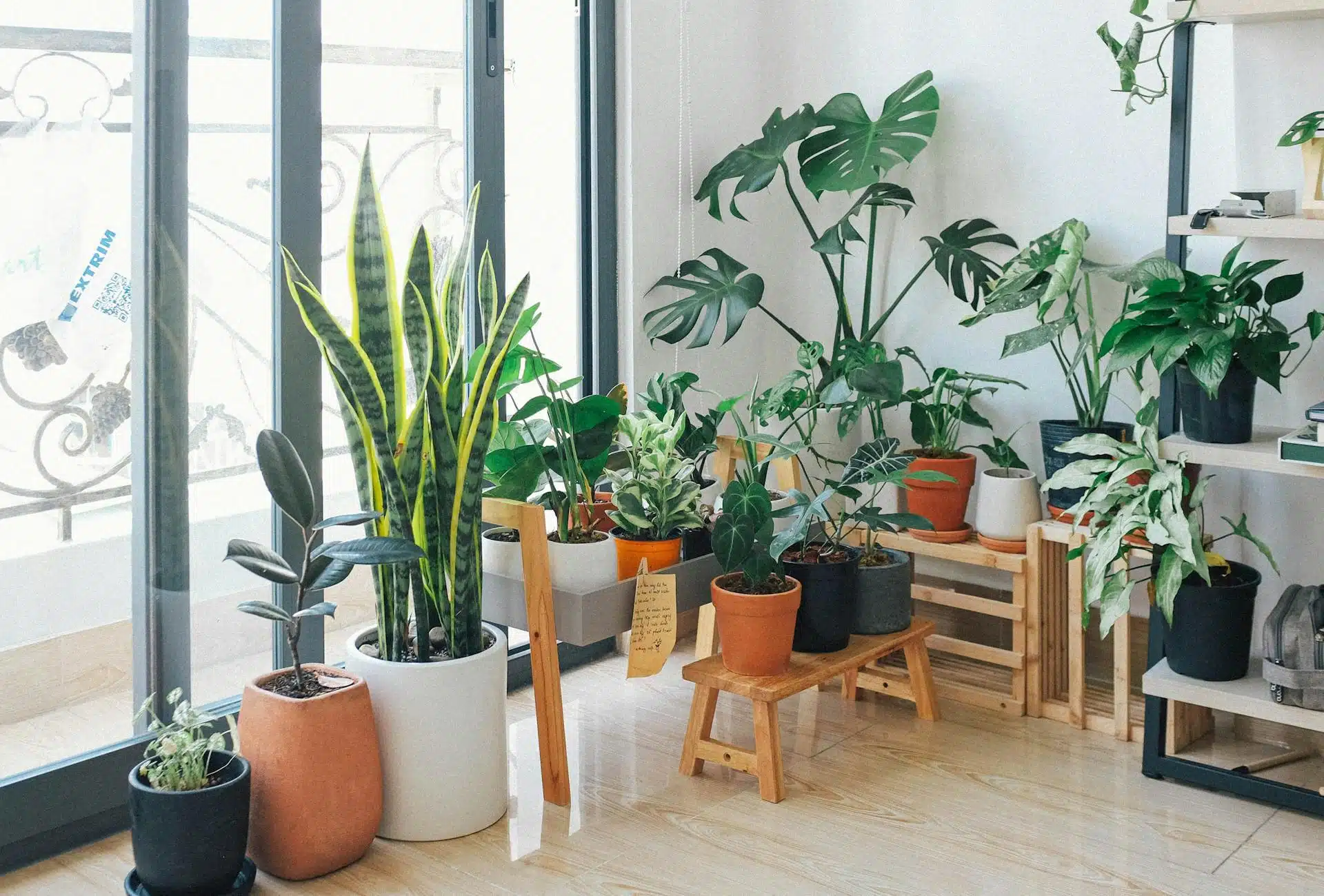
- Snake plant: Very adaptable, tolerates little light and little watering.
- ZZ Plant: Extremely flexible, suitable for offices and rooms with little light.
- Pothos: Fast growing and flexible, ideal for shelves or hanging planters.
These plants help build confidence and encourage a long-term interest in indoor gardening.
Decorative and Statement Plants
Ornamental plants add personality and visual impact to any room.
Fiddle Leaf Fig: Known for its large leaves and bold appearance. Monstera: Popular for its divided leaves and tropical appearance. Calathea: prized for elaborate leaf patterns and movement.
Indoor plant stores often highlight these plants as the focal point of interior design.
Functional Plants
Some plants are chosen for specific purposes:
- Air purifying plants such as peace lily and spider plants
- Pet-friendly plants that are safe for homes with animals
Clear labeling in indoor plant shops helps customers make safe and informed choices.
How to Choose the Right Indoor Plants Shop
Plant Health and Quality
A reliable indoor plants shop prioritizes healthy plants. Strong stems, uniform leaf color and pest-free soil are key indicators of quality.
Customers should avoid plants with yellow leaves, excessive moisture, mold or visible insects. A good shop will be transparent about the plant’s care history and conditions.
Variety and Accessibility
An ideal indoor plant shop offers a wide selection of plants for different skill levels. Beginners should feel as supported as advanced plant enthusiasts. Variety allows customers to expand their collection over time without having to change stores.
Education and Customer Support
Education is a crucial feature of a high quality indoor plant shop. Care cards, workshops, online guides and in-store advice contribute to long-term plant success. Stores that invest in education produce safer and more satisfied plant owners.
Indoor Plants Shop for Different Experience Levels
Beginners
Beginners often struggle with excess water, poor lighting or unrealistic expectations. Indoor plant shops help by recommending forgiving plants and explaining basic care principles clearly and patiently.
Starter plants encourage learning through experience and reduce the fear of failure.
Intermediate Plant Owners
At the intermediate level, plant owners become more intentional. They experiment with placement, light exposure and combinations of plants. Indoor plant stores support this stage by providing guidance on replanting, fertilizing and seasonal care.
Advanced Plant Enthusiasts
Advanced plant lovers seek out rare species and enjoy complex care routines. Indoor plant shops can cater to this audience through limited collections and expert-level advice. For these customers, plant care becomes both a hobby and a creative outlet.
Role of Technology in Indoor Plants Shops
Technology has improved access to plant care. Smart planters, moisture sensors and self-watering systems help prevent common mistakes. Many indoor plant stores are now integrating these tools into their offerings.
Online platforms give customers access to virtual consultations, care reminders and detailed plant profiles. The technology builds a bridge between expert knowledge and daily plant care.
Sustainability and Ethical Practices
Sustainability is becoming increasingly important in the indoor plant industry. Responsible indoor plant stores focus on environmentally friendly growing practices, reduced plastic use and
long-term plant health rather than mass production.
Supporting local growers reduces transport impacts and promotes healthy plants. Ethical sourcing also ensures that rare species are not overharvested from the natural environment.
Styling Indoor Spaces with Plants
Indoor plant shops often provide styling advice based on the functionality of the room and the availability of light. The bedroom, kitchen, office and living room have different needs.
Using a mix of floor plants, table plants and hanging plants creates visual balance. Choosing planters that match your interior’s colors and textures further enhances the overall aesthetic.
Common Misconceptions About Indoor Plants Shops
A common myth is that indoor plants are difficult to maintain or require special skills. In fact, indoor plant stores exist to simplify the process. With the right guidance and realistic expectations, most people can successfully care for indoor plants.
Another misconception is that indoor plants are expensive. There are many affordable options available, and with proper care, plants can last for years.
The Future of Indoor Plants Shops
As urban life continues to expand, indoor plant shops will remain highly relevant. Future trends are likely to include more low-maintenance facilities, better care solutions and a greater emphasis on sustainability.
Indoor plant shops will continue to function as educational spaces, helping people reconnect with nature even in highly developed environments.
Conclusion
Indoor Plant Shop is more than a place to buy greenery – it’s a gateway to healthier, quieter and more attractive indoor spaces. By offering curated plants, hands-on education and sustainable solutions, indoor plant shops empower people to bring nature into their everyday lives. Whether someone is just starting their plant journey or expanding an established collection, a
well-curated indoor plant store provides lasting value beyond the purchase.
FAQs
What makes a good indoor plants shop?
A good shop offers healthy plants, clear care instructions, a wide selection and knowledgeable support.
Can indoor plants thrive in small homes or apartments?
Yes, many indoor plants are suitable for tight spaces and limited light.
How do I know if I am overwatering my plants?
Yellow leaves, wet soil and root rot are its common symptoms. It is important to check the soil moisture.
Are indoor plants safe for homes with pets?
Some plants are poisonous, but many indoor plant stores clearly label pet-safe options.
Do indoor plants require frequent maintenance?
Maintenance depends on the facility. Many indoor plants require minimal care when planted correctly.

James McLaren, with a rich background in architecture from the University of Manchester, has been contributing his expertise to the world of creative construction and home innovation for over 20 years. His journey began as a project manager for a leading construction firm, where he honed his skills in bringing complex designs to life. James joined our platform as a freelancer in 2019, quickly becoming a favorite for his insightful and practical advice. He has been a pivotal force to our wing ever since, bringing our readers a blend of technical know-how and creative flair. Beyond his professional life, James is an avid woodworker and enjoys restoring vintage furniture, a hobby that complements his professional insights beautifully.