
Your heating and cooling system is working overtime – and your energy bills are proof. For millions of American homeowners, the culprit isn’t an aging HVAC unit or inefficient appliances. It’s the walls, attic, and crawl spaces quietly leaking conditioned air day and night. Spray foam insulation has emerged as one of the most effective solutions to this problem, but it also comes with a higher upfront cost than traditional options. So before you commit, it pays to understand exactly what you’re getting – and whether it’s the right fit for your home.
For homeowners in the San Francisco Bay Area, USASprayMe is a locally rooted company that’s been in the insulation business since 2005.
What is spray foam insulation?
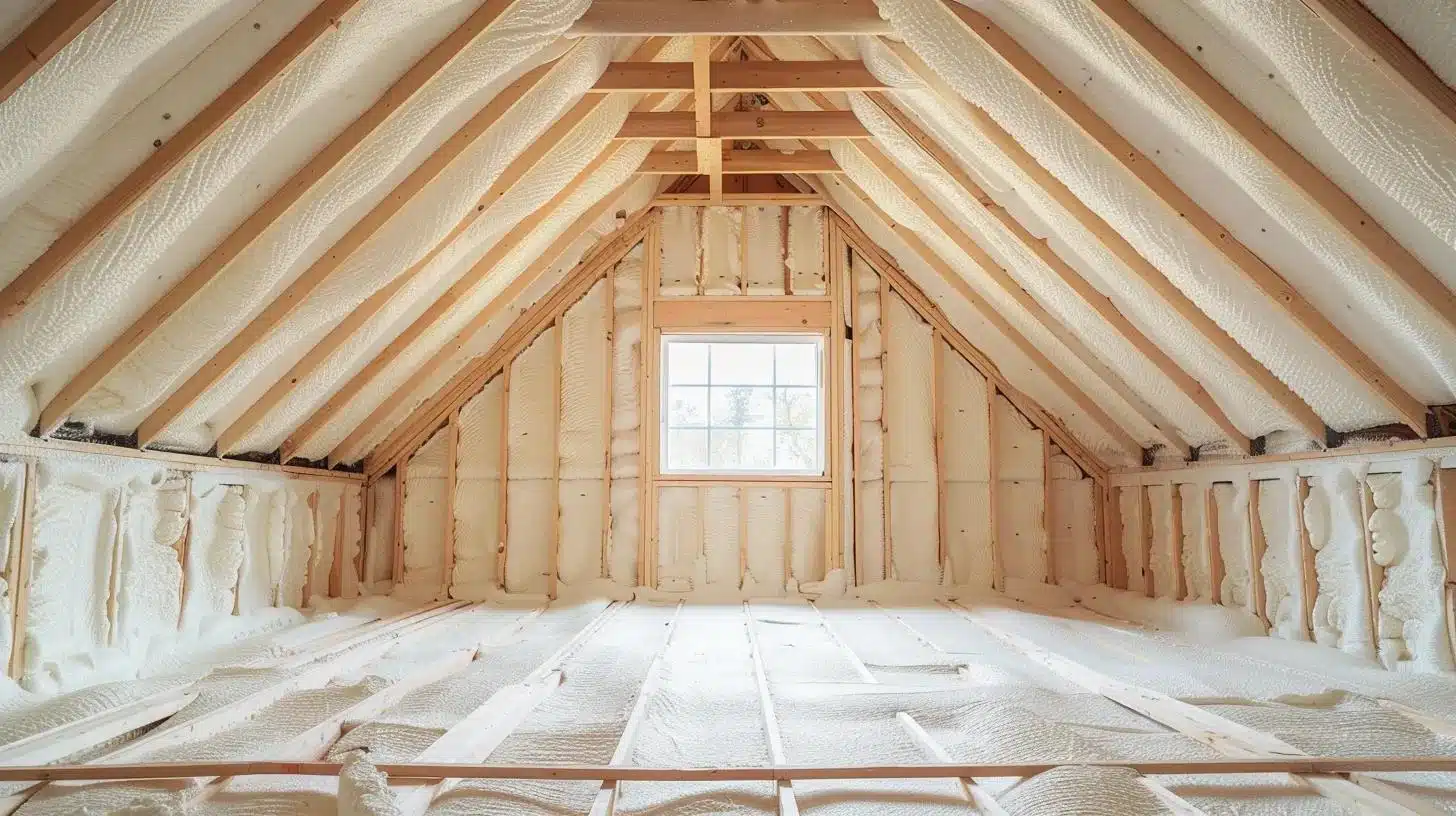
Spray foam insulation is a two-component liquid material that, when mixed and applied, expands into a dense foam that seals gaps, cracks, and cavities throughout a building envelope. Unlike fiberglass batts or blown-in cellulose, spray foam bonds directly to the surfaces it’s applied to, creating an air barrier in addition to a thermal barrier.
It’s used in new construction and retrofits alike – in attics, crawl spaces, rim joists, exterior walls, and around windows and doors. Its ability to conform to irregular shapes makes it particularly effective in older homes where framing and structure have shifted over time.
Open-Cell vs. Closed-Cell Foam: what’s the difference?
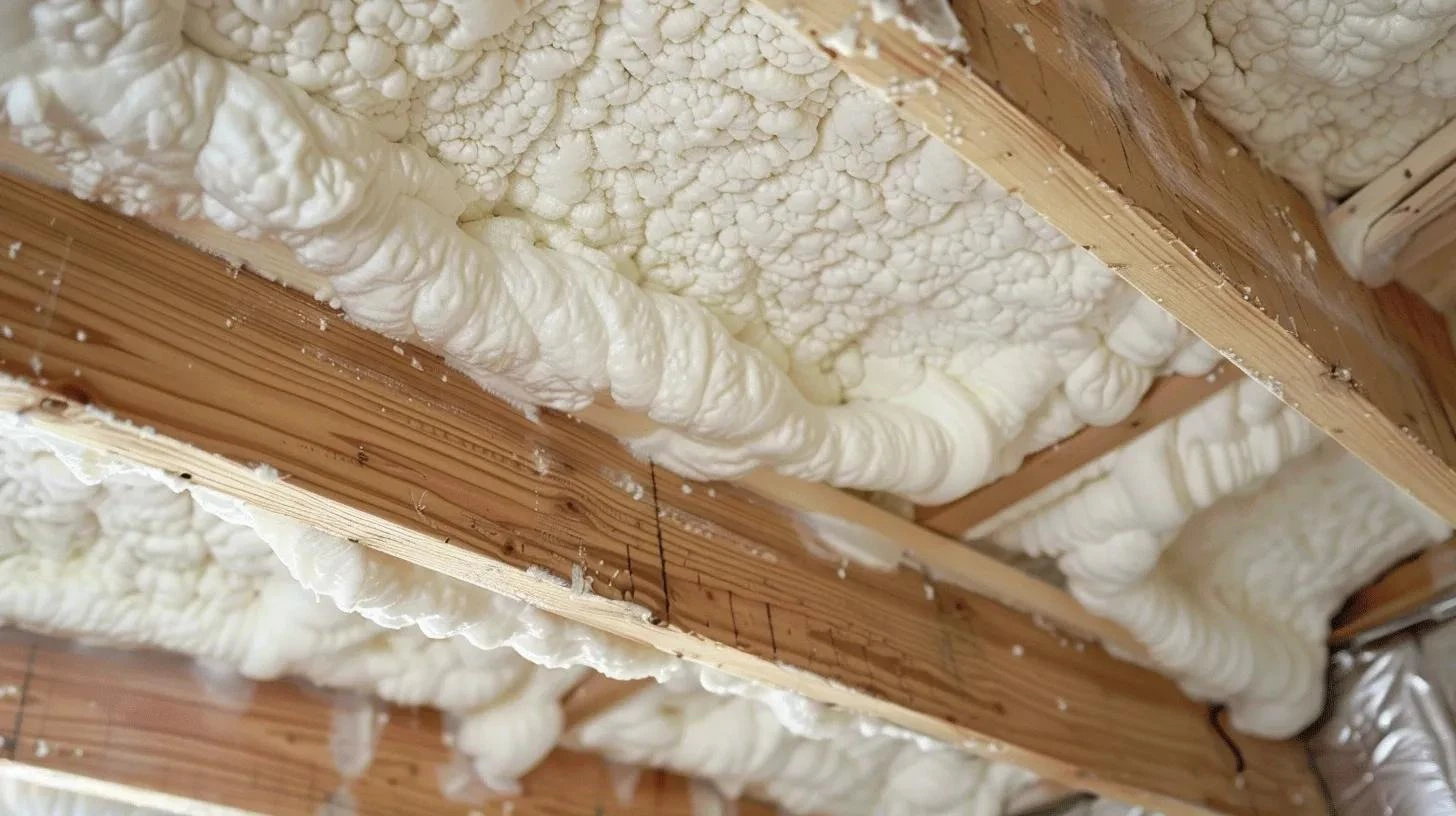
One of the most common points of confusion for homeowners exploring spray foam is the distinction between open-cell and closed-cell foam. They’re both spray foam, but they perform quite differently.
Open-Cell Spray Foam
Open-cell foam has a softer, spongy texture because its cell structure remains open after curing. It expands significantly – up to 100 times its original volume – and is less dense than its closed-cell counterpart. It has an R-value of approximately R-3.5 to R-3.8 per inch.
Open-cell foam is an excellent air barrier and performs well for interior applications like interior walls (for soundproofing), attic ceilings when the attic will be used as conditioned space, and areas where moisture vapor permeability isn’t a concern. It’s generally less expensive than closed-cell foam, making it a popular choice for budget-conscious projects.
Closed-Cell Spray Foam
Closed-cell foam is denser and more rigid, with a cell structure that remains sealed after curing. It achieves an R-value of approximately R-6 to R-7 per inch – nearly double that of open-cell – and also acts as a vapor retarder, making it ideal for areas exposed to moisture or humidity.
Closed-cell foam is the preferred choice for exterior applications, crawl spaces, basement walls, roof decks, and in climates with significant temperature swings. Its structural rigidity can also add racking strength to wall assemblies. The tradeoff is cost: closed-cell foam typically runs two to three times the price of open-cell per square foot.
Choosing between the two depends on your climate zone, the specific area of the home being insulated, moisture conditions, and your budget. Contractors who specialize in spray foam insulation in San Francisco and the wider Bay Area, for instance, often lean toward closed-cell in crawl spaces and subfloor applications, given the region’s persistent coastal moisture – a practical illustration of how local climate conditions should shape your product selection.
The benefits of spray foam insulation
The appeal of spray foam goes beyond thermal performance. Here’s what makes it stand out among energy efficiency home upgrades:
Air sealing: Unlike fiberglass or cellulose, spray foam expands to fill voids completely. The U.S. Department of Energy estimates that air leakage accounts for 25–40% of the energy used for heating and cooling in a typical American home. Spray foam addresses this directly.
Moisture control: Closed-cell foam resists moisture infiltration, reducing the risk of mold growth and structural damage – a particular advantage in humid climates or homes with a history of water intrusion.
Noise reduction: Open-cell foam absorbs sound effectively, making it a practical choice for interior walls between rooms or floors.
Durability: Unlike fiberglass batts that can sag or settle over time, spray foam maintains its position and performance for the life of the structure.
HVAC right-sizing: Better-insulated homes often require smaller, less expensive heating and cooling systems. When combined with other energy efficiency home upgrades, spray foam can enable meaningful downsizing of mechanical systems at replacement time.
Spray foam insulation cost: what to expect
Spray foam insulation cost varies based on the type of foam, the area being insulated, regional labor rates, and the complexity of the job. Here are general ranges to work from:
- Open-cell spray foam: $0.44–$0.65 per board foot installed
- Closed-cell spray foam: $1.00–$2.00 per board foot installed
For a typical 1,500-square-foot attic insulation project using open-cell foam at 5 inches thick, homeowners can expect to spend anywhere from $3,300 to $4,900. Crawl space encapsulation with closed-cell foam tends to run higher due to access challenges and the premium material.
These numbers can feel steep compared to fiberglass batts, which might run $0.30–$0.40 per square foot for DIY installation. But the comparison only holds up if you’re looking at R-value alone – and fiberglass simply doesn’t air-seal the way spray foam does.
ROI and long-term energy savings
The financial case for spray foam insulation hinges on long-term savings rather than upfront cost. According to the Environmental Protection Agency’s ENERGY STAR program, homeowners who properly air-seal and insulate their homes can save an average of 15% on total energy costs – and up to 11% on total energy bills from insulation improvements alone in certain climates.
For a household spending $2,400 per year on energy, a 15% reduction represents $360 in annual savings. At that rate, a $4,000 spray foam project breaks even in approximately 11 years – and continues delivering savings for decades after. When you factor in improved comfort, reduced HVAC wear, and the potential to downsize equipment at replacement time, the return looks even more favorable.
It’s also worth noting that federal energy efficiency tax credits under the Inflation Reduction Act may offset a portion of insulation costs, and many utility companies offer rebates for qualifying improvements. Checking with your local utility before starting a project is always a good idea.
Homeowners in high-cost energy markets or extreme climates – very cold winters or very hot summers – tend to see the fastest payback periods. In milder climates, the payback timeline stretches, but the comfort improvements and moisture control benefits still carry real value.
About USA Spray Me: a trusted Northern California insulation contractor
Based out of San Francisco, they bring over a decade of field experience to residential and commercial spray foam projects throughout Northern California.
The company is licensed, bonded, and insured, and works with materials from leading industry suppliers. Their service offering is notably broad – beyond spray foam installation, they handle closed-cell insulation, blown-in insulation, fiberglass insulation, soundproofing insulation, insulation removal, and spray foam roofing systems, as well as complementary services like concrete leveling and polyurea coatings. For homeowners who need multiple upgrades addressed in one visit, that range of capability can simplify the process considerably.
USA Spray Me offers free inspection estimates and operates Monday through Saturday, 7 AM to 6 PM. Their team’s approach is grounded in understanding the specific conditions of each project – building age, construction type, moisture exposure, and local code requirements – before recommending a solution. That kind of site-specific assessment is exactly what separates a well-executed insulation job from a generic one.
When to hire professional insulation contractors
Spray foam insulation is not a DIY-friendly material. The two-component chemical system must be mixed at precise ratios and temperatures, applied with specialized equipment, and handled with proper personal protective equipment. Improper installation can result in off-ratio foam that off-gasses harmful chemicals, fails to achieve rated R-values, or bonds poorly to surfaces.
For most residential projects, hiring licensed insulation contractors is the only practical route. When vetting contractors, look for:
- Experience specifically with spray foam, not just insulation generally
- Proper licensing and insurance in your state
- References from completed residential projects
- Familiarity with building code requirements for your area, including ignition barriers over foam in unconditioned spaces
Getting multiple quotes is standard practice. Pricing can vary significantly between contractors, and a notably low bid may reflect shortcuts in material quality or application thickness. A reputable contractor will walk you through which foam type is appropriate, the target thickness for your climate zone, and what to expect during and after installation.
Frequently Asked Questions
How long does spray foam insulation last?
Properly installed spray foam insulation is considered a permanent building material. Unlike fiberglass batts, it won’t settle, sag, or shift over time. Most manufacturers rate their products for the life of the structure – in practice, 80 or more years under normal conditions.
Can spray foam be installed in an existing home, or only new construction?
Spray foam can absolutely be installed in existing homes. Attics, crawl spaces, rim joists, and basement walls are all common retrofit applications. Open-cell foam is sometimes used in wall cavities during renovations when walls are open, but retroactively insulating closed wall cavities requires specialized slow-rise foam or an alternative approach.
Is spray foam safe after it cures?
Once fully cured – typically within 24 hours of application – spray foam is inert and considered safe for occupants. During and immediately after application, adequate ventilation is essential, and homeowners should vacate the premises for the period recommended by the installer. Off-ratio or improperly mixed foam is the primary source of indoor air quality concerns, which is why professional installation matters so much.
Does spray foam insulation require a vapor barrier?
Closed-cell spray foam above a certain thickness (typically 2 inches) acts as its own Class II vapor retarder in most applications, so a separate vapor barrier is often unnecessary. Open-cell foam is vapor-permeable and may require a vapor retarder depending on your climate zone and building assembly. Your contractor should advise based on local code requirements and conditions.
Will spray foam raise my home’s resale value?
Directly attributing resale value to insulation upgrades is difficult, but energy-efficient homes consistently sell faster and at higher prices in most U.S. markets. Buyers increasingly look for low utility costs and high-performance building envelopes. Documentation of insulation upgrades, particularly with energy audit results showing before-and-after performance, can be a meaningful selling point.

With a Master in Architectural Studies from University of Pennysylvania, Marwa Haydar has pioneered living spaces since 2005. Her expertise, initially honed in a prestigious architectural firm, is evident in her approach to creating environments. Marwa became part of our team in 2019 and has since been a driving force in our home improvement section, known for her practical yet stylish solutions. She’s been spearheading our design workshops since then, infusing her passion for teaching into her work. In her leisure time, Marwa enjoys exploring historic architecture and is an enthusiastic pottery hobbyist, further enriching her understanding of form and texture.