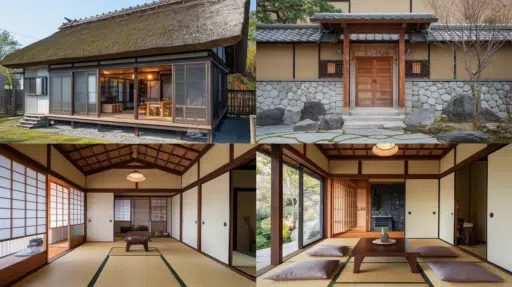
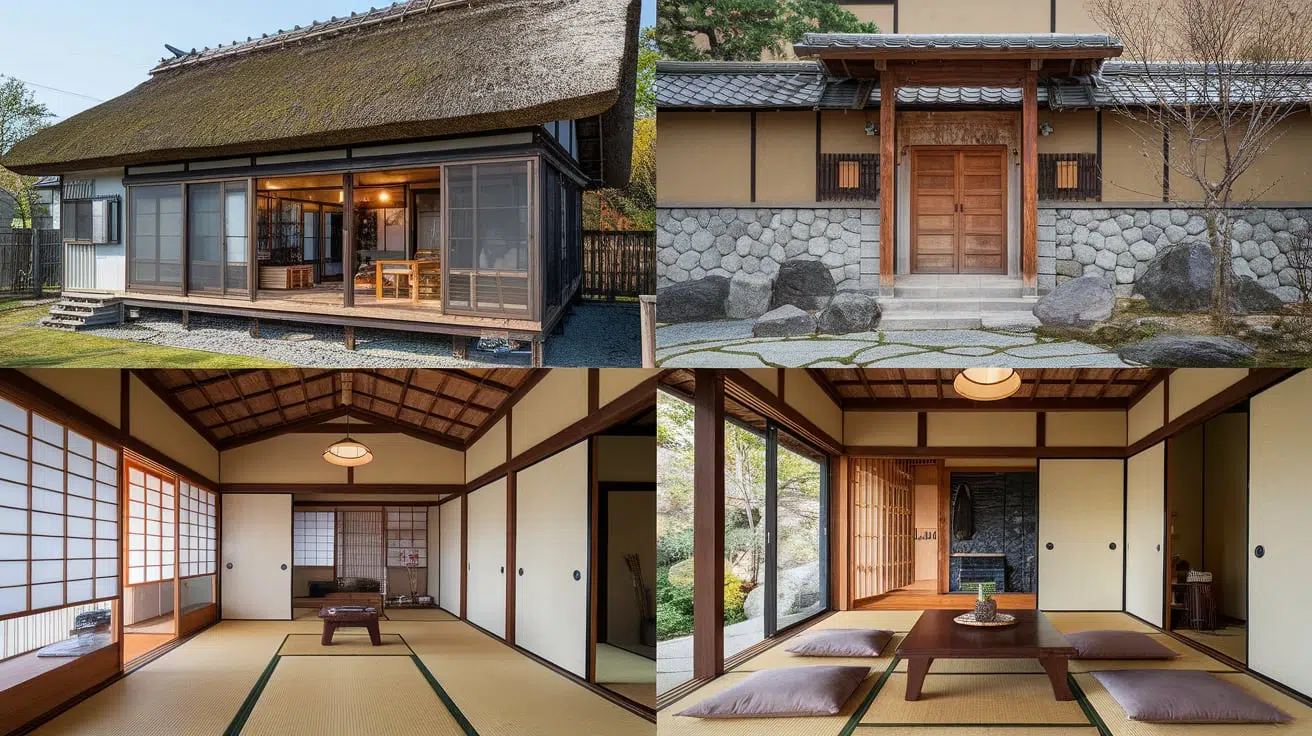

Japanese-style homes feel calm, warm, and beautifully simple, and that’s what makes them so inspiring.
I love how the design blends modern living with nature in a way that feels both peaceful and practical.
In this guide, you’ll see how Japanese houses use clean lines, natural materials, and clever layouts to create comfortable spaces, even on small lots.
Whether you want to build a new home or just refresh your current space, these ideas can help you bring a softer, more mindful feeling into your rooms.
What is a Japanese-Style House?
A Japanese-style house is a home designed around calm, simplicity, and a close connection to nature. You’ll often see clean lines, sliding doors, warm wood, and open spaces that feel light and airy.
Traditional Japanese homes use tatami mats, low furniture, and flexible rooms that can change based on the activity.
Modern Japanese architecture keeps the same peaceful feel but mixes in updated materials like glass, steel, and concrete.
The main goal is to create a home that feels balanced and uncluttered, with plenty of natural light. It’s a style that works well for small spaces and modern living.
Japanese Home Design Philosophy Basics
Japanese home design is built on a few simple ideas that focus on calm, balance, and natural beauty. These principles guide how each space feels and how you move through the home.
1. Kanso: Simple, Uncluttered Living
Kanso is all about keeping things clean, clear, and stress-free. It removes distractions so the home feels calm.
- Fewer items on display
- Clean lines and simple shapes
- Hidden or built-in storage
2. Ma: The Power of Empty Space
Ma is the space between things that helps a room breathe. It makes your home feel open, even if it’s small.
- Open floor areas
- Sliding partitions to adjust space
- Purposeful gaps around furniture
3. Shizen: Living Close to Nature
Shizen brings natural elements into everyday life. It helps the home feel more grounded.
- Wood, stone, and natural textures
- Soft daylight and garden views
- Indoor plants or mini gardens
4. Wabi-Sabi: Beauty in Imperfection
Wabi-sabi teaches us to enjoy things as they naturally age. It adds character and warmth to a home.
- Weathered wood and textured walls
- Handmade or imperfect decor
- Simple items with meaning and history
Modern Japanese House Ideas
Japanese homes mix calm design with smart function, giving you spaces that feel open and connected to nature.
1. Minimal Exterior Shapes
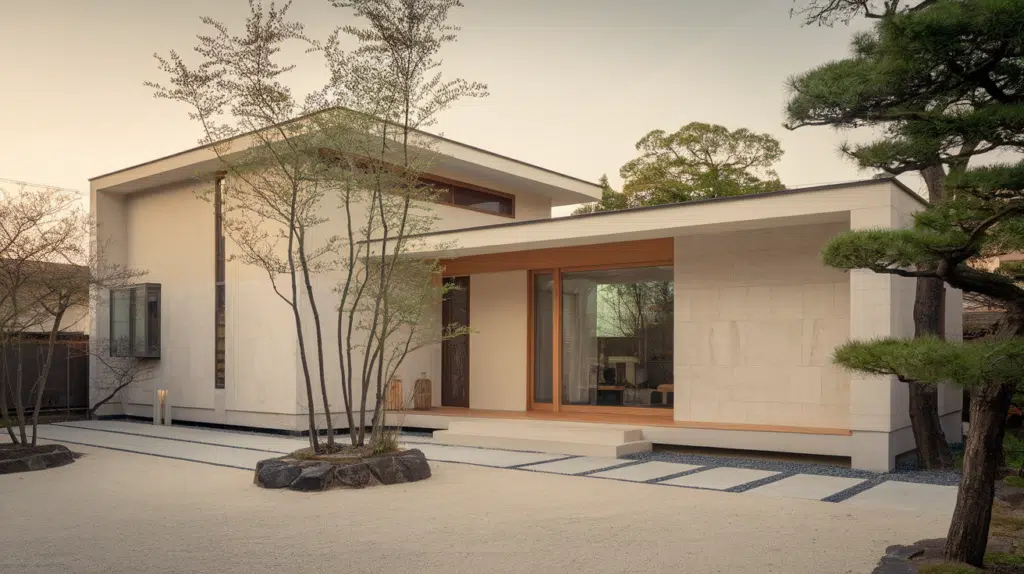
Modern Japanese houses often use simple box-like forms that keep the outside looking calm and uncluttered. These shapes help the home blend into the surroundings while still feeling modern.
Clean lines also make the building look spacious, even on a tight city lot. This simplicity sets the tone for the peaceful feel inside.
2. Wood-and-Concrete Facade Mix
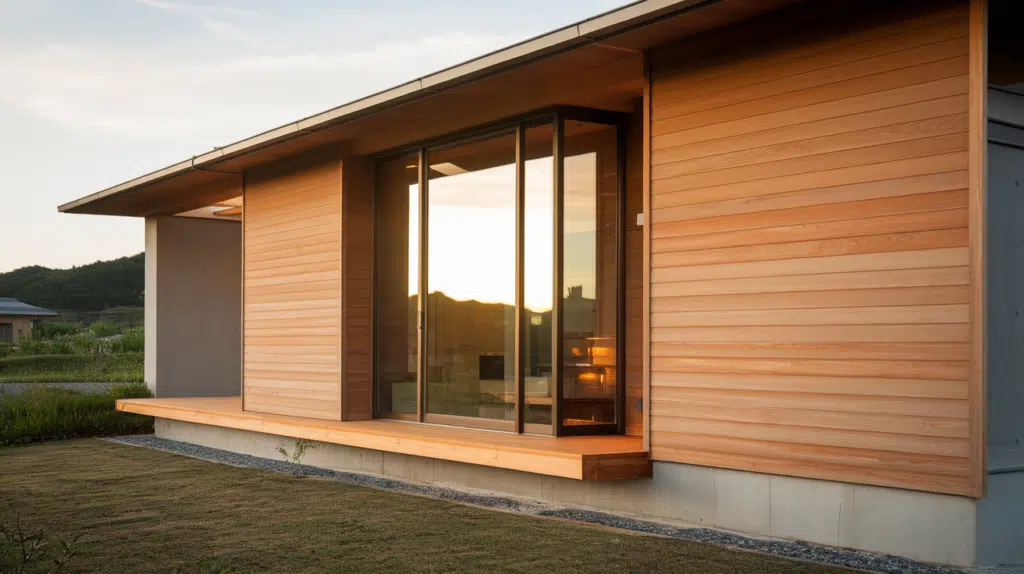
You’ll often see warm wood paired with cool concrete on Japanese exteriors. This contrast creates balance – natural and modern at the same time.
Concrete gives structure and strength, while wood adds softness and warmth. Together, they age beautifully and help the home feel grounded in nature.
3. Deep Roof Overhangs
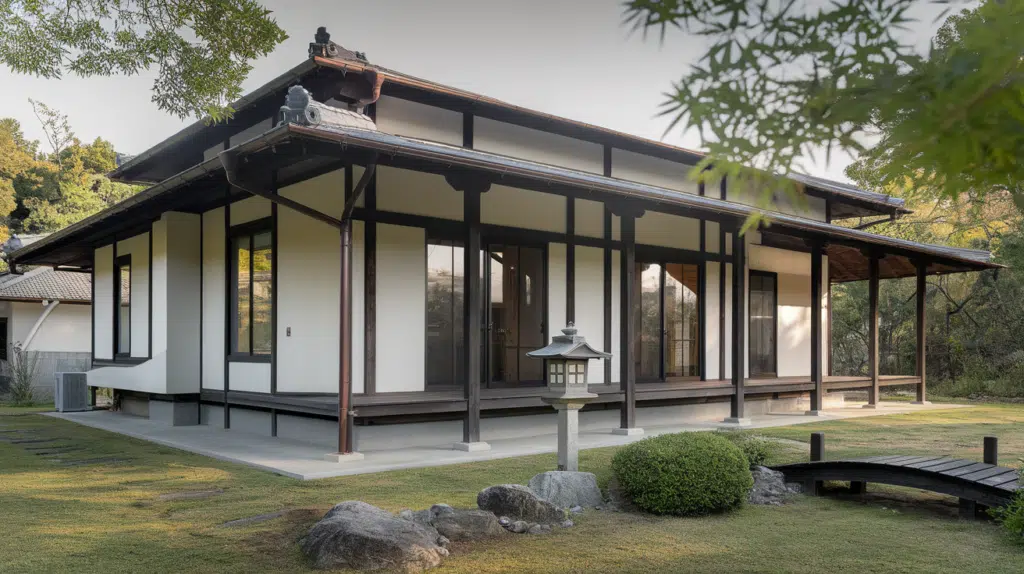
Deep roof eaves are a classic element that protects the home from the sun and rain. They help control temperature naturally by blocking heat during summer while still allowing soft light inside.
These overhangs also create sheltered outdoor spots, making it easier to enjoy fresh air even on rainy days.
4. Courtyard Homes
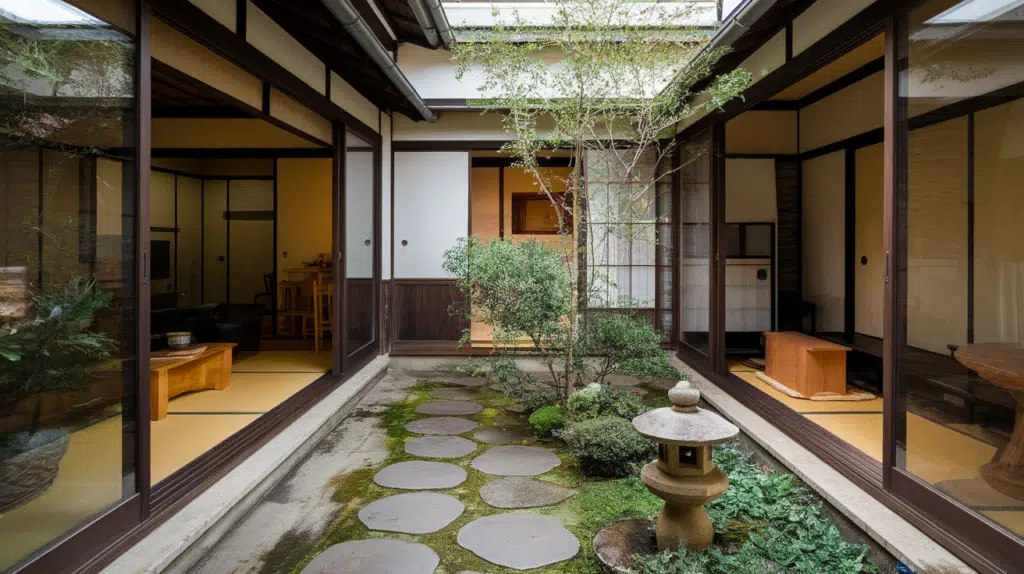
Many Japanese homes use a private courtyard in the center of the layout. This small garden pulls in daylight and fresh air while keeping privacy from neighbors.
Courtyards make tight homes feel bigger by adding a visual “break” in the middle. Even a tiny courtyard can transform the mood of a home.
5. Long Horizontal Windows
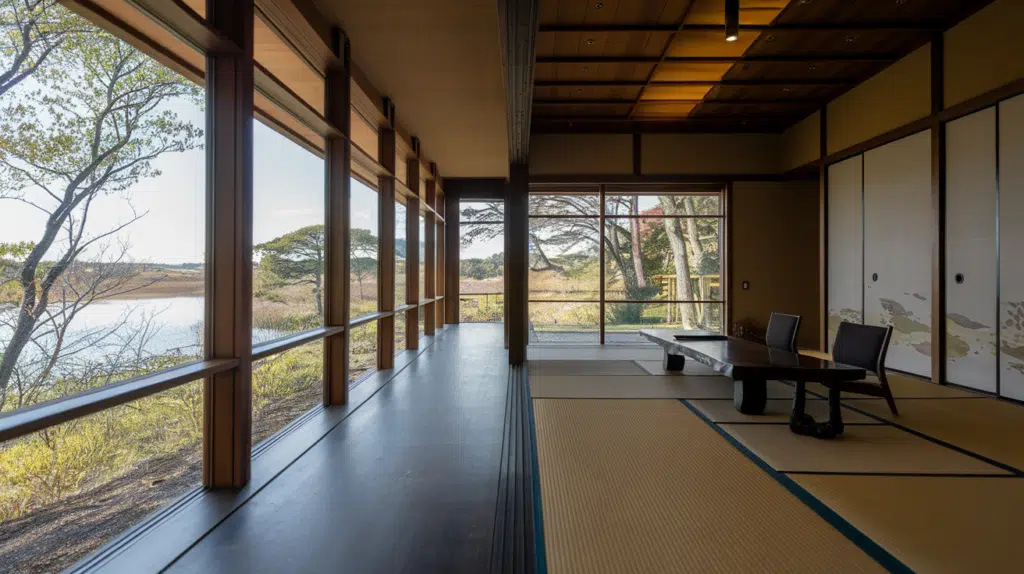
Instead of huge floor-to-ceiling glass, Japanese designers often use long, narrow windows. These create calm, picture-like views of trees, sky, or gardens.
Horizontal windows give privacy while still letting in plenty of natural light. They also make the room feel wider and more connected to the outdoors.
6. Genkan Entry
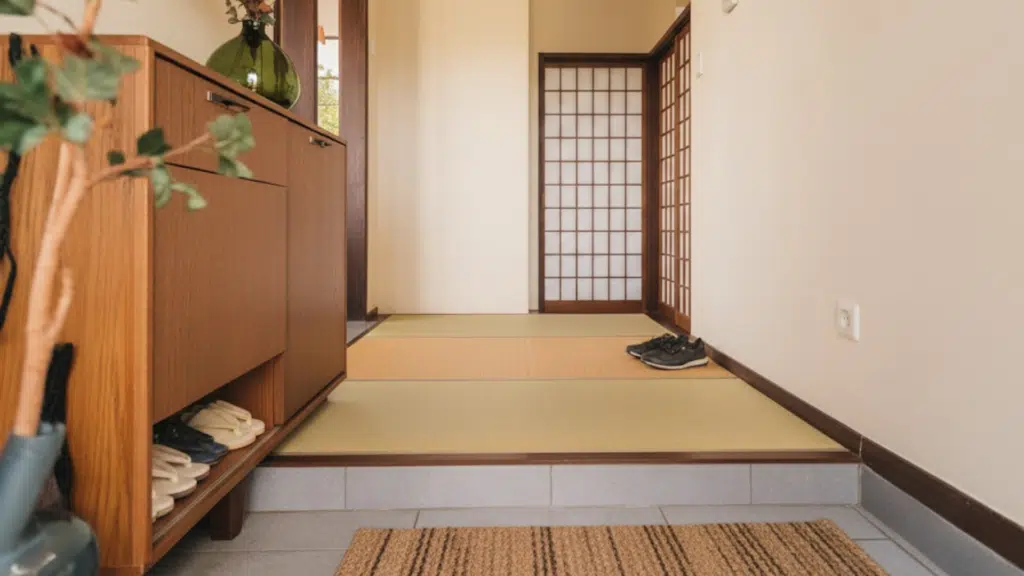
The genkan is a sunken entry area where shoes are removed before stepping inside. It creates a moment of pause and instantly separates the busy outside world from the quiet home.
Storage is usually built around it to keep the area clean. This simple practice makes the whole home feel more relaxed.
7. Flexible Rooms With Sliding Partitions
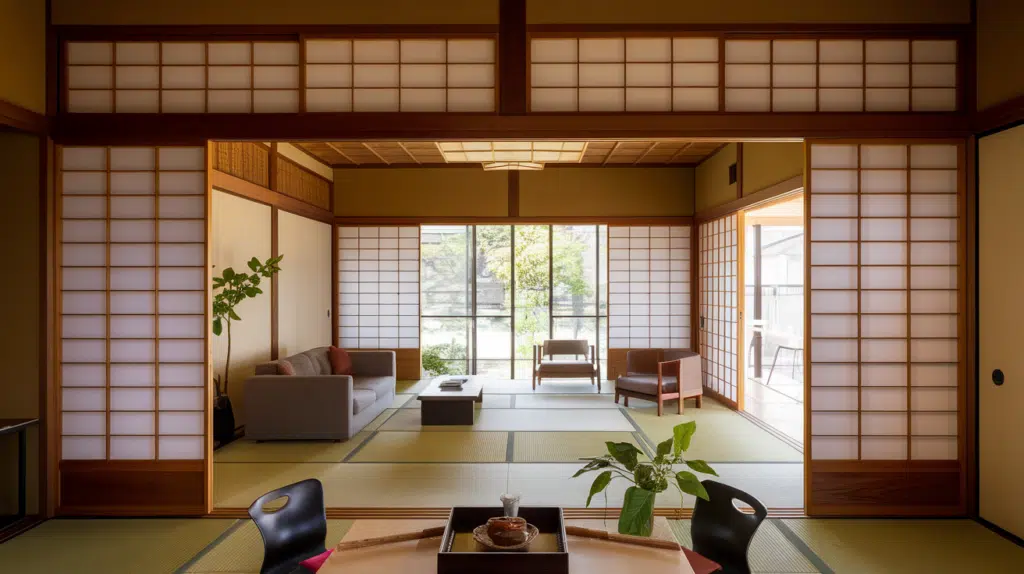
Sliding screens make it easy to open or close spaces as needed. One room can act as a living area during the day and a guest room at night.
These partitions guide light through the home and help airflow move naturally. They also reduce the need for heavy walls, keeping the layout open.
8. Tatami Zones
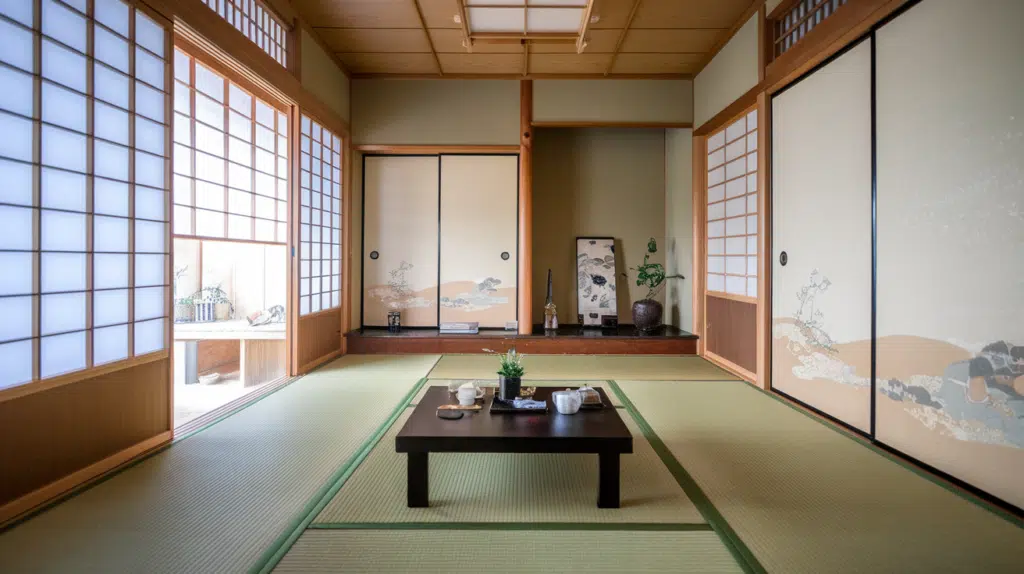
Tatami mats are soft, woven flooring that creates a warm, quiet space. A tatami zone can be used for reading, relaxing, or hosting guests.
Many homes mix tatami rooms with modern layouts for flexibility. The natural texture also adds a peaceful feel that’s hard to get with regular flooring.
9. Layered Lighting
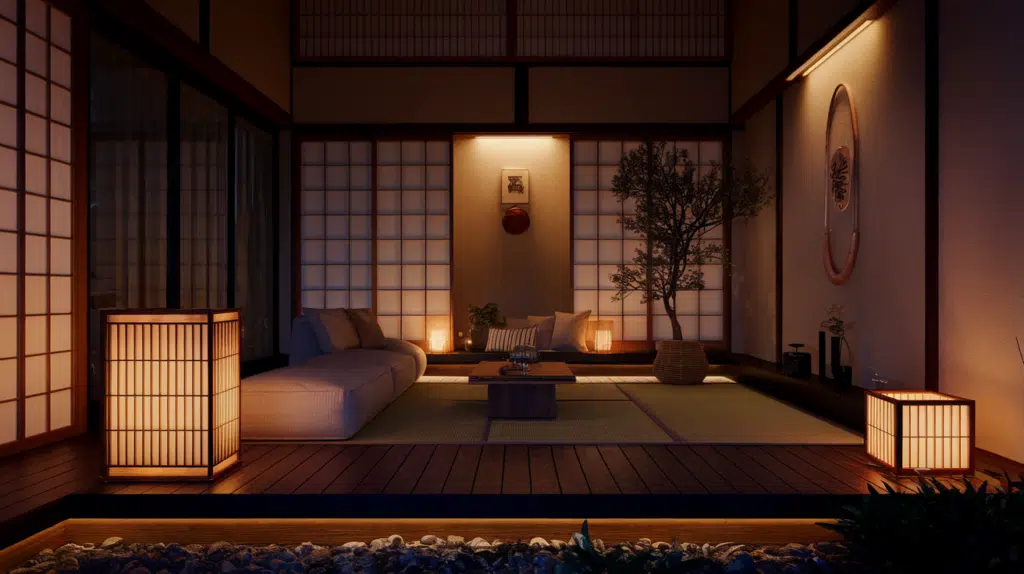
Japanese interiors avoid harsh overhead lights. Instead, they use layered lighting to create a soft glow. Floor lamps, shoji-covered lights, and hidden fixtures help shape a cozy atmosphere.
This approach makes rooms feel calm at night and highlights textures like wood and paper.
10. Compact Urban Homes
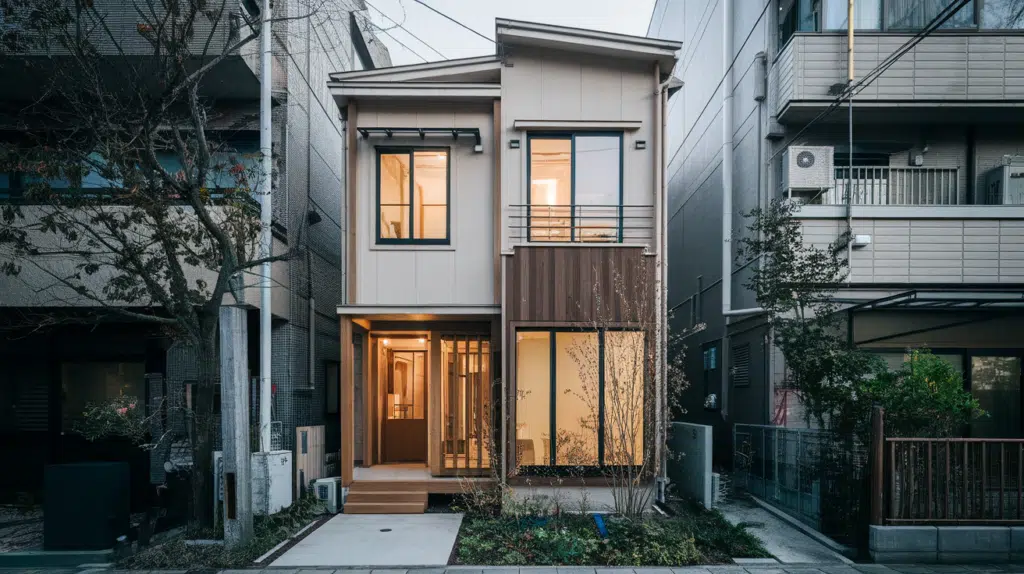
Japan is known for building creative homes on narrow or irregular lots. These designs make the most of every inch with vertical layouts, loft spaces, and clever storage.
Light wells and slim windows help brighten tight spaces. These homes prove that small footprints can still feel open, stylish, and functional.
11. Engawa Walkway
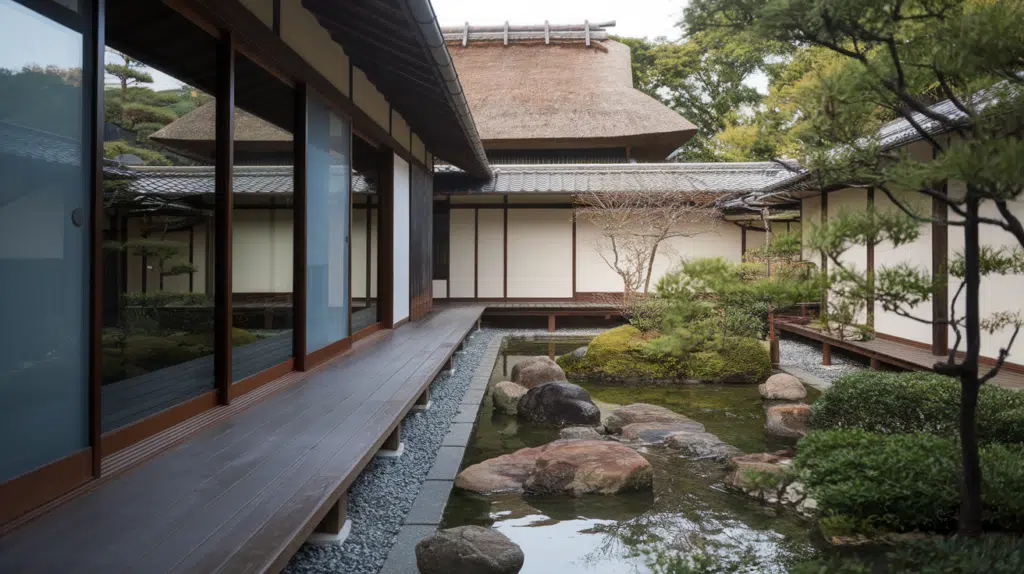
An engawa is a narrow wooden walkway that sits between the home and the garden. It works like a gentle transition space, letting you enjoy outdoor views without fully stepping outside.
Modern homes use this idea to create a relaxing sitting spot along windows or sliding doors. It also helps control light and airflow through the home.
12. Pocket Gardens
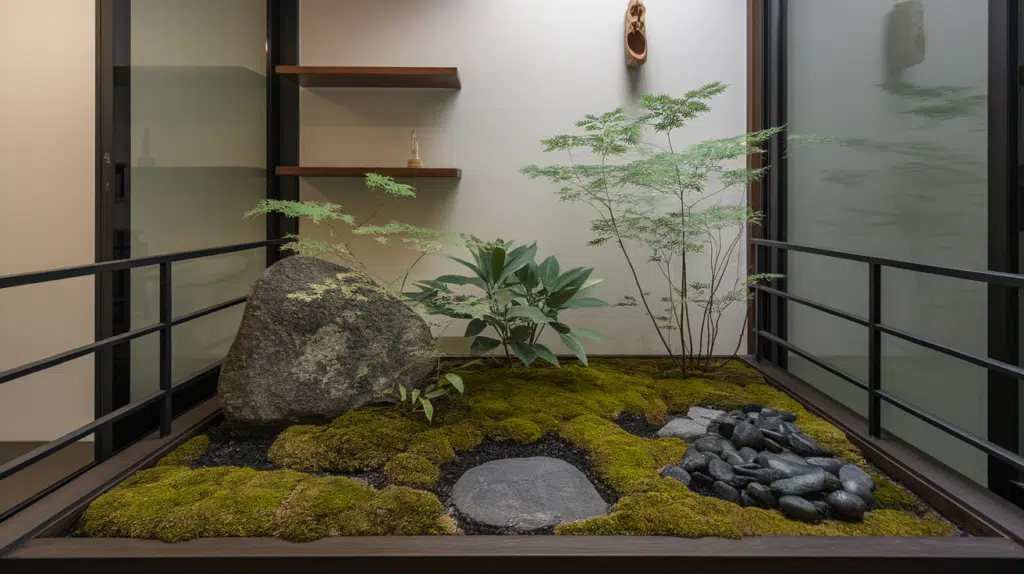
Small gardens tucked into corners or between rooms are common in Japanese design. These mini green spaces brighten interiors without taking up much space.
They create peaceful views that help break up solid walls or tight hallways. Even a few stones, plants, and moss can make a space feel more connected to nature.
13. Hidden Storage Built Into Floors and Walls
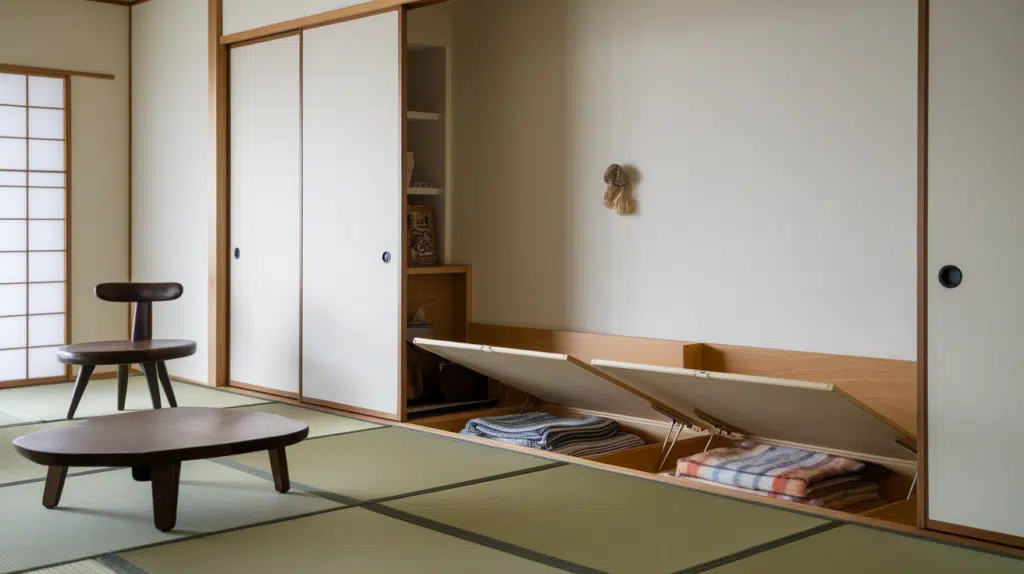
Japanese homes stay clutter-free by using storage that blends into the structure. Drawers under floors, wall niches, and built-in cabinets keep daily items out of sight.
This creates a smooth, open look without sacrificing function. It’s a smart way to maintain calm spaces in smaller homes.
14. Shoji Doors
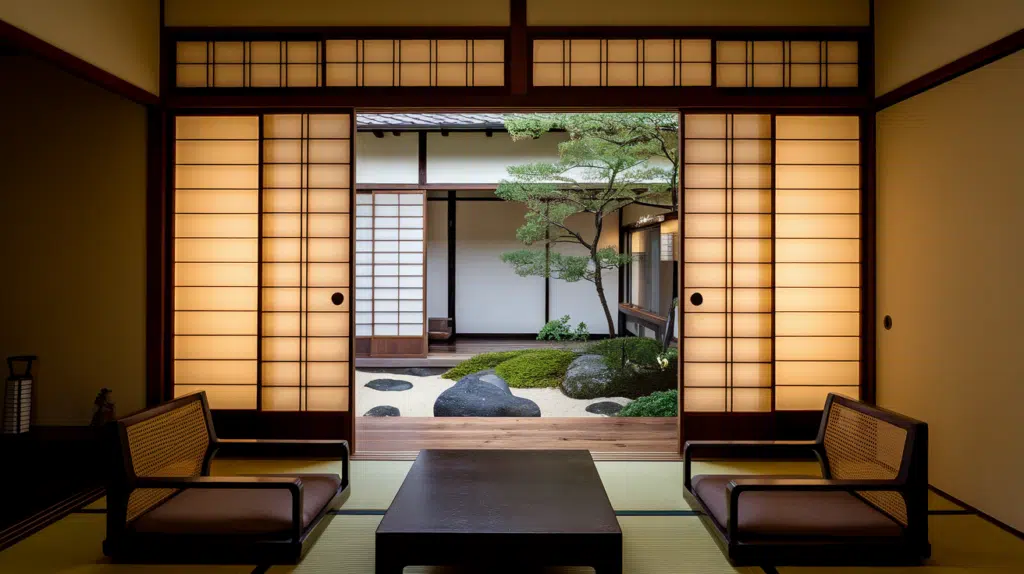
Shoji doors are sliding screens covered with translucent paper. They diffuse harsh daylight and create a warm glow across the room.
Modern versions use stronger materials but keep the same soft lighting effect. Shoji also saves space because they slide instead of swinging open.
15. Open Staircases
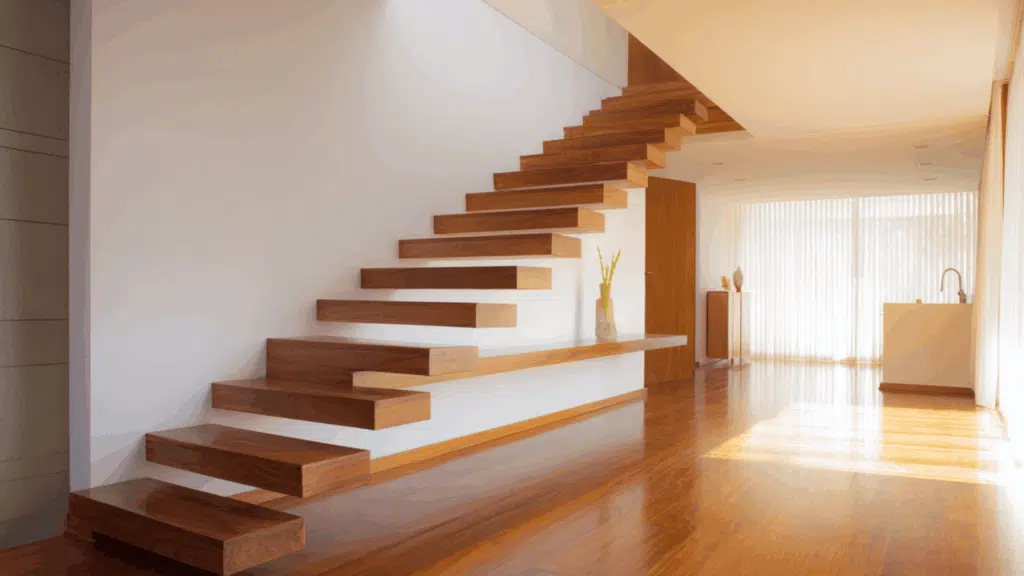
Instead of bulky staircases, Japanese homes often use slim, open designs. Steps may float off the wall or use thin wooden planks.
This keeps sightlines open and helps natural light travel through the house. It’s a great way to make small homes feel less boxed in.
16. Concrete-and-Wood Interiors
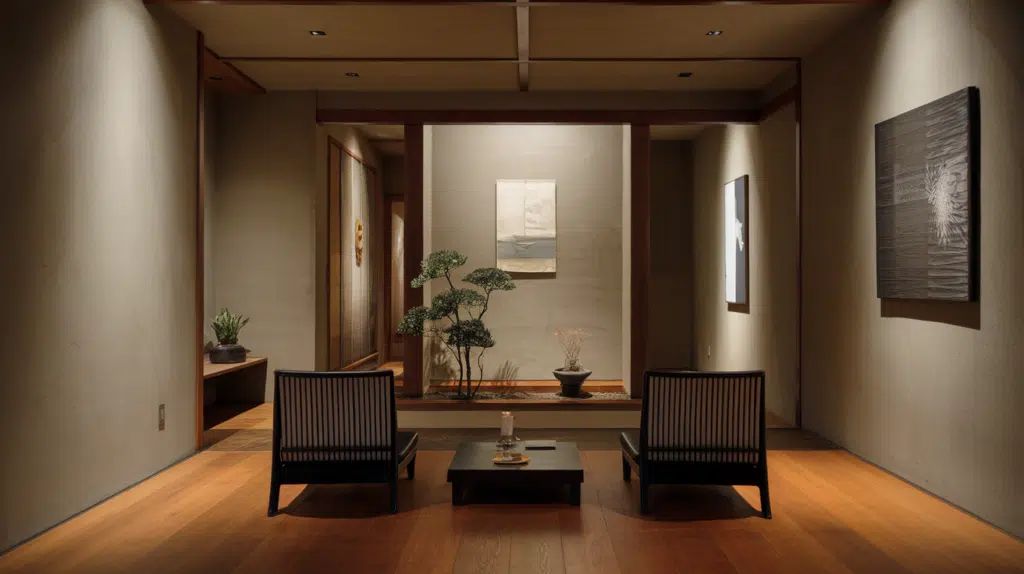
Combining smooth concrete walls with warm wood floors is a popular modern look. Concrete adds a cool, clean feel, while wood brings warmth and comfort.
When used together, they create a balanced interior that feels both minimal and inviting. This mix also wears well over time.
17. Large Sliding Glass Doors Facing Gardens
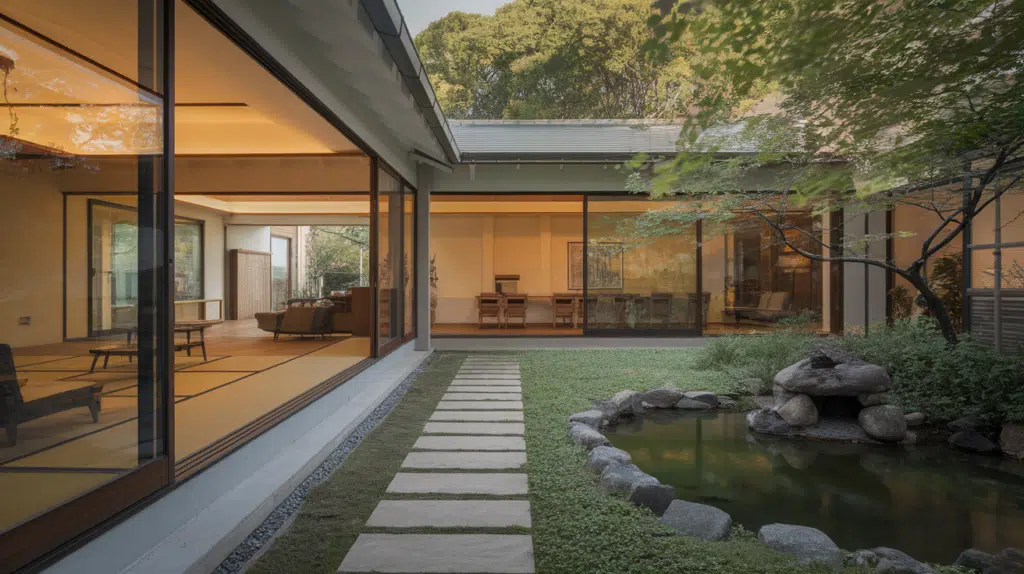
Many Japanese homes use wide glass doors that open directly to a patio or garden. This creates one big indoor-outdoor zone when the doors slide open.
It brings in fresh air, natural light, and peaceful views. Even small gardens can feel expansive with this connection.
18. Multi-Level Floors
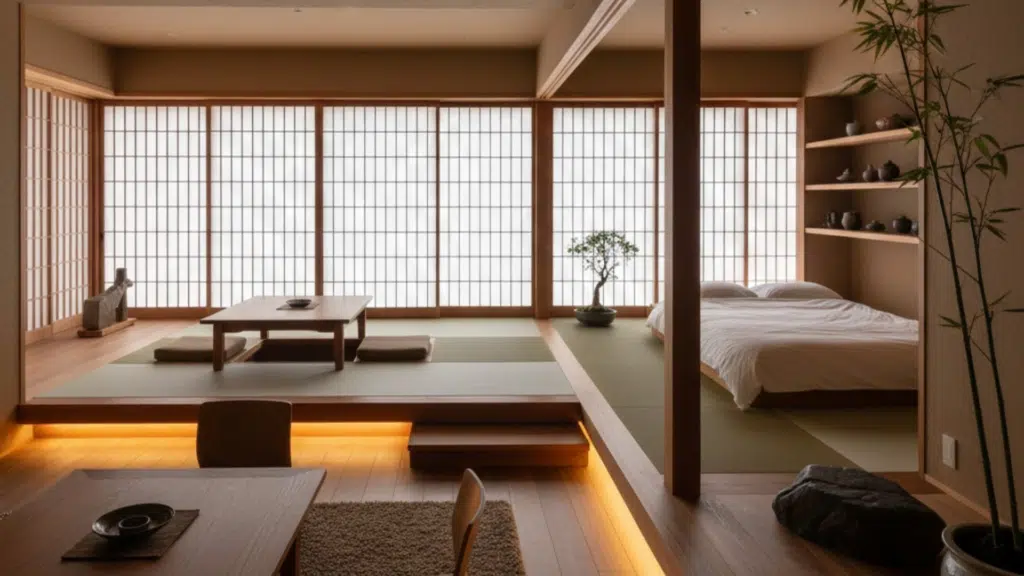
Instead of using walls, Japanese designers often raise or lower a floor area to show a change in purpose.
A step up might lead to a tatami space, while a sunken floor might create a cozy seating zone. These small level changes add depth and make the layout feel dynamic.
19. Skylights
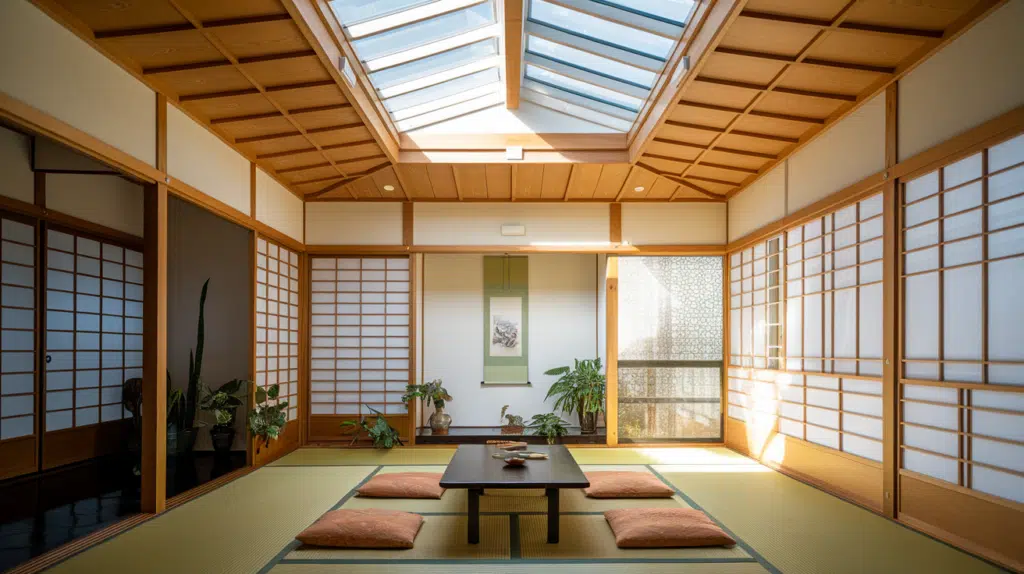
Skylights are used to brighten areas that wall windows can’t reach. They create soft, even lighting throughout the day and help reduce energy use.
Placed over staircases, halls, or living areas, they make tight interiors feel more open. Skylights also highlight natural materials like wood and stone.
20. Japandi-Inspired Hybrid Interiors
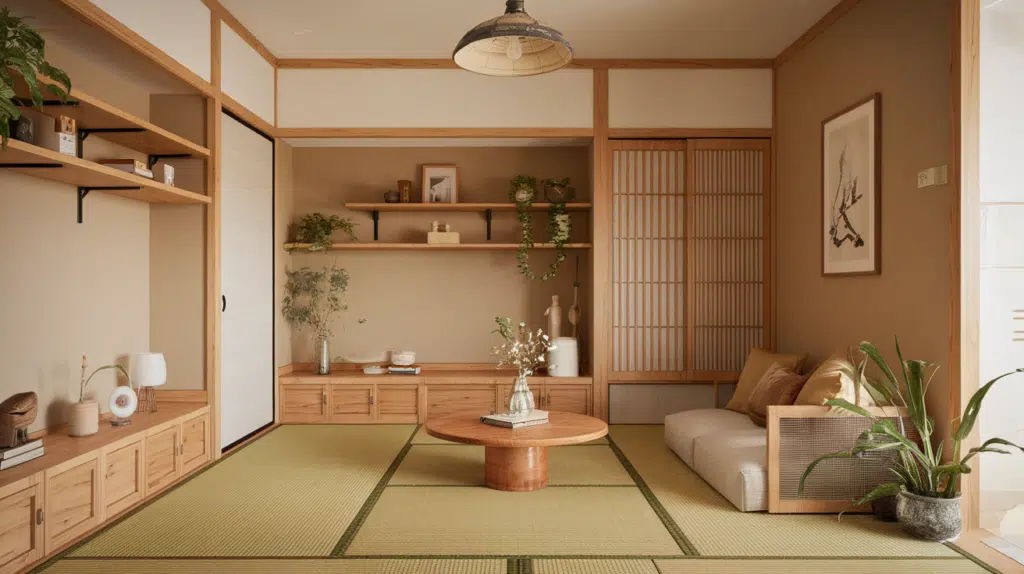
Japandi combines Japanese minimalism with Scandinavian warmth. This style uses clean lines, light wood, soft fabrics, and earthy tones.
The result feels cozy but uncluttered, simple but stylish. It’s perfect for anyone who wants the calm of Japanese design with a slightly softer, more modern touch.
21. Subtle Garden Walls
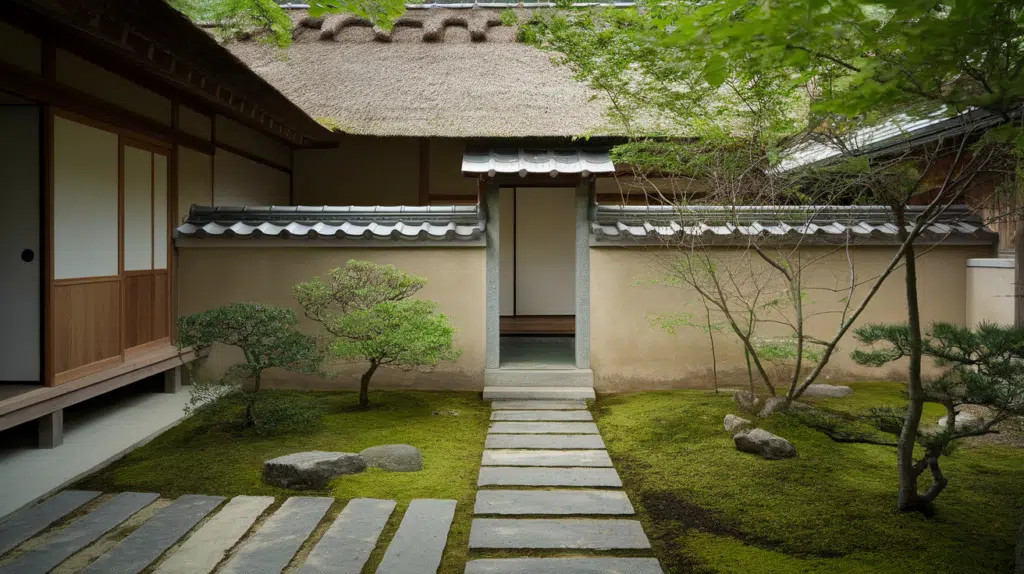
Japanese homes often use low or partial garden walls to create privacy without blocking light or views. These walls guide the eye toward plants, stone paths, or small features that feel calming.
They also help soften the transition from public to private space. Even a narrow yard feels intentional with this design approach
22. Warm Lantern-Style Lighting
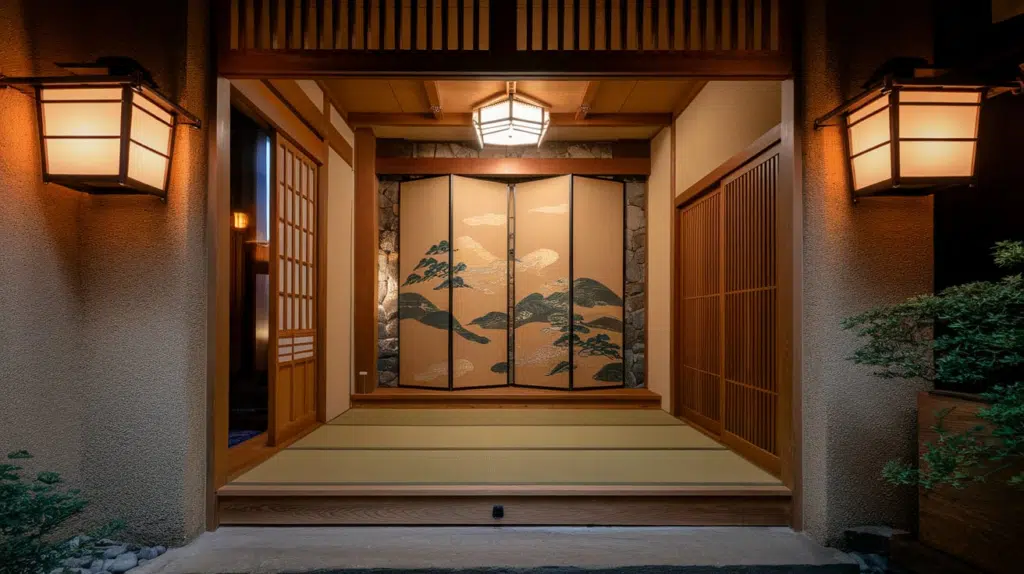
Lantern-inspired lights create soft, welcoming entryways. They remind visitors of traditional Japanese streets and temples but fit perfectly with modern homes too.
Their warm glow sets a peaceful mood before you even step inside. They’re especially stunning when paired with stone steps or wooden siding.
23. Sunken Living Rooms
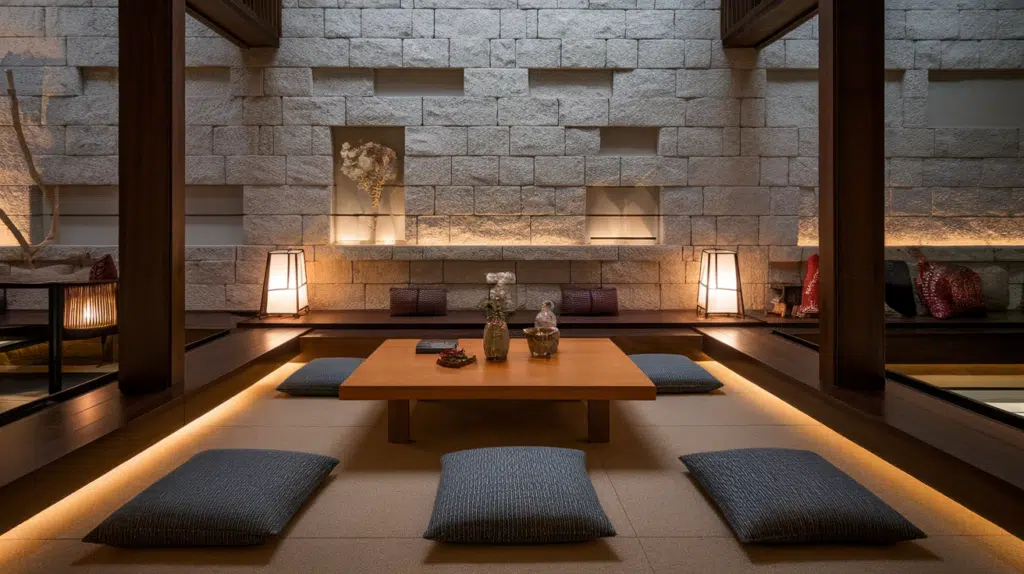
A sunken living area, often seen in modern Japanese spaces, creates a cozy, grounded zone for relaxing. This small level change helps define the space without adding walls.
It’s perfect for reading, socializing, or enjoying quiet moments. Soft cushions, low tables, and warm lighting complete the atmosphere.
24. Quiet Corners
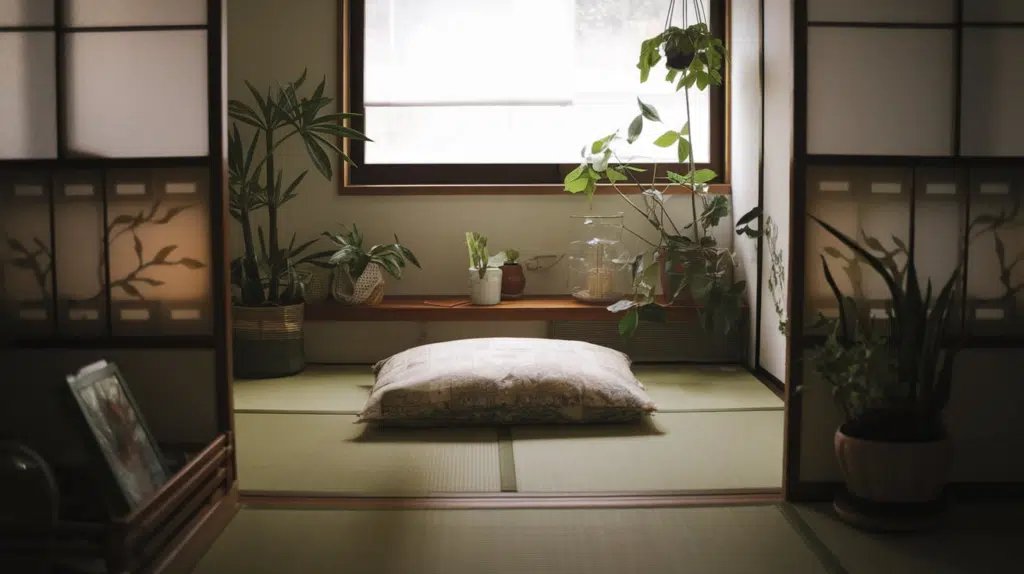
Even small homes often include a peaceful corner for reading, journaling, or quiet time. This space may sit near a window or garden for natural relaxation.
Simple decor, like a floor cushion, low table, or small plant, keeps the area calm. It shows how design can support mindfulness without needing much space.
25. Modular Furniture
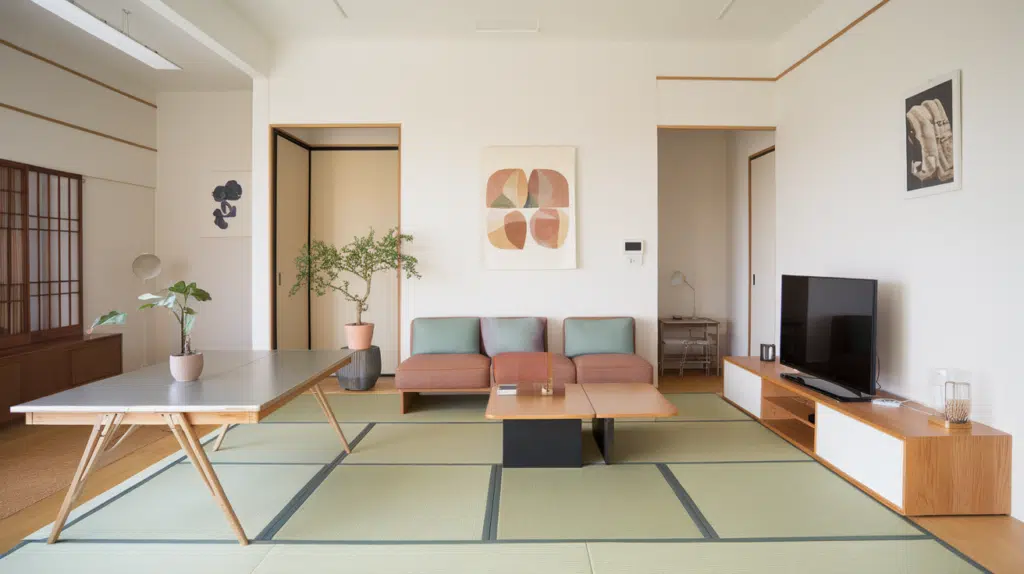
Japanese homes often use modular pieces that can shift based on the activity, like stackable seating, folding tables, or movable benches.
This makes small spaces feel more flexible and reduces clutter. It also allows living rooms to transform into guest rooms or study zones with little effort.
26. Loft Spaces
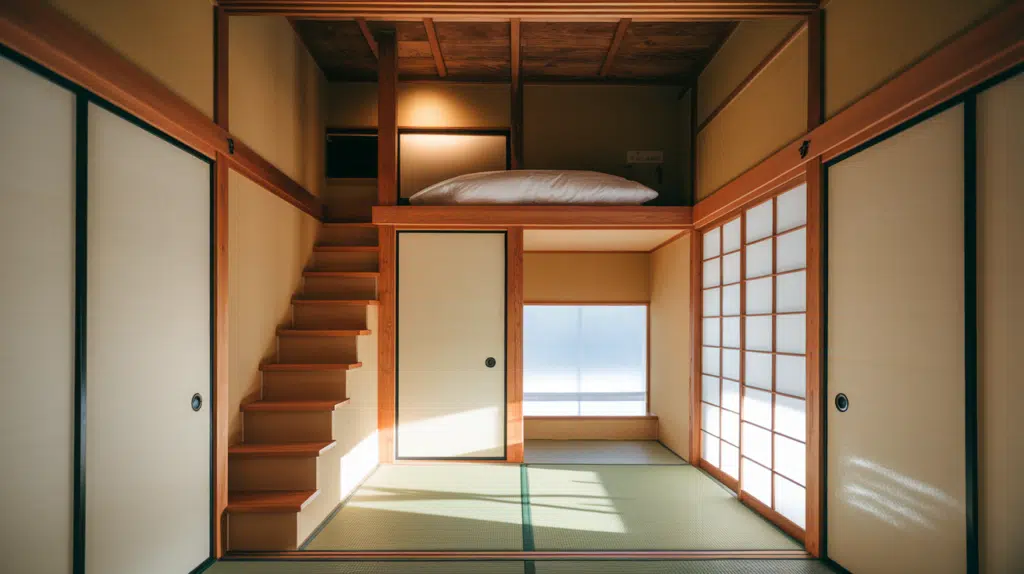
Lofts are popular in modern Japanese homes because they make great use of vertical height. These tucked-away spaces add privacy without taking up valuable floor area.
They can be used for sleeping, studying, or extra storage. With the right lighting and wood finishes, lofts feel warm and comfortable.
27. Open Shelving
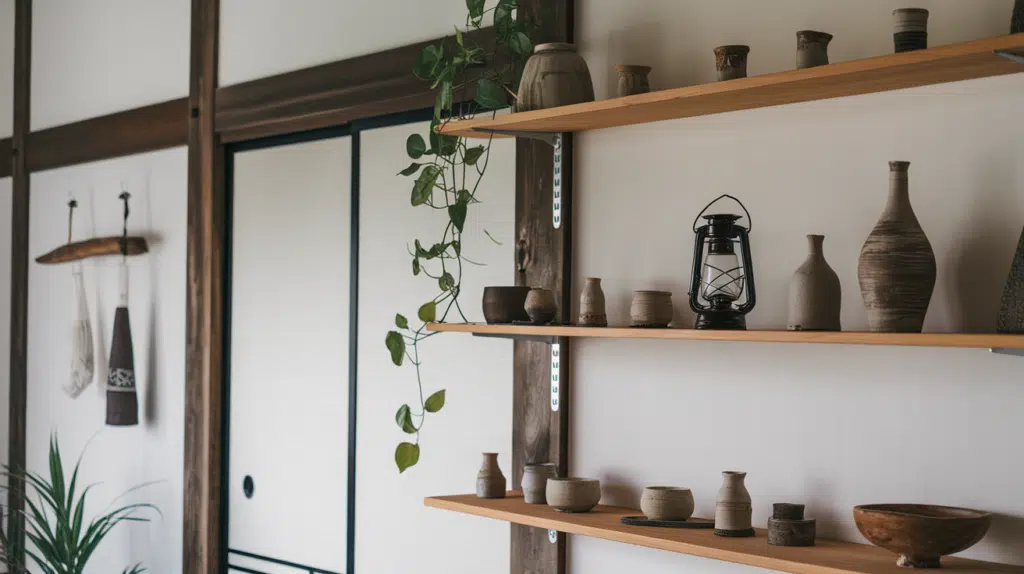
Instead of bulky cabinets, many Japanese interiors use open shelves to display a few meaningful items. This adds personality while keeping clutter low.
Natural materials like wood and pottery bring warmth to the shelves. The goal is not to fill them, but to choose pieces that tell a quiet story.
28. Stone Pathways
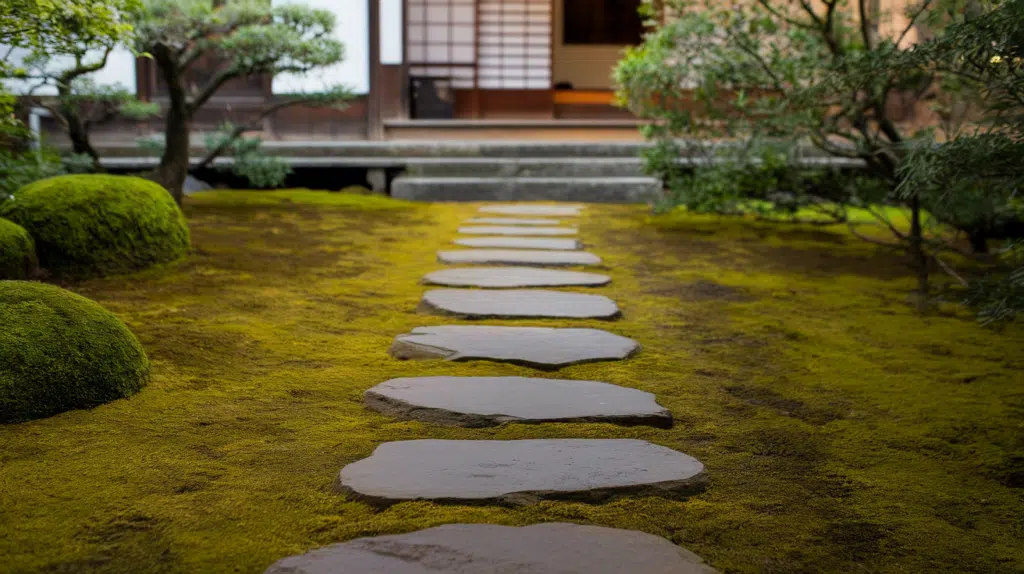
Outdoor entry paths in Japan often use stepping stones or textured gravel to create a gentle arrival experience. The uneven texture slows your pace, encouraging a moment of calm before entering the home.
Combined with plants and soft lighting, the path feels like a mini garden walk. It sets a peaceful tone right from the doorstep.
29. Earth-Toned Color Palettes
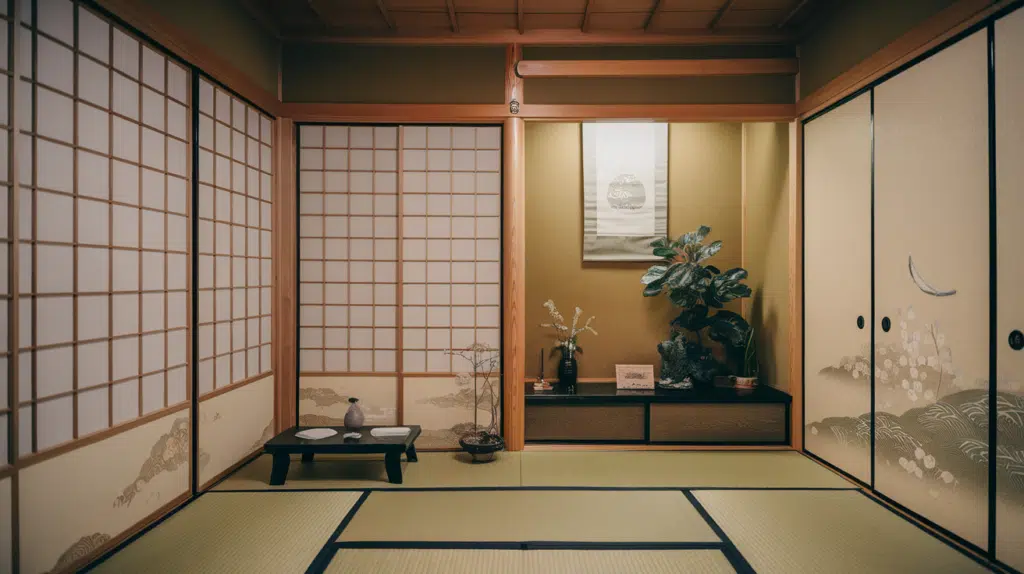
Japanese homes rely on soft, earthy colors – browns, creams, greens, and warm greys. These tones make the interior feel grounded and soothing. They also pair well with wood and stone finishes.
The overall effect is a space that feels warm, simple, and easy to relax in.
30. Low Window Seats
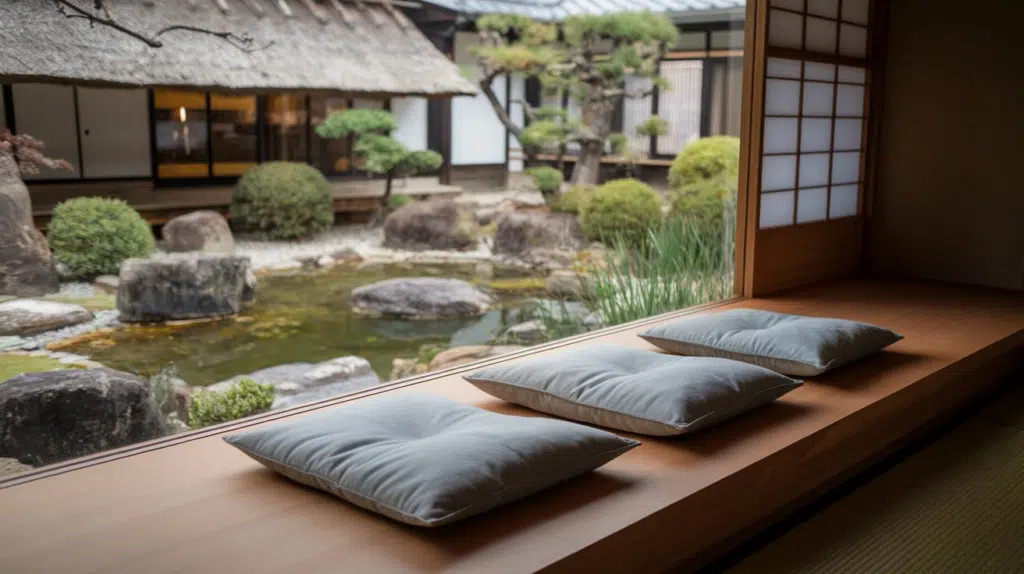
Window seats placed low to the ground create a relaxing spot to enjoy the view. This design follows the Japanese idea of staying close to nature and keeping furniture simple.
Soft cushions and natural wood make the seat feel cozy. It’s perfect for reading or morning tea.
Adapting Japanese Style to Your Home
Adapting the Japanese style to your home is easier than it looks. You can create a calm, balanced feel by making small changes that work with your current space.
- Materials: Use natural materials like wood, bamboo, and stone
- Clutter Tip: Keep surfaces clear and remove items you don’t need
- Space: Use sliding dividers or curtains to create flexible rooms
- Nature: Add plants or small garden moments for a softer feel
- Lighting: Choose warm, soft lighting instead of harsh overhead bulbs
- Furniture: Pick low, simple furniture for a grounded, cozy look
- Budgeting: Start with small upgrades, like lighting, rugs, or decor, before bigger changes
- Planning Tip: Update one room at a time so the style grows naturally
These small touches can make your home feel calmer, more open, and more inviting, no matter its size or layout.
Conclusion
Japanese-style homes show us that simple design can still feel warm, welcoming, and full of personality.
By focusing on natural materials, clean lines, and thoughtful spaces, you can bring the same calm energy into your own home.
Even small changes, like softer lighting, a bit of greenery, or better flow, can make a big difference in how a space feels.
As you go through these ideas, take your time and choose what truly fits your lifestyle. The goal isn’t to copy every detail but to create a home that feels peaceful and comfortable for you.

With a Master in Architectural Studies from University of Pennysylvania, Marwa Haydar has pioneered living spaces since 2005. Her expertise, initially honed in a prestigious architectural firm, is evident in her approach to creating environments. Marwa became part of our team in 2019 and has since been a driving force in our home improvement section, known for her practical yet stylish solutions. She’s been spearheading our design workshops since then, infusing her passion for teaching into her work. In her leisure time, Marwa enjoys exploring historic architecture and is an enthusiastic pottery hobbyist, further enriching her understanding of form and texture.