
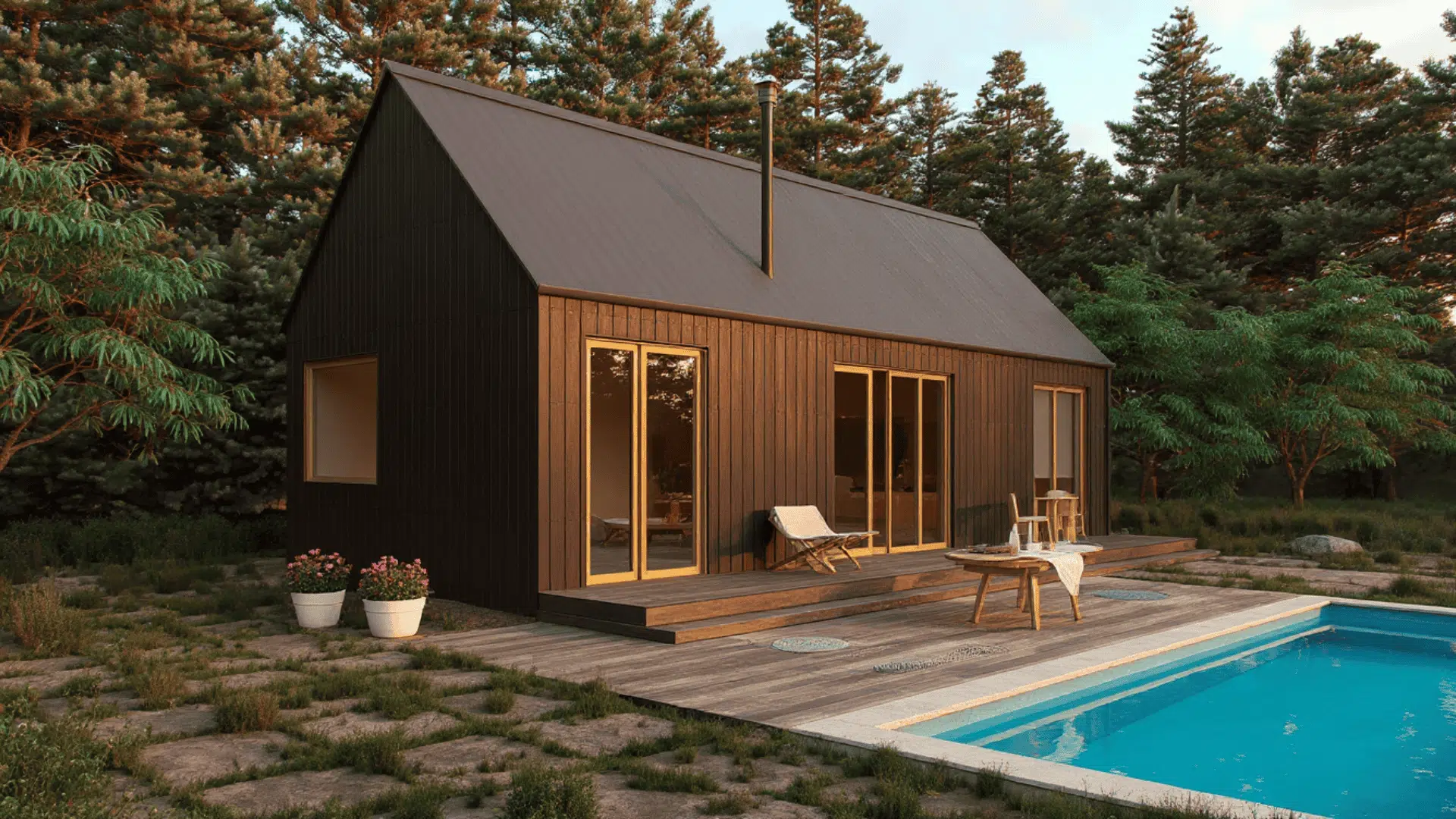

A home that borrows its bones from the countryside yet lives entirely in the present; that’s the quiet contradiction at the heart of a modern barn house.
Clean lines meet wide-open spaces. Traditional forms shed their rural past for something sleeker, more intentional.
What was once built for function alone now serves a different purpose: thoughtful living, stripped of excess.
The structure stays simple.
The details matter more.
And somewhere between the high ceilings and the uncluttered rooms, a question emerges: how did a building designed for hay and livestock become one of the most sought-after residential styles today?
What Is a Modern Barn House?
A modern barn house is a home design based on the shape of traditional barns, updated for everyday living.
It usually features a simple structure, sloped roofs, and wide open interiors.
The focus is on practical space planning, natural light, and easy movement between rooms.
While inspired by farm buildings, these homes are built for comfort, using current construction methods and materials suited for modern residential needs.
Key Design Features of a Modern Barn House
Modern barn houses follow a clear design approach that balances form and function.
Here are the defining features that shape their overall look and usability:
- Exterior Structure: The exterior is marked by strong rooflines, elongated forms, and minimal detailing, creating a bold yet restrained appearance rooted in traditional barn proportions.
- Interior Layout: Inside, spaces are arranged to support flexibility, with fewer partitions, vertical volume, and layouts that allow easy adaptation for changing household needs.
- Window and Light Planning: Openings are placed to bring in steady daylight, reduce reliance on artificial lighting, and create a strong visual connection between indoor spaces and surroundings.
Together, these features create a home that feels structured, practical, and well-suited for modern living without unnecessary complexity.
Modern Barn House Design Types
Modern barn house design types vary based on layout, scale, and functional needs, offering flexibility for different lifestyles and site conditions. These options help shape both appearance and usability.
Below are common design types often reflected in modern barn house plans:
1. Single-Story Modern Barn House

This design focuses on horizontal living with all essential spaces placed on one level. It supports easy movement, reduced stair usage, and practical room connections.
The layout works well for larger plots and suits long-term residential needs where accessibility and simplicity are priorities.
2. Two-Story Barn-Style Home

A two-level barn-style home separates shared living areas from private rooms through vertical planning.
This structure allows efficient land use while maintaining a compact footprint. Upper floors are commonly used for bedrooms, creating quieter zones without affecting daily living functions below.
3. Open-Concept Barn House

This design removes unnecessary partitions to create wide, connected living areas. Kitchens, dining spaces, and lounges flow together, supporting flexible furniture placement and adaptable use.
The layout encourages better airflow and makes interior spaces feel more expansive without increasing the building footprint.
4. L-Shaped Modern Barn House

An L-shaped layout divides the structure into two connected wings, often separating living and sleeping zones.
This configuration helps define outdoor areas such as courtyards while maintaining privacy. It works well on wider sites and supports controlled circulation between different sections of the home.
5. Compact Modern Barn House

This design prioritizes essential spaces within a smaller footprint. Rooms are carefully planned to avoid wasted space, making it suitable for limited land or secondary housing.
Storage and multi-use zones are integrated to support everyday living without unnecessary expansion.
6. Luxury Modern Barn House

A luxury-focused design increases scale and spatial comfort while retaining a simple structural form.
Larger rooms, higher ceilings, and premium material choices define this type. It suits homeowners seeking spacious living without overly complex architectural detailing.
Curious how barn-inspired homes compare with other classic styles? Take a look at Dutch Colonial house designs to see how structure and history shape residential architecture in different ways.
Common Materials Used in a Modern Barn House
Material selection plays a major role in shaping durability, maintenance needs, and overall performance.
Understanding commonly used options helps avoid design errors and supports better long-term planning.
Exterior Materials
Exterior materials are chosen for strength, weather resistance, and long-term stability rather than surface detail.
Primary Exterior Options:
- Wood siding for natural texture and warmth
- Metal panels for durability and low upkeep
- Concrete surfaces for structural support
- Stone accents for added resilience
Interior Materials
Interior selections focus on comfort, longevity, and ease of maintenance within daily living spaces.
Primary Interior Options:
- Exposed wood beams for structural definition
- Hardwood or engineered flooring for durability
- Neutral wall finishes for visual balance
- Glass elements to support light distribution
Tip: Selecting materials based on climate, maintenance effort, and long-term use helps create a consistent structure that remains practical over time without frequent updates.
Below are common mistakes made when selecting materials:
- Mixing too many finishes, leading to visual inconsistency
- Choosing appearance over weather suitability
- Using rare materials that increase maintenance demands
Pros and Cons of a Modern Barn House
The table below presents a balanced view of the advantages and limitations associated with a modern barn house to support informed planning and design decisions.
| Pros | Cons |
|---|---|
| Simple structural form allows efficient construction | Open interiors may increase heating and cooling demands |
| Open layouts support flexible space usage | Sloped roofs can raise construction costs |
| High ceilings improve airflow and comfort | Limited exterior variation may not suit all preferences |
| Suitable for rural and semi-rural plots | Not ideal for compact urban locations |
| Clean design supports long-term usability | Custom features can increase overall budget |
Overall, a modern barn house offers practical design benefits but requires careful planning to manage climate control, costs, and site suitability effectively.
How to Make a Modern Barn House Budget-Friendly
Building a modern barn house on a controlled budget depends on practical choices made early in the planning stage.
Focusing on efficiency, simplicity, and long-term use can help limit unnecessary expenses without affecting comfort or usability.
- Choose a compact footprint to reduce material and labor needs
- Use standard structural layouts instead of custom modifications
- Limit roof complexity to control framing and installation costs
- Select readily available materials to avoid sourcing delays
- Plan flexible interior spaces to reduce future remodeling expenses
With careful planning and realistic design decisions, a modern barn house can remain cost-efficient while meeting everyday living requirements and long-term maintenance goals.
Modern Barn House vs Traditional Farmhouse
A modern barn house is better suited to contemporary living needs, while a traditional farmhouse reflects older residential styles and layouts.
When comparing the two, many Farmhouse Ideas focus on comfort, functionality, and visual appeal.
| Aspect | Modern Barn House | Traditional Farmhouse |
|---|---|---|
| Overall Structure | Simple form with clean lines | Detailed form with decorative elements |
| Interior Planning | Open and flexible layouts | Defined rooms and fixed layouts |
| Material Use | Modern and industrial finishes | Natural and classic finishes |
| Design Purpose | Focused on efficiency and usability | Focused on tradition and character |
| Maintenance Needs | Generally lower with modern methods | Higher due to detailing and age-based styles |
Both styles offer distinct advantages.
The right choice depends on space needs, maintenance preferences, and long-term living goals rather than appearance alone.
Final Thoughts
A modern barn house isn’t just architecture; it’s a deliberate choice.
You get structural honesty without the clutter, space without the waste, and flexibility that grows with your needs.
From single-story spreads to compact builds, the design adapts while maintaining its core identity. Material choices matter.
Layout decisions carry weight. Budget planning separates realistic projects from abandoned ones.
Whether you’re drawn to open concepts or L-shaped configurations, the principle stays consistent: simplicity that works.
These homes don’t chase trends; they outlast them. So if you’ve been considering this style, now you know what separates good modern barn house ideas from poorly executed ones.
What’s your take?
Share your experience or favorite design approach below.
Frequently Asked Questions
Is a Barn House Cheaper to Build?
A barn house can be cheaper to build because of its simple structure and open layout, which reduces framing complexity. Costs still vary based on materials, location, labor rates, and local building requirements.
How Much Does it Cost to Build a 2000 Sq Ft Barn?
The cost to build a 2000 sq ft barn-style home typically ranges widely depending on finishes, structural systems, and region. Expenses increase with custom interiors, insulation standards, utilities, and compliance with residential building codes.
Can You Legally Live in a Barn?
Living in a barn is legal if the structure meets the requirements of residential zoning and building codes. It must include approved utilities, safety features, and occupancy permits required by local authorities.

Holding a Master’s in Construction Management from Purdue University, William Ray has dedicated more than two decades to studying and applying construction principles. His professional journey includes a tenure with a prominent construction firm, where he specialized in project management and building technologies. William brought his knowledge to our team, providing in-depth insights into practical construction techniques. As the leader of our beginner’s guide to building since 2019, he has a knack for breaking down intricate processes into easily digestible content. When not involved in writing or onsite consultations, William enjoys woodworking and volunteering in community building projects, which aligns with his passion for hands-on construction and community service.


