
Mold and mildew are often used interchangeably, but they are not the same thing. Both are types of fungi that grow in damp environments, yet they differ in appearance, growth patterns, and the level of damage they can cause.
Knowing how to tell mold and mildew apart is important for protecting your health and your home.
While mildew typically grows on surfaces and is easier to clean, mold can spread deeper into materials and may require professional removal.
This guide breaks down the key differences between mold and mildew, how to identify each one, and what steps to take if you find them in your home.
What Is Mold?
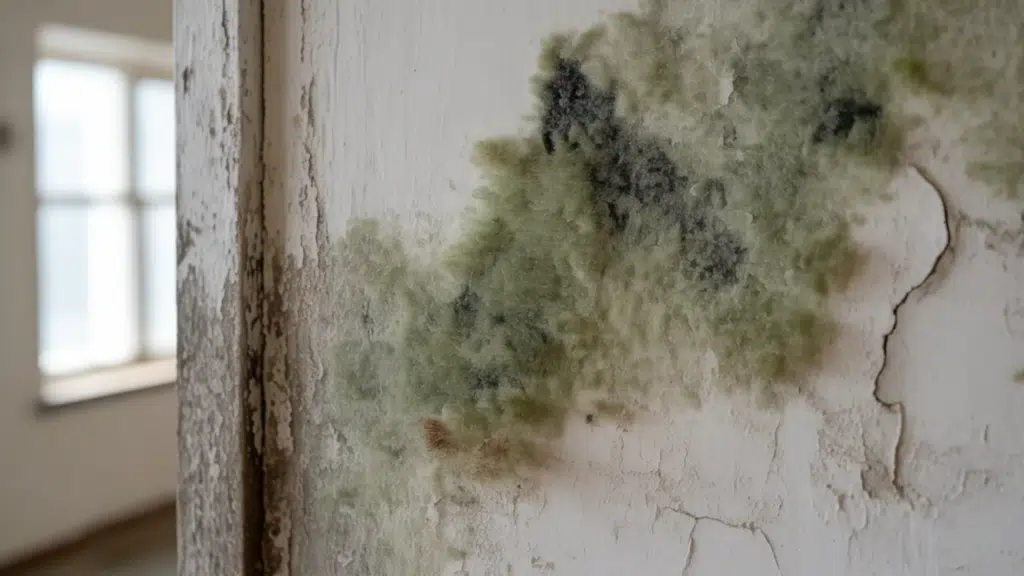
Mold is a multicellular fungus that grows in damp environments and spreads through the air via spores. It feeds on organic materials like wood, drywall, and fabric, allowing it to expand quickly when moisture is present.
In the mold vs. mildew comparison, mold is typically more invasive and can cause more serious structural damage.
Appearance and Color
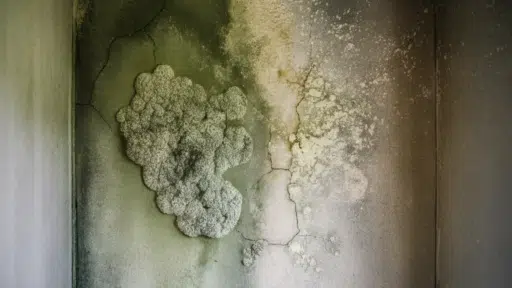
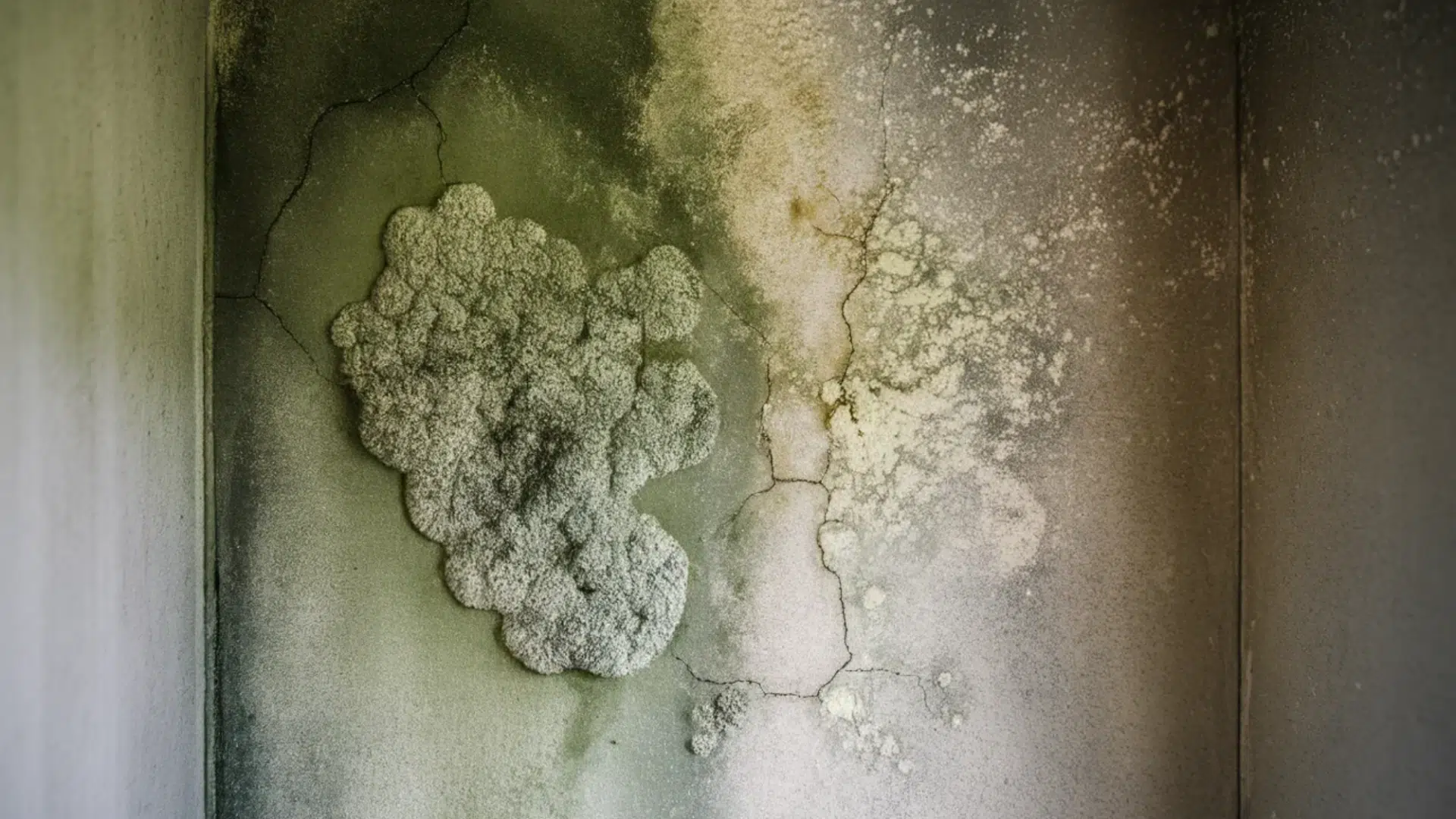
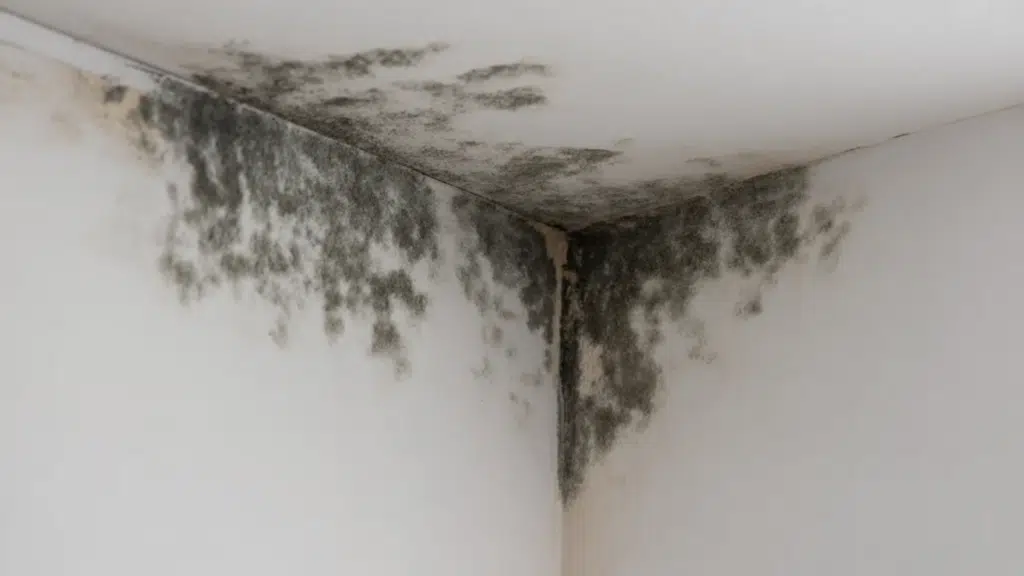
Mold is a type of fungus that appears in darker shades such as black, green, blue, or brown. It often has a fuzzy, slimy, or patchy texture and spreads in irregular shapes.
It may also darken over time as colonies mature and expand across surfaces. If left untreated, it can penetrate porous materials like drywall and wood, making removal more difficult.
Where It Grows
Mold grows in damp, humid environments with organic material to feed on. Common areas include basements, bathrooms, attics, drywall, wood, carpet, and behind walls, where moisture can be trapped.
Leaks, flooding, or high indoor humidity often trigger mold growth. Poor ventilation and condensation around pipes or windows can also create ideal conditions for rapid spread.
Even small, unnoticed leaks can support mold growth within 24 to 48 hours. Once established, mold can continue spreading as long as moisture remains present.
Health and Property Risks
Mold can cause allergic reactions, respiratory irritation, and asthma flare-ups. Some species may produce mycotoxins that pose more serious health concerns.
Beyond health risks, mold can damage drywall, weaken wood, and compromise structural materials, making it more destructive in the mold vs mildew comparison.
If left untreated, it can spread quickly and significantly increase remediation costs.
What Is Mildew?
Mildew is a surface-level fungal growth that develops in damp, humid environments. It spreads across moist areas but typically remains on the surface rather than penetrating deeply into materials.
It is often one of the first signs of excess moisture problems inside a home.
Appearance and Texture
Mildew is also a fungus, but it typically appears white, gray, or light yellow. It has a flat or powdery texture and grows in more uniform patterns. In the mold vs mildew discussion, mildew is generally lighter in color and easier to remove.
It usually remains on the surface of materials rather than penetrating deeply into them. Because of this, mildew can often be cleaned with common household solutions if caught early.
However, persistent moisture can cause it to return quickly if the underlying issue is not addressed.
Where It Grows
Mildew commonly develops on damp surfaces such as shower walls, windowsills, tile grout, and fabrics. It prefers high humidity and surface moisture but usually does not penetrate deeply into materials.
It often forms in areas with limited airflow, especially bathrooms and laundry rooms. Condensation buildup can accelerate its growth, particularly on smooth surfaces.
While it spreads quickly in moist areas, it is typically easier to clean than deeper fungal growth. Addressing ventilation and moisture control helps prevent it from returning.
Health Impact
Mildew can cause mild respiratory irritation or allergic reactions, especially in sensitive individuals.
However, compared to mold vs mildew health risks, mildew is usually less severe and less likely to cause long-term structural damage.
Some people may experience symptoms such as sneezing, coughing, or itchy eyes when exposed. Prolonged exposure in poorly ventilated spaces can worsen discomfort over time.
Prompt cleaning and moisture control can significantly reduce the risk of health concerns.
Mold vs Mildew: Key Differences
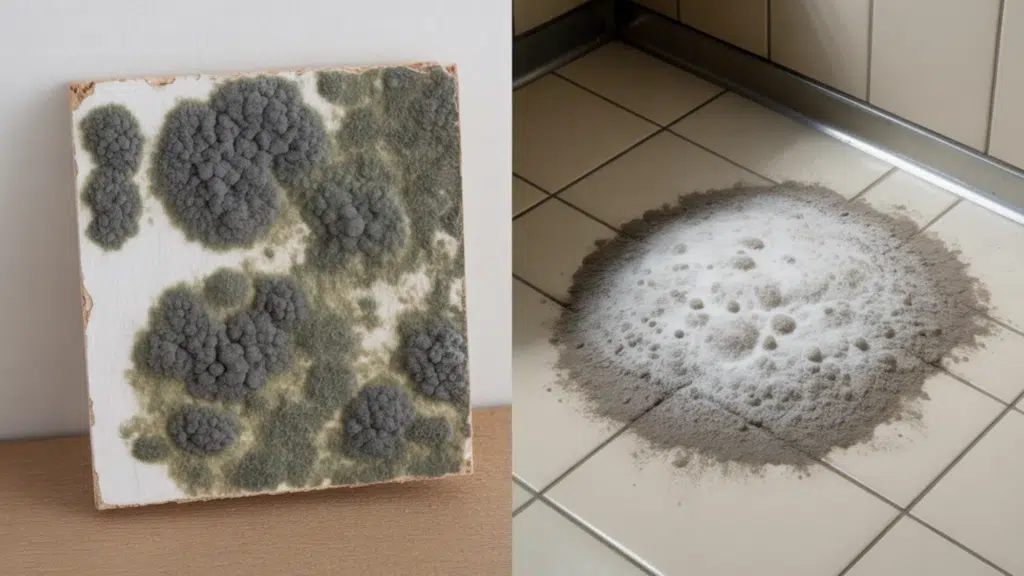
Understanding the difference between mold vs mildew is important for proper identification and treatment. While both grow in moist environments, they vary in appearance, growth behavior, damage potential, and removal methods.
The table below highlights the key distinctions to help you quickly tell them apart.
| Basis | Mold | Mildew |
|---|---|---|
| Color and Texture | Dark colors such as black, green, blue, or brown; often fuzzy, slimy, or thick | White, gray, or light yellow; usually powdery or flat |
| Growth Pattern | Irregular patches that spread aggressively | Flat or circular patterns that remain more contained |
| Surface vs Deep Growth | Penetrates porous materials like drywall and wood | Stays on the surface of materials |
| Damage Potential | Can rot wood, stain walls, and weaken structural components | Mostly cosmetic surface staining |
| Health Risk Level | Higher risk of allergic reactions and respiratory issues | Generally milder respiratory irritation |
| Removal Difficulty | May require professional remediation for larger areas | Often removable with household cleaners and ventilation |
How to Prevent Mold and Mildew?
Preventing mold vs mildew problems starts with controlling moisture and improving airflow inside your home. Since both fungi grow in damp conditions, simple DIY maintenance steps can significantly reduce the risk of growth.
Step 1: Control Indoor Humidity
Start by keeping indoor humidity below 50 percent. You can use a dehumidifier in basements or other humid areas and run air conditioning during warm months to maintain balanced moisture levels.
Monitoring humidity with a simple hygrometer can help you stay ahead of potential issues. In particularly damp climates, consider using moisture-absorbing products in closets and storage areas.
Keeping interior doors open can also help improve air circulation and prevent trapped humidity that encourages mold vs mildew growth.
Step 2: Fix Leaks Immediately
Next, fix leaks as soon as they appear. Repair dripping pipes, roof leaks, or faulty appliances promptly, and dry any water damage within 24 to 48 hours to prevent fungal growth.
Even small, unnoticed leaks can create ideal conditions for mold vs mildew to develop. Regularly inspect under sinks, around water heaters, and near windows for hidden moisture.
Sealing cracks in walls or foundations can also prevent water intrusion that may lead to long-term problems.
Step 3: Improve Ventilation
Improving ventilation is equally important. Use exhaust fans in bathrooms and kitchens, open windows when possible, and ensure attics and crawl spaces have proper airflow.
Reducing condensation by insulating cold pipes and wiping down moisture-prone surfaces will further lower the risk. Make sure exhaust fans vent outside rather than into attics, where moisture can accumulate.
Rearranging furniture slightly away from walls can also improve air circulation and reduce trapped humidity that contributes to mold vs mildew growth.
Step 4: Reduce Condensation
Insulating cold pipes helps prevent condensation from forming when warm air comes into contact with cooler surfaces.
Without insulation, moisture can drip onto nearby walls or flooring and create ideal conditions for mold vs mildew growth.
Wiping down windows, glass doors, and walls where condensation forms reduces lingering surface moisture that fungi need to develop. Pay close attention to corners and window tracks where water often collects.
If you need to dry clothes indoors, make sure the area is well ventilated by using exhaust fans or opening windows to prevent excess humidity from building up inside your home.
Step 5: Clean and Maintain Regularly
Regularly cleaning bathrooms and kitchens helps remove surface moisture, soap residue, and food particles that can encourage mold vs mildew growth.
Pay special attention to tile grout, sinks, shower corners, and areas behind appliances where moisture tends to linger.
If caulk or grout becomes cracked or moldy, replace it promptly to prevent moisture from seeping beneath the surface. Keeping these areas sealed properly reduces the risk of hidden fungal growth.
It is also wise to avoid installing carpet in high-moisture areas like bathrooms or basements, since carpet can trap moisture and create long-term problems.
At a Glance
Knowing the distinction between these common household fungi (mold vs mildew) helps you respond appropriately and avoid costly mistakes.
Moisture management remains the most effective long-term strategy for preventing recurring growth.
If contamination spreads rapidly, affects large areas, or keeps returning despite your efforts, professional evaluation may be the safest option.
Taking early action not only protects building materials but also supports a healthier indoor environment for everyone in the home.

Tommy Hardy, an alumnus of the Georgia Institute of Technology with a degree in Mechanical Engineering, has been a go-to figure in residential upkeep and innovation for over 18 years. His career commenced in a leading home appliance manufacturing company, where he mastered the intricacies of household systems. Joining our platform in 2020, Tommy quickly became a reader favorite for his practical and easy-to-follow guides. He took the helm of our DIY section in 2019, consistently delivering content that empowers homeowners. Beyond his professional pursuits, Tommy is a passionate gardener and enjoys woodworking, skills enhancing his hands-on approach to home care.