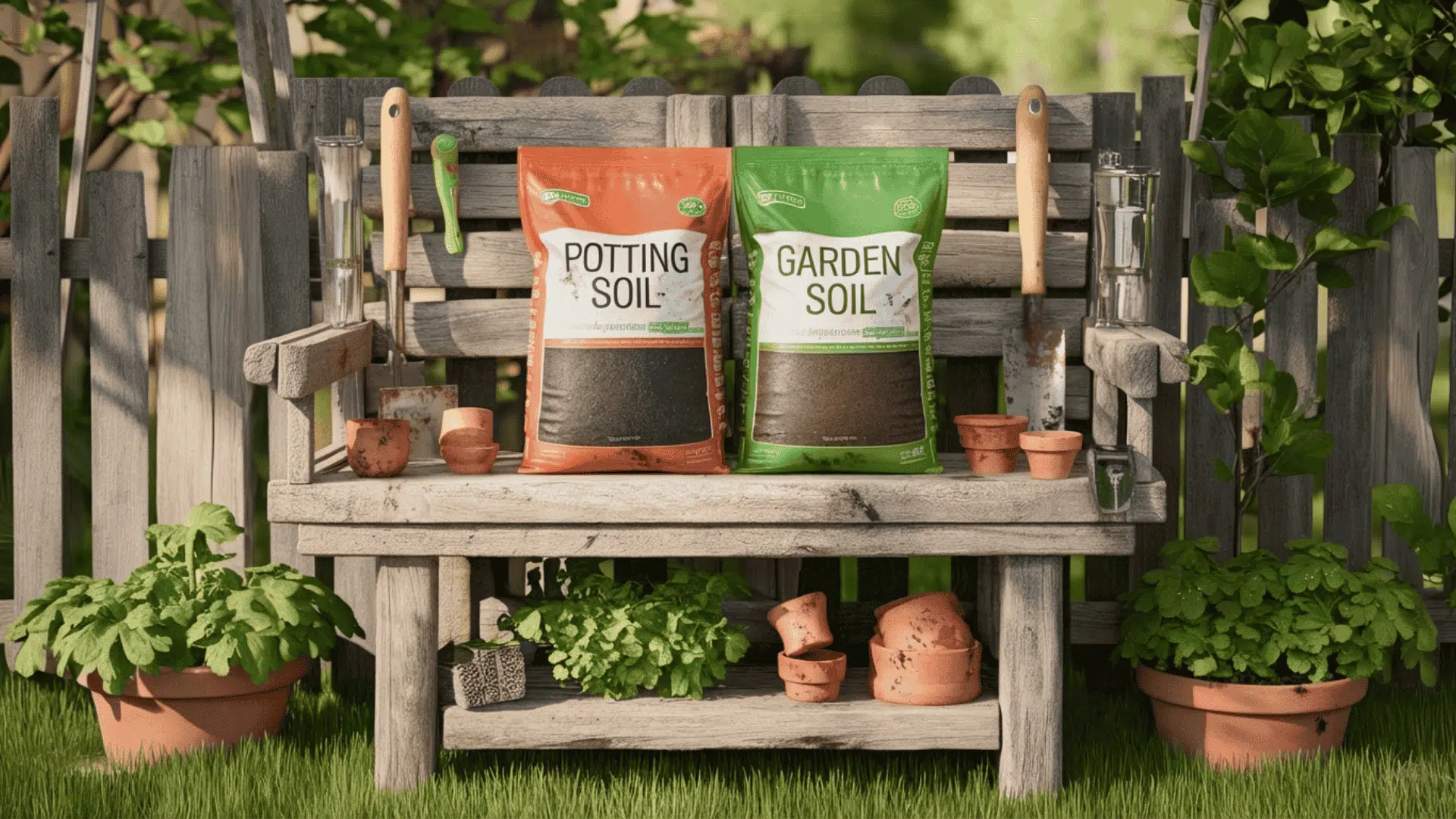

Grab a bag of soil at the garden center, and one question comes up fast: which one is actually right for the job? The debate over potting soil vs garden soil trips up many gardeners.
Some reach for the wrong mix, and their plants pay the price. Wilting containers, compacted roots, poor drainage. It all adds up quickly.
Choosing between garden soil and potting soil is not complicated once the key differences are clear. And knowing how potting mix vs. garden soil compares can make a real difference in how well plants grow.
This blog breaks it all down.
What is Potting Soil?
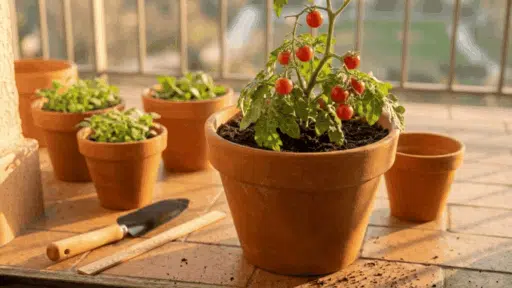
Potting soil is a growing medium specifically formulated for container plants. It is not traditional soil at all.
Most commercial mixes combine peat moss or coco coir, perlite, and composted bark to create a blend that stays light, loose, and well-draining inside pots.
What makes it stand out in the potting mix vs garden soil conversation is its engineered structure. It holds just enough moisture while letting excess water escape freely.
It also tends to be sterile, which means fewer weeds and pathogens to deal with.
This makes it the best choice for tomatoes in grow bags, herbs on a windowsill, or any plant living outside natural ground conditions.
What is Garden Soil?
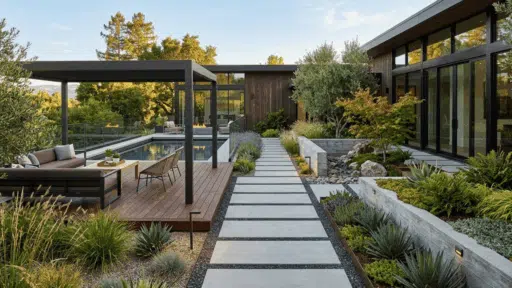
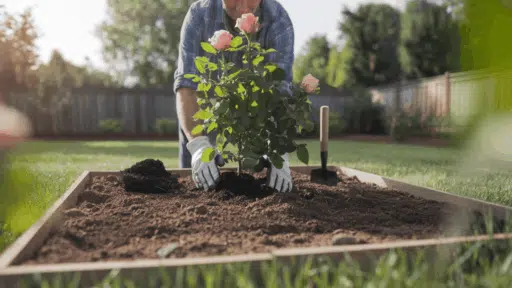
Garden soil is a mineral-based growing medium designed specifically for outdoor use, whether in the ground or in raised beds.
It contains real mineral soil, blended with organic matter such as compost or aged manure, giving it a richer composition suited for open-earth planting.
In the garden soil vs potting soil comparison, garden soil wins outdoors because it integrates with the existing ground over time.
Roots spread naturally, pulling nutrients from a larger volume of earth. It is built for plants that need room, natural drainage, and the benefits of nutrient-rich ground.
Key Difference: Potting Soil vs. Garden Soil
Understanding the core differences between potting soil and garden soil helps gardeners make smarter choices from the start. Here is a breakdown of what sets them apart:
| Basis | Potting Soil | Garden Soil |
|---|---|---|
| Texture and Weight | Light and fluffy, easy to handle in containers | Heavier and denser, suitable for ground use |
| Drainage and Aeration | Drains quickly and allows good air circulation around roots | Retains more moisture, which works well in outdoor beds |
| Nutrient Availability | May require added fertilizers over time | Naturally richer in nutrients |
| Microbial Activity | Usually sterile with fewer microorganisms | Contains beneficial microbes and organisms |
| Best Planting Environment | Ideal for containers and indoor plants | Best for garden beds and outdoor planting |
| Soil Structure and Compaction | Resists compaction in pots, supports root growth | Can be compacted in containers and restricts roots |
When to Use Potting Soil
Potting soil is the right call for any growing situation where drainage and root aeration cannot be left to chance. Containers, indoor spaces, and compact growing setups all depend on it.
1. Container Gardening
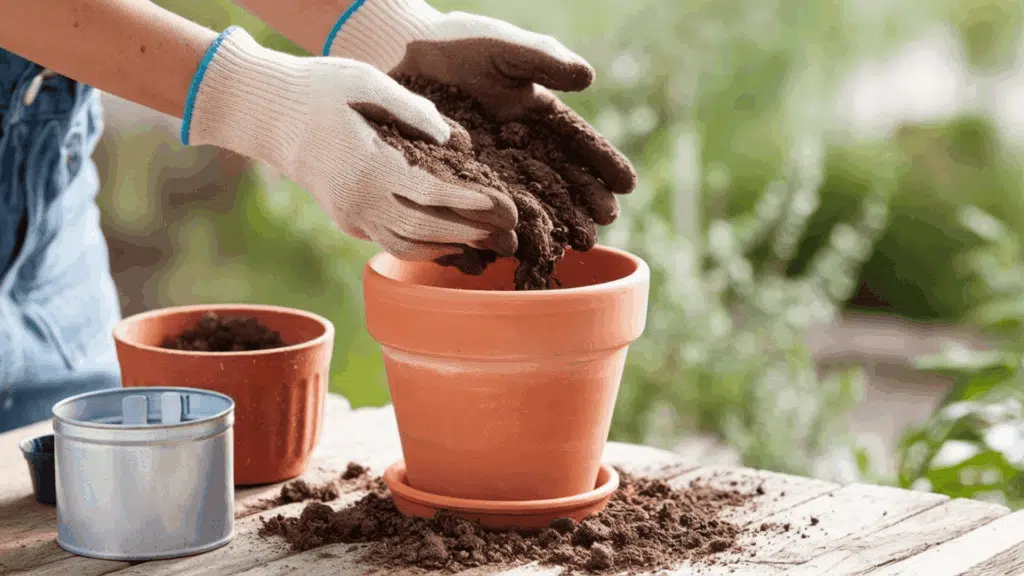
Container plants have no access to natural ground drainage. Potting soil solves this by keeping the mix loose and free-draining, so roots get both moisture and oxygen without sitting in waterlogged conditions.
It also resists compaction inside pots, which matters a lot as plants grow. Garden soil would harden over time, choking root development in the same space.
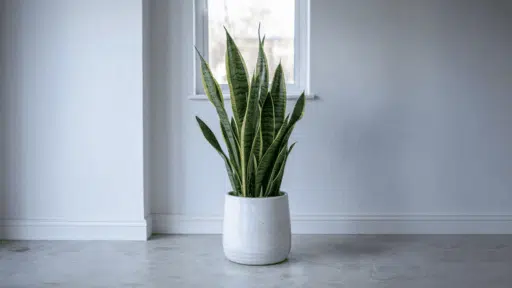
2. Planting Indoors
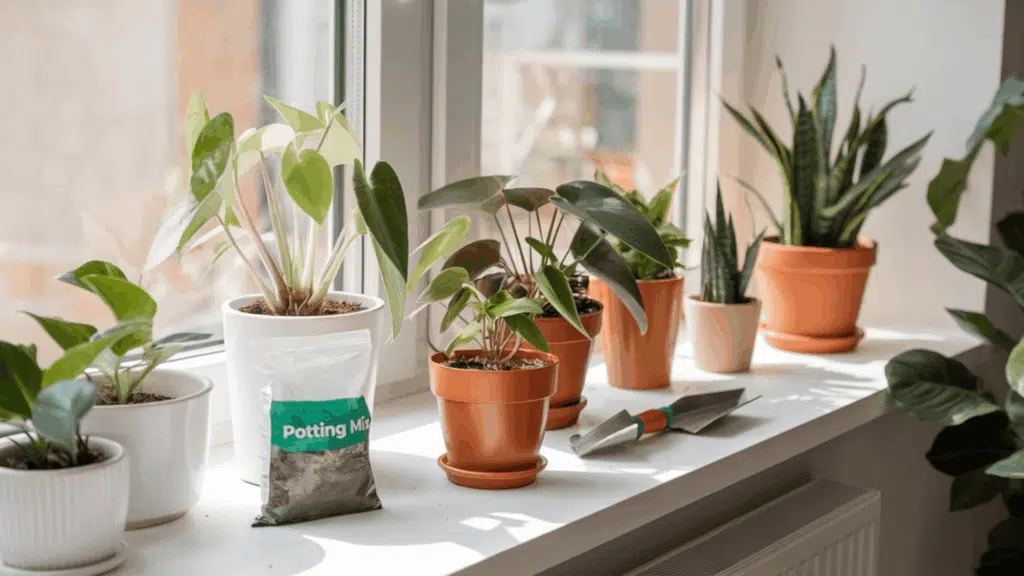
Indoor plants live in a controlled environment with limited airflow and no natural water runoff. Potting soil supports these conditions well by managing moisture levels without becoming soggy or dense.
Using garden soil indoors introduces weeds, pests, and pathogens into the home. A sterile potting mix keeps things clean and gives indoor plants a stable, healthy growing base.
3. Using Starting Seeds
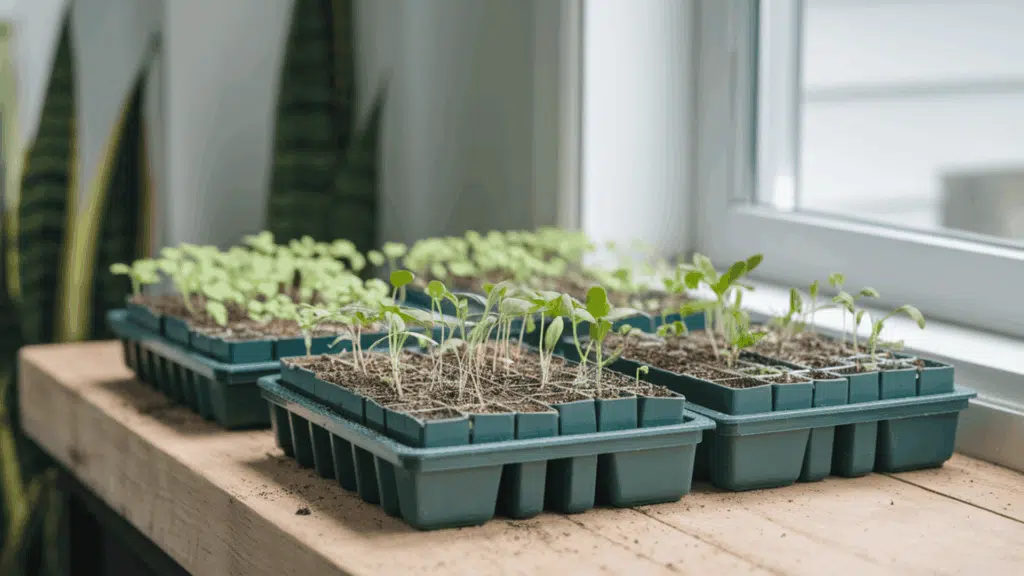
Young seedlings have fragile roots that need a fine, light medium to push through. Potting soil, especially a seed-starting mix, provides exactly that: soft texture, good drainage, and low pathogen risk. Starting seeds in heavy garden soil often leads to poor germination and root damage.
4. Using Hanging Baskets and Vertical Planters
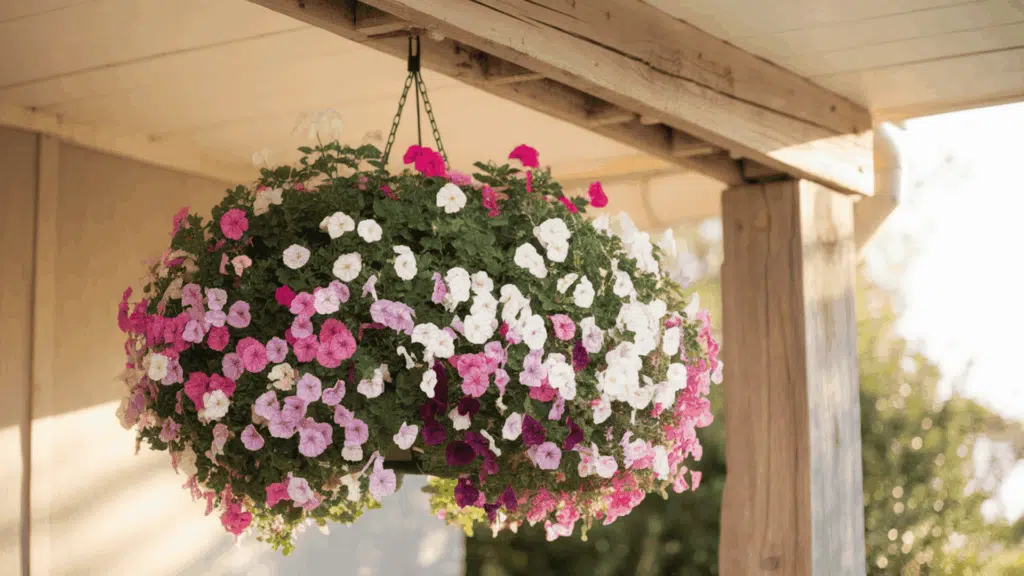
Hanging baskets and vertical planters deal with rapid moisture loss and constant drainage pressure. Potting soil handles both well, holding just enough water to keep plants hydrated between watering sessions.
Weight is another factor here. Potting soil is significantly lighter than garden soil, which keeps hanging structures and wall-mounted planters from becoming too heavy to support safely.
When to Use Garden Soil
Garden soil supports plants grown directly in outdoor beds where roots can spread naturally and access nutrients from the surrounding ground. It is the practical choice for large-scale outdoor growing.
1. In-Ground Vegetable Gardens
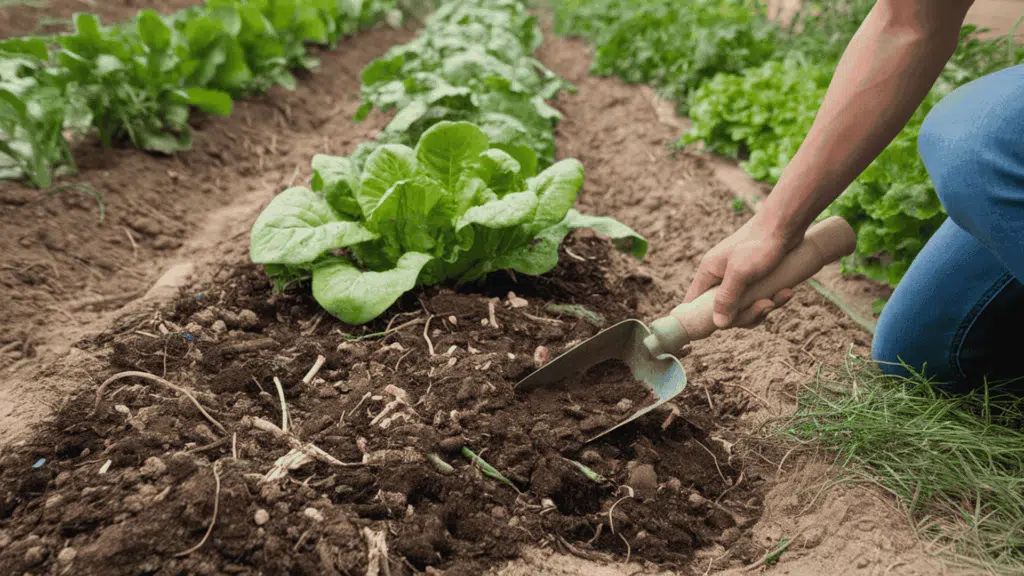
Vegetable plants grown directly in the ground need soil that integrates with the existing earth and improves over time.
Garden soil blended with compost does exactly that, building a fertile base for strong root development. It also supports the beneficial microbial activity that vegetables rely on for nutrient absorption.
Potting soil cannot replicate that kind of living, active growing environment at ground level.
2. Flower Beds and Landscaping Areas
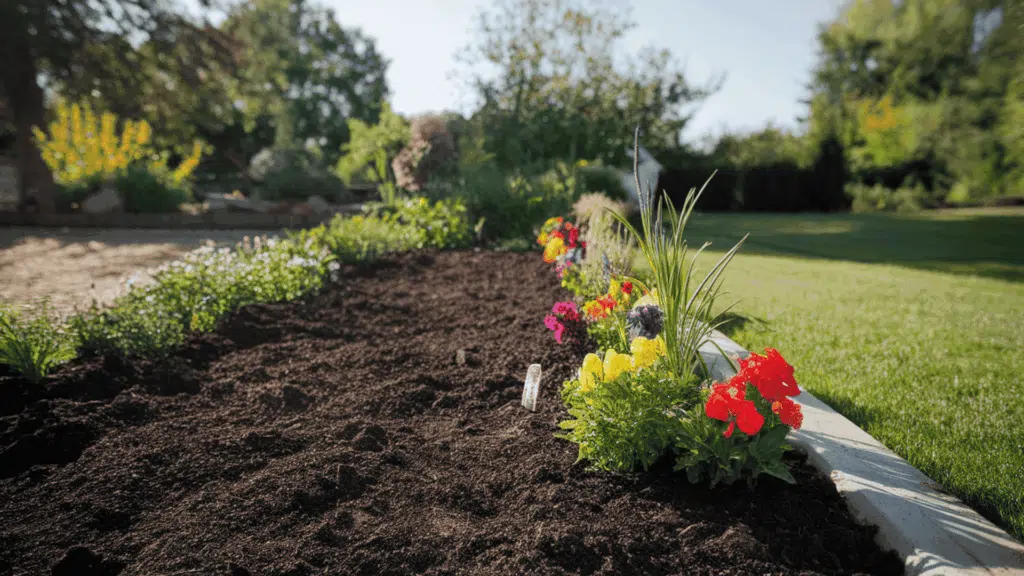
Flower beds cover large surface areas where buying potting soil in bulk would be both costly and impractical. Garden soil is formulated for exactly this kind of wide, open planting space.
It blends into the existing ground and improves soil structure across the entire bed.
3. Raised Beds with Soil Amendments
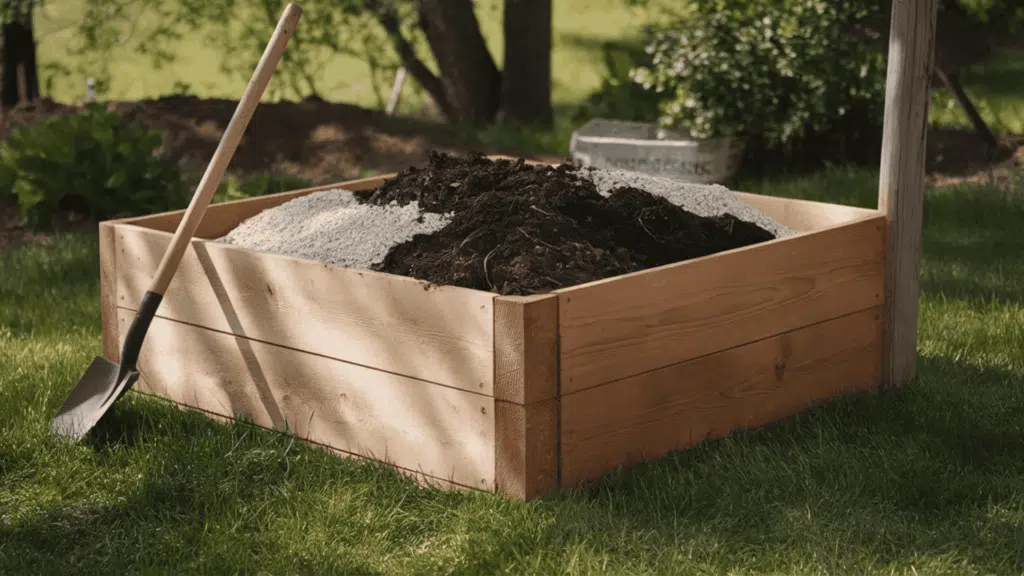
Raised beds benefit from garden soil when it is mixed with compost or other organic amendments. On its own, garden soil can be too dense for raised bed use, but with the right additions, it becomes a productive growing medium.
This combination improves drainage, adds nutrients, and supports healthy root growth. A common ratio is 1 part garden soil, 1 part compost, and 1 part perlite for improved drainage and long-term fertility.
4. Lawn Repair and Ground Leveling
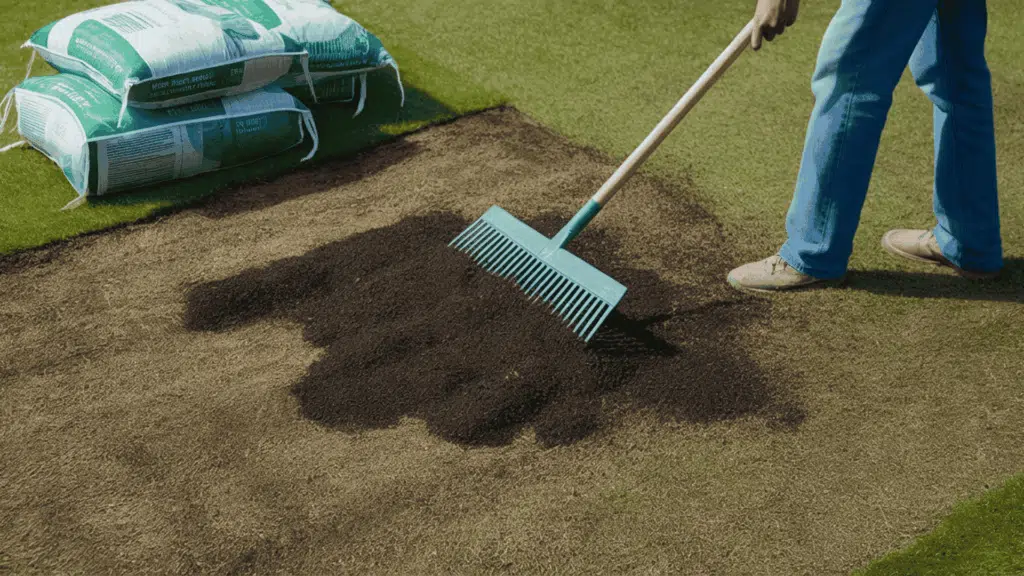
Garden soil is the standard choice for filling low spots, repairing bare patches, and leveling uneven ground. Its density and composition make it well-suited for blending into existing turf and supporting grass regrowth.
Potting soil would not hold up in this situation. It is too light and drains too fast to provide the stable base that lawn repair and ground leveling require.
Cost and Sustainability Considerations
Soil costs add up fast, especially for larger projects. Here is a clear comparison of how potting soil and garden soil stack up:
| Factor | Potting Soil | Garden Soil |
|---|---|---|
| Average cost per bag | Higher cost due to processed ingredients | Lower cost for large areas |
| Quantity required | Used in smaller volumes for containers | Needed in bulk for garden beds |
| Organic options | Peat-free versions available using coco coir as a sustainable alternative | Often mixed with compost or organic matter |
| Environmental impact | Peat harvesting raises concerns as bogs take centuries to regenerate | Choose organic or locally sourced options to avoid synthetic fertilizer damage |
Common Mistakes When Choosing Soil
Even experienced gardeners make soil selection errors that affect plant health. Here are the most common ones to avoid:
- Using garden soil in containers: It compacts quickly, blocking drainage and suffocating roots. It is too dense for any container setup. It is too dense for any container setup.
- Filling raised beds with untreated garden soil only: Straight garden soil in a raised bed can become hard and poorly draining. It always performs better when mixed with compost or organic amendments.
- Ignoring drainage needs of specific plants: Not every plant has the same moisture requirements. Succulents need fast-draining mixes while moisture-loving plants need a medium that holds water longer.
- Assuming all potting mixes perform the same: Potting mixes vary widely in quality. A cheap mix may lack proper aeration or nutrients, leading to slow growth and weak roots.
- Reusing depleted potting soil without improvement: Old potting soil loses structure and nutrients over time. Reusing it without adding compost or fresh mix gives plants a poor start.
Conclusion
Soil choice is not complicated once the basics are clear. The decision comes down to one straightforward question: where is the plant growing?
Containers, indoor setups, and hanging planters call for potting soil. Ground beds, landscaping areas, and lawns need garden soil. That is really the heart of the garden soil vs potting soil discussion.
Matching the right soil to the right environment is one of the simplest ways to see better results. The potting mix vs garden soil choice matters more than most gardeners initially think.

With a Master’s in Landscape Architecture from the University of Virginia, Sophia Stephenson has dedicated the last 20 years to creating and maintaining vibrant outdoor spaces. Her professional journey started in landscape design, where she gained a reputation for innovative and sustainable approaches. Sophia became a part of our editorial team as a freelancer in 2019, offering a fresh perspective on outdoor living. Since 2020, she has been the chief for our outdoor design content, blending aesthetic appeal with environmental stewardship. In her leisure time, Sophia is a keen photographer, capturing the beauty of natural landscapes, a hobby that complements her professional expertise.