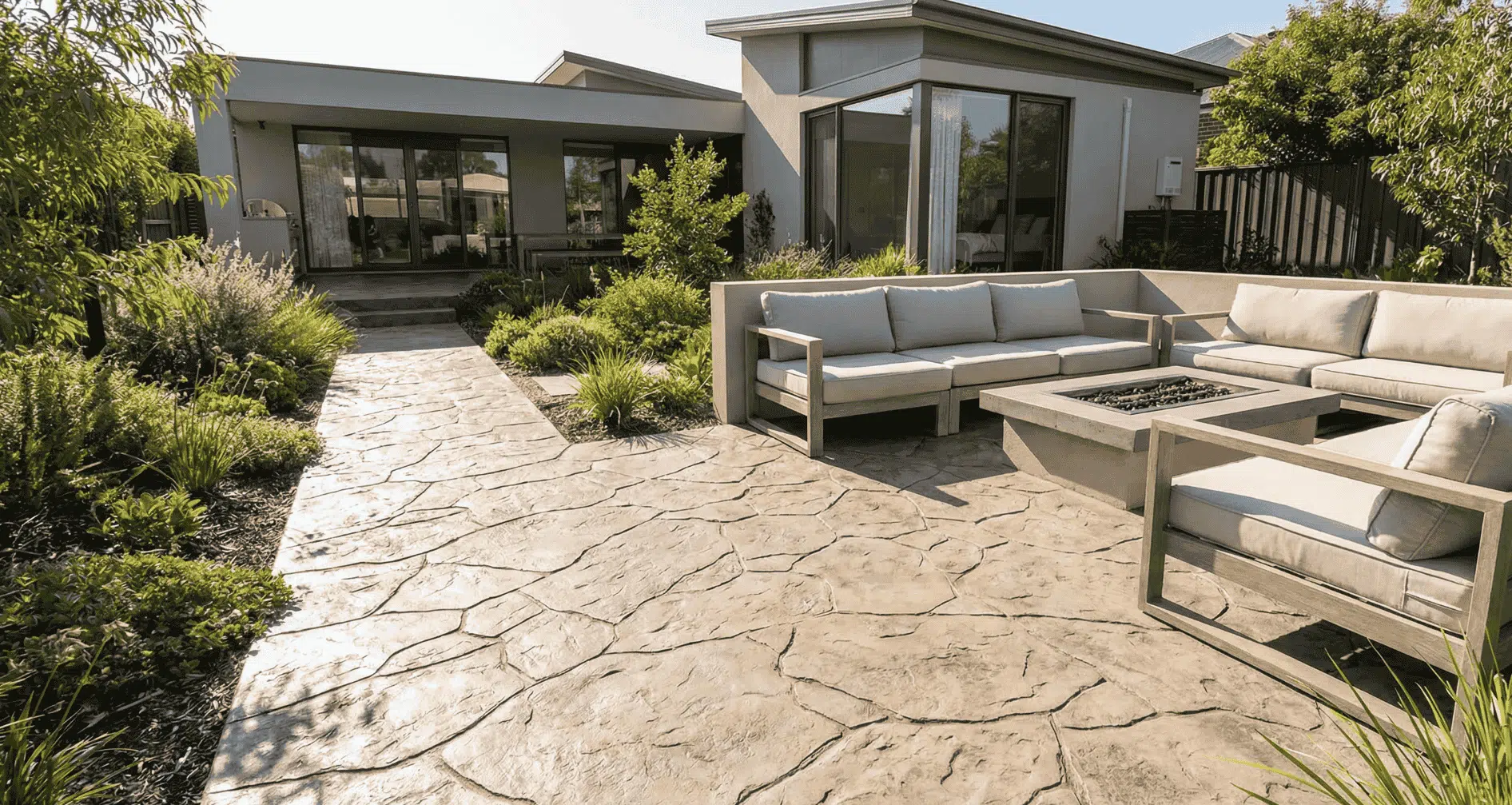

Across contemporary residential design, outdoor spaces have evolved from simple functional zones into curated extensions of the home. Patios, walkways, garden terraces, and entry paths now play a central role in how people experience comfort, style, and connection to the landscape.
As homeowners seek materials that blend long-lasting performance with visual character, textured concrete has become a surprising yet powerful design medium.
Once seen merely as a structural material, concrete is being reinterpreted as a surface that can express warmth, natural patterns, and refined craftsmanship.
The Rise of Material-Driven Outdoor Aesthetics
Modern outdoor design embraces textures inspired by nature—stone, slate, wood, earth tones, and organic patterns that add depth and personality to exterior environments. Concrete offers a unique ability to adapt to these design directions because it can be shaped, tinted, and textured in ways that traditional materials cannot.
Whether the goal is a rustic garden path or a clean, modern courtyard, concrete can be shaped to create a sense of continuity between architecture and landscape.
Why Textured Concrete Works So Well Outdoors
1. Versatility in Style
With the right surface treatment, concrete can mimic natural stone or weathered wood, allowing designers to achieve a specific aesthetic without the limitations of fragile or high-maintenance materials.
2. Seamless Integration
A single continuous surface eliminates gaps, shifting, or uneven settling—common issues with pavers and natural stone tiles. This makes outdoor areas feel more intentional and cohesive.
3. Durable Beauty
Unlike materials that fade, splinter, or weaken over time, textured concrete maintains its form and character for years, even in climates with intense sun or seasonal freeze–thaw cycles.
Patterns as a Design Language
One of the strongest advantages of textured concrete is the wide range of patterns available. These patterns are not purely decorative—they guide movement, define space, and influence how people perceive an outdoor environment.
Popular pattern choices include:
– soft, irregular stone textures for garden settings
– geometric slate patterns for modern residences
– wood-grain textures for warm, natural aesthetics
– large, repeating stone motifs for expansive patios
By choosing the right surface pattern, a simple concrete slab becomes a vital design element that supports the identity of the entire outdoor space.
Homeowners and designers can explore a broad selection of these textures through trusted industry resources such as GlobMarble, which provides pattern libraries and material options for various architectural styles.
Connecting Design With Everyday Living
Outdoor spaces are ultimately about experience—morning coffee on a sunlit patio, barefoot walks along a garden path, evenings gathered with friends on a textured terrace. Materials shape these moments. Textured concrete offers a grounded, comfortable foundation that feels natural yet remains resilient through daily use.
Its ability to blend aesthetic intention with long-term performance makes it a standout choice for homeowners who want outdoor environments that look beautiful and grow more meaningful over time.
Homeowner Summary and Practical Tips
As residential design continues to blur the boundaries between indoors and outdoors, materials that combine creativity with durability become essential. Textured concrete provides designers and homeowners with a medium that is expressive, practical, and timeless. Whether used to evoke the richness of natural stone or the warmth of wood, it transforms everyday outdoor areas into thoughtful, lasting spaces.

With a Master’s in Architecture from the University of California, Berkeley, Alexander Martin has dedicated the last 18 years to enhancing outdoor living through thoughtful and robust structure design. His career kicked off in urban planning, giving him a unique perspective on integrating structures into diverse environments. In 2019, Alexander brought his expertise to our website, offering insights into creating versatile outdoor spaces. Since then, he has been the lead advisor for our outdoor design projects and is known for his ability to merge functionality with environmental consciousness. Alexander enjoys rock climbing outside of work and participates in community development projects, activities that reflect his passion for the outdoors and sustainable design.