

When you start shopping for a new bathtub, the first decision is usually about style. But the choice that affects how the tub performs over time is the material. Two options come up most often in American homes. One is acrylic, which has been popular for decades. The other is solid surface, a newer option that looks similar to stone but comes with its own set of pros and cons.
Understanding the difference between solid surface tubs and acrylic tubs helps you make a choice that fits your budget, your cleaning habits, and how long you plan to stay in your home. Both materials have their place, but they behave very differently when it comes to installation, durability, and daily maintenance.
What Each Material Actually Is
Before comparing how they perform, it helps to know what you are actually buying.
Acrylic tubs start as a single sheet of acrylic that is heated and formed into a tub shape. The sheet is usually about a quarter-inch thick. That acrylic shell is then reinforced with fiberglass or resin on the back side to add stiffness and strength. The result is a lightweight tub that feels smooth and warm to the touch. Most acrylic tubs have the color running through the material, so the finish does not wear off. The surface is non-porous, so it does not absorb water or soap residue.
Solid surface is a man-made material that combines mineral dust and acrylic resins. It was originally developed as a countertop material but has become more common for tubs. The material is cast into a mold to form the tub shape, so the entire tub is one solid piece throughout. Unlike acrylic, which is a shell with reinforcement, solid surface is uniform from the inside to the outside. Solid surface tubs typically weigh more than acrylic but less than cast iron. The material can be sanded and buffed to repair scratches.
Weight and Installation
The weight of a tub affects everything from delivery to floor structure.
An acrylic tub typically weighs between 70 and 100 pounds. That is light enough for two people to carry up stairs and through doorways without special equipment. For a second-floor bathroom, you usually do not need to reinforce floor joists. Installation is straightforward, and the tub can be set in place without heavy lifting equipment. The lightweight nature also makes acrylic easier to maneuver into tight spaces.
Solid surface tubs weigh significantly more. A typical solid surface tub can weigh 150 to 250 pounds depending on the size. That is still lighter than cast iron, but it is heavy enough that delivery and installation require more planning. For a second-floor bathroom, you may need to check the floor structure to make sure it can support the weight when filled with water. A full tub adds another 300 to 400 pounds of water, so the total load can approach 600 to 700 pounds. Most modern floors handle this, but older homes may need reinforcement.
Feel and Heat Retention
How a tub feels when you are in it matters. The material affects how warm the surface is and how well the water holds its temperature.
Acrylic does not pull heat out of the water the way metal does. The surface warms up to body temperature within a few minutes of filling. For most people, that means the tub does not feel cold against your back. Acrylic loses heat faster than solid surface because the material is thinner. A well-made acrylic tub with foam insulation holds heat better than a basic model. If you like long soaks of 30 minutes or more, heat retention is something to consider.
Solid surface is denser than acrylic. That density means it takes longer to warm up initially, but once it is warm, it holds heat for a longer period. For someone who likes to soak for 45 minutes to an hour, a solid surface tub will keep the water warmer toward the end of the bath. The feel of solid surface is also different. It is harder and more rigid than acrylic. There is no flex when you step in, which can feel more stable.
Durability and Repairs
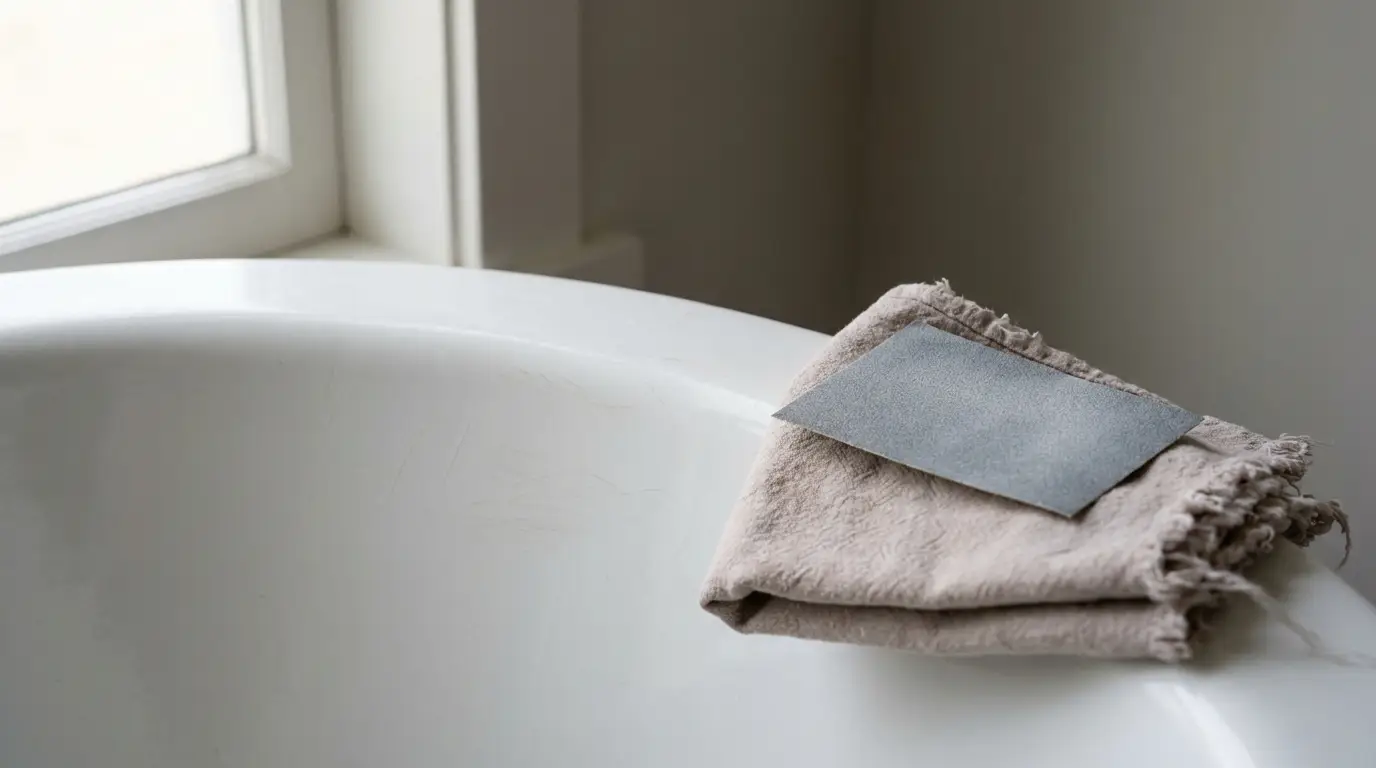
Tubs take a beating over the years. How easy the tub is to repair matters.
Acrylic is surprisingly easy to fix. If you get a scratch, you can buff it out with fine-grit sandpaper and a polishing compound. For deeper damage like a chip or crack, there are repair kits that fill the area and blend with the finish. A homeowner with basic DIY skills can do these repairs in an hour or two. The surface is non-porous, so it resists staining. Soap scum and hard water deposits clean off with standard bathroom cleaners.
One of the selling points of solid surface is repairability. Because the material is uniform throughout, scratches and minor damage can be sanded out. A deeper scratch can be sanded with progressively finer sandpaper and then buffed to match the original finish. The catch is that solid surface is softer than acrylic. It scratches more easily in everyday use. If you drop a heavy bottle or drag something across the bottom, you are more likely to leave a mark. The material is also more susceptible to damage from harsh chemicals.
Cleaning and Maintenance
No one wants to spend their weekend scrubbing a bathtub. The material you choose affects how much effort cleaning takes.
Acrylic cleans easily with a soft sponge and a mild bathroom cleaner. Because the surface is smooth and non-porous, soap scum does not bond tightly. A quick wipe after each use keeps the tub looking clean. For weekly cleaning, a spray cleaner and a few minutes of wiping are usually enough. One thing to watch is abrasive cleaners. Powdered cleaners or scrub pads can leave fine scratches that dull the finish over time.
Solid surface also cleans easily, but it requires more attention to what you use. Abrasive cleaners can scratch the surface. Bleach and other harsh chemicals can cause discoloration or dull the finish. Most manufacturers recommend using a mild soap and a soft cloth for regular cleaning. For hard water stains, solid surface can be more challenging. The material is slightly more porous than acrylic, so mineral deposits can be harder to remove.
Cost Comparison
Budget is always a factor in a bathroom remodel.
Acrylic tubs are generally the most affordable option among quality tub materials. The manufacturing process is efficient, and the materials are less expensive. For a standard alcove or freestanding tub, acrylic typically costs less than solid surface. The lower weight also means lower installation costs. You do not need extra labor to move the tub, and you are less likely to need structural reinforcement.
Solid surface tubs are priced higher than acrylic. The material costs more to produce, and the manufacturing process is more labor-intensive. For a comparable size and style, expect to pay a premium. Installation costs can also be higher. The additional weight may require extra labor, and if floor reinforcement is needed, that adds to the project cost.
Aesthetics and Style Options
Both materials offer plenty of design options, but there are differences.
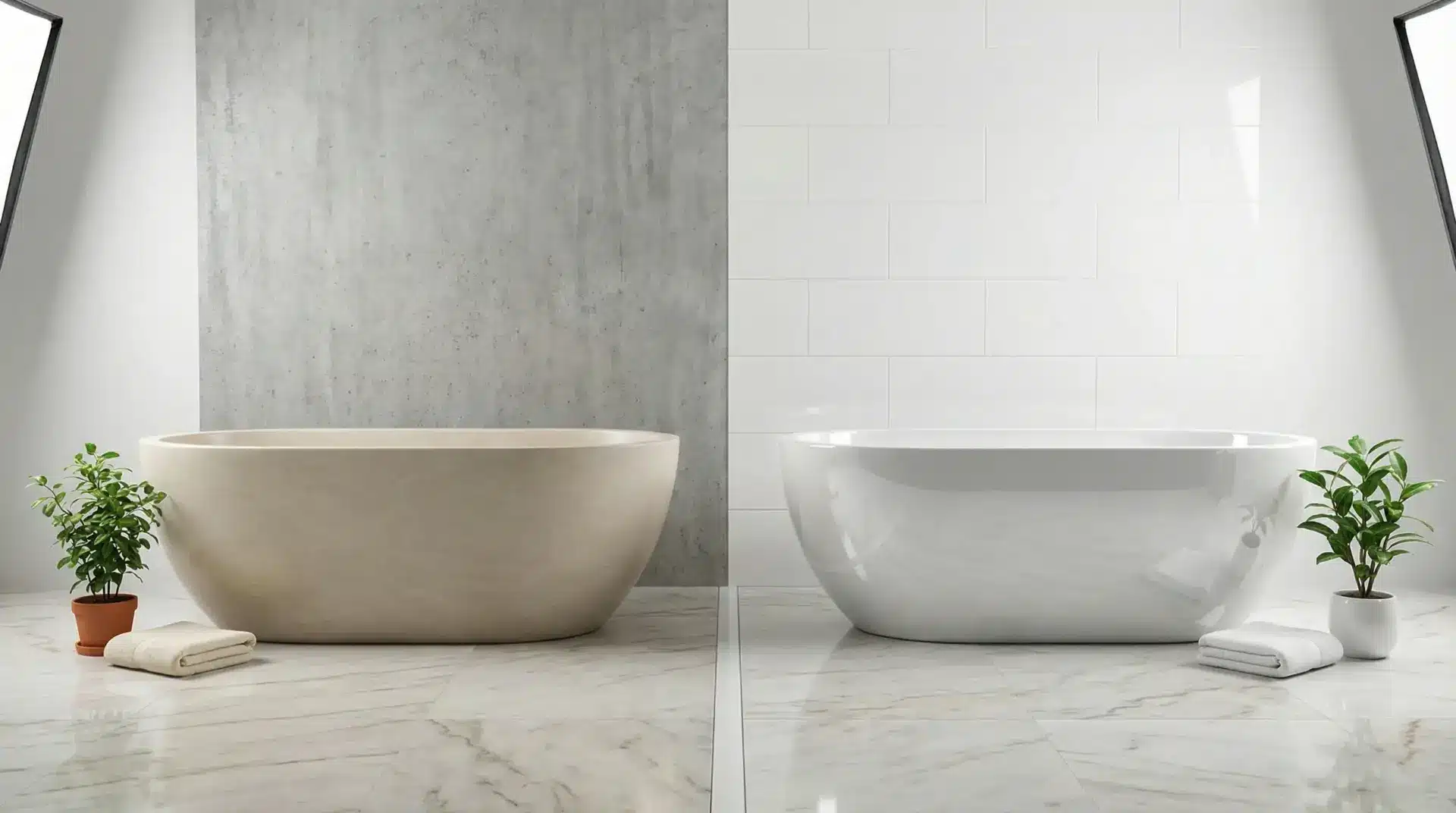
Acrylic can be molded into almost any shape. Curved tubs, asymmetrical designs, and compact soaking tubs are all possible. The material is available in a range of colors, though white remains the most popular. The finish is glossy and reflects light, which can make a bathroom feel brighter. The glossy surface shows water spots and soap residue more than a matte finish.
Solid surface is often chosen for its matte finish. The material does not have the high-gloss shine of acrylic. For bathrooms with a modern or minimalist design, the softer look of solid surface can be appealing. Solid surface can also be molded into various shapes, though the manufacturing process is more limited than acrylic. The matte finish does not show water spots as easily as glossy acrylic, which can be an advantage in areas with hard water.
Long-Term Value
How a tub holds up over time affects its value, both for your enjoyment and for resale.
Acrylic has been used in bathrooms for decades. The material is well understood, and quality acrylic tubs regularly last 20 years or more with proper care. When the tub does show signs of wear, repairs are straightforward and affordable. For resale value, acrylic is a safe choice. Most buyers are familiar with it, and a well-maintained acrylic tub does not raise concerns.
Solid surface tubs are newer to the market and less common than acrylic. For a homeowner who plans to stay in the house for many years, the durability and repairability can be appealing. For someone who plans to sell in a few years, a solid surface tub may not add as much value as the cost would suggest, simply because buyers are less familiar with it.
Making the Choice
The right tub for your bathroom depends on your priorities.
Choose acrylic tubs if you want a lightweight option that is easy to install, affordable, and simple to maintain. Acrylic is a practical choice for most households, especially if you have children who will be using the tub or if you are working with a tight budget.
Choose solid surface tubs if you prefer the look and feel of a matte finish and are willing to pay more for it. Solid surface is a good fit if you like the idea of being able to sand out scratches and if you are planning to stay in the home long enough to enjoy the material over time.
Both materials have their strengths. Acrylic gives you lightweight durability and easy maintenance at a lower price point. Solid surface offers a denser feel and a matte look with repairable surfaces. Understanding how each material behaves in a real home helps you pick the one that works for your space and your routine.

NKBA-certified designer Harper Williams holds a degree in Interior Architecture from Auburn University and has specialized in high-function kitchens and spa-inspired baths since 2011. She joined us in 2024 to simplify layout planning, fixture selection, and budget tricks for remodelers. Away from CAD files, Harper restores vintage cookstoves and crafts small-batch soaps.