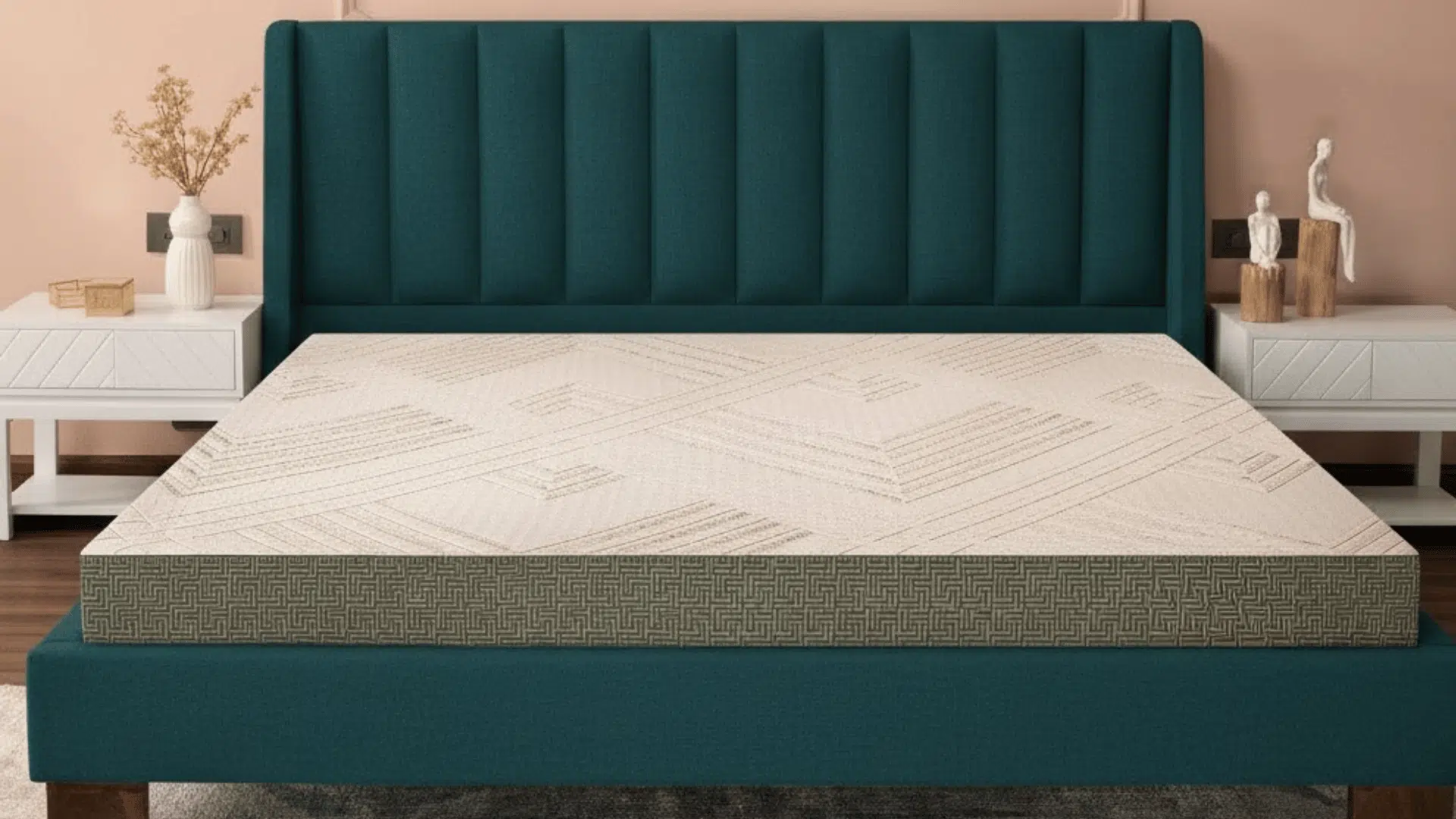

Have you ever wondered what the standard mattress height should be for a comfortable and easy-to-use bed? Most people only think about firmness, but the height of your mattress matters just as much.
I’ve seen many people choose a mattress that’s too tall or too low without realizing how it impacts daily comfort.
In this guide, you’ll learn the ideal height for your sleep style, body type, and bedroom setup so you can choose the height that feels right.
What is the Standard Mattress Height?
Most mattresses fall between 8 and 12 inches, which is considered the standard range. This height works well for most sleepers and provides a good balance of support and comfort.
If you want a quick look at how different mattress heights compare, here’s a simple breakdown:
| Mattress Height | Description |
|---|---|
| Slim (Under 8 inches) | Best for kids, bunk beds, or low-profile setups where a firmer feel works well. |
| Standard (8–12 inches) | The most common height and a good fit for most sleepers and bed styles. |
| Thick (12–16 inches) | Offers more cushioning and deeper comfort layers, great for side sleepers. |
| Extra Tall (16+ inches) | Plush and layered, often used for a more luxurious or hotel-style feel. |
How Mattress Height Changes Based on Your Sleep Needs
Mattress height plays a big role in how comfortable you feel at night. The right height depends on how you sleep and how your body carries weight.
Mattress Height by Sleeping Position

Your sleeping position changes how much support or cushioning you need. The right height helps your body stay aligned and reduces stress on key pressure points.
1. Side Sleepers
Side sleepers need extra cushioning. They usually need more padding to reduce pressure on the shoulders and hips.
A taller mattress adds softer layers that improve joint comfort and ease tension.
This creates a softer, more relaxing feel throughout the night. The ideal height is 12 to 14 inches or more.
2. Back Sleepers
Back sleepers need balanced support. A medium feel keeps the spine straight without letting the hips drop.
This height keeps your back supported through the night.
It also supports the lower back, so you wake up feeling rested. The ideal height is 10 to 12 inches.
3. Stomach Sleepers
Stomach sleepers need a firmer surface. A steady base keeps the hips lifted and reduces lower-back strain.
A lower height creates a stable feel that stops the midsection from sinking.
This setup prevents sinking and keeps the body in a steady position. The ideal height is 8 to 10 inches.
Mattress Height by Body Type

Your weight changes how deeply you sink into the mattress. The right height improves support and keeps your body comfortable through the night.
1. Lightweight Sleepers
Lighter bodies rest closer to the top of the mattress. Lower or mid-height options usually feel supportive.
These sleepers don’t need deep comfort layers because they don’t sink much.
A basic structure still feels comfortable and supportive. The ideal height is 8 to 10 inches.
2. Average Weight Sleepers
Average-weight sleepers need a balanced feel. Standard heights offer the right mix of cushioning and stability.
This height offers balanced support without feeling too firm.
It also works well with most bed frames and setups. The ideal height is 10 to 12 inches.
3. Heavy Sleepers
Heavier bodies need stronger support layers. A taller mattress helps prevent sinking and improves durability.
Hybrids work well because coils add strength, and comfort layers protect the joints.
This height keeps the surface steady and supportive. The ideal height is 12 to 14 inches or more.
Total Bed Height vs. Mattress Height
This table shows the key differences between mattress height and total bed height. It helps you understand what each one affects and why both matter when setting up your bed.
| Feature | Mattress Height | Total Bed Height |
|---|---|---|
| What It Means | The thickness of the mattress only | The full height from the floor to the top of the mattress |
| Typical Range | 8 to 14 inches and higher | 18 to 25 inches for most people |
| Main Purpose | Comfort, support, and pressure relief | Safety, support, and smoother daily use |
| Who It Impacts Most | Sleepers with position or body-type needs | Seniors, kids, and anyone with mobility concerns |
| What Changes It | Foam layers, coils, and pillow tops | Frame style, foundation height, and mattress thickness |
| Shopping Impact | Helps you choose the right comfort level | Helps you set up a safe and comfortable bed |
| Best Practice | Pick a height that supports your sleep style | Aim for a height close to your knee level |
Understanding both measurements helps you build a bed that feels good and works well for your daily routine. When they match your needs, getting in and out of bed becomes easier and more comfortable.
Pros and Cons of Thick vs Thin Mattresses
Mattress height changes how the bed feels and how your body rests on it. Both thin and thick mattresses have strengths, so the right choice depends on your comfort needs and sleep style.
Thin Mattresses (8-10 inches)
Thin mattresses feel firmer and sit lower. They work well for sleepers who prefer solid support.
Pros
- Easy to move and rotate
- Good for bunk beds and low frames
- Supportive for stomach and back sleepers
- Stable and easy to get in and out of
Cons
- Can feel firm on the shoulders and hips
- Not great for side sleepers
- Limited support for heavier bodies
- May feel too firm for soft-surface lovers
Thick Mattresses (12-16+ inches)
Thick mattresses feel softer and offer more layers. They work well for sleepers who want deeper cushioning.
Pros
- Offers softer layers that reduce pressure across the body
- Ideal for side sleepers and restless sleepers
- More material for long-lasting support
- Softer, more relaxed feel
Cons
- Harder to move or lift
- Needs deep or extra-deep pocket sheets
- Can feel tall on certain frames
- Some softer designs may lack firm support for larger bodies
Mattress Height for Mobility & Accessibility Needs

Mattress height affects how well your fitted sheets stay in place. The pocket depth of your sheet should match the height of your mattress for a secure fit.
Standard sheets work for mattresses up to about 12 inches. Deep-pocket sheets fit heights between 13 and 16 inches, and extra-deep sheets work for thicker designs.
Slippage happens when the sheet is too shallow. The corners lift, the surface wrinkles, and the bed feels uneven. Matching the right pocket depth prevents this and keeps the bed smooth.
Final Tips for Choosing the Right Mattress Height
The right mattress height depends on how you sleep, how your body feels, and how easily you move in and out of bed. These simple tips make the choice easier.
- Pick a height that matches your sleeping position and comfort needs.
- Check your body type so you get the right level of support and pressure relief.
- Measure your frame and foundation to know your total bed height.
- Choose a height that sits close to your knee level for easy movement.
- Use sheets that match your mattress height for a secure fit.
These small steps help you build a bed that feels better, supports your body, and fits your daily routine.
Conclusion
Choosing the right mattress height can improve the way your bed feels each night.
When you understand your sleep style, body type, and total bed setup, it becomes easier to choose a height that works naturally for you.
I always remind people that the standard mattress height is a helpful starting point, but your comfort matters most.
Measure your current setup, compare it with the tips above, and choose what feels right for your daily routine.

With a Master’s in Architecture from the University of California, Berkeley, Mitchell Green has spent over two decades dedicated to the study and practical application of home fixture design. His career started in an architectural firm, providing him a strong foundation in the structural and aesthetic aspects of home interiors. Mitchell brought his comprehensive knowledge to our platform, where he has been an influential voice in our home fixtures and fittings section. Since 2018, he has been guiding our readers through the intricacies of selecting and installing fixtures, combining technical know-how with design flair. In his spare time, Mitchell is a keen photographer, capturing architectural details and design elements, an interest that complements his professional focus.