
A cluttered closet often turns simple routines into time-consuming tasks.
When clothing, shoes, and accessories lack structure, mornings feel rushed and storage space feels limited.
A practical system helps restore order without major changes or expensive tools. The focus is not on appearance alone, but on creating a setup that supports daily use.
This content explains how to organize a closet using clear, manageable steps that fit different home layouts.
It also addresses how to organize a small closet by using space efficiently and reducing excess items.
With the right approach, a closet can remain functional, easier to maintain, and better suited to everyday needs.
Why Closet Organization Matters?
Closet organization improves daily efficiency and space management.
When clothing is arranged with clear zones, it becomes easier to locate items, plan outfits, and avoid unnecessary purchases. Organized storage also helps protect clothing from damage caused by overcrowding.
A structured closet supports better habits by making it easier to return items to their place.
Over time, this reduces clutter buildup and keeps the space functional without frequent reorganization.
How to Organize a Closet?

Organizing a closet works best when handled in clear, logical stages. Each step creates a foundation that supports long-term use and reduces the effort needed to maintain order over time.
Starting with a full reset and ending with consistent placement helps prevent clutter from returning.
Step 1: Empty and Sort Everything
Remove all items from the closet and group them by type, such as tops, bottoms, outerwear, shoes, and accessories. This makes it easier to see what is owned and what is used.
Sorting everything outside the closet also reveals how much space each category requires. It helps identify duplicates and highlights items that may no longer fit current needs.
This step sets a clear starting point before anything goes back into the closet.
Step 2: Declutter with Purpose
Set aside items that no longer fit, are rarely worn, or are damaged. Keeping only what is used regularly prevents overcrowding and creates space for better arrangement.
A helpful approach is to consider how often each item has been worn in the past year. Clothing that has not been used during that time may no longer serve a clear purpose.
Decluttering also improves visibility. When fewer items compete for space, it becomes easier to see complete outfits and avoid unnecessary purchases.
Removing excess clothing supports better decision-making and reduces the chance of clutter returning quickly.
Step 3: Clean the Closet Space
Wipe shelves, rods, and floors before placing items back. A clean base supports better organization and makes future upkeep easier.
Cleaning also helps reset the space visually. Dust-free surfaces and cleared corners make it easier to spot available storage areas and maintain hygiene, especially in closets used daily.
Step 4: Arrange by Frequency of Use
Place frequently worn clothing at eye level or within easy reach. Seasonal or occasional items can go on higher shelves or less accessible areas.
This arrangement reduces daily effort and keeps commonly used items visible. It also prevents frequent handling of rarely worn clothing, helping maintain order across the closet.
Step 5: Use Matching Hangers and Dividers
Uniform hangers create visual order and save space. Shelf dividers help keep stacks from mixing together.
Using the same hanger style prevents uneven spacing on rods and allows clothes to hang evenly.
Dividers maintain separation between clothing types, making it easier to return items to the correct place after use.
How to Organize a Small Closet?
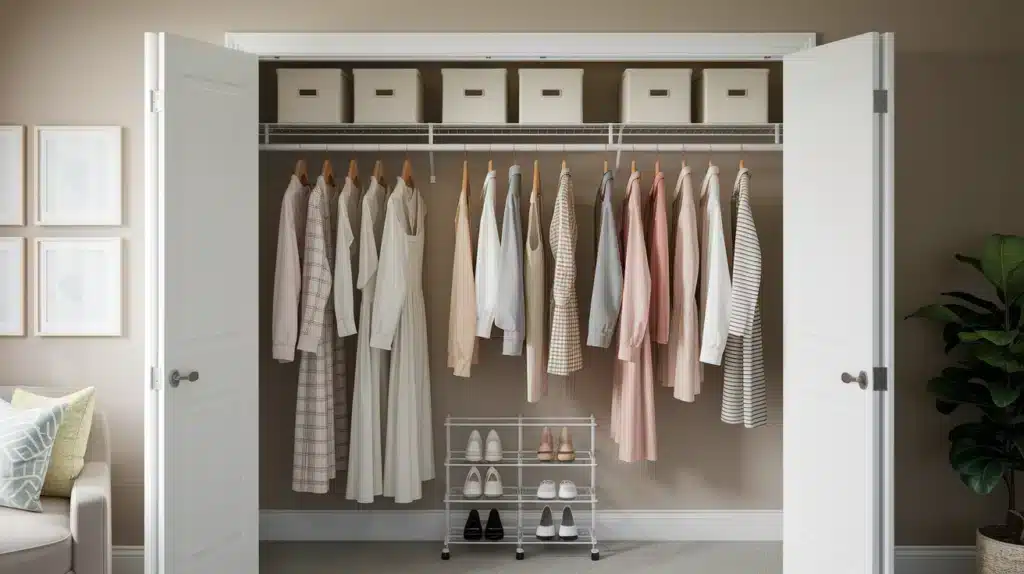
A small closet needs careful planning to avoid wasted space. The goal is to use every section without creating clutter.
Limited square footage makes organization more important, as even minor inefficiencies can lead to overcrowding.
1. Use Vertical Space
Install additional shelves or stackable storage to take advantage of height. Hanging organizers can also hold shoes or folded items.
Upper shelves work well for seasonal clothing or items used less frequently, helping keep daily essentials within reach.
2. Choose Slim Storage Options
Thin hangers, narrow bins, and compact drawers reduce bulk and free up room for clothing.
These options allow more items to fit comfortably without compressing fabrics or blocking visibility.
3. Limit Categories
Keeping fewer clothing categories in a small closet prevents overcrowding. Store rarely used items elsewhere if possible.
This approach helps maintain clear zones and avoids mixing unrelated items.
4. Add Hooks and Door Storage
Hooks on side walls or the door can hold bags, belts, or scarves without taking up shelf space.
Door-mounted organizers are especially useful in small closets where floor and shelf space is limited.
Popular Closet Organization Techniques That Work
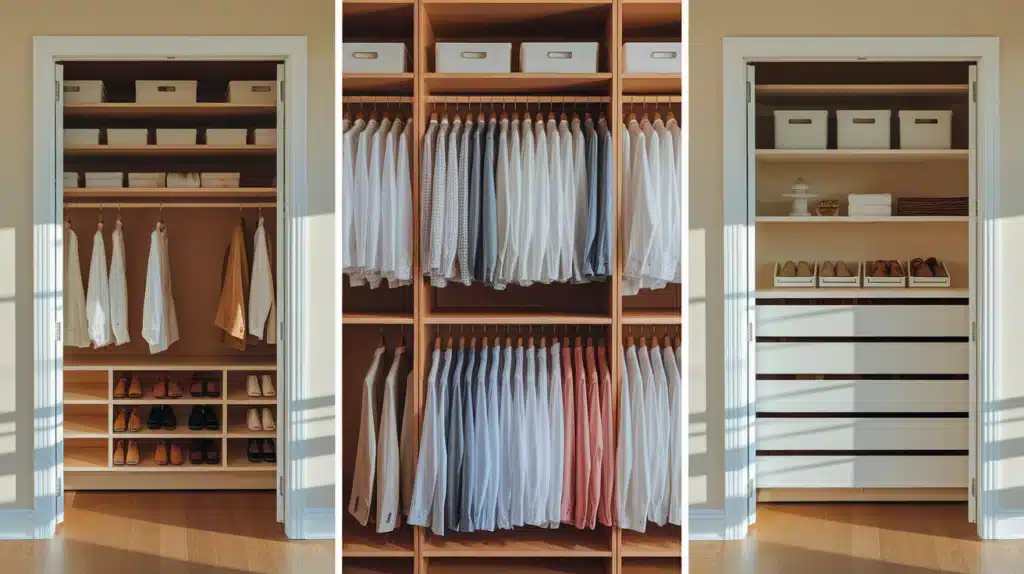
Several closet organization techniques are commonly used because they are simple, flexible, and easy to maintain. These methods work for both standard and small closets when applied correctly.
Zone-Based Organization
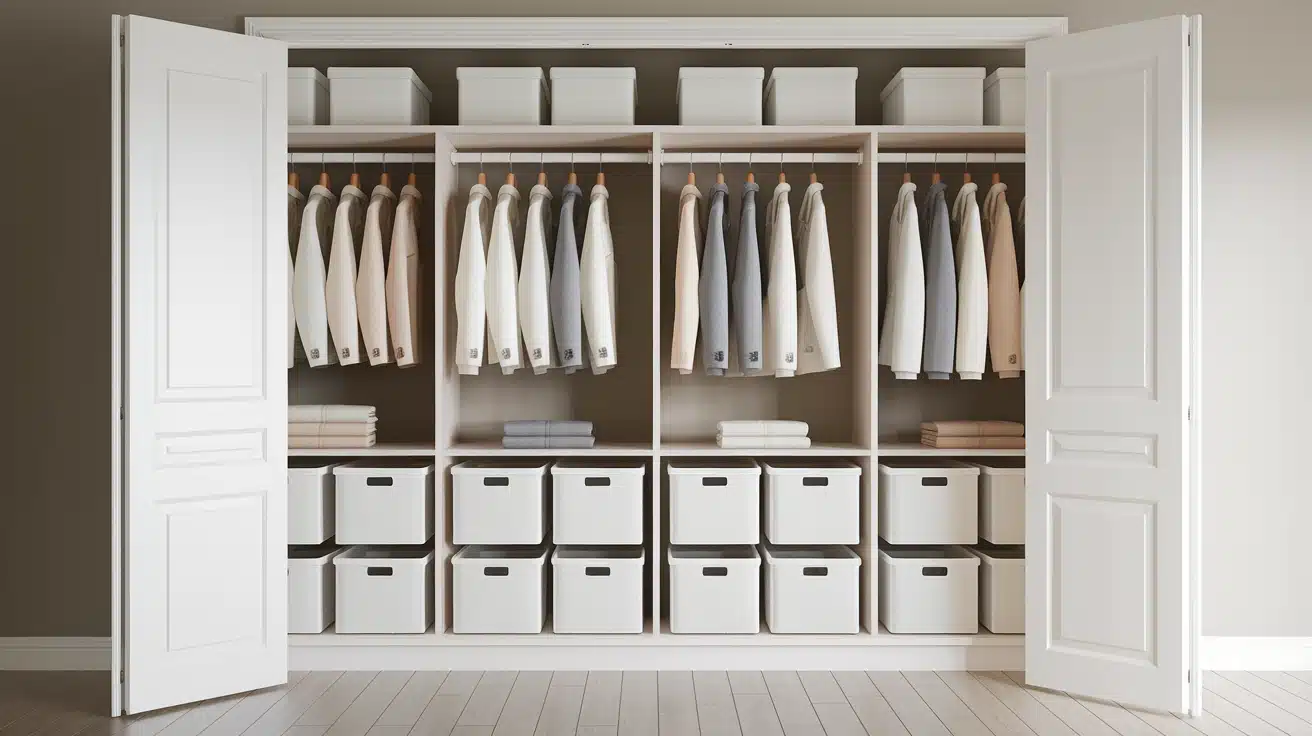
This technique divides the closet into clear zones based on item type, such as workwear, casual clothing, outerwear, shoes, and accessories.
Each category is assigned a specific area, making it easier to find items and return them to the correct place. Zone-based organization reduces mixing and keeps the closet structured over time.
Hanging-First Organization
Hanging-first organization prioritizes hanging garments instead of folding whenever possible.
Shirts, pants, dresses, and jackets are placed on rods, while shelves are reserved for items that cannot be hung. This approach improves visibility and works well for people who prefer seeing all clothing at once.
Container-Based Organization
This method relies on bins, baskets, and drawer inserts to group smaller items such as accessories, footwear, or folded clothing.
Containers help control clutter and maintain separation between categories. Labeling containers further supports consistency and long-term organization.
Common Closet Organization Mistakes
Avoiding common errors helps maintain order for longer periods and reduces the need for repeated reorganization.
Keeping too many unused items leads to overcrowding and makes it harder to see or access clothing that is actually worn
Mixing categories on the same shelf causes items to overlap and creates confusion when returning clothes after use
Overfilling rods and shelves, which can damage garments and make the closet feel cluttered despite available storage
Ignoring vertical or door space results in missed opportunities for additional storage in compact areas
Tips to Maintain an Organized Closet
Consistency matters more than perfection. Small habits help keep the closet organized and reduce the need for frequent overhauls.
- Return items to their assigned place after use
- Reassess clothing every few months to remove unused pieces
- Adjust storage as needs change over time
- Avoid impulse storage solutions that do not fit the space
Regular maintenance keeps systems functional.
Taking a few minutes each week to realign hangers, refold stacks, or clear surfaces helps prevent clutter from building up again.
This ongoing attention supports long-term closet organization without added effort.
The Bottom Line
Learning how to organize a closet creates a space that supports daily routines and reduces unnecessary stress.
A clear system, regular decluttering, and smart placement make closets easier to use and maintain.
For limited spaces, knowing how to organize a small closet is especially important, as thoughtful storage choices prevent clutter from building up.
An organized closet is not about appearance alone; it supports efficiency and comfort over time.
Share thoughts or practical tips in the comments to help others improve their closet organization.

Tommy Hardy, an alumnus of the Georgia Institute of Technology with a degree in Mechanical Engineering, has been a go-to figure in residential upkeep and innovation for over 18 years. His career commenced in a leading home appliance manufacturing company, where he mastered the intricacies of household systems. Joining our platform in 2020, Tommy quickly became a reader favorite for his practical and easy-to-follow guides. He took the helm of our DIY section in 2019, consistently delivering content that empowers homeowners. Beyond his professional pursuits, Tommy is a passionate gardener and enjoys woodworking, skills enhancing his hands-on approach to home care.