
You’re standing in a roofing aisle, or deep in a contractor quote, or three tabs into a browser rabbit hole, and you’ve landed on the same two options everyone seems to be choosing between: 3-tab vs architectural shingles.
They look similar at first glance, they’re both asphalt, and yet the price difference is real enough to make you stop and wonder what you’d actually be paying for.
Most people don’t figure out what separates these two until they’re already mid-project.
This blog breaks it all down without the roofing confusion, cost, durability, lifespan, and performance, so that by the time you finish reading, the right choice for your home feels completely obvious.
What are 3 Tab Shingles?
A 3-tab shingle is a single-layer asphalt shingle with three evenly spaced cutouts along the bottom edge, and that’s exactly where the name comes from.
Those three uniform tabs create the appearance of three separate shingles on the roof, even though each piece is actually one continuous strip.
They’ve been the standard roofing choice for decades, and while architectural shingles have overtaken them in popularity, 3-tab shingles are still widely used and readily available across most markets today.
Appearance:
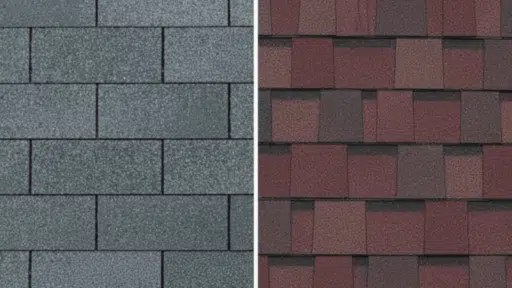
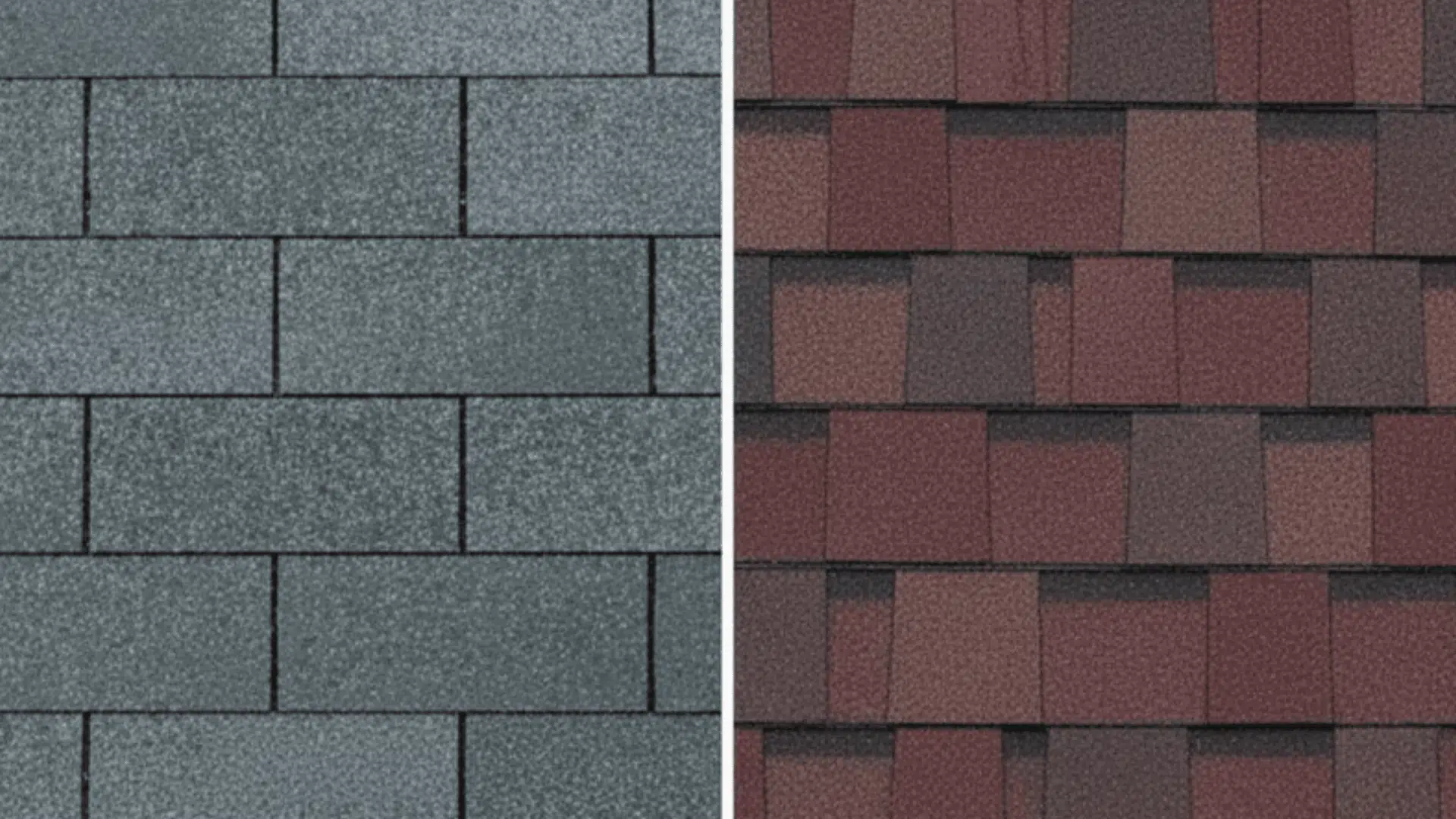
On a roof, 3-tab shingles have a flat, uniform appearance with a clean, repeating pattern that runs consistently across the entire surface.
They suit traditional home styles well, particularly where a straightforward, no-fuss roofline is the goal rather than a standout visual feature.
What are Architectural Shingles?
Architectural shingles, also called dimensional shingles or laminate shingles, are multi-layer asphalt shingles made by bonding two or more layers of material into a single, thicker piece.
That extra layer is what gives them both their visual depth and their significantly improved durability compared to the single-layer construction of a 3-tab shingle.
Over the past two decades, they’ve become the dominant choice in residential roofing.
Appearance:
Architectural shingles have a dimensional, layered appearance that genuinely mimics the look of more premium roofing materials like wood shake or slate, without the maintenance headaches or cost that come with either.
That flexibility is a big part of why they’ve overtaken 3-tab shingles in popularity; they work beautifully on everything from traditional colonial homes to contemporary builds without ever looking out of place.
3 Tab Vs Architectural Shingles: The Key Differences
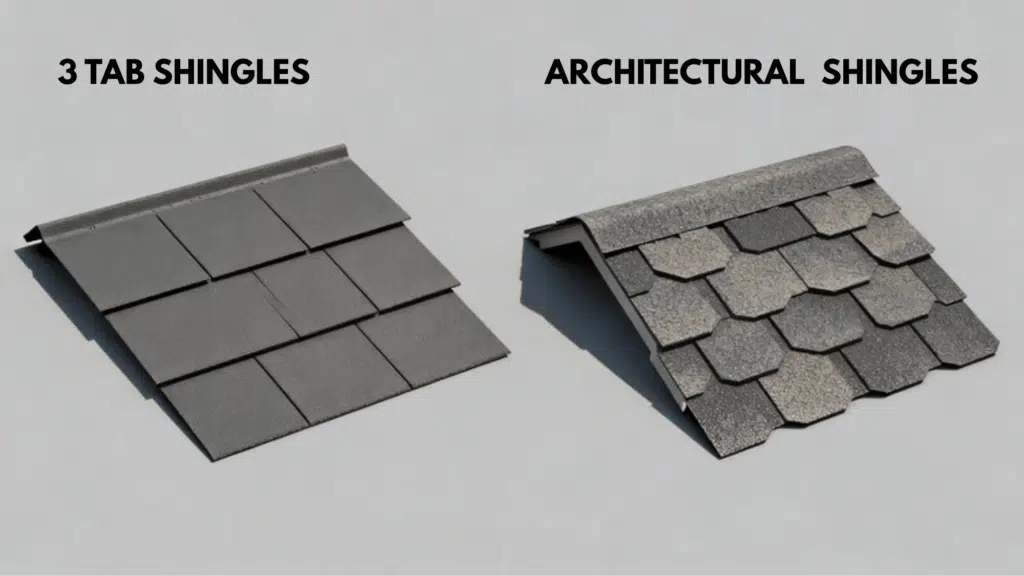
This is where the comparison really opens up. Once you see these two shingle types side by side across the factors that actually matter, the differences become a lot harder to ignore.
1. Thickness and Construction
3-tab shingles are single-layer, making them thinner, lighter, and easier to construct than their architectural counterparts.
Architectural shingles, on the other hand, are laminated, multiple layers of asphalt material bonded together to create a noticeably thicker, more substantial shingle.
That construction difference isn’t just cosmetic; thicker shingles handle impact, wind, and weather more effectively because there’s more material standing between your roof deck and whatever the sky decides to throw at it.
2. Durability and Wind Resistance
This is one of the starkest gaps between the two. Most 3-tab shingles are rated for winds up to 60–70 mph, which is adequate in calm climates but leaves real room for concern in storm-prone areas.
Architectural shingles are typically rated for winds up to 110–130 mph, depending on the specific product, which is a substantial difference in real-world performance.
Beyond wind, architectural shingles also hold up significantly better against hail impact and debris damage, two things that can quietly compromise a roof long before you notice any visible signs of trouble.
3. Lifespan
On average, 3-tab shingles last 15 to 20 years with proper maintenance and decent installation. Architectural shingles can last 25–30 years, and premium versions can reach 50 years under the right conditions.
That lifespan gap is worth doing the math on. If you’re replacing a 3-tab roof twice in the time an architectural roof lasts once, the upfront savings start to look a lot less compelling over the long run.
4. Appearance
3-tab shingles give you a flat, uniform look that’s clean and inoffensive but not particularly striking from the street.
Architectural shingles bring genuine depth and dimension to a roofline; the layered construction creates shadows and texture that make the roof look like a deliberate design feature rather than an afterthought.
If you’re thinking about resale value at all, this difference is worth taking seriously, because curb appeal is one of the first things a potential buyer notices and one of the hardest things to fake.
5. Weight
3-tab shingles are lighter, and on older homes with roof structures that haven’t been assessed recently, that can actually be a deciding factor.
Architectural shingles are heavier, not prohibitively so on a sound roof deck, but enough that you should always confirm your structure can handle the load before committing.
If your home is older, a quick structural assessment before you choose either option is a worthwhile investment that can save you from a much more expensive problem down the line.
So Which One Should You Choose?
Both shingle types have a legitimate place; it really comes down to your specific situation. Here’s a straightforward way to think about it.
Choose 3 Tab Shingles If
- You’re working with a tight budget, and keeping upfront costs as low as possible is the priority right now.
- The structure you’re roofing is temporary, secondary, or not something you’ll be managing long-term, like a rental property, a shed, or an outbuilding.
- Your roof deck has weight limitations that genuinely rule out the added load of heavier materials, which is worth confirming with a professional before you decide either way.
Choose Architectural Shingles If
- You want a roof that will comfortably last 25–30 years without constant maintenance calls or premature replacement costs eating into your budget.
- Curb appeal, home value, and the overall appearance quality of your exterior matter to you, especially if resale is anywhere on your radar.
- You live in a region that deals with strong winds, heavy rainfall, or frequent hail, where the performance gap between these two shingle types becomes very real, very fast.
- Your roof deck is structurally sound, and you’re ready to make a long-term investment that pays for itself over time rather than just solving the immediate problem in front of you.
Final Thoughts
At the end of the day, the 3-tab vs. architectural shingles debate doesn’t have a single right answer; it has the right answer for your home, your budget, and your climate.
If you’re replacing a roof on a tight timeline with limited funds, 3-tab shingles get the job done. But if you’re thinking long-term, the numbers consistently favor architectural.
Better durability, stronger wind resistance, longer lifespan, and real curb appeal, it’s a hard case to argue against. Whatever you choose, prioritize installation quality above everything else.
The best shingle in the world will underperform if it’s not put on correctly. Start there, and the rest follows.

Tommy Hardy, an alumnus of the Georgia Institute of Technology with a degree in Mechanical Engineering, has been a go-to figure in residential upkeep and innovation for over 18 years. His career commenced in a leading home appliance manufacturing company, where he mastered the intricacies of household systems. Joining our platform in 2020, Tommy quickly became a reader favorite for his practical and easy-to-follow guides. He took the helm of our DIY section in 2019, consistently delivering content that empowers homeowners. Beyond his professional pursuits, Tommy is a passionate gardener and enjoys woodworking, skills enhancing his hands-on approach to home care.