
What You’ll Learn in This Guide
|
|---|
Most backyard pergolas are planned as decorations, instead of functional shade structures, and that is usually why they fail.
It’s often too late already when homeowners realize that the sun still hits the seating area at the worst time of the day, or that the posts of the pergola interrupt walking spaces, or simply that the pergola feels awkwardly sized for the yard.
All it actually takes is planning the pergola around sun exposure, scale, and daily use before finalizing the design.
Now, if you’re thinking about timber frame pergolas, then the stakes are raised. Their solid posts and heavy beams make them feel permanent, which means poor planning becomes impossible to ignore.
When designed with intention, they define outdoor living. When rushed, they become obstacles, rather than gathering spaces.
What Makes Timber Frame Pergolas Different?
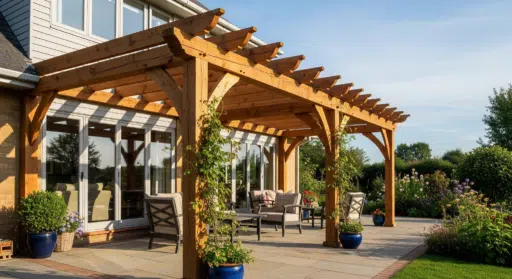
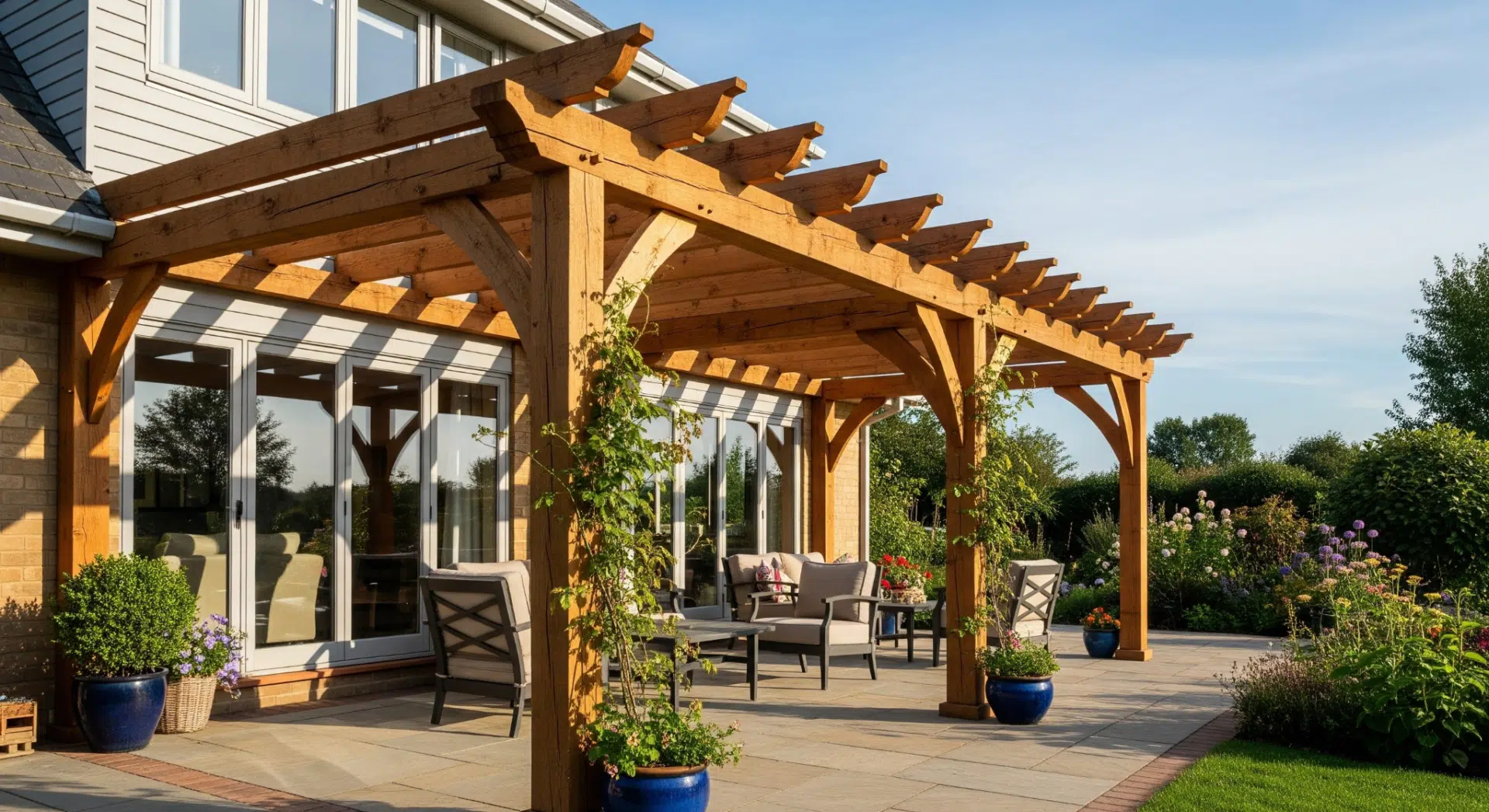
Unlike lightweight pergolas, timber frame pergolas are built with substantial wooden posts and beams that create both a structural strength and a visual presence. They anchor a space and change how your yard feels as a whole.
This permanence is exactly why planning matters more.
Timber frame pergolas behave more like outdoor rooms instead of mere garden features. Their placement affects views from the inside of the house, the traffic flow in the yard, and how comfortable the space feels at different times of the day.
A successful design balances strength with restraint. The goal is not to dominate the yard but to make the pergola feel like it belongs there.
How To find The Right Location For Effective Shade?
Shade quality depends almost entirely on location. A pergola placed without studying the sun patterns often fails during the hottest hours.
Attached pergolas work best when shade is needed, close to the home. They help protect doors, windows, and nearby seating from direct sun. However, you must be careful about aligning them with the roof height and drainage paths to avoid blocking light indoors or trapping heat.
Freestanding pergolas offer flexibility and are ideal for:
- Poolside seating
- Quiet reading areas
- Outdoor dining zones away from the house
- Yard with limited natural shade
Now, before committing to placement, observe the yard at different times of the day. Morning sun is usually mild and pleasant. Late afternoon sun is more intense and often uncomfortable.
Blocking the western sun typically delivers the biggest improvement in usability.
How To Choose The Right Size Without Overbuilding
One of the most common planning mistakes is over-sizing.
Timber frame pergolas carry a lot of visual weight, so even small increases in size can change how the yard feels.
A pergola that is too small feels cramped. One that is too large feels exposed and disconnected.
When planning size, focus on how the space will actually be used:
- Dining areas need room for chairs to move freely
- Seating areas need clear walkways
- Post should never block natural paths
How Shade Actually Works in Timber Frame Pergolas
Many homeowners expect pergolas to behave like solid roofs. That expectation often leads to disappointment.
Open rafter designs allow sunlight to filter through in shifting patterns. This creates partial shade that changes throughout the day. It reduces glare and heat but does not eliminate sun exposure entirely.
Tighter rafter spacing increases shade but reduces airflow and light. This can make the space feel cooler or heavier, depending on placement.
Common Shade Options Compared
Shade Approach | Light Control | Airflow | Best Use Case |
|---|---|---|---|
Open rafters | Moderate | High | Relaxed seating, filtered light |
Tight rafters | High | Moderate | Dining areas, stronger sun |
Fabric panels | Adjustable | Moderate | Flexible seasonal shade |
Climbing plants | Variable | High | Natural shade over time |
Understanding these differences helps set realistic expectations and leads to better decisions.
Materials and Maintenance That Matter Long Term
Timber structures are durable, but they are not maintenance-free.
Sealing or staining protects wood from moisture and sun exposure. This is typically done shortly after installation and refreshed based on climate conditions. Areas where posts meet the ground should be inspected regularly since moisture collects there most easily.
Basic care includes:
- Checking for surface wear
- Inspecting joints and connections
- Keeping debris from collecting around footings
Routine attention preserves both appearance and safety. A maintained pergola looks intentional and settled. A neglected one quickly looks unfinished.
Planning Details Homeowners Often Miss
Small planning decisions have long-term consequences.
Lighting is one of the most overlooked elements. Planning for fixtures before construction avoids awkward wiring later. Drainage should also be considered so water does not pool near posts or footings.
Local guidelines may apply depending on size and placement. Verifying requirements early prevents delays and redesigns.
Quick Planning Checklist
- Measure the space and mark post locations
- Track the sun’s movement over several days
- Confirm setback or permit requirements
- Plan lighting and accessories early
- Consider drainage and footing placement
This checklist saves time and prevents common regrets.
Conclusion
A timber frame pergola succeeds when it feels quietly essential. It provides shade exactly when the sun becomes uncomfortable, frames the yard without overwhelming it, and supports how the space is actually used. Thoughtful planning transforms heavy timbers into a comfortable extension of daily life. When placement, size, and shade behavior are chosen with care, the pergola stops being a project and starts becoming part of the home.

With a Master’s in Architecture from the University of California, Berkeley, Alexander Martin has dedicated the last 18 years to enhancing outdoor living through thoughtful and robust structure design. His career kicked off in urban planning, giving him a unique perspective on integrating structures into diverse environments. In 2019, Alexander brought his expertise to our website, offering insights into creating versatile outdoor spaces. Since then, he has been the lead advisor for our outdoor design projects and is known for his ability to merge functionality with environmental consciousness. Alexander enjoys rock climbing outside of work and participates in community development projects, activities that reflect his passion for the outdoors and sustainable design.