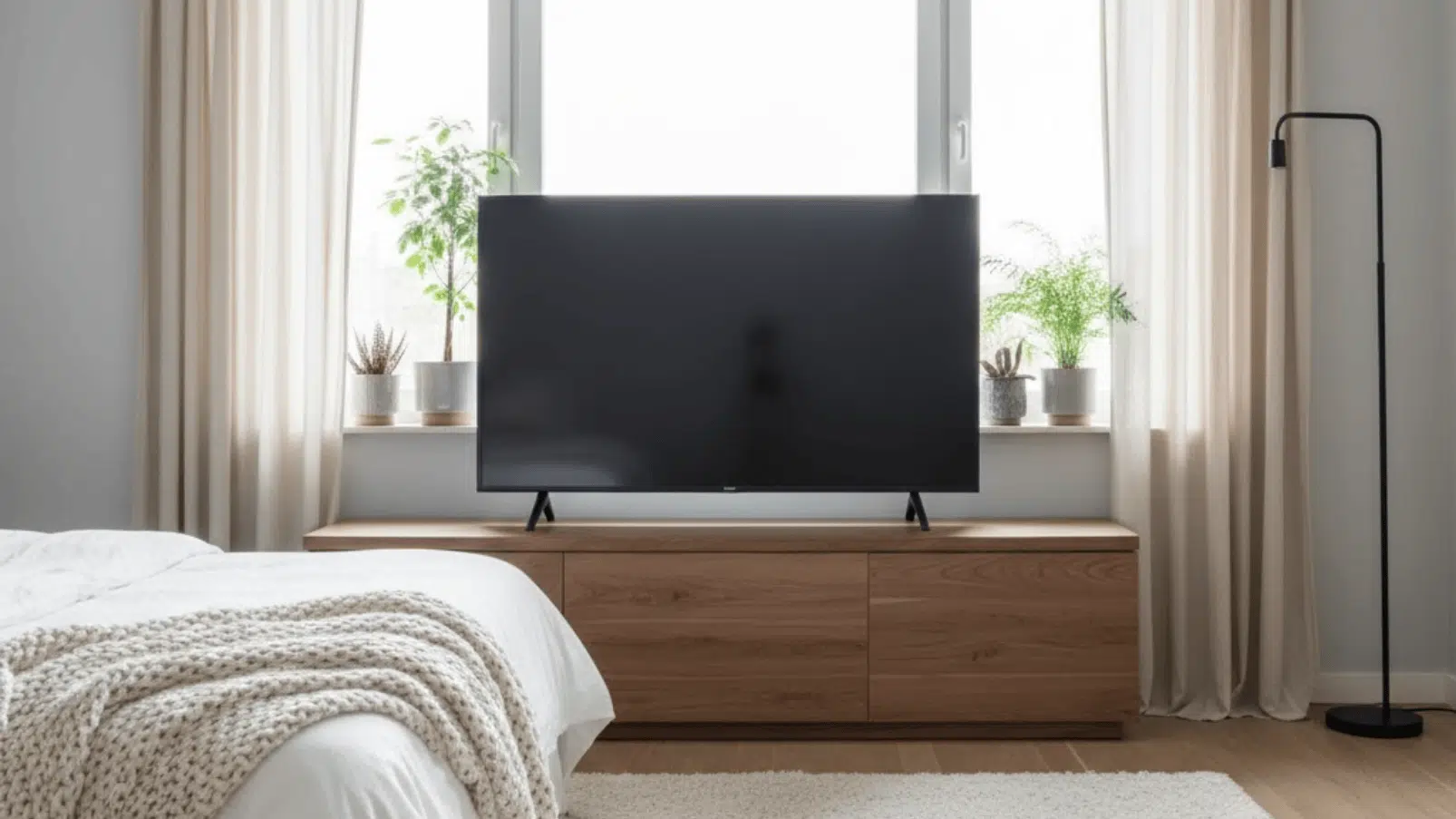

Some design rules exist for good reason. Others just stuck around longer than they should have.
Putting a TV in front of a window falls firmly in the second category.
For years, homeowners rearranged entire rooms to avoid it. And honestly, the advice made sense at the time. But homes have changed, technology has moved on, and a lot of people are quietly realising the rule no longer holds up the way it used to.
So if your window wall is calling your name, you might be onto something.
Windows that Work Best for a TV in Front of a Window
The direction your windows face plays a significant role in how well your TV setup will work, especially when placing a TV in front of a window.
| Window Orientation | Challenges | Solutions |
|---|---|---|
| North-facing | No direct sunlight, minimal glare. | Ideal for TV placement with little interference. |
| East-facing | Intense morning light, possible glare in early hours. | Use blinds or curtains to block morning sun. |
| West-facing | Afternoon and evening sun, causing glare during TV time. | Install shades or shutters to reduce afternoon light. |
| South-facing | Constant direct sunlight throughout the day. | Requires heavy investment in blinds, curtains, or anti-glare TV options. |
| Window Size | Narrow windows cause minimal interference; large windows create more glare. | Opt for strategic furniture placement and effective window treatments. |
Understanding how window orientation and size impact glare can help you create a more comfortable TV setup
Is Placing the TV by the Window a Good Idea?
Like most real design decisions, this one is not black and white. Here is what you are actually signing up for, on both sides of the debate.
Potential Benefits Worth Considering
- Frees up your solid walls: Moving the TV to the window wall opens your other walls for art, shelving, or a gallery display making for a meaningful trade-off in smaller rooms.
- Creates a strong focal point: A well-styled setup framed by curtains and a low media console draws the eye in a way that feels intentional and designed.
- Works well in low-light rooms: North-facing or naturally dim spaces see far less glare, making this placement genuinely low-risk from a viewing standpoint.
- Solves a real space problem: In apartments or open-plan homes where wall space is limited, this is often the most practical layout.
Drawbacks You Should Not Ignore
- Glare is the biggest issue: Natural light hitting the screen washes out picture quality and makes viewing uncomfortable, especially in south- or west-facing rooms during the day.
- Eye strain adds up fast: The contrast between a bright window and a lit screen forces constant adjustment, which gets tiring during longer viewing sessions.
- Direct sunlight can damage your TV: Prolonged exposure degrades screen coatings and internal components, particularly on south-facing walls with unobstructed afternoon sun.
- You’ll likely push brightness too high: To compensate for ambient light, most people crank brightness beyond what’s needed, hurting picture quality and increasing energy use.
- Seating flexibility takes a hit: Viewers sitting at an angle to the window experience more glare than those sitting dead-center, which limits how freely you can arrange furniture.
How to Make a TV in Front of a Window Work
Getting this setup right comes down to controlling light, using your TV smartly, and dodging the styling traps most people fall into.
Control the Light
Motorized blackout blinds are the most reliable fix. For tighter budgets, window tinting film works passively with no daily adjustment needed.
In low-glare rooms, sheer layering is often enough to soften the contrast without closing the space off.
Use Your TV’s Settings
Turn on auto-brightness or ambient light sensors if your TV has them; they adjust output automatically based on room conditions.
If you’re still buying, choose a matte screen over glossy as it handles reflections significantly better. And tilt the TV slightly downward, a small angle deflects incoming light and costs nothing to try.
Simple Style Tips to Tie the Set-up Together
With a few intentional design tweaks, you can take your television placement by the window look intentional rather than accidental.
1. Frame the Setup with a Low Console and Curtain Panels
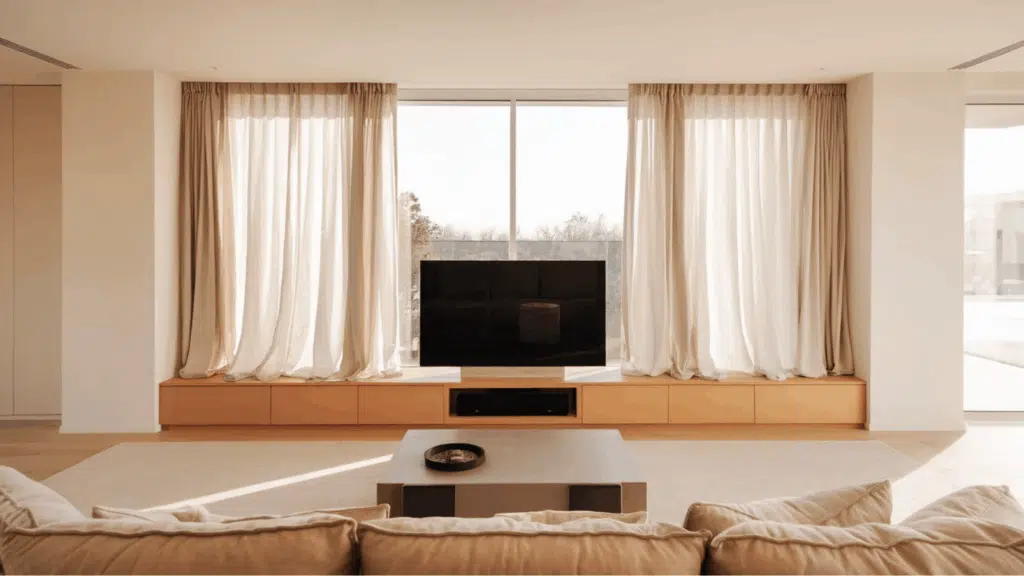
A low-profile console keeps the window visible above the screen. Add matching curtain panels on either side, and the whole arrangement looks intentional.
The panels don’t need to be heavy, even lightweight linen does the job of anchoring the setup visually.
2. Style the Windowsill with Something You Love
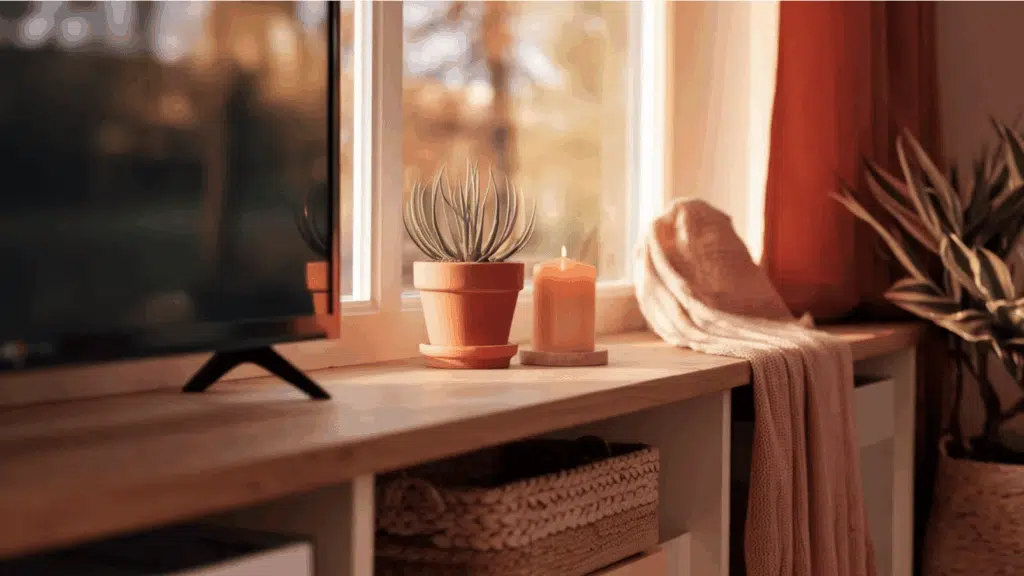
A planter, candle, or woven basket softens the space and makes it feel lived-in rather than like a showroom.
It also draws the eye to the window itself, making the TV feel like part of a larger composition rather than the only thing in the room.
3. Keep Walls and Window Treatments Neutral
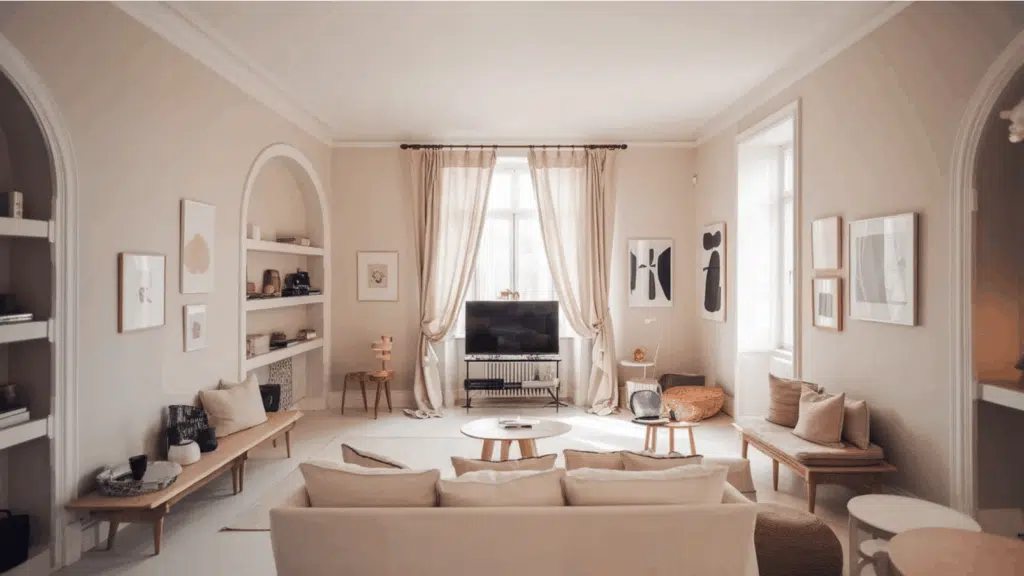
Warm whites, soft greiges, or natural linen let the setup breathe, saving the surrounding walls for shelving or a gallery display so the TV becomes a focal point, not the whole room.
Neutrals also make it easier to layer in colour through accessories without the space feeling busy.
4. Draw on Biophilic, Minimalist, or Japandi Aesthetics
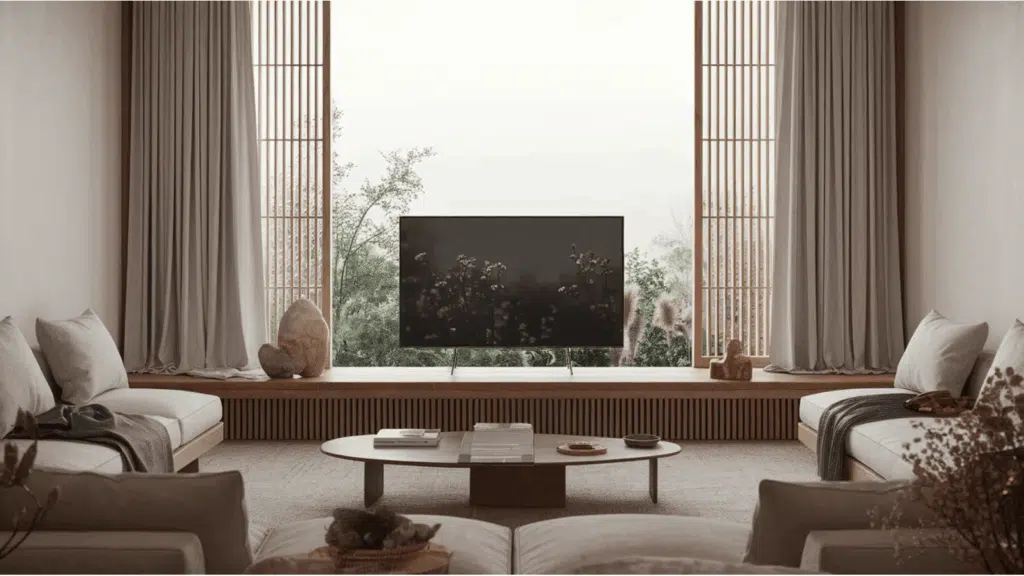
A TV framed by a real window view brings the outside in, which is the core idea behind biophilic design.
Pair that with clean lines and a neutral backdrop, and you get the calm, intentional quality of Japandi interiors: the kind of room that makes guests ask who designed it.
5. Use Diffused Light to Build Atmosphere
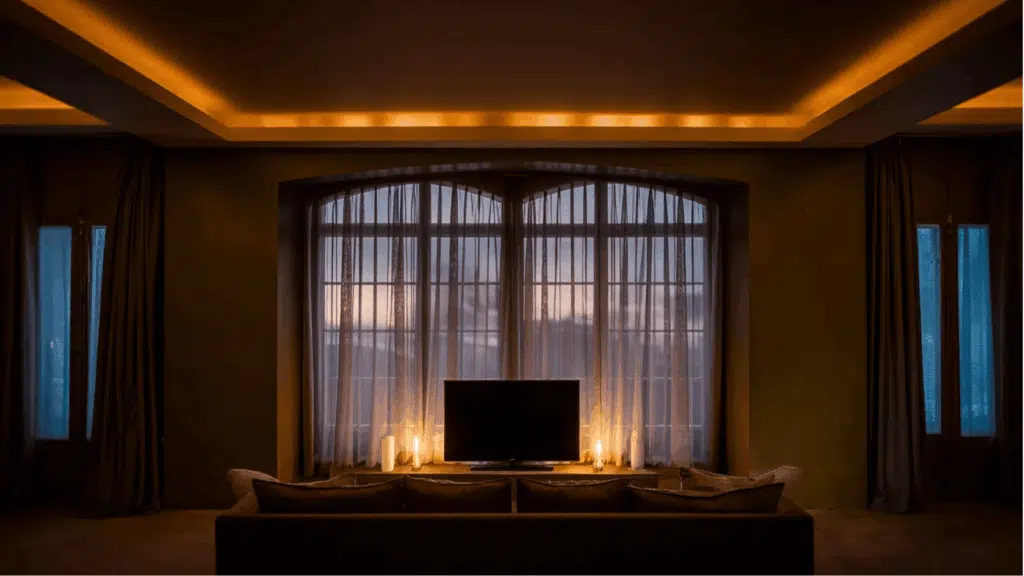
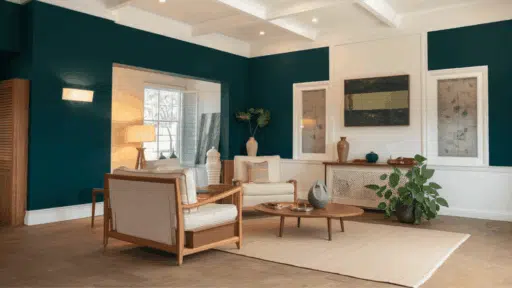
In moodier, richly toned rooms, soft window light adds depth rather than glare – and in newer open-concept homes where solid walls are rare, this setup is quietly becoming the norm.
A dimmer on your overhead lights gives you even more control over how the room feels once the sun goes down.
What Real Homeowners are Actually Saying
Head to Reddit, AVS Forum, or Houzz, and the conversation is refreshingly unfiltered. The tone has shifted in recent years – from blanket warnings to practical, experience-based advice about what actually works.
“I’ve had my TV in this location for two years, and while I noticed the window reflection when I moved in, I can’t say I’ve noticed it since — I watch mostly at night.” — AVS Forum member, r/hometheater
“Our living room is very bright and the TV is reflecting everything behind me. In any remotely dark scene, the reflections are incredibly distracting. There’s really nowhere else to put it — our apartment layout makes it difficult.” — LG OLED owner, AVS Forum
“I used all-monochrome pieces around the TV so it looked like modern art. I added sheer curtains on the other side to reduce glare and it worked well with the dramatic black finish. Surrounding the TV with items like this also reduces its visual importance.” — Designer Jon Call, via Livingetc
“I placed my TV directly across from the window. Big mistake. Afternoon sun made the screen nearly unusable. I had to shuffle the whole layout so the TV faced away from direct sunlight.” — Homeowner, Carpet Cleaning Force
The people who actually live with this setup aren’t debating whether it’s allowed. They’re sharing what fixed it — better blinds, a brighter panel, a slightly different angle. The rule has quietly become a starting point, not a verdict.
When Putting Your TV in Front of a Window is the Right Call
Placing your TV in front of a window can be the right choice in certain situations where space and layout dictate the placement. Here are a few scenarios where this setup works well:
- Small Living Rooms & Studio Apartments: Limited wall space makes this an ideal solution for maximizing viewing areas.
- Open-Plan Homes: The window wall acts as a natural room divider, making it a practical TV spot.
- Bedrooms: With minimal daytime TV use, this setup works well, especially when morning sunlight doesn’t interfere.
- Deep Window Recesses or Architectural Overhangs: These built-in features help diffuse light, reducing glare naturally.
Key Takeaway
Placing a TV in front of a window doesn’t have to be a design mistake; in fact, it can be a practical solution in many cases.
By considering factors like room size, window orientation, and natural light, you can create a functional and visually appealing setup.
If you’re facing issues with glare, simple adjustments like adding curtains, adjusting brightness, or using matte screens can make a huge difference.
Ultimately, it’s all about balancing functionality and style. If you’re considering this layout, experiment with these tips and make the most of your space.

With a Master in Architectural Studies from University of Pennysylvania, Marwa Haydar has pioneered living spaces since 2005. Her expertise, initially honed in a prestigious architectural firm, is evident in her approach to creating environments. Marwa became part of our team in 2019 and has since been a driving force in our home improvement section, known for her practical yet stylish solutions. She’s been spearheading our design workshops since then, infusing her passion for teaching into her work. In her leisure time, Marwa enjoys exploring historic architecture and is an enthusiastic pottery hobbyist, further enriching her understanding of form and texture.