
Picking the wrong hinge seems like a small mistake. But it can cost you a full reinstallation, damaged cabinet doors, or a gate that simply won’t stay shut.
The truth is, not all hinges are built the same, and choosing the right one makes a real difference.
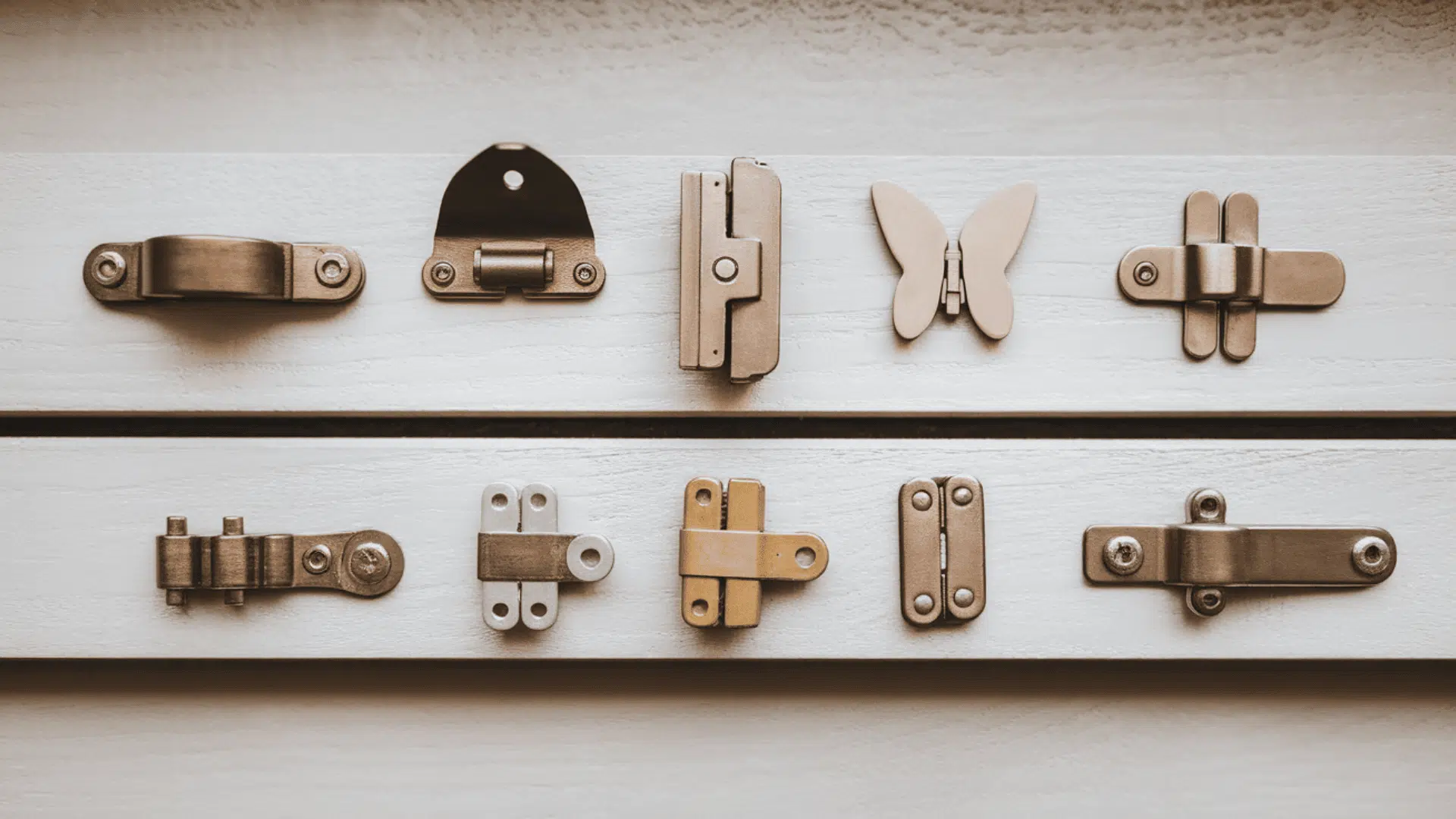
This guide covers the major types of hinges you need to know, from everyday door and gate hinges to cabinet hinge types, all detailed.
You will also find a practical breakdown by material and a straightforward framework to help you pick the right hinge for any project.
How does the Hinge System Work?
A hinge is a mechanical bearing that connects two surfaces, like a door and its frame, and allows one of them to rotate or swing.
Every hinge has the same basic job: to create controlled movement while supporting the weight of whatever it holds.
But here is the thing: the type of hinge you choose determines how well it performs, how long it lasts, and whether it actually suits your application.
Get it right, and everything works smoothly. Get it wrong, and you are looking at sagging doors, stripped screws, and early replacements.
Quick Overview: Types of Hinges at a Glance
Before getting into the details, here is a quick overview of the major hinge categories covered in this guide.
- Door Hinges: Built for interior and exterior doors, designed for load-bearing use and long-term durability.
- Cabinet Hinges: The most varied category, covering concealed, soft-close, overlay, inset, and more.
- Furniture Hinges: Compact and lightweight, best suited for chests, boxes, and furniture lids.
- Gate Hinges: Heavy-duty and weather-resistant, built for garden gates and driveways.
- Specialty Hinges: Engineered for specific industries, including marine, medical, and industrial equipment.
Cabinet Hinge Types
Most people assume a hinge is just a hinge until they have to choose one.
Cabinet hinges come in distinct types, each designed for a different door style, frame type, and use case, and choosing the wrong one affects how your cabinets look and function every day.
1. Concealed Hinges (European Hinges)
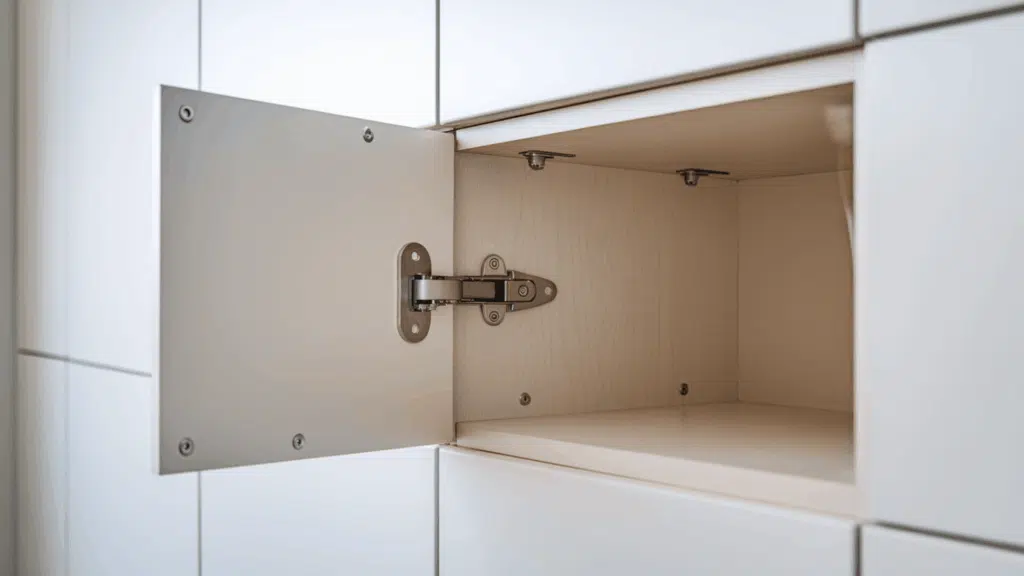
Concealed hinges sit completely hidden inside the cabinet when the door is closed, with no visible hardware, just a clean, smooth look.
Most can be adjusted in three directions after installation, which makes door alignment much easier. Best suited for modern kitchen cabinets, frameless cabinets, and minimalist designs.
2. Overlay Hinges
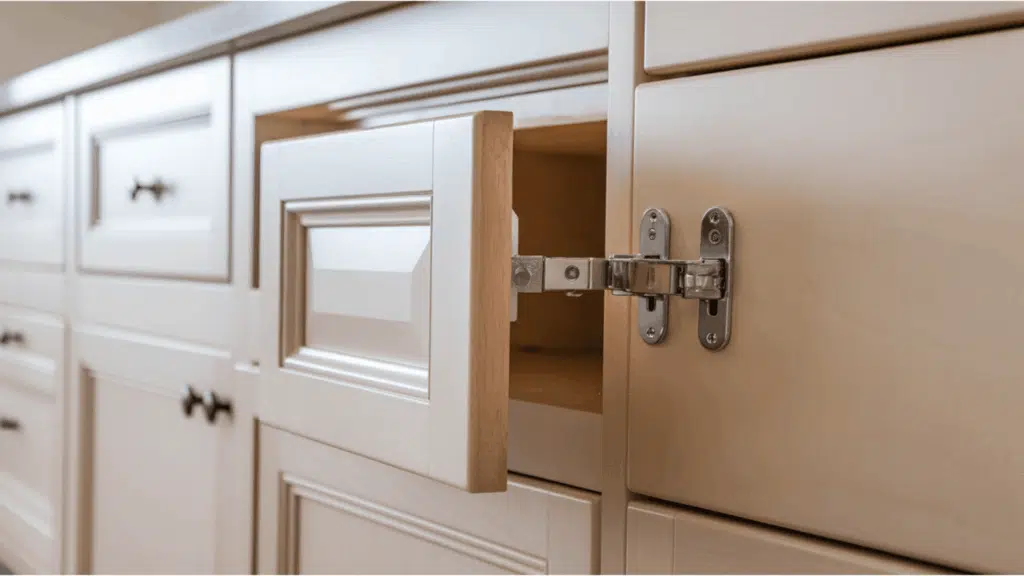
Overlay hinges are built for doors that sit on top of the cabinet frame. They come in two variations: full overlay for doors that cover the entire face frame, and half overlay for doors that share a single partition.
A reliable and widely used choice for standard kitchen and bathroom cabinets.
3. Inset Hinges
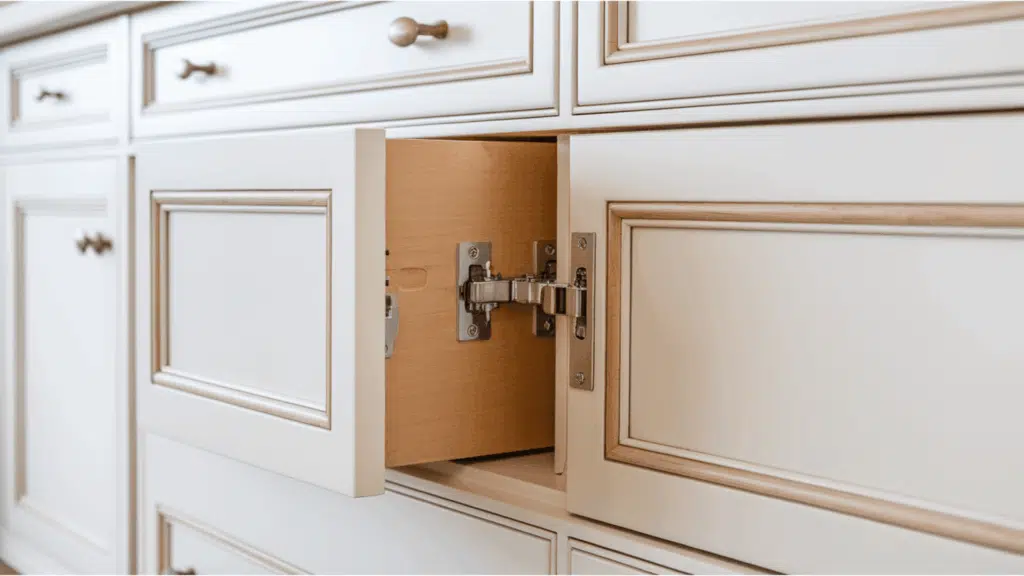
Inset hinges are used when the cabinet door sits flush inside the frame rather than overlapping it. The look is clean and precise, but the installation leaves very little room for error.
Best suited for traditional face-frame cabinets and custom furniture where a refined finish matters.
4. Soft-Close Hinges
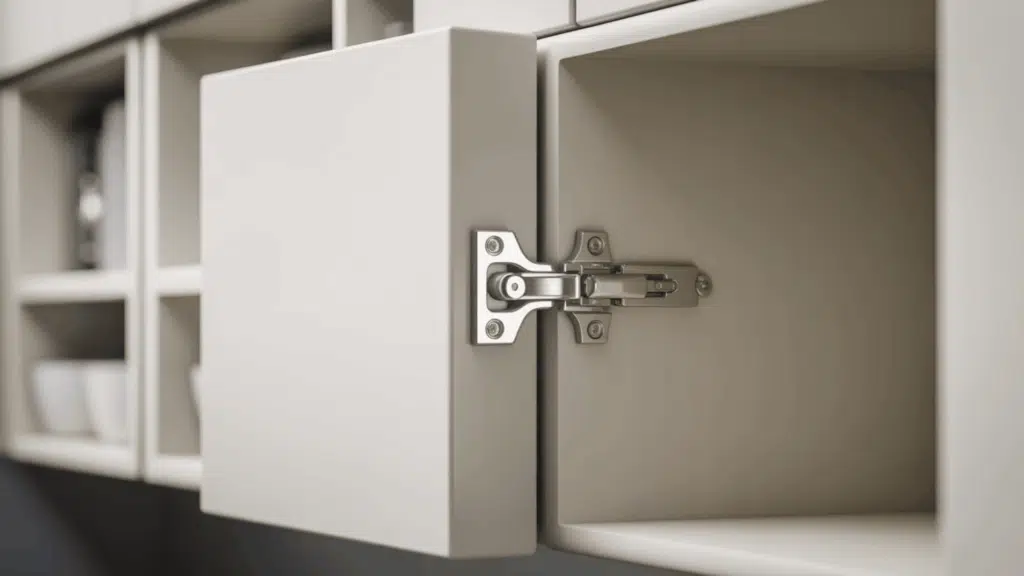
Soft-close hinges have a built-in damping mechanism that slows the door during the last few inches of closing so it never slams.
They also reduce wear on doors and frames over time, making them a smart long-term investment for kitchen cabinets, bathroom vanities, and any high-traffic area.
5. Self-Closing Hinges
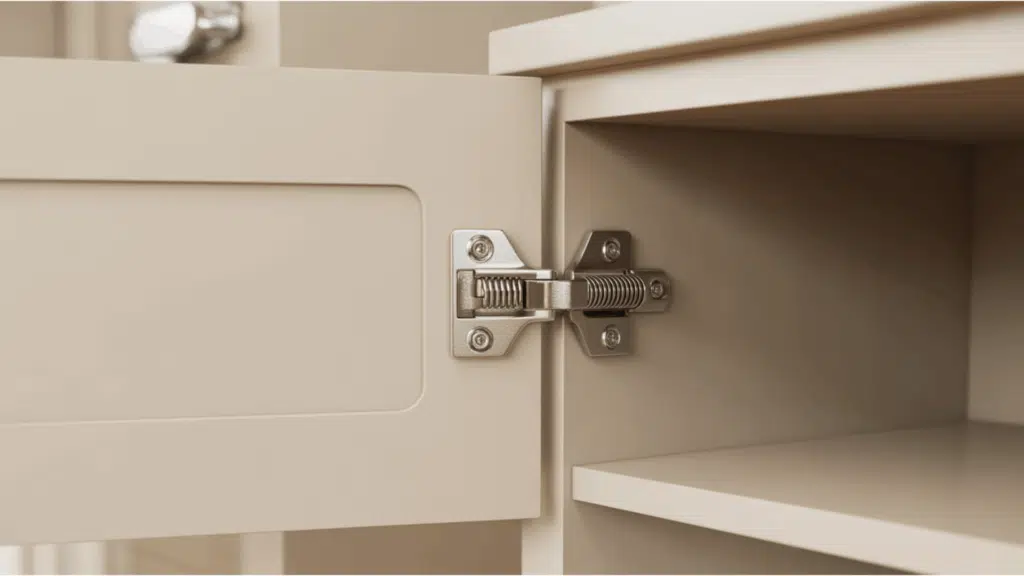
Also called snap-closing hinges, these use a spring mechanism that pulls the door shut automatically with no dampening, just a firm close.
Practical for utility cabinets, storage rooms, and pantry doors where quiet operation is not a priority.
6. Semi-Concealed Hinges
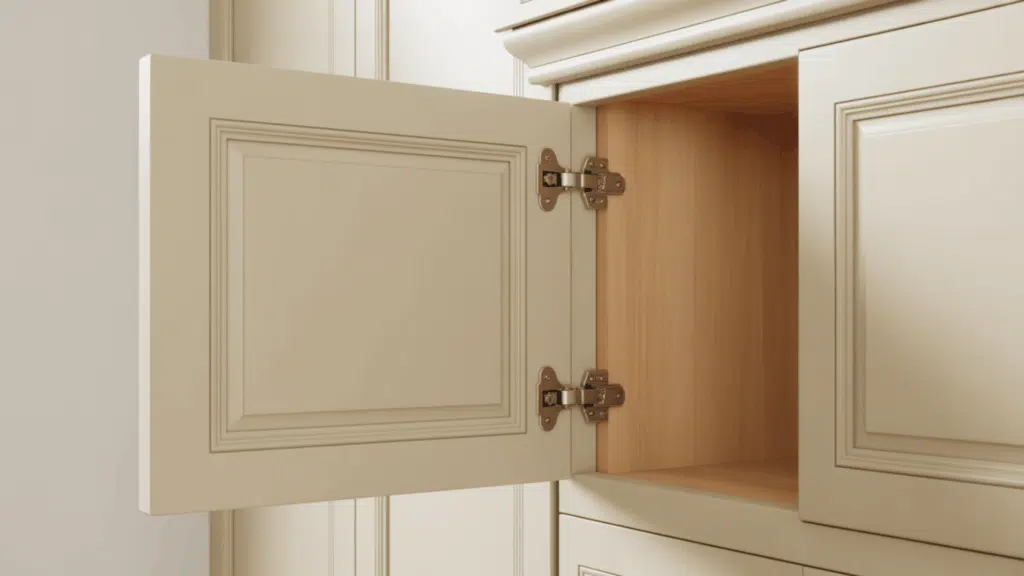
Semi-concealed hinges hide the door wing behind the cabinet door, while the frame wing stays visible.
They are the same as face-frame hinges, just referred to by different names depending on the manufacturer. A practical choice for face-frame cabinets with a classic or transitional look.
7. Pivot Hinges
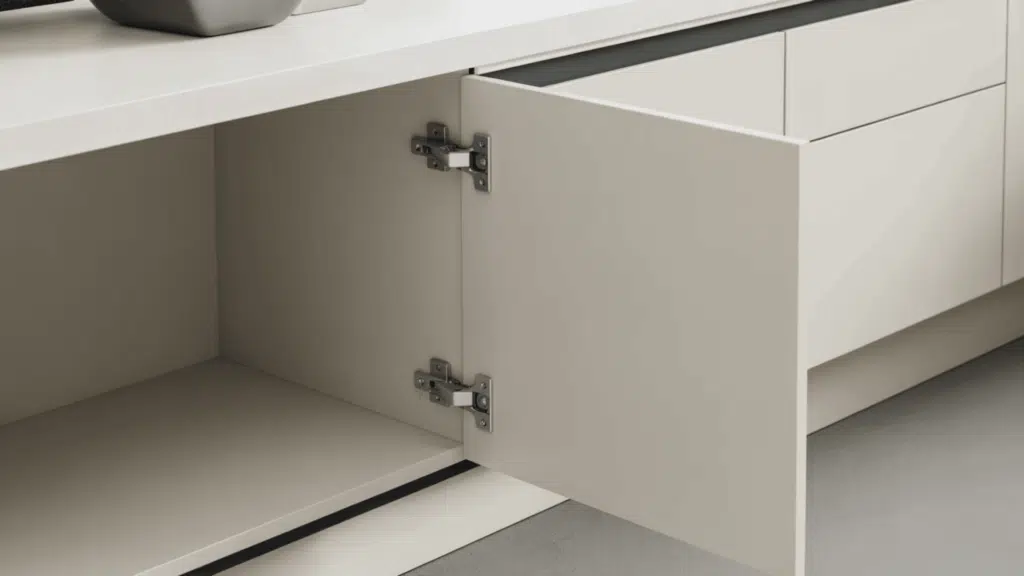
Pivot hinges mount at the top and bottom of the door rather than along the side, creating a clean, minimalist look with no side-mounted hardware.
They work with full, partial, and smooth doors but are more fragile than side-mounted hinges. Best suited for frameless cabinets, floating doors, and display cabinets.
8. Wrap-Around Hinges
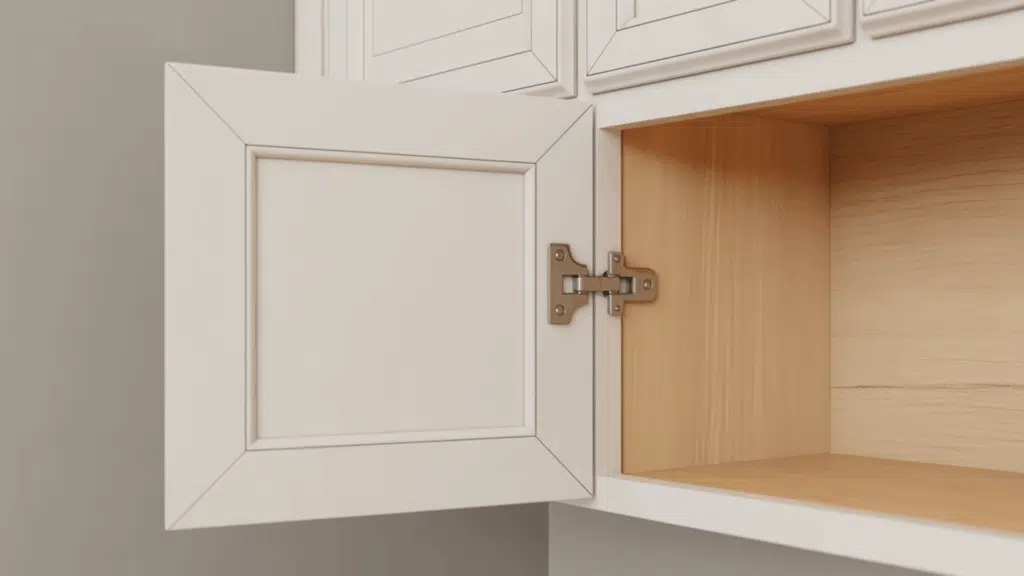
Wrap-around hinges wrap around the cabinet frame for a stronger hold.
A full wrap covers three sides of the frame, while a partial wrap covers two sides; both offer more mounting surface than a standard hinge. A solid choice for heavy cabinet doors and face-frame cabinets.
9. Frameless Cabinet Hinges
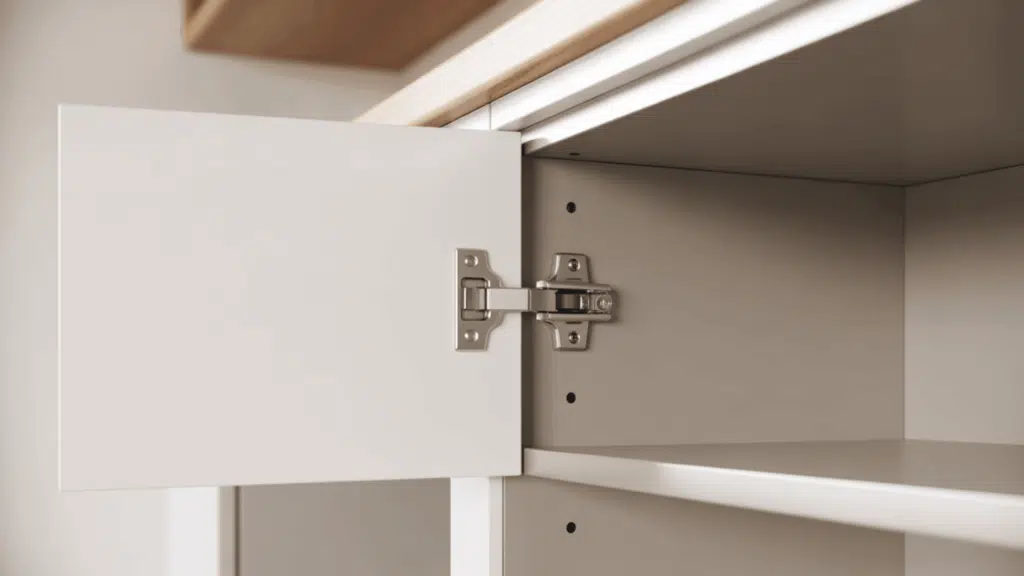
Frameless cabinet hinges are designed for European-style cabinets without a face frame. They attach directly to the inside of the cabinet box, giving full, unobstructed access to the cabinet interior.
The go-to choice for modern frameless kitchen cabinets and European-style cabinetry.
10. Demountable Hinges
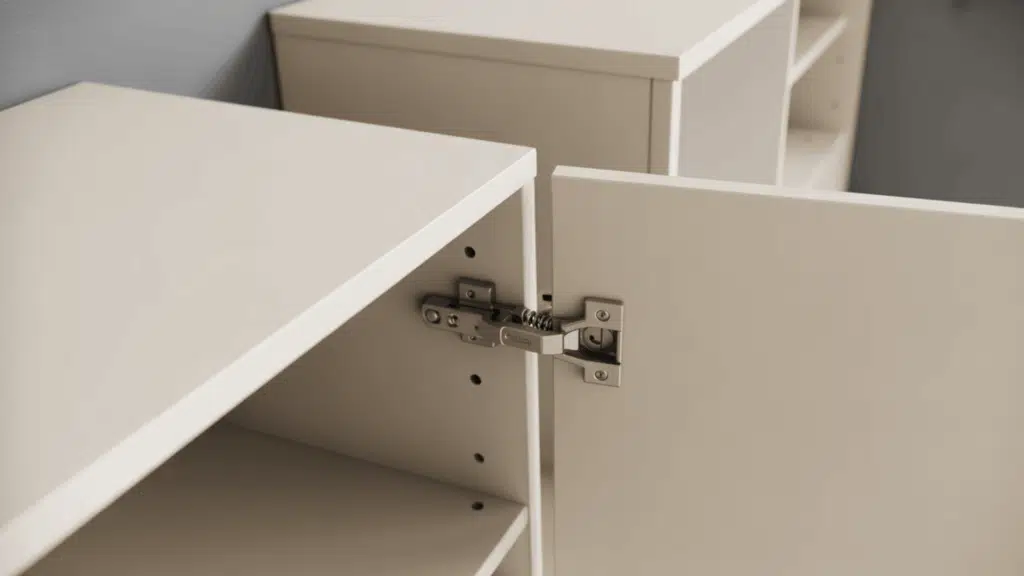
Demountable hinges let you remove and reattach cabinet doors quickly without any tools, making them a practical choice for rental properties, modular kitchens, and spaces that need frequent reconfiguration.
11. Butterfly Hinges
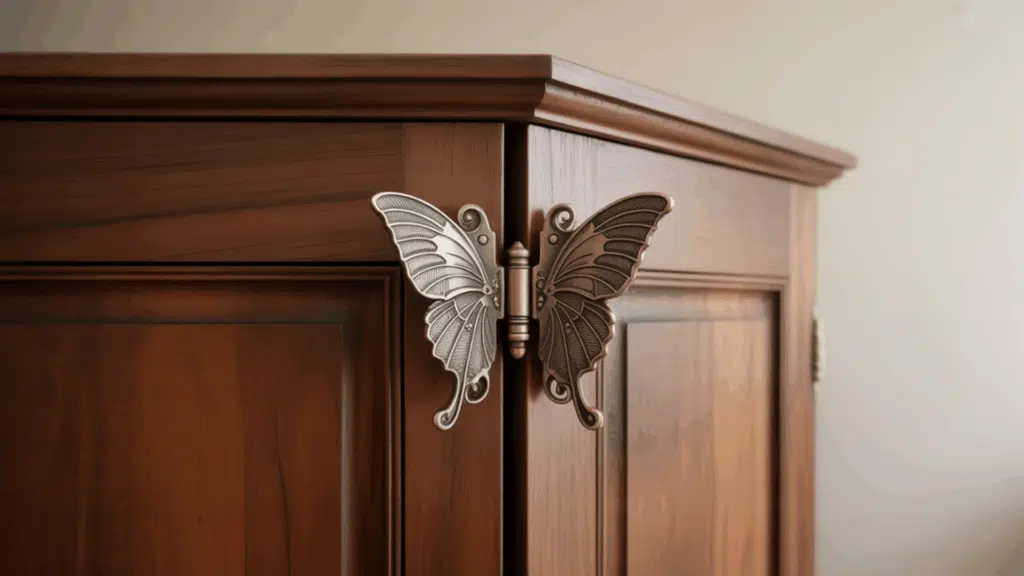
Butterfly hinges get their name from their wing-shaped design. They are surface-mounted and fully visible, making them a decorative choice rather than purely functional.
Most commonly seen on decorative cabinet doors, antique furniture, and display cabinets.
12. Clip-On Hinges
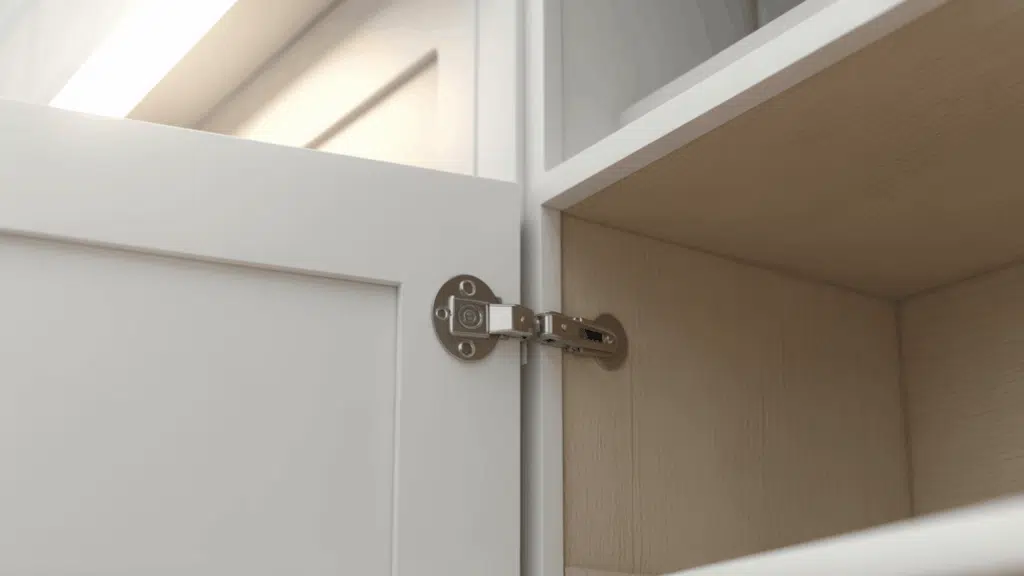
Clip-on hinges attach to a pre-installed mounting plate without screws, making them among the fastest hinges to install and remove.
Very common in flat-pack furniture and modern cabinet systems where speed and adjustability matter.
13. Surface Mount Cabinet Hinges
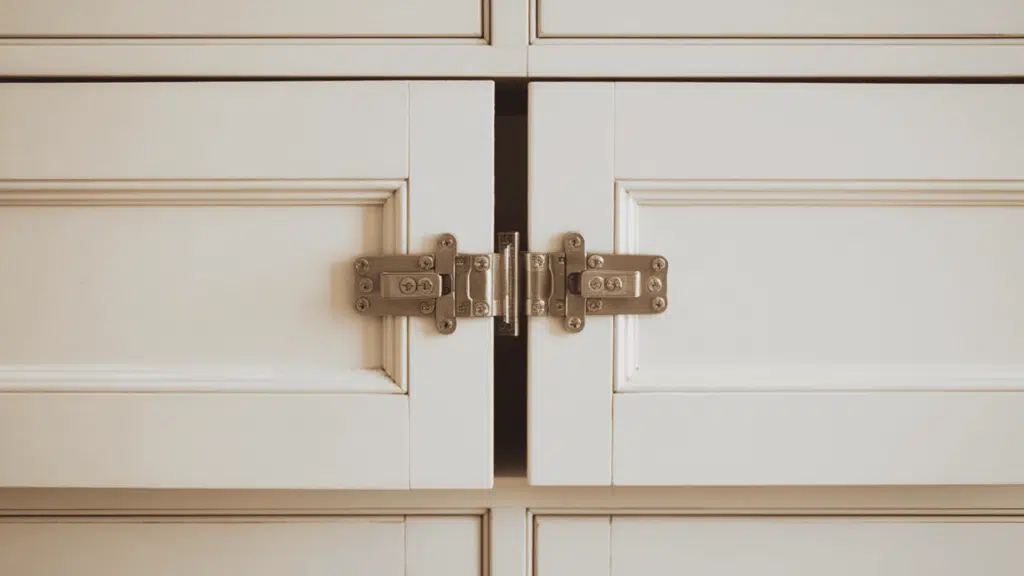
Surface-mount hinges attach directly onto the cabinet and door surfaces with no mortising or chiseling required.
Straightforward to install and a dependable choice for overlay cabinet doors, DIY projects, and budget-conscious installations.
14. Corner Cabinet Hinges
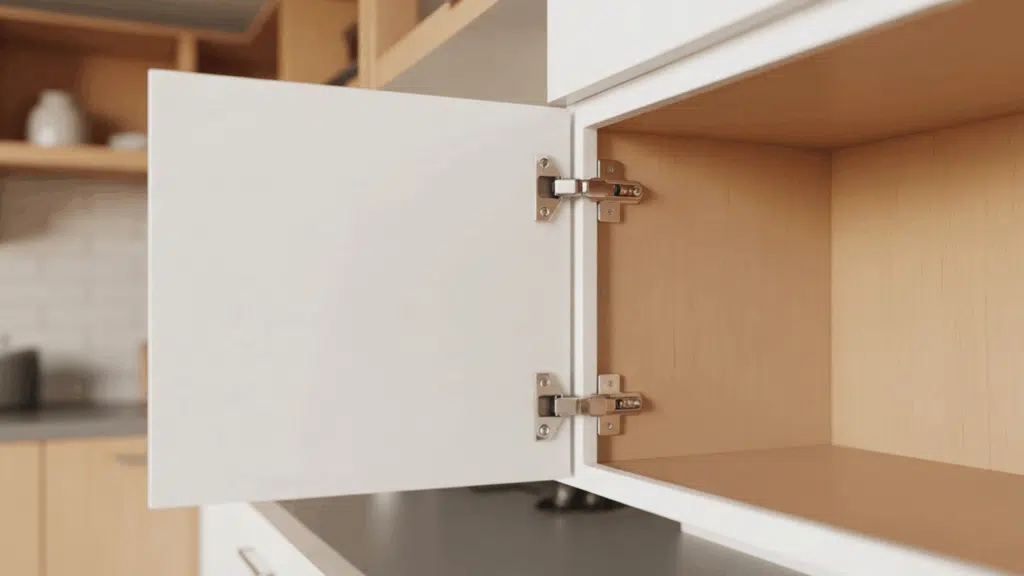
Corner cabinet hinges are built specifically for the wide-angle opening needs of corner kitchen cabinets.
They allow the door to swing open far enough to give full access to what is often the most difficult cabinet space to reach.
15. Butt Cabinet Hinges
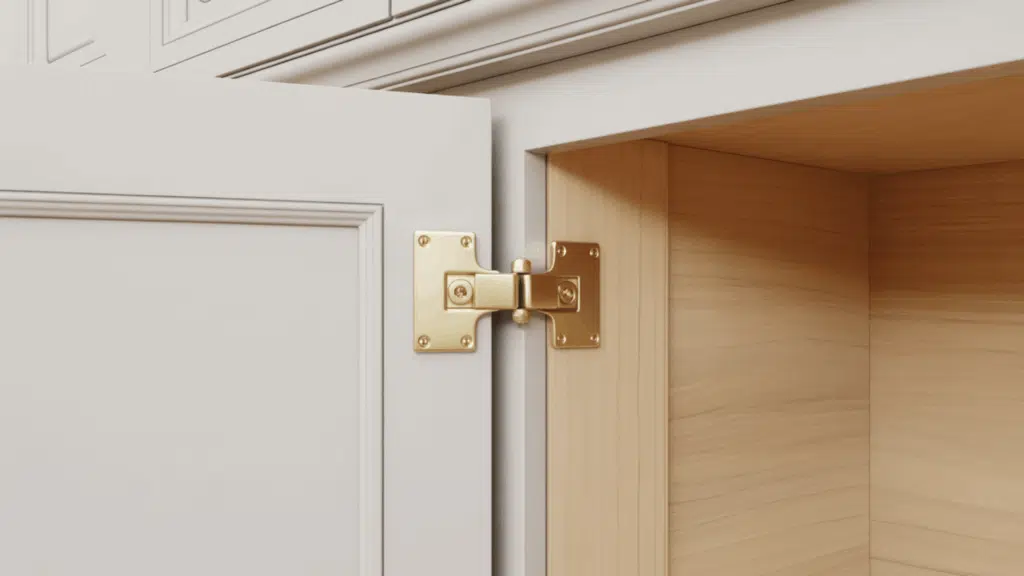
Butt hinges are one of the oldest and most traditional cabinet hinge types. They consist of two rectangular metal plates joined by a central pin.
One plate mounts to the cabinet frame, the other to the door, with only the pin visible when the door is closed. A durable and reliable option for traditional kitchen cabinets, bookshelves, and wardrobes.
Types of Hinges by Material
The hinge type is only half the decision. The material determines how well it holds up over time and in what environment it will actually last.
| Material | Best For | Key Benefit | Limitation |
|---|---|---|---|
| Steel | Heavy interior doors, high-traffic areas | Strongest and most affordable option available | Prone to rust without a protective coating, not suited for damp or outdoor use |
| Stainless Steel | Outdoor, coastal, and marine environments | Highly corrosion-resistant with a significantly longer lifespan in moisture-heavy settings | Higher cost than standard steel |
| Brass | Traditional furniture, period-style doors, and cabinetry | Naturally corrosion-resistant with a warm decorative finish that suits classic designs | Softer than steel, not ideal for heavy-duty structural use |
| Bronze | Architectural and high-end residential projects | Rich appearance combined with high durability, a premium finish that holds up long-term | Most expensive material option, often specified rather than DIY-purchased |
| Plastic | Small storage boxes, plastic enclosures, light-duty fittings | Lightest and most budget-friendly option available | Minimal load capacity, not suitable where strength or appearance matters |
To Conclude
Choosing the right hinge comes down to a few simple factors: the type of cabinet or door you have, the weight it carries, how often it’s used, and the environment it’s in.
Cabinet hinges in particular deserve careful thought. With fifteen distinct cabinet hinge types available, the right choice makes a real difference in how your cabinets look and function every day.
Take your time, match the hinge to the job, and you will not have to think about it again.
Got questions about specific types of hinges for your project? Drop them in the comments, and we are happy to help you find the right fit.

James McLaren, with a rich background in architecture from the University of Manchester, has been contributing his expertise to the world of creative construction and home innovation for over 20 years. His journey began as a project manager for a leading construction firm, where he honed his skills in bringing complex designs to life. James joined our platform as a freelancer in 2019, quickly becoming a favorite for his insightful and practical advice. He has been a pivotal force to our wing ever since, bringing our readers a blend of technical know-how and creative flair. Beyond his professional life, James is an avid woodworker and enjoys restoring vintage furniture, a hobby that complements his professional insights beautifully.