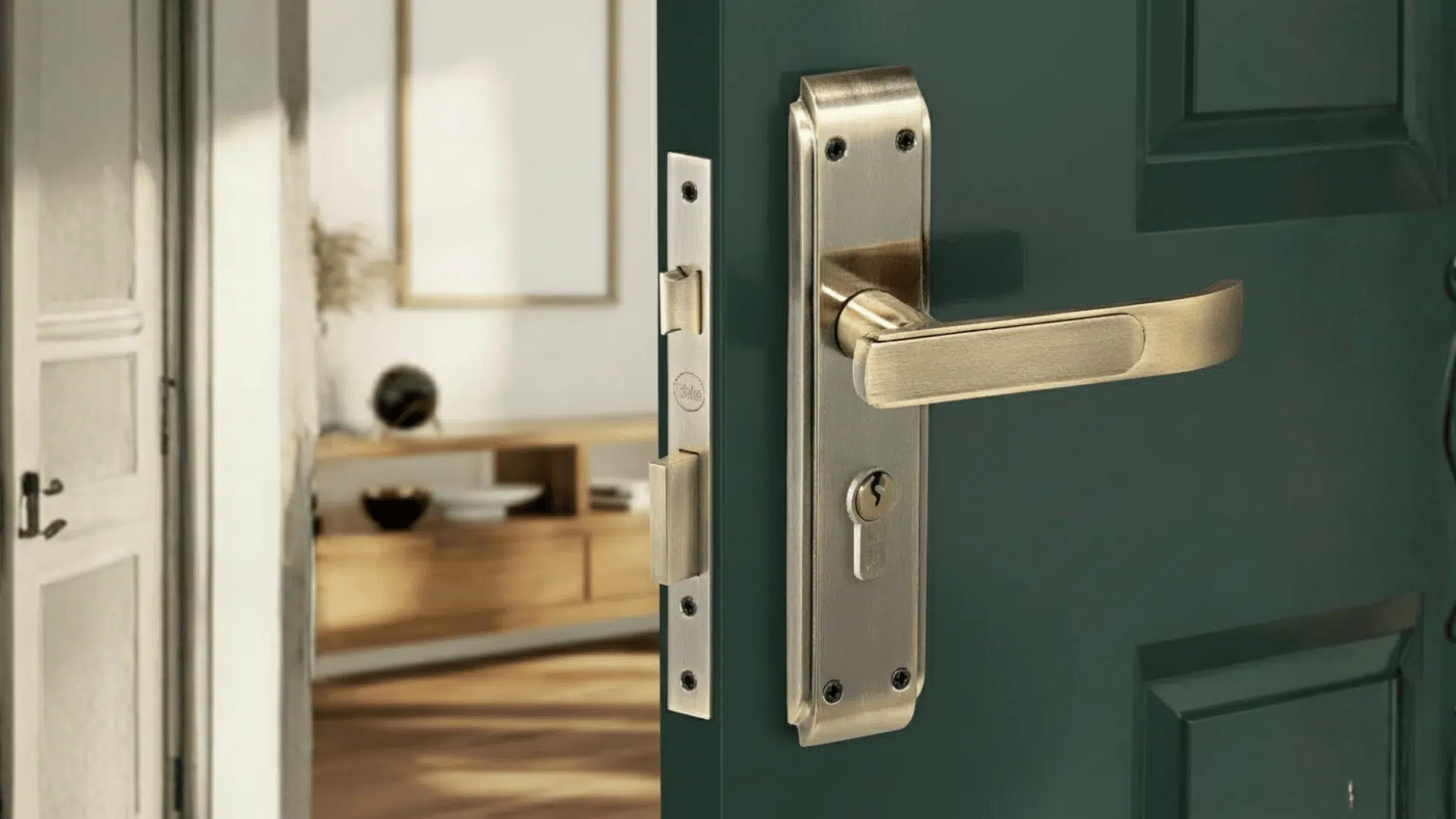

Understanding the parts of a door lock makes it much easier to handle everyday issues like choosing a new lock, replacing a broken piece, or improving your home’s security.
Many people look at a lock and see one simple device, but it’s actually made of several small parts that work together.
In this blog, you’ll learn what each piece is called, how different lock styles use different parts.
If you’re fixing a sticky handle or comparing lock designs, this overview of parts of a door lock will help you feel more confident working with any lock in your home.
Understanding the Different Parts of a Door Lock
Every lock has a set of basic parts that work together, and learning them helps you understand how the whole system works.
1. Cylinder / Core

The cylinder is the part of the lock that takes the key. Inside it are small pins that move when the key slides in. When the cuts match the pins, the cylinder turns and opens the door.
High-quality cylinders stay smooth longer and resist damage better, and choosing a cylinder from a trusted brand gives you better security and fewer key issues.
Recommendation: Prime-Line E 2103 Cylinder Lock
2. Keyway

The keyway is the opening where the key enters the lock. Its shape Breakdown the key into the right position so the pins can line up.
Different lock brands use different keyway designs, so not every key fits every lock. In my experience, narrow keyways offer better pick resistance, but standard ones are easier to use daily.
Recommendation: Brass Mortise Cylinder Keyed
3. Latch Bolt

The latch bolt is the angled piece that keeps the door closed. It’s spring-loaded, so it pulls back when you turn the handle and moves out again when you release it.
I’ve seen many latch problems caused by misalignment, not the latch itself. In my experience, a good-quality latch with a strong spring makes the door feel solid and responsive. It also lasts longer and avoids sticking or dragging.
Recommendation: Adjustable Door Latch
4. Deadbolt

The deadbolt is a solid metal bolt that provides stronger security. It doesn’t move unless you turn a key or thumbturn. Because it slides deeper into the frame, it resists force much better than a latch.
A single-cylinder deadbolt works best for most homes, while double-cylinder versions add extra safety for glass doors, so a well-built deadbolt is the most important part of door security.
Recommendation: Boomerang Heavy Duty Designer Commercial Deadbolt
5. Strike Plate

The strike plate is the metal piece on the door frame that receives the latch or deadbolt. It reinforces the frame and helps the lock line up correctly.
If it’s loose or misaligned, the door won’t close smoothly. A reinforced strike plate with longer screws gives far better protection and helps prevent forced entry.
Recommendation: Extra Large Door Strike Plate
6. Faceplate / Forend Plate

The faceplate is the metal piece on the edge of the door around the latch. It holds the latch in place and keeps it aligned so the door works smoothly.
Faceplates come in square or rounded shapes, depending on the cutout. A solid, properly fitted faceplate keeps the latch stable and reduces long-term wear. Picking the exact match makes installation easier and prevents wobbling.
Recommendation: Leviton + 80601-W 1-Gang Decora
7. Spindle

The spindle is the rod that connects the inside and outside door handles. When you turn the knob or lever, the spindle rotates and pulls the latch back.
If the spindle wears out, the handle can spin without opening the door. In my experience, a sturdy steel spindle is best because it handles daily use better and keeps the handle feeling firm.
Recommendation: Mandrel Spindle Fit
8. Thumbturn

The thumbturn is the small knob you twist to move the deadbolt from inside the house. It makes locking fast and easy without a key. If it becomes stiff, the deadbolt may not fully extend.
Smooth, well-machined thumbturns make the lock feel more comfortable and reliable, and a thumbturn with a good grip works best, especially for children or older adults.
Recommendation: Thumbturn Storefront Door Mortise Lock
9. Knob or Lever

The knob or lever is the part you grab to open the door. Turning or pressing it rotates the spindle and pulls the latch back. Levers are easier for kids and older adults.
Knobs offer a classic look, but levers feel more natural to use, and a solid, well-balanced handle makes the whole door feel better and lasts longer.
Recommendation: Commercial Lever Door Lock
10. Escutcheon / Rose Plate

The escutcheon, or rose plate, sits behind the knob or lever. It covers the screws and protects the surface around the hardware from wear. It also gives the lock a clean, finished appearance.
Strong metal plates hold everything in place more securely. In my experience, choosing a well-made escutcheon improves both the look and durability of the lock, especially on doors used often.
Recommendation: Wall Split Flange JianLing
Parts Used in Different Lock Styles
Each lock style has its own set of parts, and knowing them helps you understand how the lock works and what you may need to replace.
1. Doorknob & Lever Lock Parts

Doorknob and lever locks use a basic setup that makes everyday use simple. These locks include a latch bolt, a spindle, two knobs or levers, a faceplate on the door edge, and a strike plate on the frame.
The handle turns the spindle, which pulls the latch back so the door can open. This design works well for most interior doors and light-use exterior doors because it’s easy to install and maintain.
Recommendation: Knobonly Sets of Front Exterior Door Knob Set
2. Deadbolt Parts

Deadbolts rely on stronger internal parts because they’re meant for security. Inside the lock, the tailpiece connects the key cylinder to the bolt so the key can move it.
The bolt hub controls the motion of the bolt, and the bolt sleeve keeps everything lined up as it slides. Some deadbolts also have anti-drill features that protect the cylinder from forced entry.
This setup makes a deadbolt harder to break than a regular latch lock.
Recommendation: Door Knob With Key Lock and Deadbolt
3. Mortise Lock Parts

Mortise locks sit inside a deep pocket in the door and have more moving parts than standard locks. The lock body holds the internal gears, while the lock cylinder takes the key and turns the mechanism.
A thumbturn inside the door lets you lock or unlock it without a key. The faceplate covers the edge of the lock and supports the latch and bolt openings.
Some versions include an auxiliary latch for extra stability or added security. This design is common in commercial buildings and older homes.
Recommendation: Mortise Lock Set for Interior Door
4. Smart Lock Variations

Smart locks use electronic systems to move the bolt instead of relying only on a key. A motor assembly handles the locking and unlocking once a code, app, or sensor triggers it.
Built-in sensors help the lock track whether the door is open, locked, or needs adjustment. The battery housing holds the power source that runs everything, and some models include Wi-Fi or Bluetooth modules.
This setup offers convenience and keyless entry while still keeping a mechanical backup inside.
Recommendation: Schlage Encode Smart WiFi Deadbolt Lock for Front Door
Common Door Lock Problems and Fixes
| Problem | Fix |
|---|---|
| Latch won’t retract | Replace the worn latch or spindle. A weak spring or damaged spindle is usually the cause. |
| The key won’t turn | Use dry lubricant or replace the cylinder if the keyway or pins are stuck or worn. |
| The door won’t close or latch | Adjust or move the strike plate. Tighten hinges so the latch lines up with the opening. |
| Loose door handle | Tighten set screws or replace the spindle or handle set if looseness continues. |
Understanding these simple causes makes it easier to repair minor lock issues without replacing the entire lock.
Are Door Lock Parts Universal?
Most door lock parts are not universal because sizes and shapes vary by brand.
The backset is the main measurement to check, usually 2-3/8 inches or 2-3/4 inches. If this doesn’t match, the part won’t line up.
Latch and faceplate shapes also differ, and some brands use unique designs that only fit their hardware. Deadbolts may be compatible across brands, but only when the bolt size, backset, and screw spacing match.
Universal parts work when all measurements and shapes line up. They won’t fit when the door prep, screw pattern, or latch design is different.
Buying Guide for Door Lock Parts
- Take key measurements: Measure the backset, door thickness, and faceplate shape so the new part fits the existing cutouts.
- Check standard sizes: Most locks follow common sizes, but some brands use unique latch shapes or screw patterns. Match these to avoid extra drilling.
- Match the finish: Choose a finish like satin nickel, bronze, or chrome that matches your current hardware for a clean, consistent look.
- Review security grades: Grade 1 offers the highest strength, Grade 2 is standard for homes, and Grade 3 provides basic protection.
Checking these basics helps you avoid fitting issues and ensures the new part lasts longer.
Conclusion
Knowing the parts of a door lock gives you a clearer picture of how your locks work and what to check when something feels off.
Simple details like choosing the right measurements, matching finishes, or understanding which part controls movement can make repairs and upgrades much easier.
This knowledge also helps you pick hardware that fits your door properly and meets the level of security you want.
If you ever decide to switch styles, update old hardware, or handle small fixes yourself, these basics make the process smoother.
If you’re planning a repair or want help choosing new parts, feel free to ask.

With a Master’s in Architecture from the University of California, Berkeley, Mitchell Green has spent over two decades dedicated to the study and practical application of home fixture design. His career started in an architectural firm, providing him a strong foundation in the structural and aesthetic aspects of home interiors. Mitchell brought his comprehensive knowledge to our platform, where he has been an influential voice in our home fixtures and fittings section. Since 2018, he has been guiding our readers through the intricacies of selecting and installing fixtures, combining technical know-how with design flair. In his spare time, Mitchell is a keen photographer, capturing architectural details and design elements, an interest that complements his professional focus.