
If you’ve been looking into flat or low-slope roofing options, chances are you’ve come across the term TPO.
It keeps showing up in contractor quotes, roofing guides, and product comparisons. But what exactly is it, and why do so many people recommend it?
If you’re wondering: what is a TPO roof? You’re not alone. It’s become a popular choice for a reason.
So if you’re comparing roofing options or just curious about what’s covering the nearby warehouse, this blog will help. Here, you’ll learn what a TPO roof is, how it works, and what you can expect in terms of cost and benefits.
What is a TPO Roof?
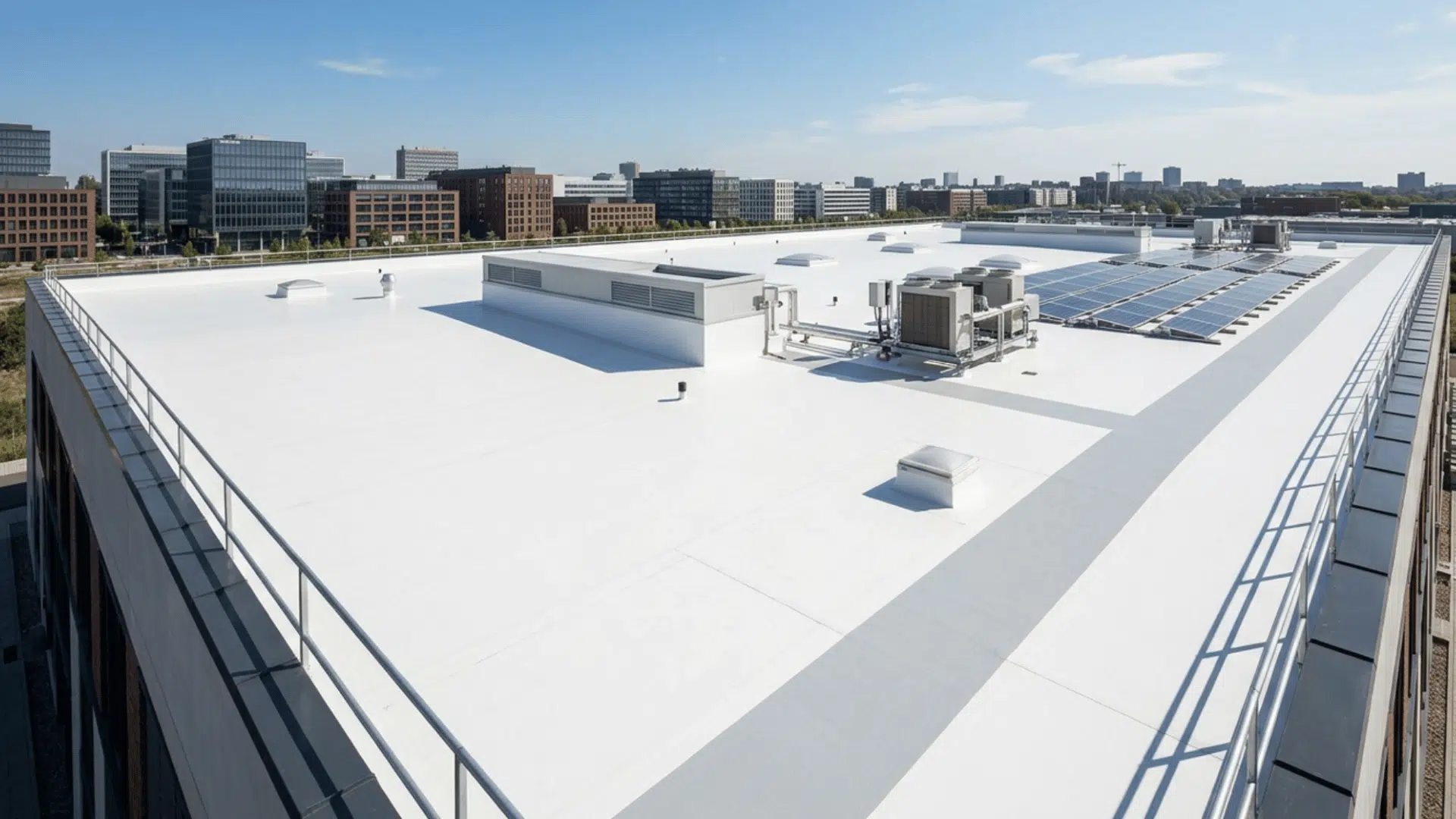
TPO stands for Thermoplastic Polyolefin. It’s a single-ply roofing membrane made from a blend of polypropylene and ethylene-propylene rubber, essentially a flexible sheet installed over flat or low-slope roofs to keep water out and withstand the elements.
Most TPO membranes come in white or light gray, with sheet widths of 10, 12, and 20 feet. Inside the membrane sits a reinforcing layer of polyester or fiberglass scrim, which adds strength and helps resist tears and punctures.
As for how it works, the sheets are rolled out on the roof deck, and the seams are heat-welded with a hot-air gun, forming a tight, watertight bond.
That reflective white surface also bounces sunlight back rather than absorbing it, helping keep the building cooler and cutting energy bills.
Pros and Cons of TPO Roofing
A balanced view helps make a better decision. It offers high cost and performance benefits, but it also has a few limitations.
| Advantages | Disadvantages |
|---|---|
| It reflects sunlight, helping keep indoor spaces cooler and reducing energy costs. | The lifespan can vary depending on the material quality and the installation quality. |
| It performs well against dirt, algae, and everyday wear, making it a reliable option over time. | Different manufacturers offer different quality levels, which can affect long-term performance. |
| The lightweight material makes installation quicker and can lower labor costs. | Extreme heat or cold can impact the roof’s flexibility and overall performance. |
| It requires minimal upkeep, with simple cleaning and occasional inspections. | Seams may weaken over time if not installed or maintained properly. |
| It offers a good balance between cost and performance for flat roofing systems. | The surface can get damaged from sharp objects or heavy foot traffic. |
| The material can withstand slight building movement without cracking. | Poor installation can lead to early issues and reduce the roof’s lifespan. |
Common TPO Roof Installation Methods
Not all TPO roofs are installed the same way. The method used can affect cost, durability, and performance. Here are the most common types:
1. Fully Adhered System

In this method, the TPO membrane is glued directly to the roof surface, creating a smooth and secure finish. It gives a clean look and offers strong wind resistance, which makes it a reliable option in harsh weather.
However, the installation cost is usually higher than that of other methods. It also needs proper surface preparation to ensure the adhesive works well and lasts long.
2. Mechanically Attached System

This system uses screws and plates to fasten the TPO membrane to the roof. It is a cost-effective option that can be installed quickly, making it popular for large projects.
On the downside, it has slightly lower wind resistance compared to fully adhered systems. In some cases, fastener lines may be visible, which can affect the overall appearance.
3. Ballasted System

In this setup, the membrane is placed loosely and held down using gravel or pavers. It is one of the most affordable options and works well for large flat roofs.
The added weight helps keep the membrane in place without adhesives or fasteners. However, the heavy load can put extra stress on the building structure.
It is also not suitable for all buildings, especially those not designed to handle the extra weight.
How Much Does a TPO Roof Cost?
Cost is one of the biggest deciding factors for any roofing project. It is often chosen because it offers a good mix of price, performance, and lifespan.
| Cost Item | Typical Range |
|---|---|
| TPO material only | $1.00 to $2.50 per sq. ft. |
| Installed TPO roofing | $4.00 to $10.00 per sq. ft. |
| Full project total | $6,000 to $18,000 |
| Fully adhered system | 15% to 20% more |
What Affects TPO Roofing Cost
Several factors can change the final cost of a TPO roof, both during installation and over time:
- Roof size and complexity: Larger roofs require more materials and labor, increasing the total cost. Complex layouts with vents, edges, or drains can add 10% to 25% more due to the extra work required.
- Insulation and deck condition: Adding insulation may cost around $1 to $3 per sq. ft., depending on thickness. If the roof deck is damaged, repairs can add $500 to $3,000 before installation can begin.
- Labor and location: TPO material itself is affordable, but labor, roof prep, and installation make it expensive.Labor costs vary by area and contractor availability. In some regions, prices can be 20% to 40% higher, especially in cities with higher living costs.
- Inspection cost: Regular inspections usually cost $100 to $300 and help spot small issues early. This can prevent bigger and more expensive repairs later.
- Minor repairs: Small fixes like seam repairs or patches typically cost $150 to $1,000, depending on the size and location of the damage.
- Typical repair range: Most common repairs fall between $360 to $1,550, especially for leaks, flashing issues, or worn sections of the membrane.
- Major leak repairs: More serious problems can cost $700 to $3,000, especially if water damage spreads or multiple areas need fixing.
TPO Roof vs. Other Roofing Materials
Comparing TPO with other materials helps you understand where it stands in terms of cost, strength, and long-term use.
TPO vs. EPDM
EPDM is a rubber-based roofing material, while TPO is made from a blend of plastic and rubber compounds. Both are widely used for flat and low-slope roofs because they are lightweight and easy to install.
EPDM has been around longer and is known for its proven track record, while TPO is a newer option that focuses more on energy efficiency and modern performance.
Here’s how it compares:
- Cost: EPDM is usually more affordable upfront. TPO costs slightly more but offers better energy-saving benefits.
- Durability: Both materials are durable, but EPDM is known for long-term reliability. TPO durability depends more on product quality and installation than on the material itself.
- Heat resistance: TPO reflects sunlight, which helps reduce heat buildup. EPDM absorbs heat, which can make indoor spaces warmer.
TPO vs. PVC
PVC is another single-ply roofing material, similar to TPO, but it is known for its higher strength and chemical resistance.
Both are used for flat roofs and commercial spaces, but they differ in cost and performance. TPO is more budget-friendly, while PVC is often chosen for areas that need extra durability.
Here’s how it compares:
- Strength: PVC is stronger and more resistant to tears and impact. TPO is durable but slightly less tough.
- Price differences: TPO is more affordable, making it a popular choice for budget projects. PVC costs more due to its higher performance.
- Chemical resistance: PVC performs better in areas exposed to grease, oils, or chemicals. TPO works well but may not offer the same level of protection.
TPO vs. Fiberglass
TPO and fiberglass are both used in RV roofing, but they serve different needs. TPO is flexible and lightweight, while fiberglass is rigid and more solid.
The choice often depends on budget, durability needs, and long-term maintenance.
Here’s how it compares:
- Weight comparison: TPO is lighter, which can help with fuel efficiency. Fiberglass is heavier but provides a more solid surface.
- Cost difference: TPO is more affordable and commonly used in budget RVs. Fiberglass costs more but is seen as a long-term option.
- Repair and maintenance: TPO is easier and cheaper to repair. Fiberglass repairs can take more time and cost more.
- Why many RVs use fiberglass instead: Fiberglass lasts longer and offers better strength. It also gives a smoother finish, which many buyers prefer.
Conclusion
At the end of the day, TPO roofing is a solid choice for anyone dealing with a flat or low-slope roof. It’s cost-effective, energy-efficient, and relatively easy to maintain.
If you’re overseeing a commercial building or seeing options for a residential flat roof, a TPO roof checks a lot of the right boxes without pushing your budget too far.
That said, every roof is different. Thickness, location, and installation quality all play a role in how well it performs over time.
Before you make a final decision, it’s worth talking to a certified roofing contractor who can assess your specific situation and provide an accurate quote.

Holding a Master’s in Construction Management from Purdue University, William Ray has dedicated more than two decades to studying and applying construction principles. His professional journey includes a tenure with a prominent construction firm, where he specialized in project management and building technologies. William brought his knowledge to our team, providing in-depth insights into practical construction techniques. As the leader of our beginner’s guide to building since 2019, he has a knack for breaking down intricate processes into easily digestible content. When not involved in writing or onsite consultations, William enjoys woodworking and volunteering in community building projects, which aligns with his passion for hands-on construction and community service.