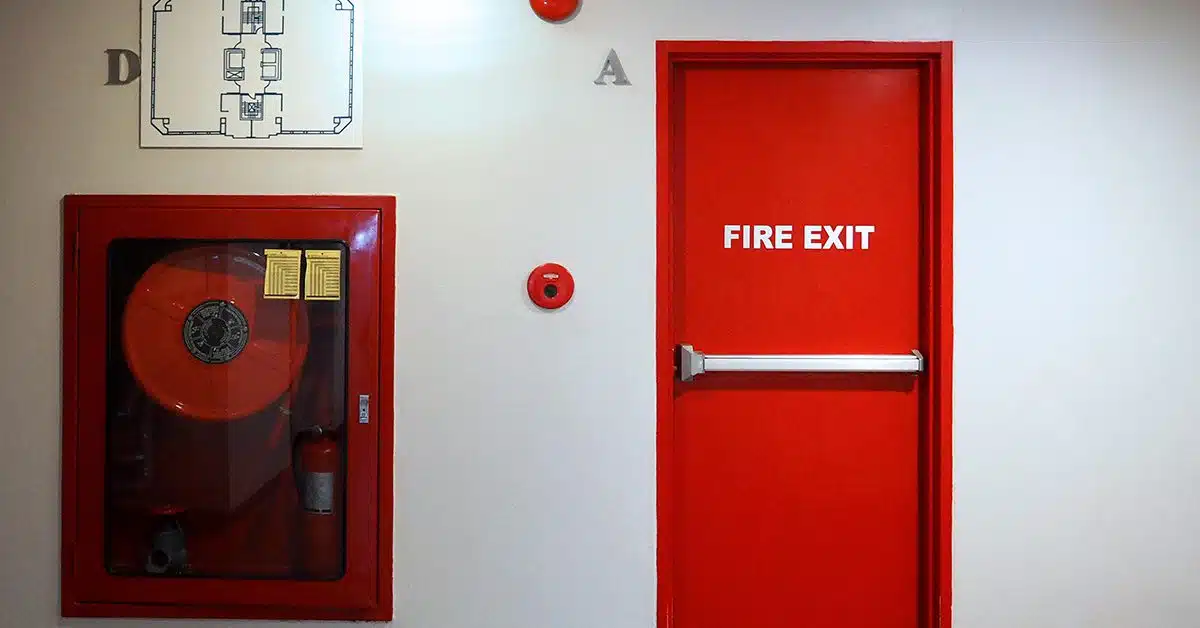

What Is a Fire Door?
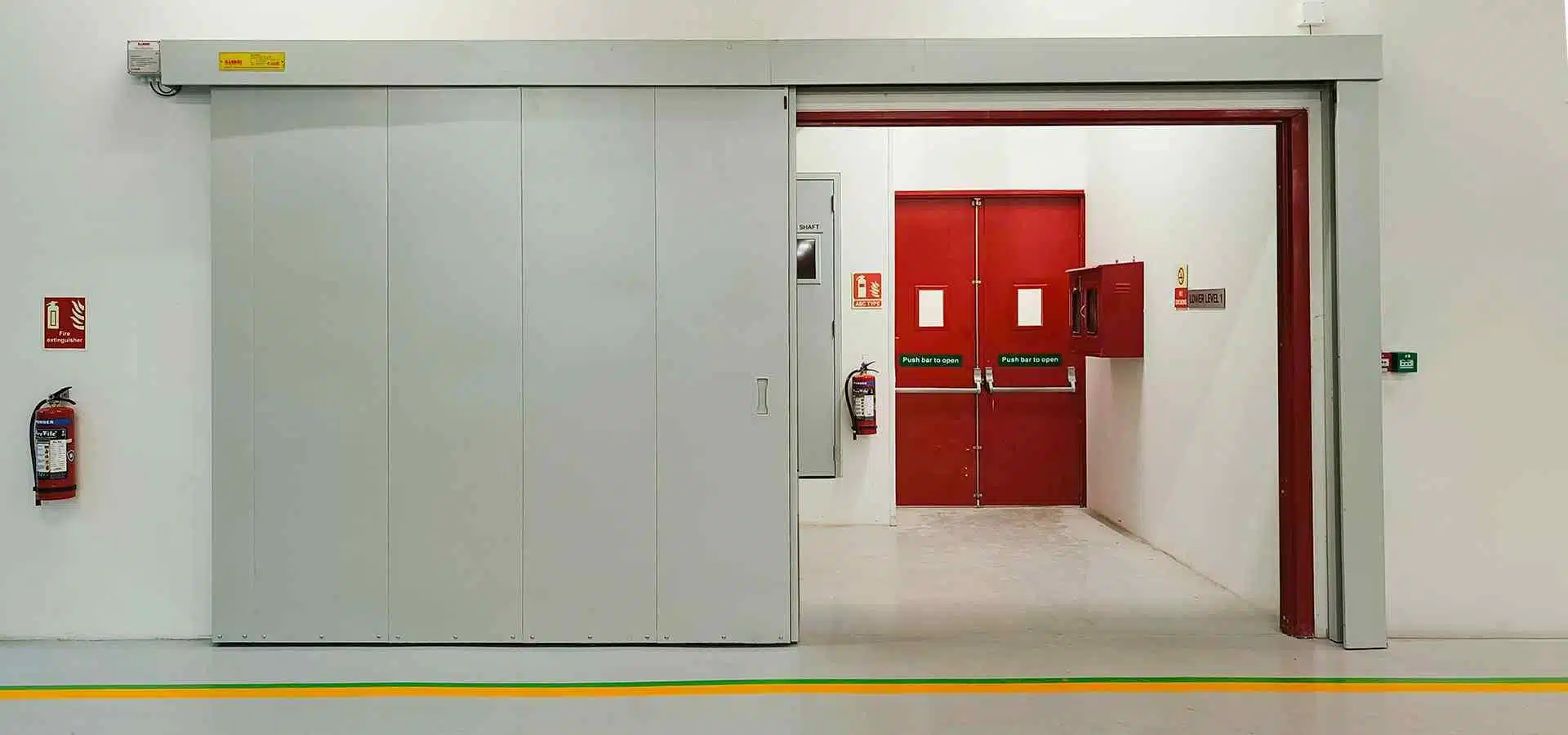
A fire door is a specially built door that slows the movement of fire and smoke. It is heavier than a standard door and fitted with parts that help it stay closed during a fire.
Why Fire Doors Exist in the First Place
Fire doors exist to slow heat, flames and smoke. They hold back danger long enough for people to reach a safe exit. Their purpose is to reduce harm and prevent fire from moving through a building unchecked. The purpose of fire door includes:
Protecting Escape Routes
Fire doors protect escape routes by keeping corridors and stairwells clear of smoke for as long as possible. A safe route out of the building depends on these protected zones remaining usable while people evacuate.
Protecting High-Risk Areas
Many fires start in rooms with heat or stored items. Fire doors around kitchens, plant rooms and storage areas hold back a fire in its early stages. This protection reduces spread and limits damage.
Buying Time for the Fire Service
Fire doors slow the progress of fire through a building. This delay supports the fire service by keeping the fire contained when firefighters arrive. A controlled spread improves safety and protects the structure.
How Fire Doors Work
A fire door works by using strong materials, seals and controlled closing to resist fire for a set period. These parts work together to form a barrier that buys time in an emergency.
Materials and Core
The door’s core slows the fire by resisting heat and preventing flames from spreading through the structure. This delay gives time for escape.
Intumescent Seals
Seals around the door expand when exposed to heat. This expansion blocks gaps that smoke and fire would otherwise pass through.
Closers and Hinges
Closers and hinges pull the door shut and keep it steady under heat. Without a working closer, the door cannot perform its safety function.
Meeting UK Legal Duties
Fire doors form part of the legal requirements under the Regulatory Reform Fire Safety Order 2005 and Building Regulations. These rules set out where fire doors must be fitted and how they must perform.
Responsible Person Duties
The responsible person must ensure that fire doors are installed, kept in good condition and checked on a routine basis. They must take steps to confirm that doors close correctly and are not damaged.
Approved Document B Requirements
Approved Document B sets clear rules for where fire doors are required and what level of fire resistance they must provide in different parts of a building. These standards guide building design and ongoing safety management.
Common Misconceptions About Fire Doors
Many people assume a fire door works the same way as any other door, which leads to unsafe habits. Misunderstandings often come from convenience, poor training or lack of awareness.
“It’s Only a Door”
Some treat a fire door like a normal door. This view ignores the role it plays in holding back fire and smoke to protect escape routes.
“Wedges Aren’t a Problem”
Wedges stop the door from closing. A wedged fire door cannot contain fire or smoke. This single act can remove the protection the door is meant to provide.
“Minor Damage Doesn’t Matter”
Damage to edges, seals or hinges weakens the door’s performance. Even small defects stop the door from forming a proper seal in a fire.
What Happens When Fire Doors Fail
A failed fire door lets fire and smoke move freely between rooms and corridors. This movement cuts off escape routes and speeds up the spread of heat. When a fire door stays open or cannot close, people lose vital time to evacuate. The fire service faces a larger and more dangerous fire. Damage increases and the structure of the building becomes harder to protect.
Faster Spread
Without a barrier, fire travels through corridors and stairwells. This spread can make upper floors unreachable within minutes.
Greater Smoke Risk
Smoke is often more dangerous than flames. A failed fire door allows smoke to fill escape routes long before people reach them.
Increased Structural Damage
Without containment, fire reaches areas that should be protected. This leads to more severe damage and longer recovery times.
The Role of Regular Checks and Maintenance
Routine checks keep fire doors ready to perform. Buildings rely on daily use, so wear and minor faults appear over time. Regular attention ensures every door closes properly and still resists fire.
User Checks
Basic checks confirm the door closes fully, moves without obstruction and shows no visible damage. These checks take little time but prevent unnoticed faults from growing.
Competent Fire Door Inspections
Periodic inspections by a trained person confirm that all parts work as designed. These inspections build competence through fire door inspection training. This skill helps identify hidden faults that ordinary users may miss.
Support Through Awareness
Workers and residents benefit when they understand why fire doors must stay shut and in good condition. Safe habits often come from simple reminders and consistent oversight.
Why Fire Doors Are Essential in Modern Buildings
Modern buildings contain complex layouts and high occupancy. Fire doors slow danger in these spaces and maintain safe routes for evacuation. They support compartmentation, reduce damage and help workers, residents and visitors move to safety in an organised way.
High Occupancy Settings
Workplaces, schools, hospitals and housing blocks rely on fire doors to maintain safe movement during evacuation.
Mixed Use Buildings
Shops, flats and offices often share the same structure. Fire doors separate risk zones and support safe evacuation for different groups.
Support for Day to Day Safety
Training helps people understand the behaviour expected around fire doors. Safer habits develop when staff follow routines learned through online fire awareness training courses.
Conclusion
Fire doors work quietly in the background until a fire tests them. Their purpose depends on proper use, routine checks and a clear understanding of their role. A working fire door slows danger, protects escape routes and supports the fire service. The difference between a door that functions and one that fails can decide how safely people leave a building.

With a Master’s in Architecture from the University of California, Berkeley, Mitchell Green has spent over two decades dedicated to the study and practical application of home fixture design. His career started in an architectural firm, providing him a strong foundation in the structural and aesthetic aspects of home interiors. Mitchell brought his comprehensive knowledge to our platform, where he has been an influential voice in our home fixtures and fittings section. Since 2018, he has been guiding our readers through the intricacies of selecting and installing fixtures, combining technical know-how with design flair. In his spare time, Mitchell is a keen photographer, capturing architectural details and design elements, an interest that complements his professional focus.