
Rocks are everywhere, but not all of them carry the same story. Some form from cooling lava. Others build up layer by layer over time.
And then there is slate: a rock that starts as one thing and becomes something entirely different under the earth’s surface.
For anyone curious about what type of rock slate is, the answer sits at the intersection of geology, pressure, and time.
This blog breaks down its formation, properties, global occurrence, and practical applications in a straightforward way.
What is Slate and How Does It Form?
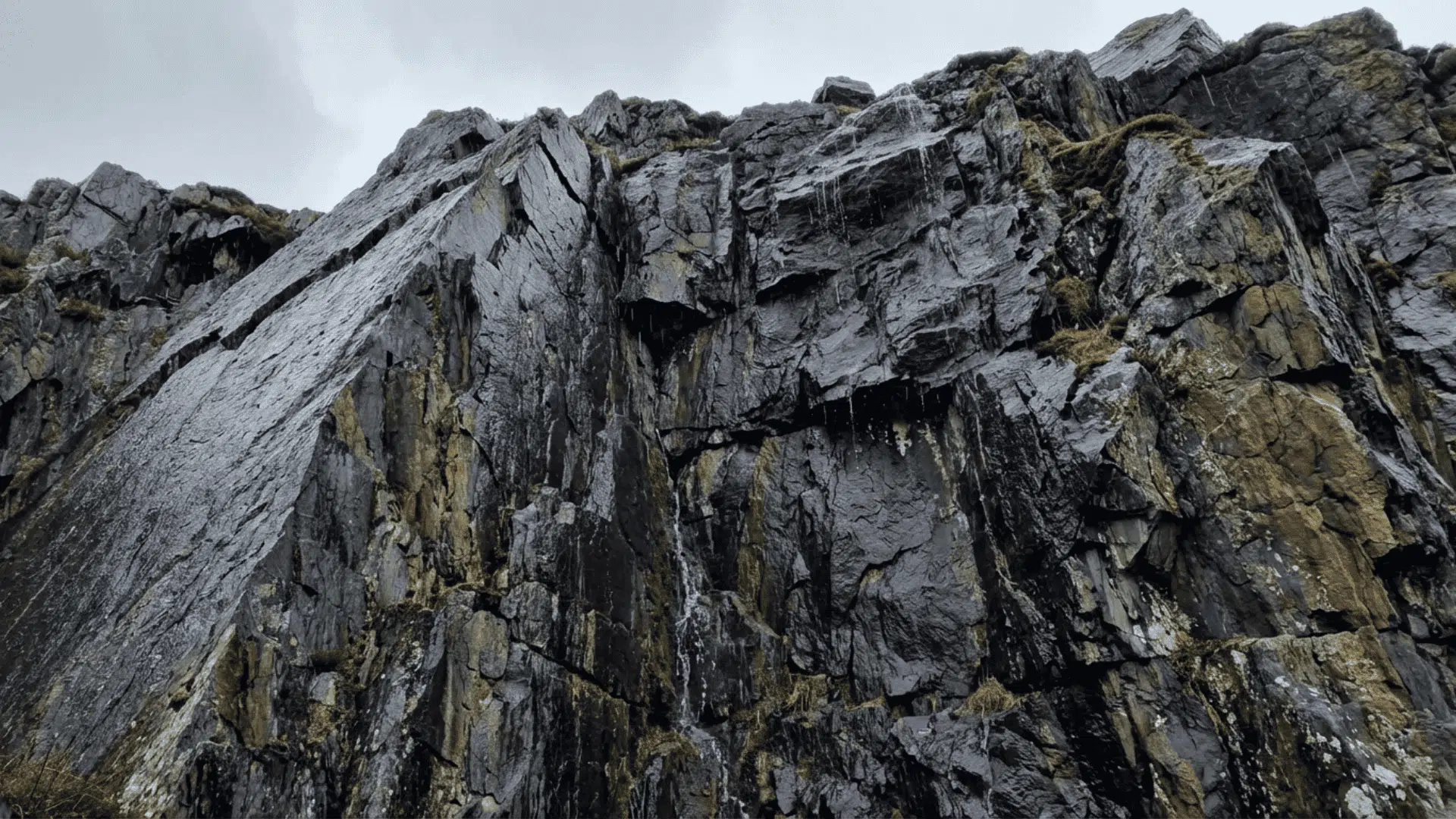
Slate is a metamorphic rock, and that classification stems from its formation. It begins as shale or clay-rich sedimentary rock: layers of fine particles buried deep underground.
Exposure to significant heat and pressure changes it at a structural level. Not enough to melt it, but enough to change it entirely.
The minerals inside begin to realign, shifting and flattening in a specific direction. This creates slaty cleavage: the ability to split into thin, flat sheets.
Two features define it above everything else.
- First, its fine-grained texture: smooth, consistent, and free of visible crystals.
- Second, that slaty cleavage is a direct result of aligned minerals under pressure.
This process, known as low-grade metamorphism, places slate firmly in the metamorphic rock category.
Characteristics and Properties of Slate

Slate has a unique structure shaped by pressure and mineral alignment. Understanding these properties helps explain why slate behaves the way it does and why it has been used so widely across construction and design.
1. Fine-Grained Texture
Slate is composed of very fine mineral particles, giving it a smooth, consistent surface. Unlike many other rocks, it shows no visible crystals to the naked eye.
This fine-grained texture results from the low-grade metamorphic process it undergoes. It is one of the key features that distinguishes it from coarser rocks.
2. Slaty Cleavage
Slaty cleavage is the defining feature of slate. It refers to the rock’s ability to split into thin, flat sheets along parallel planes.
This happens because minerals align under pressure during formation. The result is a rock that breaks cleanly and consistently, making it consistent across a range of applications.
3. Hardness and Strength
Slate is significantly stronger and more compact than shale, the rock from which it originates. It holds its shape well under pressure and resists surface damage far better than the shale from which it originates.
This structural integrity makes it suitable for applications that require a reliable, load-bearing material.
4. Low Water Absorption
Slate has minimal porosity, which means it effectively resists moisture penetration. Water does not seep through it easily, keeping its structure stable over time.
This low water absorption is particularly valuable in outdoor and high-moisture environments. It helps the rock maintain its form without deteriorating under wet conditions.
This is why slate is commonly chosen for bathrooms, kitchens, and outdoor paving, where moisture exposure is constant
5. Durability
Slate withstands long-term exposure to the elements without breaking down. It holds up against long-term weather exposure and physical wear far better than many other materials.
Its durability is a direct result of the intense geological conditions it endured during formation.
6. Color Variations
Slate commonly appears in shades of grey, black, green, purple, and red. These color differences are influenced by the mineral content present during formation, including carbon, chlorite, and iron.
Color consistency across a batch of slate often indicates uniform mineral composition. The range of natural colors also makes slate a practical choice for design projects where appearance matters alongside performance.
Slate vs. Other Rocks: A Quick Comparison

The table below highlights the key differences between slate and the rocks it is most commonly confused with.
| Feature | Slate | Shale | Schist |
|---|---|---|---|
| Rock Type | Metamorphic | Sedimentary | Metamorphic |
| Formation | Heat and pressure on shale | Compressed clay and mud | Higher heat and pressure |
| Grain Size | Fine-grained | Fine-grained | Medium to coarse |
| Cleavage | Slaty cleavage | No cleavage | Schistosity |
| Strength | Strong and compact | Weak and brittle | Strong |
| Metamorphism Level | Low-grade | None | Medium to high-grade |
Common Uses of Slate

Understanding what type of rock is slate makes it easier to see why it suits so many practical applications. Its strength, structure, and moisture resistance make it a reliable choice across construction and design.
1. Roofing
Slate roofing is known for its long lifespan and strong resistance to weather. It can handle heavy rain, snow, and temperature changes without losing its structure.
Once installed properly, it requires very little maintenance compared to other materials. Many slate roofs last over 100 years, making them a reliable long-term option.
2. Flooring Tiles
Slate tiles are a durable choice for both indoor and outdoor flooring. Their natural strength helps them handle heavy foot traffic without wearing down quickly.
The slightly textured surface also provides better grip, which is useful in wet areas. With proper care, slate flooring can maintain its look for many years.
3. Chalkboards
Slate has a smooth and fine-grained surface, which made it a popular material for traditional chalkboards. It allows writing to appear clear and easy to read while also being simple to clean.
Before modern boards became common, slate was widely used in schools and workplaces. Its durability made it suitable for repeated daily use.
4. Countertops
Slate countertops stand out because of their natural color variations, including grey, black, green, and even purple tones. This gives each surface a unique appearance.
They are also resistant to heat and stains, making them practical for kitchens. With proper sealing, slate countertops can be both functional and visually appealing.
Interesting Facts About Slate Rock
Slate has a long history and a few lesser-known details that make it more interesting than it first appears. Beyond its common uses, it carries unique traits shaped by nature and time.
- Used for Writing in the Past: Before paper became common, slate tablets were widely used in schools for writing.
- Naturally Fire-Resistant: Slate does not burn, making it a safe material for roofing and construction.
- Each Piece is Unique: No two slate slabs look exactly the same due to natural mineral variations.
- Can Produce Sound: When struck, some slate pieces create a sharp, ringing sound because of their density.
- Long Geological History: Slate forms over millions of years through gradual pressure and change underground.
- Common in Historic Buildings: Many old structures still have original slate roofs that remain intact today.
Conclusion
Understanding what type of rock slate is comes down to one straightforward fact: it is a metamorphic rock, formed when shale or mudstone undergoes heat and pressure deep within the earth.
That process gives slate its fine-grained texture, its structural strength, and its ability to split into thin, flat sheets.
These aren’t just technical details; they’re the reason slate works so well in real-world applications, from roofing to flooring.
Once you understand how slate is formed, everything about it makes more sense. Its durability, appearance, and performance all stem from its life underground.

Veronica Lee holds a Master’s degree in Landscape Architecture from Cornell University and has dedicated more than 15 years to transforming outdoor areas into artistic and sustainable spaces. Her career took off in a renowned landscape design firm, where she excelled in creating visually stunning and environmentally responsible designs. In 2019, Veronica brought her expertise to our platform, quickly becoming a key contributor to our outdoor design and sustainability sections. As the lead of our landscape innovation series ever since joining, she has inspired readers with her forward-thinking and practical approach. When not drafting designs, Veronica enjoys pottery and participates in local conservation efforts, activities that complement her professional ethos of blending art with nature.