

Sometimes plumbing problems can be easily overlooked until they’ve grown into an expensive fix. Whether your issue involves repairing water or gas lines, connecting sewer lines, replacing fixtures or equipment, or working with piping inside your walls, you want to hire a plumbing contractor who’s properly licensed and insured in your area. If your plumber doesn’t carry insurance or is unlicensed, you may be held responsible for damage or accidents that occur on the job.
Service Fit
It’s important to match your contractor’s specialties to your repair needs. If you’re simply replacing a faucet, for example, that’s less complicated than repiping an entire home. You should find a contractor who is comfortable and experienced in the type of repair you need.
Relevant Experience
While some plumbers can effectively perform all types of repairs, others have a specialty in a particular area. Before you call a plumber, learn whether he or she handles general repairs and maintenance, plumbing for remodeling projects, drain cleaning, water heater repair and installation, or large plumbing projects.
A good local plumber will ask you to thoroughly explain the plumbing issue at hand. You should be prepared to discuss when you first noticed the problem, how many fixtures are affected, and other details such as odd sounds, stains, changes in water pressure, recurring problems, and unpleasant smells. Tell them about recent renovation projects or repairs in your home that could be related to the problem.
If you’re experiencing reduced water pressure throughout the house, it’s important to hire a contractor who has experience working on supply issues and valves, rather than a clogged drain. Likewise, structural problems with water and piping repairs require different skills than changing out a shower head.
Clear Estimates
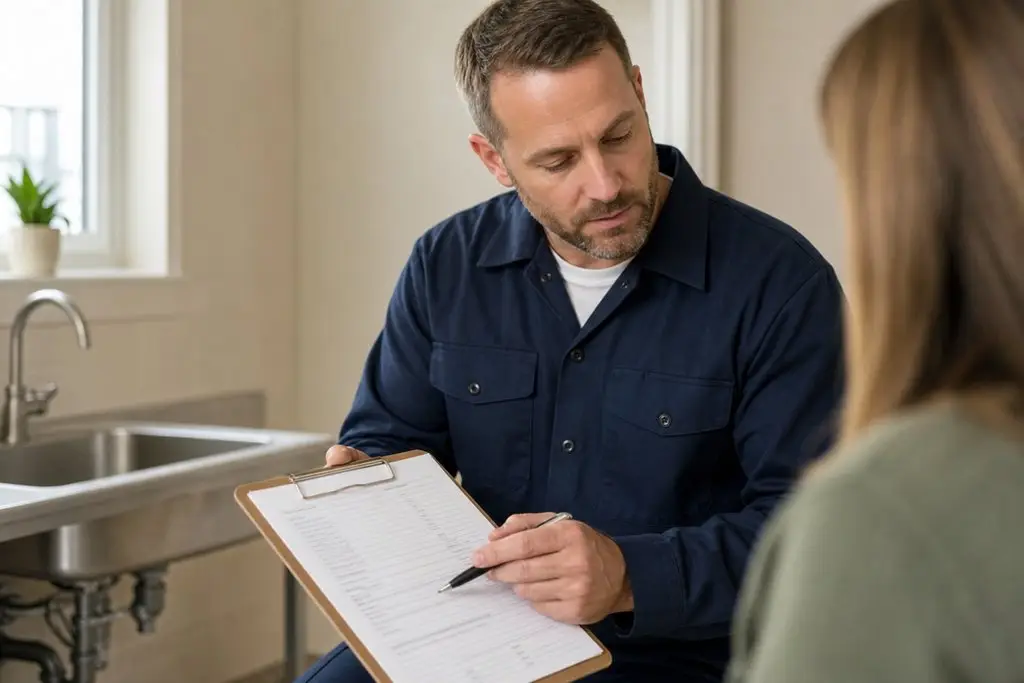
Before you hire a plumbing contractor, it’s always a good idea to get a written cost estimate that provides a thorough breakdown of service fees, parts, and labor costs. Some estimates will include the possibility of extra fees if additional repairs are found. Find out if your plumber uses a flat fee or a time-and-materials cost basis.
If you’re hiring a plumber for a bathroom remodeling project, make sure you know what happens if your plumber runs into an issue with outdated connections, rotten pipes, mold, damaged framing, and other expensive issues.
Remember, if one plumbing contractor’s estimate is significantly cheaper than other estimates, it may be excluding costs for materials, permits, cleanup, and follow-up service. Make sure you’re comparing the details of all the items included before you make a decision.
- Can you get a ballpark idea over the phone, or does the plumber need to first examine the problem?
- Are there any extra charges to make an emergency plumbing repair?
- How will you be billed, flat rate or on a time-and-materials basis?
- Will the cost include parts, permits, travel fees, and other charges?
Project Communication
Hiring the cheapest plumber isn’t always the best idea. Instead of focusing on flashy marketing or rock-bottom prices, choose a local plumber who will listen to your concerns, keep you informed throughout the repair, and use safe, reliable practices. Click this https://www.gharpedia.com/blog/hire-a-plumber-for-your-house/ for some ips.
When you first call your plumber to describe your plumbing problem, the representative should tell you what to expect during the repair process and offer an estimated time of arrival for a service technician. They may also suggest ways to minimize any issues until your plumber arrives at your home.
When the plumber arrives at your home, it’s important that they explain the cause of your problem and how to fix it. A reputable contractor should be willing to go over several repair options if necessary. You don’t have to understand technical terminology, but a good plumber will take his or her time explaining the project, and not bombard you with jargon just to rush you into making a decision.
For larger plumbing projects, such as remodeling a bathroom, your plumbing contractor may work alongside a general contractor. Other professionals, such as cabinet makers, tile installers, and electricians, could also be included. Make sure your plumber explains the project management process and who will be responsible for pulling permits, scheduling building inspections, and coordinating with other professionals.
Make sure any contracts you sign before the project begins clearly outline how you’ll be notified about unexpected circumstances that require approval. For example, if your plumber comes across rotted pipes or needs to extend an electric line, you need to know who makes the final decision on additional expenses.
Ask for permits, inspection sign-off and invoices for the materials used before you make a final payment. You’ll thank yourself later when it makes maintenance easier, warranty coverage easier and it will serve as proof of work done when refinancing or selling the home.
Work Guarantees
When you hire a local plumbing contractor, make sure you’re guaranteed that their work will be performed correctly. Before any repairs start, ask your plumber about their guarantee policy in case you find a new leak or a poorly connected fitting right after they leave.
It’s important to know whether your plumber guarantees their work, what this warranty covers, and how long their policy lasts. Find out if your contractor charges an additional fee to return for a service call to repair an issue. It’s a good idea to ask for a written copy of your workmanship guarantee for your records.
Sometimes homeowners forget that equipment purchases, such as a sump pump, water filtration system, or water heater come with a warranty. It’s always a good idea to ask if your plumber offers an equipment warranty as well as a workmanship warranty in case an item fails. Make sure they provide a written warranty that clearly distinguishes between the workmanship guarantee and the manufacturer’s warranty on any new equipment.
When your plumbing repair is finished, a reputable contractor will perform a walk-through so you can both verify the work has been completed. Your plumber should tell you about any newly installed equipment and how to operate it and let you know where to find shutoff valves. Make sure your plumber leaves the job site in as neat and clean a condition as he or she found it.

Holding a Master’s in Architecture from the University of Texas at Austin, Emily Rodriguez has dedicated more than two decades to the art and science of building renovation. Starting her journey in historic preservation, she developed a profound respect for blending old with new in building design. Emily became a vital part of our team in 2019, renowned for her insightful and innovative renovation tips. She has been leading our DIY home improvement series since ever since, where she shares her wealth of knowledge in turning outdated spaces into modern havens. When not engaged in writing or consulting, Emily is a passionate advocate for heritage conservation and enjoys exploring vintage architecture, a hobby that complements her professional expertise.