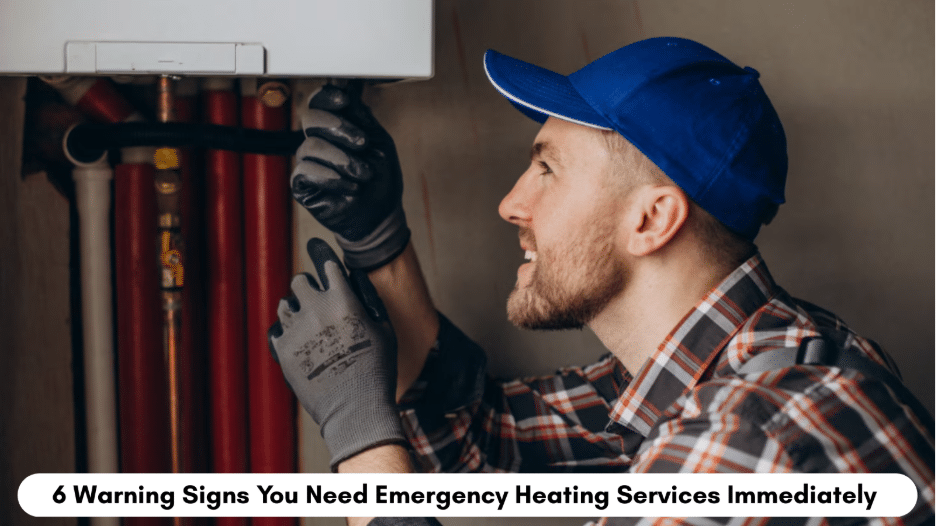

As soon as your heater malfunctions, particularly during cold seasons, it turns into a stressful situation. You count on an adequately functioning heating system to make your house cozy and safe, and when it malfunctions, an unpleasant experience may develop into serious issues.
You may notice an increase in indoor cold spots, odd noises, or even strange smells, and all of them may indicate something serious. Not paying attention to them can cause your house to be colder than usual and may also cause larger mechanical issues or even unsafe living conditions within your home.
Fortunately, there are certain signs that you can identify when a mere repair is not sufficient, and an emergency heating service is required. Being aware of these early signs can help you to act before the condition gets out of control.
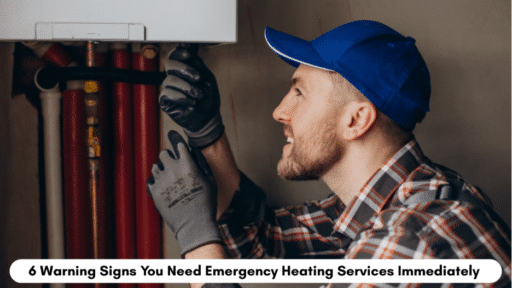
This article discusses six warning signs that indicate that you require emergency heating services.
1. No Warm Air from Vents

In case your heating system does not produce warm air, even though it is on, it is not a minor issue; it is a major warning. When the blowers in your home blow cold or only slightly warm air into your house, this is an indication that the central heating units are not working properly.
Moreover, airflow without adequate heat in most cases implies that internal components such as burners, heat exchangers, or ignition systems are either faulty or dangerously out of position.
Since this condition leaves your home poorly heated, you must immediately seek professional assistance to get emergency heating services before you experience unsafe temperatures indoors and possible damage to the system.
An efficient heater must be able to keep your house warm at all times, and an abrupt cessation of the flow of warm air should never be overlooked.
2. Yellow Flame or Constant Fan Operation
Serious internal problems can be detected by the color of your furnace flame and the conduct of your fan. The furnace flame must be blue, indicating that the burning process is efficient and safe.
When the flame turns yellow, it is an indication that it has not burned completely and may emit toxic fumes such as carbon monoxide into your living room, which is very dangerous to your life.
Likewise, when the fan is turned on continuously, even when the heater is not producing heat, then this is a signal of a fault in the control system or the airflow sensors. Continuous running of fans also causes friction on internal components and may overwork the system; therefore, this should be checked at the earliest.
3. Carbon Monoxide Alarm Activates Frequently

A Carbon Monoxide (CO) alarm in your home is a very important piece of security equipment that should never be underestimated. When the CO alarm is turning on or ringing out over and over again when your heating system is on, it is a sign that the carbon monoxide- an invisible and possibly lethal gas- is getting into your living room.
In addition, exposure to carbon monoxide may lead to the following symptoms: headaches, dizziness, nausea, and, in severe cases, loss of consciousness. Due to this risk, you are advised to stop using your heating system and call emergency help as soon as the CO alarm triggers. This is among the most obvious and most pressing pointers that your heating equipment is no longer safe to use.
4. Puddles or Steam Around Heating Equipment
Water or steam appearing near your furnace, boiler, or heat pump isn’t normal, and it’s something that must be addressed quickly. Moisture around these units often results from condensation build-up, cracked heat exchangers, loose fittings, or blocked drains, and each of these issues can worsen rapidly if left unresolved.
Over time, persistent leaks can weaken system components, corrode internal parts, reduce heating efficiency, and increase the likelihood of sudden equipment failure when you rely on it most. Damp conditions may also affect nearby wiring, insulation, and support structures, creating additional repair concerns.
Aside from damaging floors and surrounding structures, excess water can create electrical hazards or promote mold growth. Because of these potential risks, noticing visible water or steam should prompt an immediate call for professional help rather than waiting for a scheduled appointment.
5. Strange Or Rotten Egg Odors in Home

Detecting odd smells when your heating system runs is never a good sign, and a rotten egg odor in particular is alarming. This smell typically indicates a natural gas leak, which is dangerous due to its flammability and the risk of explosion if gas accumulates.
Even a faint gas odor should not be ignored, as leaks can spread quickly through enclosed spaces and create serious safety hazards for everyone inside the home. Other unusual smells, including burning or chemical scents, can point to electrical problems, overheated components, or blocked vents.
Regardless of the exact smell, anything out of the ordinary when your heater operates must be investigated right away. When you detect these odors, emergency heating services should be contacted immediately, and the heating system should be turned off if it is safe.
6. Loud Banging or Metallic Noises from System
Heating systems are designed to operate with steady, controlled sound, so loud banging, rattling, screeching, or metallic noises indicate serious internal problems that should not be ignored.
These sounds often point to loose or broken components, delayed ignition, blower motor failure, belt issues, or expanding metal parts inside the unit. In some cases, banging noises may result from pressure imbalances or ignition delays that create small internal bursts, which place stress on system components.
When parts operate under strain, wear accelerates quickly, and minor mechanical issues can turn into major failures without warning. Continued operation in this condition may damage the heat exchanger, motor assembly, or internal supports, leading to sudden shutdown.
Because these risks increase during cold weather when systems run longer cycles, unusual loud noises require immediate attention. Turning the system off and contacting emergency heating services helps prevent further damage and reduces potential safety hazards inside your home.
Final Thoughts
Being proactive about heating system issues protects both your home and your well-being. While some problems can wait for routine service, the warning signs discussed above signal urgent situations where your heater may be unsafe or close to failure. Whether you notice a lack of heat, unusual odors, leaks, or safety alerts like carbon monoxide warnings, quick action helps prevent larger repairs and serious risks.
Recognizing these signs early allows you to respond before conditions worsen, especially during cold weather when reliable heat is essential. When symptoms point to an emergency, seeking professional help immediately is the safest and most responsible decision.

Tommy Hardy, an alumnus of the Georgia Institute of Technology with a degree in Mechanical Engineering, has been a go-to figure in residential upkeep and innovation for over 18 years. His career commenced in a leading home appliance manufacturing company, where he mastered the intricacies of household systems. Joining our platform in 2020, Tommy quickly became a reader favorite for his practical and easy-to-follow guides. He took the helm of our DIY section in 2019, consistently delivering content that empowers homeowners. Beyond his professional pursuits, Tommy is a passionate gardener and enjoys woodworking, skills enhancing his hands-on approach to home care.