
Craftsman style houses continue to attract attention for their balanced design, durable construction, and clear architectural identity.
Originating in the early 20th century, this home style reflects a deliberate shift toward practical layouts and visible craftsmanship.
Many existing neighborhoods still feature original Craftsman homes, while newer developments adopt Craftsman-inspired designs for their proven functionality.
This article explains what defines a craftsman-style house, outlines its key features, identifies common variations, and addresses frequent misconceptions.
It also compares craftsman homes with other architectural styles and evaluates their suitability in current residential settings, providing a clear and structured overview of this enduring home design.
Craftsman Style House Explained
A craftsman-style house is an early-20th-century home design shaped by the American Arts and Crafts movement.
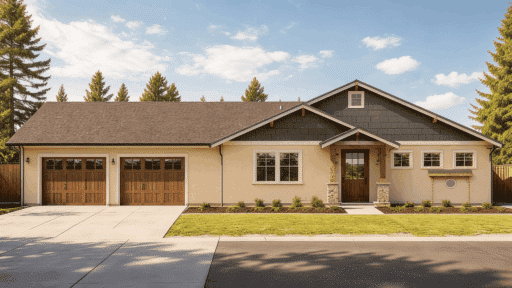
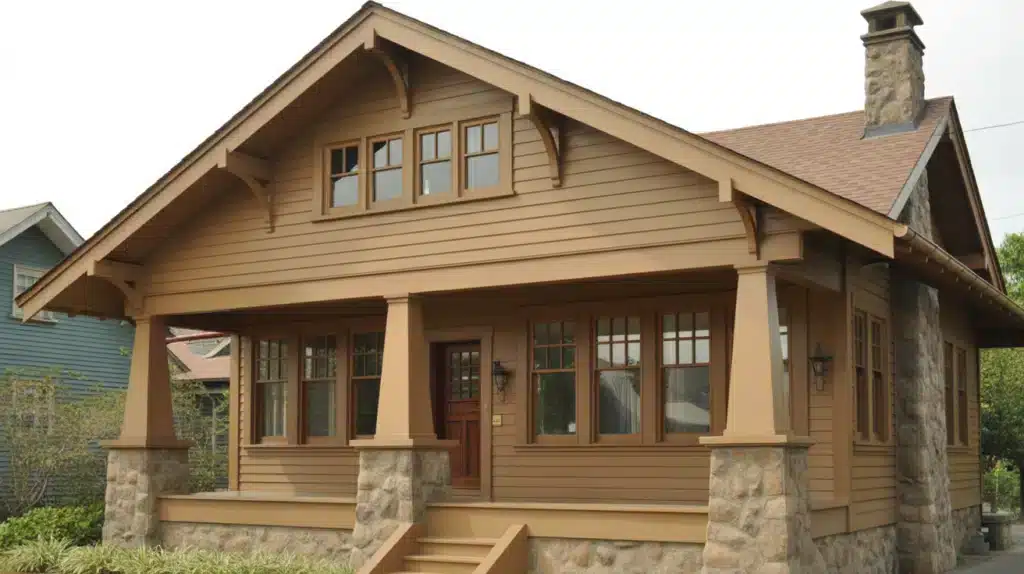
It is identified by low-pitched gable roofs, wide front porches with tapered columns, exposed rafters, natural materials, built-in interior features, prominent woodwork, and practical floor plans focused on function and durability.
Key Features
- Low-pitched gable roofs with overhanging eaves
- Exposed rafters, beams, and brackets
- Wide front porch with thick tapered columns
- Natural exterior materials (wood, stone, brick, stucco)
- Built-ins like bookcases and window seats
- Central fireplace and strong interior wood trim
- Large functional windows and efficient layouts
Best For
Homeowners seeking durable construction, defined rooms, classic architectural detail, and a timeless exterior that suits both historic neighborhoods and modern builds inspired by the style.
Types of Craftsman Style Houses
1. Bungalow
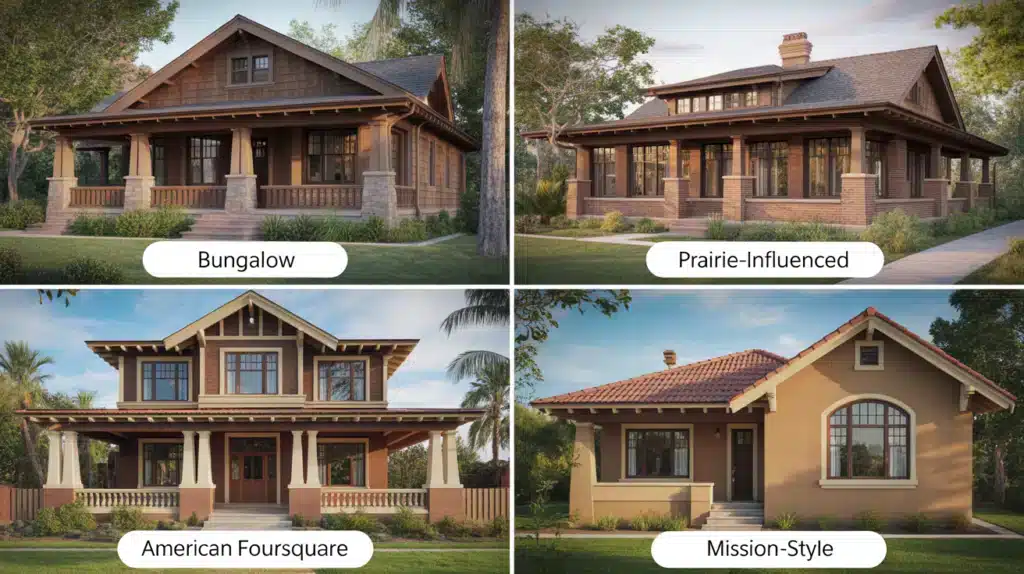
The most common form, craftsman bungalows are typically one or one-and-a-half stories tall. These homes feature wide front porches, low-pitched roofs, and compact, efficient layouts designed for everyday living.
2. Prairie-Influenced
This type blends craftsman detailing with Prairie School design. Homes emphasize strong horizontal lines, extended roof overhangs, and grouped windows while retaining craftsman materials and interior woodwork.
3. American Foursquare
American Foursquare craftsman homes have a boxy shape with two or more stories. Craftsman elements such as tapered porch columns, exposed rafters, and natural materials are applied to a simple, symmetrical structure.
4. Mission-Style
Mission-style craftsman houses are most common in the Southwestern United States. These homes use stucco exteriors and may include tile roofs while maintaining the proportions and functional design principles.
Popular Materials Used in Craftsman Homes
These materials were chosen for their long-term performance and compatibility with local climates.
Their visible textures and structural role reflect the craftsman’s emphasis on honest construction rather than decorative finishes. Materials like:
- Wood siding and cedar shingles
- Brick and stone for foundations and accents
- Stucco in regional variations
- Hand-finished interior surfaces
Common Misconceptions About Craftsman Style Houses
1. Any house with a front porch or wood trim is a Craftsman home.
While many craftsman houses include porches and wood details, true craftsman design follows specific proportions, roof forms, and structural elements that go beyond surface features.
2. All bungalows are craftsman style houses.
Although many craftsman homes are bungalows, not every bungalow reflects craftsman principles. Proportions, materials, and exposed structural details determine whether a home fits the style.
3. Craftsman homes are designed with open floor plans.
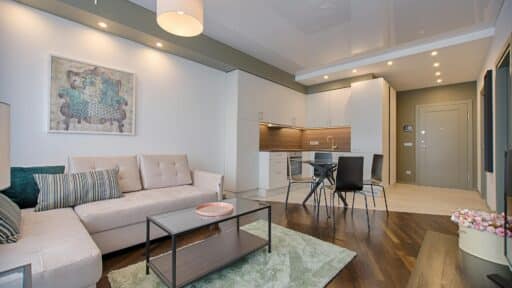
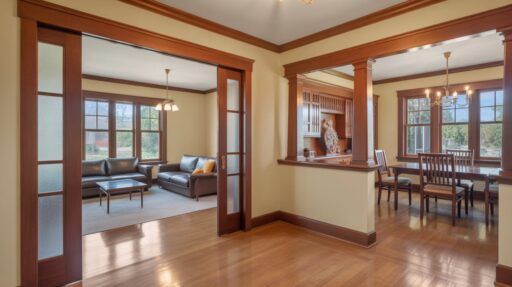
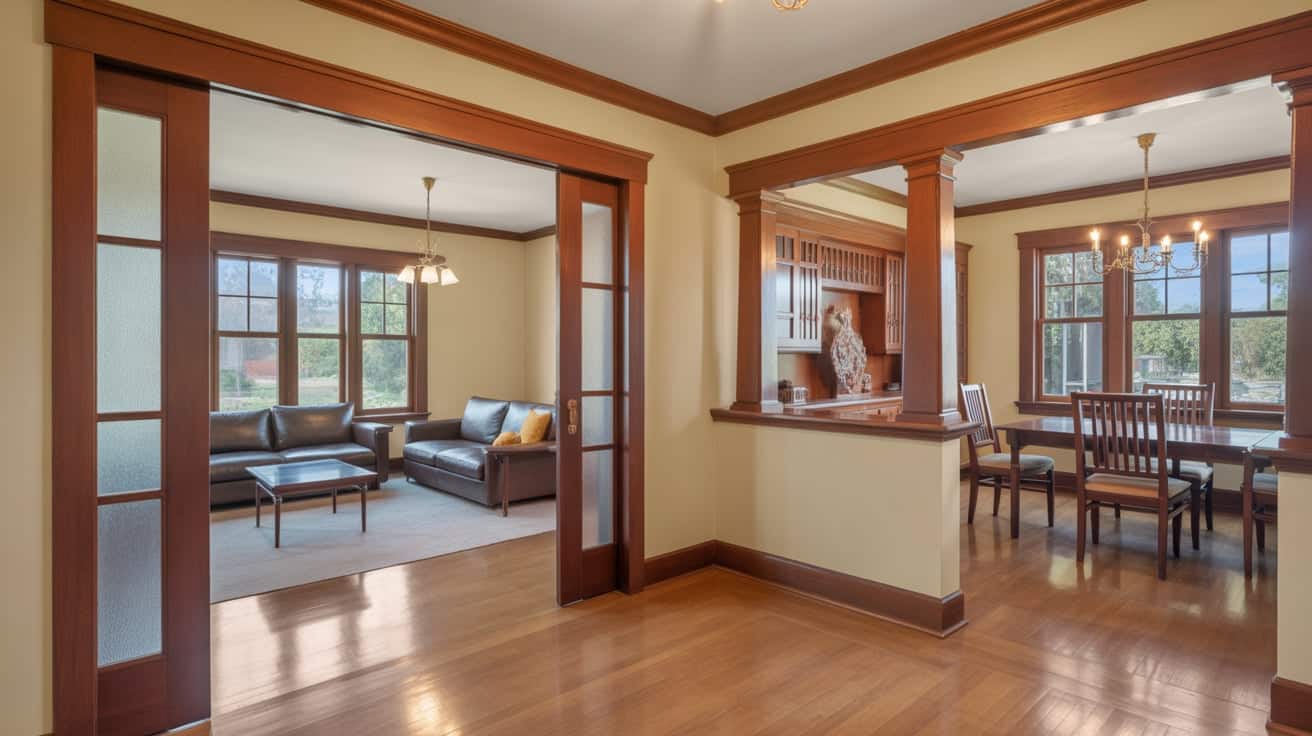
Traditional craftsman layouts favor defined rooms connected through wide openings, built-ins, or partial dividers rather than fully open interiors.
Craftsman Style House vs Other Home Styles
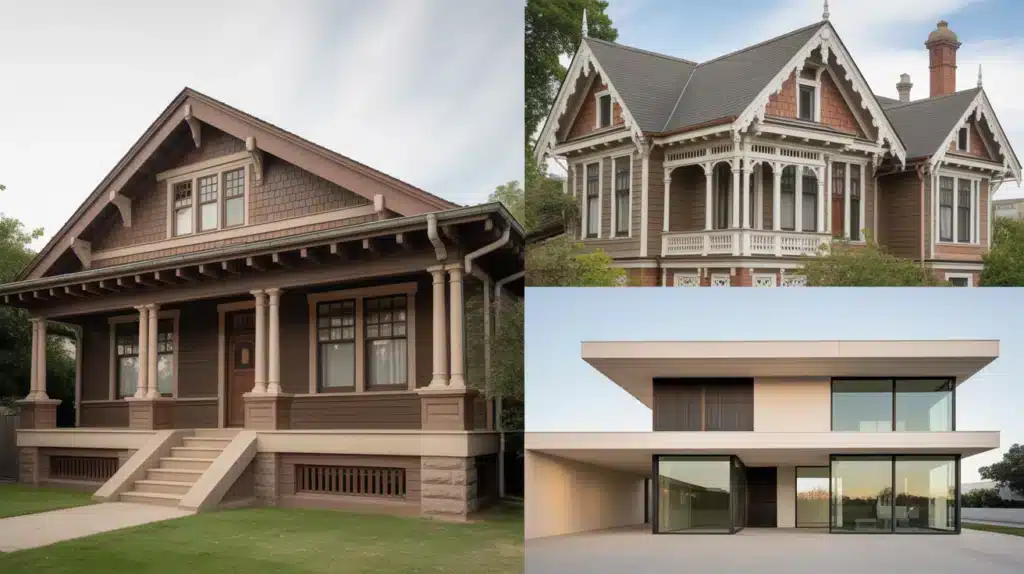
A craftsman style house differs from other residential styles primarily in how structure, materials, and space are treated.
The design approach prioritizes visible construction and everyday usability rather than decorative excess or minimal presentation.
Craftsman Style House vs Victorian Houses
When compared to Victorian houses, the difference is immediately noticeable.
Victorian architecture places strong emphasis on vertical height, ornate trim, decorative facades, and layered details meant to display status and complexity.
In contrast, a craftsman-style house relies on horizontal lines, grounded proportions, and restrained detailing.
Decorative elements in such homes often serve a functional role, such as exposed rafters or structural brackets, rather than purely visual embellishment.
Craftsman Style House vs Modern Houses
Compared to modern houses, Craftsman homes follow a more defined spatial layout.
Modern designs typically favor open-plan interiors, smooth surfaces, and minimal structural visibility.
Craftsman homes maintain clear room separation while still allowing visual connection through wide openings, built-ins, or partial dividers.
Structural elements such as beams, columns, and wood trim are intentionally visible and contribute to the overall character of the home rather than being concealed.
Overall, a craftsman style house sits between traditional and contemporary design.
It avoids the ornament-heavy approach of older architectural styles while also resisting the stripped-back simplicity of modern construction. This balance explains why the style continues to remain relevant across different regions and housing needs.
Is a Craftsman Style House a Good Choice Today?
A craftsman-style house remains a practical option due to its efficient layouts, durable construction, and adaptable design.
The style supports both historic preservation and modern building needs.
While maintenance of wood elements may require attention, the long-term structural value and consistent demand make craftsman homes a reliable residential choice across many regions.
The Bottom Line
A craftsman-style house isn’t just another old home design that refuses to fade away.
It sticks around because it works. The wide porches actually get used. The built-in shelves save space.
The solid wood and stone hold up year after year. These homes were built to last, not to impress the neighbors for one season.
If you want a house with character that doesn’t require constant updates to stay relevant, craftsman style delivers.
It fits historic streets and brand-new neighborhoods equally well.
The design solved problems over a century ago, and those same solutions still make sense today. That’s why craftsman-style house designs aren’t going anywhere.

With a Master in Architectural Studies from University of Pennysylvania, Marwa Haydar has pioneered living spaces since 2005. Her expertise, initially honed in a prestigious architectural firm, is evident in her approach to creating environments. Marwa became part of our team in 2019 and has since been a driving force in our home improvement section, known for her practical yet stylish solutions. She’s been spearheading our design workshops since then, infusing her passion for teaching into her work. In her leisure time, Marwa enjoys exploring historic architecture and is an enthusiastic pottery hobbyist, further enriching her understanding of form and texture.