
Most people have been there: a leftover can of exterior paint sitting in the garage and a room that desperately needs a fresh coat. Seems like a no-brainer, right?
But can you safely use exterior paint inside your home? That’s where things get interesting.
What looks like a simple swap might not be as straightforward as it seems. There’s more going on beneath that glossy finish than most people realize, and it’s the kind of thing that’s worth understanding before picking up a brush.
The answers might actually surprise a lot of people. Let’s find out!
Can You Use Exterior Paint Inside?
Do you also wonder if you can use exterior paint inside your home? Yes, you can use exterior paint indoors, but it’s usually not the best idea.
Exterior paint is designed to withstand outdoor conditions, so it often contains stronger additives and chemicals.
Inside your home, that can mean stronger fumes, longer-lasting odor, and unnecessary indoor air concerns, especially in rooms where you spend a lot of time.
If you’re painting a bedroom, living room, or nursery, it’s better to stick with interior paint. If it’s a garage, shed, or a well-ventilated utility space, exterior paint may be okay in certain situations.
Exterior Vs Interior Paint: The Core Difference
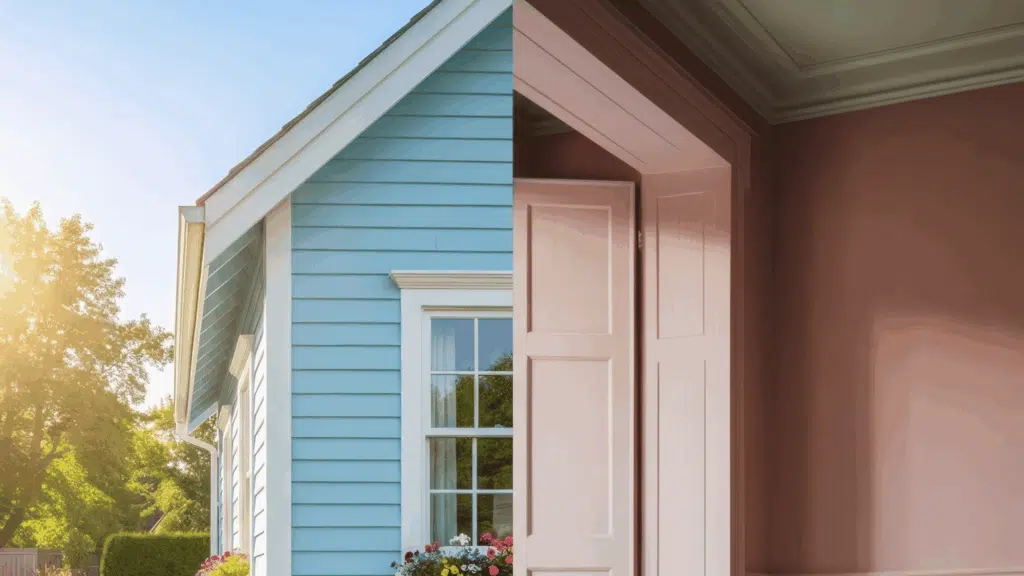
Exterior and interior paints may look similar in the can, but they’re made for different environments. Understanding how they differ can help you choose the right paint for your space and avoid costly mistakes.
| Feature | Exterior Paint | Interior Paint |
|---|---|---|
| Formulation & Additives | Contains UV blockers to resist sun damage, mildew-resistant chemicals, and flexible resins to handle temperature changes | Formulated without heavy weatherproof additives, designed for stable indoor conditions |
| Mold & Mildew Protection | Strong mildewcides to fight outdoor moisture and rain | Mild protection suitable for indoor humidity levels |
| Flexibility | Expands and contracts with heat and cold | Designed to remain stable in climate-controlled spaces |
| VOC Levels & Odor | Often higher VOCs, which can mean stronger fumes and longer-lasting smell | Lower VOC options available, made for enclosed indoor spaces |
| Primary Goal | Weather resistance and long-term outdoor durability | Low odor, easy maintenance, and safer indoor air quality |
| Best Use | Siding, fences, decks, and exterior trim | Bedrooms, living rooms, kitchens, ceilings, and interior trim |
What Happens If You Use Exterior Paint Inside?
If you decide to use exterior paint indoors, you might not notice problems right away. However, over time, certain issues can show up, especially in rooms with limited ventilation.
- Stronger smell: Exterior paint usually has a heavier odor than interior paint.
- Odor can linger:The smell may stick around for days, especially in closed rooms.
- Off-gassing continues: Even when the paint feels dry, it can still release fumes.
- Possible irritation: Some people may experience headaches or irritation of the eyes, nose, and throat.
- Not ideal for kids or pets: Children, pets, and asthma sufferers can be more sensitive to strong fumes.
- Longer curing time: Exterior paint often takes more time to fully cure indoors.
- Indoor air concerns: Stronger chemicals may affect indoor air quality.
- Works, but not ideal: It may work in a pinch, but it’s usually not worth the trade-off indoors.
Ways to Durability Without Using Exterior Paint Inside

If your goal is durability, moisture resistance, or long-lasting results, you really don’t need exterior paint to achieve that.
There are safer, better options made specifically for indoor spaces that deliver the same performance without the extra fumes.
1. Use High-Quality Interior Paint for Durability
Modern interior paints are much tougher than they used to be. Many premium brands offer washable, scrubbable, and stain-resistant formulas that hold up well in high-traffic areas like hallways, family rooms, and kids’ rooms.
You get durability without the strong smell that often comes with exterior paint.
Recommendations: Sherwin-Williams Duration Home
2. Choose Kitchen and Bath Paint for Moisture-Prone Areas
If you’re worried about humidity or mold, look for interior paint labeled “kitchen and bath.”
These formulas are designed to handle steam and moisture while still being safe for indoor spaces. They also offer mildew resistance, but in a way that’s meant for indoor air.
Recommendations: BEHR Premium Plus Ultra Interior Paint
3. Look for Low-VOC (Volatile Organic Compounds)or Zero-VOC Labels
For better indoor comfort, choose paints labeled low-VOC or zero-VOC. These options help reduce strong odors and limit the release of airborne chemicals.
This matters most in bedrooms, nurseries, and any room where your family spends a lot of time.
Recommendations:Valspar Signature Interior Paint
4. Consider Interior Enamel for Trim and Doors
If you want a tougher finish for trim, baseboards, cabinets, or doors, interior enamel is a great choice.
It dries into a harder surface that stands up better to scuffs and cleaning, without the outdoor additives found in exterior paint.
Recommendations:Valspar Cabinet & Furniture Oil-Enriched Enamel
What If You Already Painted Indoors With Exterior Paint?
Already painted and now second-guessing it? Don’t panic. Most of the time, the issue is more about comfort and indoor air than anything serious. Here’s what you can do next:
1. Ventilate the Space
- Open windows and doors as much as possible
- Create cross ventilation (open windows on opposite sides if you can)
- Even a few hours of fresh air daily helps a lot
2. Run Fans and Air Purifiers
- Use box fans, ceiling fans, or exhaust fans to keep air moving
- An air purifier with a carbon filter can help reduce odor and fumes
3. Monitor the Odor
- A paint smell right after painting is normal
- If the odor stays strong for more than 1 to 2 weeks, it may still be curing
- Keep the room ventilated until the smell fades
4. Know when Repainting May Be Necessary
- If the smell does not go away
- If anyone gets headaches, irritation, or breathing discomfort
- If it’s a bedroom, nursery, or a room used every day
- Repainting with a low-VOC interior paint is often the safest fix
Final Verdict
So, can you use exterior paint inside? Yes, exterior paint can be used indoors, but for most homes, it’s not worth it.
Exterior paint may seem like a convenient option, but convenience does not always equal suitability.
Using the right type of paint from the start helps you avoid unnecessary odors, comfort issues, and potential air quality concerns.
When you match the paint to the space, you get a finish that not only looks good but also supports a healthier, more comfortable home.

Holding a Master’s in Architecture from the University of Texas at Austin, Emily Rodriguez has dedicated more than two decades to the art and science of building renovation. Starting her journey in historic preservation, she developed a profound respect for blending old with new in building design. Emily became a vital part of our team in 2019, renowned for her insightful and innovative renovation tips. She has been leading our DIY home improvement series since ever since, where she shares her wealth of knowledge in turning outdated spaces into modern havens. When not engaged in writing or consulting, Emily is a passionate advocate for heritage conservation and enjoys exploring vintage architecture, a hobby that complements her professional expertise.