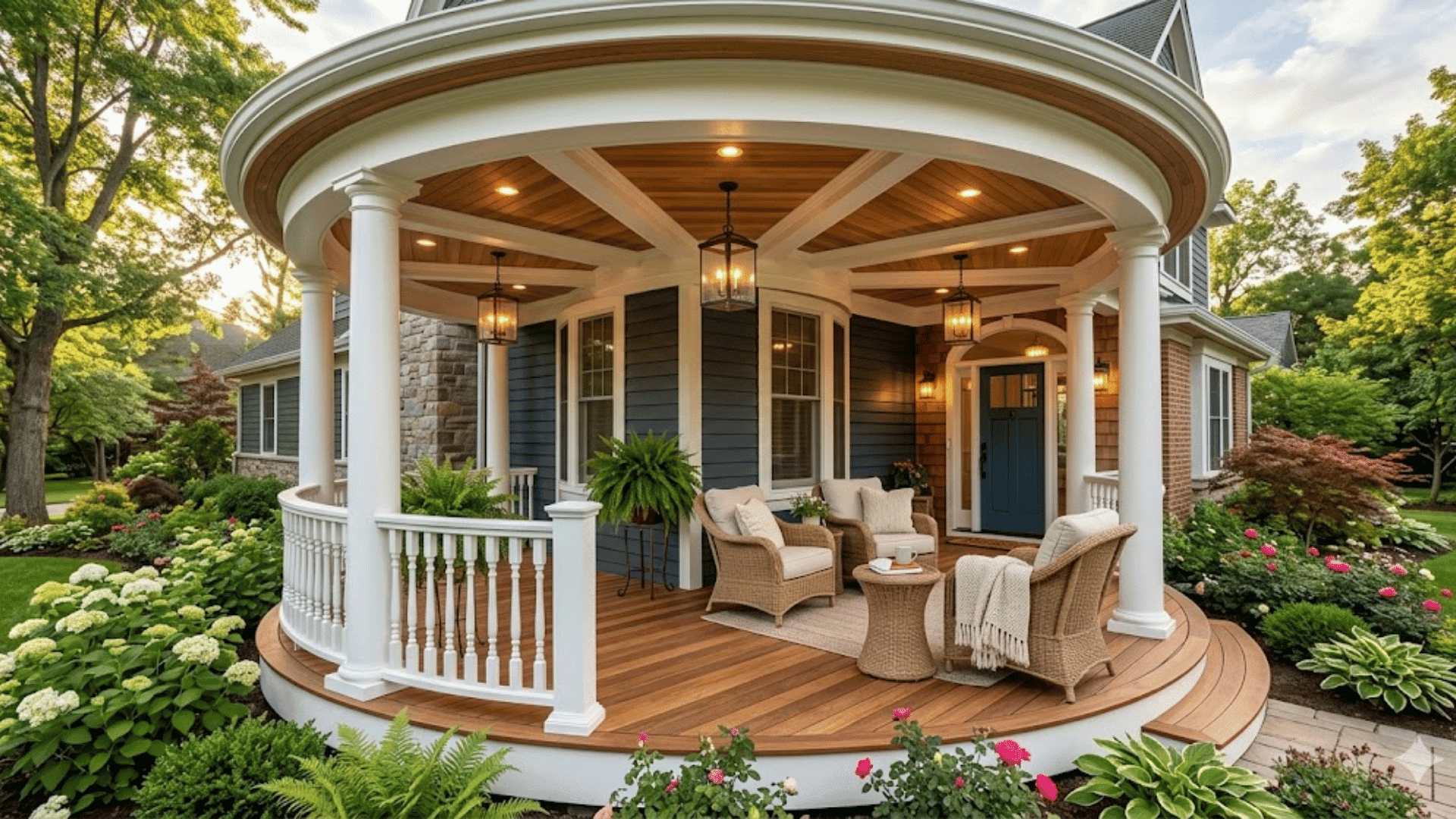

A porch is often the first space people notice when they approach a home, yet the ceiling above it is easy to overlook.
The design you choose can influence how open, warm, or polished the entire porch feels.
That is why many homeowners look for porch ceiling ideas that add both style and durability to their outdoor space.
In this guide, you’ll see several porch ceiling ideas that can help you create a porch that feels comfortable, welcoming, and visually balanced.
What Makes a Good Porch Ceiling Design?
A porch ceiling should look good while also handling outdoor conditions without constant upkeep. The right mix of material, style, and lighting helps create a space that feels comfortable and practical.
- Choose Durable Materials: Use options like beadboard, wood, or PVC that handle moisture and weather well
- Match Home Style: Keep the ceiling design consistent with your home’s overall look
- Focus on Color: Lighter shades help make the porch feel brighter and more open
- Add Functional Lighting: Use ceiling lights or fans for comfort and everyday use
- Keep Maintenance Low: Select materials that require minimal upkeep over time
Porch Ceiling Ideas to Transform Your Outdoor Space
If you are looking for ways to improve your outdoor space, seeing different porch ceiling ideas can make a noticeable difference in both style and comfort.
1. Classic Beadboard Porch Ceiling
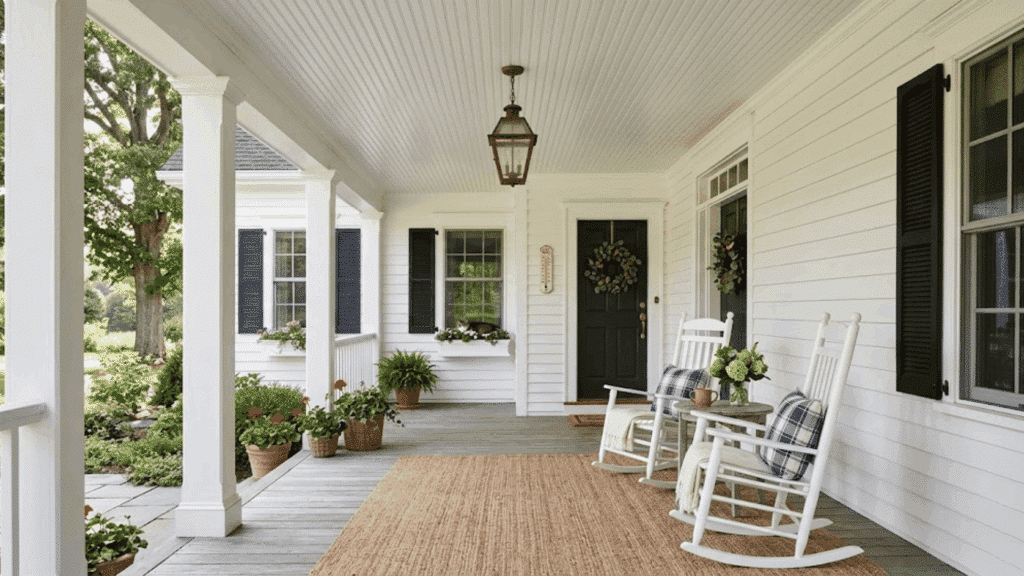
Beadboard ceilings are among the most common porch ceiling styles because they offer a simple yet refined look. The narrow vertical grooves create subtle texture without making the space feel busy.
This design works especially well with farmhouse, cottage, and traditional homes.
Many homeowners choose beadboard because it is affordable and relatively easy to install. When painted properly, it can also handle outdoor conditions quite well.
2. Painted Beadboard Ceiling
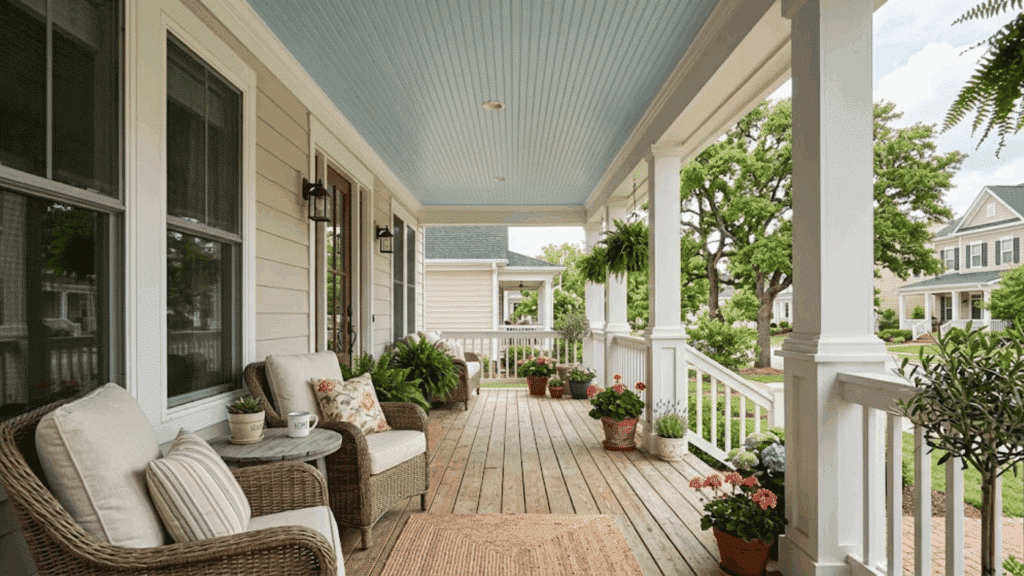
Painting beadboard panels can completely change the appearance of your porch.
White is a popular choice because it reflects light, making the area feel brighter and more open. However, soft gray, pale blue, or muted green can also add personality to the space.
Paint also helps seal the material and protect it from moisture. This small change can make the porch feel fresh and updated.
3. Natural Wood Porch Ceiling
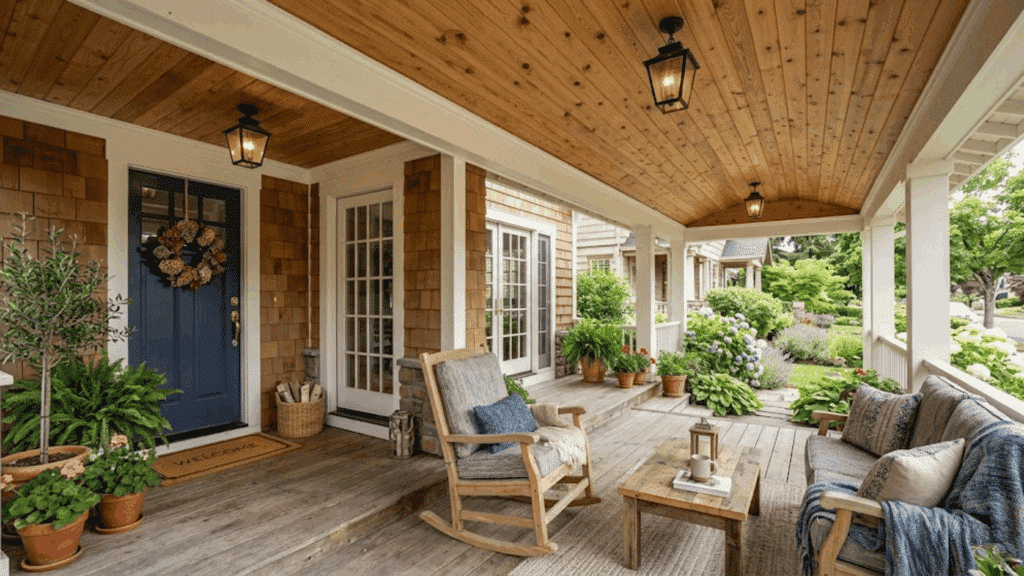
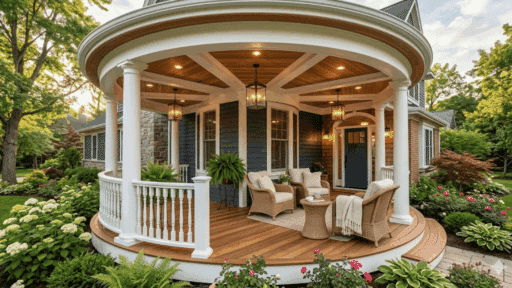
A natural wood ceiling adds warmth and character to a porch area. The visible wood grain creates texture that many homeowners find appealing.
Cedar, pine, and redwood are often used because they hold up well outdoors.
When sealed properly, wood ceilings can last for many years. This style works nicely with rustic, modern, or craftsman-style homes.
4. Tongue and Groove Wood Ceiling
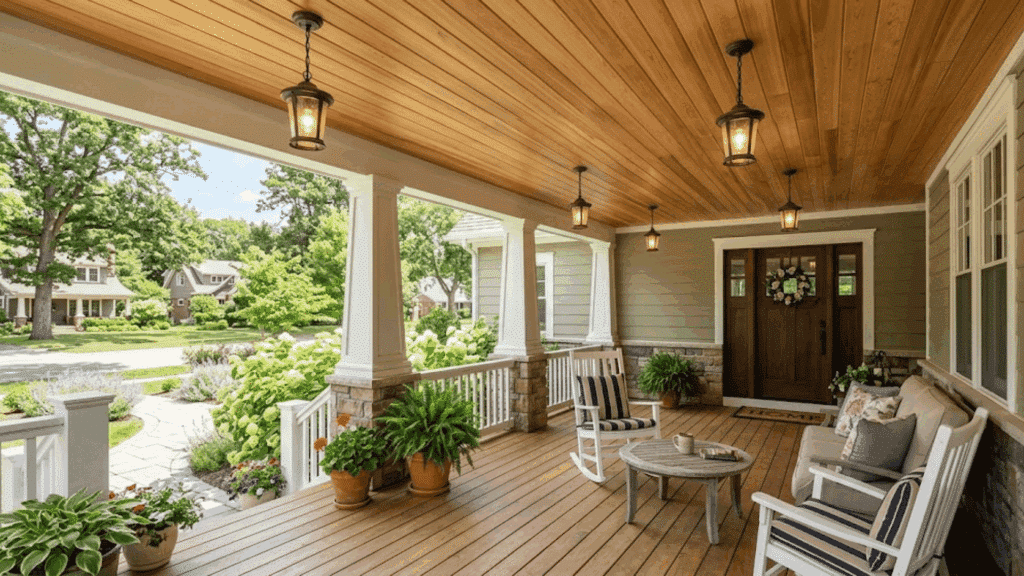
Tongue-and-groove boards connect tightly, creating a smooth, structured ceiling surface.
This design provides a clean appearance without visible gaps between panels. It also adds durability because the boards lock together securely.
Many homeowners stain or paint these boards to match their exterior style. The result is a polished porch ceiling that feels solid and well finished.
5. White Porch Ceiling
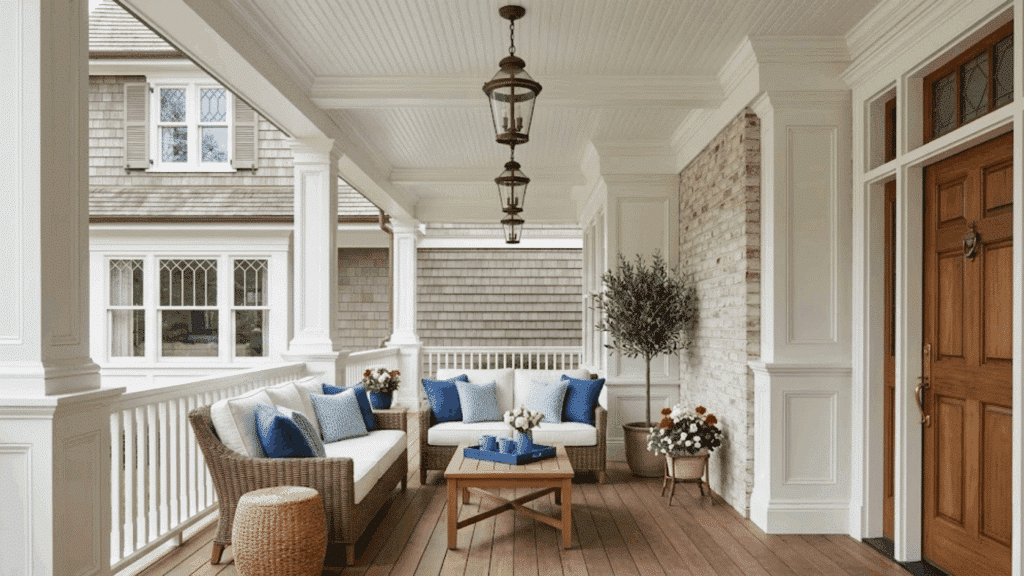
A white porch ceiling is one of the easiest ways to brighten an outdoor space. Light colors reflect natural light, making smaller porches appear larger.
This option also works with almost any architectural style. White ceilings highlight hanging lights, fans, and decorative fixtures. For many homeowners, it remains a reliable and timeless design choice.
6. Light Blue Porch Ceiling
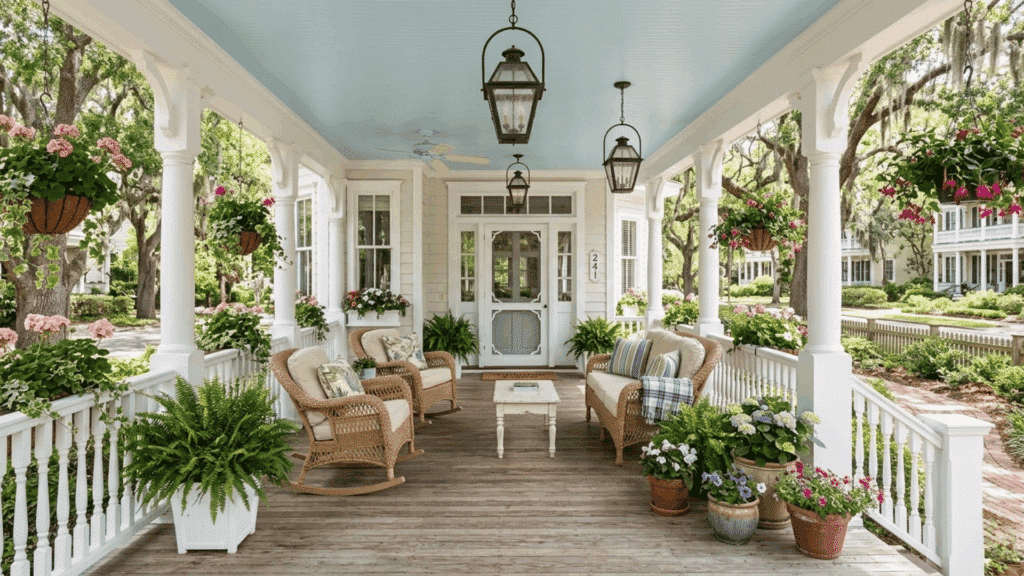
Light blue ceilings are often associated with traditional southern porch designs. The soft color creates a calm and relaxed atmosphere.
Many homeowners like the gentle contrast between blue ceilings and white trim.
This shade can also make the porch feel cooler during hot weather. It is a subtle way to add color without overwhelming the space.
7. Exposed Beam Porch Ceiling
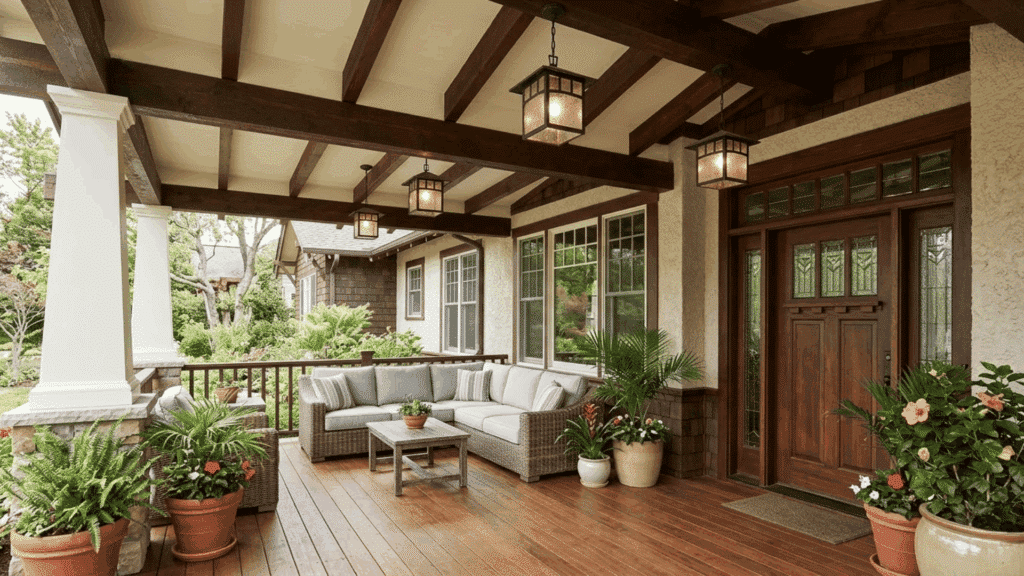
Exposed beams add depth and structure to a porch ceiling. The beams create strong visual lines that draw attention upward.
This design works particularly well with wood ceilings or painted panels. Some homeowners choose dark beams over a lighter ceiling for contrast. The result is a porch that feels both sturdy and visually interesting.
8. Rustic Wood Porch Ceiling
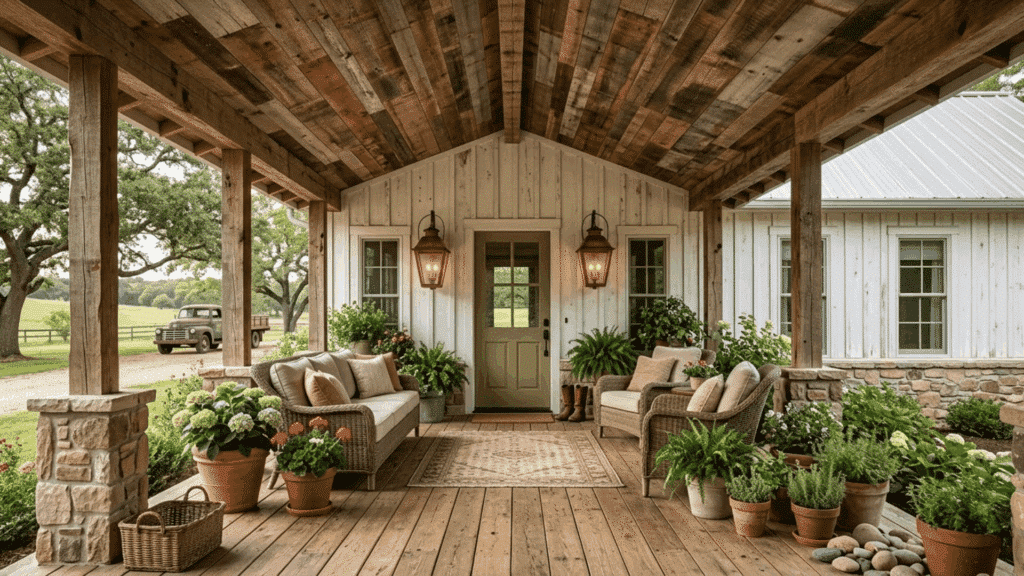
Rustic ceilings often use reclaimed wood or distressed boards. These materials add texture and a slightly weathered appearance.
The natural imperfections in the wood create a relaxed outdoor feel. This design pairs nicely with stone walls, brick exteriors, and farmhouse-style homes.
It is a good option for homeowners who prefer a natural and casual porch design.
9. PVC Porch Ceiling Panels
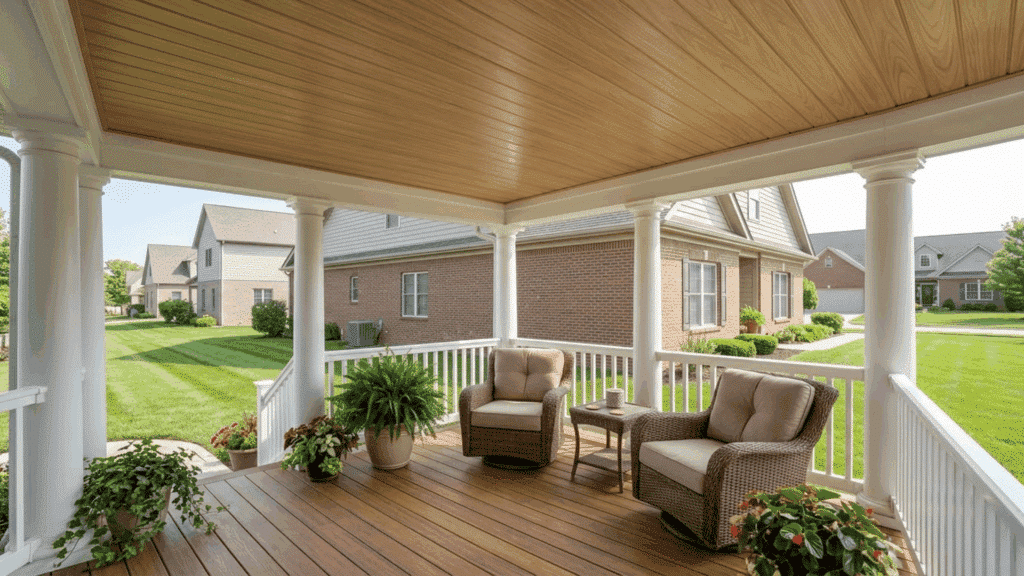
PVC ceiling panels are known for their durability and low maintenance. Unlike wood, PVC resists moisture, insects, and warping.
Many modern PVC panels are designed to resemble wood grain.
This allows homeowners to enjoy the look of wood without heavy maintenance. It is a practical option for porches in humid climates.
10. Cedar Porch Ceiling
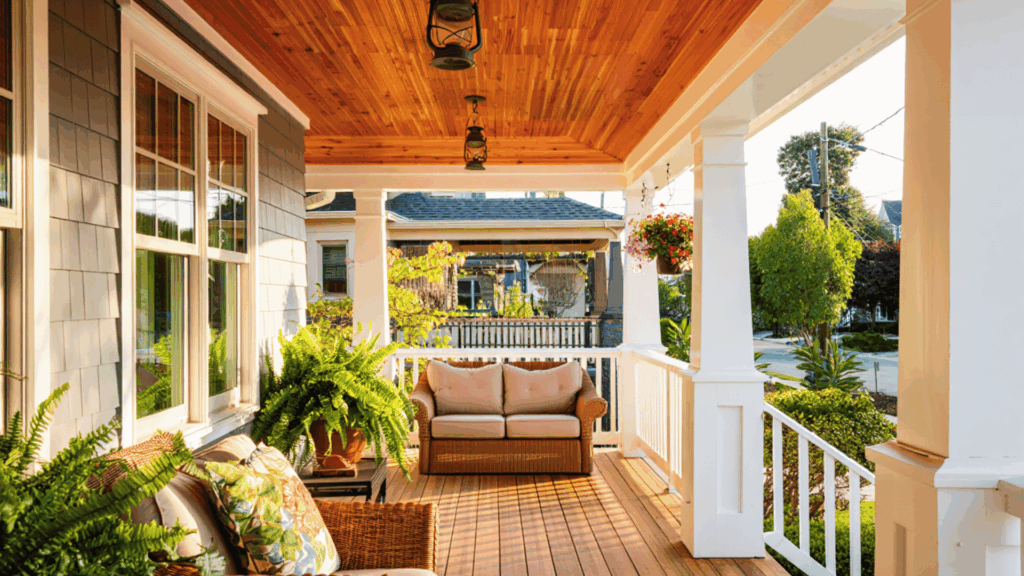
Cedar is often chosen for porch ceilings because of its natural resistance to moisture and insects. The warm reddish tone adds richness to the design.
Over time, cedar can develop a soft gray appearance if left untreated. Many homeowners seal the wood to maintain its original color.
Cedar ceilings create a welcoming and natural porch environment.
11. Shiplap Porch Ceiling
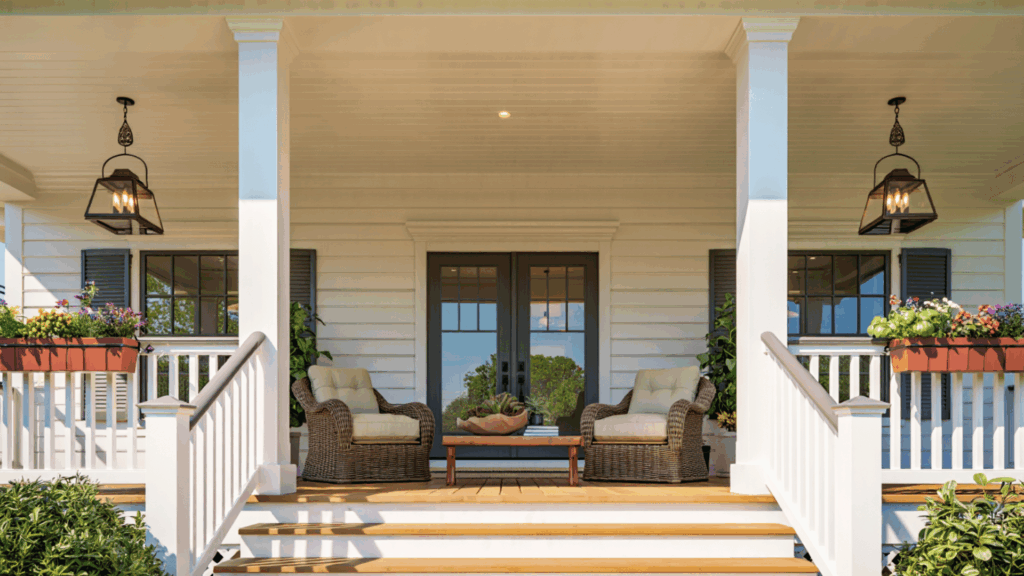
Shiplap boards create a simple horizontal pattern across the ceiling. The overlapping edges add texture while keeping the design clean.
This style is often seen in farmhouse and coastal homes. Shiplap can be painted white or left in natural wood tones. It gives the porch a neat and organized look.
12. Stained Wood Porch Ceiling
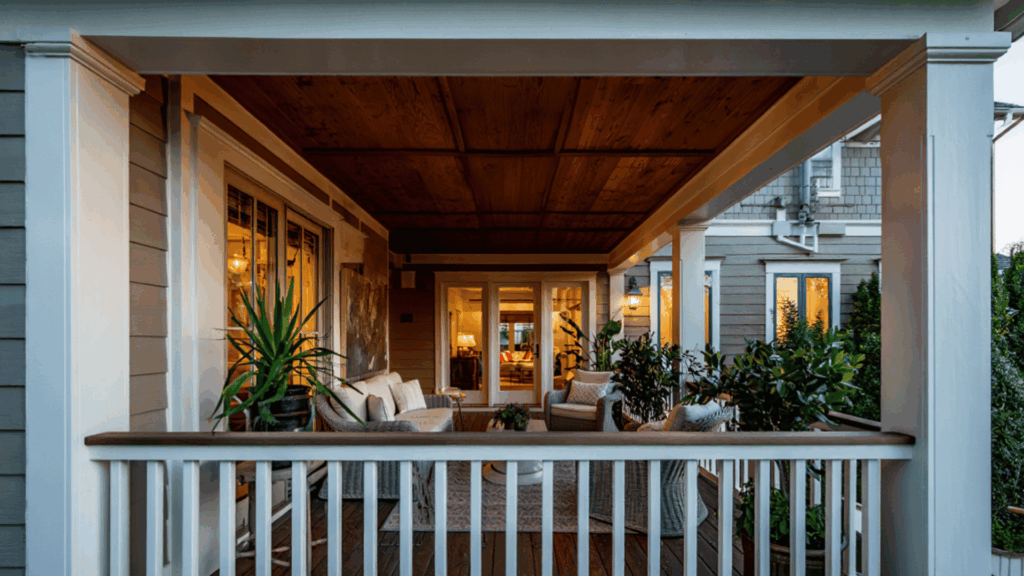
Staining wood boards highlights their natural grain and color.
Darker stains can create a rich and dramatic appearance. Medium stains often produce a warm and balanced look.
This option works well when paired with exposed beams. A stained ceiling also adds a layer of protection to the wood.
13. Metal Porch Ceiling Panels
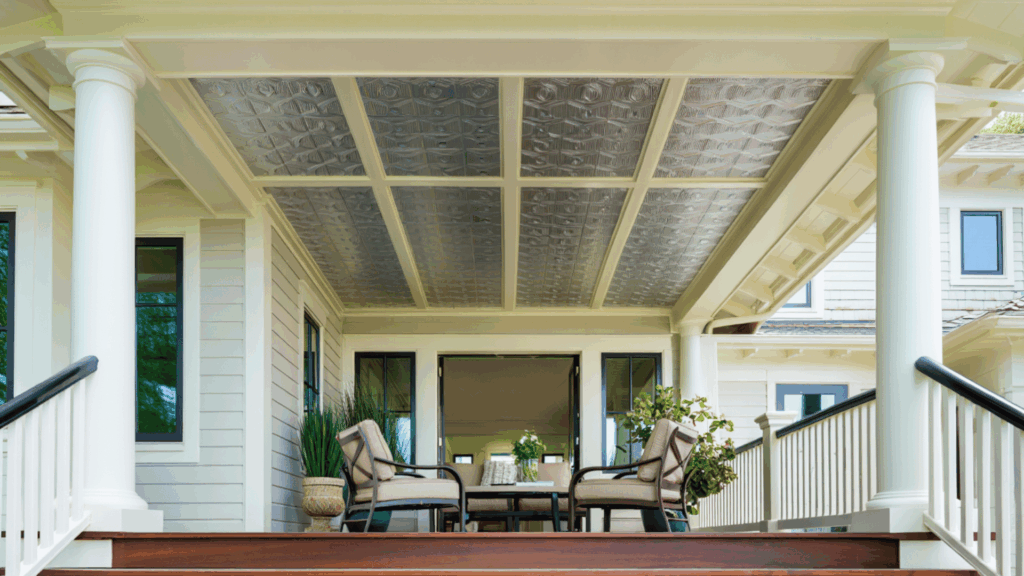
Metal ceiling panels introduce a unique texture to the porch area. Some panels feature decorative patterns that add visual interest. Metal is also durable and easy to maintain.
This material can work well in modern, rustic, or industrial-style homes. It creates a porch ceiling that stands out.
14. Coffered Porch Ceiling
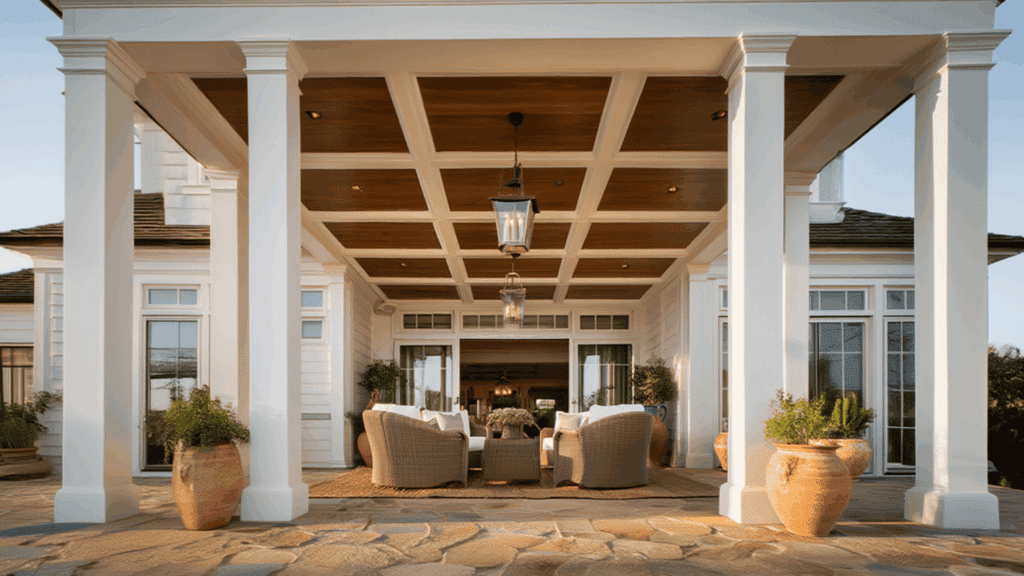
A coffered ceiling features recessed squares or rectangles arranged in a grid pattern. This design adds depth and architectural detail.
It often works best in larger porches with higher ceilings. The pattern can be painted in one color or accented with contrasting trim.
This design gives the porch a more refined appearance.
15. Board and Batten Porch Ceiling
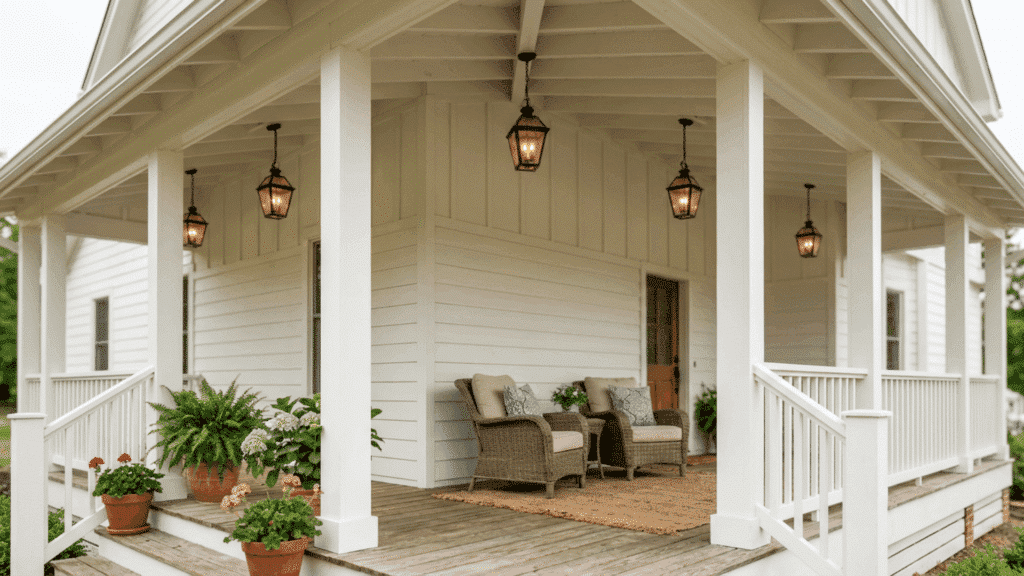
Board-and-batten ceilings use wide panels separated by narrow strips. This layout creates a subtle structure across the ceiling surface.
The design remains simple but adds visual interest. It pairs well with farmhouse and craftsman-style homes. Many homeowners paint the entire surface in a light color.
16. Vaulted Porch Ceiling
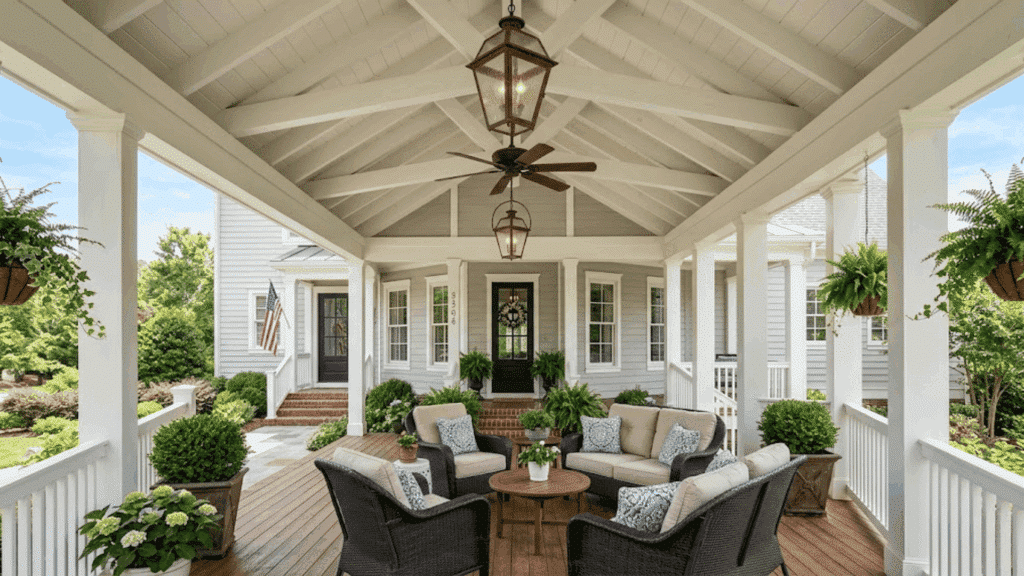
A vaulted porch ceiling slopes upward, creating a sense of height. This design can make a porch feel more open and spacious.
It works especially well for homes with large front porches. Hanging lights or ceiling fans can become focal points in this design. The extra height also improves airflow.
17. Painted Wood Beam Ceiling
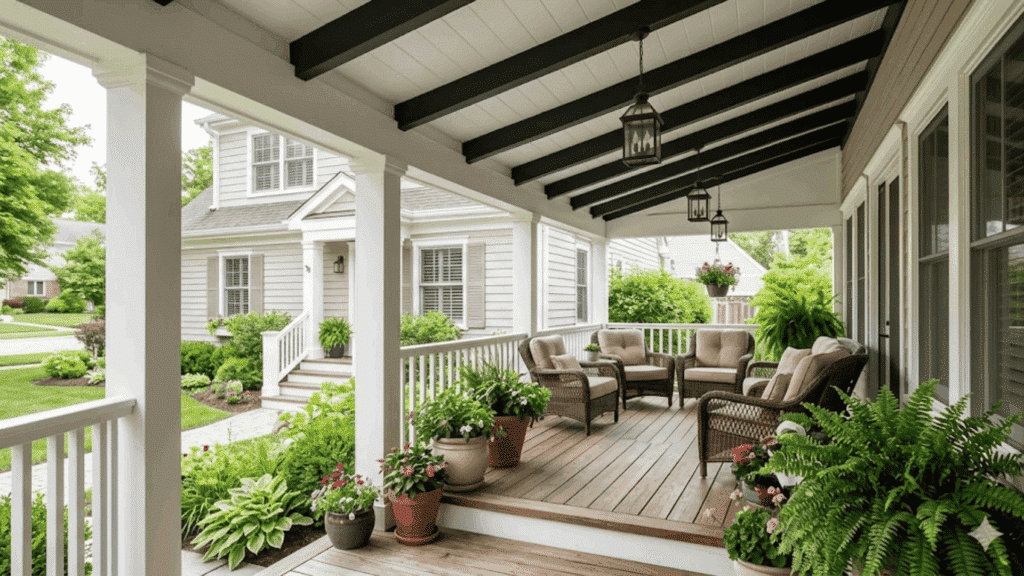
Painting beams can add contrast and character to a porch ceiling. Dark beams over a white ceiling create a classic combination.
Lighter beams can also soften the appearance of the space.
This design adds structure without making the ceiling feel heavy. It blends well with many architectural styles.
18. Farmhouse Style Porch Ceiling
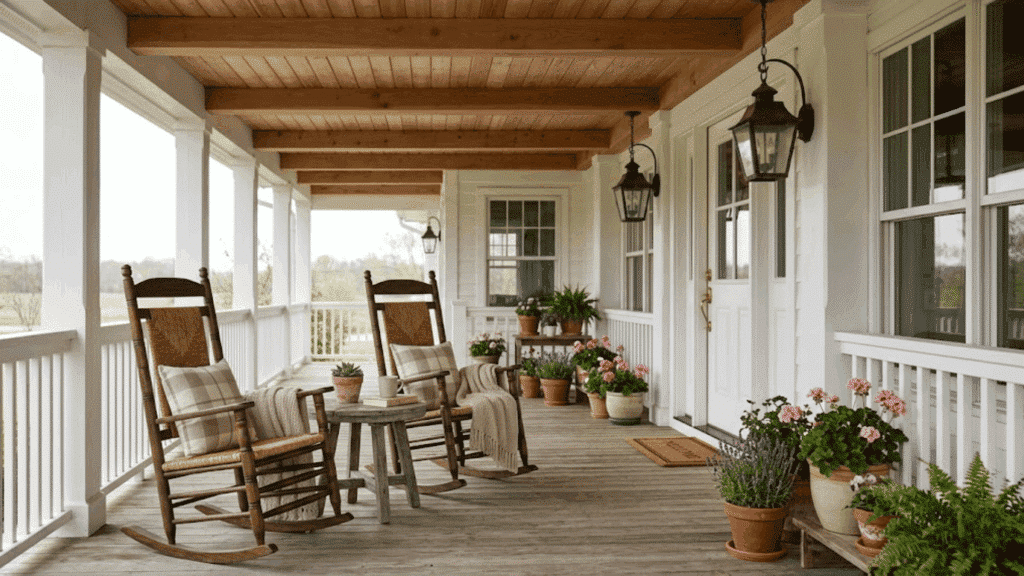
Farmhouse ceilings often combine wood boards and exposed beams.
The design feels comfortable and welcoming. White paint or natural wood tones are commonly used. This style pairs nicely with rocking chairs and wooden porch furniture.
It creates a relaxed outdoor atmosphere.
19. Coastal Style Porch Ceiling
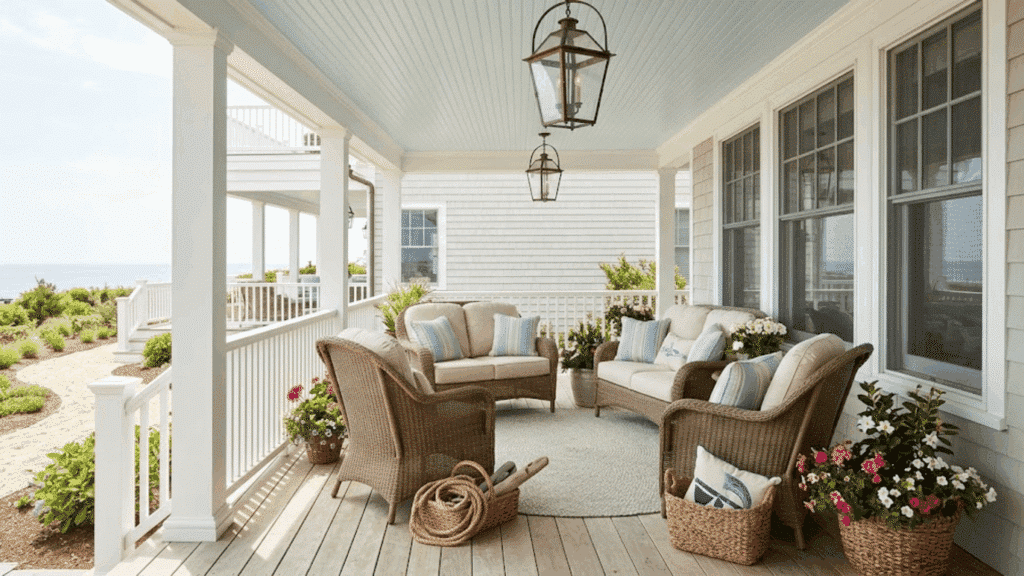
Coastal ceilings focus on light colors and simple materials. Whiteboards or soft blue tones are common choices. The goal is to create an airy and relaxed porch setting.
This style works well for homes near water or in warm climates. Natural light becomes an important design feature.
20. Modern Minimal Porch Ceiling
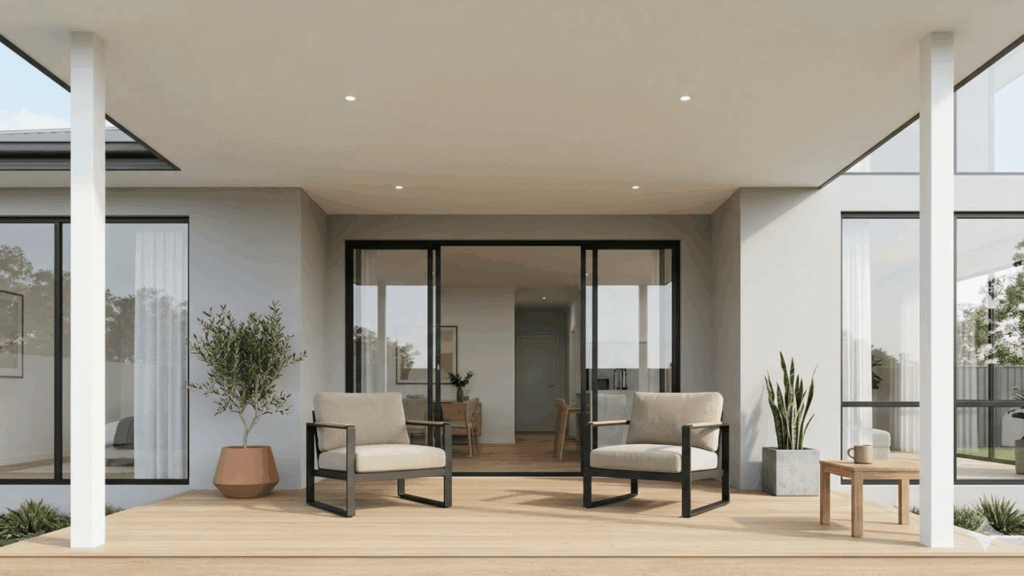
Modern minimal ceilings focus on simplicity. Flat panels and neutral colors keep the design clean and uncluttered.
This approach works well with contemporary homes. The ceiling becomes a quiet background for lighting fixtures. The overall result feels balanced and organized.
21. Decorative Ceiling Panels
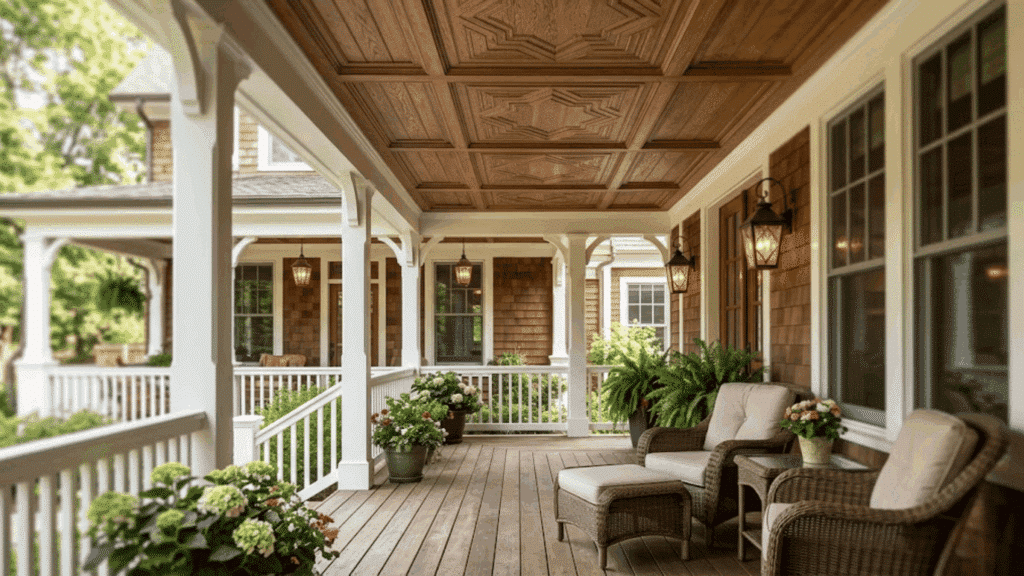
Decorative panels introduce patterns or textures to the porch ceiling. These panels may feature geometric shapes or subtle embossed designs.
They can become the focal point of the space. Many homeowners use them to add personality to a simple porch. The panels are often lightweight and easy to install.
22. Dark Wood Porch Ceiling
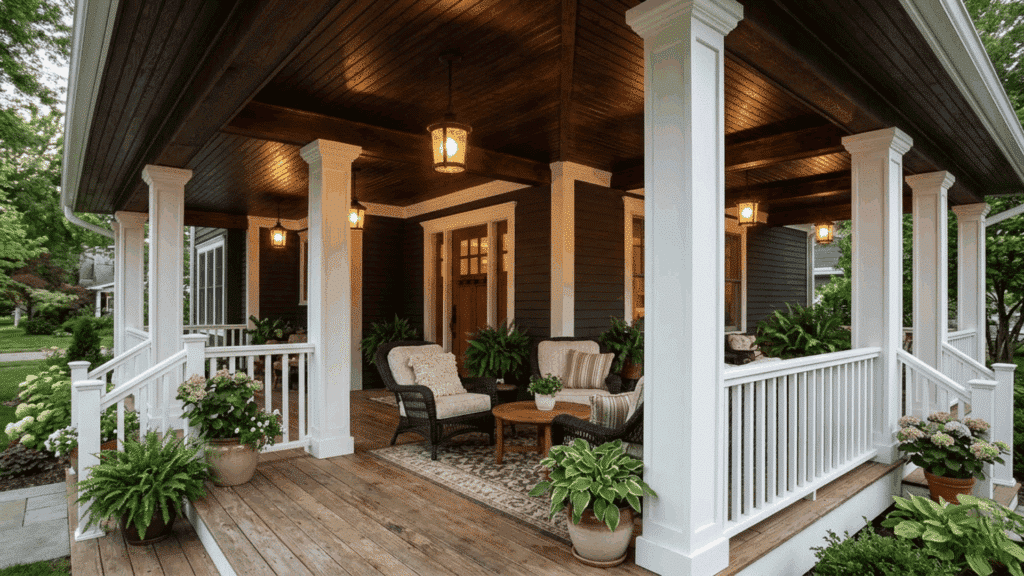
Dark wood ceilings add depth and contrast to the porch design. They stand out against lighter walls and flooring.
This approach can create a cozy outdoor space. Good lighting helps balance the darker tones. The result feels warm and inviting.
23. Outdoor Plywood Porch Ceiling
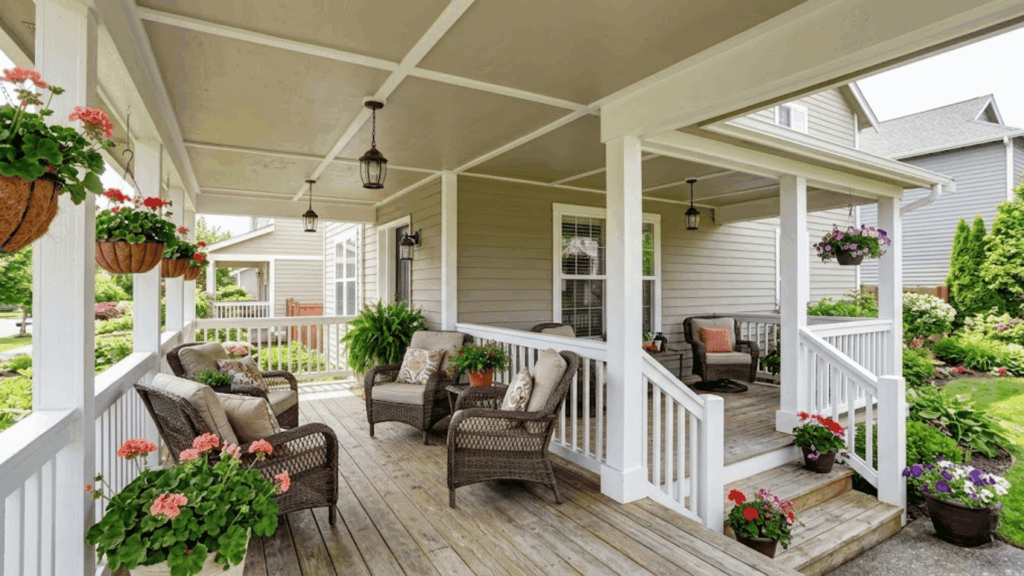
Finished plywood can serve as a simple and affordable ceiling option. When sealed and painted, it provides a smooth surface.
This material is often used for budget-friendly porch upgrades. It can also be combined with trim boards for added detail. Proper sealing helps protect it from moisture.
24. Bamboo Porch Ceiling
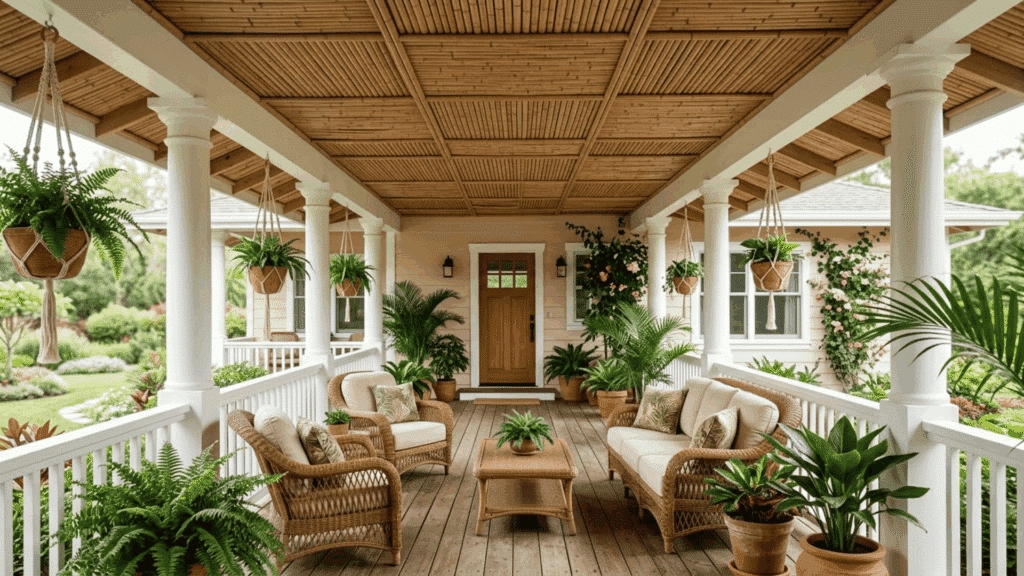
Bamboo ceilings create a natural and relaxed look. The texture works well for garden or tropical-style porches. Bamboo panels are lightweight and easy to install.
They pair nicely with plants and natural wood furniture. This option adds a calm outdoor atmosphere.
25. Aluminum Porch Ceiling
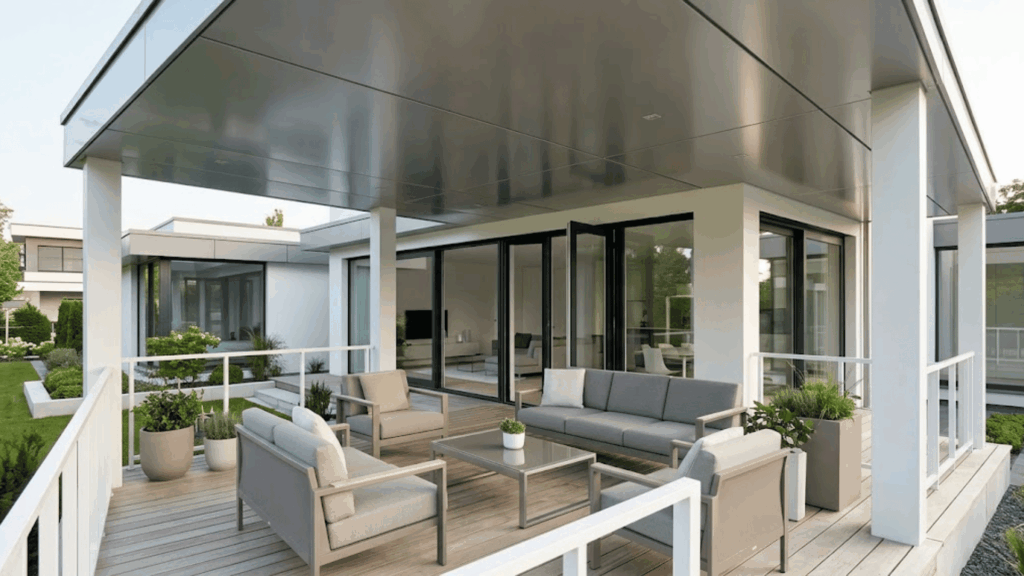
Aluminum panels are durable and weather-resistant. They require very little maintenance compared to wood. This material works well in humid climates.
Aluminum ceilings can also create a clean and modern appearance. Many homeowners choose it for its practicality.
26. Painted Pattern Porch Ceiling
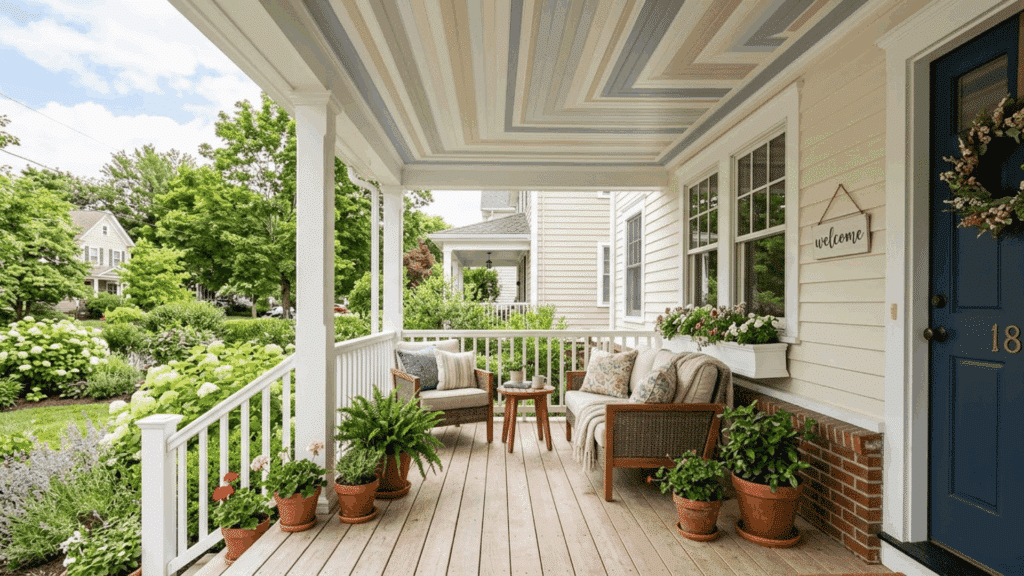
Painting simple patterns on the ceiling can add personality to the porch. Stripes or geometric designs are popular options.
This approach allows homeowners to experiment with color.
It works well for smaller porches that need a design feature. The ceiling becomes a creative focal point.
27. Mixed Material Porch Ceiling
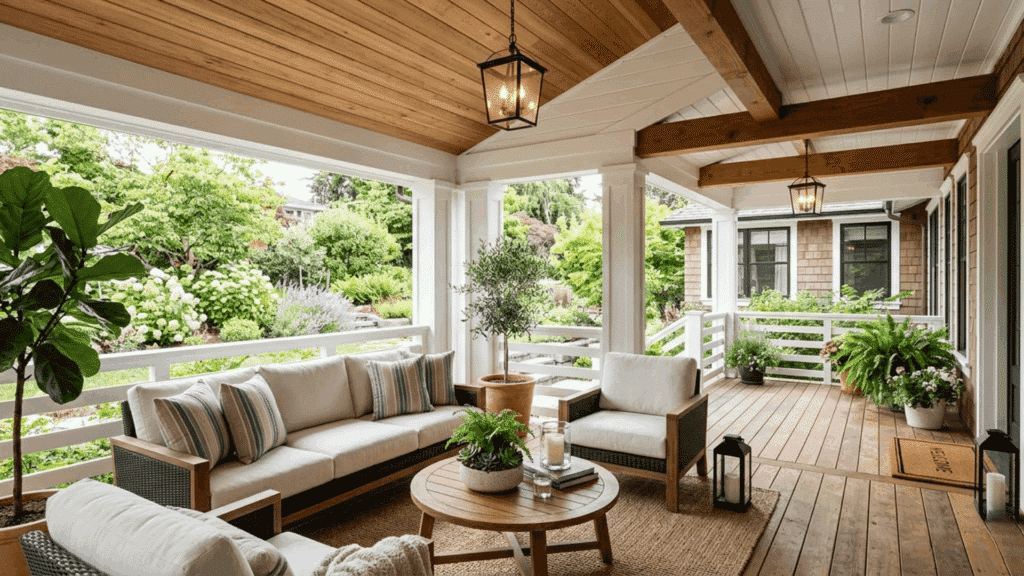
A mixed material ceiling combines elements such as wood panels, beams, and paint. This approach adds contrast and visual interest.
It allows homeowners to combine traditional and modern design features.
Different textures can make the porch feel more dynamic. The result is a ceiling that feels unique and customized.
Conclusion
A well-finished porch ceiling can quietly improve the comfort and style of your outdoor space.
The right materials, colors, and layout help protect the structure while also giving the porch a more complete look.
From simple beadboard panels to wood finishes and modern designs, there are many porch ceiling ideas that fit different budgets and home styles.
Paying attention to durability, lighting placement, and overall design balance can make a noticeable difference.
When chosen carefully, porch ceiling ideas not only improve visual appeal but also create a space that feels welcoming for everyday use, relaxing evenings, and time spent with family and friends.
Frequently Asked Questions
What is the best material for a porch ceiling?
Common materials include beadboard, tongue-and-groove wood, PVC panels, and cedar. The best choice depends on your climate, maintenance preference, and the style of your home.
Can I install a porch ceiling myself?
Yes, many porch ceiling materials, such as beadboard panels, PVC boards, or plywood sheets, are suitable for DIY installation. However, larger or more detailed designs may require professional help.
What color works best for a porch ceiling?
White and light blue are popular choices because they reflect light, creating a bright outdoor space. Neutral tones and natural wood finishes are also commonly used.
How do I protect a porch ceiling from moisture?
Using weather-resistant materials, applying sealants or exterior paint, and ensuring proper ventilation can help protect the ceiling from moisture damage.

With a Master’s in Architecture from the University of California, Berkeley, Alexander Martin has dedicated the last 18 years to enhancing outdoor living through thoughtful and robust structure design. His career kicked off in urban planning, giving him a unique perspective on integrating structures into diverse environments. In 2019, Alexander brought his expertise to our website, offering insights into creating versatile outdoor spaces. Since then, he has been the lead advisor for our outdoor design projects and is known for his ability to merge functionality with environmental consciousness. Alexander enjoys rock climbing outside of work and participates in community development projects, activities that reflect his passion for the outdoors and sustainable design.