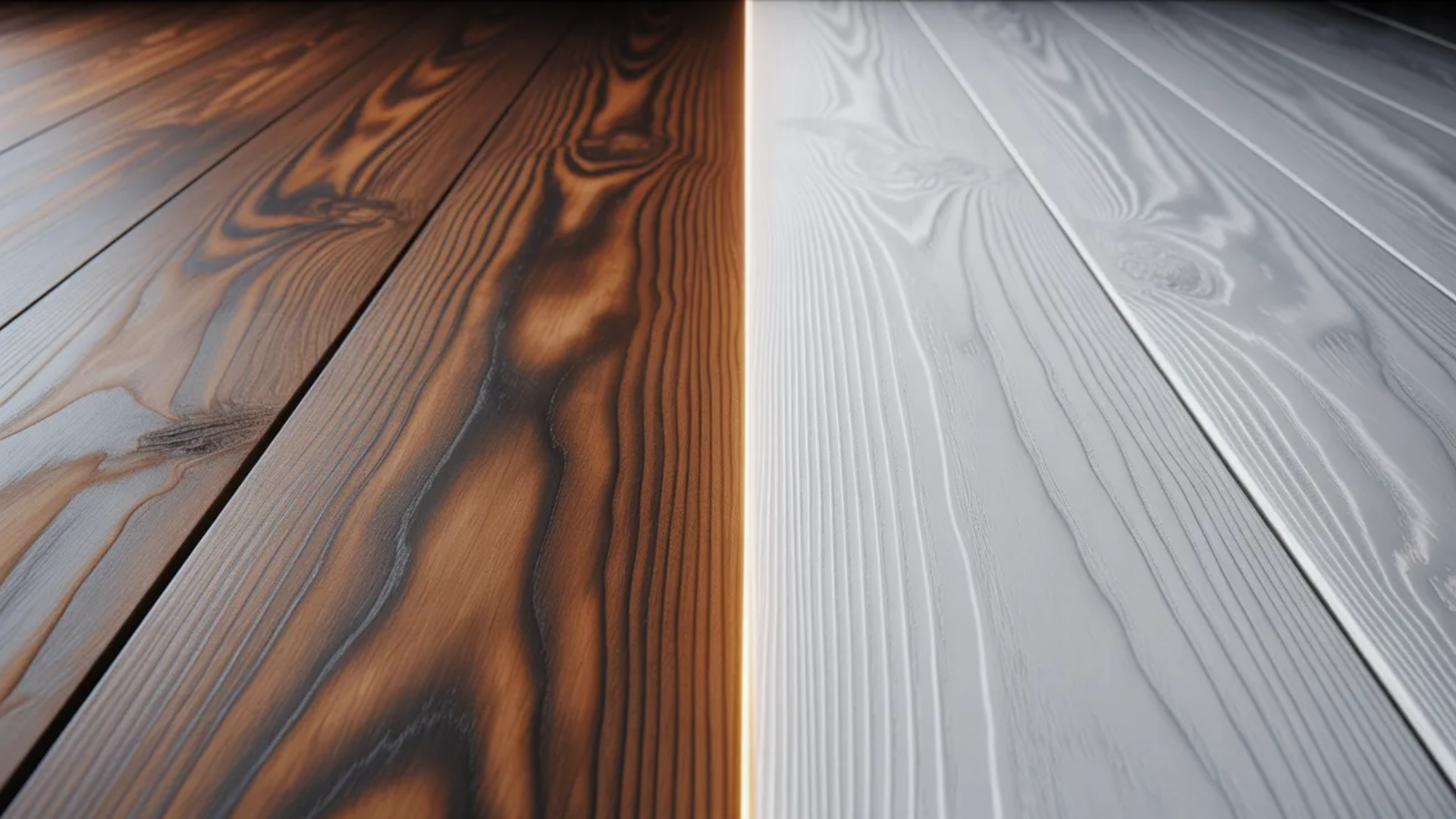

You’re standing in the paint aisle of your local hardware store, staring at rows of cans, some labeled “stain,” some labeled “paint,” and the question hits you: “Which one do I actually need”?
If you’re refreshing a weathered deck, updating an old fence, or transforming a piece of furniture, the finish you choose matters more than most people realize.
Pick the wrong one, and you could be dealing with peeling, fading, or a look that just doesn’t feel right. This is the heart of the stain vs. paint debate.
In this detailed breakdown of wood stain vs paint, we’ll compare durability, cost, aesthetics, and maintenance so you walk into your next project with total confidence. Let’s dive in.
What is Wood Stain?
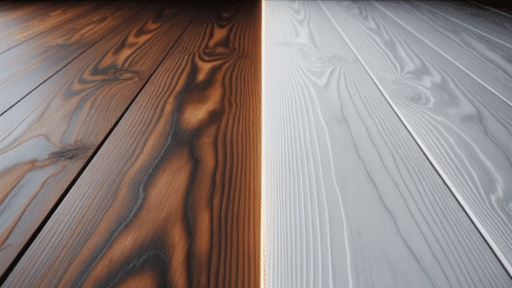
Wood stain is a finish designed to penetrate deeply into the wood grain rather than sit on the surface like a coat of armor.
Think of it less like a skin and more like a dye that soaks into the wood fibers, enhancing the natural texture, tone, and character already living inside the wood.
When you apply stain, you’re not covering your wood; you’re revealing its best version. The natural knots, grain patterns, and unique markings that make each piece one of a kind? Stain lets everyone of them breathe and shine.
Unlike paint, stain doesn’t hide your wood; it celebrates it. Working with the wood’s natural identity, it delivers a finish that feels warm, organic, and authentically beautiful.
How Staining Works
- Penetrates deep into wood fibers, not just the surface.
- Enhances natural grain and texture rather than hiding them.
- Color comes from pigments or dyes carried by a liquid base.
- Absorption varies based on wood type and porosity.
- Usually needs a topcoat for protection and durability.
Types of Wood Stain
There are three main types of wood stain, each offering a different level of coverage and color intensity. The right one for you depends on your wood’s condition, age, and how much of that natural grain you actually want to show off.
1. Transparent / Semi-Transparent
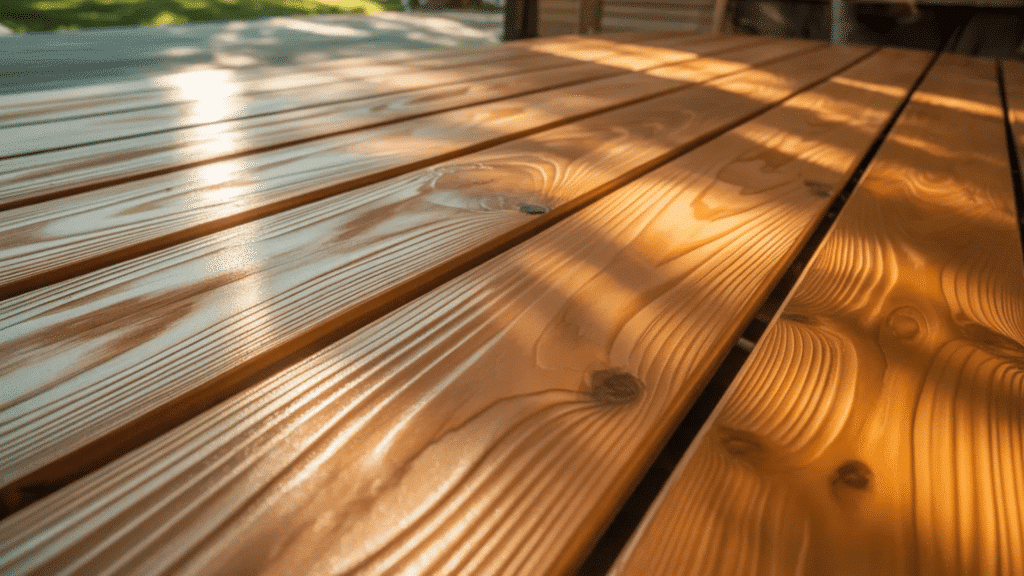
Let the full wood grain show through with minimal color interference, making it best for new or high-quality wood.
It adds a light tint while keeping the natural knots, texture, and grain patterns fully visible because beautiful wood deserves to be seen.
It’s also the most forgiving option for application; minor lap marks or uneven strokes blend naturally into the wood’s existing texture.
If you’re working with freshly installed timber or a premium wood species, transparent stain is hands down the finish that honors the material most.
2. Semi-Solid
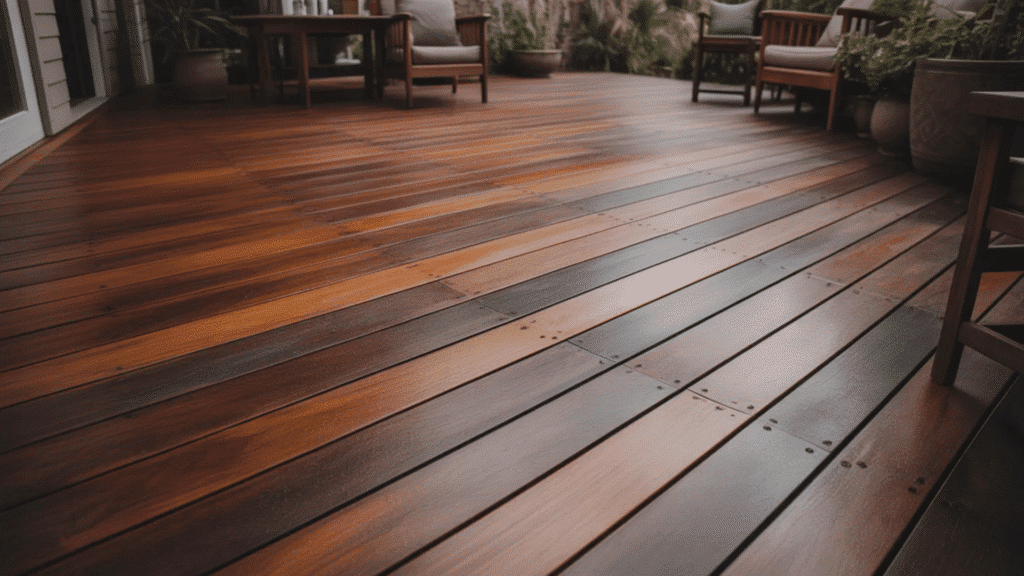
Adds a richer, deeper color while still allowing some grain to be visible beneath the surface.
It’s the perfect middle ground for wood with minor weathering or surface imperfections you want to tone down without losing the natural character entirely.
It strikes the ideal balance between protection and aesthetics, offering more coverage than a transparent stain without fully committing to the opacity of a solid finish.
If your wood is showing its age but still has good bones, semi-solid stain is the finish that refreshes it without erasing its story.
3. Solid Stain
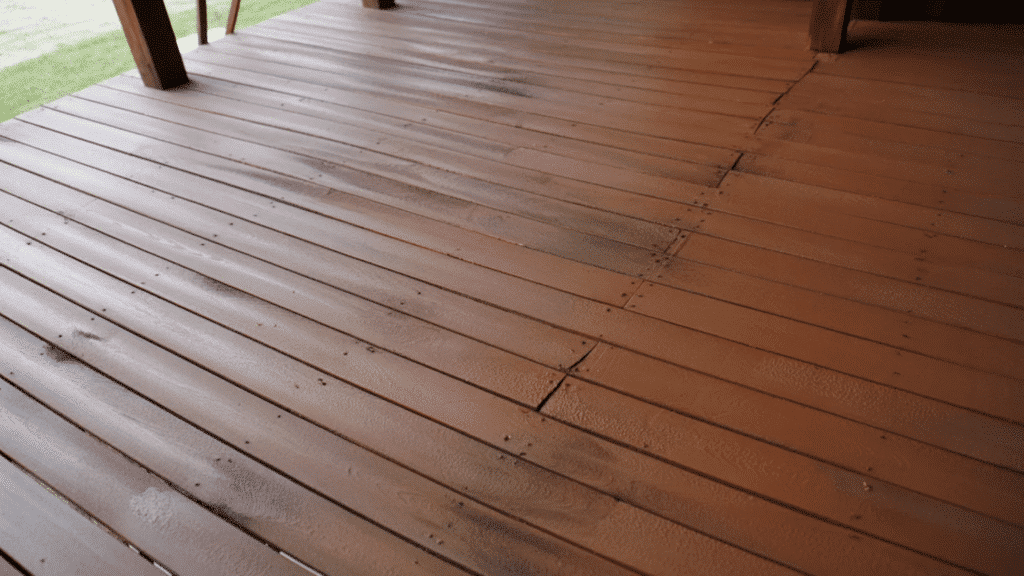
Delivers full, opaque color coverage while still penetrating the wood fiber, making it far more durable than paint on rough or textured surfaces. It’s the go-to choice for older, weathered wood that needs serious color correction while still benefiting from stain’s natural flexibility.
Unlike paint, it won’t trap moisture beneath a surface film or crack under the pressure of the wood’s natural movement over time.
If your wood has seen better days but you’re not ready to replace it, a solid stain is the finish that gives it a brand-new life without compromising its structural integrity.
What is Paint?
Paint is a finish designed to sit on top of the wood surfacerather than soak into it, forming a thick, protective film that acts as a shield between the wood and the outside world.
When you apply paint, you’re not enhancing the wood; you’re transforming it.The grain, knots, and natural markings? Paint covers them entirely, giving you a clean, smooth, and uniform surface to work with.
Unlike stain, paint doesn’t work with the wood’s natural identity; it reinvents it.Offering unlimited color choices and bold, solid coverage, it delivers a finish that feels polished, intentional, and completely customizable.
How It Creates a Protective Layer
- Builds up layer by layer on top of the wood.
- Hardens into a solid, opaque moisture barrier.
- Protects wood from physical wear and impact.
- Sits on top of the wood rather than within it.
- Can crack, chip, or peel with wood’s natural movement.
Types of Paint
There are three main types of paint, each formulated for a different surface, finish, and level of durability.
The right one depends on where you’re applying it, what look you’re going for, and how much wear and tear the surface needs to handle:
1. Latex / Water- Based paint
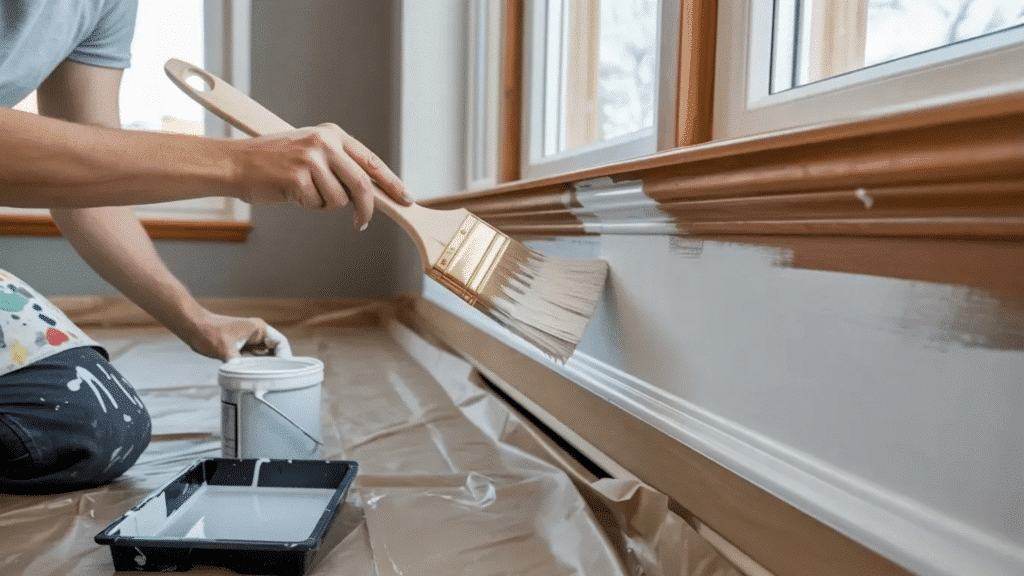
Dries quickly, cleans up easily with water, and offers excellent color retention over time, making it the most popular choice for everyday wood projects.
It’s best suited for interior walls, trim, and furniture where a clean, durable finish is the priority. It’s also the most beginner-friendly option on the market, with low odor, fast drying, and widely available in thousands of colors and finishes.
If you’re tackling a straightforward interior project and want reliable, consistent results without the complexity, latex paint is the easiest and most practical place to start.
2. Oil-Based Paint
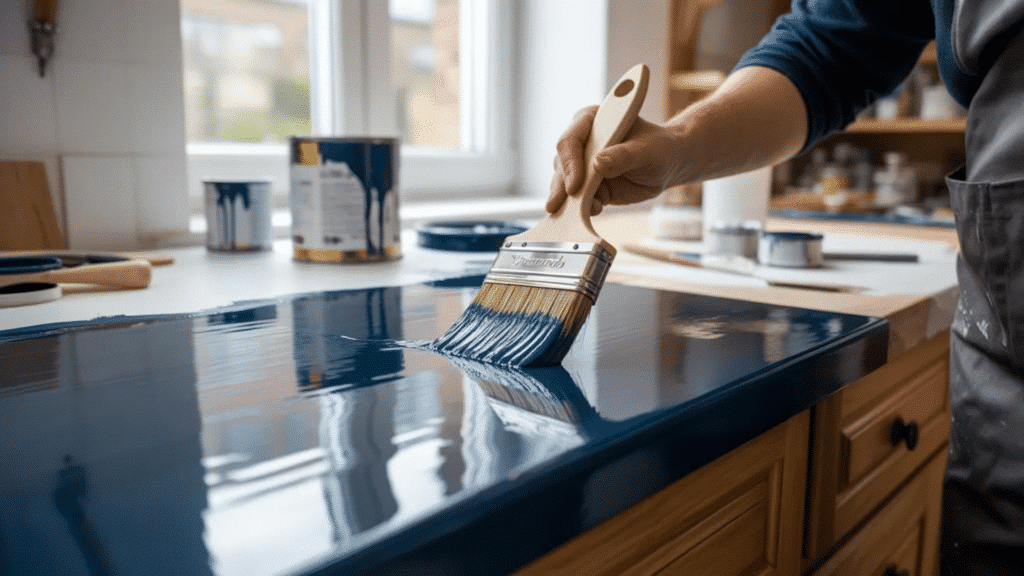
Penetrates slightly deeper than latex and dries to an incredibly hard, durable finish, making it ideal for high-traffic surfaces like floors, cabinets, and exterior trim.
It takes longer to dry but delivers a smooth, professional-grade result that stands up to heavy wear.
The extended drying time actually works in your favor; it allows the paint to self-level beautifully, minimizing brush marks and leaving behind a flawlessly smooth surface.
If you’re working on a surface that takes a beating daily and demands a finish that holds its ground, oil-based paint is the heavy-duty solution built to last.
3. Chalk / Milk Paint
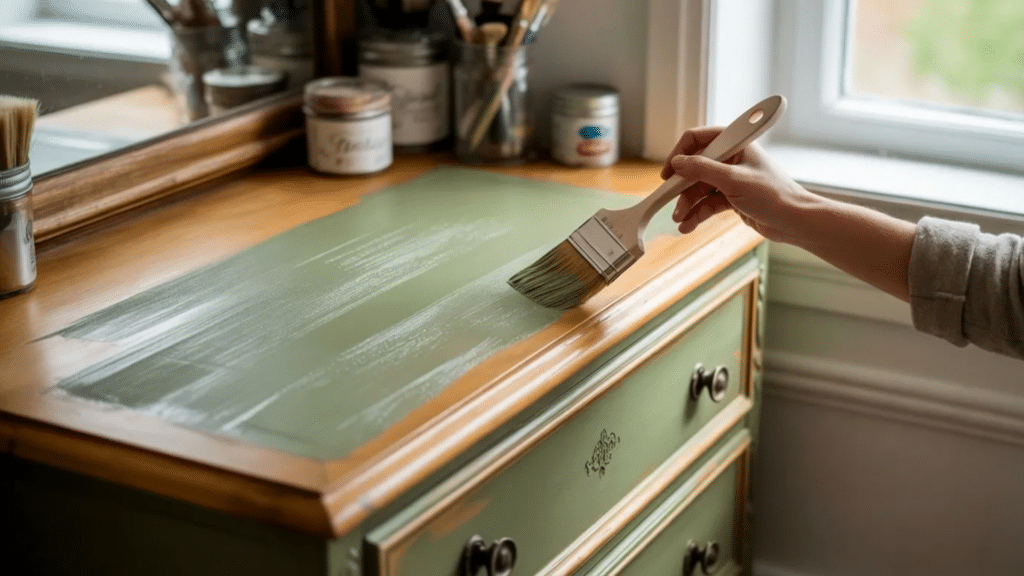
Offers a soft, matte, vintage-inspired finish that has become a favorite for furniture makeovers and interior décor projects.
It requires minimal surface prep, adheres to most surfaces without priming, and is perfect for effortlessly achieving a rustic or shabby-chic aesthetic.
What makes it truly unique is its ability to be distressed, layered, or waxed after application, giving you complete creative control over the final look and feel.
If you’re transforming an old piece of furniture or adding character to a plain surface, chalk and milk paint deliver an artisanal, one-of-a-kind finish that no other paint type can replicate.
Stain vs. Paint: Head-to-Head Comparison
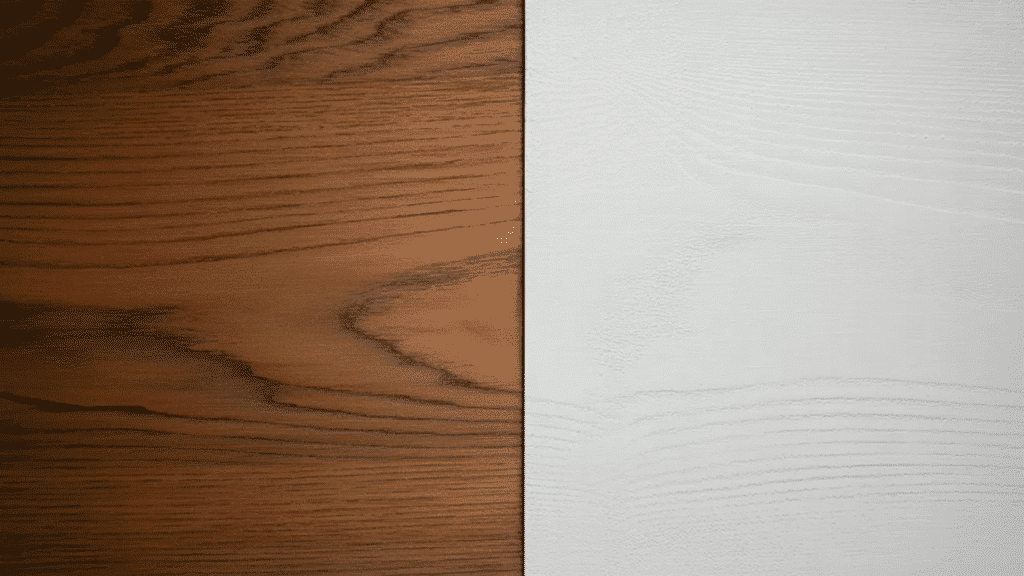
When it comes to stain vs. paint, there’s no universal winner, but there is a right choice for every project. Here’s a direct, side-by-side breakdown across the factors that matter most.
| Feature | Wood Stain | Paint |
|---|---|---|
| Appearance | Natural, grain visible. | Solid, opaque coverage. |
| Durability | Moderate, fades gradually. | High, longer-lasting film. |
| Maintenance | Easy to recoat. | Peels require stripping. |
| Application | Forgiving, fewer coats. | Requires prep and priming. |
| Cost | Lower upfront. | Can be higher. |
| Moisture Resistance | Good for the exterior. | Excellent with primer. |
| Best For | Decks, fences, and natural wood. | Furniture, trim, cabinets. |
Which One to Choose: Stain or Paint?
Choosing between wood stain vs paint depends on your surface, location, and desired finish. Using the wrong one can lead to wasted time, money, and frustration.
Choose Wood Stain When
If preserving the wood’s natural beauty is a priority or if you’re working on outdoor, rough, or rustic surfaces, stain is almost always the smarter, more practical choice. Here’s when to reach for it:
- Preserve the Natural Wood Look: You want the grain, knots, and texture to stay visible. Stain enhances what’s already there rather than covering it up.
- Outdoor Projects: Decks, fences, and pergolas exposed to weather and moisture perform far better with stain’s deep penetration than a surface film of paint.
- Rough or Textured Surfaces: Stain holds on tight to uneven surfaces by soaking in deep, where paint would eventually crack, bubble, and peel away.
- Lower Maintenance Priority: Stain fades gradually and recoats with minimal effort, no stripping, no sanding, no prep headaches.
- Log Homes or Rustic Projects Stain complements the organic, natural aesthetic that defines rustic architecture and outdoor woodwork perfectly.
Pro Tip: Use a semi-transparent stain on new wood to let the natural grain shine through at its best.
Choose Paint When
If bold color, full coverage, or maximum surface protection is what your project demands, paint is the clear winner. Here’s when it’s the right call:
- Bold, Solid Color with Full Coverage: Paint offers unlimited color choices and a clean, uniform finish that stain simply can’t deliver when color is the priority.
- Indoor Furniture, Cabinetry, or Trim: Paint is the gold standard for interior wood surfaces that demand a polished, smooth, and professionally finished look.
- Hiding Wood Imperfections: Knots, discoloration, or uneven surfaces? Paint’s opaque coverage hides everything for a flawless, seamless result.
- Maximum Moisture and Wear Protection: Paint’s hard-surface film provides superior protection for high-traffic areas and environments with high humidity, such as kitchens and bathrooms.
- Modern, Contemporary, or Traditional Design Styles: If it’s crisp white trim or bold statement cabinets, paint brings any design vision to life with precision and versatility.
Pro Tip: Always use a primer before painting bare or previously stained wood for the best adhesion and longest-lasting finish.
Final Thoughts
There’s no wrong choice in the stain vs paint debate, only a wrong fit for your project. Stain lets the wood speak for itself. Paint gives you a blank canvas to work with.
One celebrates the wood; the other transforms it. Knowing the difference is all it takes to make the right call every single time.
So before you crack open that first can, know your surface, know your goal, and know the finish you want to wake up to every day.

Millie Anderson, a graduate of Textile Design from the Fashion Institute of Technology, has carved her name in fabric and material finishes for over 16 years. Her career took flight in a renowned textile manufacturing company, where she mastered combining textures and patterns. Millie joined our team in 2018, becoming a cornerstone for readers interested in the latest trends in textiles. Since then, she has been the lead editor for our home decor fabrics section, blending her deep knowledge of materials with a flair for contemporary design. Beyond her professional achievements, Millie is an enthusiastic quilter and often participates in community arts and crafts workshops, further nurturing her passion for fabrics and design.