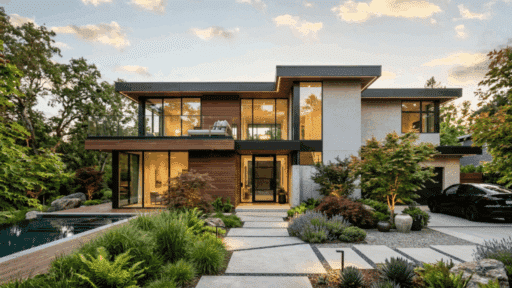
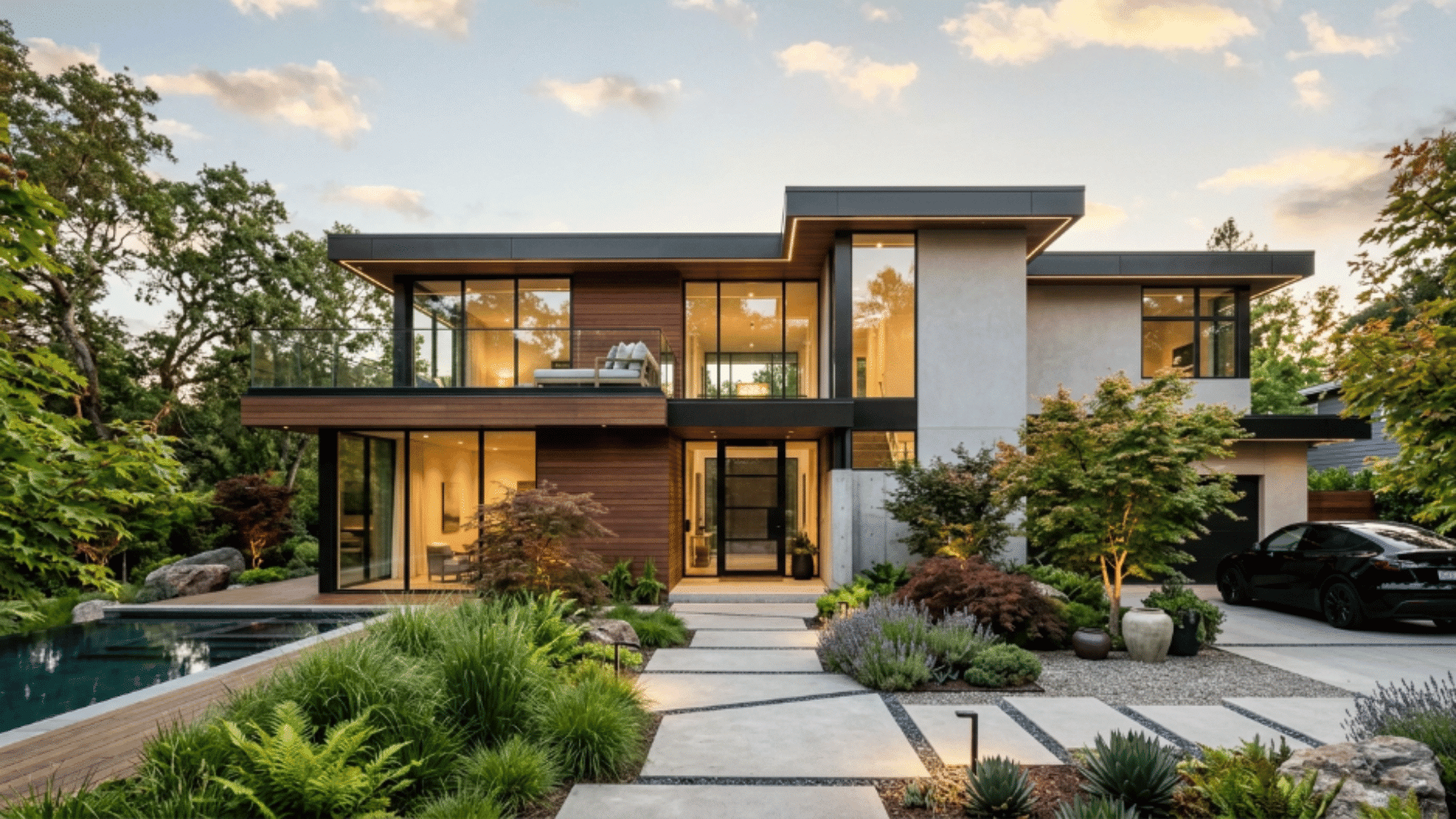

Contemporary modern house exteriors have become a popular choice for people who want a clean, updated look that reflects current design trends.
If you’re looking for inspiration, there are many ways to approach modern exteriors.
In this blog, you’ll find a range of contemporary house exterior ideas to help you create a look that fits your space and personal taste.
What Defines a Contemporary Modern House Exterior?
Contemporary modern house exteriors focus on clean lines, simple forms, and a minimal look. The design blends function with style while keeping the overall appearance uncluttered.
- Clean Lines and Shapes: Uses straight lines and simple geometric forms for a neat, structured look
- Neutral Color Palette: Relies on shades like white, gray, black, and beige for a balanced appearance
- Mixed Materials: Combines materials like wood, glass, metal, and concrete for visual contrast
- Large Windows: Adds natural light and creates a connection between indoor and outdoor spaces
- Minimal Detailing: Avoids excess decoration to keep the design simple and modern
Contemporary Modern House Exterior Ideas
These ideas highlight creative styles, materials, and layouts that help shape a stylish and well-balanced contemporary house exterior.
1. Box-Style Exterior
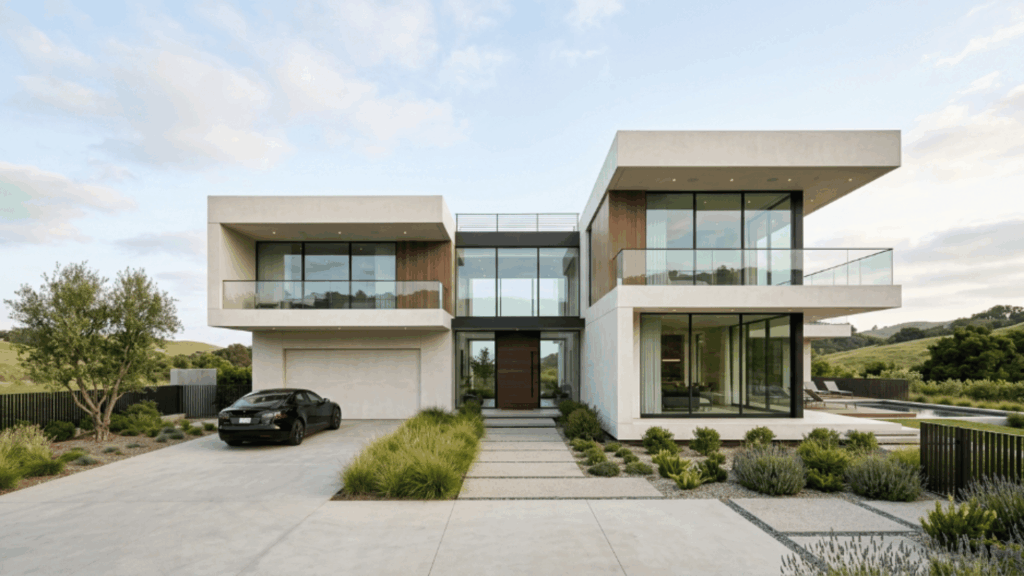
A box-style exterior focuses on strong rectangular shapes and sharp architectural lines. This design often uses smooth stucco, concrete panels, or painted fiber cement siding.
Large glass windows usually balance the solid wall sections. The simple geometry keeps the exterior clean while giving the home a bold modern structure.
The flat planes and crisp edges highlight the architectural form of the house. This layout also allows designers to experiment with layered volumes and contrasting materials.
2. Wood and Concrete Exterior
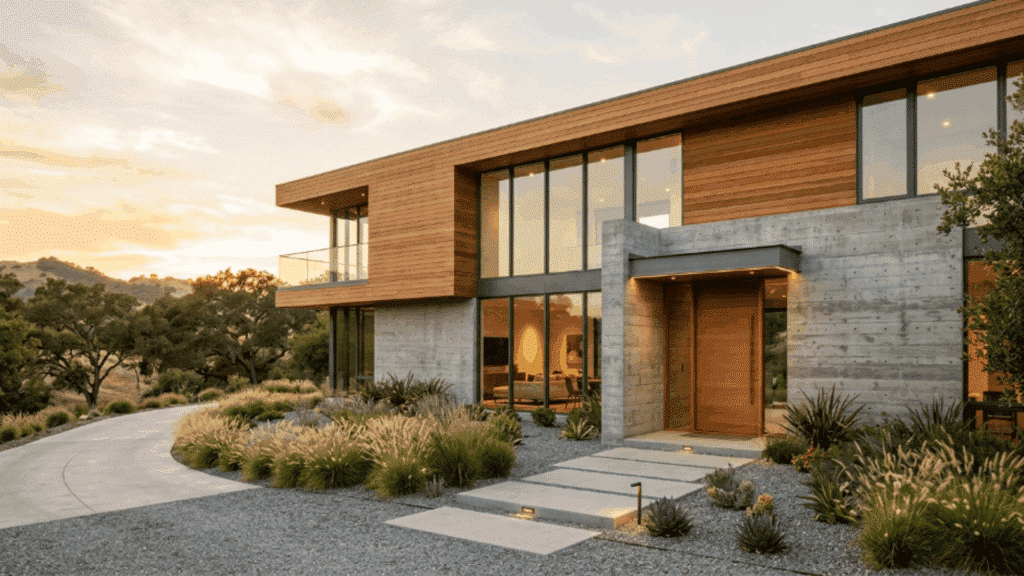
This style combines industrial concrete walls with warm, natural wood siding. The contrast between the two materials creates depth without making the design look busy.
Wood panels are often used around entryways or upper sections of the house. This combination keeps the structure modern while adding a natural and welcoming feel.
3. Full Glass Front Exterior
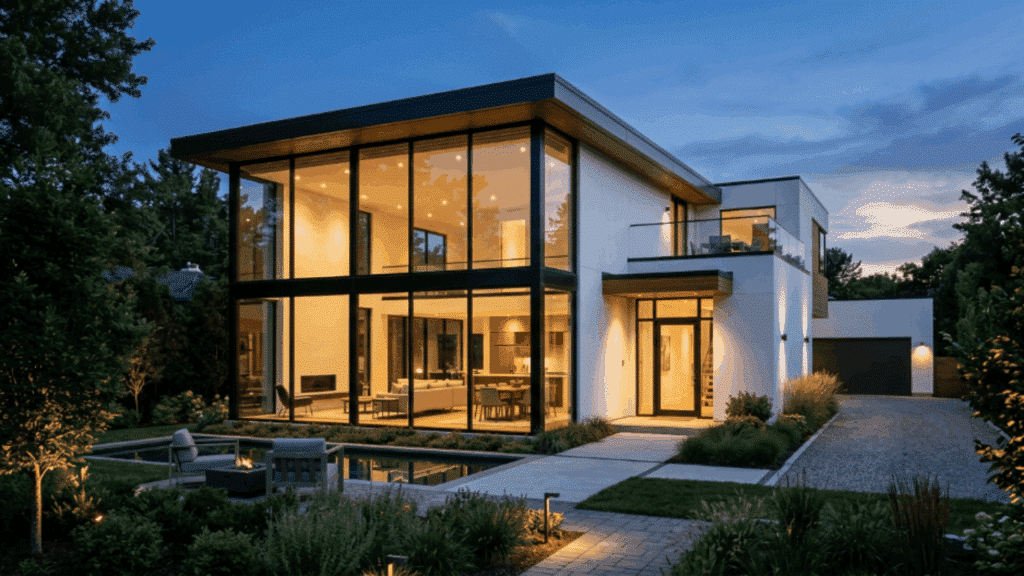
A glass-focused exterior features floor-to-ceiling windows across the main facade. The large panels highlight modern architecture and keep the structure visually light.
Glass works well with materials like steel, concrete, and wood framing. The result is a home that looks open, contemporary, and visually connected to outdoor spaces.
The transparency allows daylight to travel deeper into the interior spaces. This design also helps the exterior feel more connected with the surrounding landscapes.
4. Dark Metal Cladding Exterior
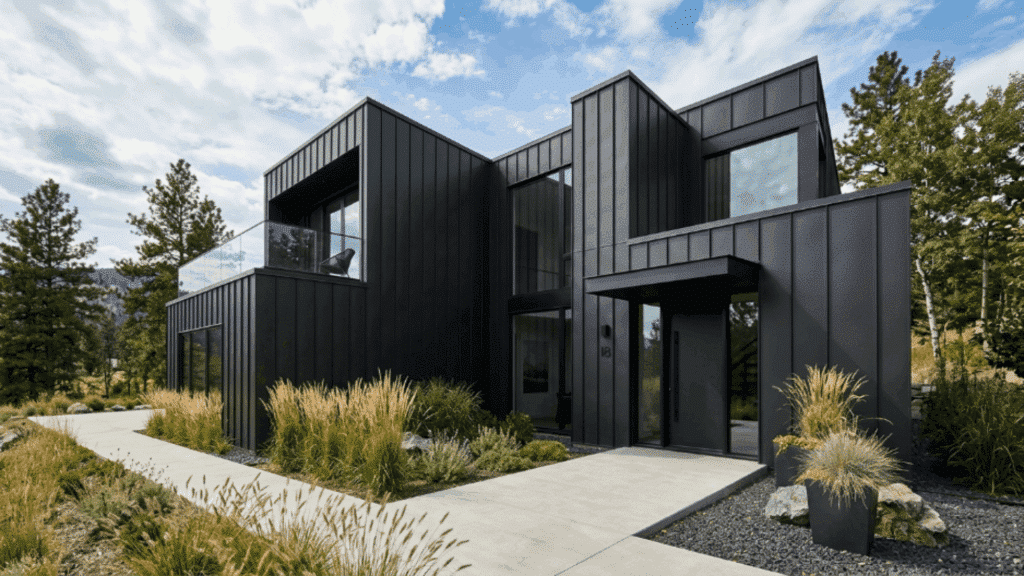
Metal cladding panels create a sleek and modern surface for contemporary homes. Dark finishes such as charcoal, black, or deep gray highlight the building’s clean lines.
The smooth metal texture contrasts nicely with glass windows and wood accents. This material choice gives the home a sharp and structured architectural appearance.
5. White and Wood Facade
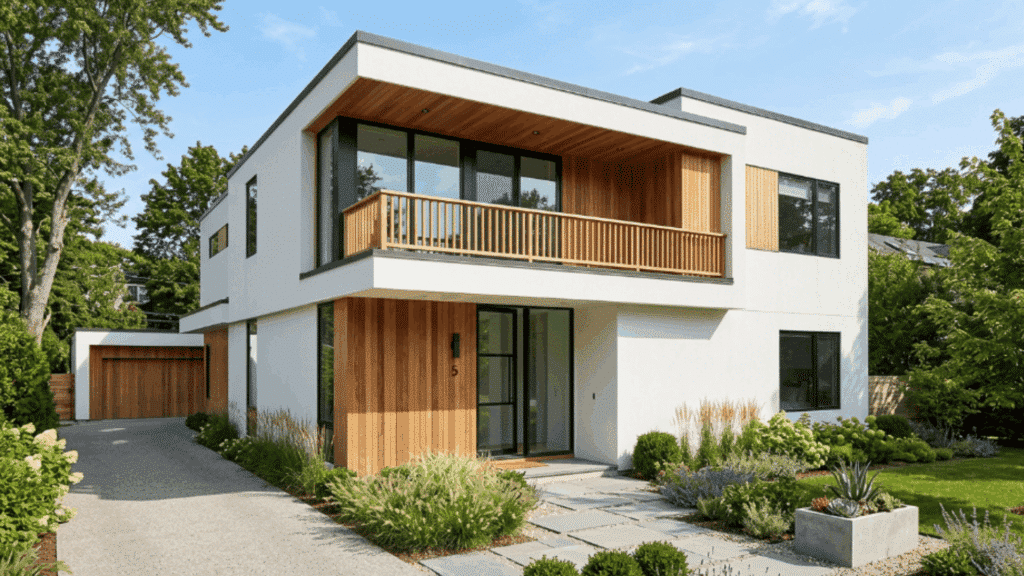
A white and wood facade creates a modern design that still feels warm and balanced. White stucco or painted siding provides a clean background for natural wood elements.
Wood panels are often placed around the entrance or upper floors. This design concept blends minimal modern style with natural materials.
The light exterior reflects natural sunlight, keeping the house visually bright. Wood accents help soften the structure and add a welcoming atmosphere.
6. Slanted Roof Exterior
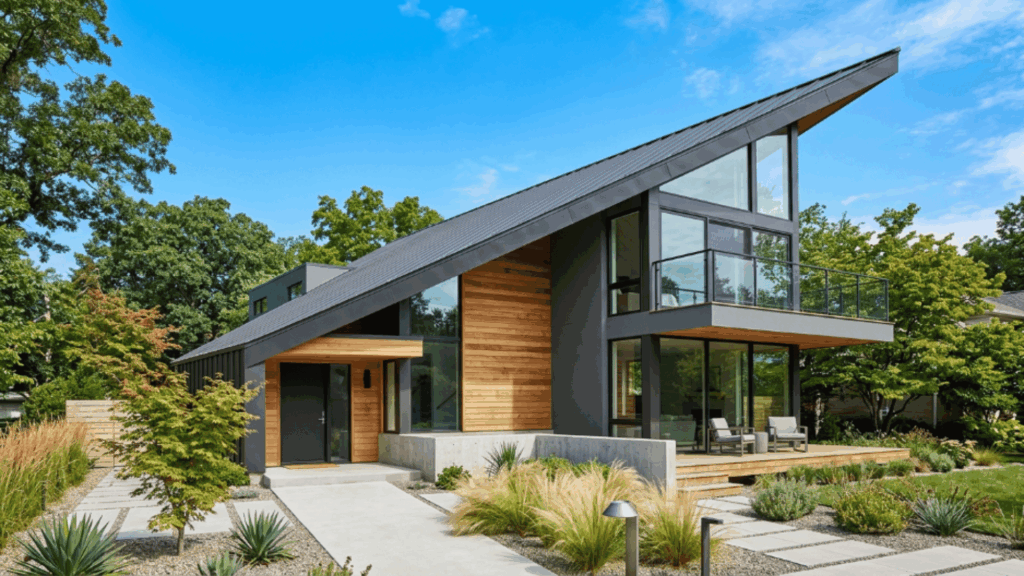
A slanted roof introduces movement to the home’s exterior silhouette. The angled roofline gives the structure a dynamic, modern appearance.
This design is often paired with large windows and wood siding. The slope adds architectural interest while keeping the overall style simple.
7. Stone Panel Exterior
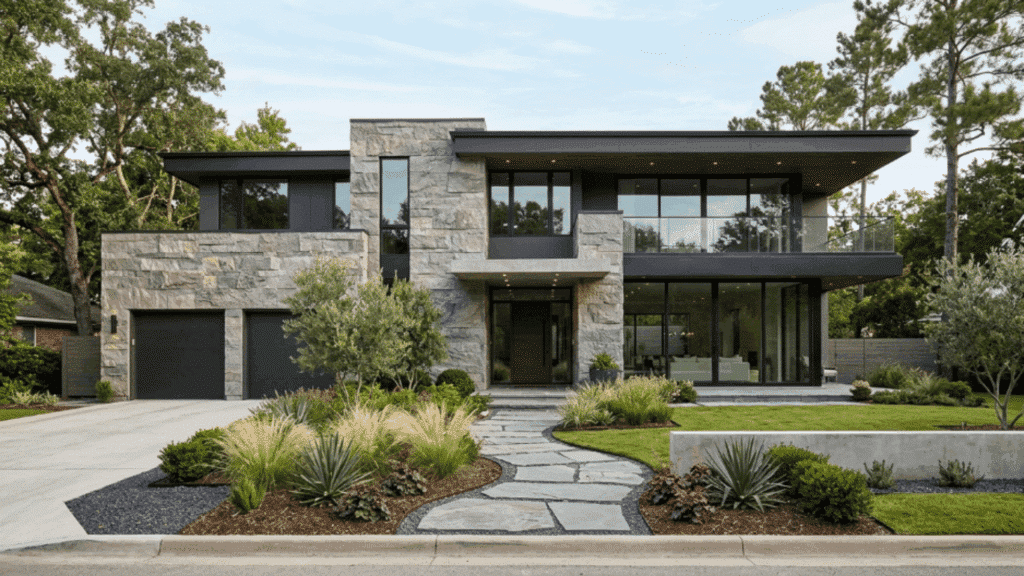
Stone panels bring natural texture into a contemporary exterior design. Flat stone cladding works well with modern shapes and geometric architecture.
Many homes use stone as an accent wall near the entrance or along the lower facade. The material adds contrast and makes the exterior feel more grounded.
Natural stone tones blend well with surrounding landscaping elements. This combination creates a balanced exterior appearance.
8. Horizontal Window Exterior
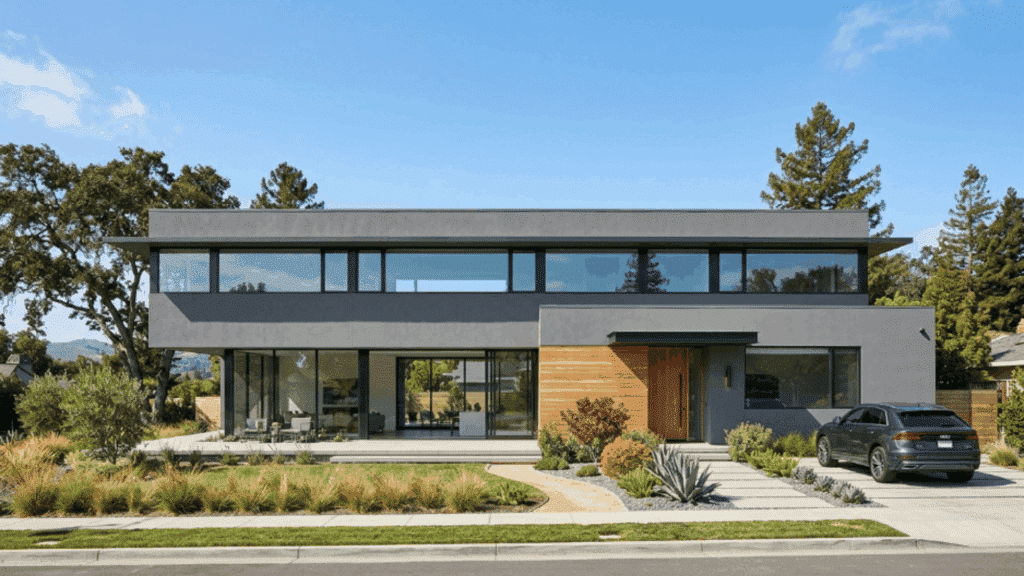
Horizontal ribbon windows stretch across the facade in long, narrow lines. This design emphasizes the width of the building and strengthens the modern visuals.
These windows pair well with smooth stucco walls or concrete finishes. The clean alignment of the windows keeps the exterior structured and balanced.
9. Mixed Material Modern Facade
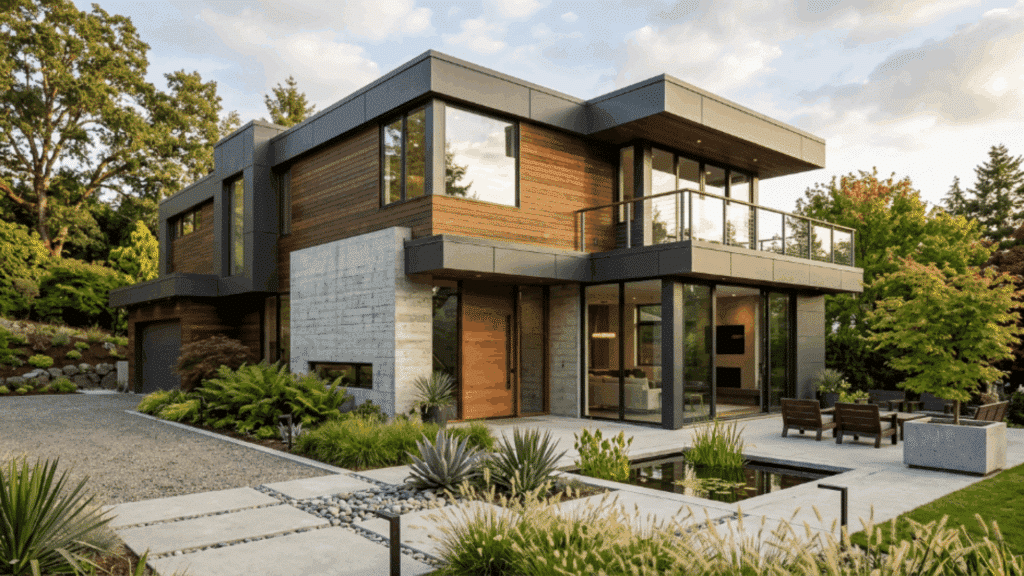
A mixed material facade combines surfaces such as wood siding, metal panels, concrete, and glass. Each material highlights a different section of the exterior.
This design concept prevents the facade from looking flat. The layered materials create visual interest while maintaining a modern architectural style.
Different textures help break up large surfaces and add depth to the design. This approach also allows designers to highlight specific architectural features.
10. Floating Balcony Exterior
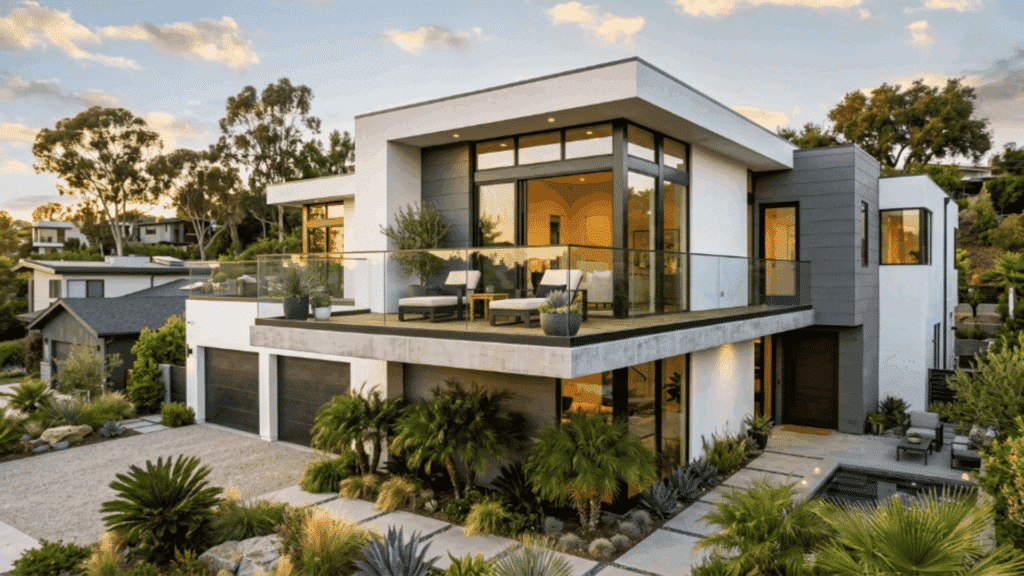
A floating balcony extends outward from the building with minimal visible support. This design element creates a striking modern architectural feature.
Glass railings or slim metal frames keep the balcony looking light and minimal. It adds depth and dimension to the overall facade.
11. Vertical Wood Panel Exterior
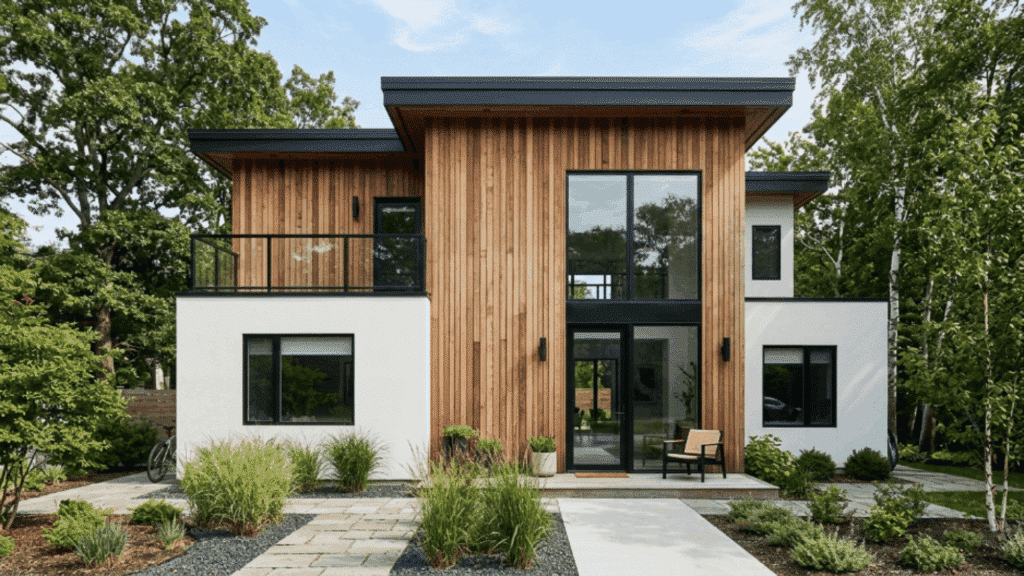
Vertical wood panels bring texture and warmth to contemporary architecture. The tall lines draw the eye upward, adding visual height to the structure.
Natural wood finishes contrast nicely with concrete or white walls. This material choice helps balance modern design with organic elements.
Over time, natural wood develops subtle color variation that adds character. The vertical layout also enhances the clean architectural rhythm of the facade.
12. Frameless Glass Balcony Exterior
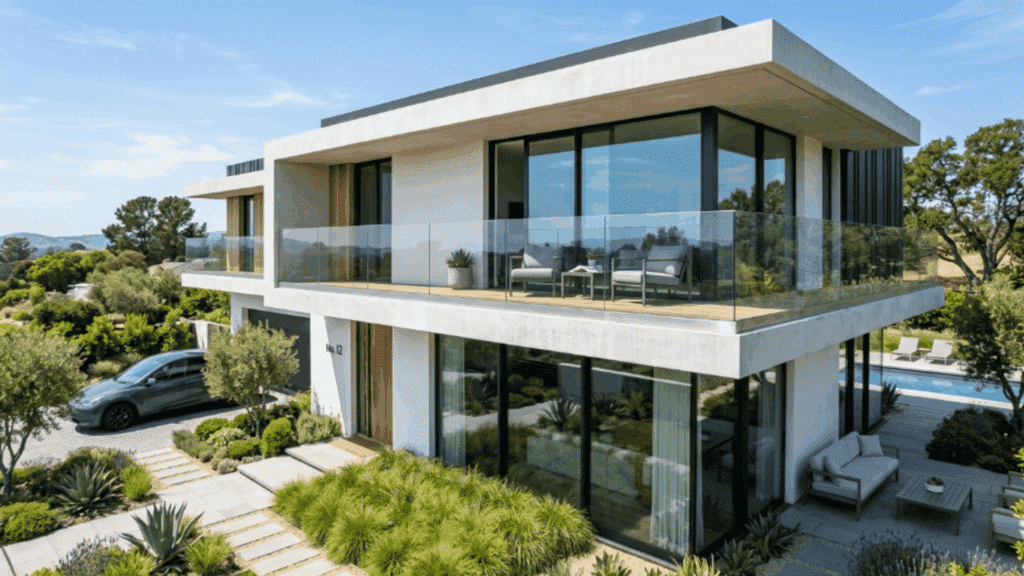
Frameless glass railings create a very clean, minimalist balcony design. The transparent panels maintain open views and highlight the building’s structure.
This design works well with modern materials like metal, concrete, and stucco. The result is a sleek and contemporary exterior detail.
13. Concrete Entry Path Exterior
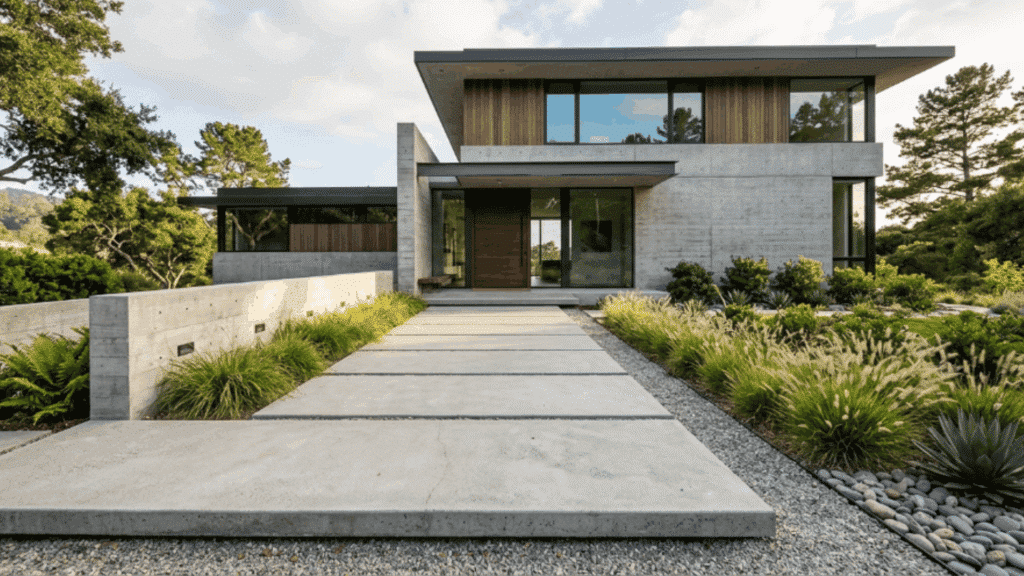
Large concrete slab pathways lead visitors to the entrance in a simple, structured way. The straight lines match the geometric style of modern architecture.
Concrete works well with gravel landscaping, stone accents, and minimal plantings. This design concept keeps the front approach clean and modern.
The wide slabs create a strong visual pathway leading to the front door. Small gaps between the slabs can also be filled with grass or pebbles for added texture.
14. Recessed Entry Contemporary Exterior
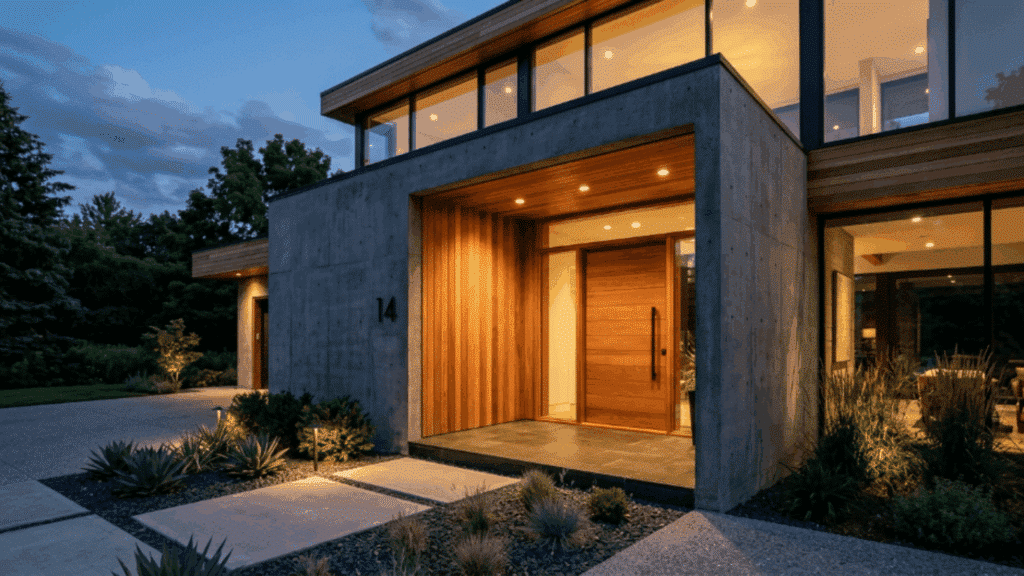
A recessed entry sets the front door slightly back into the facade. This design adds depth and highlights the entrance area.
Wood doors, concrete walls, or stone panels are often used in this space. The recessed section creates a subtle focal point for the exterior.
15. Steel Frame Accent Exterior
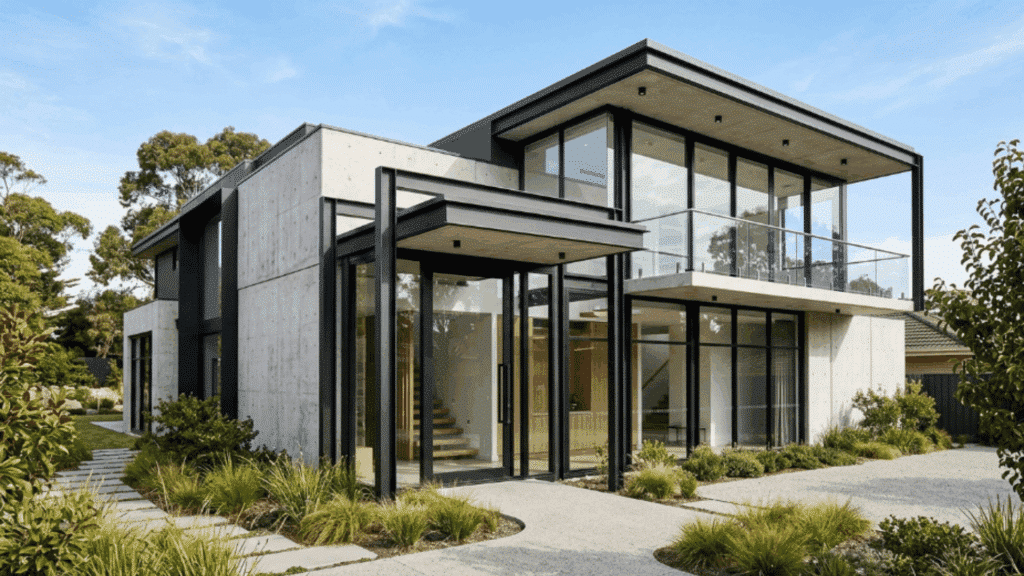
Steel frames around windows or doors introduce an industrial element to modern architecture. The dark metal lines emphasise the structure’s geometry.
Steel pairs well with glass, concrete, and wood siding. This combination creates a bold contemporary look with strong architectural definition.
These frames also help visually outline key areas of the facade. The sharp edges reinforce the modern design language of the home.
16. Natural Stone Base Exterior
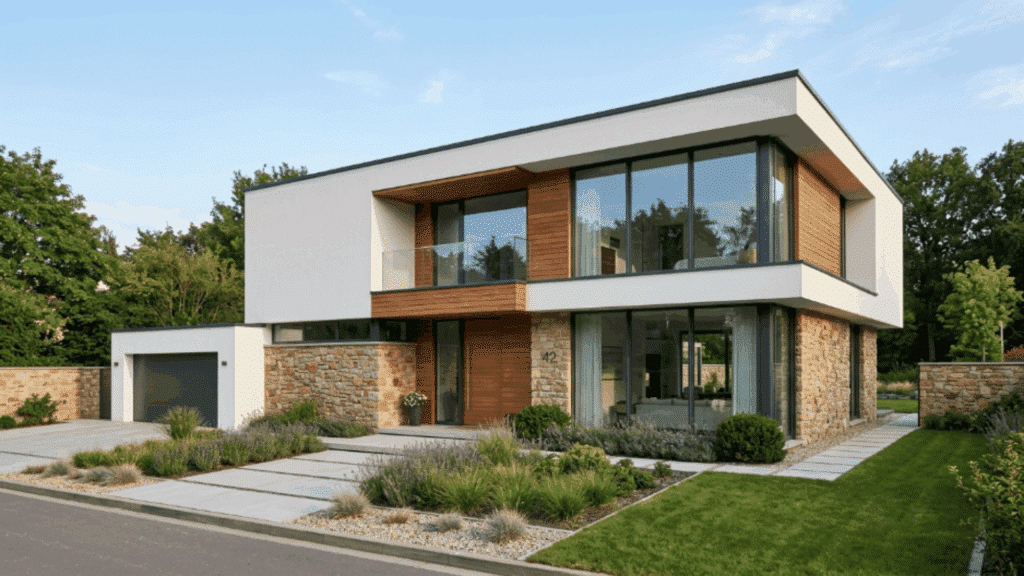
A natural stone base along the lower section of the house adds texture and durability. This design element helps visually anchor the structure.
Stone cladding works well with stucco, wood siding, or metal panels. The contrast between materials keeps the exterior balanced.
17. Asymmetrical Window Exterior
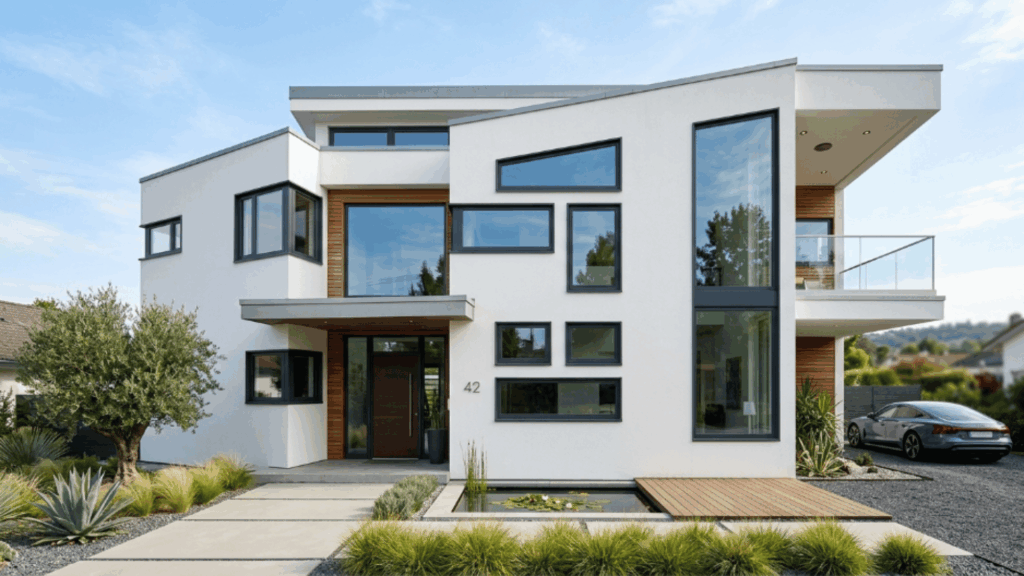
Asymmetrical window placement creates an artistic and modern facade. Windows of different sizes add visual interest to the exterior.
This design concept works well with minimalist architecture. The varied window arrangement keeps the facade dynamic without adding extra decoration.
The layout allows natural light to enter rooms in unique ways. It also helps create interesting shadow patterns throughout the day.
18. Glass Garage Door Exterior
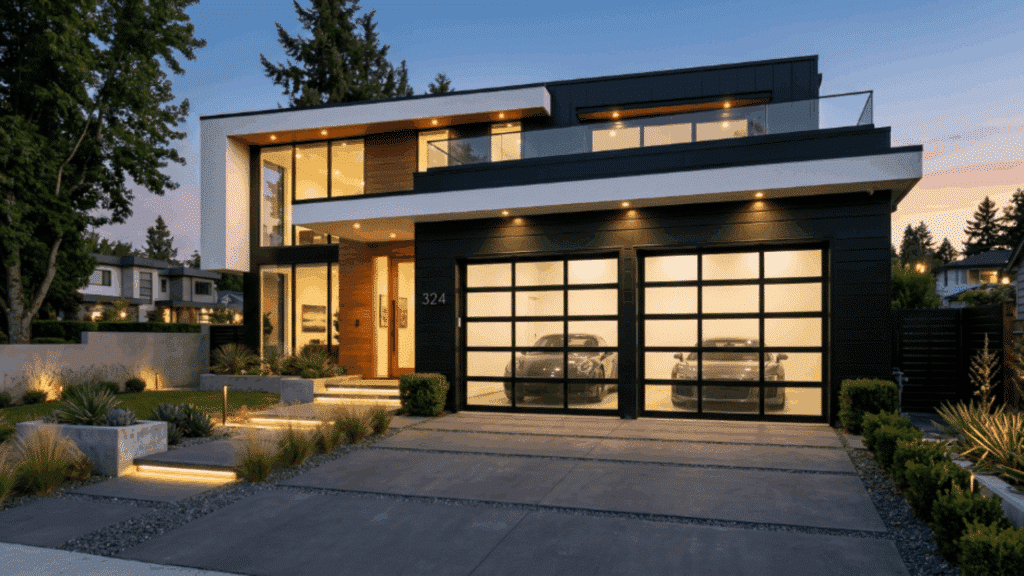
Glass garage doors add a sleek contemporary element to the front of the house. The panels often use frosted or tinted glass for privacy.
Metal frames around the glass keep the design structured. This style helps the garage blend smoothly into the modern facade.
19. Extended Roof Overhang Exterior
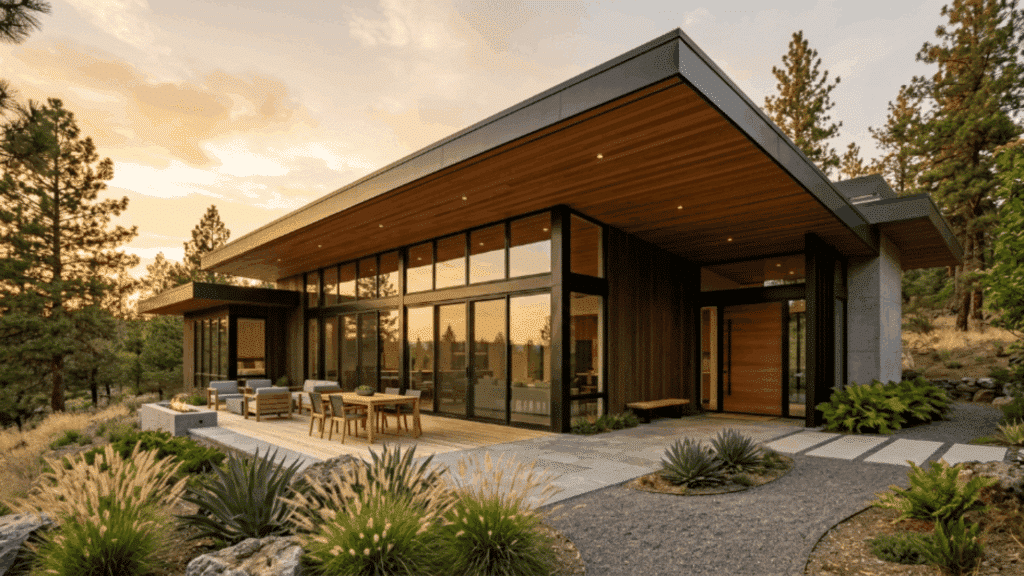
Extended roof overhangs create strong horizontal lines along the top of the house. This architectural feature emphasises the width of the building.
Wood soffits or metal trim often highlight the underside of the overhang. The design adds depth and shading to the exterior.
Overhangs also protect from direct sunlight and rain. This feature improves comfort while enhancing the modern architectural look.
20. Built-In Planter Wall Exterior
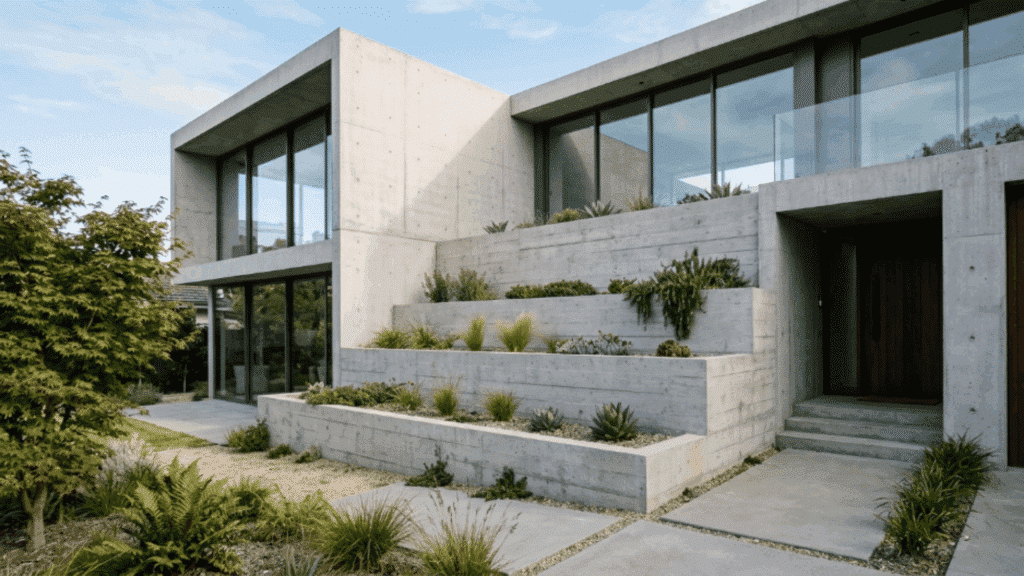
Planter walls built directly into the facade introduce greenery to the modern design. Plants soften the sharp architectural lines.
Concrete or stone planter boxes often frame the entrance or outdoor seating areas. This feature blends architecture with landscaping.
21. Neutral Tone Exterior
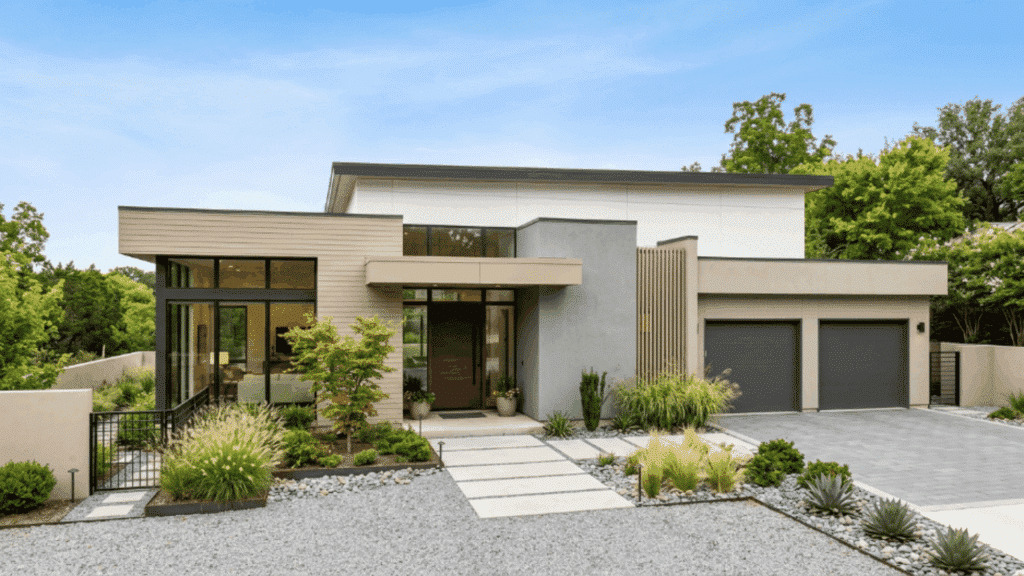
Neutral color palettes are common in modern architecture. Shades of white, gray, beige, and charcoal keep the design calm and balanced.
These colors highlight the materials and structure of the home. Neutral tones also allow wood, metal, and stone accents to stand out. A restrained palette helps maintain a clean architectural appearance.
22. Courtyard-Centered Exterior
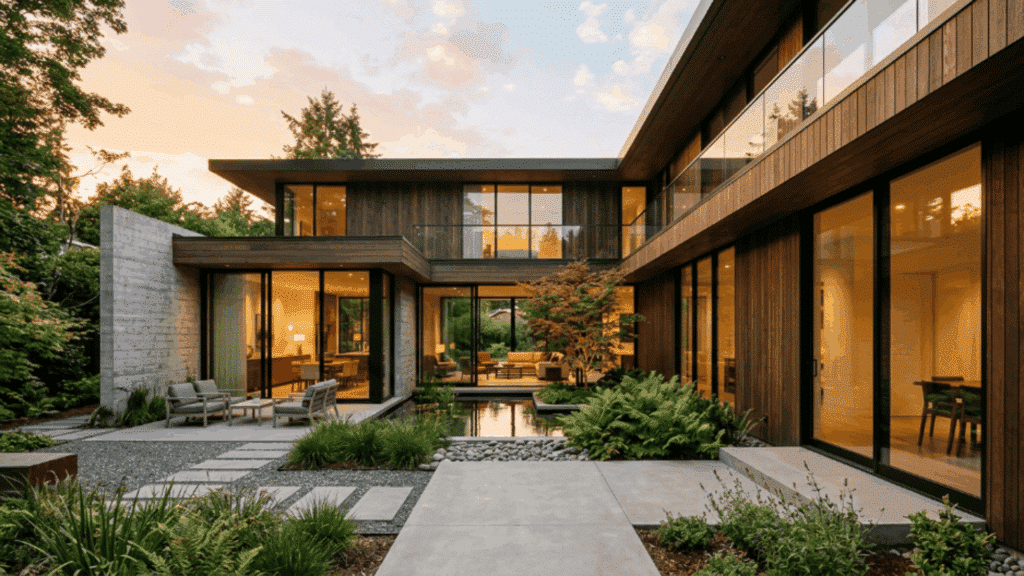
A courtyard-centered layout places an open outdoor space in the middle of the house. This design creates privacy while still allowing light and fresh air to enter multiple rooms.
Large glass doors and windows usually face the courtyard area. Materials like concrete, wood, and stone often frame the space.
The courtyard becomes a natural focal point of the home. It also blends architecture with landscaping for a calm outdoor environment.
23. Black and Wood Contrast Exterior
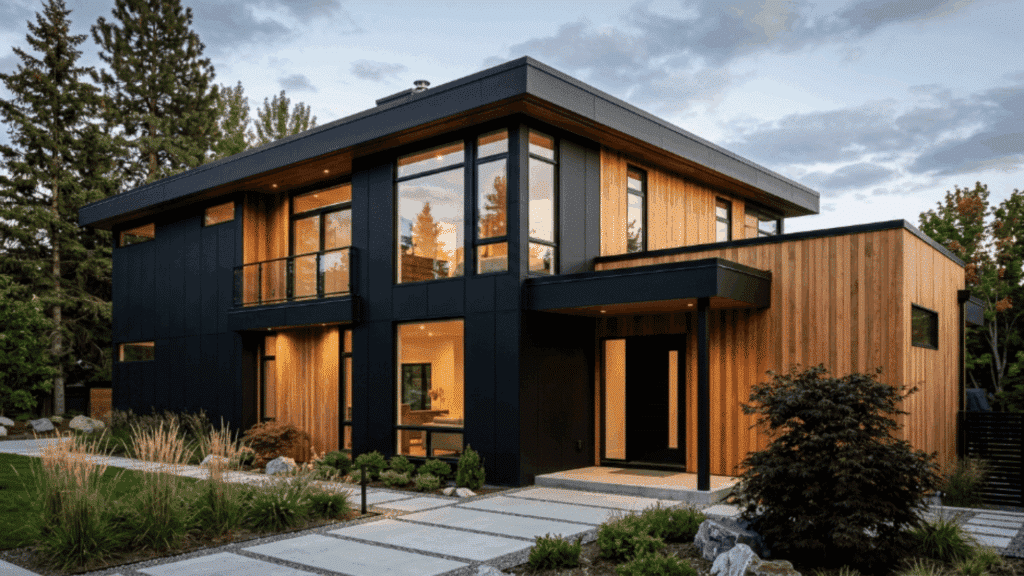
This design combines matte black cladding with natural wood accents. The strong contrast highlights the architectural structure of the house.
Dark panels often cover large wall surfaces, while wood is used around entrances, balconies, or upper floors.
The combination gives the home a bold, modern look. At the same time, the wood tones add warmth and balance to the exterior.
24. Concrete and Glass Minimalist Exterior
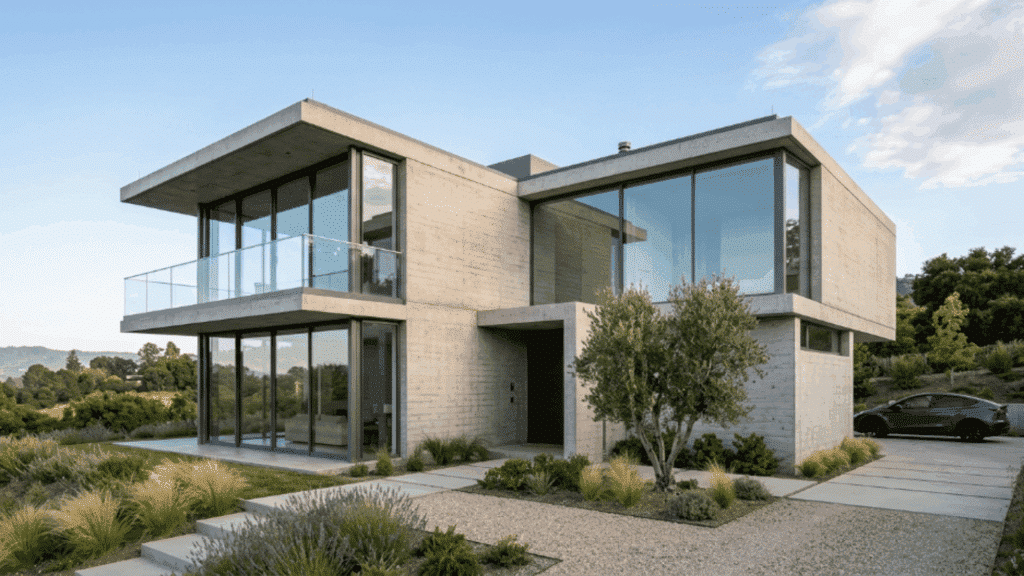
A concrete-and-glass exterior emphasizes clean lines and minimal materials. Exposed concrete walls create a strong architectural base.
Large glass windows soften the solid surfaces and bring light into the home. This contrast creates a sleek and modern appearance.
The design emphasizes structure rather than decoration. It works well for homes that prioritize simplicity and modern architectural form.
25. Multi-Level Terrace Exterior
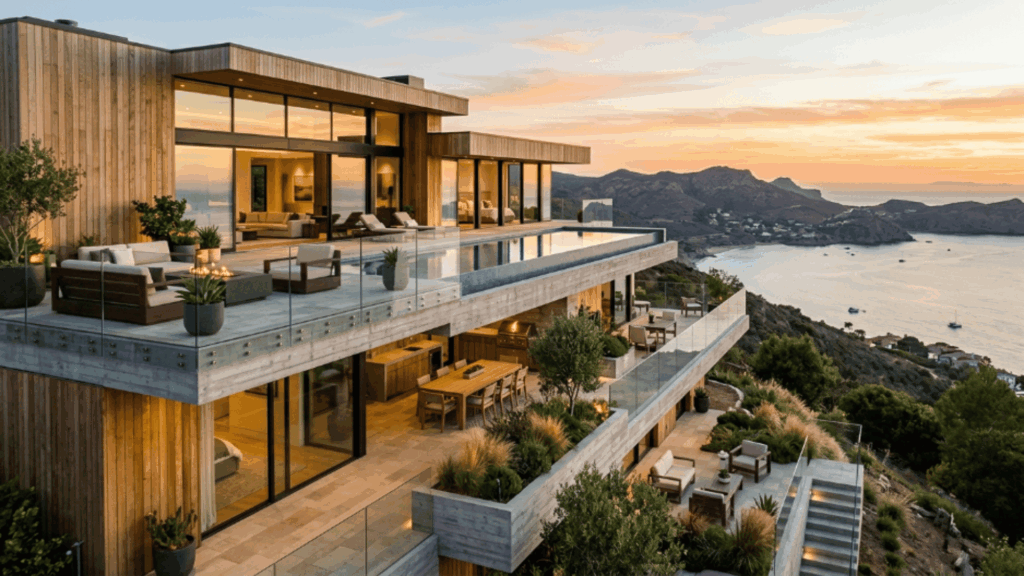
Multi-level terraces create layered outdoor spaces connected to different rooms. These terraces often include glass railings and modern outdoor furniture.
Materials like wood decking, metal railings, and concrete platforms are commonly used. The stacked design adds depth to the facade.
26. Modern Exterior with Wooden Screen Panels
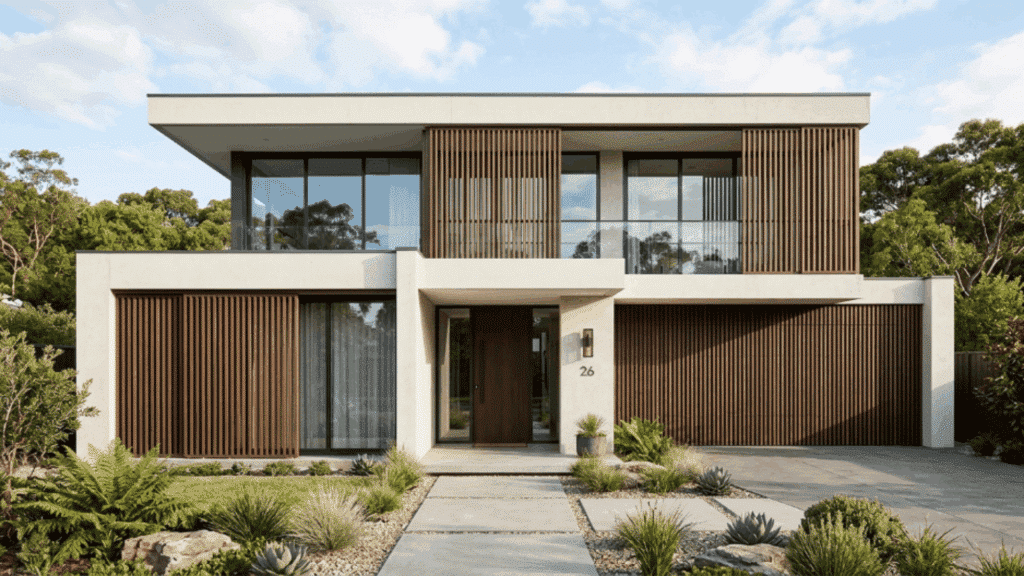
Wooden screen panels add texture and visual interest to a modern exterior. These panels often feature vertical slats or geometric patterns.
They can cover balconies, windows, or sections of the facade. The screens provide shade and privacy while maintaining airflow.
Natural wood tones soften the modern architecture. This design balances clean lines with organic materials.
27. Exterior with Large Corner Windows
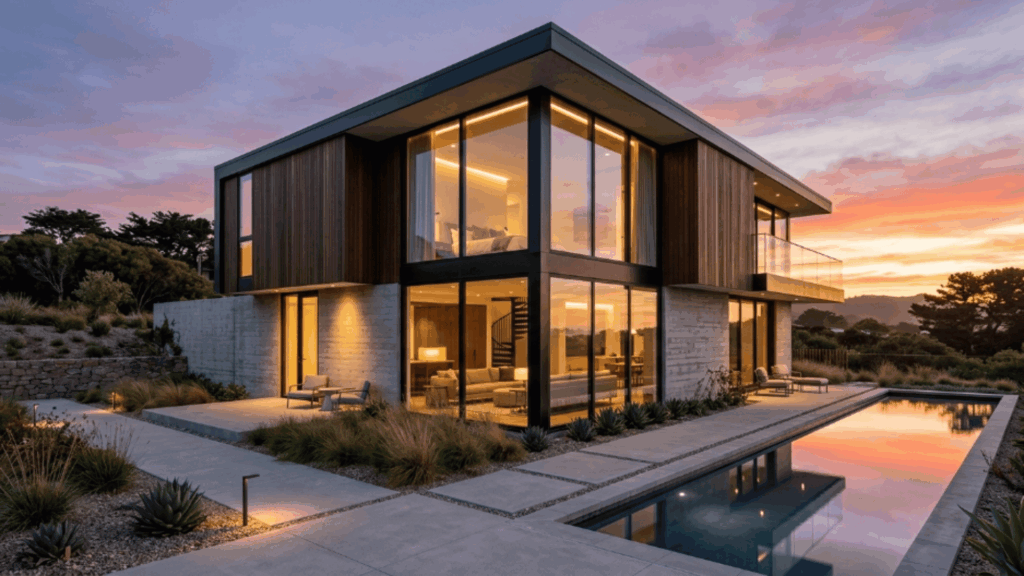
Corner windows remove the solid wall at the edge of the building. This design creates a seamless glass corner that feels open and modern.
Large glass panels allow sunlight to enter from multiple directions. The combination of glass, metal frames, and simple walls keeps the structure minimal. It creates a bright and contemporary facade.
28. Two-Story Glass Wall Exterior
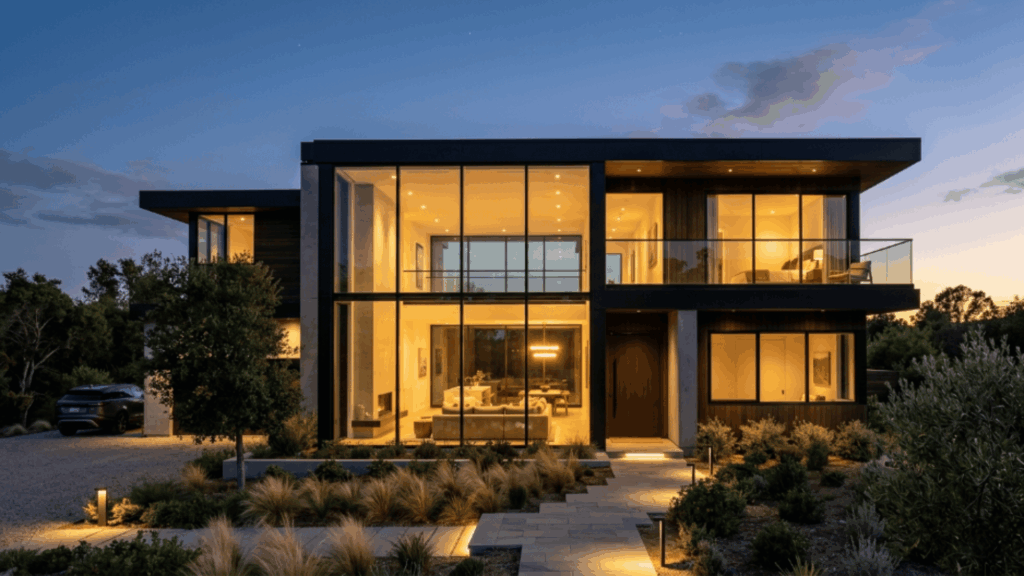
A two-story glass wall creates a dramatic vertical feature on the exterior. This design is often placed along living rooms or main gathering spaces.
Tall glass panels highlight the height of the house. Steel or aluminium frames usually support the structure. The transparent facade allows daylight to fill the interior. At night, interior lighting gives the house a striking appearance from the outside.
29. Exterior with Outdoor Lighting
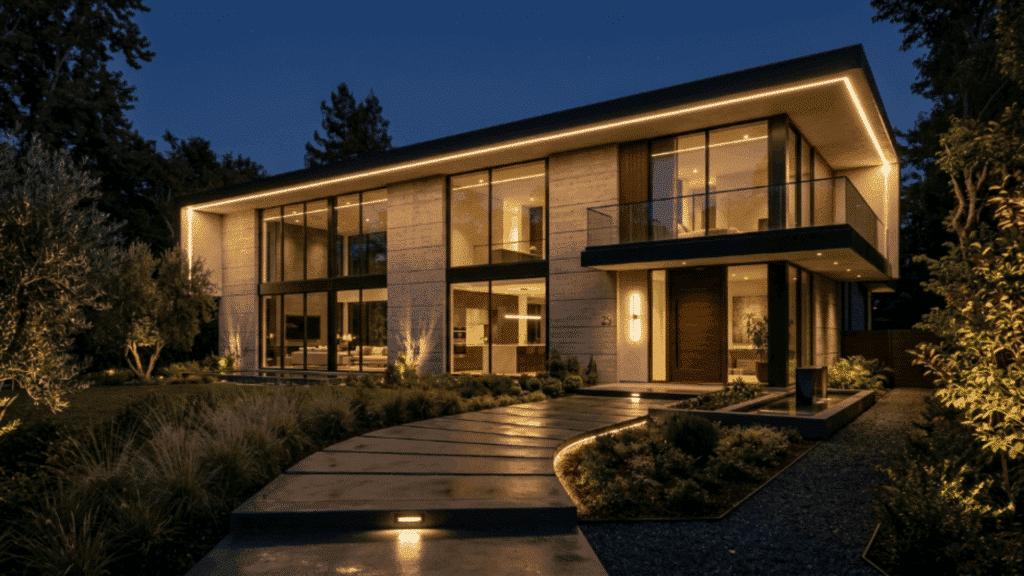
Integrated outdoor lighting highlights the architectural features of the house. LED strips are often installed along rooflines, pathways, or wall edges.
The lighting emphasizes clean lines and materials such as stone, wood, or concrete. It also improves visibility around the property. At night, the illuminated exterior creates a refined and modern atmosphere.
30. Exterior with Open Carport Design
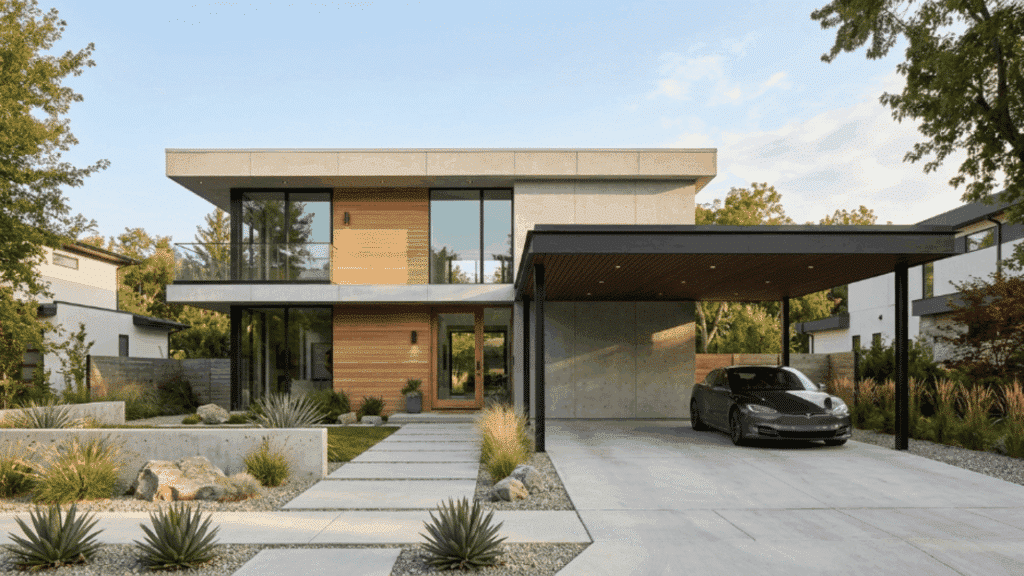
An open carport replaces the traditional enclosed garage. slim columns and flat roof structures support the covered parking area.
Materials such as steel beams, wood panels, and concrete slabs maintain the modern architectural style. The open structure keeps the facade visually light. It also blends seamlessly with minimalist contemporary design.
31. Contemporary Exterior with Rooftop Garden
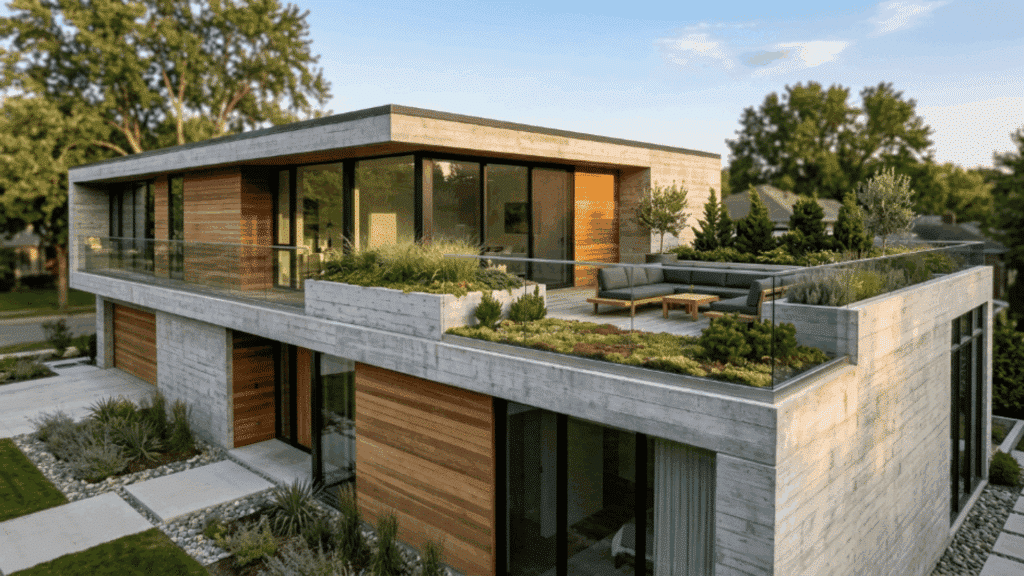
A rooftop garden adds greenery to the top level of a modern home. Flat roofs provide the perfect surface for planting areas and outdoor seating.
Planters, wooden decks, and glass railings are commonly used in this design. the greenery softens the sharp architectural lines.
This feature combines modern architecture with natural elements. It also creates a relaxing outdoor space with views.
Popular Materials Used in Contemporary Modern Exteriors
A well-designed contemporary house exterior often blends natural and industrial materials to create a balanced, modern appearance.
- Natural Wood Panels: Bring warmth, organic texture, and visual softness, balancing concrete, metal, and glass elements in modern home facades.
- Concrete Finishes: Create a strong architectural base with smooth or textured surfaces that highlight geometric shapes in contemporary designs.
- Metal Cladding: Introduces sharp lines, durability, and a sleek industrial character that strengthens the modern architectural appearance.
- Stone Veneer: Adds natural texture, subtle color variation, and depth that contrasts beautifully with smooth contemporary exterior surfaces.
- Stucco Walls: Provide smooth, clean surfaces that highlight minimal architecture while maintaining a timeless, simple exterior finish.
- Glass Panels: Increase natural light flow while creating openness and a strong connection between indoor and outdoor spaces.
Conclusion
A well-planned contemporary house exterior focuses on architectural clarity, thoughtful materials, and balanced proportions.
Instead of relying on decorative elements, the design highlights structure, texture, and simple geometry to create a refined look.
A carefully designed house exterior also considers how the building interacts with its surroundings, including landscaping, lighting, and open spaces.
When these elements come together, they create a home that feels modern, functional, and visually distinctive while maintaining a calm and organized overall appearance.

With a Master’s in Architecture from the University of California, Berkeley, Alexander Martin has dedicated the last 18 years to enhancing outdoor living through thoughtful and robust structure design. His career kicked off in urban planning, giving him a unique perspective on integrating structures into diverse environments. In 2019, Alexander brought his expertise to our website, offering insights into creating versatile outdoor spaces. Since then, he has been the lead advisor for our outdoor design projects and is known for his ability to merge functionality with environmental consciousness. Alexander enjoys rock climbing outside of work and participates in community development projects, activities that reflect his passion for the outdoors and sustainable design.