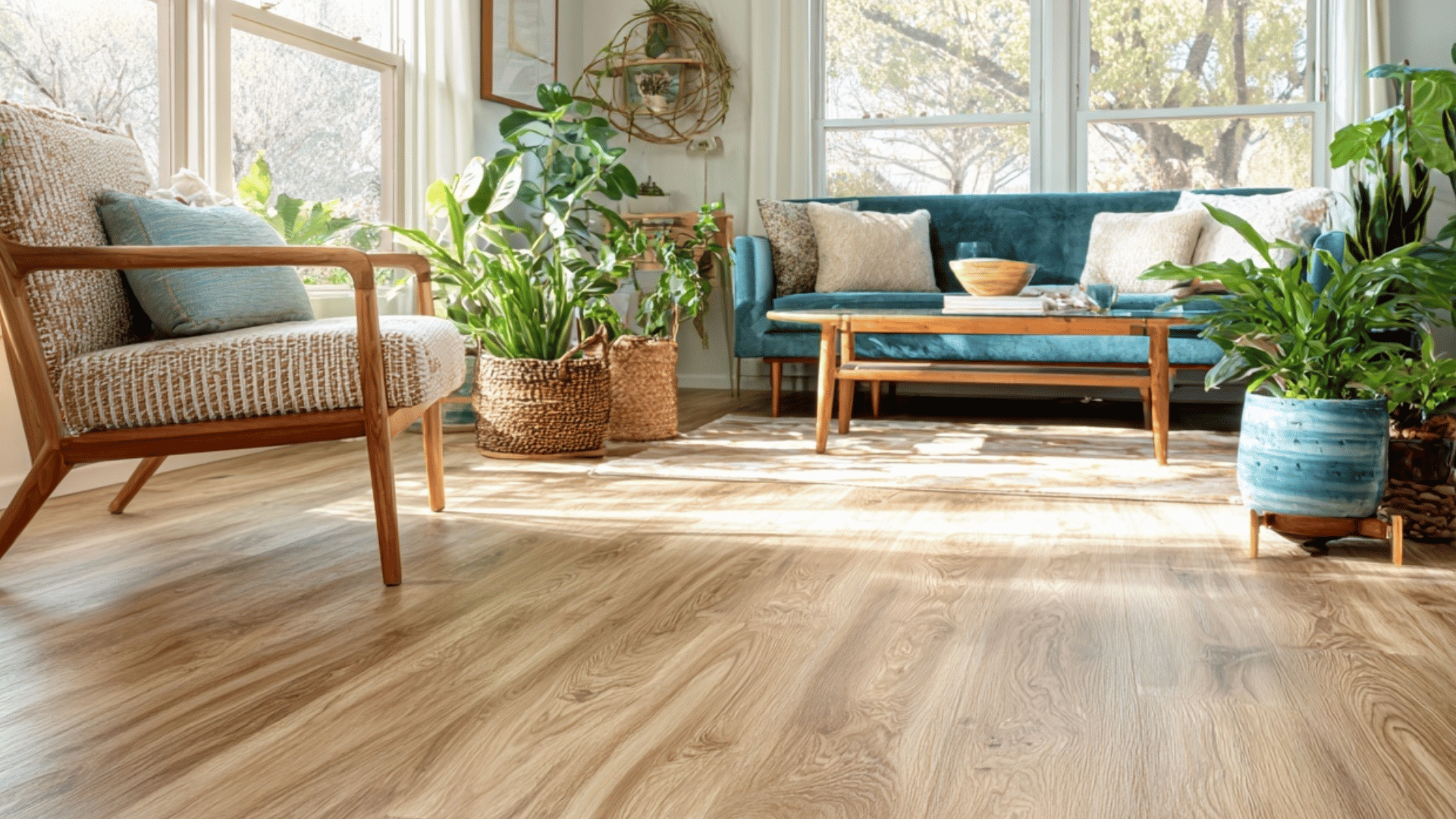

There’s something genuinely classic about mid-century modern design. Clean lines, warm tones, and a whole lot of character. It never really goes out of style.
And if you’re looking to bring that retro-yet-fresh vibe into your home, the floor is honestly the best place to start.
Mid-century modern flooring sets the entire mood of a space. It’s the foundation everything else builds on, your furniture, your colors, your lighting.
This blog breaks down the best flooring materials, colors, and design tips that work effectively for this style. If you’re redoing one room or the whole house, you’ll walk away with ideas you can really use. Let’s get into it.
What Defines Mid Century Modern Flooring?
Mid century modern design grew out of the post-World War II era. Designers at the time wanted to blend mass production with smart technology, and the result was something really special.
Simple lines, earth tones, and functional wooden furniture became the signature of an entire generation.
The style actually traces back to the early 1930s, running all the way through the mid-1960s. It drew heavily on the German Bauhaus movement, which was big on clean lines and practicality.
At its core, MCM design rests on four pillars: simplicity, organic materials, geometric shapes, and functionality. No clutter, no excess. Just good design that works.
Top Mid Century Modern Flooring Materials
Mid-century modern flooring is all about warmth, simplicity, and clean lines. The right material can set the tone and bring that classic look together without feeling overdone.
1. Hardwood Flooring
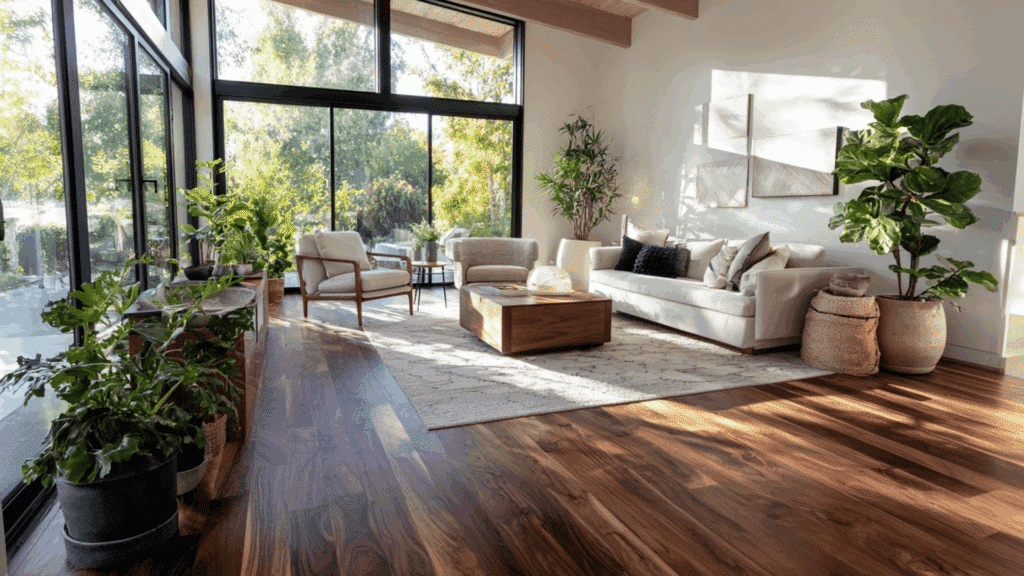
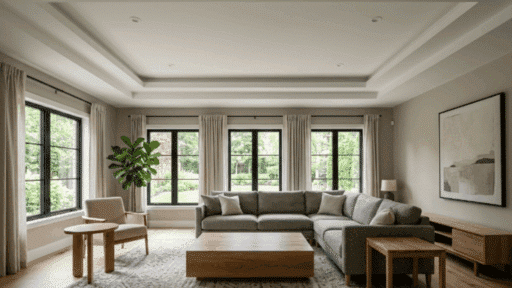
Hardwood is the go-to for mid-century modern flooring, and for good reason. Woods like walnut, oak, and teak bring in rich, warm undertones that define this style.
The natural grain adds depth without feeling too busy. A matte or satin finish keeps the look clean and true to the era.
- Best Suited Areas: Open spaces where you want a warm and grounded feel
- Flooring Colors: Warm browns, honey tones, deep walnut
- Pairing Tip: Match with low-profile wood furniture and neutral textiles to keep the look balanced
2. Terrazzo Flooring
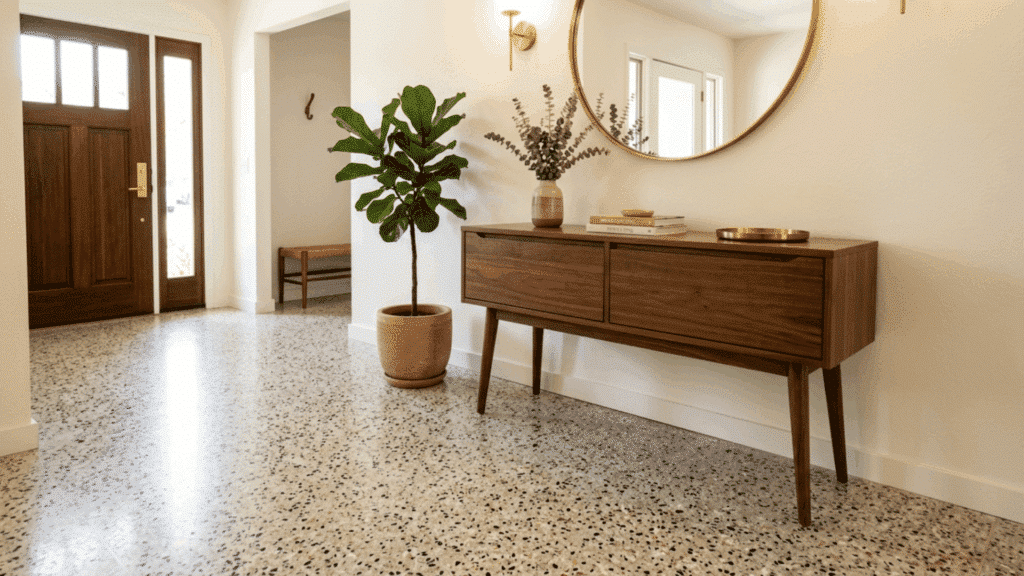
Terrazzo was a staple in mid-century homes and is making a strong comeback. Its speckled pattern adds texture without overwhelming the space.
It brings visual interest while still keeping things simple and controlled.
- Best Suited Areas: High-use zones that need durability with subtle design
- Flooring Colors: White base with gray, black, or earthy specks
- Pairing Tip: Combine with warm wood tones to soften the surface and keep the look cohesive
3. Cork Flooring
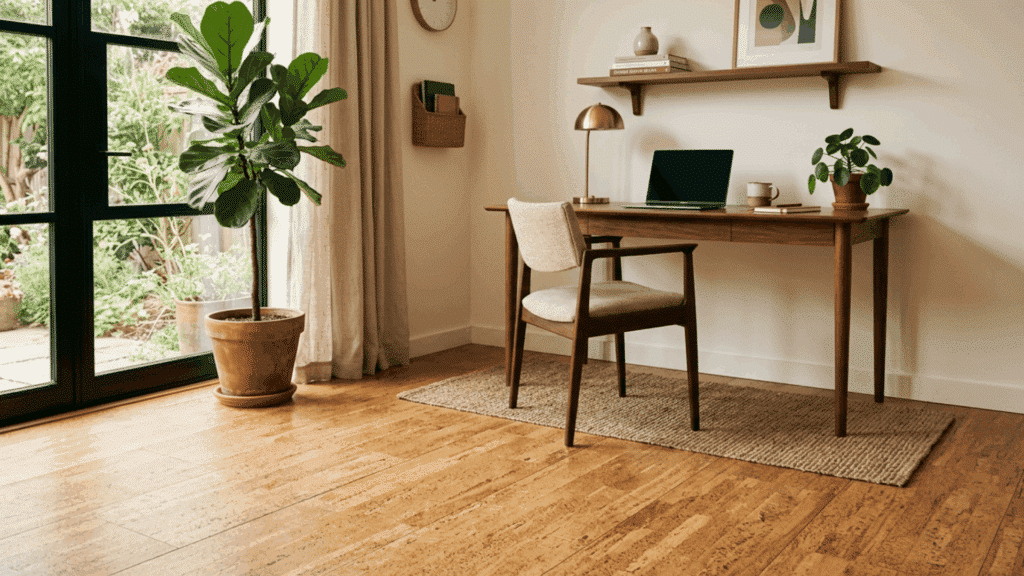
Cork is soft underfoot and eco-friendly, with a natural texture that complements mid-century modern design. It adds warmth without relying on heavy color.
It also resists mold and mildew, which makes it a practical choice, along with its comfort.
- Best Suited Areas: Quiet, low-noise spaces focused on comfort
- Flooring Colors: Light tan, caramel, soft brown
- Pairing Tip: Use with simple furniture and clean lines to let the texture stand out
4. Engineered Wood Flooring
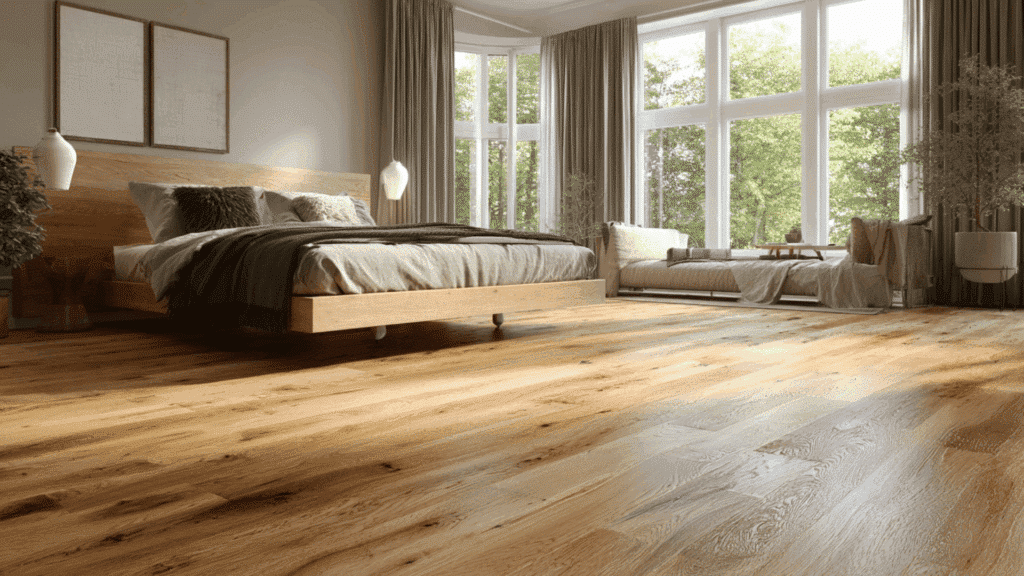
If solid hardwood is out of your budget, engineered wood is a smart move. It gives you a very similar look at a lower price point.
The top layer is real wood, so it still feels genuine and fits the mid-century modern aesthetic well. It also handles moisture better than solid wood, making it a practical pick for basements or areas with some humidity.
- Best Suited Areas: Areas where you want a wood look with added durability
- Flooring Colors: Oak, walnut, natural wood tones
- Pairing Tip: Stick to wide planks for a more real mid-century feel
5. Linoleum Flooring
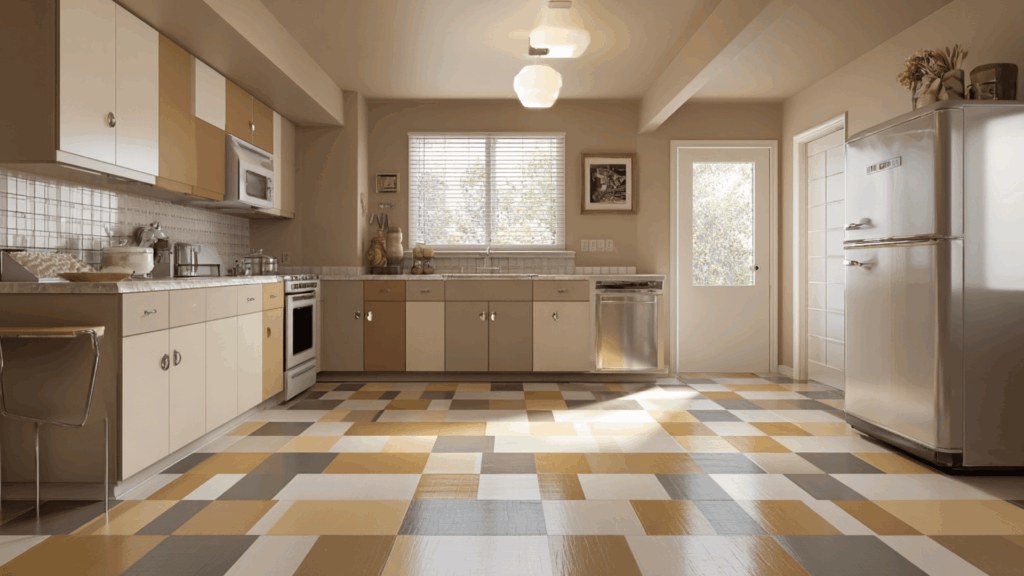
Linoleum has real retro roots, and that works in its favor here. It comes in muted, earthy tones that blend nicely with mid-century modern color palettes.
Modern linoleum is also far more durable than its older versions, so you get the classic look without the upkeep stress.
- Best Suited Areas: Kitchens are a great spot for it, since they handle foot traffic and spills without much fuss.
- Flooring Colors: Olive green, mustard, soft gray, muted beige
- Pairing Tip: Pair with simple cabinetry and matte finishes to keep the retro vibe clean
6. Concrete Flooring
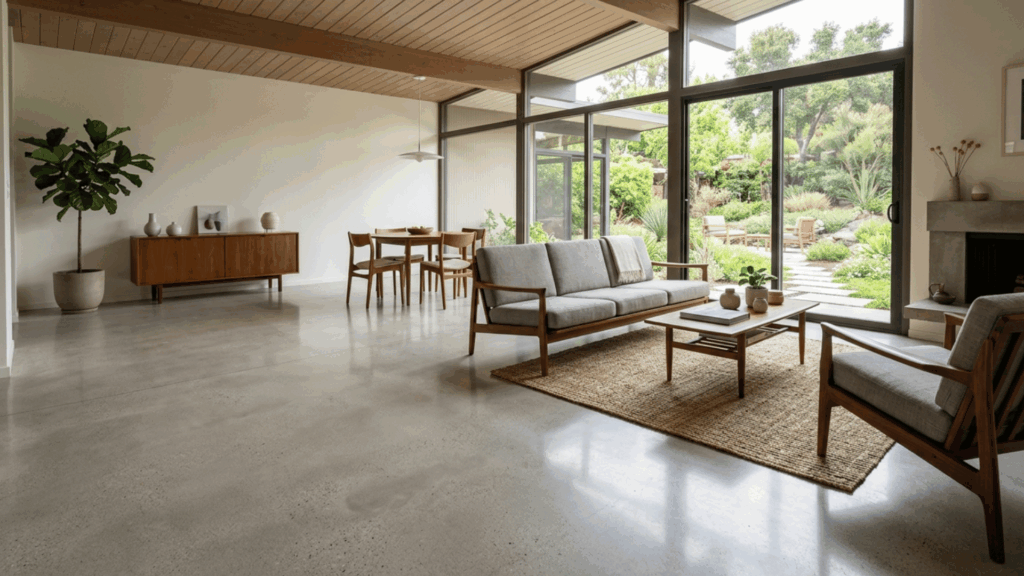
Concrete keeps things clean and minimal, which aligns very well with mid-century modern principles. It works especially well in open floor plan layouts where you want the space to feel connected and uncluttered.
On its own, it can feel a little cold, but throw in a warm area rug and some wood furniture, and it balances out nicely. Stained or polished concrete adds a bit more character, too.
- Best Suited Areas: Open layouts where continuity matters
- Flooring Colors: Light gray, charcoal, stained earth tones
- Pairing Tip: Add rugs and wood accents to bring warmth into the space
7. Luxury Vinyl Plank (LVP) and Vinyl Composite Tile (VCT)
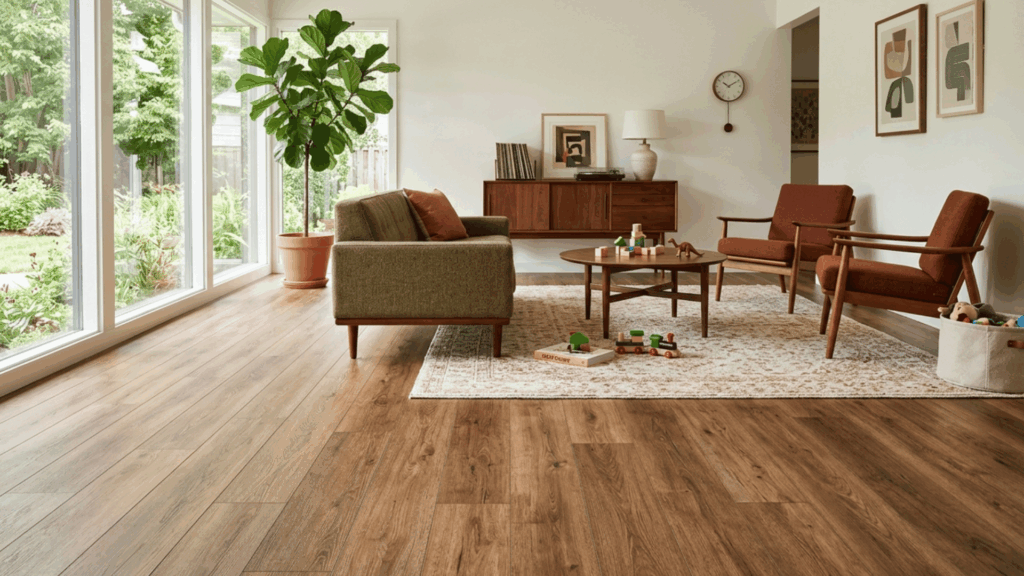
If budget is a concern, LVP and VCT are smart picks. VCT can actually mimic the look of terrazzo at a fraction of the cost. Modern vinyl has also come a long way.
It closely resembles real wood and stone, and holds up well against scratches, stains, and moisture. Practical and good-looking.
- Best Suited Areas: Works best in high-traffic areas and homes with kids or pets.
- Flooring Colors: Wood-look browns, neutral grays, terrazzo-style mixes
- Pairing Tip: Choose realistic textures and avoid overly glossy finishes for a more natural look
Mid Century Modern Flooring Patterns and Layouts
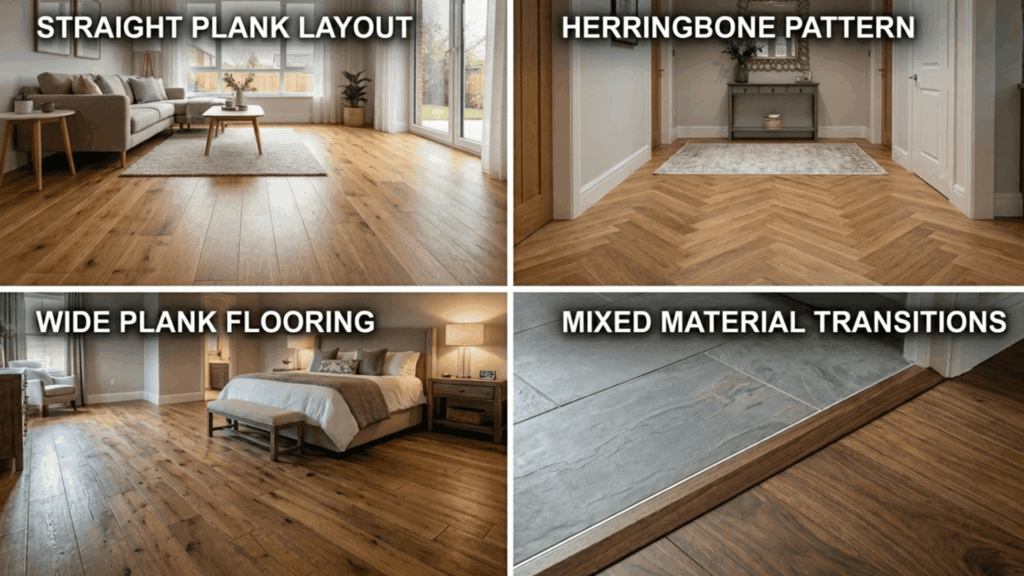
Patterns in mid-century modern design are never the main event. They support the space quietly without stealing attention. Here are the layouts that work best.
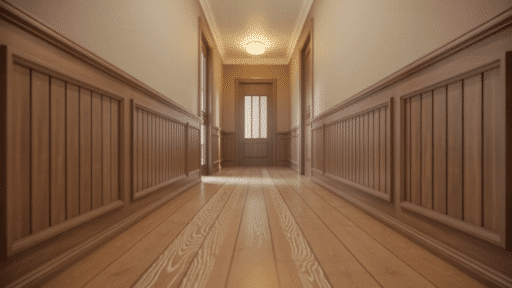
1. Straight Plank Layout
The straight plank is the most common layout in mid century modern flooring. Planks run parallel across the room, creating a smooth visual flow that doesn’t compete with your furniture or decor.
It lets the wood grain and color do the talking. If you’re just starting out with this style, the straight plank is the safest and most reliable option.
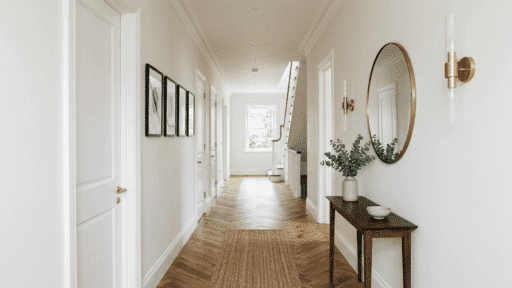
2. Herringbone Pattern
Herringbone adds visual interest without making the floor feel too busy. The angled layout gives the space some structure and a slightly polished feel.
It works well in dining rooms and hallways where you want the floor to stand out just a little. Keep the wood tone warm, and it fits right into the mid century modern look.
3. Wide Plank Flooring
Wide planks make a room feel bigger and more open, which is exactly what mid century modern spaces aim for. Fewer seams mean a cleaner look overall.
The broad surface also shows off natural wood grain really well. Pair it with low-profile furniture, and you’ve got a combination that hits the style spot on.
4. Mixed Material Transitions
Combining wood and tile is a smart way to handle open floor plans. It helps define separate areas without putting up walls. Keep both materials in the same warm, earthy color family so the transition feels natural.
Done right, mixed material flooring adds visual interest while keeping the overall look grounded and cohesive.
Flooring Mistakes to Avoid
Even small flooring decisions can throw off the whole MCM look. Here are the most common mistakes people make and how to steer clear of them:
- Going Too Dark on Wood Stains: Dark, dramatic espresso tones feel heavy and go against the light, airy nature of MCM design.
- Picking Distressed or Hand-Scraped Textures: MCM flooring is smooth and clean, so distressed textures belong to a completely different design style.
- Ignoring Plank Size: Floors from the 1950s and 60s used longer boards, and choosing longer planks today instantly brings back that mid-century feel.
- Overlooking Floor-to-Doorway Transitions: A mismatched transition between your floor and door frames can break the visual flow of the entire room.
- Using High-Gloss Finishes: Matte and low-sheen finishes are far more true to the MCM era than a shiny, high-gloss surface.
- Mixing Too Many Flooring Materials: Using too many different flooring types across connected spaces makes the home feel disjointed rather than cohesive.
Final Thoughts
Your floor is not just a surface. It is the foundation that holds your entire MCM design together. Get it right, and everything else, the furniture, the colors, the decor, falls into place naturally.
Mid century modern flooring gives you a lot of great options to work with. Hardwood, terrazzo, LVP, and tile each bring something different to the table.
The key is picking a material that balances how good it looks with how well it works for your lifestyle.
Start with one room. Get the floor right there first, then build the rest of your mid century modern look around it, step by step.

With a Master in Architectural Studies from University of Pennysylvania, Marwa Haydar has pioneered living spaces since 2005. Her expertise, initially honed in a prestigious architectural firm, is evident in her approach to creating environments. Marwa became part of our team in 2019 and has since been a driving force in our home improvement section, known for her practical yet stylish solutions. She’s been spearheading our design workshops since then, infusing her passion for teaching into her work. In her leisure time, Marwa enjoys exploring historic architecture and is an enthusiastic pottery hobbyist, further enriching her understanding of form and texture.