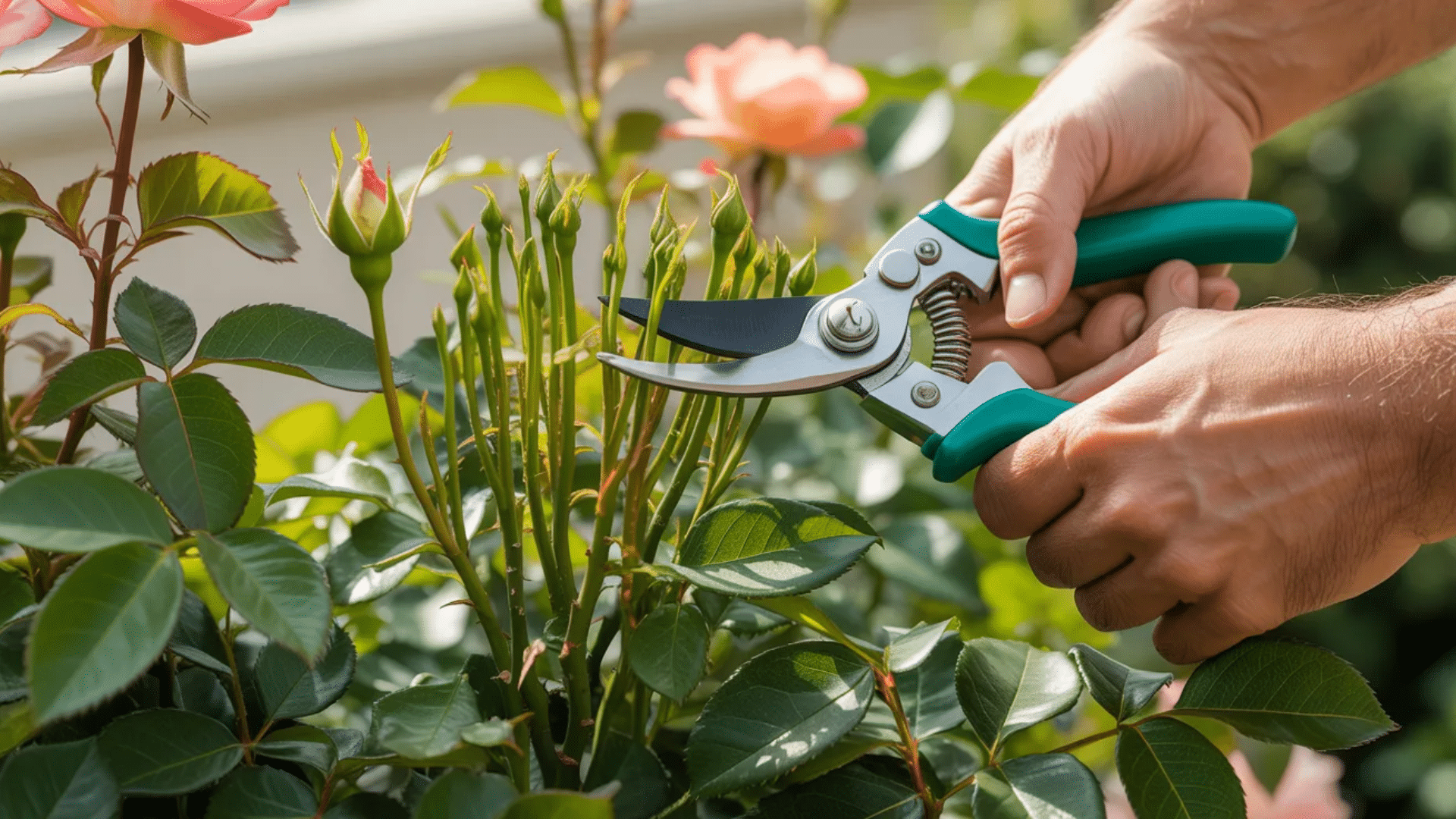

Your rose bush isn’t struggling because of pests. It’s not the soil. It’s not even the weather. It’s you and the way you’ve been trimming it all along.
If you want to know how to trim rose bushes, this is the part most gardeners get wrong. Hard to hear, but someone had to say it. Most gardeners grab their shears, snip a few branches, and call it done.
So before you pick up those pruners again, stop. Because what you’re about to learn completely changes how you’ll ever look at a rose bush again.
Why Trimming Rose Bushes Matters
Most people treat pruning as a seasonal chore, something they do when the bush starts looking unruly or when a neighbor mentions it.
But here’s the truth: trimming your rose bush isn’t maintenance. It’s a survival strategy. The moment you stop pruning with intention, the plant begins to work against itself.
And by the time the damage shows up in your blooms, it’s already been happening underground and inside the canes for months.
Rose bushes are vigorous growers, but vigorous doesn’t mean smart. Left to their own devices, they’ll push energy in every direction, including into dead wood, crossing branches, and weak canes that will never produce a single flower.
Pruning is how you take control of that energy and point it exactly where it needs to go toward stronger stems, fuller blooms, and a healthier root system season after season.
Tools You Need Before You Start
Using the wrong tools or dirty ones is one of the fastest ways to spread disease through your entire rose bed. You don’t need an expensive kit. But you do need the right kit.
| Tool | Use |
|---|---|
| Bypass Pruning Shears | Cut live stems up to ½ inch thick |
| Loppers | Cut thicker canes (½–1½ inches) |
| Pruning Saw | Remove old, woody canes |
| Thorn-Proof Gloves | Protect hands from thorns |
| Disinfectant | Clean blades to prevent disease spread |
| Tool Sharpener | Keep blades sharp for clean cuts |
| Safety Glasses | Protect eyes from thorns and debris |
| Garden Bucket/Bag | Collect cut stems and cleanup debris |
How to Trim Rose Bushes
Pruning a rose bush comes down to five focused steps. Each step has a purpose, and each one builds on the last. Follow this sequence, and you’ll never approach a rose bush with guesswork again.
Step 1: Remove Dead, Damaged, or Diseased Canes
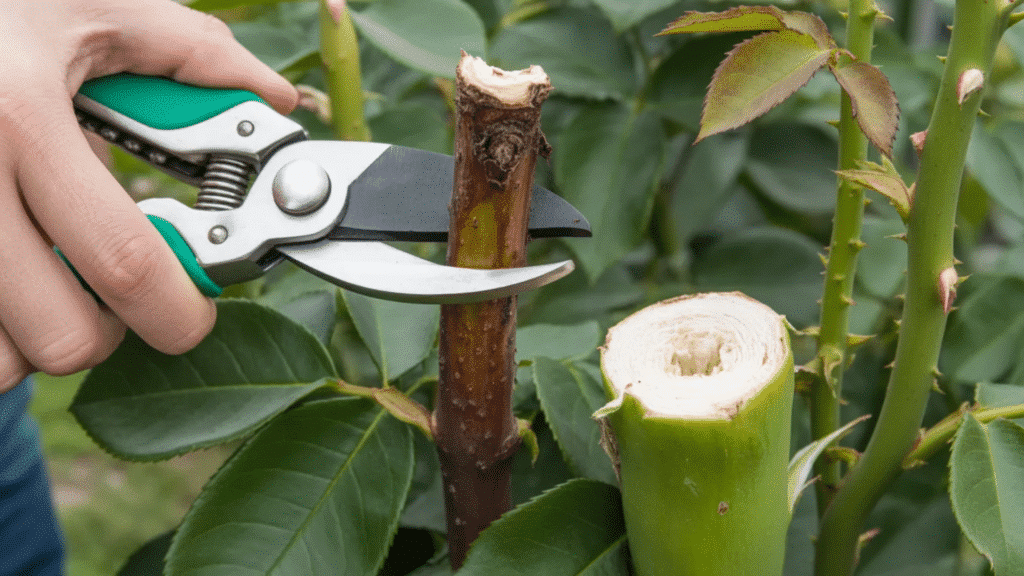
This is always your first move, no exceptions. Before you think about shaping or trimming, strip out everything the plant is wasting energy on.
Look for canes that are dry, shriveled, or brown all the way through. Look for splits, cracks, or any signs of rot, mold, or pest damage.
Cut each one down to its base or until you hit clean, white-centered wood. Don’t leave stubs behind. Stubs rot, attract pests, and become entry points for disease.
Step 2: Cut out Crossing or Rubbing Branches
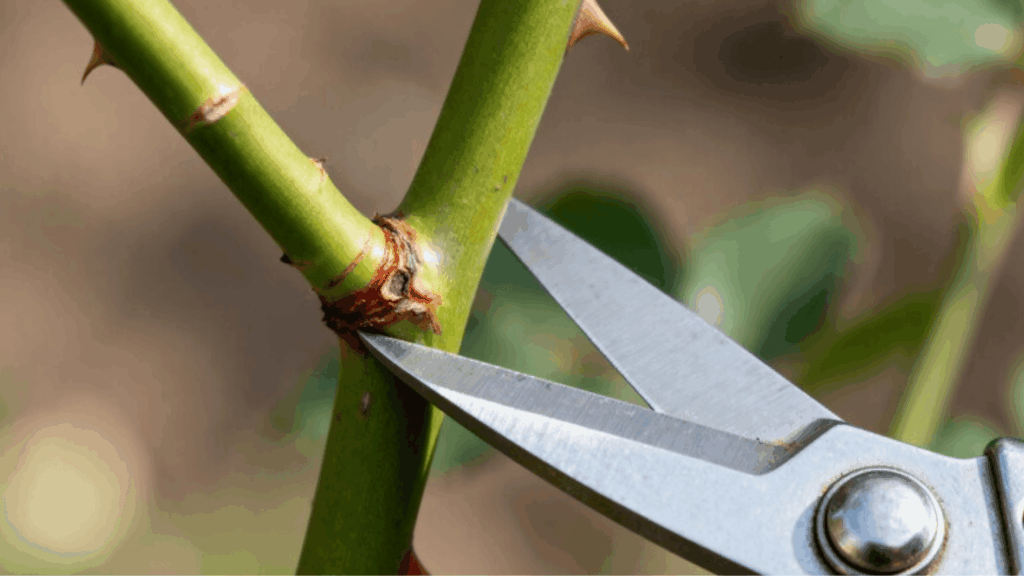
Dead wood is gone. Now target any cane that’s growing into or rubbing against another cane. When two canes cross and rub, they create open wounds on both.
Those wounds don’t heal; they invite disease and pests. Always remove the weaker of the two. Keep the one that’s thicker, healthier, and growing outward. Cut it clean at the base, leaving no stub behind.
Step 3: Shape the Bush for Airflow and Growth

Now step back. Look at the full structure and shape the plant with intention. The goal is an open center with canes fanning outward like a vase, maximizing sunlight and keeping air moving freely through the bush.
Aim for 4 to 6 strong, healthy canes evenly spaced around the plant. Remove anything growing inward. Trim back canes that are significantly taller than the rest.
Step back frequently and assess from a distance, not just up close. If you can see daylight through the center of the bush from above, you’ve shaped it correctly.
Step 4: Make the Right Cut
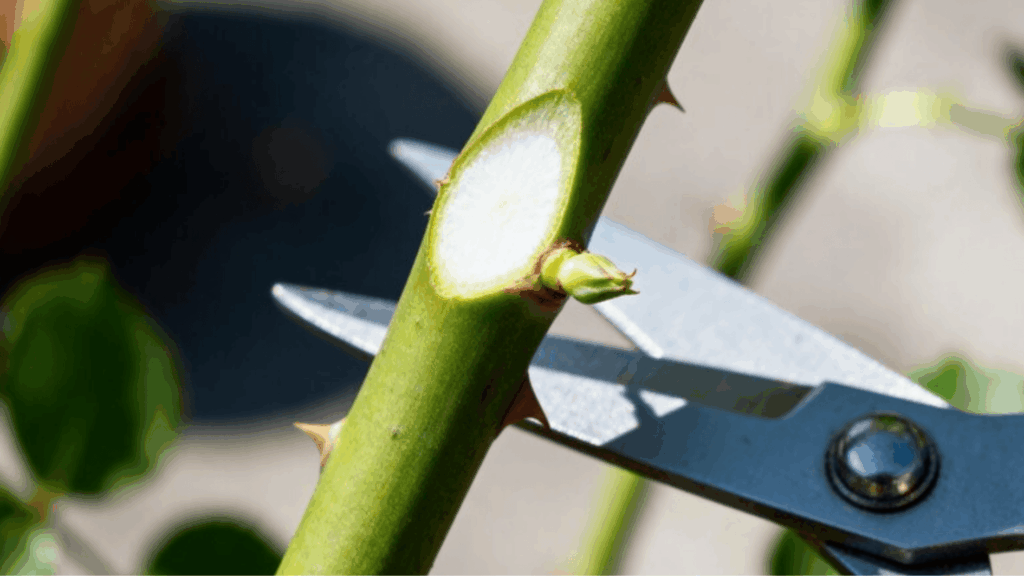
This is the step most gardeners get wrong. Where you cut, how you cut, and the angle you cut at directly affect how well the plant heals and how strongly it grows back. Remember all three rules.
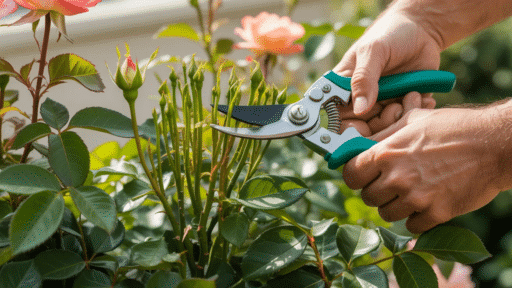
Cut at a 45-degree angle, so water runs off the wound instead of pooling and causing rot. Cut ¼ inch above an outward-facing bud so new growth heads away from the center.
Don’t cut too close or too far; cutting too close damages the bud, and cutting too far leaves a stub that rots. The sweet spot is exactly ¼ inch every single time.
Step 5: Do the Final Clean Up
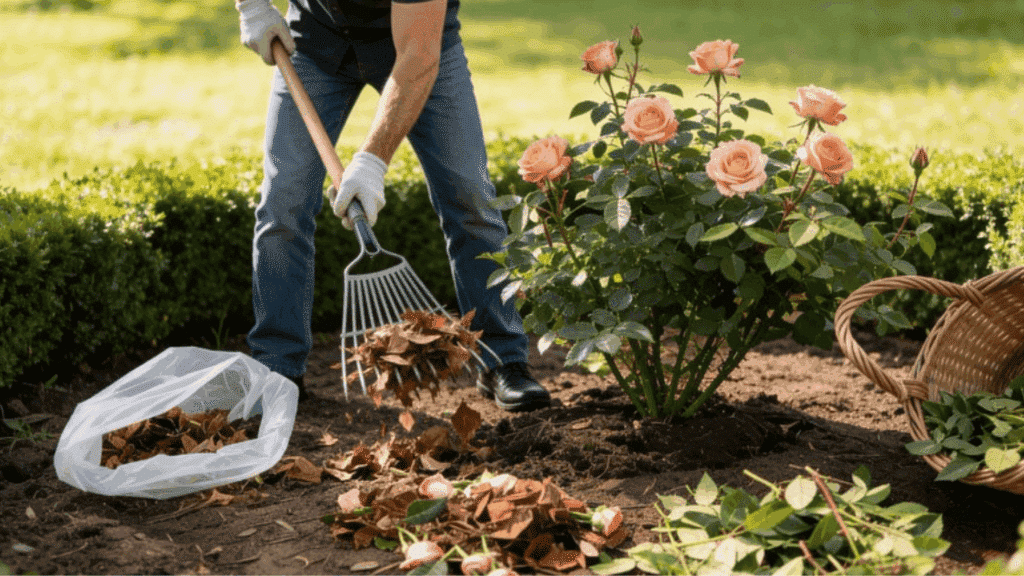
Diseased leaves and infected canes left on the ground overwinter in the soil, reinfecting your bush the moment spring arrives. Rake up every leaf, petal, and clipping around the base.
Do not compost diseased material. Bag it and throw it away. Healthy clippings can be composted normally. Finish by laying 2 to 3 inches of fresh mulch around the base to suppress remaining fungal spores and lock in moisture.
Best Time to Trim Rose Bushes
Here’s something most gardening guides won’t tell you upfront: it doesn’t matter how perfectly you prune if you do it at the wrong time. The timing of your cuts is just as critical as the cuts themselves.
Spring
Spring is the big one. This is when you do your primary, hard pruning, which shapes the entire plant and lays the foundation for the season ahead.
The golden rule? Prune when you see the first swelling buds on your canes. That’s your signal that the plant is waking up and ready to respond to your cuts.
Do this in Spring:
- Remove all dead, damaged, and diseased canes down to healthy wood.
- Cut back healthy canes by one-third to one-half.
- Open up the center by removing inward-growing branches.
- Cut at a 45-degree angle, ¼ inch above an outward-facing bud.
Avoid: Pruning while frost is still a risk. One late freeze after cutting can wipe out all the new growth your plant just pushed out.
Summer
Summer is not the time for heavy pruning. The plant is in full production mode and doesn’t need the shock.
Your only job here is deadheading, removing spent blooms the moment petals start dropping. Do that consistently, and your bush will keep flowering all season long.
Do this in the summer:
- Deadhead spent flowers regularly.
- Remove any diseased or pest-damaged growth immediately.
- Trim suckers growing below the graft union.
Avoid: Any major structural cuts, especially in peak heat above 90°F.
Fall
Fall pruning is the mistake most gardeners don’t realize they’re making. Cutting back hard in autumn triggers new growth, and that soft, fresh growth gets destroyed by the first frost.
The result? A weakened plant heading into its most vulnerable season.
Do this in Fall:
- Trim only excessively long canes that could whip in winter winds.
- Clear diseased foliage from the plant and the surrounding soil.
- Stop deadheading, let rose hips form naturally to signal dormancy.
Avoid: Any hard pruning. Save it for spring, that’s where it belongs.
Pruning Techniques for Different Types of Rose Bushes
Not all roses are trimmed the same way, and treating them as if they were is a costly mistake. Every rose type has its own growth pattern, energy cycle, and pruning needs. Here’s what each variety actually needs.
| Basis | Hybrid Tea | Climbing Roses | Shrub & Landscape | Miniature Roses |
|---|---|---|---|---|
| When to Prune | Late winter to early spring | After the first bloom flush | Early spring | Early spring |
| How Much to Cut | One-third to one-half | Lateral shoots, 2 to 3 buds | One-third of height | One-third to one-half |
| What to Remove | Weak, twiggy, inward growth | Dead or unproductive canes | Dead, crossing canes | Dead, crossing, thin canes |
| Special Rule | Hard pruning = bigger blooms | The train canes horizontally | Never shear into a ball | Use micro-tip pruners |
| Pruning Intensity | Heavy | Moderate | Light to Moderate | Moderate |
Common Pruning Mistakes to Avoid
Even experienced gardeners make these errors and never connect them to the poor results they see weeks later. These aren’t minor slip-ups. Knowing what not to do is just as important as knowing what to do.
- Never remove more than one-third of the plant at once; over-pruning kills energy reserves instantly.
- Prune only in late winter to early spring; at any other time, it does more harm than good.
- Don’t prune by the calendar, prune by the plant; swelling buds are your green light.
- Dull blades crush and tear canes; always prune with sharp, clean tools.
- Unsterilized tools spread disease directly into every fresh cut, and sterilize between every plant.
- Remove dead and diseased wood immediately; never wait for a scheduled session.
Conclusion
Learning how to trim rose bushes isn’t complicated, but intentional. Every cut you make is either working for the plant or against it. Now you know the difference.
You know when to cut, what to remove, which tools to use, and how each rose variety responds to pruning. That knowledge alone puts you ahead of most gardeners who’ve been guessing for years.
The results won’t appear overnight, but they will. Stronger canes, fuller blooms, and a healthier plant season after season. All because you stopped pruning out of habit and started pruning with purpose.

Veronica Lee holds a Master’s degree in Landscape Architecture from Cornell University and has dedicated more than 15 years to transforming outdoor areas into artistic and sustainable spaces. Her career took off in a renowned landscape design firm, where she excelled in creating visually stunning and environmentally responsible designs. In 2019, Veronica brought her expertise to our platform, quickly becoming a key contributor to our outdoor design and sustainability sections. As the lead of our landscape innovation series ever since joining, she has inspired readers with her forward-thinking and practical approach. When not drafting designs, Veronica enjoys pottery and participates in local conservation efforts, activities that complement her professional ethos of blending art with nature.