
Christmas cactus care is easier than most people think. This plant looks beautiful, especially during the holiday season when it blooms with bright flowers.
But many people struggle with proper care, which can lead to weak growth or no blooms at all. The good news? A few simple changes can make a big difference.
This blog covers everything you need to know about caring for a christmas cactus, including common mistakes and easy tips to keep your plant healthy and blooming every season.
All About the Christmas Cactus
Despite its name, the Christmas cactus (Schlumbergera bridgesii) is nothing like the spiky desert cacti you might picture.
It’s actually a tropical succulent native to the shaded, humid rainforests of southeastern Brazil, where it naturally grows on tree branches and rocky cliffs, not dry sand.
This means it thrives in conditions that mimic its origins: indirect light, moderate humidity, and well-draining soil.
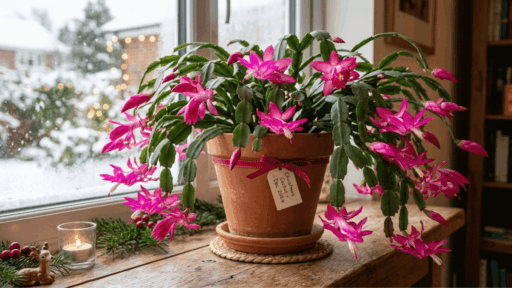
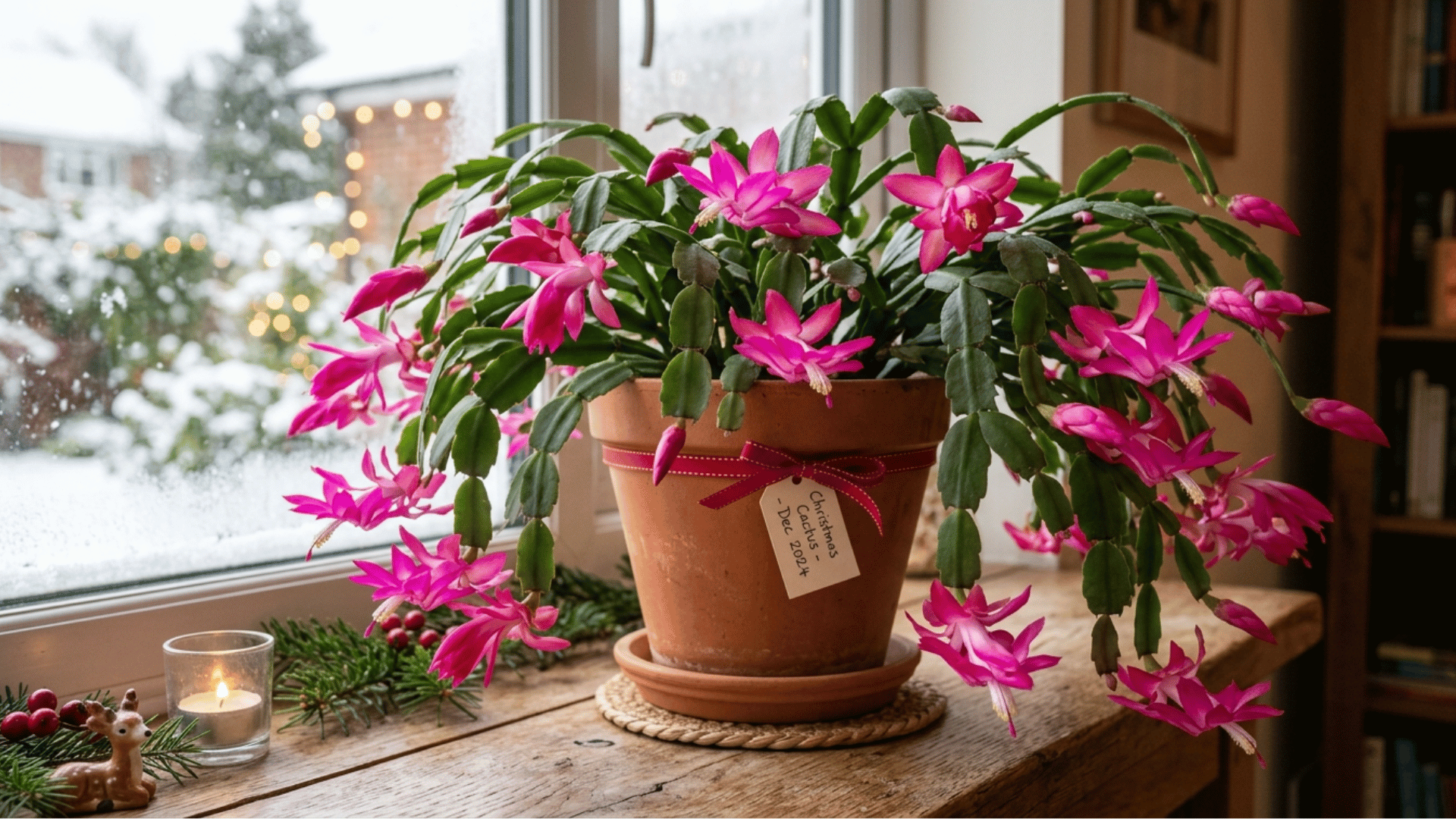
Its flat, glossy stem segments arch gracefully outward, and when properly cared for, it rewards you with stunning tubular blooms in shades of pink, red, white, and purple right in the heart of winter when most plants are dormant.
How to Care for a Christmas Cactus
Christmas cactus care is straightforward once you understand its tropical roots.
1. Watering
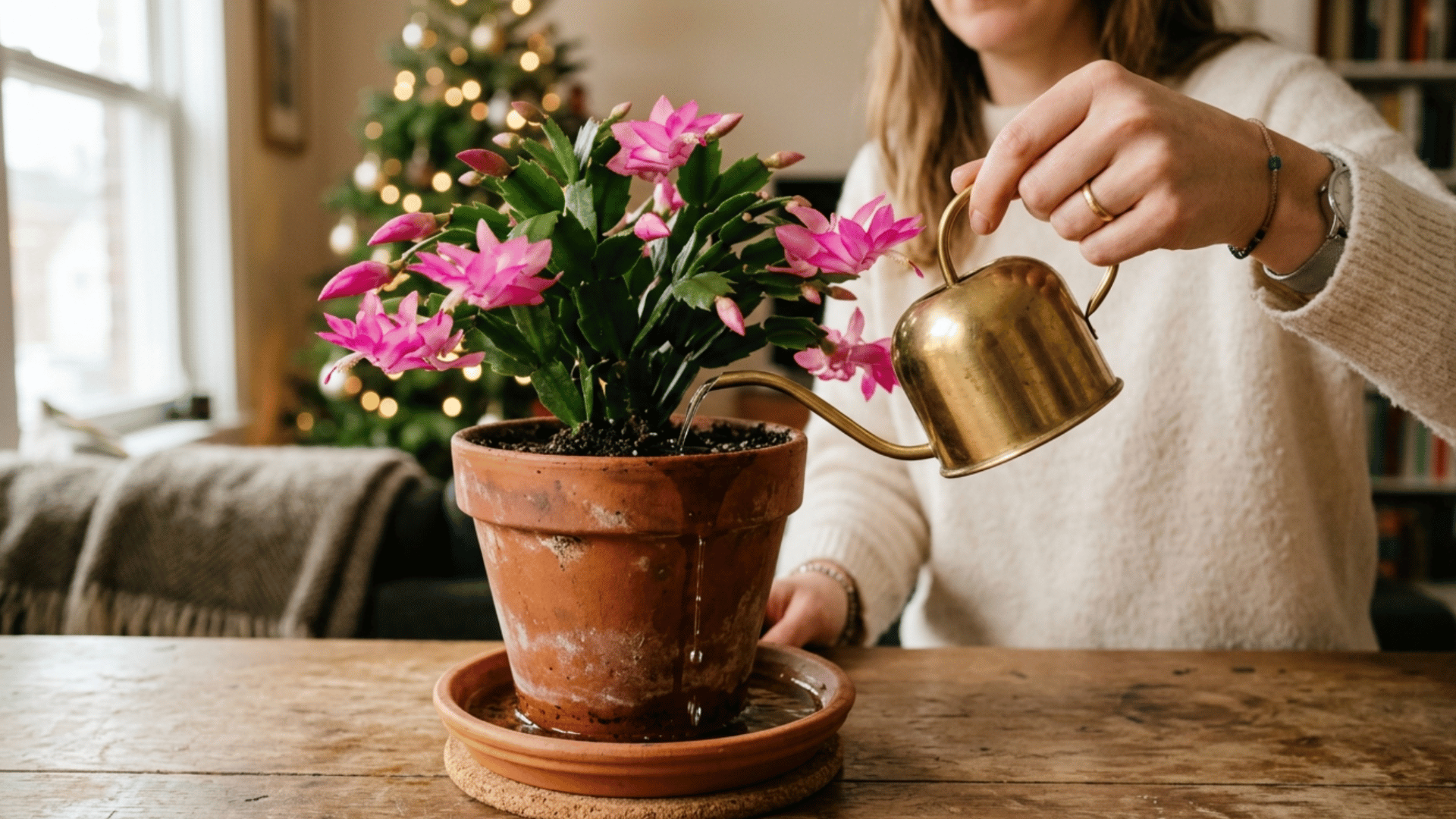
Water your Christmas cactus when the top inch of soil feels dry to the touch, typically every 1–2 weeks, depending on your home’s humidity.
Always water thoroughly, letting excess drain freely from the pot. Avoid letting it sit in standing water, as this quickly leads to root rot.
In fall, reduce watering slightly to trigger the plant’s natural rest period and encourage bud formation for winter blooms.
2. Light Requirements
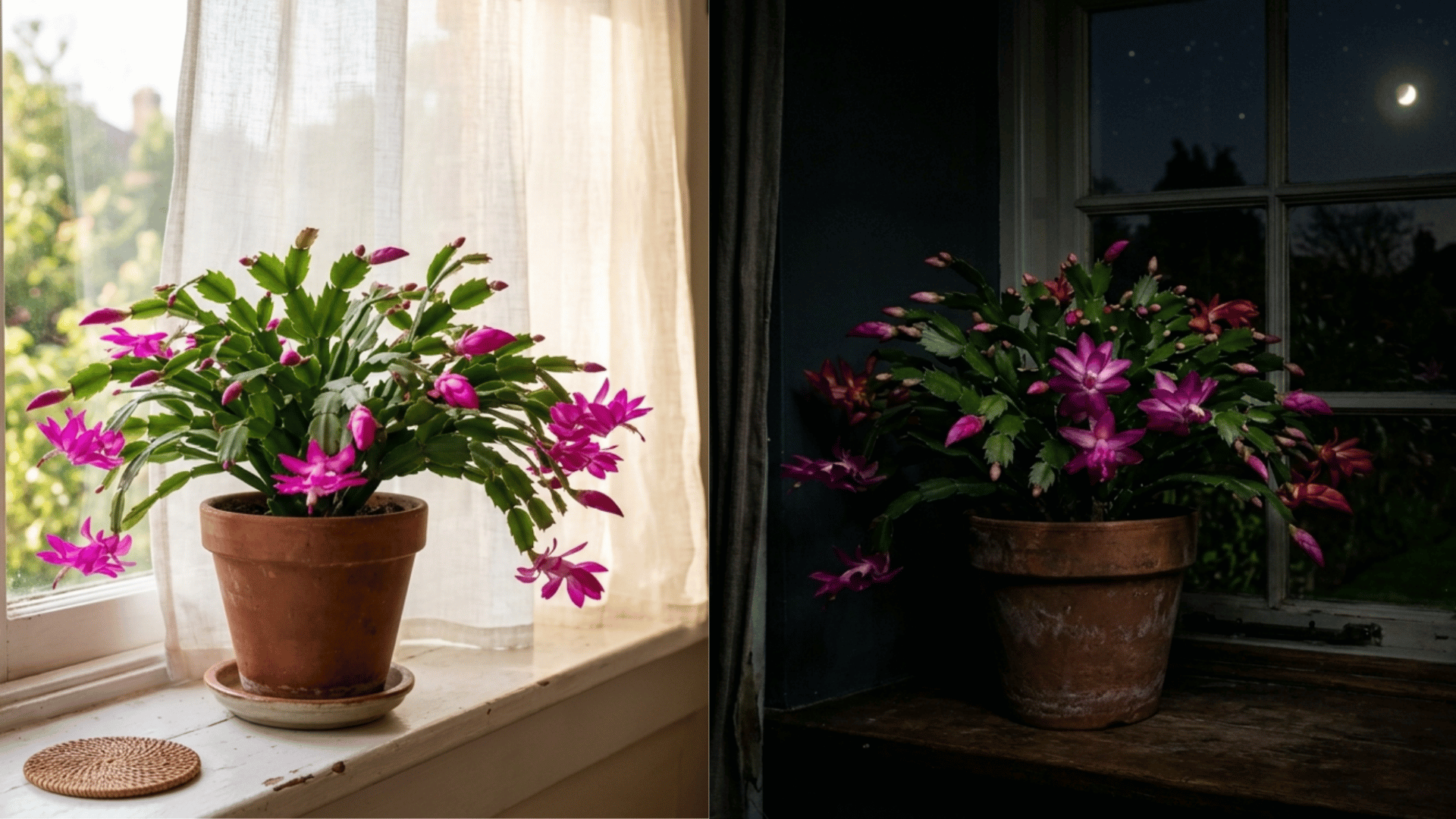
Christmas cactus thrives in bright, indirect light. A north or east-facing windowsill is ideal, as harsh afternoon sun can scorch its segments and cause yellowing. In the fall, the plant needs:
- 12–14 hours of complete darkness each night
- 4–6 consecutive weeks of this treatment to set buds
- No exposure to artificial light during dark hours, including lamps and streetlights
- Even brief light interruptions during this period can prevent blooming entirely.
3. Best Soil and Potting Mix
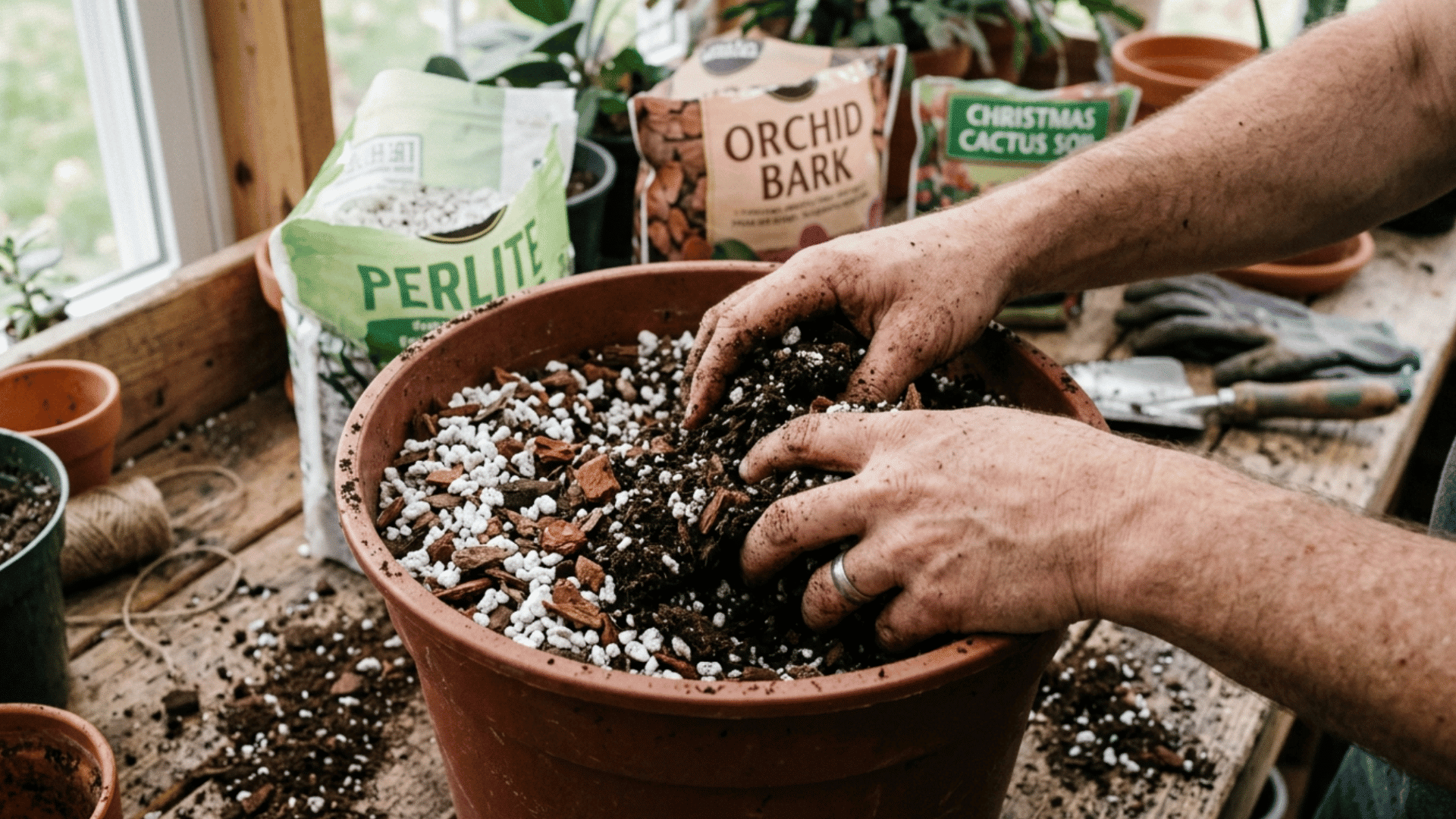
This plant needs well-draining, slightly acidic soil with a pH between 5.5 and 6.2.
A simple DIY mix works best with 2 parts cactus or succulent mix, 1 part perlite for drainage, and 1 part orchid bark for aeration, allowing roots to breathe while retaining just enough moisture.
Always choose a pot with drainage holes. Soggy, compacted soil is one of the leading causes of poor growth and root rot in Christmas cactus plants.
4. Temperature and Humidity Needs
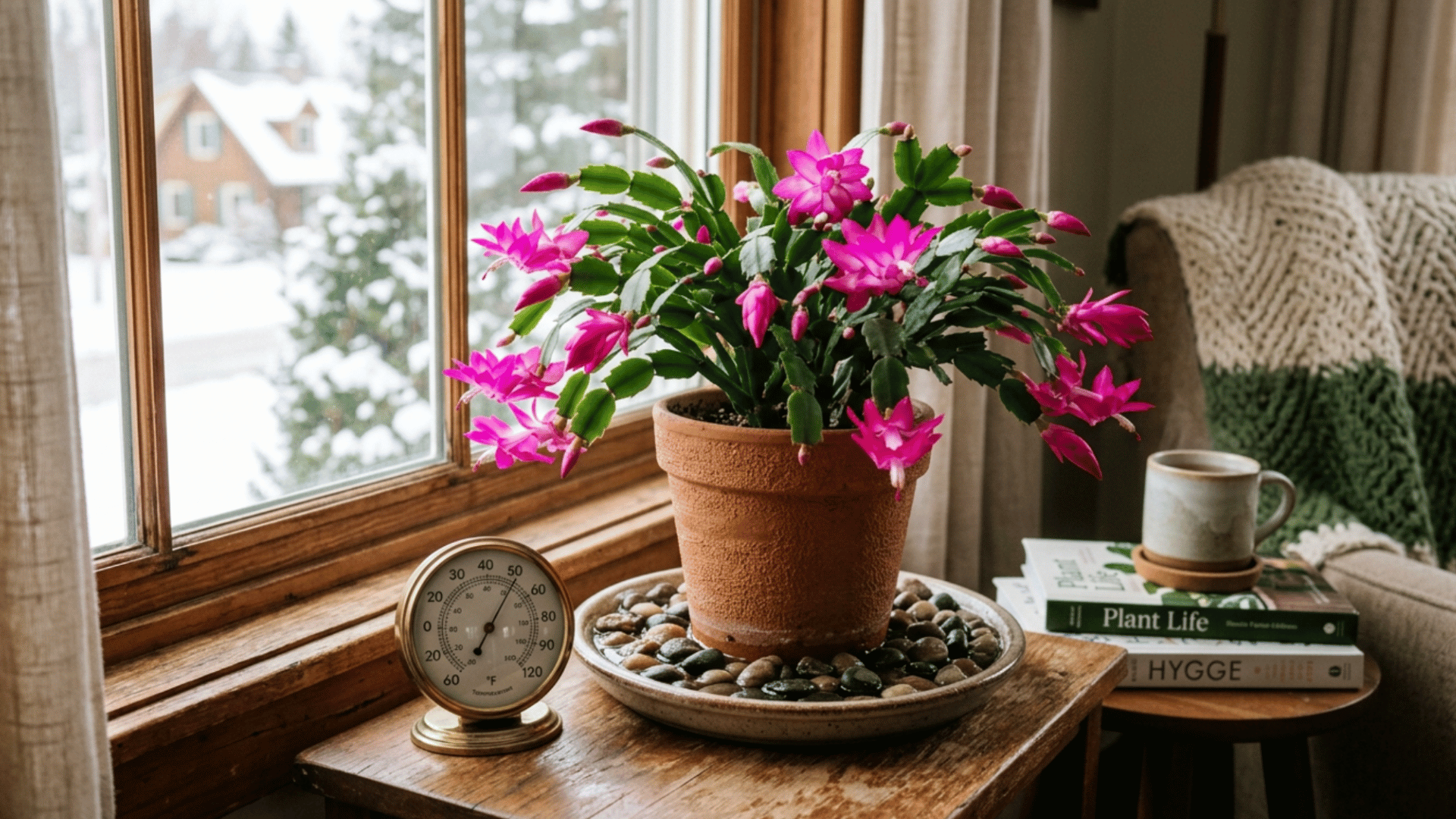
Christmas cactus prefers temperatures between 60°F and 70°F (15–21°C) during the growing season. In early fall, cooler nights around 50–55°F naturally signal the plant to begin forming buds.
As a tropical plant, it appreciates moderate humidity. Place it on a pebble tray filled with water or mist the leaves occasionally. Keep it away from heating vents, radiators, and cold drafts, which can cause bud drop and leaf stress.
5. Fertilizing Your Christmas Cactus
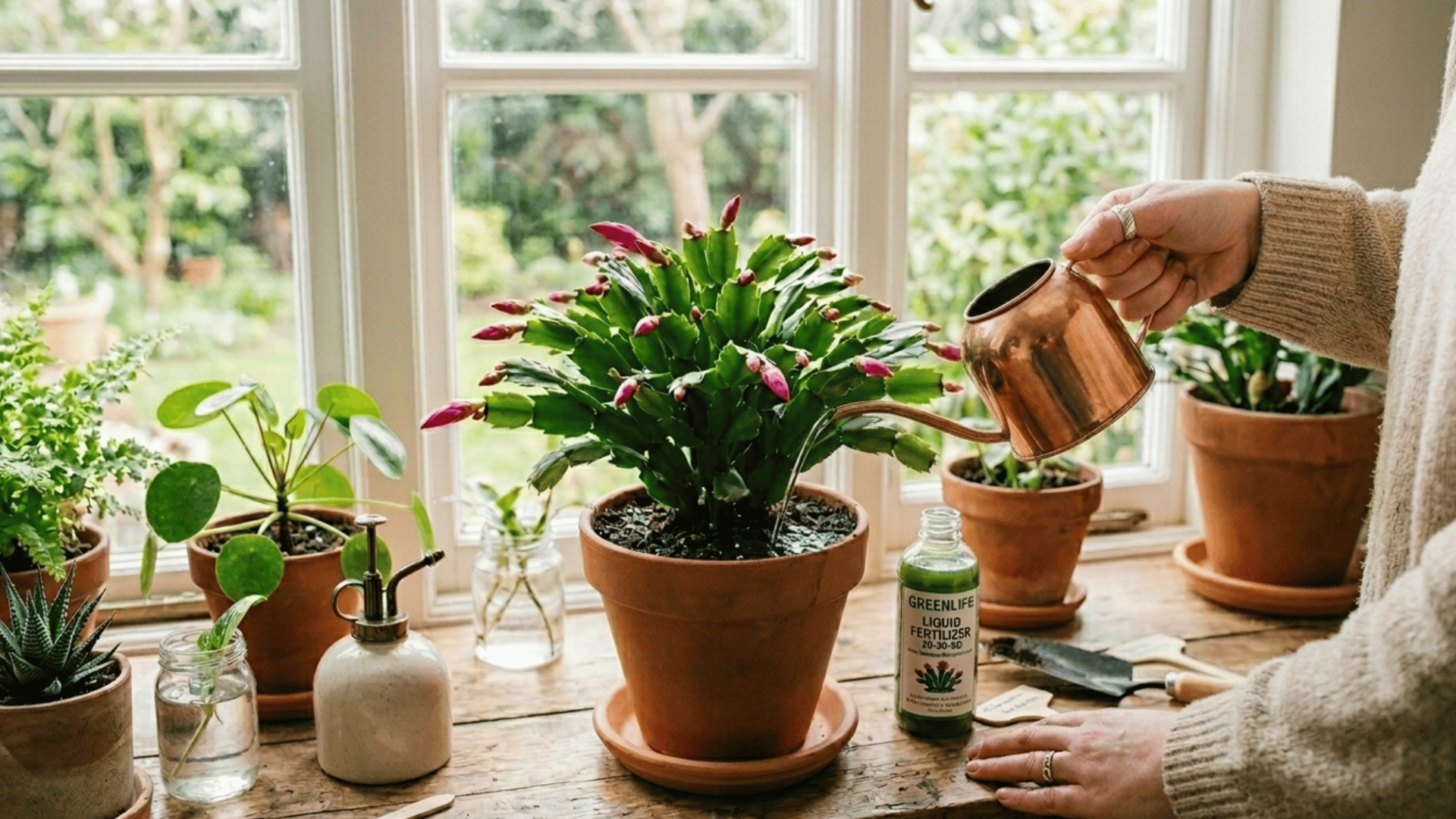
Feed your Christmas cactus with a balanced liquid fertilizer (20-20-20) every 2–4 weeks from spring through early fall. A few key rules to follow:
- Stop fertilizing once buds begin forming in autumn
- Resume feeding only after flowers have fully faded
- Switch to a high-phosphorus fertilizer in late summer for an extra bloom boost
- Never fertilize a stressed, dry, or recently repotted plant
Feeding at the wrong time is one of the most common reasons Christmas cactus fails to bloom.
Types of Holiday Cactus Plants
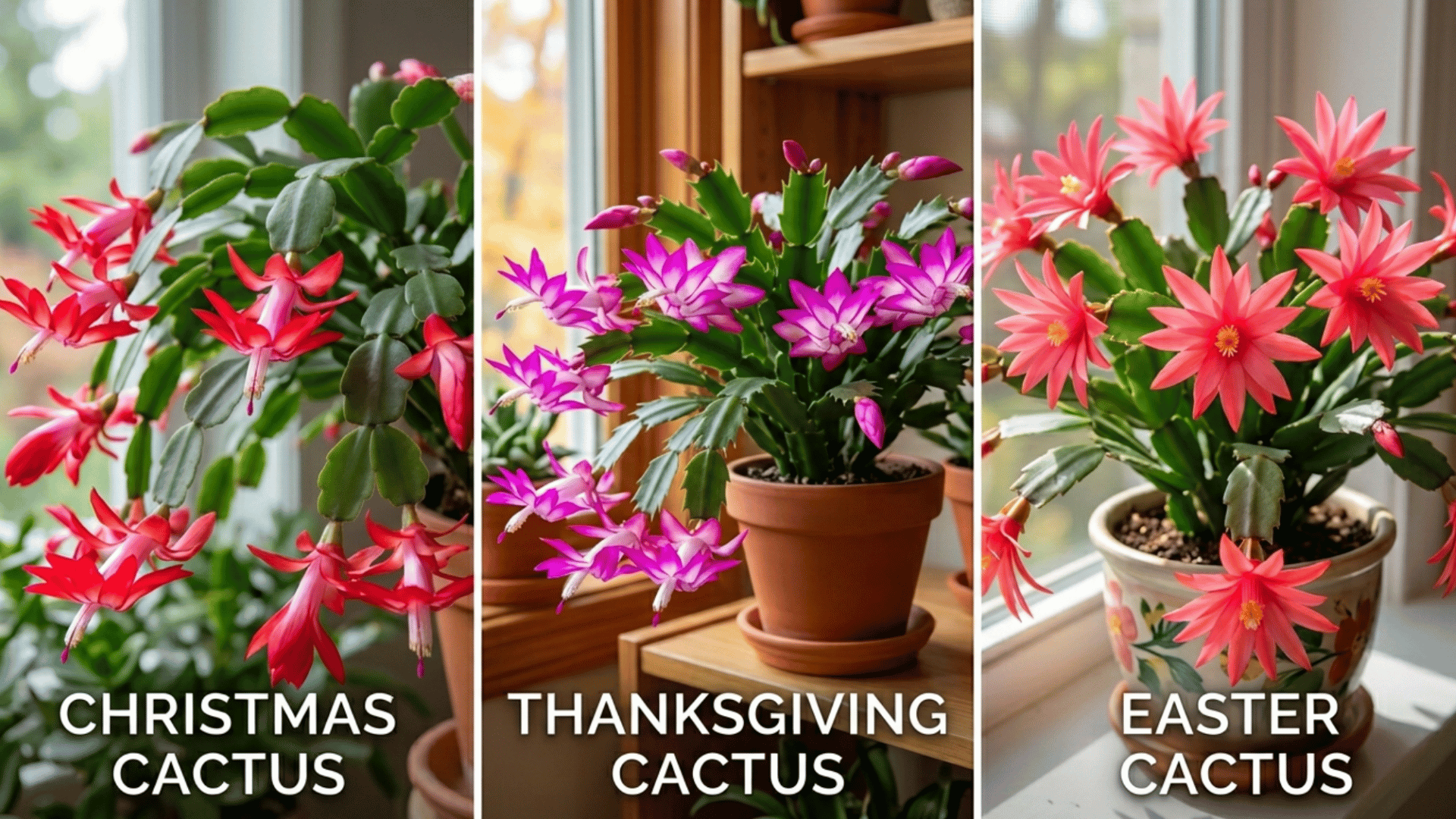
These holiday cacti look similar but differ in bloom time, leaf shape, and flower style.
| Feature | Thanksgiving Cactus | Christmas Cactus | Easter Cactus |
|---|---|---|---|
| Scientific Name | Schlumbergera truncata | Schlumbergera x buckleyi | Rhipsalidopsis gaertneri |
| Bloom Time | November | December | March–April |
| Leaf Shape | Pointed, claw-shaped edges | Rounded, smooth edges | Rounded, thicker segments |
| Flower Style | Upright flowers | Hanging, drooping flowers | Star-shaped flowers |
| Availability | Most common in stores | Less common | Moderately available |
| Care Level | Easy | Easy | Slightly different care |
| USDA Zones | 9–11 | 10,11,12 | 10–11 |
| Color Varieties | Pink, red, purple, orange, white | Pink, red, purple, orange, white | Pink, red, purple, orange, white |
How to Get a Christmas Cactus to Bloom Again
The two main bloom triggers are darkness and cool temperatures. Christmas cactus needs about 12–14 hours of complete darkness daily, along with cooler temperatures around 55–60°F. These conditions signal the plant to start forming buds.
Follow a simple 6-week blooming schedule starting in early October.
- Week 1–2: Reduce watering and move to a cooler space
- Week 3–4: Give long, uninterrupted dark periods daily
- Week 5: Buds begin to form
- Week 6: Return to normal light once buds appear
Buds often drop due to small environmental changes, so avoid moving the plant, keep it away from drafts, and maintain steady watering. Even slight changes can cause buds to fall.
After blooms fade, give the plant a rest period. Reduce watering, keep it in a cool spot, and resume normal care after a few weeks to support the next bloom cycle.
When to Repot Your Christmas Cactus
Christmas cactus actually prefers being slightly root-bound, so there’s no need to repot frequently. Plan to repot every 3–4 years, or when you notice:
- Roots poking out of the drainage holes
- Water runs straight through without absorbing
- The plant is drying out much faster than usual
- Stunted growth despite proper feeding and watering
When repotting, choose a pot only one size larger than the current one. Too much extra space holds excess moisture and increases the risk of root rot. Spring is the best time to repot never during budding or blooming.
How to Propagate from Cuttings
The Christmas cactus is one of the easiest houseplants to propagate. All you need is a healthy stem cutting:
- Take your cutting: snip a segment of 2–3 joined stem pieces from a healthy, mature stem
- Let it callous: leave the cut end exposed to air for 24–48 hours until it dries and seals over. This step prevents rotting
- Prepare your mix: fill a small pot with moist perlite, or a 50/50 blend of perlite and cactus soil
- Plant the cutting: push the calloused end about an inch into the mix. No rooting hormone needed
- Place in indirect light: keep it in a warm spot away from direct sun. Mist lightly every few days to maintain moisture without waterlogging
- Wait for roots: roots typically develop within 3–4 weeks. Tug gently on the cutting; resistance means it has rooted successfully
Final Thoughts
Successful christmas cactus care comes down to five simple pillars: the right light, consistent watering, well-draining soil, suitable temperature, and a proper rest period before blooming.
Nail these, and your plant will reward you with stunning blooms every winter, year after year.
If you’re a first-time grower or you’ve had yours for decades, there’s always something new to discover with this remarkable plant.
Found this guide helpful? Share it with a fellow plant lover and help them grow a beautiful Christmas cactus too.

With a Master’s in Landscape Architecture from the University of Virginia, Sophia Stephenson has dedicated the last 20 years to creating and maintaining vibrant outdoor spaces. Her professional journey started in landscape design, where she gained a reputation for innovative and sustainable approaches. Sophia became a part of our editorial team as a freelancer in 2019, offering a fresh perspective on outdoor living. Since 2020, she has been the chief for our outdoor design content, blending aesthetic appeal with environmental stewardship. In her leisure time, Sophia is a keen photographer, capturing the beauty of natural landscapes, a hobby that complements her professional expertise.