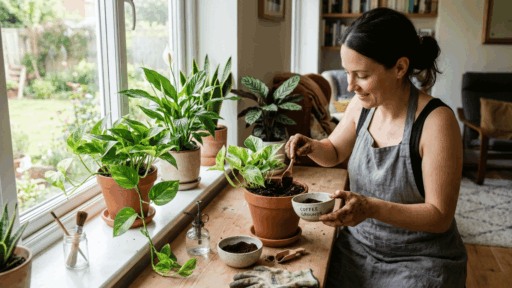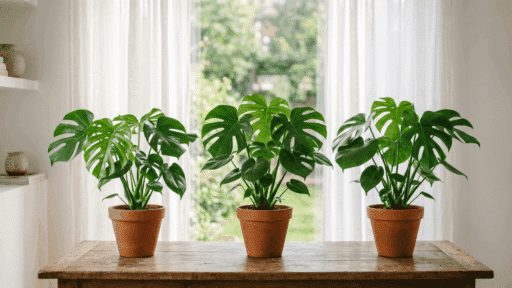
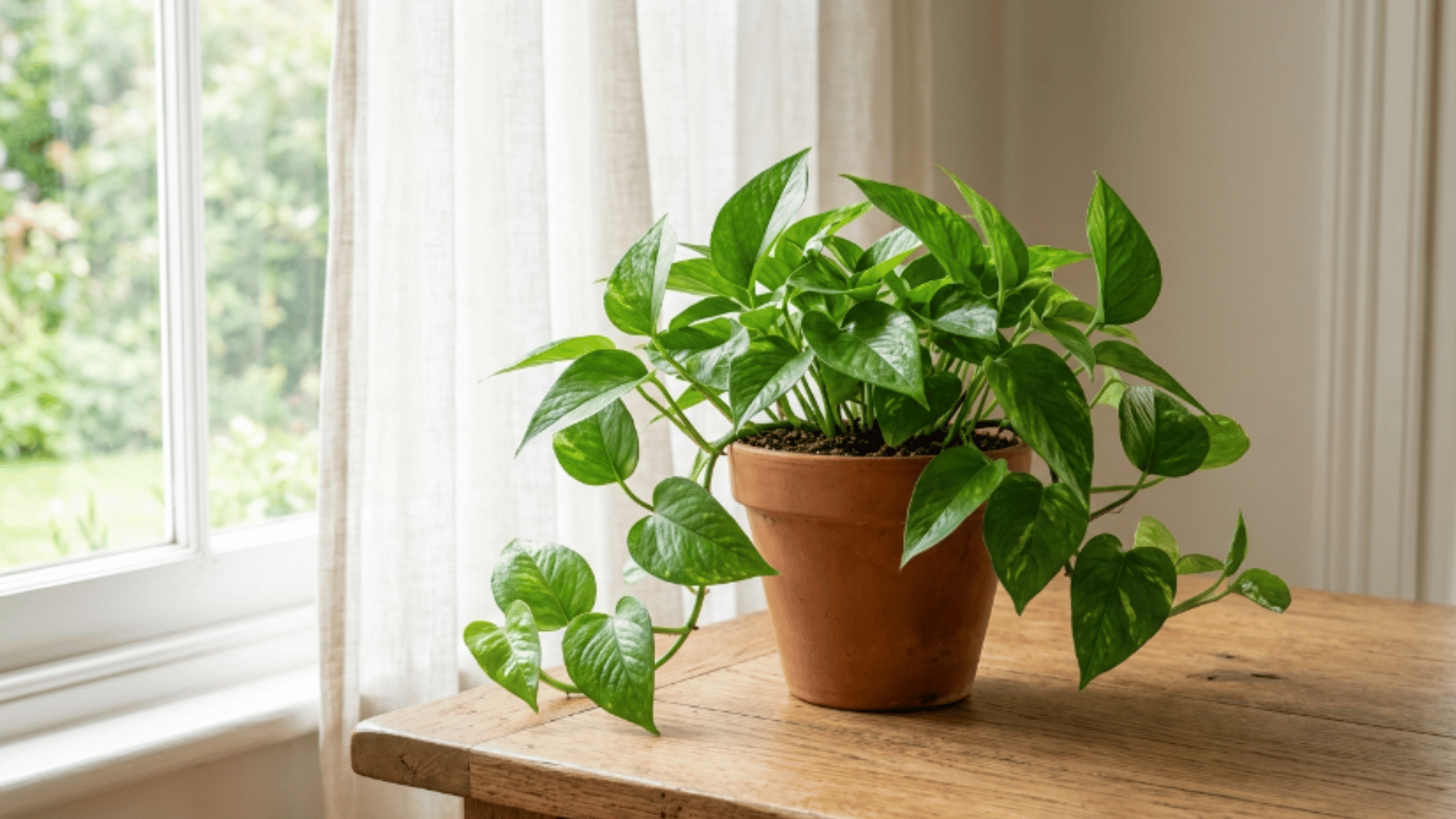

Pothos is one of the easiest indoor plants to grow at home, which is why it remains a top choice for beginners.
This blog explains pothos plant care in a straightforward and beginner-friendly way, so nothing feels complicated. It covers everything you need to know, from watering habits to light needs and soil basics.
If the goal is to keep your pothos healthy and growing well without second-guessing every step, you will find everything you need right here.
All About Pothos
Pothos is a tropical vine plant originally from the Solomon Islands, now one of the most common indoor plants found in homes across the world.
It has earned its place in living rooms, offices, and kitchens because it fits into almost any indoor setting without demanding constant attention.
Unlike many houseplants that require strict care routines, the pothos plant adapts well to varying light levels, temperatures, and humidity.
It grows in both soil and water, making it flexible for any setup.
Pothos Plant Care Tips for Healthy Growth
With the right balance of water, light, and basic care, pothos plant care is straightforward and rewarding even for first-time plant owners.
1. Watering Pothos the Right Way
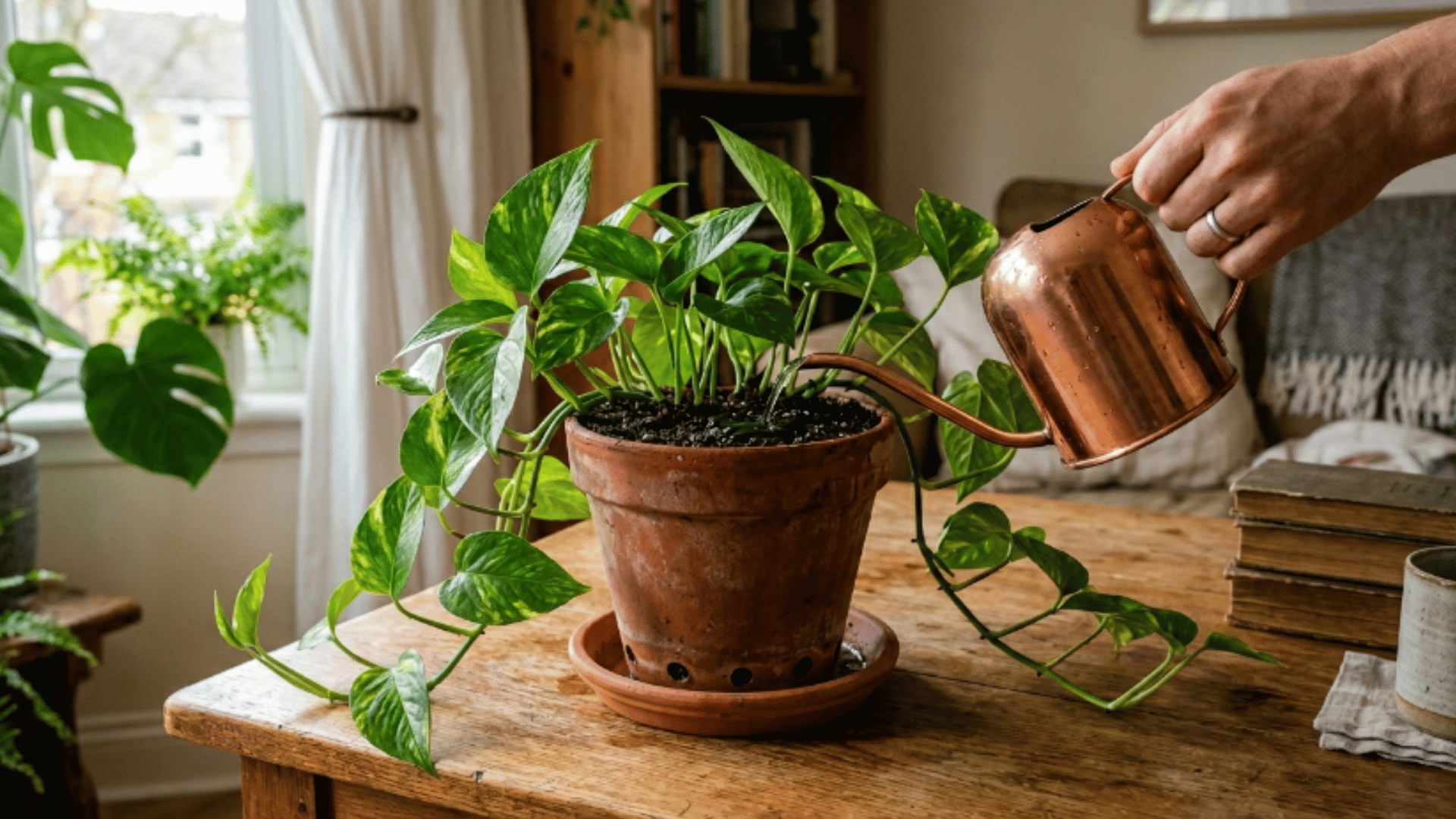
- Avoid Water Buildup – Standing water damages roots over time and slows growth.
- Check Soil Before Watering – Water only when the top 1–2 inches feel dry.
- Let Soil Dry Between Watering – Helps maintain healthy roots and steady growth.
2. Providing the Right Light
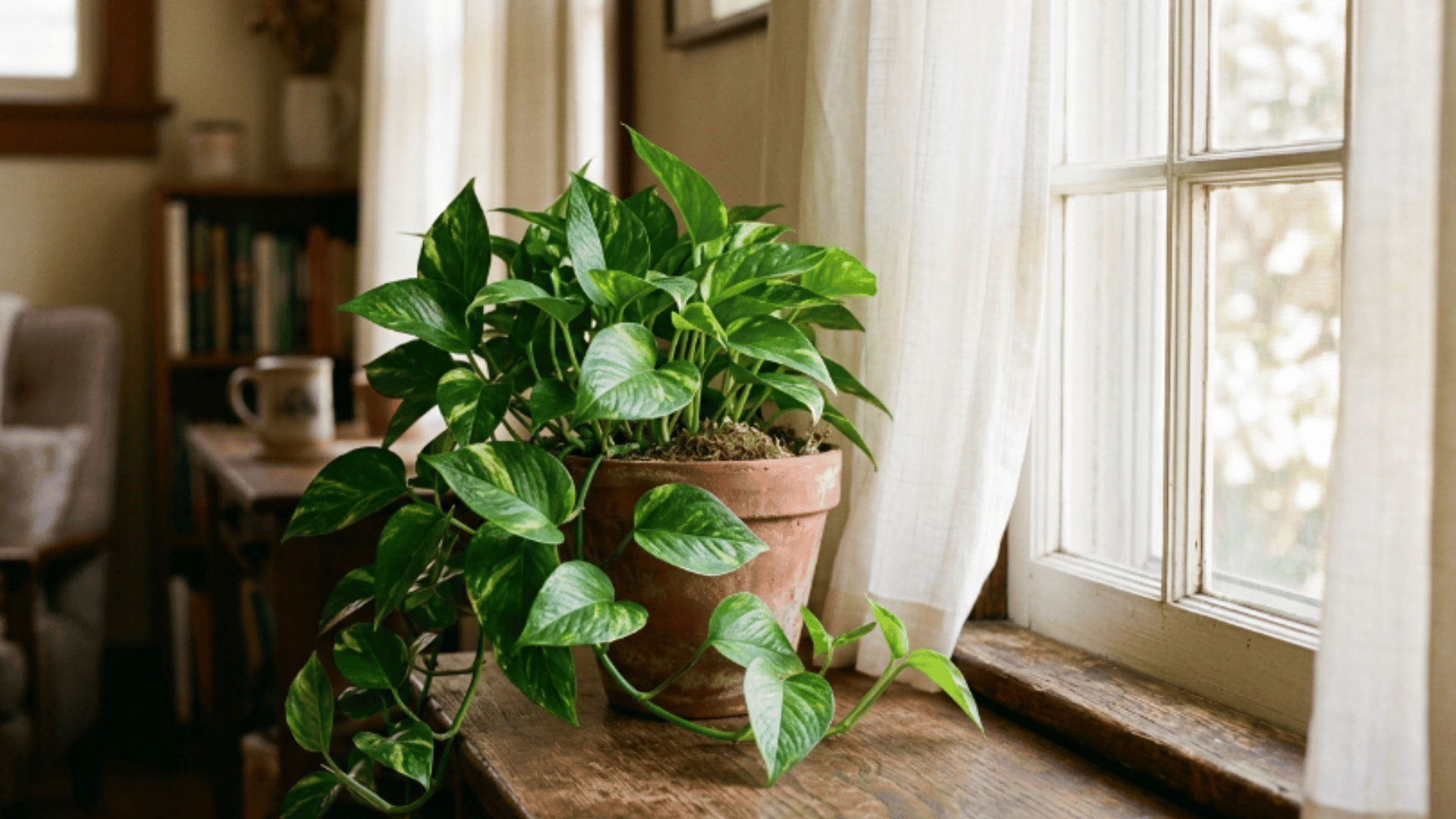
- Bright Indirect Light Works Best – Supports healthy growth and strong leaf color.
- Avoid Direct Sunlight – Prevents leaf burn and faded patches.
- Watch for Growth Signs – Small leaves or stretched vines mean more light is needed.
- Adjust Placement Easily – Moving closer to a window usually fixes light issues.
3. Choosing the Right Soil
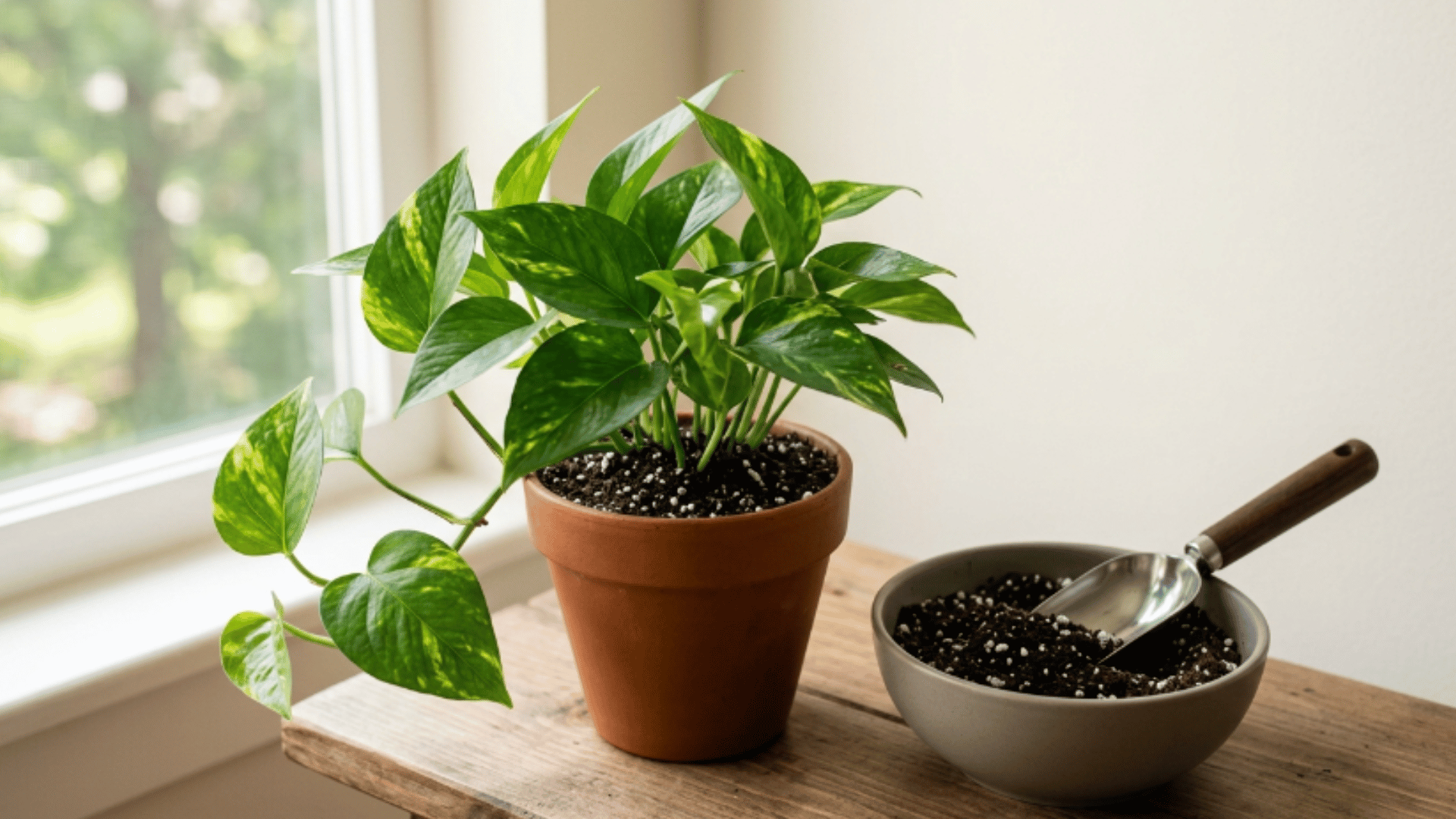
- Use Well-Draining Mix – Prevents excess moisture from sitting around roots.
- Add Perlite or Bark – Improves airflow and drainage in the soil.
- Avoid Heavy Soil – Dense soil holds water and increases the risk of root rot.
- Keep Roots Dry Between Watering – Supports overall plant health.
4. Choosing the Right Pot
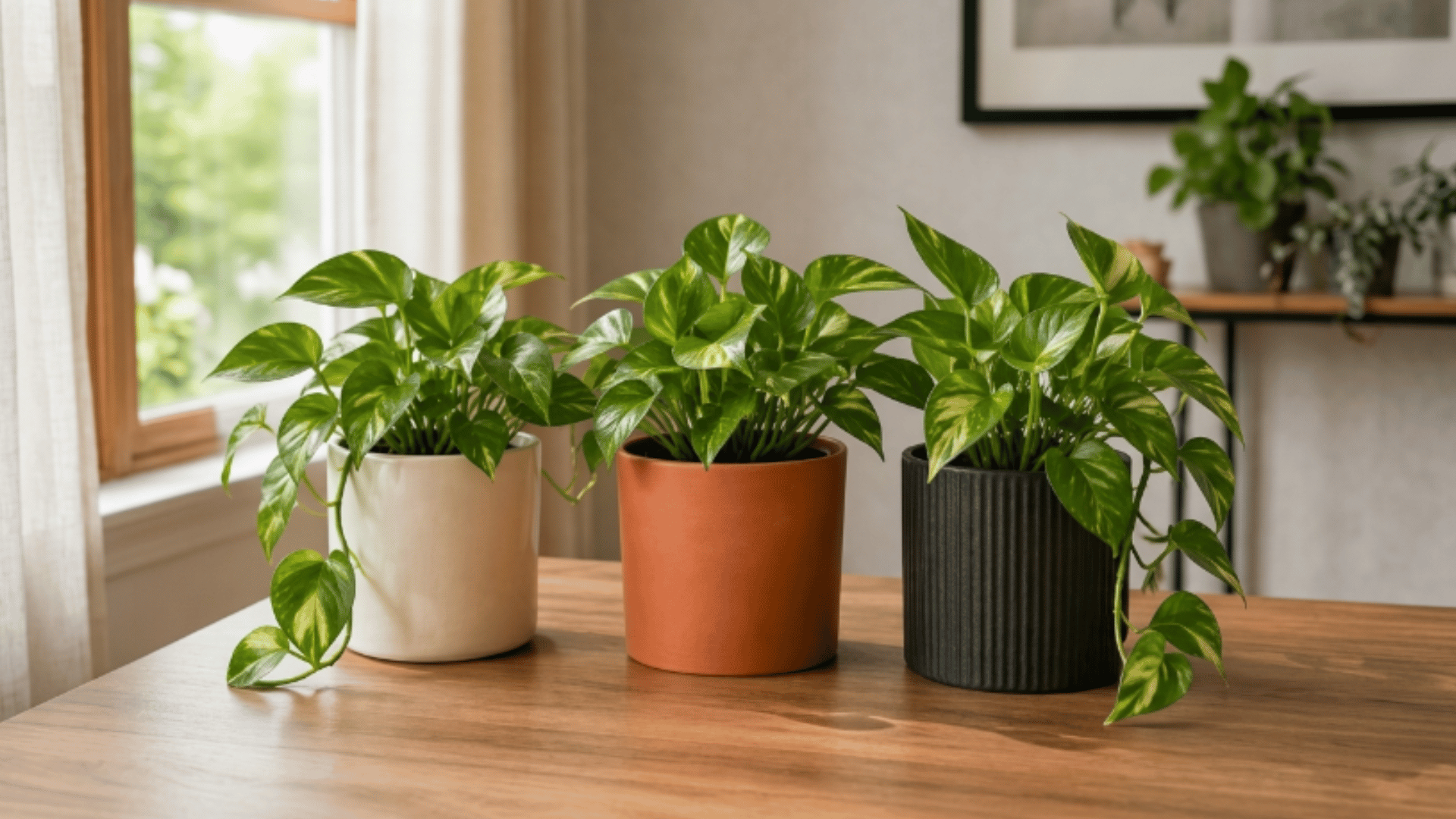
- Pick Pots with Drainage Holes – Allows excess water to escape after watering.
- Use Proper Pot Size – Prevents excess moisture from staying in unused soil.
- Try Terra-Cotta Pots – Helps soil dry faster than plastic containers.
- Avoid Oversized Pots – Too much soil holds unnecessary moisture
5. Maintaining the Right Temperature
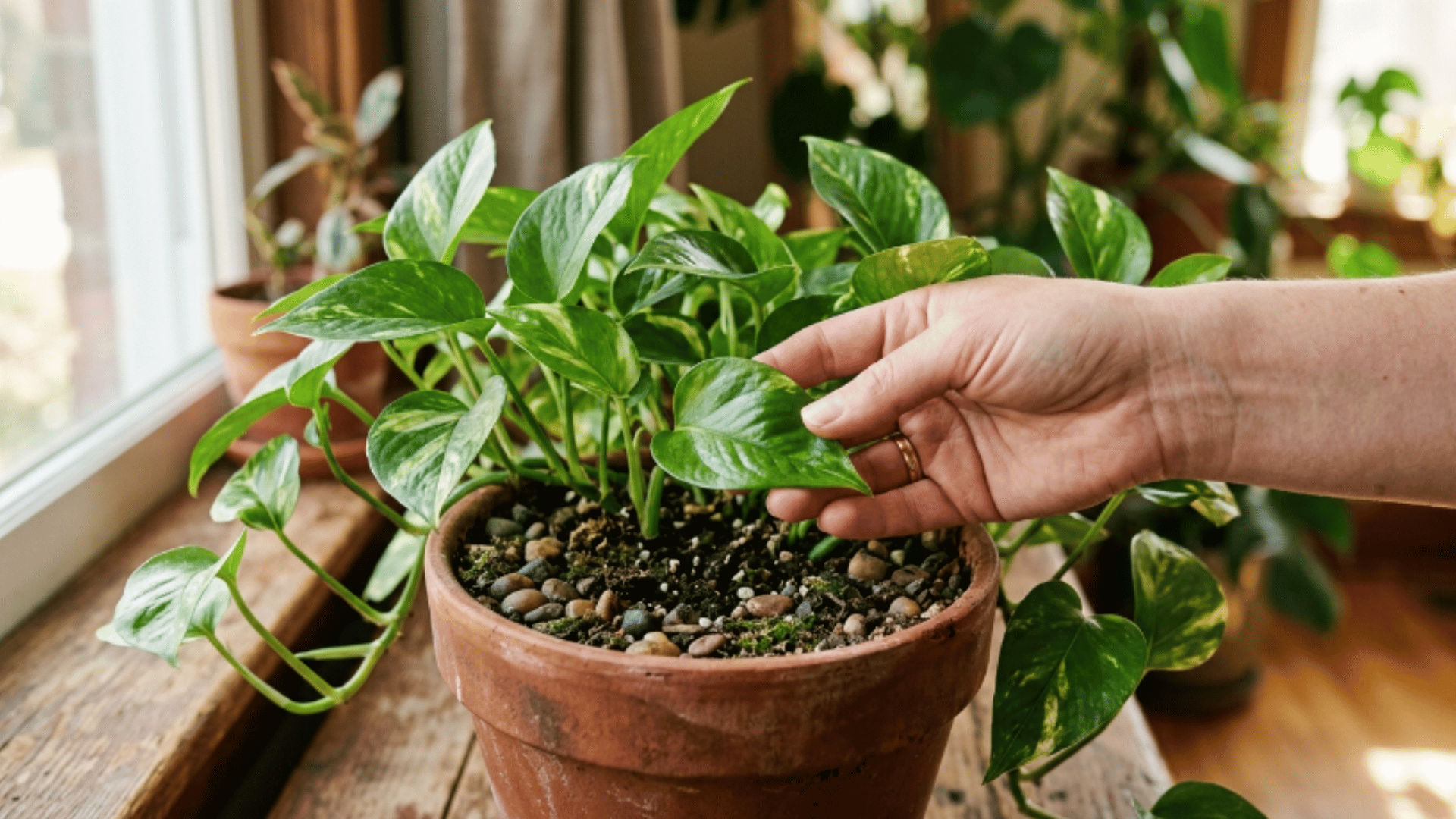
- Keep in Warm Indoor Conditions – Supports steady and healthy growth.
- Avoid Cold Drafts – Protect from AC vents and cold windows.
- Maintain a Stable Environment – Sudden changes can stress the plant.
- Ensure Good Airflow – Helps keep the plant healthy year-round.
Indoor vs. Outdoor Pothos Care
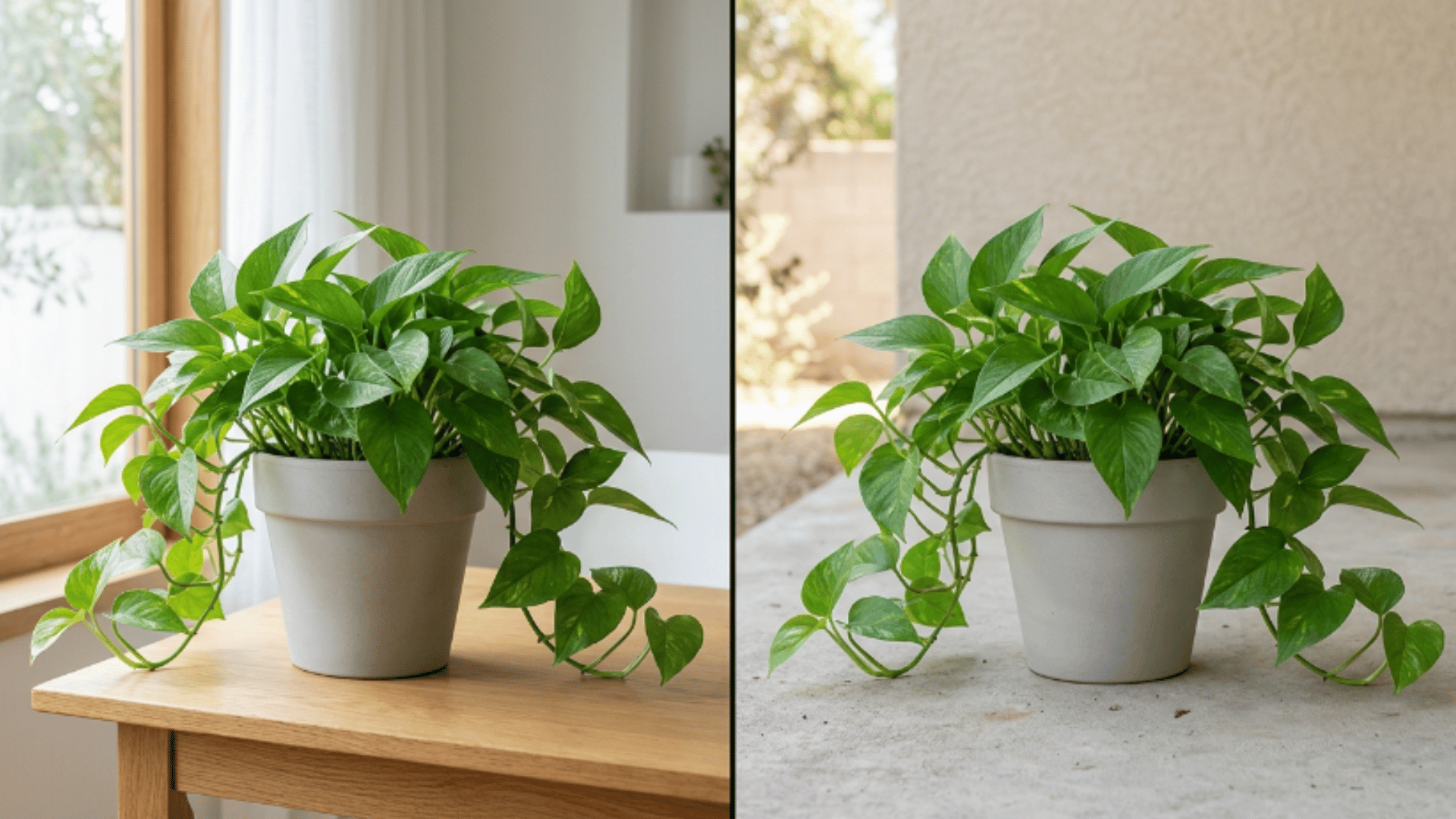
Understanding pothos plant care for indoor and outdoor settings helps you adjust watering, light, and growing conditions based on where the plant is placed.
| Care Factor | Indoor Pothos Care | Outdoor Pothos Care |
|---|---|---|
| Light Exposure | Bright indirect light works best near windows | Needs filtered light or partial shade to avoid leaf burn |
| Watering Needs | Soil dries more slowly, so watering is less frequent | Soil dries faster, so watering may be needed more often |
| Temperature Control | Stable indoor temperatures support steady growth | Growth depends on the weather and may change with the seasons |
| Humidity Levels | Grows well in normal room humidity | Benefits from higher natural outdoor humidity |
| Pest Risk | Lower chance of pests in indoor spaces | Higher risk of insects and outdoor pests |
How to Repot Your Pothos Plant
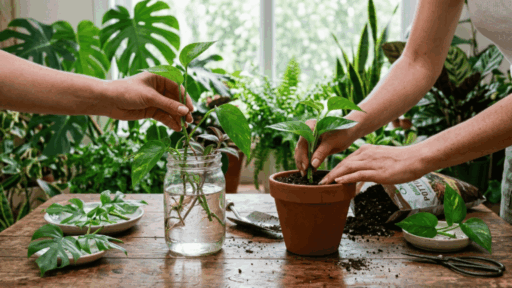
Repotting your pothos every 1–2 years helps maintain healthy growth and prevents the roots from becoming crowded.
As the plant grows, it may outgrow its pot, leading to slower growth or roots circling tightly within the pot. When repotting, choose a pot that is one size larger with proper drainage holes to allow excess water to escape.
Gently remove the plant from its current pot and loosen the roots slightly before placing it into fresh, well-draining soil.
Keep the plant at the same depth as before and avoid watering right away. Letting the plant settle for a day or two helps reduce stress and supports better root adjustment.
Common Pothos Problems and Fixes
Pothos plant care can run into problems. Knowing the signs helps you fix issues quickly and improve your pothos plant care routine before things get worse.
| Problem | Cause | Solution |
|---|---|---|
| Yellow Leaves | Too much water and poor drainage | Reduce watering and let the topsoil dry before watering again |
| Brown Leaf Tips | Low humidity or inconsistent watering | Mist occasionally and maintain regular watering |
| Slow Growth | Not enough light | Move the plant to bright, indirect sunlight |
| Pale or Washed-Out Leaves | Too much direct sunlight | Shift to a spot with filtered light |
| Leggy or Stretched Vines | Lack of proper light | Place in a brighter area and prune for fuller growth |
Wrapping Up
Pothos is a forgiving plant, but getting the basics right makes a real difference in how well it grows over time.
Small habits built early, such as checking the soil before watering, placing the plant in the right spot, and regularly observing leaf color, go a long way toward keeping it healthy long term.
Pay attention to the leaves; they will tell you when something needs to change. With a little observation and minor adjustments, most problems are easy to correct before they get serious.
Good pothos plant care doesn’t require perfection; it just requires consistency from starting with one plant or adding to a growing collection.
Put these tips to use today and see the difference it makes in your plant.

With a Master’s in Landscape Architecture from the University of Virginia, Sophia Stephenson has dedicated the last 20 years to creating and maintaining vibrant outdoor spaces. Her professional journey started in landscape design, where she gained a reputation for innovative and sustainable approaches. Sophia became a part of our editorial team as a freelancer in 2019, offering a fresh perspective on outdoor living. Since 2020, she has been the chief for our outdoor design content, blending aesthetic appeal with environmental stewardship. In her leisure time, Sophia is a keen photographer, capturing the beauty of natural landscapes, a hobby that complements her professional expertise.