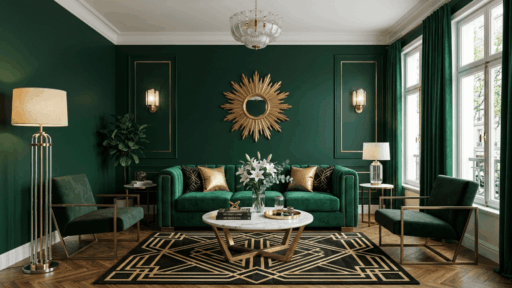
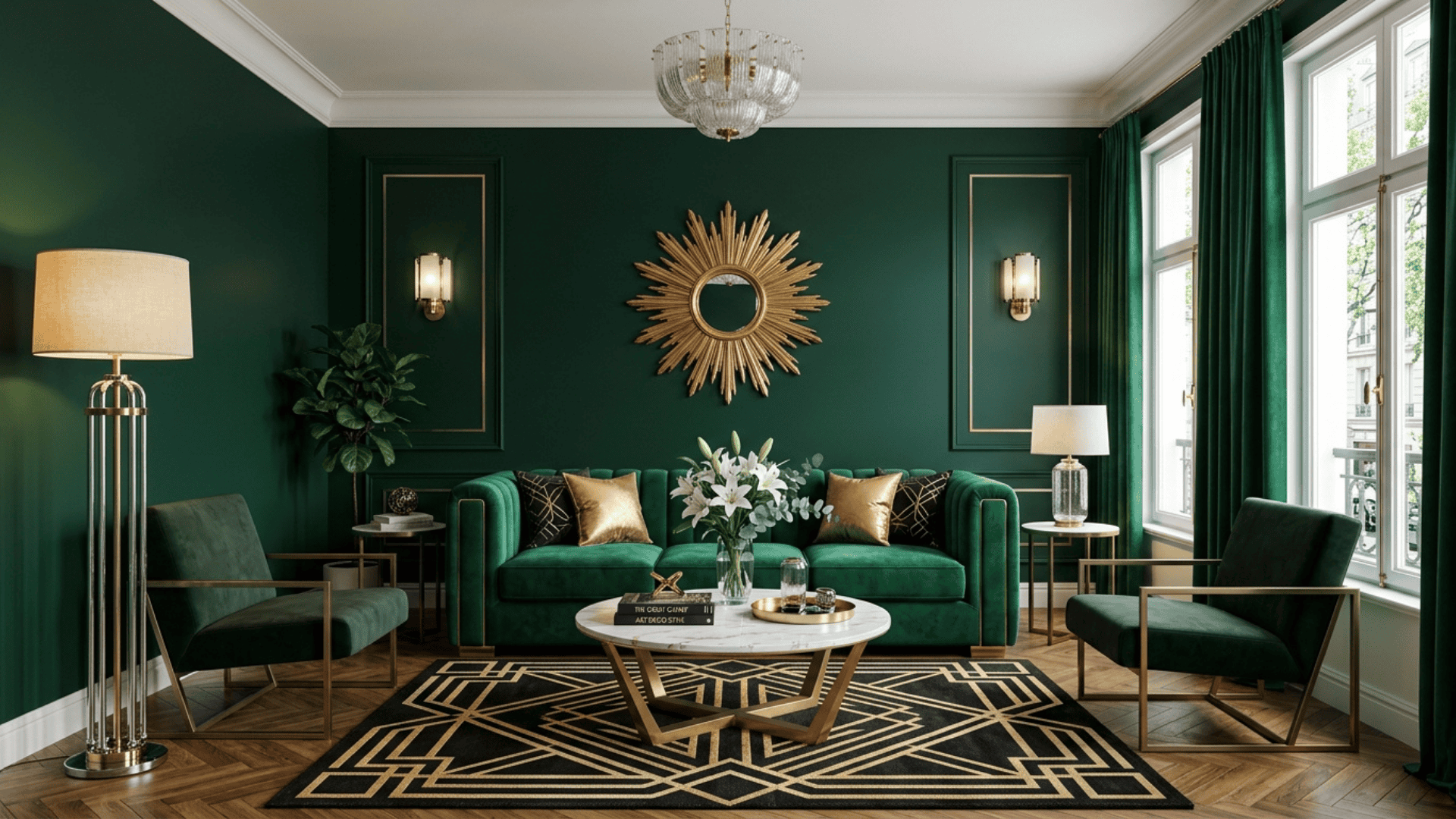

If you step into a space where bold lines and rich materials come together with purpose, its possibly the Art Deco interior design that focuses on contrast and structure without overfilling a room.
It combines strong shapes with defined details that still fit well in modern homes. The style works through clear placement rather than excess decoration.
In this guide, the Art Deco interior style is explored through practical ideas that show how it can be applied across different rooms.
Each idea shows how small changes can create a more structured, visually clear space.
What is Art Deco Interior Style?
Art Deco interior style originated in France during the 1920s and spread globally through the 1930s. It was a direct response to the overly ornate styles that came before it.
What makes it stand apart from other styles is its balance between decoration and order.
It is not minimal, but it is never chaotic either. Every element serves a visual purpose. and the overall look carries a sense of confidence that few other styles can match.
Key Factors and Elements of Art Deco Design
Art Deco interior design is built on defining elements that create a structured and well-defined space. Each factor plays a clear role in shaping the overall look.
- Geometric Patterns: Zigzags, chevrons, and sunburst shapes are used across floors, walls, and textiles to create rhythm and structure.
- Color Palettes: High-contrast combinations like black and gold, along with deep jewel tones and neutrals, define the visual tone.
- Materials and Finishes: Marble, chrome, lacquered wood, and glass are used for their reflective quality and depth.
- Furniture Shapes: Strong outlines with curved edges give balance and visual weight without making the space feel heavy.
- Lighting and Decorative Accents: Statement fixtures, mirrors, and patterned textiles add detail and complete the overall look.
Art Deco Interior Design Ideas for Every Room
Art Deco can be applied differently across spaces depending on how each element is used and positioned. The ideas below focus on specific design features and where they work best within a room:
1. Bold Geometric Wall Patterns
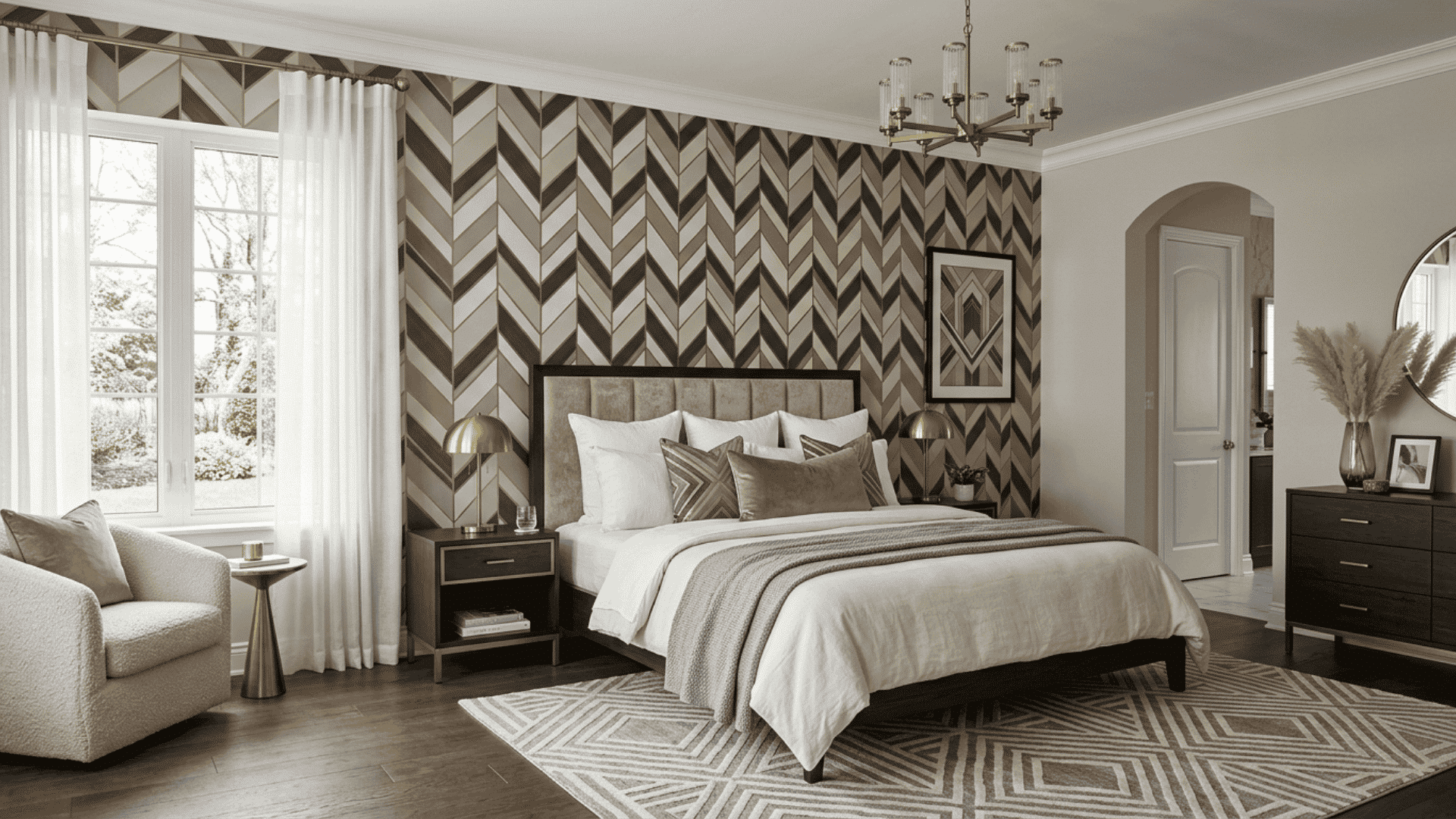
This art deco interior design element works well in a master bedroom or living room as a strong wall backdrop. Large fans or chevron patterns can be placed behind a bed or sofa to clearly define the space.
It fits best on a main wall to create a focused visual center.
2. Black and Gold Color Palette
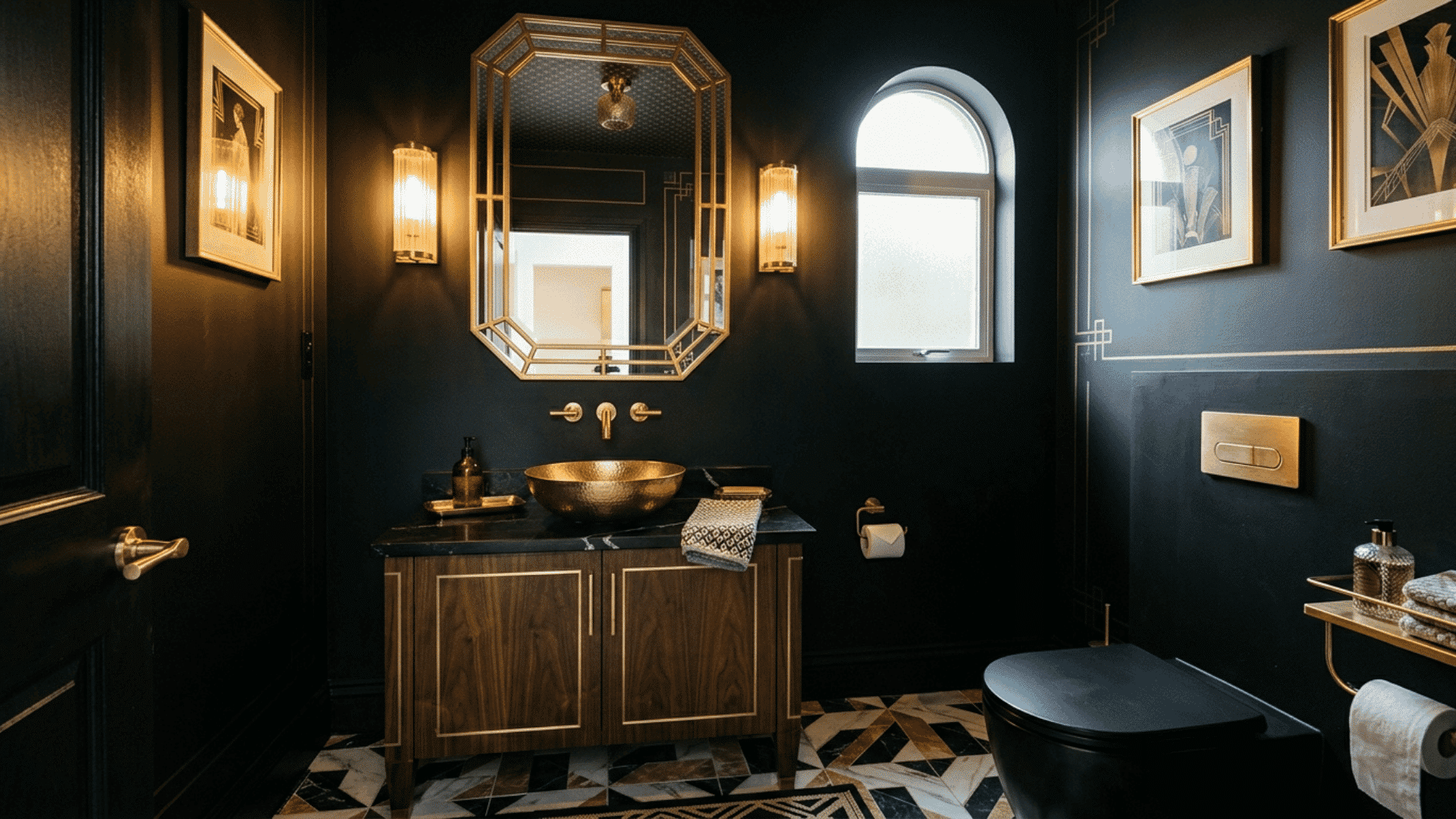
This combination works well in a powder room or small bathroom where contrast can stand out clearly. Dark walls paired with gold fixtures can be used around vanities and mirrors to define the space.
It helps smaller areas feel intentional without adding too many elements.
3. Channel-Tufted Velvet Seating
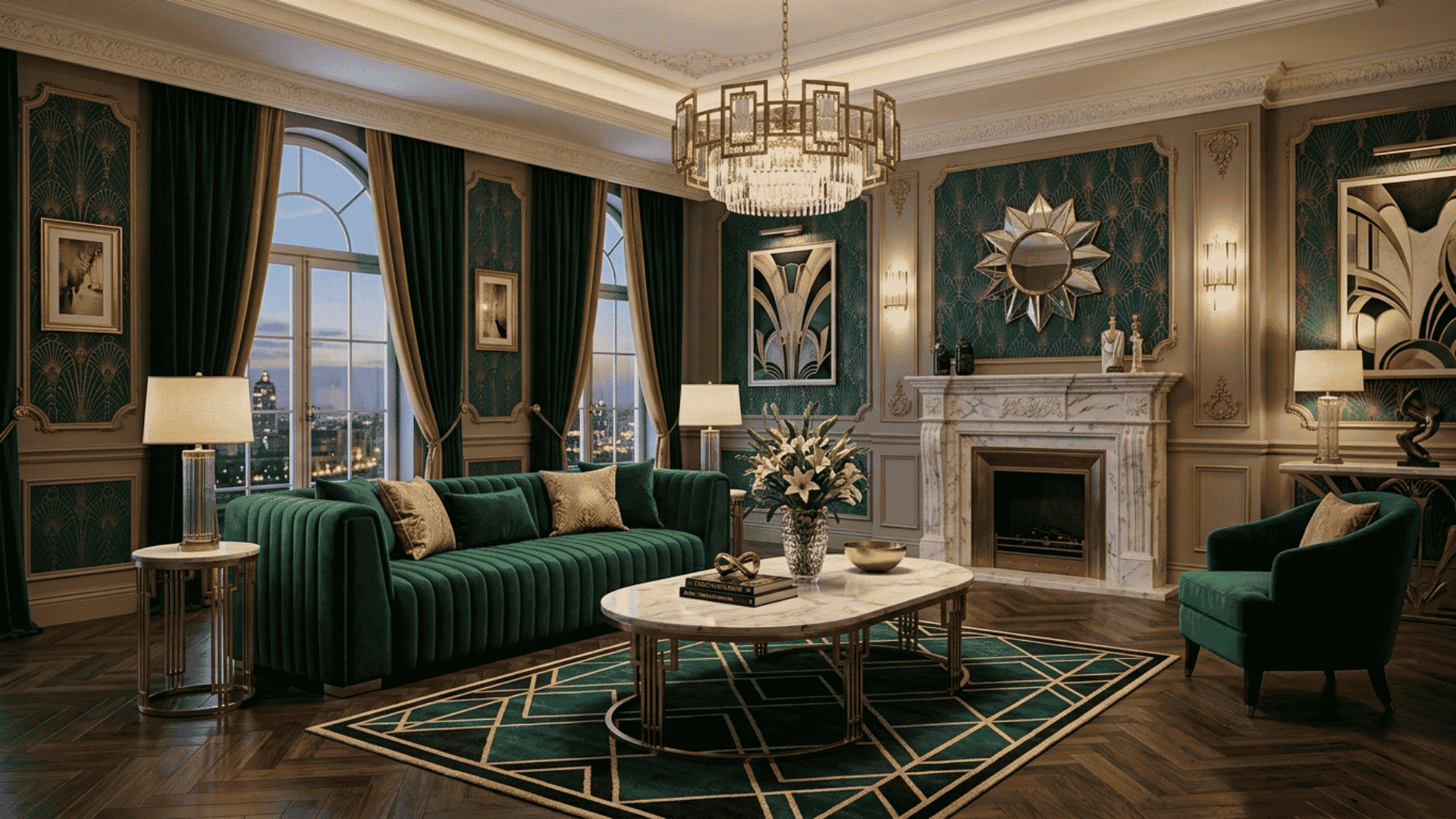
This seating style works well in a formal living room where texture and structure both play a role. It can be placed as a central sofa or chair to anchor the seating layout clearly.
Vertical tufting helps maintain a clean and controlled visual rhythm. Using deeper tones helps highlight the texture without adding extra decor.
4. Statement Sunburst Mirrors
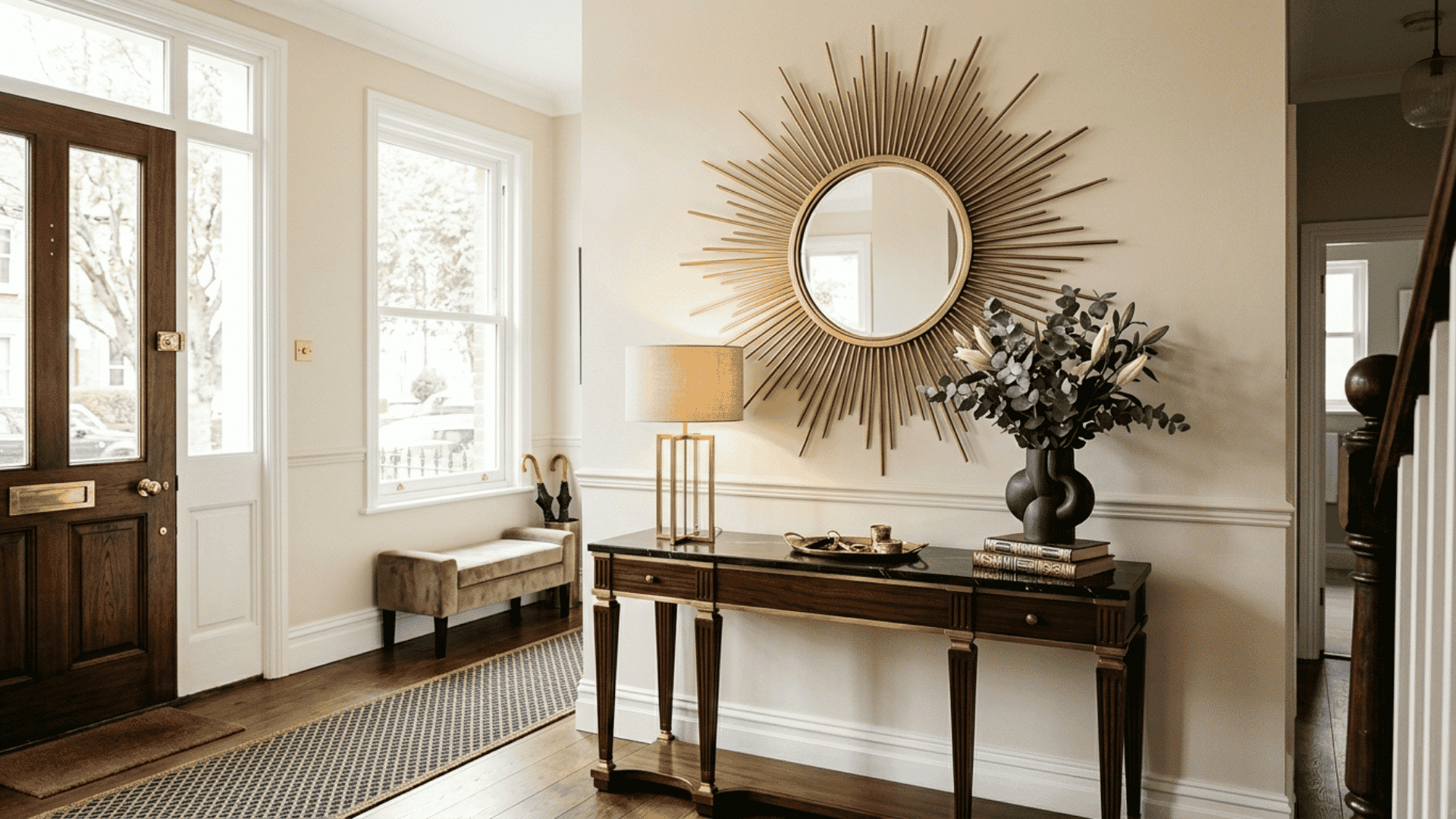
This element works well in an entryway or hallway where a strong focal point is needed. It can be mounted above a console or centered on a wall to evenly reflect light.
The radiating form helps create balance without adding extra decor.
5. High-Gloss Lacquered Surfaces
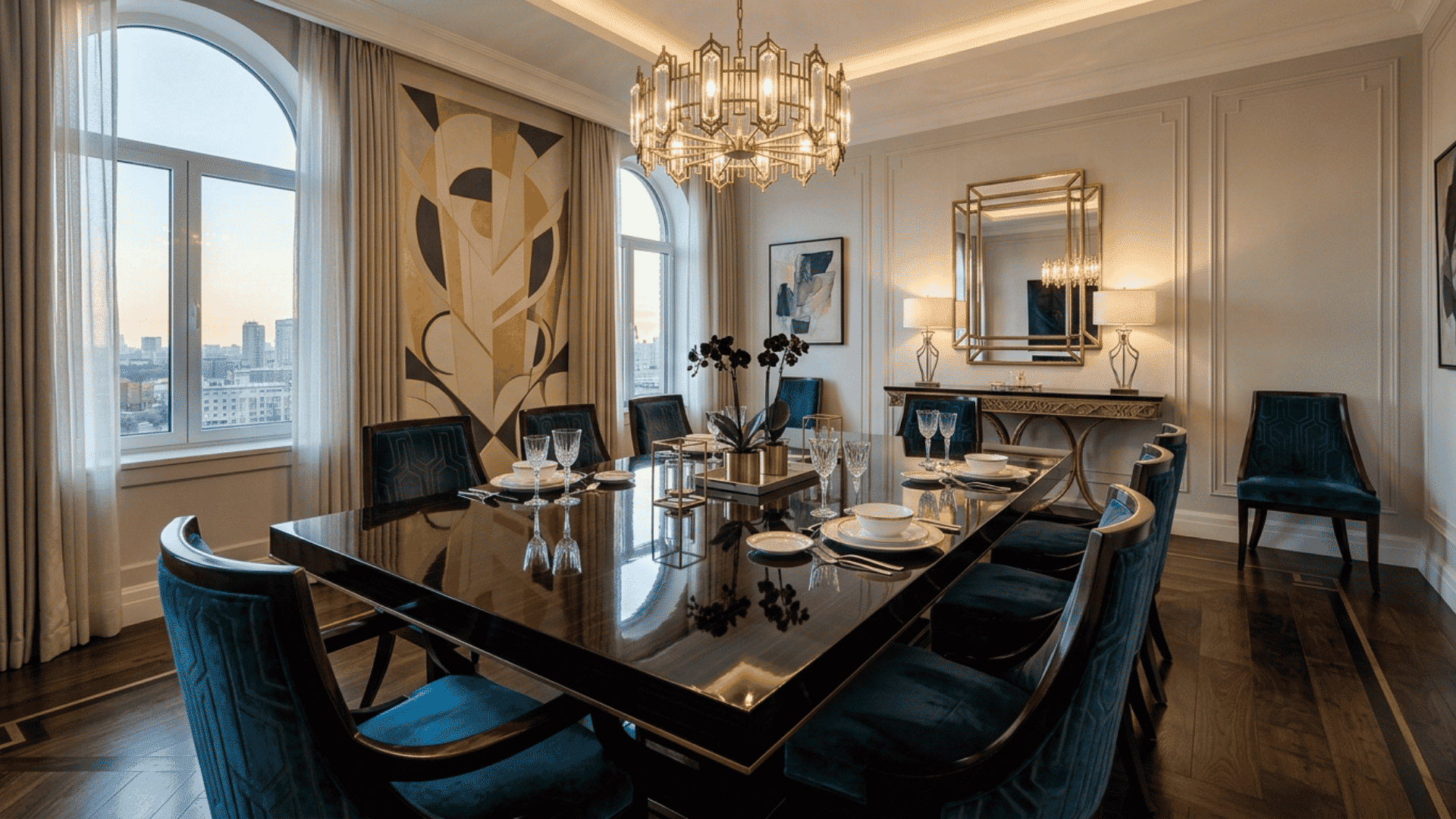
This art deco decor element works well in a dining room where surfaces can reflect light clearly. Glossy finishes can be applied to tables or cabinets to enhance brightness throughout the space.
It helps maintain a clean look while keeping the overall setting visually sharp.
6. White Marble and Brass Fixtures
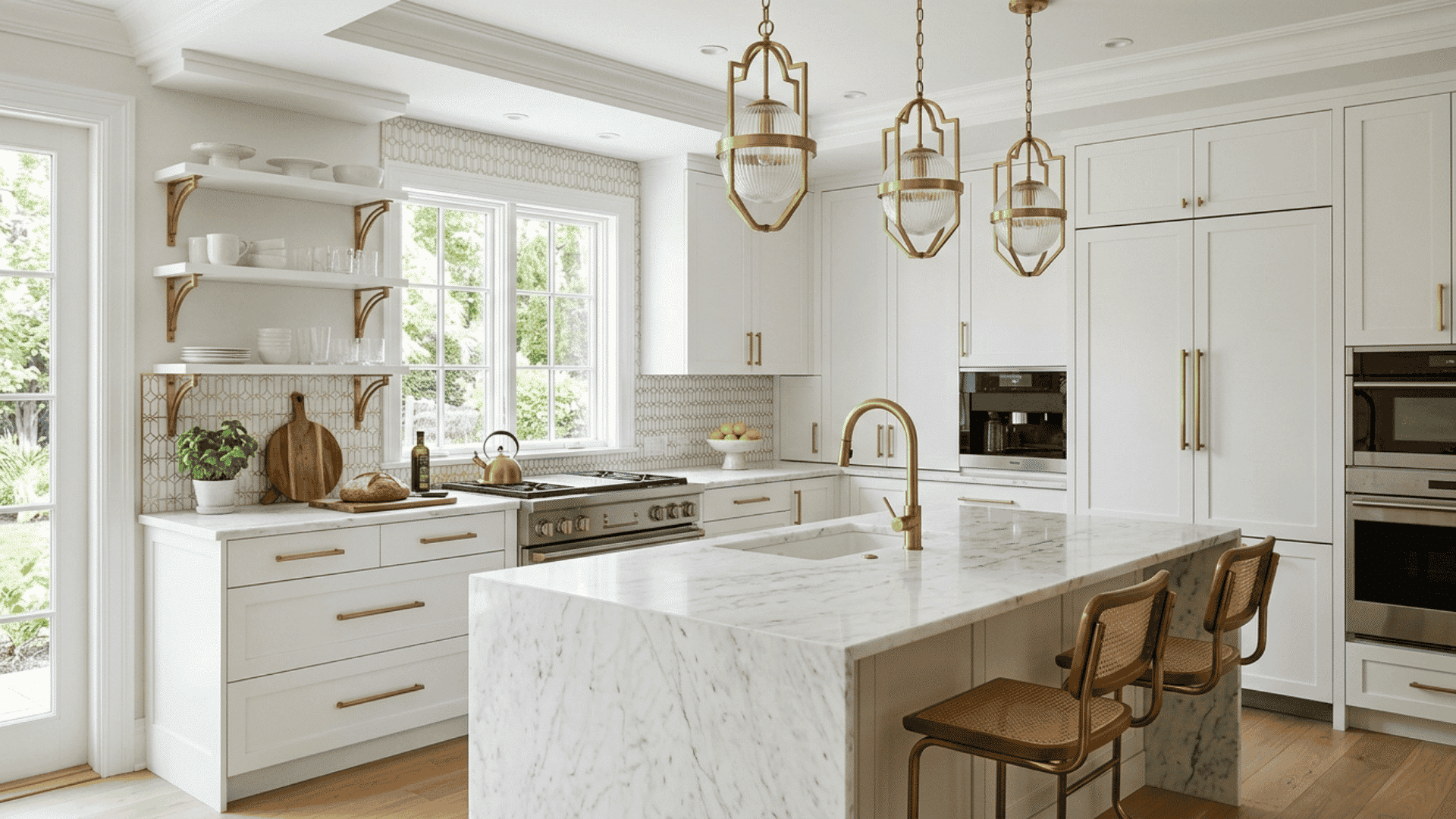
This combination works well in a kitchen where materials can create a clear visual contrast.
Marble surfaces paired with brass accents can be added to countertops and hardware for balance. It helps maintain structure while keeping the overall setting visually clean.
7. Symmetrical Architectural Layouts
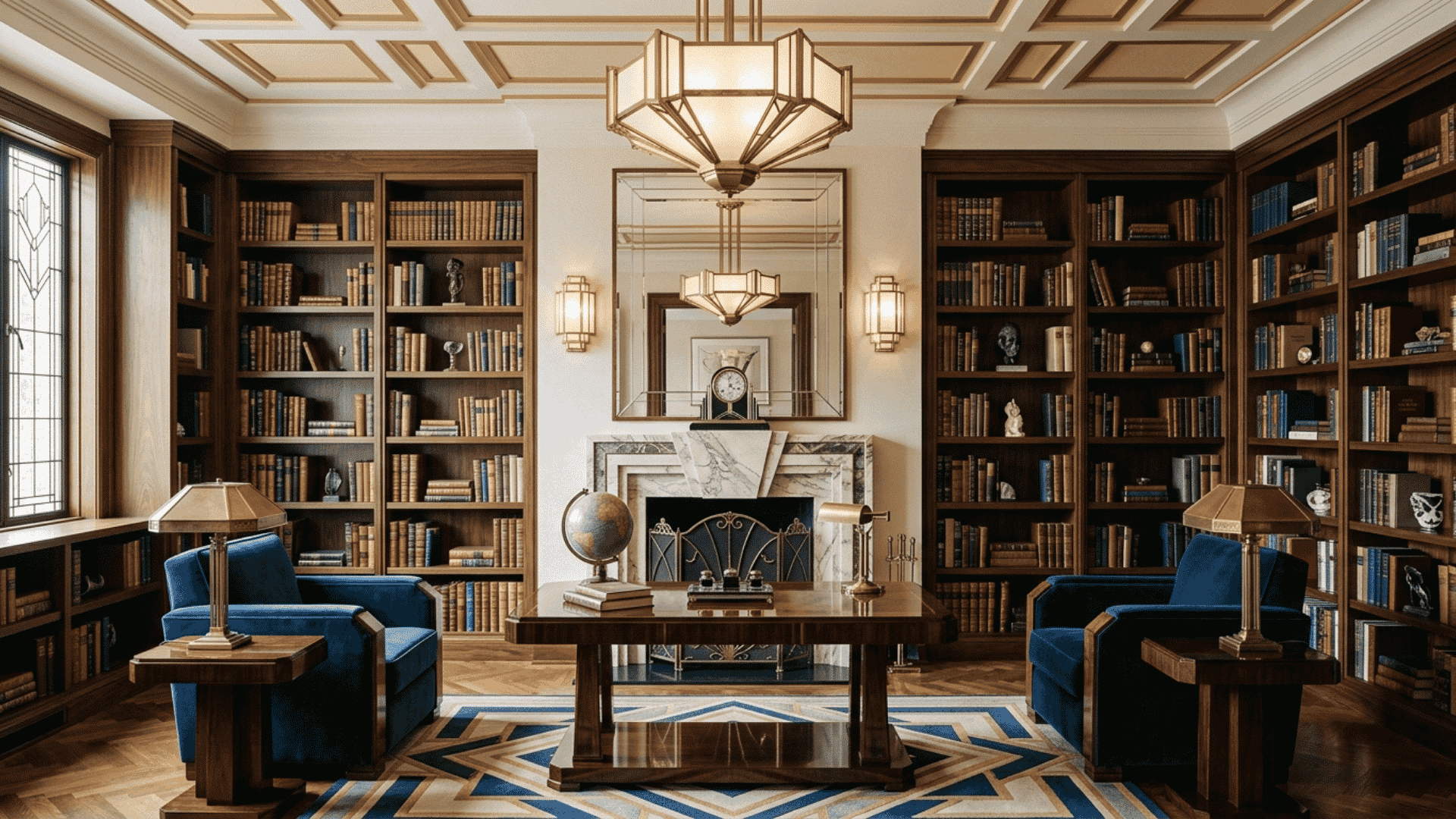
This layout works well in a home library or study, where balance can clearly shape the space. Matching shelves and seating can be arranged on both sides to create a structured layout.
It helps the room feel organized while keeping the design visually consistent. Keeping equal spacing between elements improves the overall visual flow.
8. Tiered Lighting
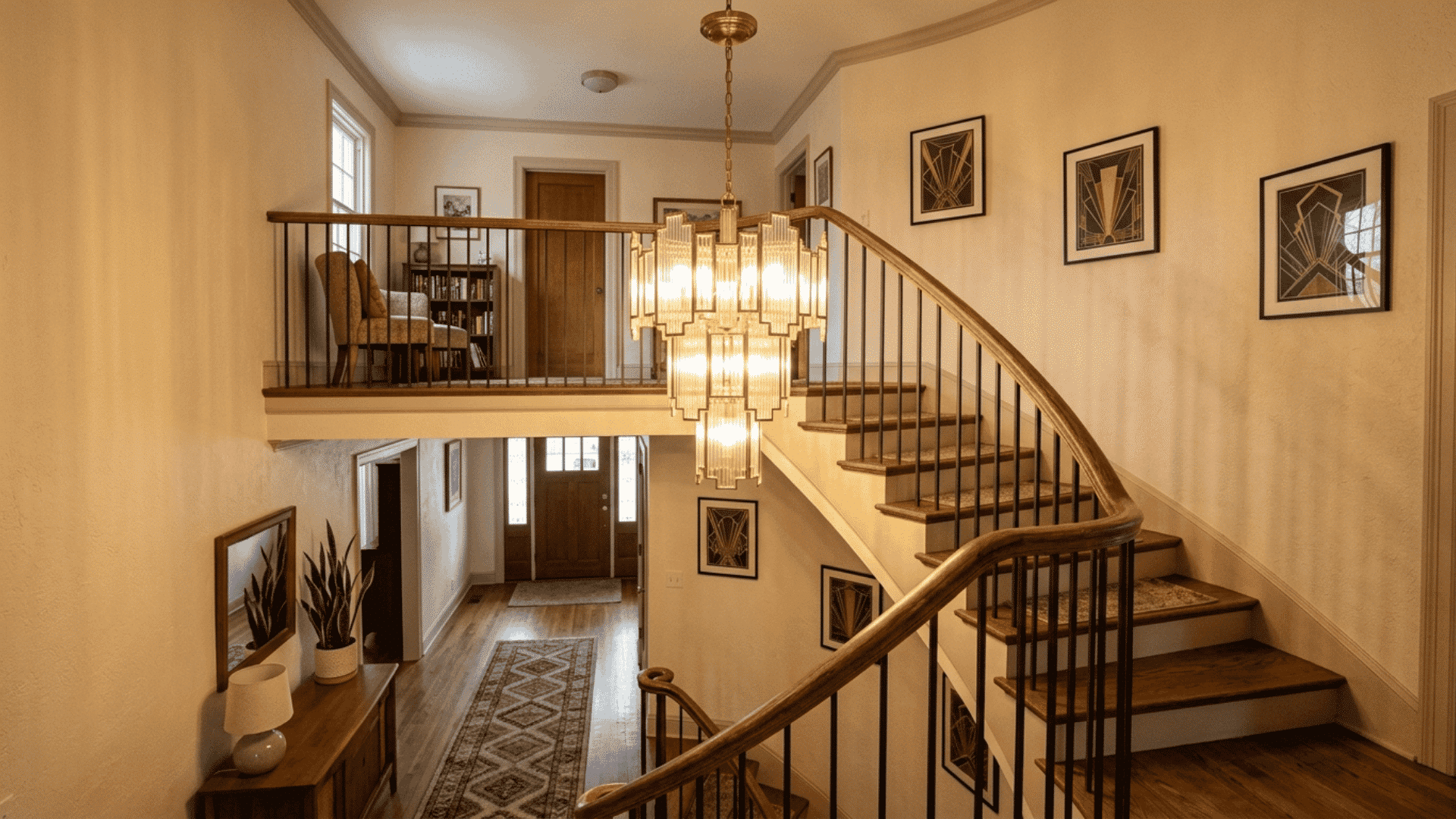
This lighting style works well in staircases or tall entryways where height needs to be emphasized. Layered fixtures can be placed centrally to draw the eye upward across levels.
It helps create a strong vertical focus while evenly spreading light.
9. Monochromatic Checkered Flooring
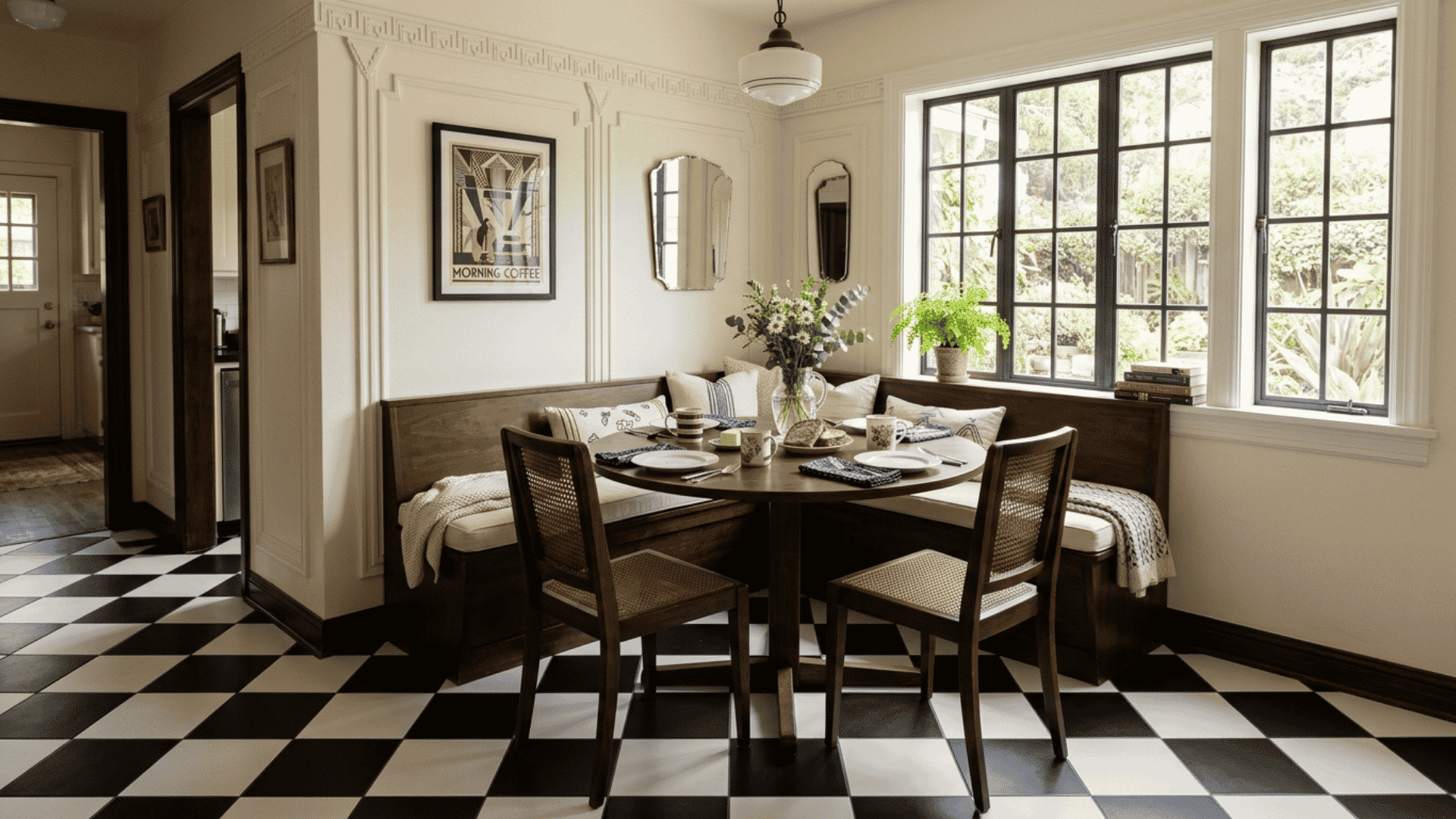
This art deco interior design element works well in a breakfast nook or kitchen where the flooring can stand out clearly. Black-and-white patterns can be applied across open floor areas to define the layout.
It helps keep surrounding elements simple and visually balanced.
10. Metallic Trimmed Wall Paneling
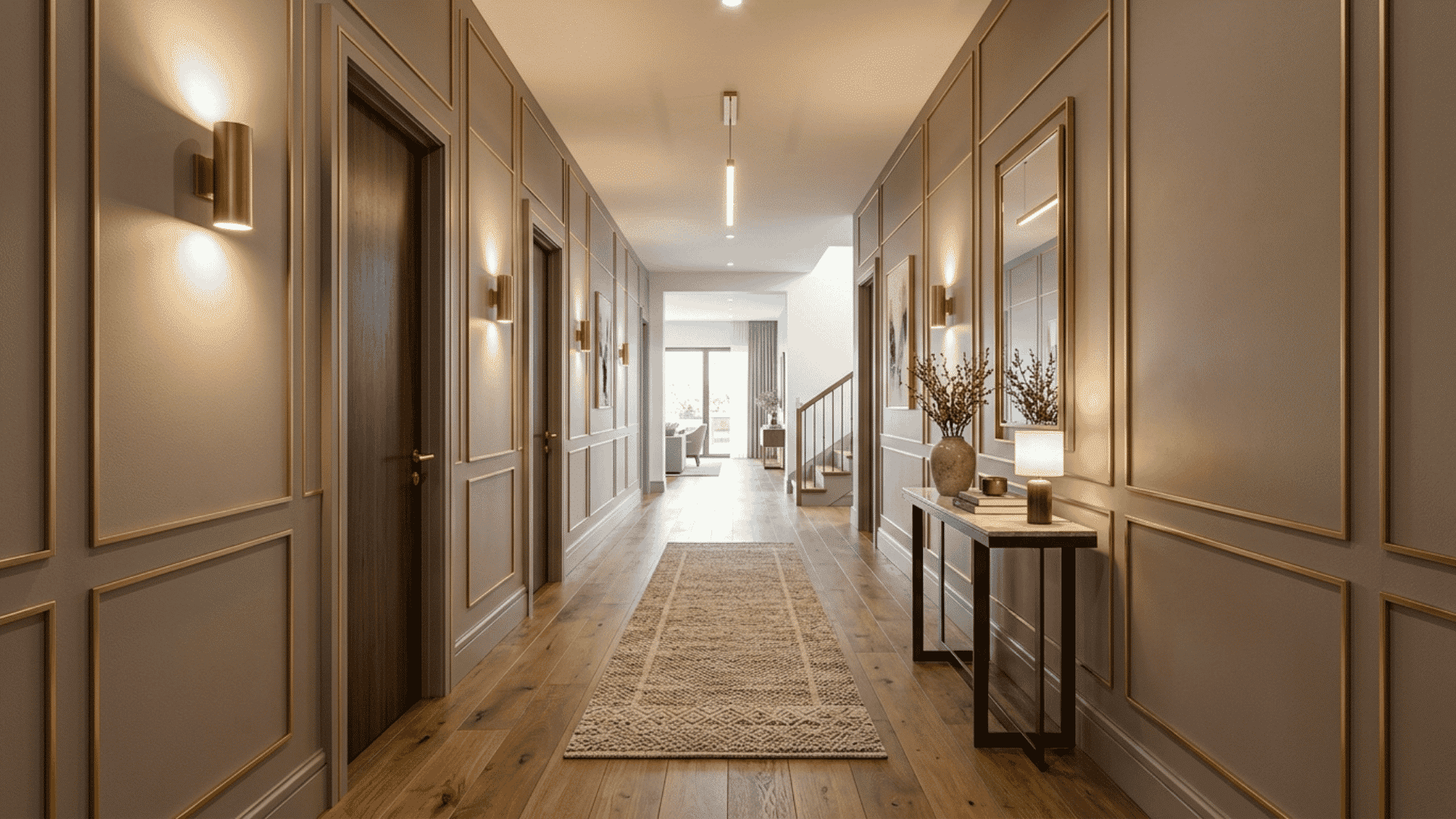
This feature works well in hallways where walls need added structure and definition. Thin metallic borders can be applied to divide wall surfaces into clean sections.
It helps add depth while keeping the overall look controlled and visually consistent. Maintaining equal spacing between panels creates a more refined, balanced finish.
11. Mirrored Vanity Furniture
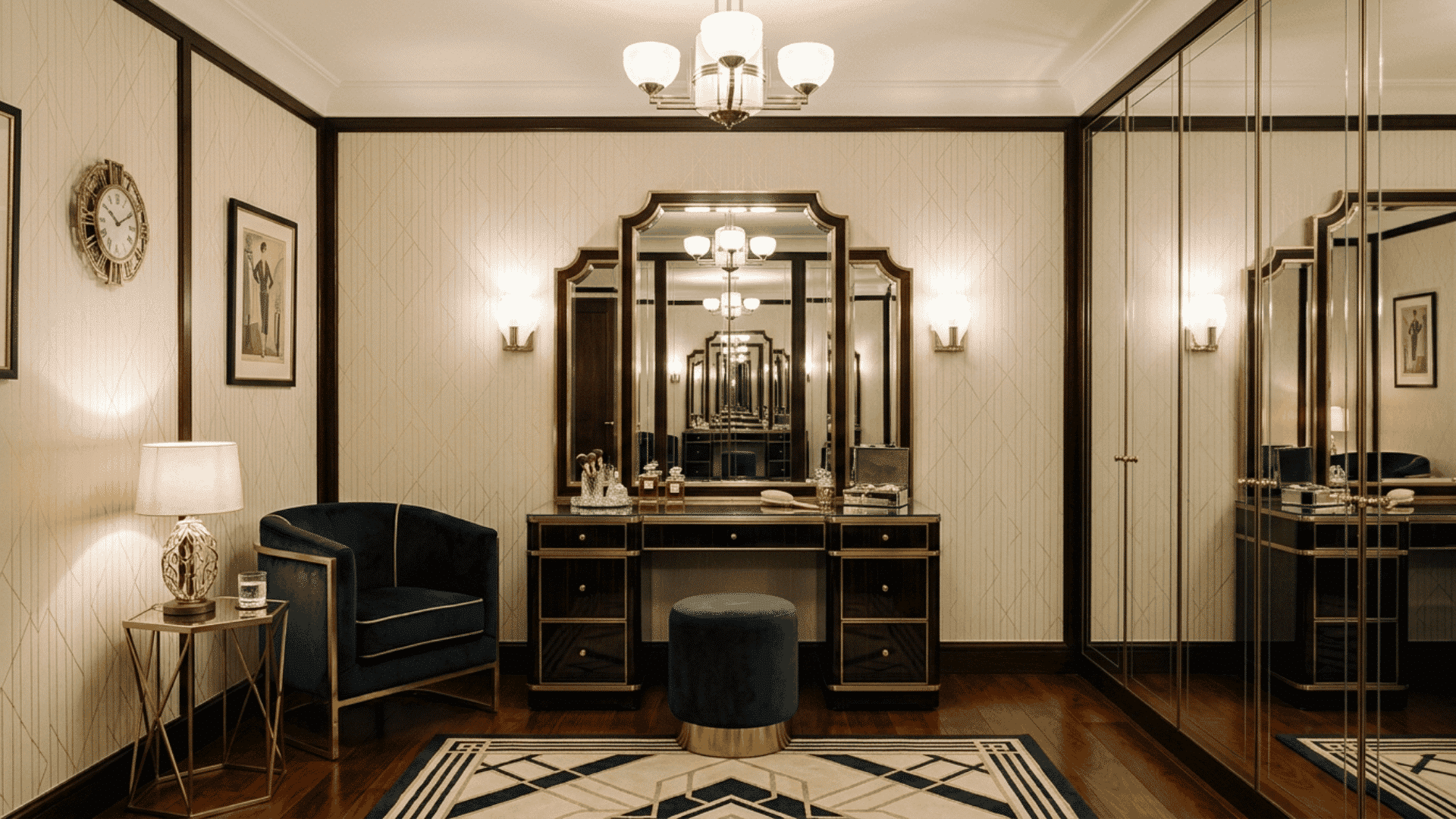
This setup works well in a dressing room or bedroom where reflection can open up the space. Mirrored surfaces can be used on vanities or storage units to evenly reflect light.
It helps smaller areas feel larger while keeping the layout minimal. Placing it near a light source further enhances the reflective effect.
12. Polished Chrome Bar Accents
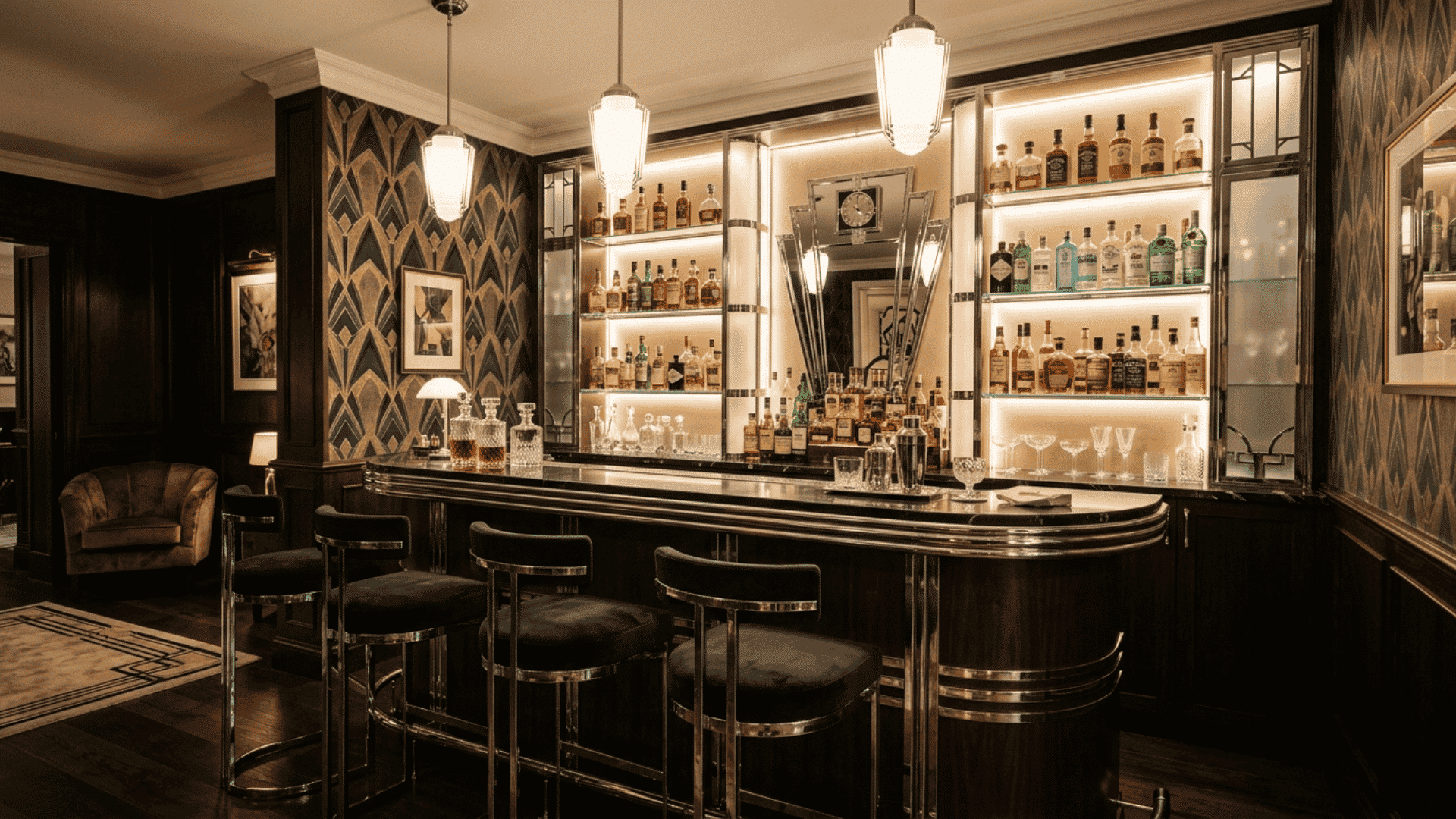
This art deco interior design element works well in a home bar where reflective finishes can stand out clearly. Chrome accents can be added to shelving and fixtures to enhance brightness and contrast.
It helps maintain a clean look while keeping the setup visually sharp.
13. Scalloped and Shell-Shaped Silhouettes
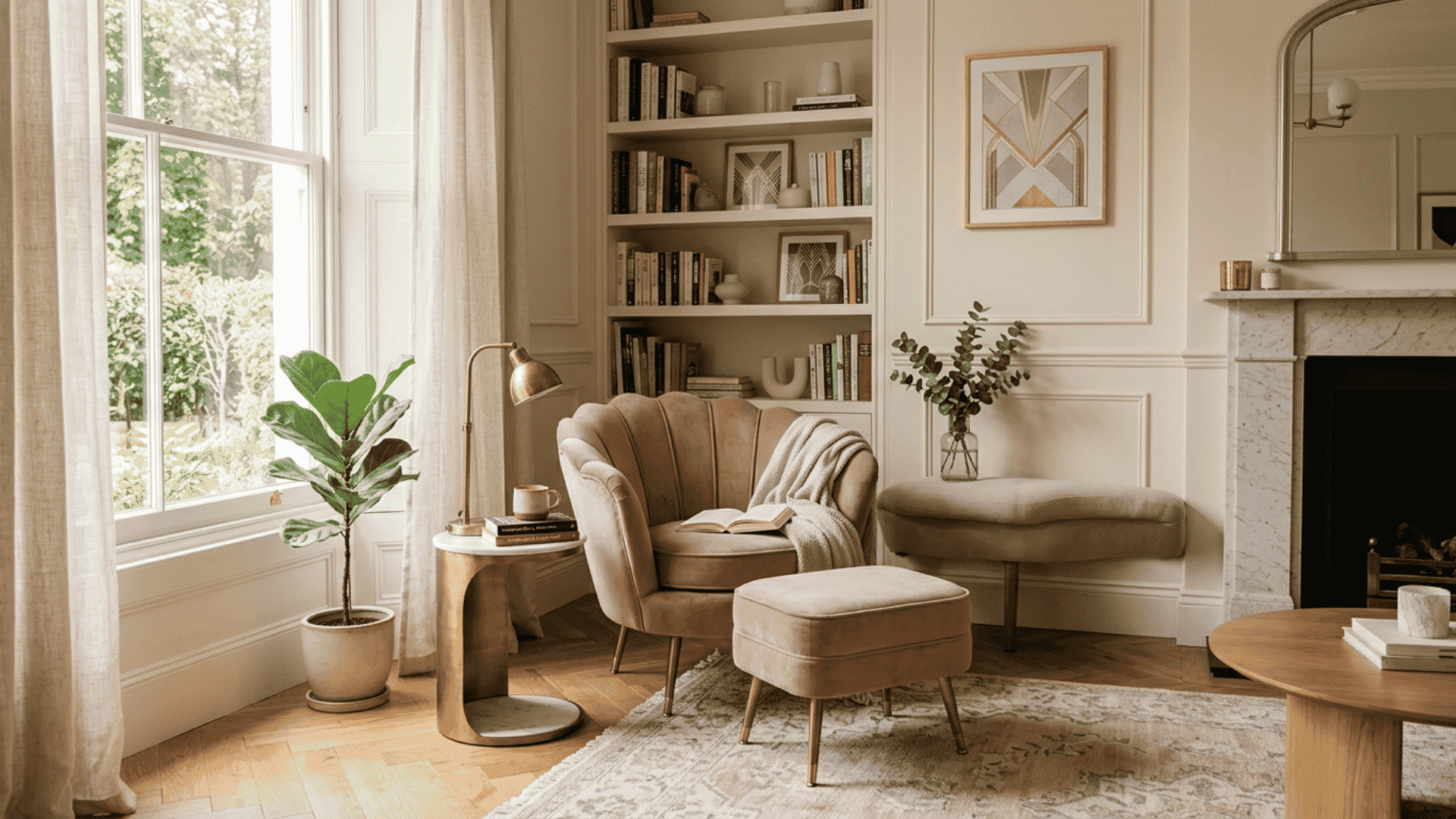
This feature works well in a reading nook or bedroom where softer forms can balance strong lines. Curved shapes can be added through chairs or headboards to soften the layout.
It helps create a relaxed feel while maintaining the style.
14. Intricate Parquet Wood Flooring
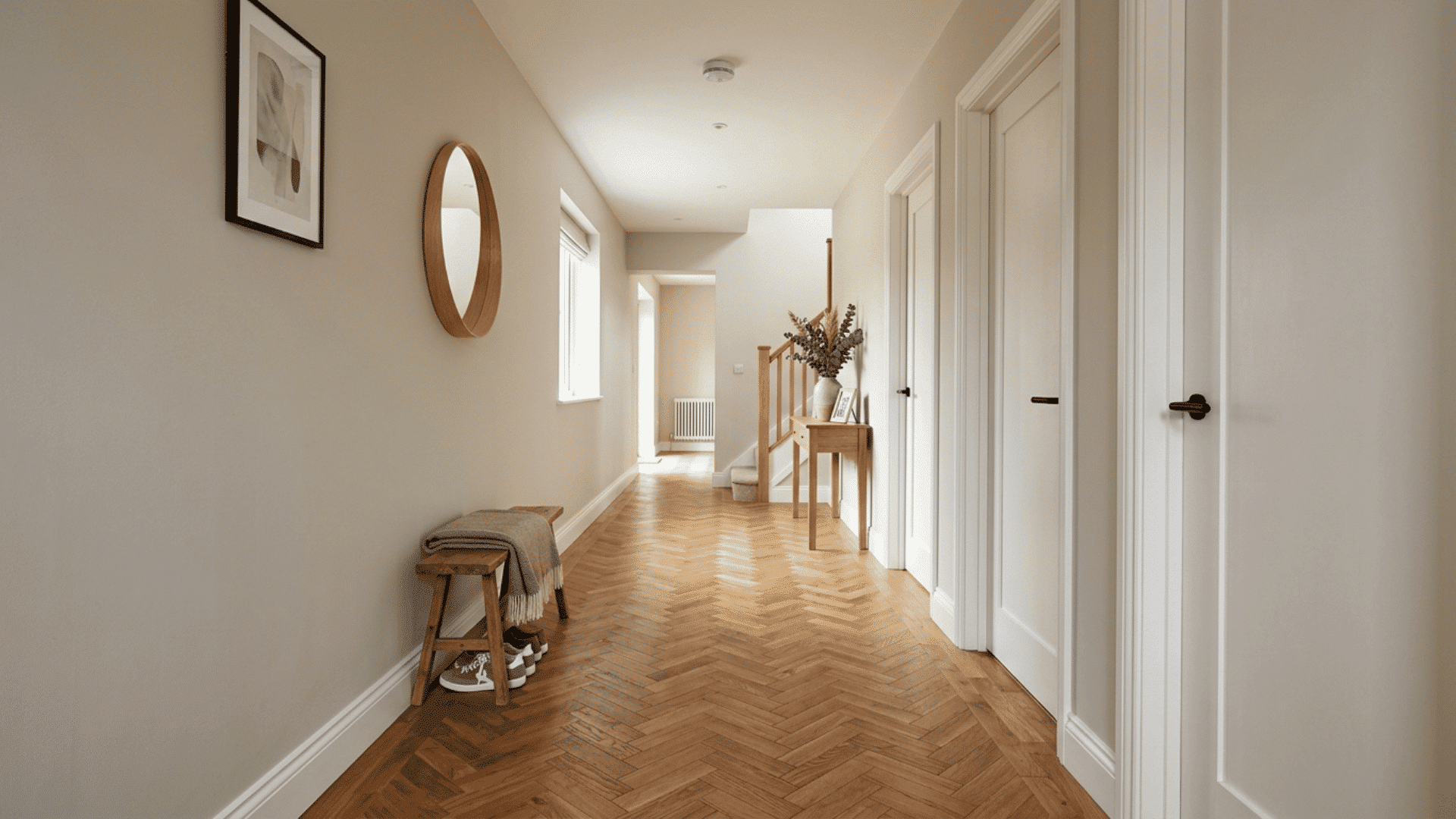
This element works well in a corridor or gallery space where the flooring can guide movement clearly. Patterned wood layouts can be applied across long spaces to add subtle texture.
It helps define the area while keeping the overall setting grounded. Consistent pattern direction helps maintain a clean visual flow.
15. Layered Silk and Faux-Fur Textiles
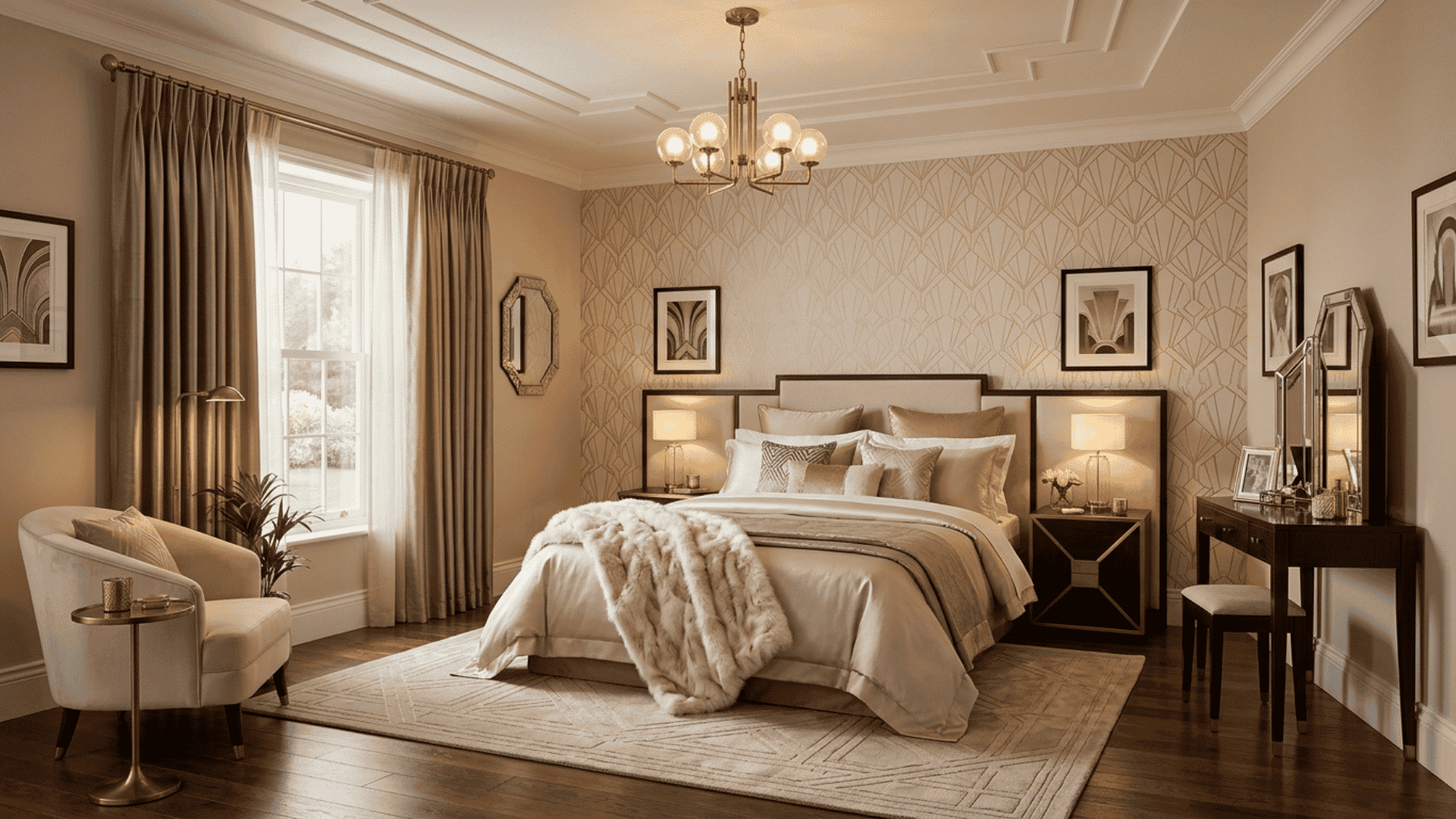
This combination works well in a guest bedroom where texture can add depth and comfort. Layered fabrics can be used on bedding and throws to create contrast in the space.
It helps maintain a rich feel while keeping the layout visually balanced.
16. Streamlined Sculptural Statues
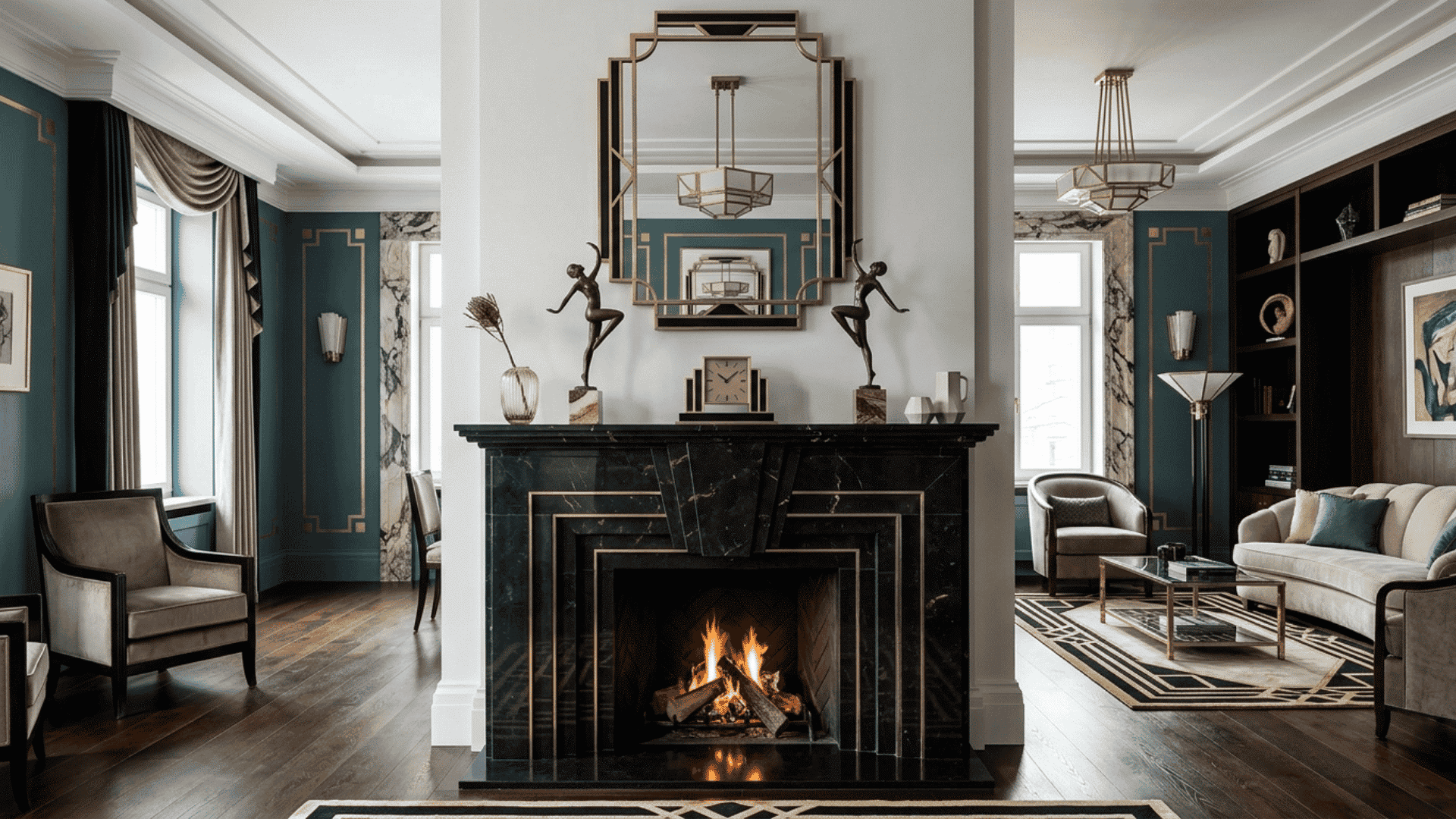
This feature works well on a fireplace mantel or console where decor can act as a focal point. Sculptural pieces can be placed centrally or in pairs to maintain balance.
It helps enhance the space while keeping the overall look controlled.
17. Vintage Graphic Poster Art
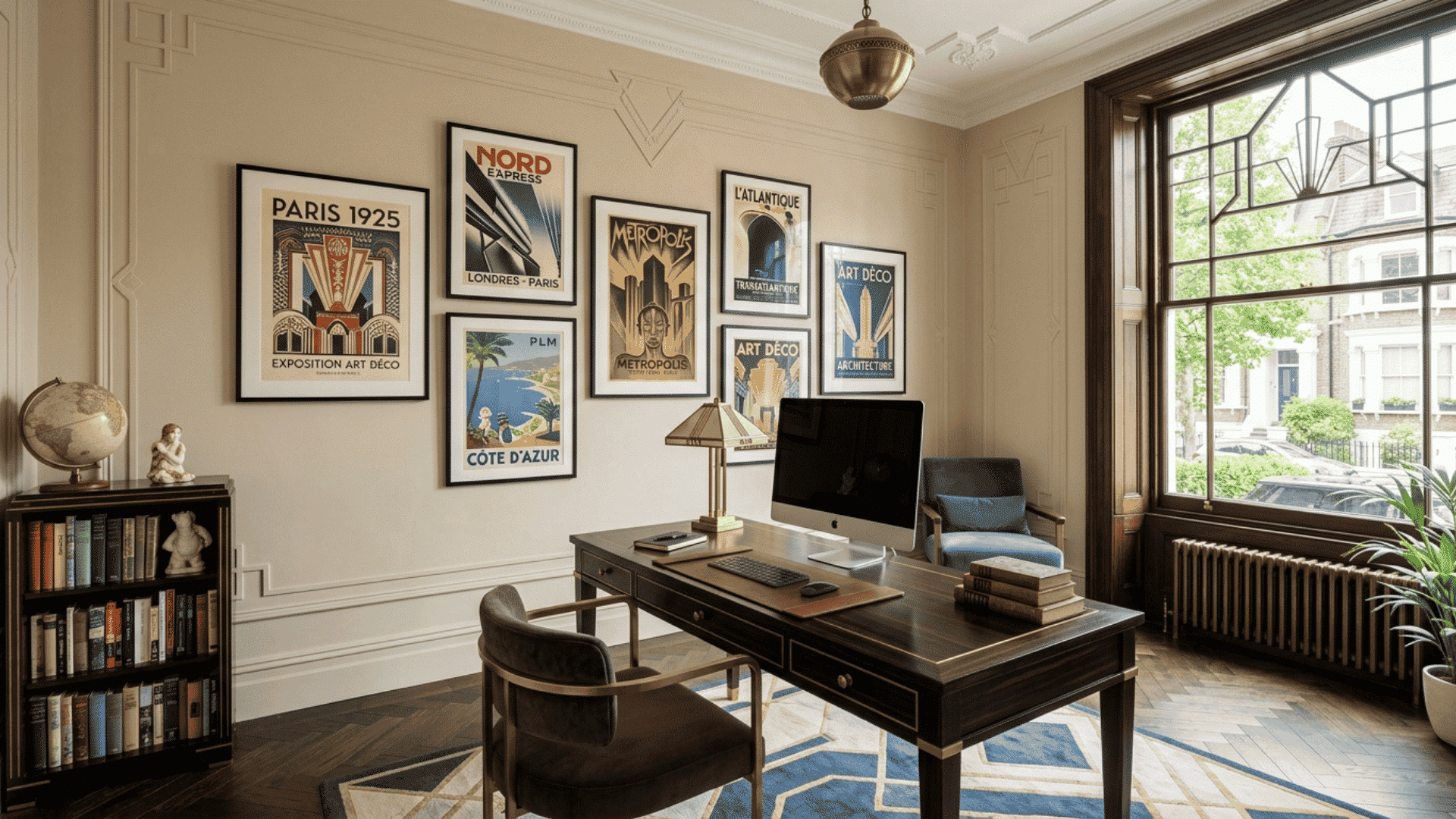
This art deco decor element works well in a home office where wall visuals can stand out clearly. Graphic posters can be framed and arranged on plain walls to define the space.
It helps maintain structure while adding visual contrast to the room. Keeping spacing even between frames improves the overall arrangement.
Note: For a broader take on mixing vintage wall art into evergreen spaces, see modern colonial interior design for classic homes.
Art Deco Vs Art Nouveau: Understanding the Stylistic Shift
Art Deco and Art Nouveau are often grouped together, but they differ clearly in structure, materials, and visual direction. The comparison below shows how each style approaches form and detail differently:
| Feature | Art Deco | Art Nouveau |
|---|---|---|
| Design Approach | Structured and based on geometry | Organic and inspired by natural forms |
| Line Style | Sharp angles and symmetry | Flowing curves and asymmetry |
| Materials Used | Chrome, glass, marble, lacquered wood | Wood, stained glass, ceramic |
| Visual Focus | Contrast and repetition | Movement and decorative detail |
| Furniture Style | Defined shapes with smooth curves | Intricate forms with flowing lines |
| Color Direction | High contrast and deep tones | Soft, muted tones |
| Overall Feel | Balanced and bold | Fluid and expressive |
Small Details that Can Change the Overall Look in Your Space
Even well-planned spaces can feel slightly off when certain details are not handled with care. Paying attention to these small aspects helps maintain clarity and balance throughout the space:
- Too Many Focal Points: When several bold elements compete, the space can feel scattered instead of visually clear and structured.
- Ignoring Room Scale: Furniture or finishes that do not match the size of the space can disrupt the overall balance.
- Uncoordinated Finishes: Mixing metals, woods, and surfaces without a clear direction can break the visual flow.
- Lack of Open Space: Filling every corner can reduce the impact of key elements and make the layout feel crowded.
- Flat Lighting Choices: Inconsistent or weak lighting can reduce depth and limit how materials reflect and stand out.
Final Thoughts
Art deco interior design becomes effective when each element is placed with clarity rather than excess. The ideas covered above show how different rooms can carry this style without losing balance or function.
From materials to layout choices, Art Deco decor works best when there is a clear visual direction. It is not about adding more, but about selecting what fits the space and keeping it consistent.
In the end, Art Deco works best when it feels deliberate yet striking.
With the right balance, you can create a space that is both polished and visually engaging, where every detail contributes to a strong, lasting impression.

With a Master in Architectural Studies from University of Pennysylvania, Marwa Haydar has pioneered living spaces since 2005. Her expertise, initially honed in a prestigious architectural firm, is evident in her approach to creating environments. Marwa became part of our team in 2019 and has since been a driving force in our home improvement section, known for her practical yet stylish solutions. She’s been spearheading our design workshops since then, infusing her passion for teaching into her work. In her leisure time, Marwa enjoys exploring historic architecture and is an enthusiastic pottery hobbyist, further enriching her understanding of form and texture.