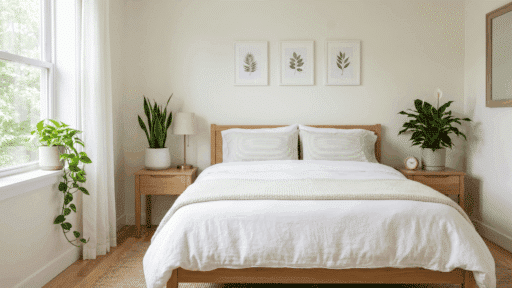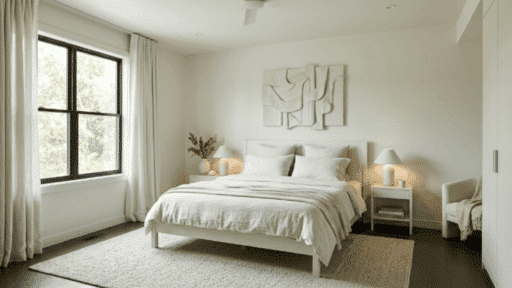
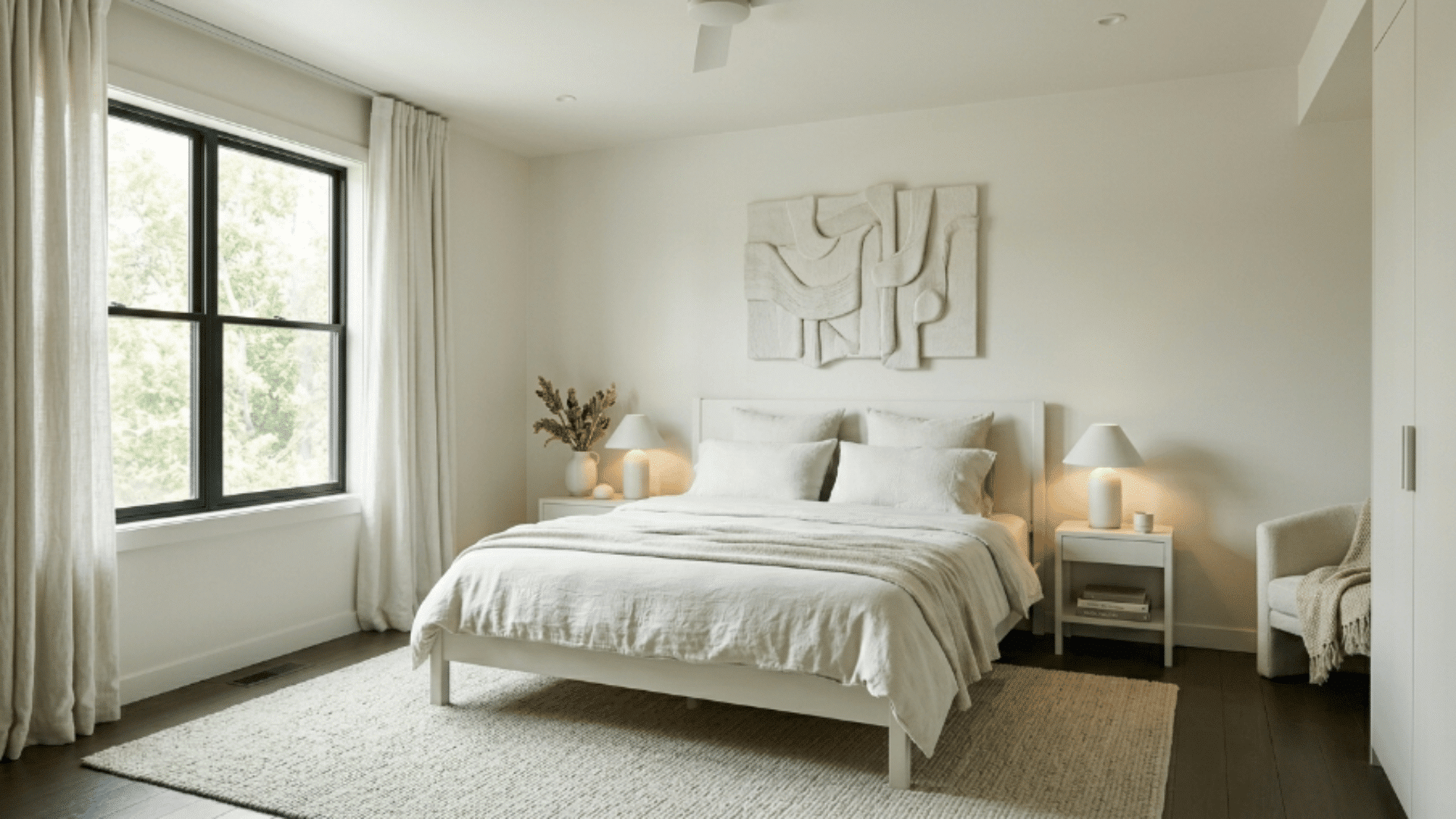

A color-drenching bedroom might look bold at first, but it’s actually one of the easiest ways to create a calm, cohesive space.
Instead of mixing multiple shades, you stick to one color and carry it across walls, ceiling, and decor, and that’s where the magic happens.
If you’ve been searching for practical color-drenching bedroom ideas or wondering how to color-drench a bedroom without overdoing it, you’re in the right place.
What is Color Drenching in a Bedroom?
Color drenching in a bedroom means using one main color across most surfaces, walls, ceiling, trim, and even furniture, to create a unified look.
If you’re wondering how to color-drench a bedroom, the key is to avoid breaking the space with contrasting shades. Instead, everything flows together, which makes the room feel more connected and intentional.
Unlike accent walls, where one wall stands out, color drenching avoids sharp contrasts. There’s no single focal wall; the entire room becomes the focus.
This approach reduces visual breaks, making the space feel smoother.
Color Drenching Bedroom Ideas You Should Know About
Some colors feel calm and open, while others create a cozier or bolder space. The key is to use one color consistently and build around it. Here are ideas to help you see what works and how to apply them:
1. Soft Beige Bedroom
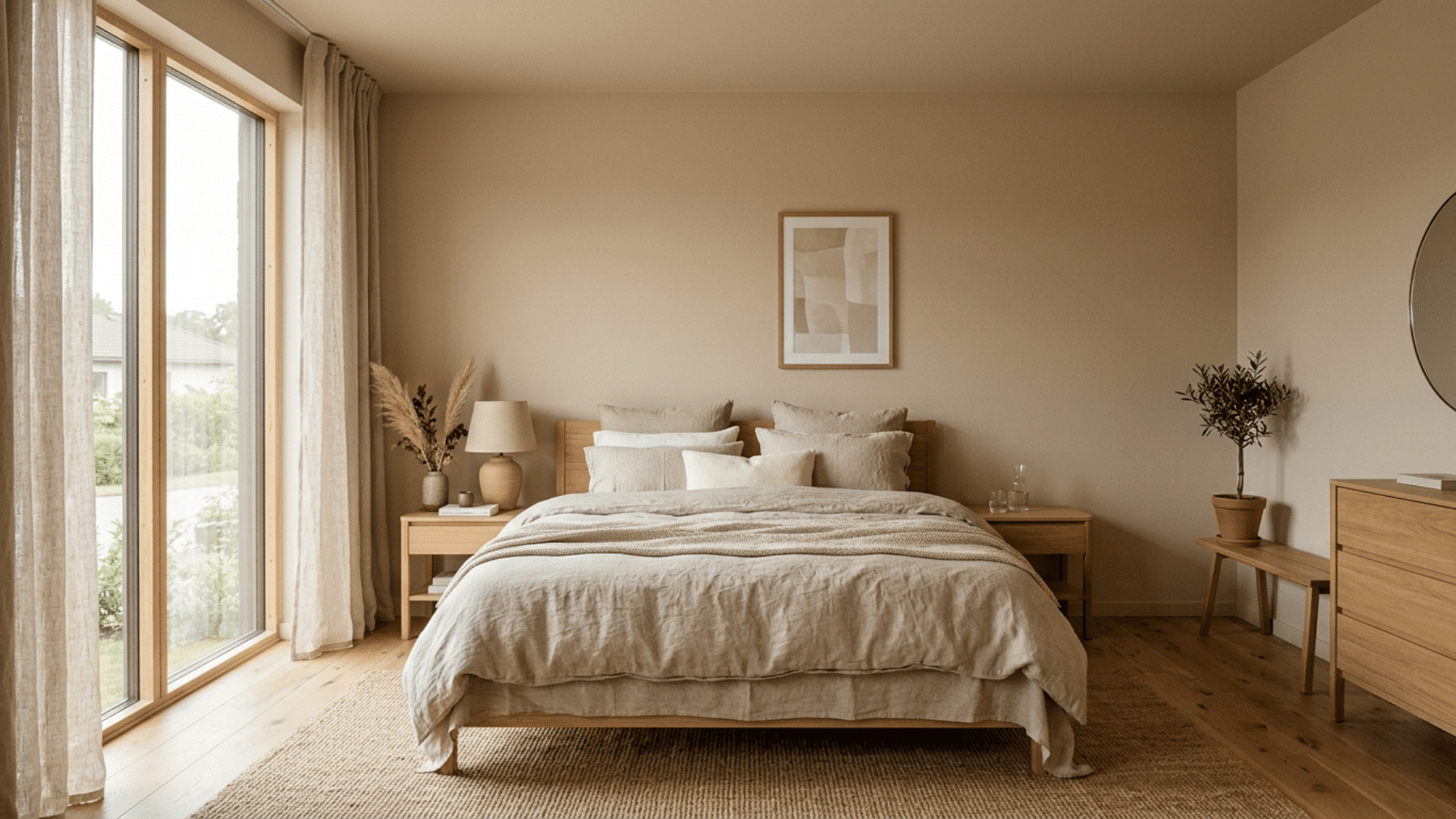
A soft beige bedroom creates a calm and neutral space that feels easy to live in. It doesn’t demand attention, but it quietly makes the room feel more open and settled.
This kind of setup works especially well in minimal interiors where too many colors can feel distracting.
How to do it:
- Use the same beige on walls, ceiling, and trim
- Add linen bedding in similar tones
- Choose light wood or neutral furniture
- Layer rugs and curtains in soft beige shades
- Keep decor simple and minimal
2. Deep Navy Bedroom
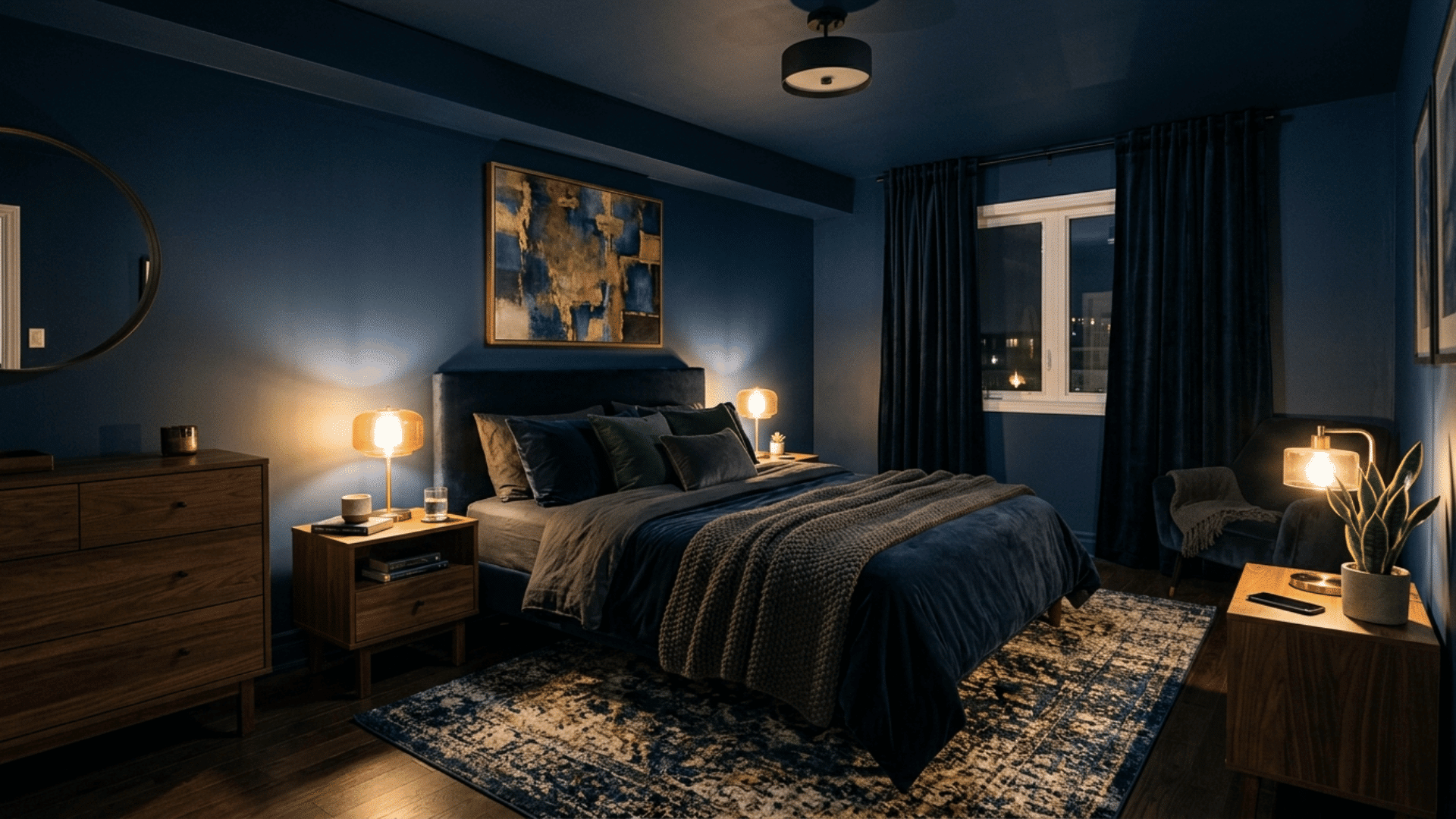
A deep navy bedroom feels cozy but also has a strong presence. It’s one of those colors that can make a space feel more enclosed in a good way, especially in larger rooms where lighter shades might feel too open.
Navy also works well at night, which makes it a solid choice for a bedroom setting.
How to do it:
- Paint the walls and ceiling in navy
- Use darker bedding and curtains
- Add warm lighting to soften the look
- Include minimal contrast in furniture
- Keep finishes matte for a softer effect
3. Sage Green Bedroom
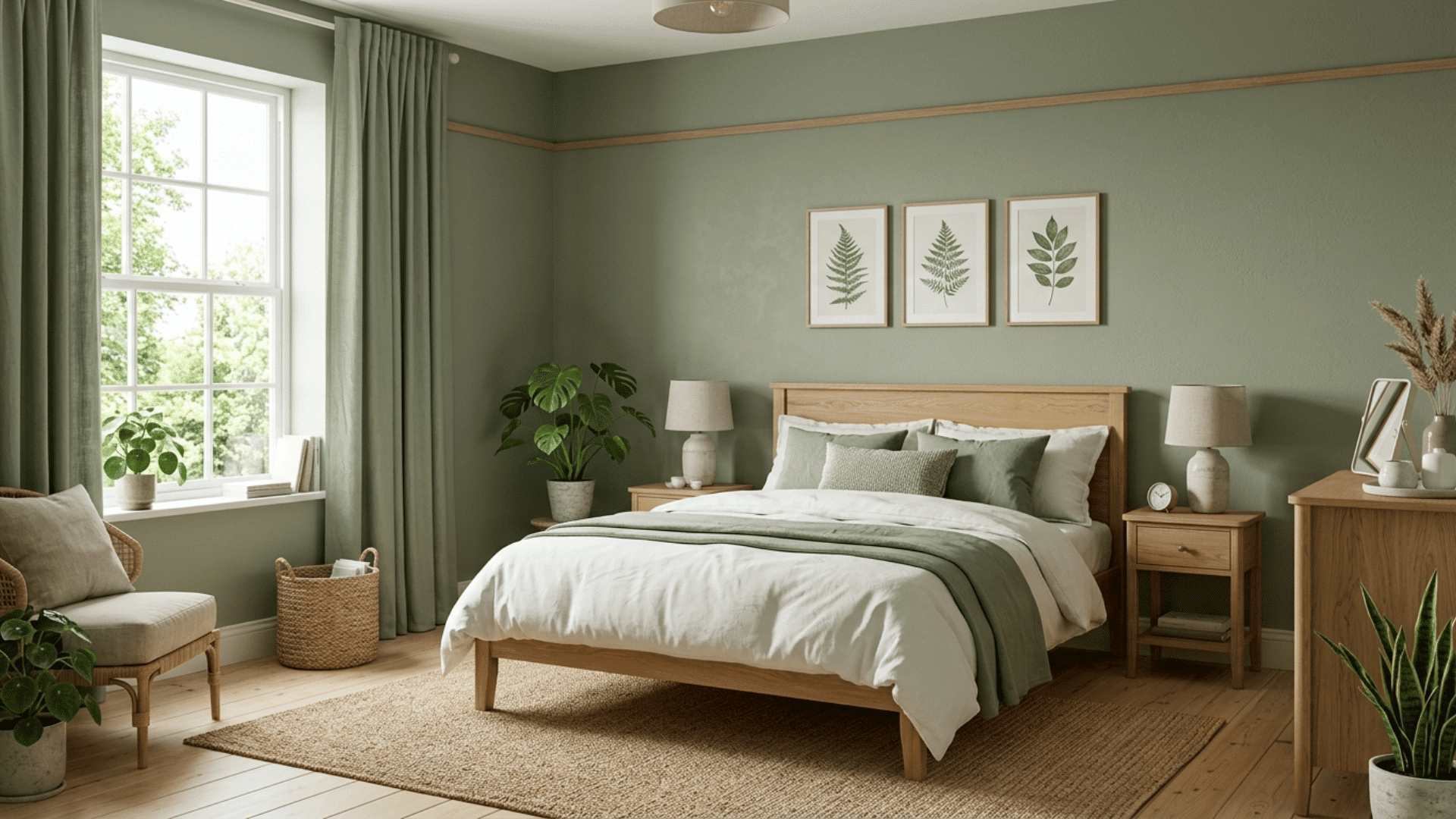
Sage green brings a natural and relaxed feel to the bedroom. It’s not too bold, which makes it easier to live with long-term.
The color falls somewhere between neutral and soft, so it works well for people who want something different without going too far. It also pairs easily with natural materials.
How to do it:
- Use sage green across all walls and trim
- Add curtains in matching tones
- Include wooden furniture for balance
- Use soft fabrics like cotton or linen
- Keep decor simple and nature-inspired
4. Warm Terracotta Bedroom
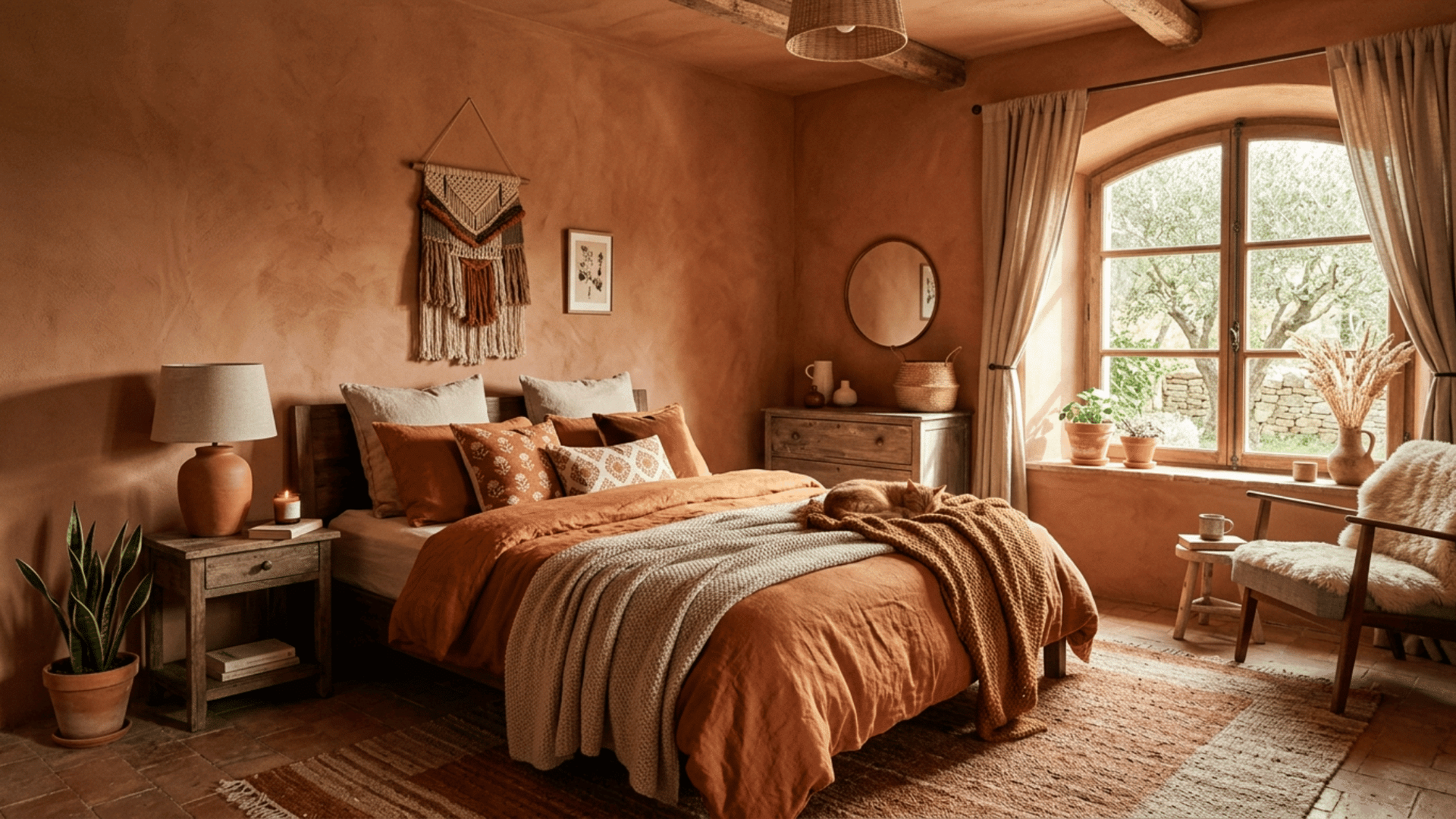
Terracotta adds warmth that feels grounded rather than bright. It gives the room a slightly earthy tone, which can make the space feel more comfortable and lived-in.
This works especially well in rooms that get a lot of natural light, as the color shifts slightly throughout the day.
How to do it:
- Apply terracotta on the walls and ceiling
- Use clay-toned bedding and rugs
- Add textured fabrics for depth
- Keep lighting warm
- Use minimal contrasting colors
5. Charcoal Grey Bedroom

Charcoal grey creates a clean and structured look without feeling too stark. It’s a good option if you want something modern but not overly bright.
The darker tone can also help hide minor wear over time, making it practical as well as visually appealing.
How to do it:
- Paint walls and ceiling charcoal
- Use matching or darker furniture
- Add soft lighting to avoid harshness
- Keep matte finishes
- Add subtle metallic elements
6. Dusty Pink Bedroom
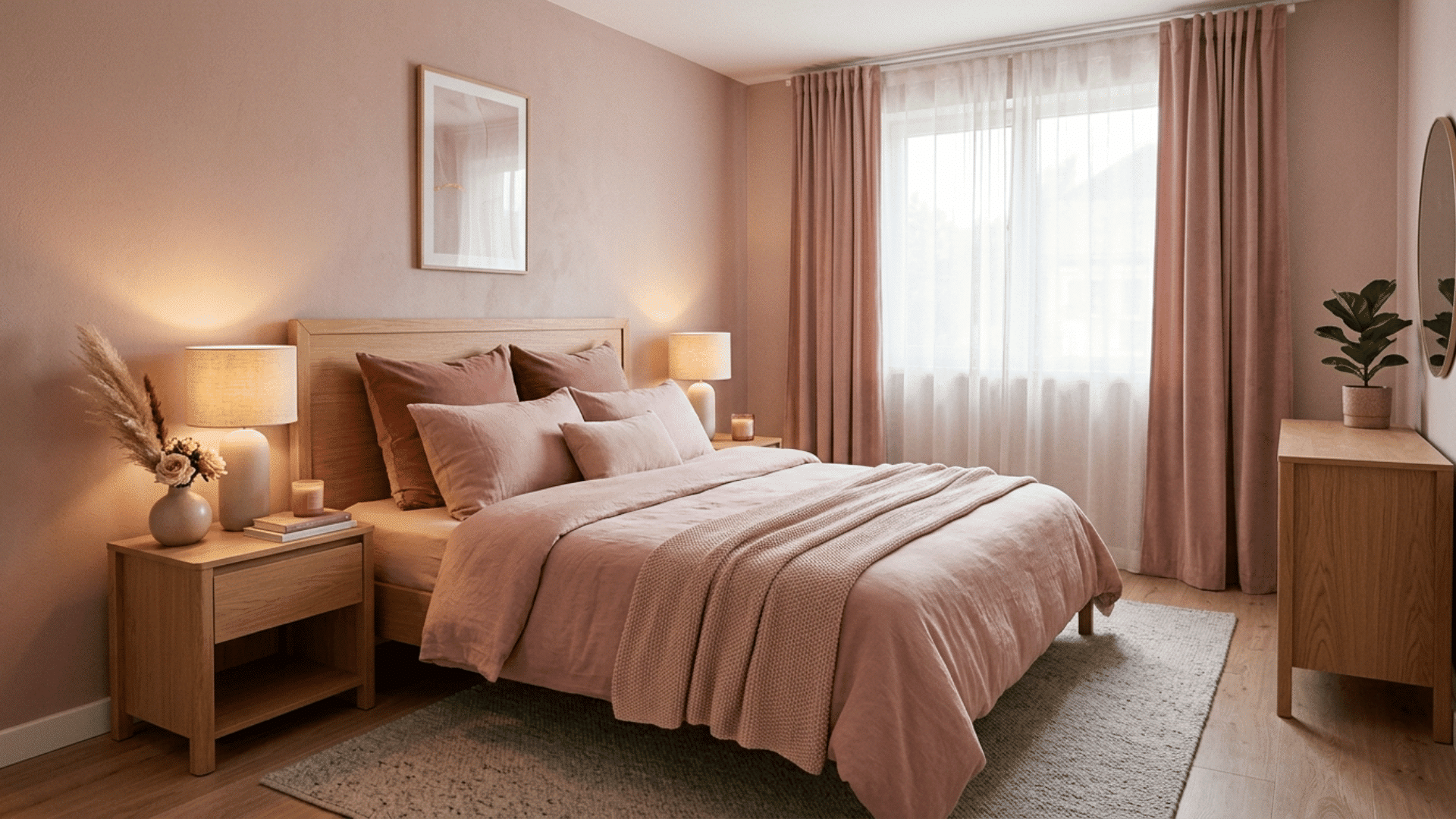
Dusty pink brings a soft warmth that doesn’t feel overwhelming. Unlike brighter pinks, this shade feels more muted and easier to balance across the room. It works well if you want a bit of color while still keeping the space calm.
How to do it:
- Use muted pink tones across walls
- Match bedding and curtains
- Keep furniture in similar shades
- Add soft textures
- Avoid strong contrasting colors
7. Forest Green Bedroom
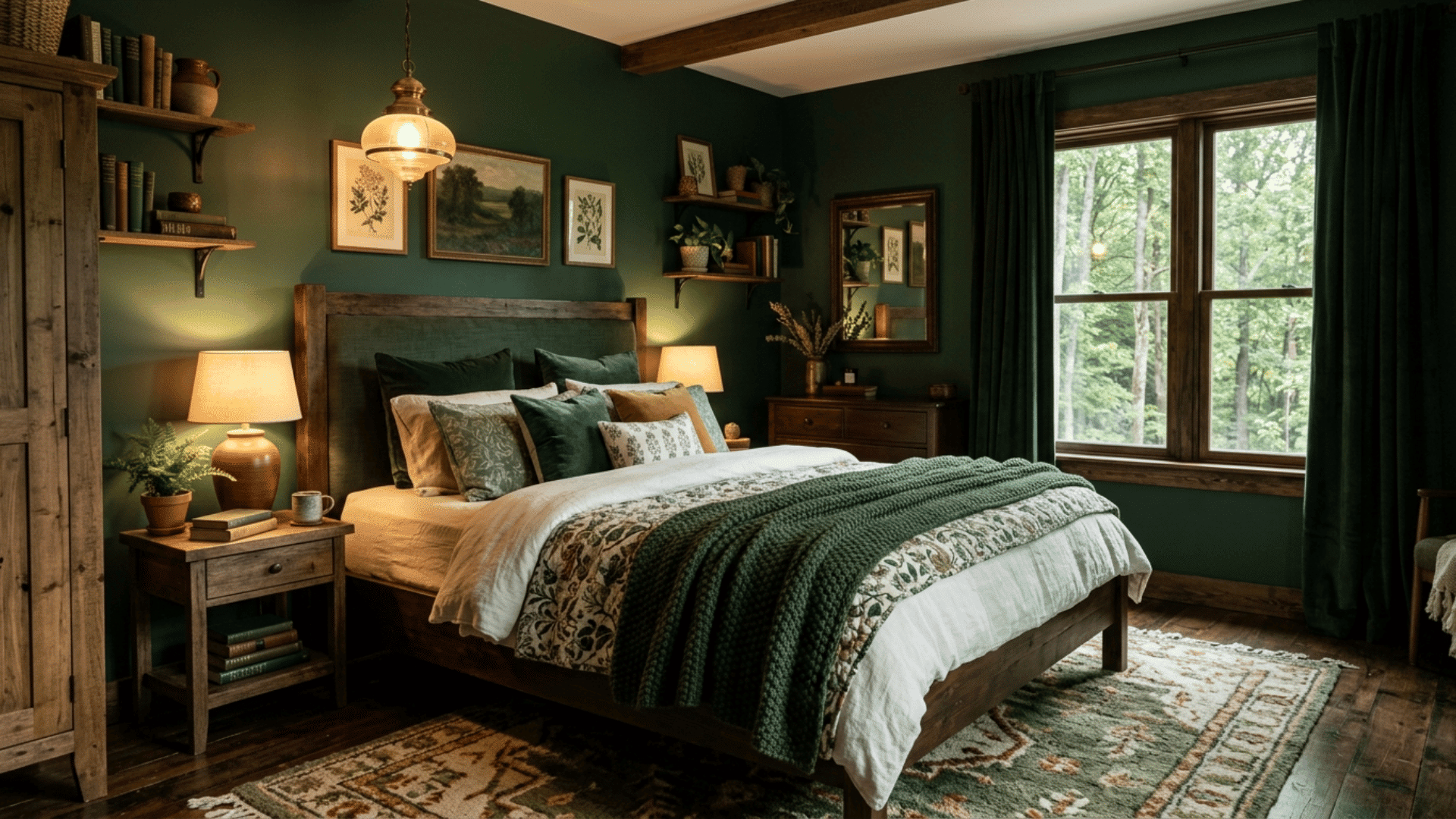
Forest green adds depth and makes the room feel more enclosed in a comfortable way. It’s a strong color, but when used across the entire space, it feels balanced rather than heavy. It also works well with natural textures.
How to do it:
- Paint walls and ceiling deep green
- Add wooden furniture
- Use darker textiles
- Keep lighting warm
- Add subtle texture through fabrics
8. Cream Monochrome Bedroom
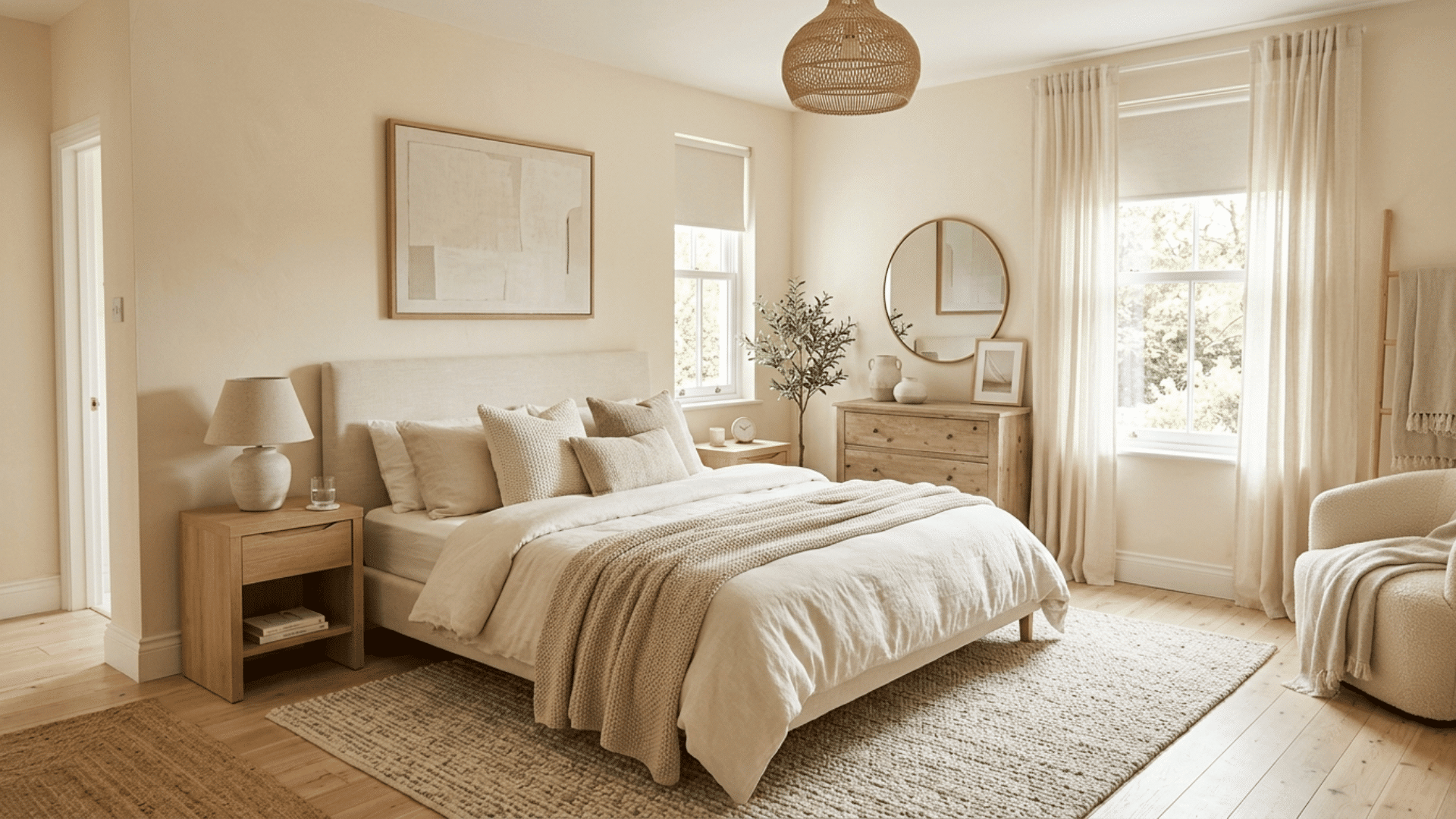
A cream monochrome bedroom feels open and simple. It doesn’t rely on bold colors; instead, it uses slight variations in tone to create interest. This is a good choice if you want a light space that still feels complete.
How to do it:
- Use cream on all surfaces
- Layer different cream tones
- Add textured fabrics
- Keep furniture light
- Use soft lighting
9. Midnight Blue Bedroom

Midnight blue creates a more dramatic version of the navy look.
It can make the room feel more enclosed, which often works well for sleeping spaces. The key is to balance it so it doesn’t feel too dark.
How to do it:
- Use dark blue across the walls and the ceiling
- Add layered lighting
- Use similar tone fabrics
- Avoid strong contrasts
- Keep decor minimal
10. Mustard Yellow Bedroom
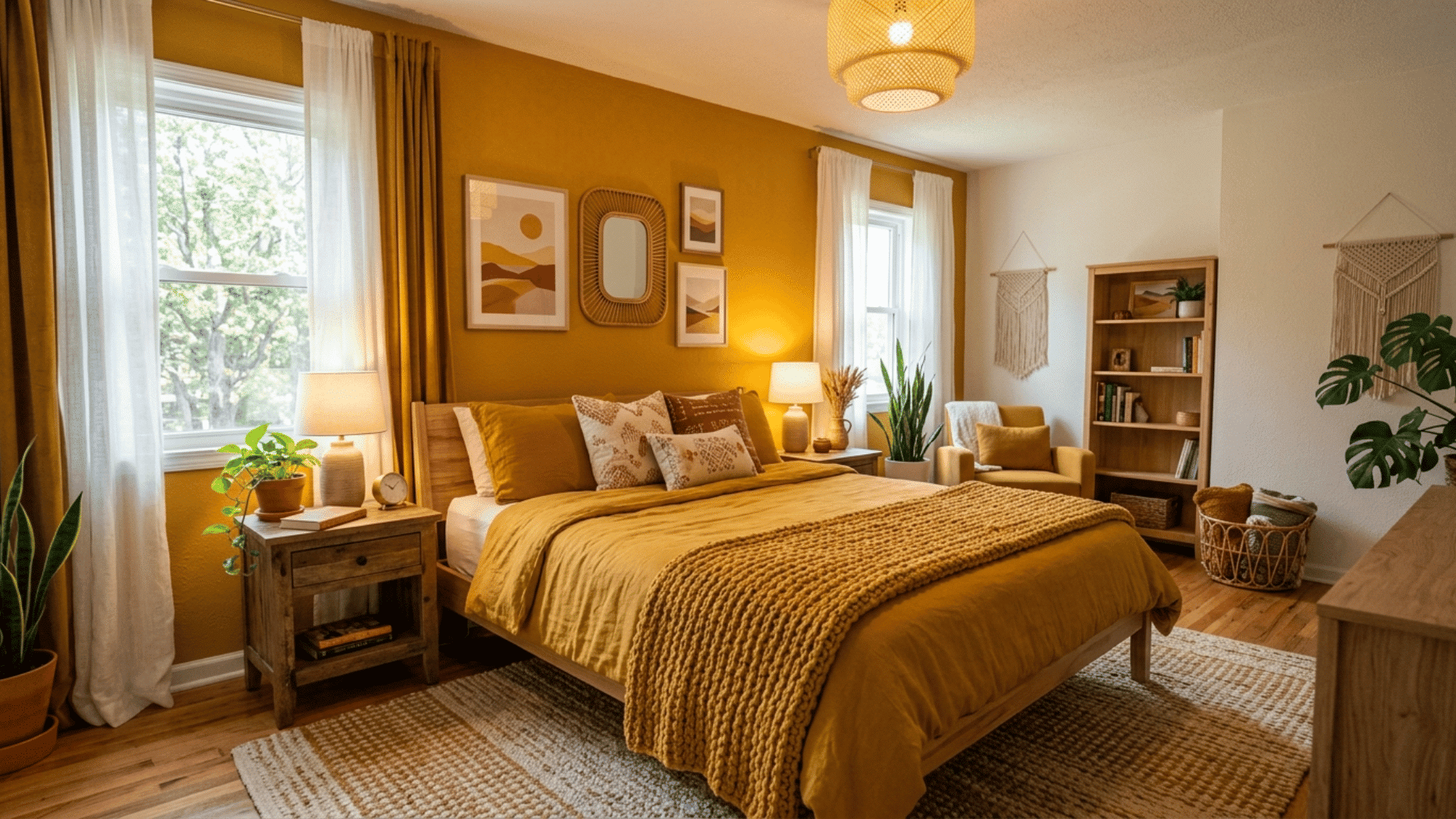
Mustard yellow adds energy but in a more controlled way than brighter yellows. It can make the room feel warmer and more active, so it’s better suited for people who want something less neutral.
How to do it:
- Use toned-down mustard on walls
- Add matching bedding
- Keep furniture within the tone
- Use warm lighting
- Balance with textures
11. Olive Green Bedroom
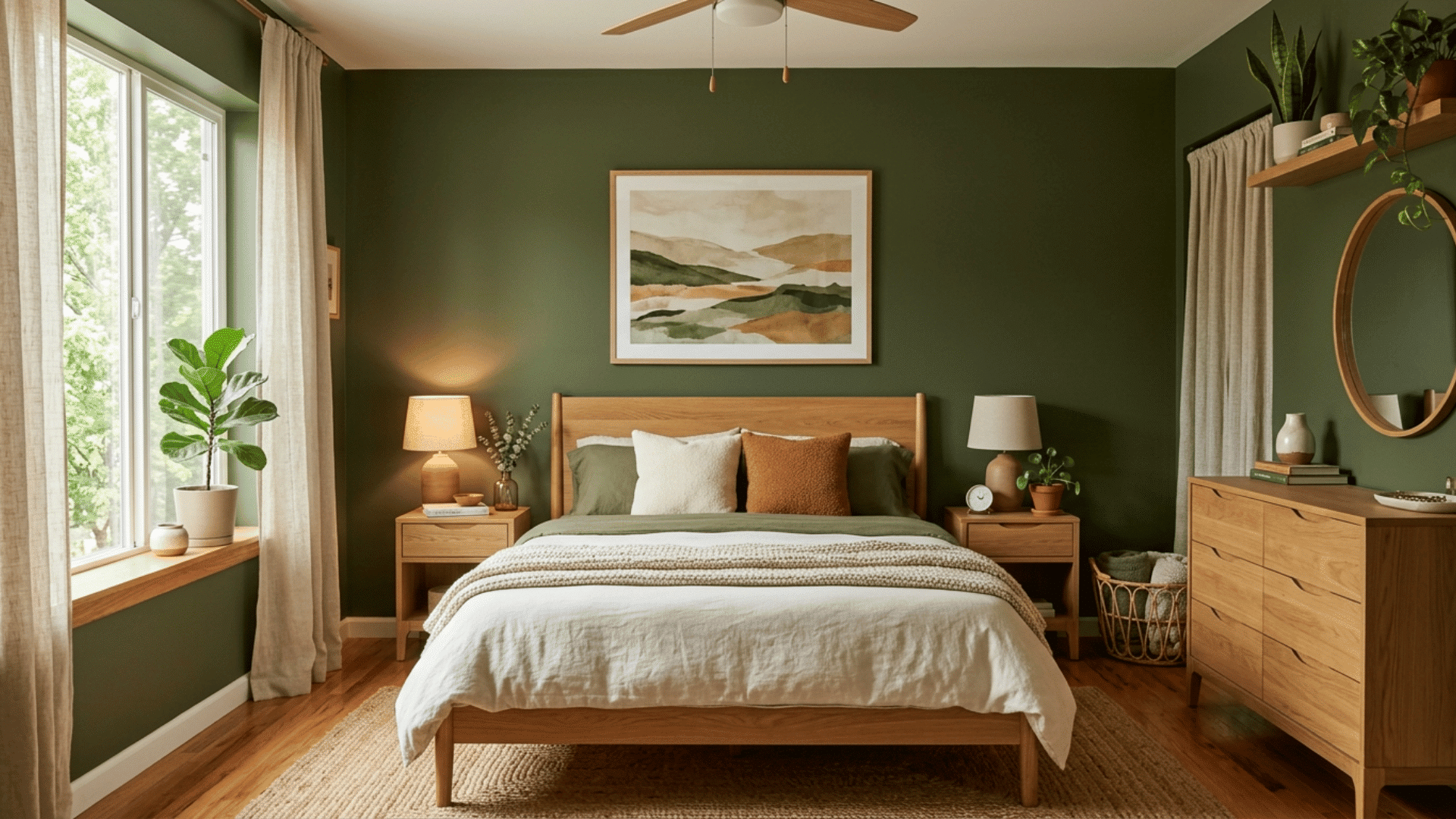
Olive green is one of those shades that feels balanced without trying too hard. It sits between neutral and color, which makes it easier to live with over time.
When used across the entire room, it creates a steady, grounded feel without becoming too dark or too light. It also pairs well with natural materials, so the space feels more connected rather than styled in pieces.
How to do it:
- Use olive green across the walls and ceiling
- Add matching or slightly darker textiles
- Include natural wood furniture
- Keep lighting soft and warm
- Avoid strong contrasting accents
12. Lavender Bedroom
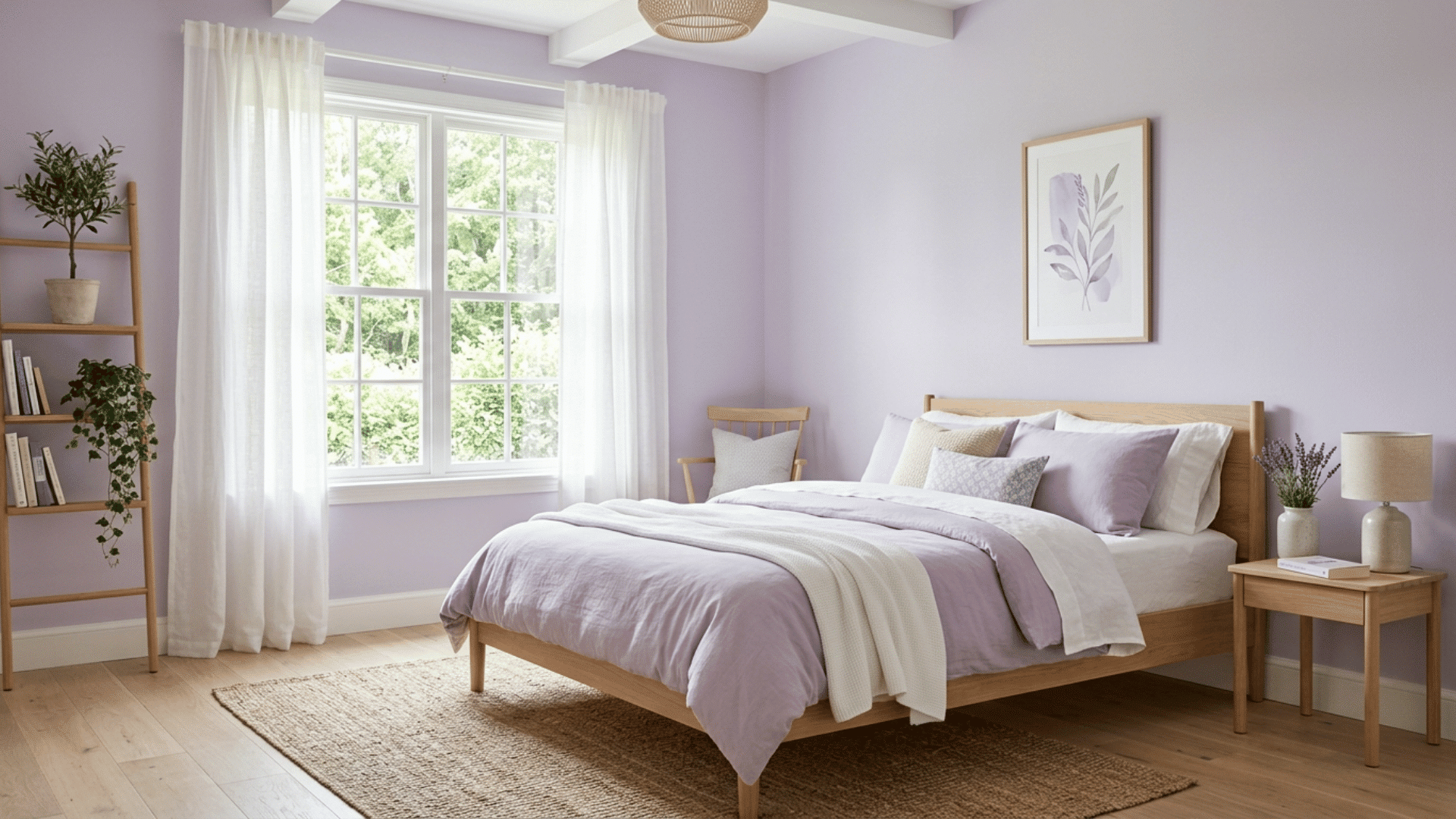
Lavender brings a softer, lighter tone that helps the room feel relaxed without looking plain. It works well in bedrooms because it doesn’t feel heavy, even when used across all surfaces.
The color reflects light gently, which keeps the space from feeling closed in. Over time, it stays easy on the eyes, making it a good long-term choice.
How to do it:
- Apply light lavender across the walls and trim
- Use similar tones in bedding and curtains
- Keep furniture minimal and light
- Add soft fabrics for comfort
- Use neutral lighting to maintain balance
13. Chocolate Brown Bedroom

Chocolate brown creates a deeper, more enclosed feeling that can make the bedroom feel comfortable and settled. It’s a strong color, but when used consistently, it doesn’t feel overwhelming.
Instead, it gives the space a sense of stability. The key is to soften it with textures so it doesn’t feel too flat or heavy.
How to do it:
- Use deep brown tones on the walls and ceiling
- Add textured bedding and rugs
- Keep lighting warm to soften the look
- Use similarly-toned furniture
- Layer different materials for depth
14. Pale Blue Bedroom
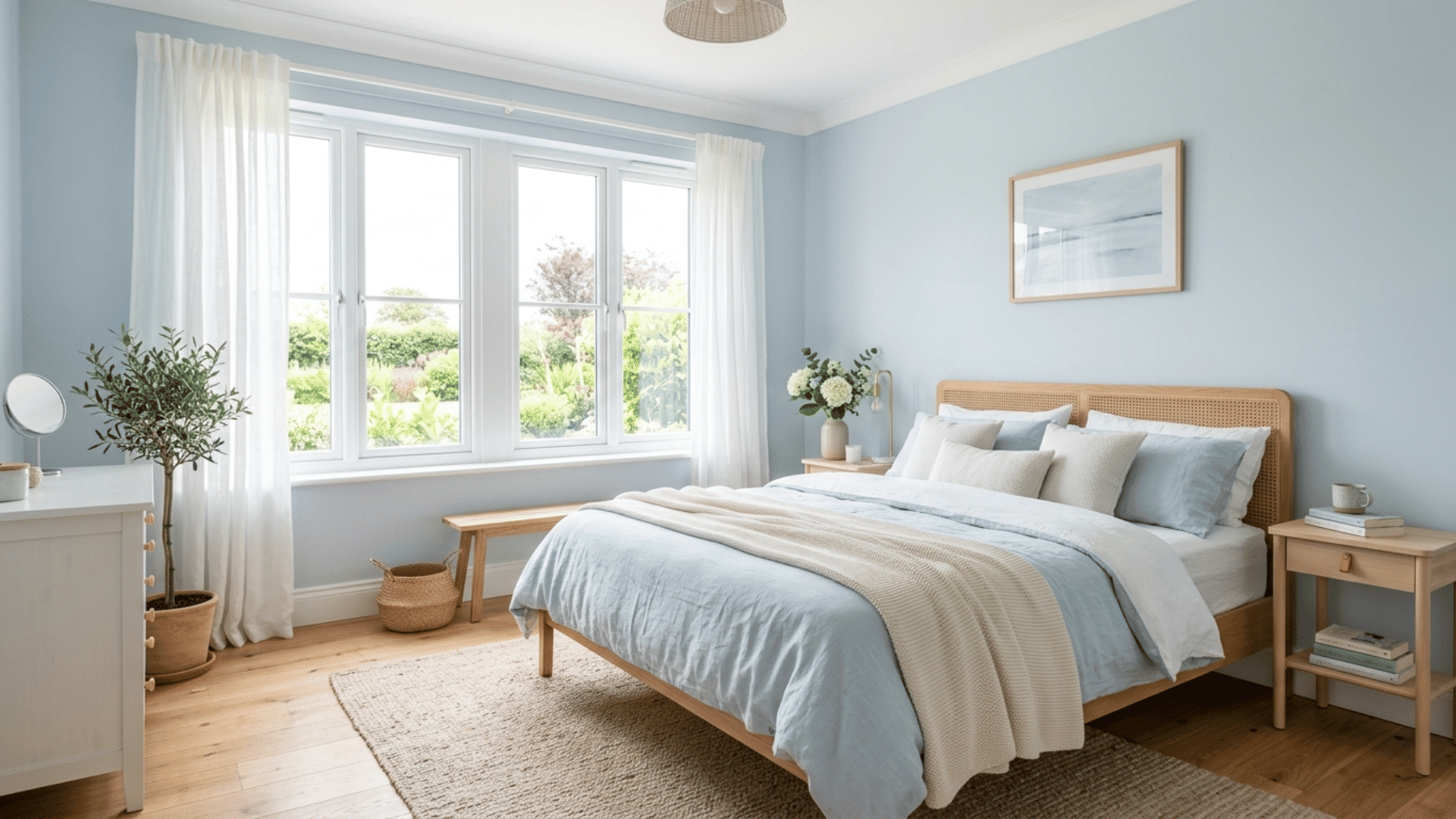
Pale blue keeps the room feeling open and fresh, which is why it works well in smaller spaces. It reflects light easily, so even when used across walls and ceiling, the room doesn’t feel crowded.
It’s also a color that stays easy to live with, making it a practical option if you don’t want something too bold.
How to do it:
- Use pale blue on all surfaces
- Keep fabrics in similar light tones
- Choose simple furniture
- Add soft textures for comfort
- Use natural light to enhance the color
15. Burnt Orange Bedroom
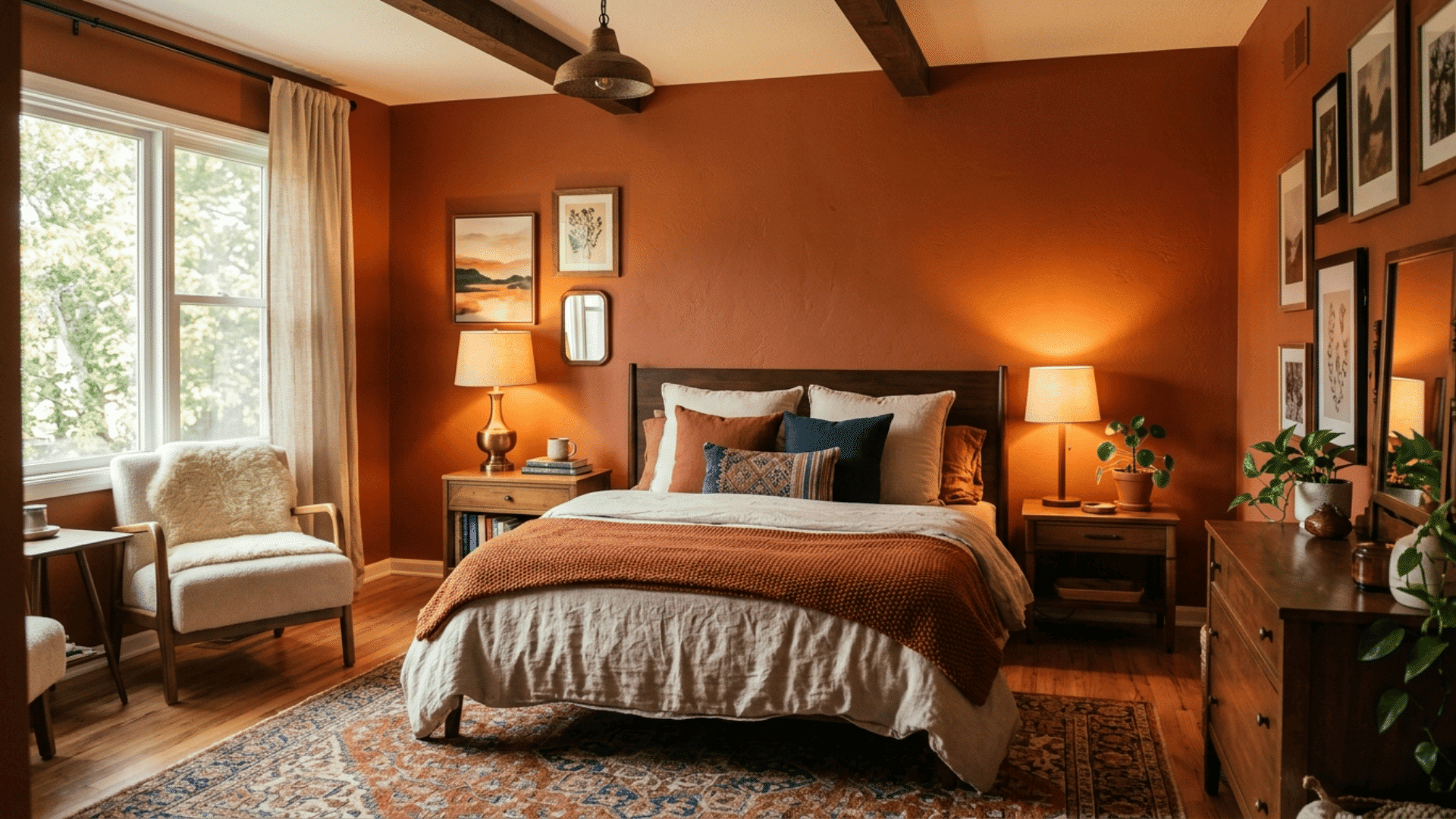
Burnt orange adds warmth in a way that feels steady rather than bright. It gives the room more character without becoming too intense. When used across the space, it creates a cozy feel that works well for bedrooms, especially in spaces with good natural light.
How to do it:
- Apply burnt orange across the walls and ceiling
- Use matching textiles and rugs
- Keep lighting warm
- Balance with neutral-toned furniture
- Add subtle textures to break flatness
16. Taupe Bedroom
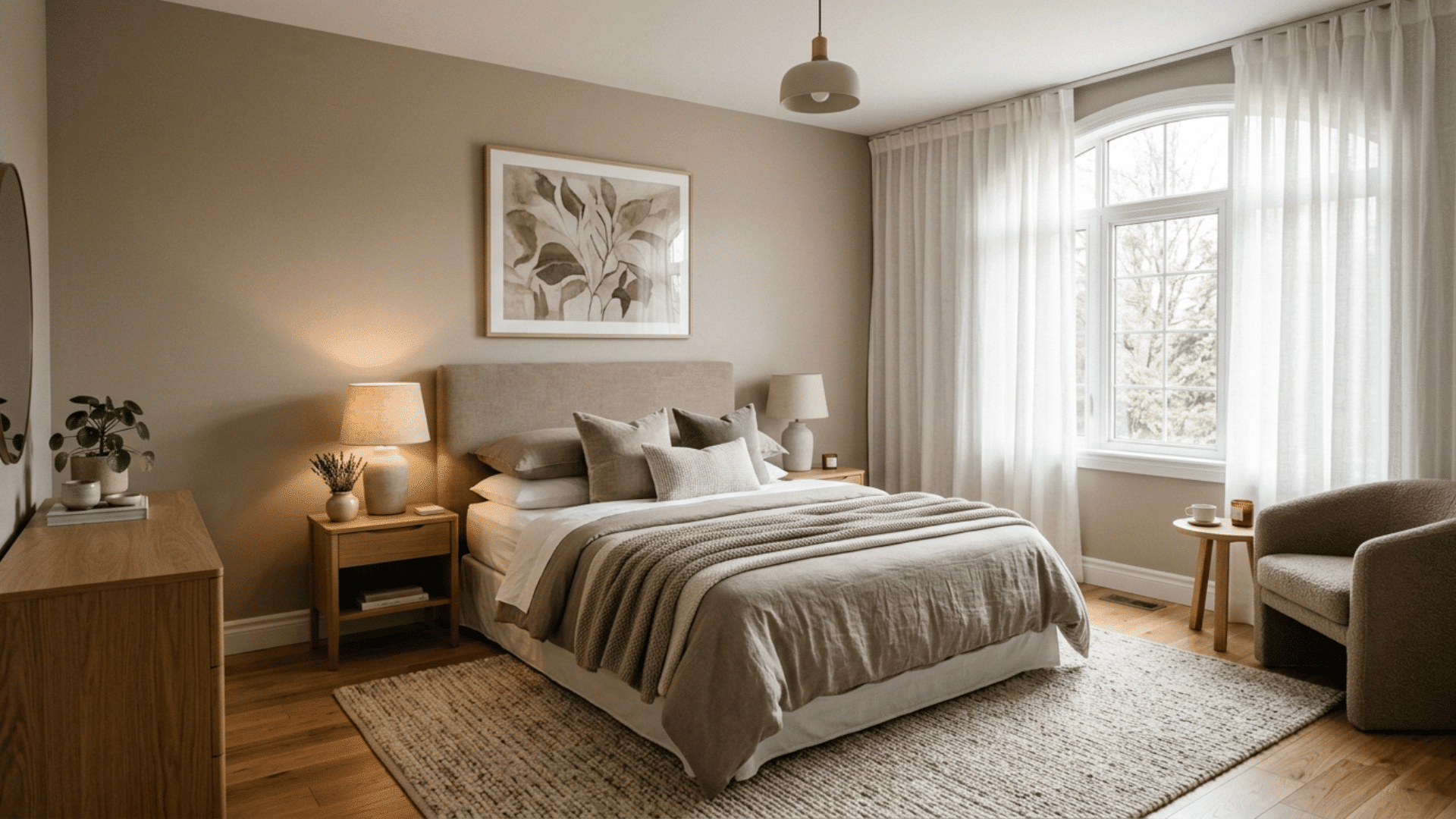
Taupe is a quiet color that sits between beige and grey, making it easy to work with. It doesn’t stand out, but that’s exactly why it works well for color drenching.
When used across the room, it creates a smooth and balanced look without drawing attention to any one area.
How to do it:
- Use taupe across walls and trim
- Layer slightly different shades
- Add textured fabrics
- Keep furniture within the same tone
- Use soft lighting
17. Black Bedroom
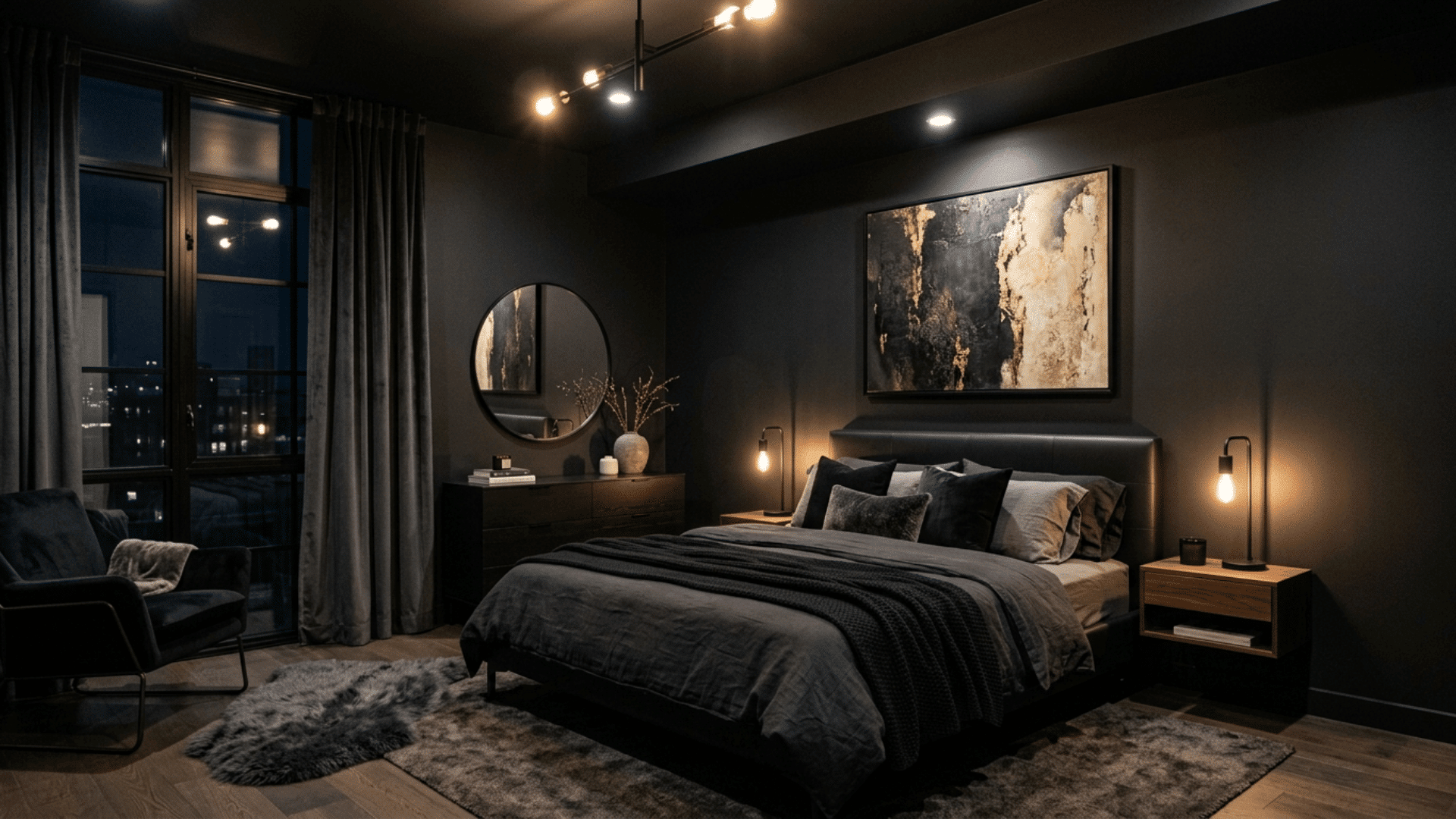
A black bedroom feels bold at first, but when the entire space uses the same shade, it actually becomes more balanced.
Instead of a sharp contrast, everything blends into a single tone. The result is a space that feels controlled and modern, as long as lighting is handled properly.
How to do it:
- Paint the walls and ceiling black
- Use matching dark furniture
- Add layered lighting
- Include soft textures
- Avoid sharp color contrasts
18. Peach Tone Bedroom
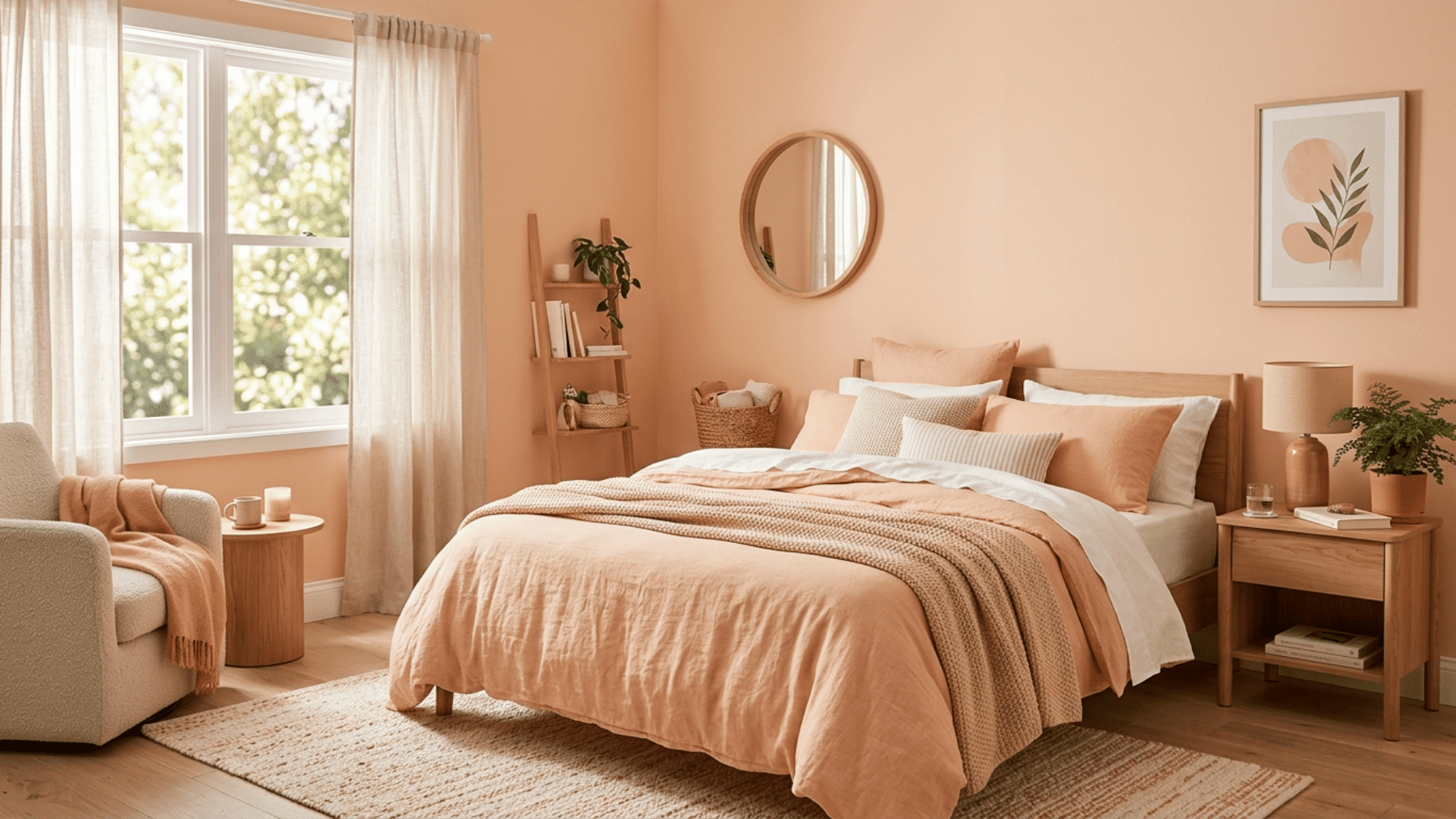
Peach tones bring warmth without being too strong, which makes them easy to use across a full room. They work especially well in spaces with natural light, where the color can shift slightly throughout the day.
This keeps the room from feeling flat or repetitive.
How to do it:
- Use peach shades across walls and decor
- Match bedding and curtains
- Keep furniture light and simple
- Add soft fabrics
- Use warm lighting
19. Teal Bedroom
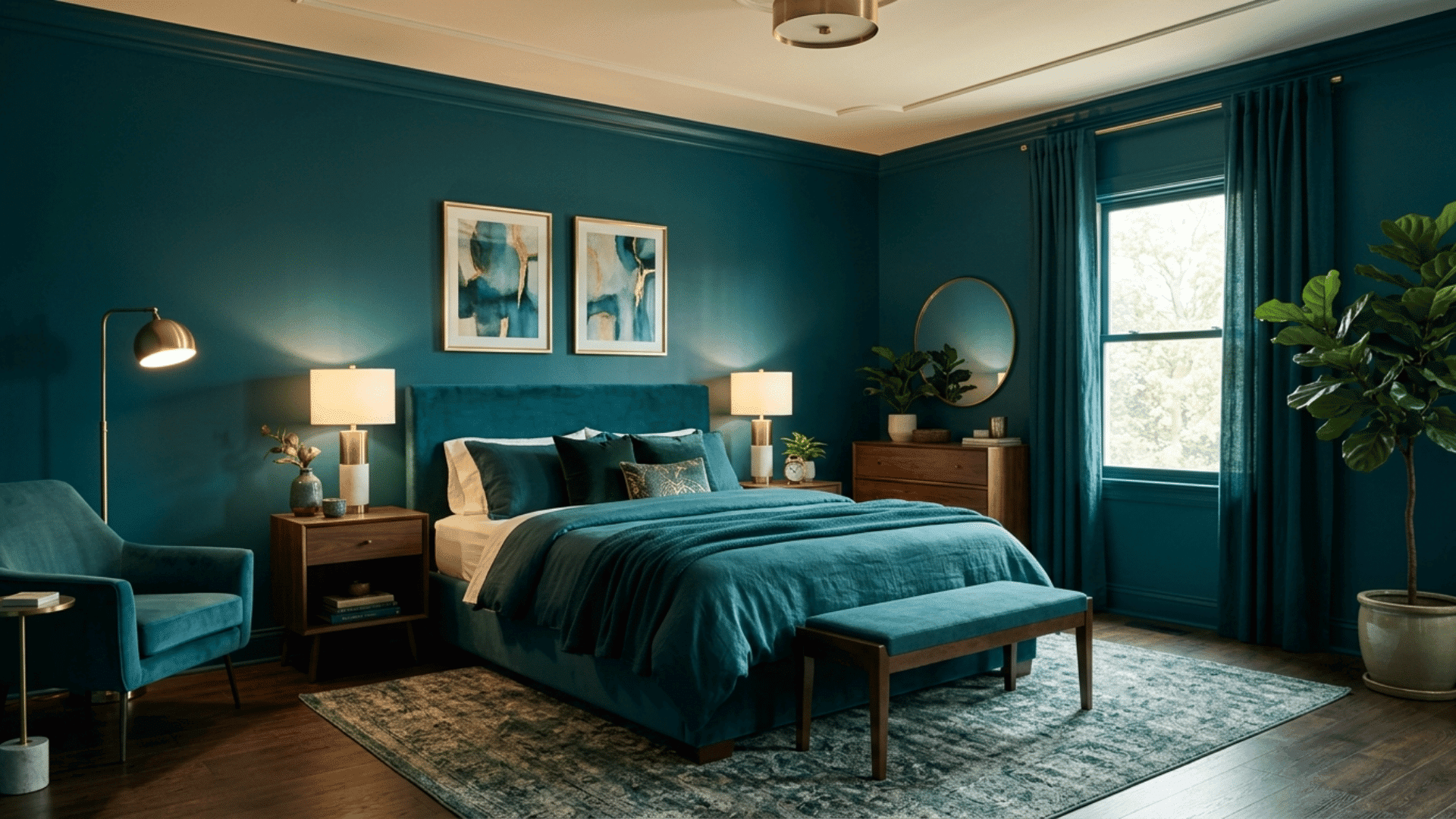
Teal offers a mix of depth and balance, sitting between blue and green. It’s strong enough to define the space but not so dark that it feels heavy. When used across the room, it creates a consistent look that still has some visual interest.
How to do it:
- Apply teal across the walls and the ceiling
- Use matching textiles
- Add subtle texture through fabrics
- Keep lighting balanced
- Avoid introducing too many extra colors
20. Off-White Layered Bedroom
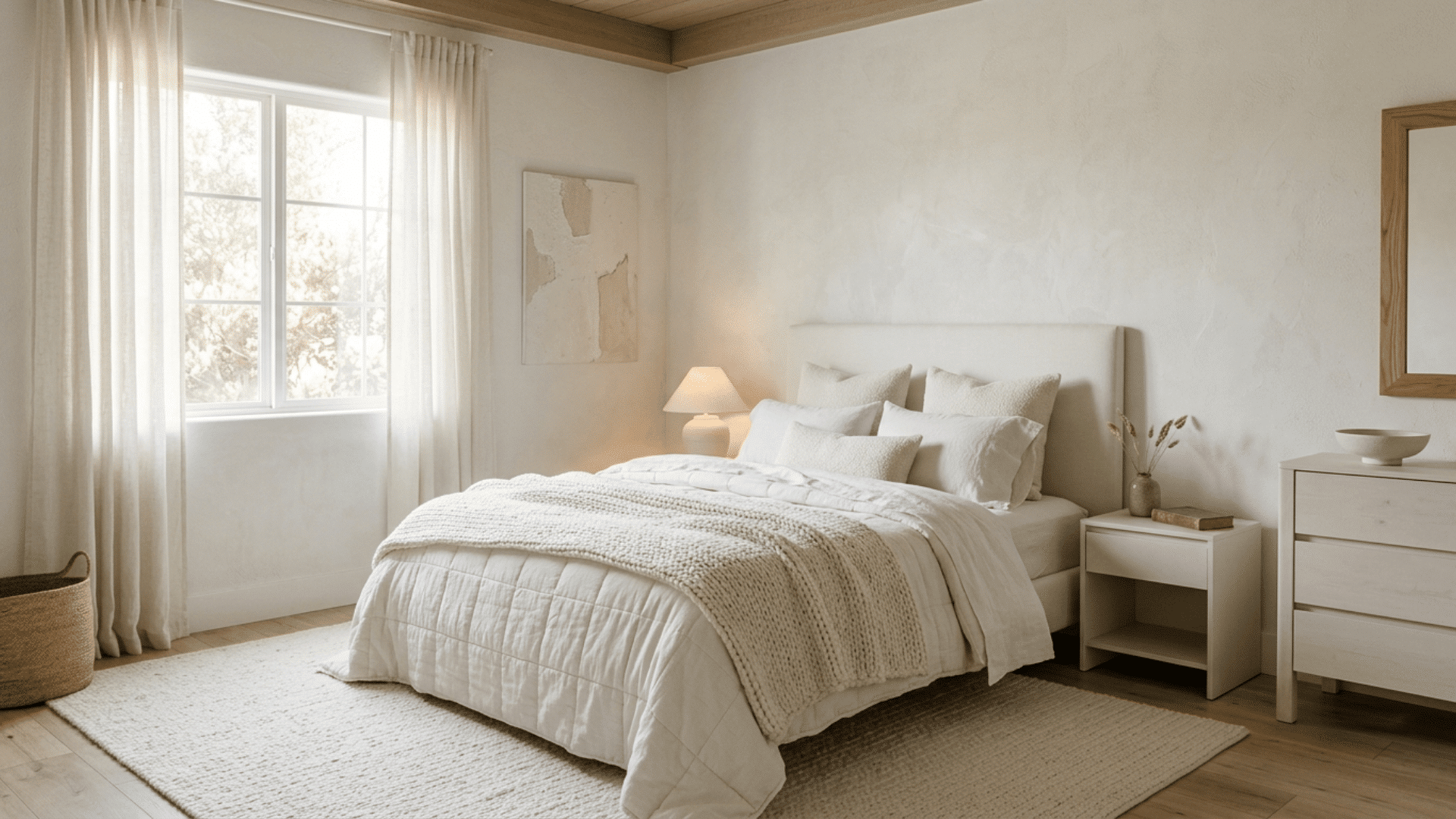
Off-white works differently from bold colors, but it still follows the same idea of color drenching. Instead of relying on color depth, it uses layers of tone and texture to create interest. This makes the room feel clean but not empty.
How to do it:
- Use off-white across all surfaces
- Layer different shades of white
- Add textured fabrics
- Keep decor minimal
- Use soft lighting
21. Monochrome Grey Bedroom
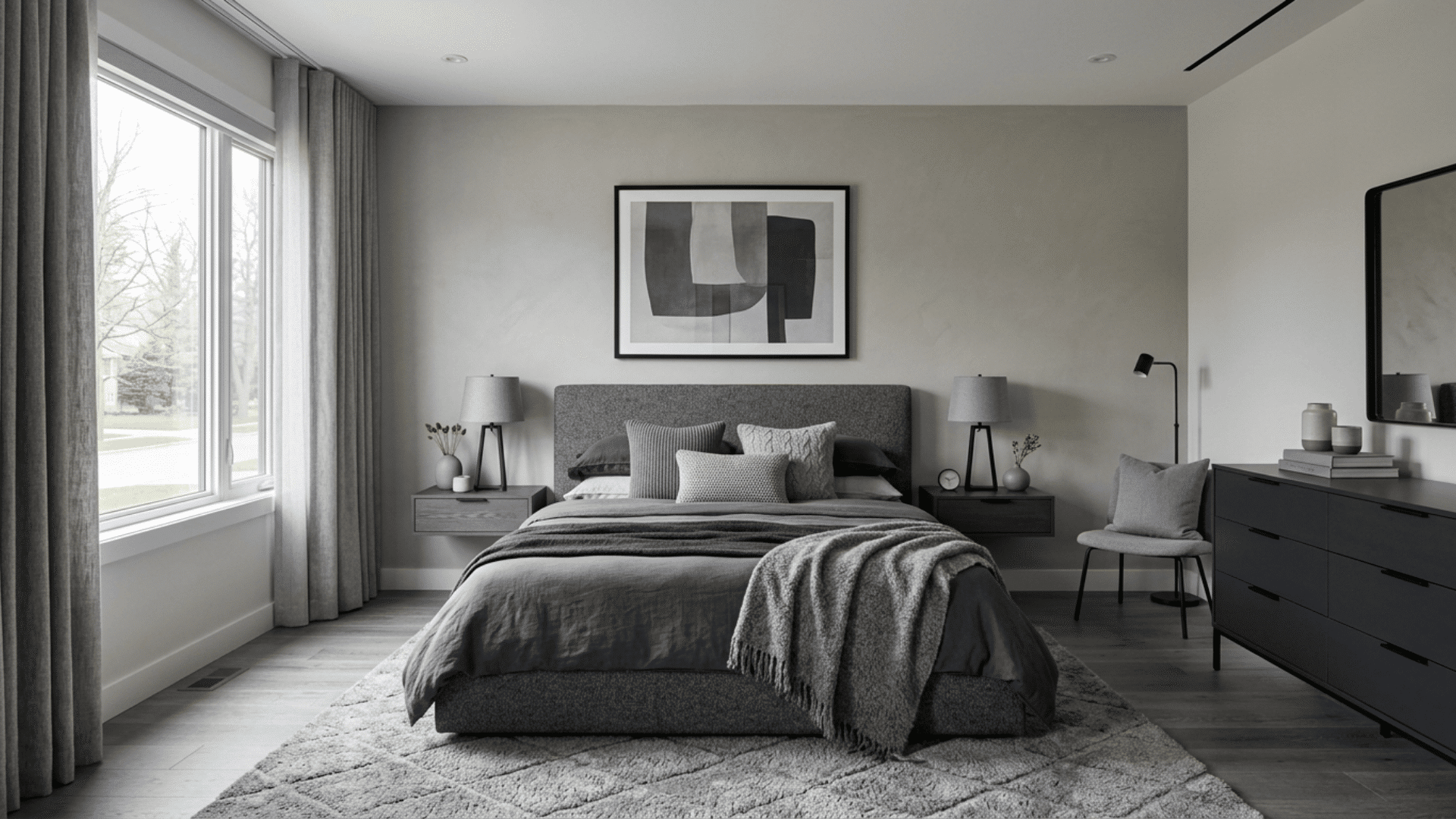
A monochrome grey bedroom feels structured and easy to manage. It doesn’t stand out too much, but it stays consistent and practical.
By layering different shades, you can create depth without breaking the overall look.
How to do it:
- Use grey tones across the walls and ceiling
- Layer lighter and darker shades
- Add textured fabrics
- Keep furniture within the same palette
- Use balanced lighting
Simple Tips for Creating a Cohesive Room with One Color
Color drenching is easy to get wrong if you don’t know what to watch out for. One missed surface or wrong shade can throw off the whole look. These tips will help you get it right from the start:
- Cover Every Surface: Walls, ceiling, trim, and skirting boards all need the same color; skip one, and the look falls apart.
- Layer Textures, Not Colors: Mix fabrics, wood, and ceramics to add depth while keeping the color consistent.
- Use Soft Lighting: Warm, layered lighting helps the room feel less dark and more open.
- Stick to One Undertone: Paint, fabric, and furniture must all share the same warm or cool base; mismatches are easy to spot.
- Go for Matte Finishes: Matte paint absorbs light evenly, making color look richer than with gloss or satin.
- Test Before You Paint: Light shifts from morning to night, so sample the shade at different times before committing.
- Skip Busy Patterns: Bold patterns fight the color; keep it simple and let the shade do the talking.
Final Thoughts
A color-drenching bedroom works when everything feels intentional, not forced. The right shade, combined with consistent application and layered textures, can completely change how a space feels.
It’s less about following strict rules and more about understanding what works for your room.
With the right approach, these color-drenching bedroom ideas can help you create a space that feels calm, balanced, and put together.
And once you understand how to color-drench a bedroom, it becomes easier to experiment with different tones while still keeping the overall look cohesive.

Ava Taylor, holding a Bachelor’s degree in Interior Design from the Pratt Institute, has made her mark in creating engaging and functional living spaces for over 14 years. She began her career with a New York-based design studio, where she gained a reputation for her innovative and user-centric designs. Ava joined our team in 2019, bringing a blend of artistic flair and practicality to our home improvement section. Since the she has been the lead contributor to our room transformation series, inspiring readers with her unique approach to maximizing space utility and aesthetic appeal. Beyond her professional work, Ava is a passionate collector of vintage furniture, a hobby that enriches her design perspective.