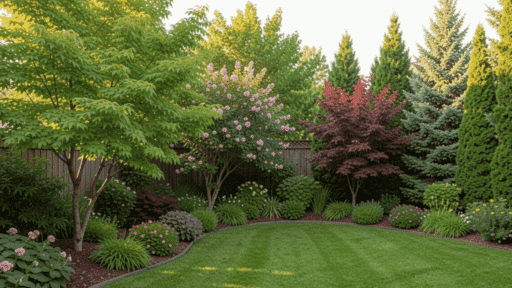
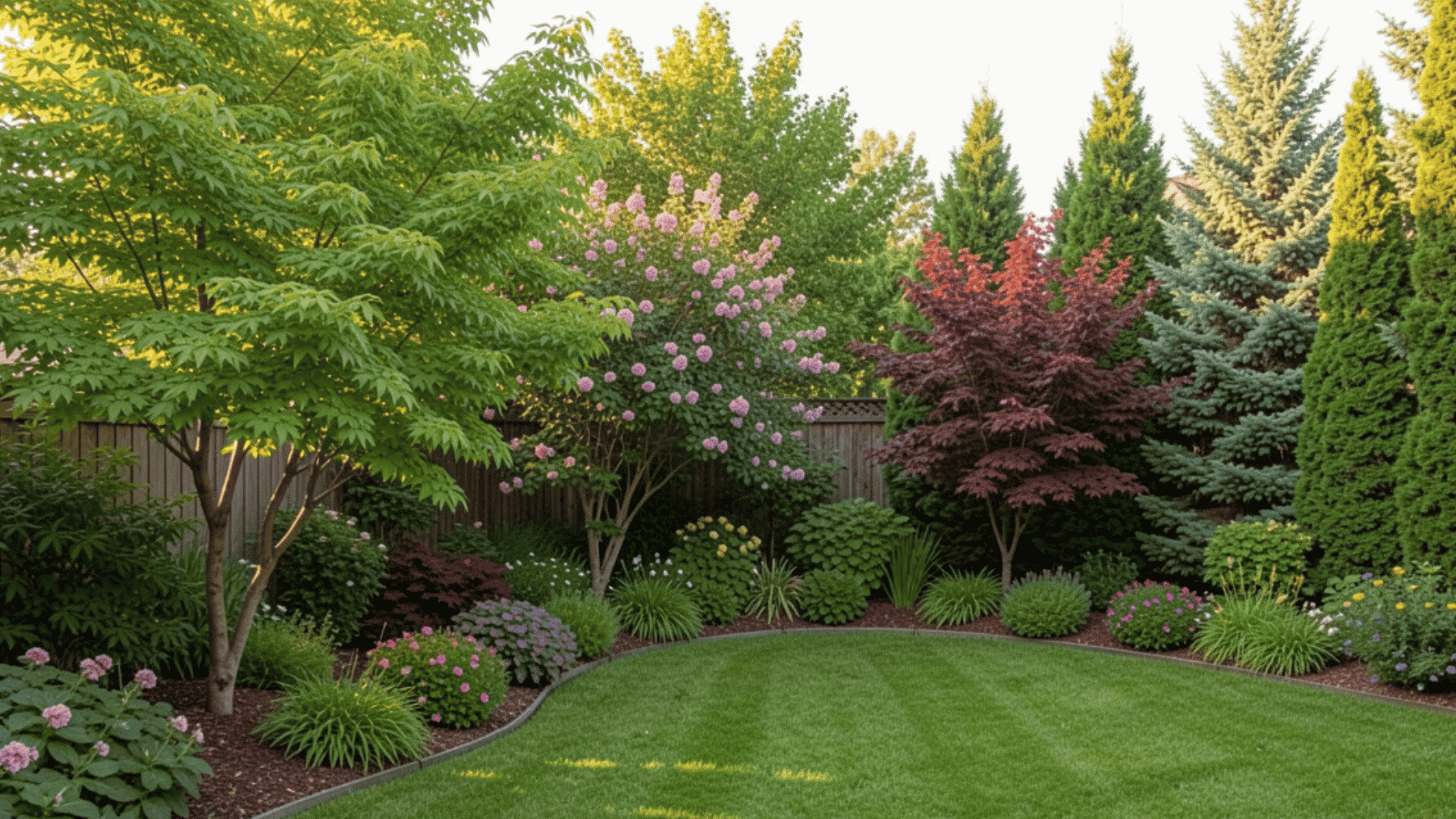

Waiting years for a tree to grow is nobody’s idea of fun. You plant it, water it, and then… nothing much happens for a long time.
The good news is, some trees grow fast, really fast. And they still look great doing it. In this article, I’ve rounded up a solid list of fast-growing trees that actually deliver.
If you need shade on a hot afternoon, a privacy screen from the neighbors, or just more green in your yard, there’s something here for you.
I’ve included details on growth rate, mature height, and the best growing conditions for each tree. That way, you’re not guessing, you’re picking something that fits your space and climate.
Some of these trees can add several feet of growth in a single season. A few years from now, your yard could look completely different. In a good way.
Why Fast-Growing Trees are a Good Choice
Waiting years for a tree to fill in your yard isn’t always an option. Fast-growing trees close that gap, delivering shade, privacy, or visual interest in a fraction of the time it takes slower species to get going.
The right tree in the right spot will always outperform a random fast grower planted without a plan. A Weeping Willow or Tulip Poplar works well for large shade canopies.
For privacy, Leyland Cypress and Green Giant Arborvitae stay full year-round and grow quickly; two qualities that matter when blocking sight lines are the goal.
Flowering trees like the Royal Empress add visual impact quickly, while the Hybrid Poplar remains one of the strongest picks for large, open yards that need structure and quick canopy cover.
Speed matters, but matching the tree to the purpose matters more.
Fast-Growing Trees for a Greener Yard
Not every yard needs the same tree. This list covers fast-growing options across goals, shade, privacy, flowers, and more, making it easier to match the right tree to the right space.
1. Hybrid Poplar
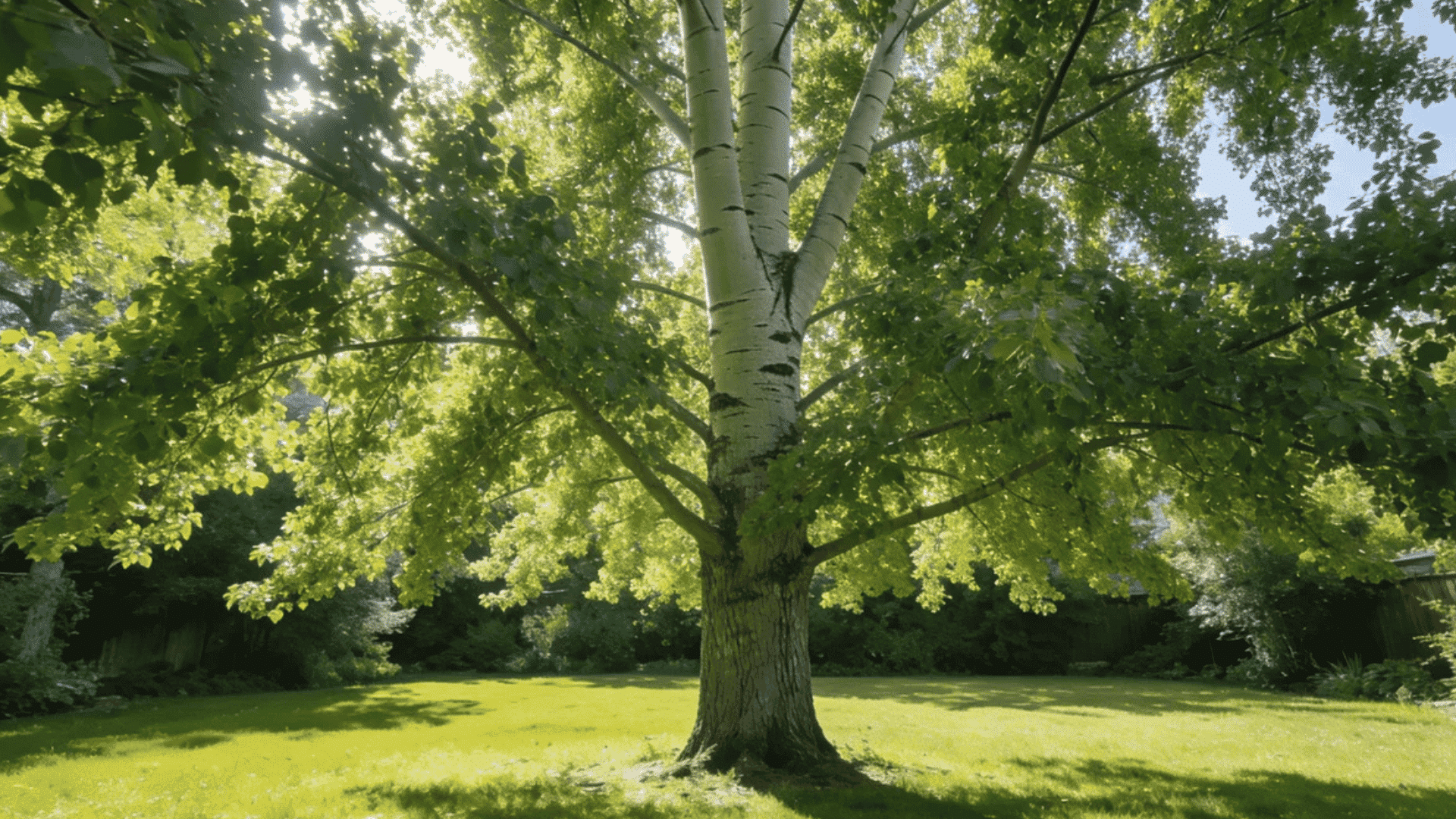
I planted a pair of Hybrid Poplars along the back fence three years ago, and the difference in shade has been noticeable every summer since.
This is one of the fastest-growing trees available, adding up to 8 feet in a single year under good conditions. It works best in large, open yards with full sun and enough room to spread.
The canopy fills in quickly, making it a strong first choice when shade is the main goal and patience is running thin.
- Best for: Quick shade
- Growth rate: 5–8 feet per year
- Mature size: Large (50–70 ft tall)
- Sun needs: Full sun
- Where to buy: Arbor Day Foundation
2. Silver Maple
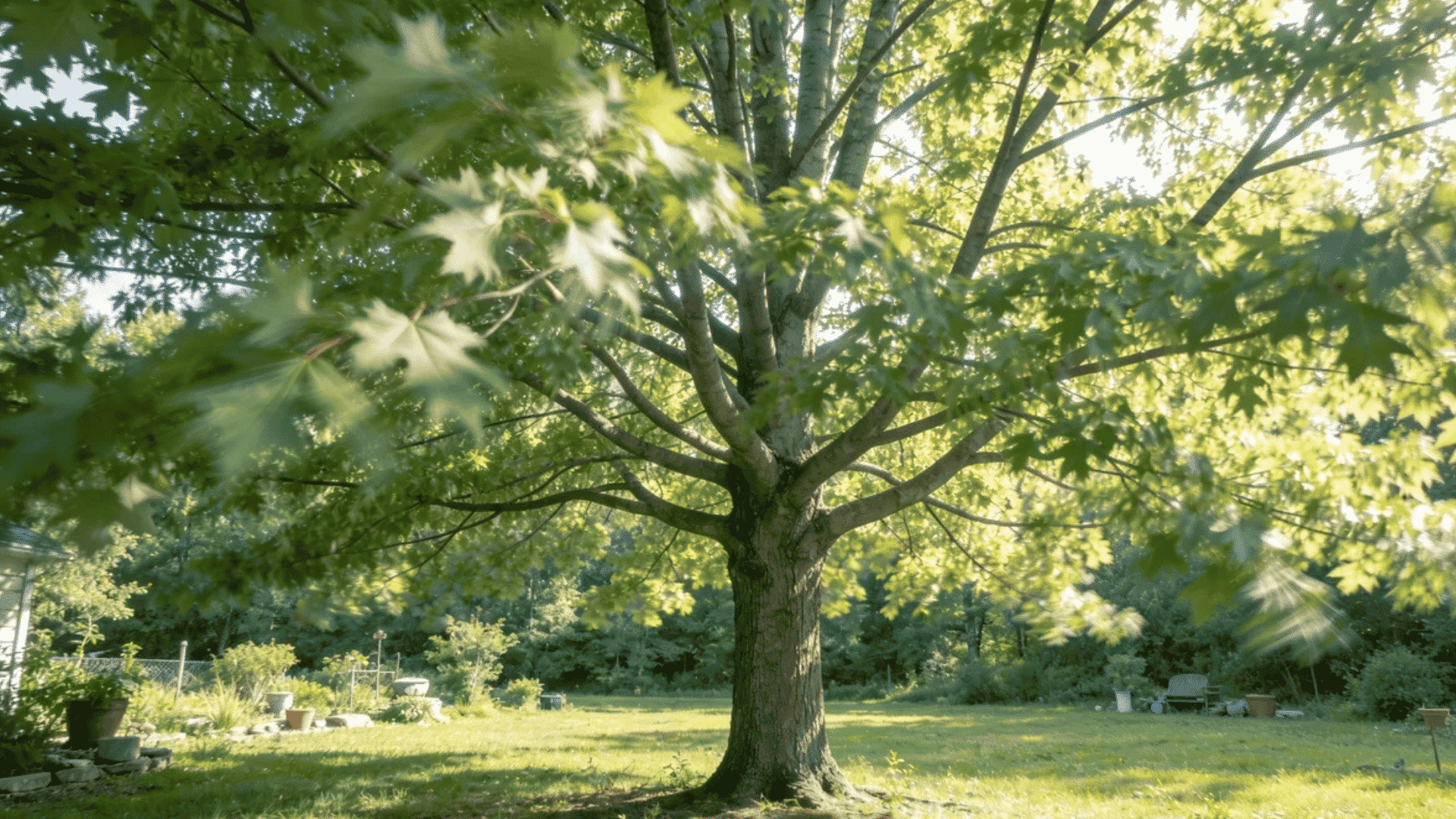
Got a wide, open yard and need canopy cover fast? Silver Maple is worth a close look.
It grows at a strong pace, typically adding 3–7 feet each year, and the wide branch spread creates generous shade in a relatively short time.
The soft green leaves add movement in the wind, and the tree handles a range of soil types. Keep it away from driveways and foundations, though, since the roots can be aggressive and cause cracking over time.
- Best for: Large shade areas
- Growth rate: 3–7 feet per year
- Mature size: Large (50–80 ft tall)
- Sun needs: Full sun to partial shade
- Where to buy: Arbor Day Foundation
3. Red Maple
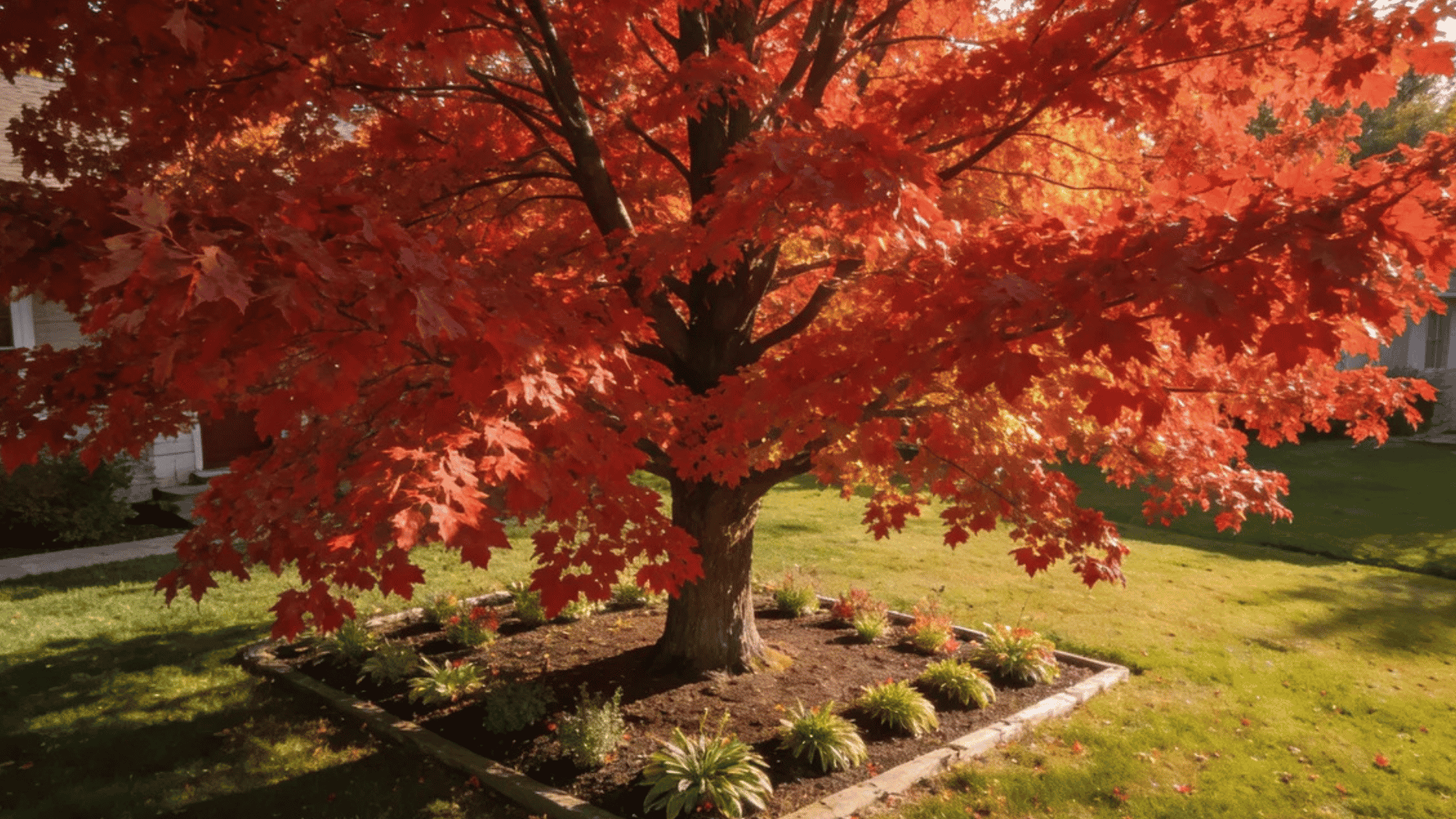
Red Maple pulls double duty; it grows fast and puts on a real show in autumn.
Growth sits around 3–5 feet per year, which is solid for a tree that also delivers reliable structure and seasonal color. The deep red fall foliage makes it a popular pick for front yards and larger garden beds.
It adapts well to different light conditions and tolerates both dry and moist soils, making it one of the more flexible fast-growing trees for a range of climates.
- Best for: Shade and fall color
- Growth rate: 3–5 feet per year
- Mature size: Medium to large (40–70 ft tall)
- Sun needs: Full sun to partial shade
- Where to buy: Arbor Day Foundation
4. Weeping Willow
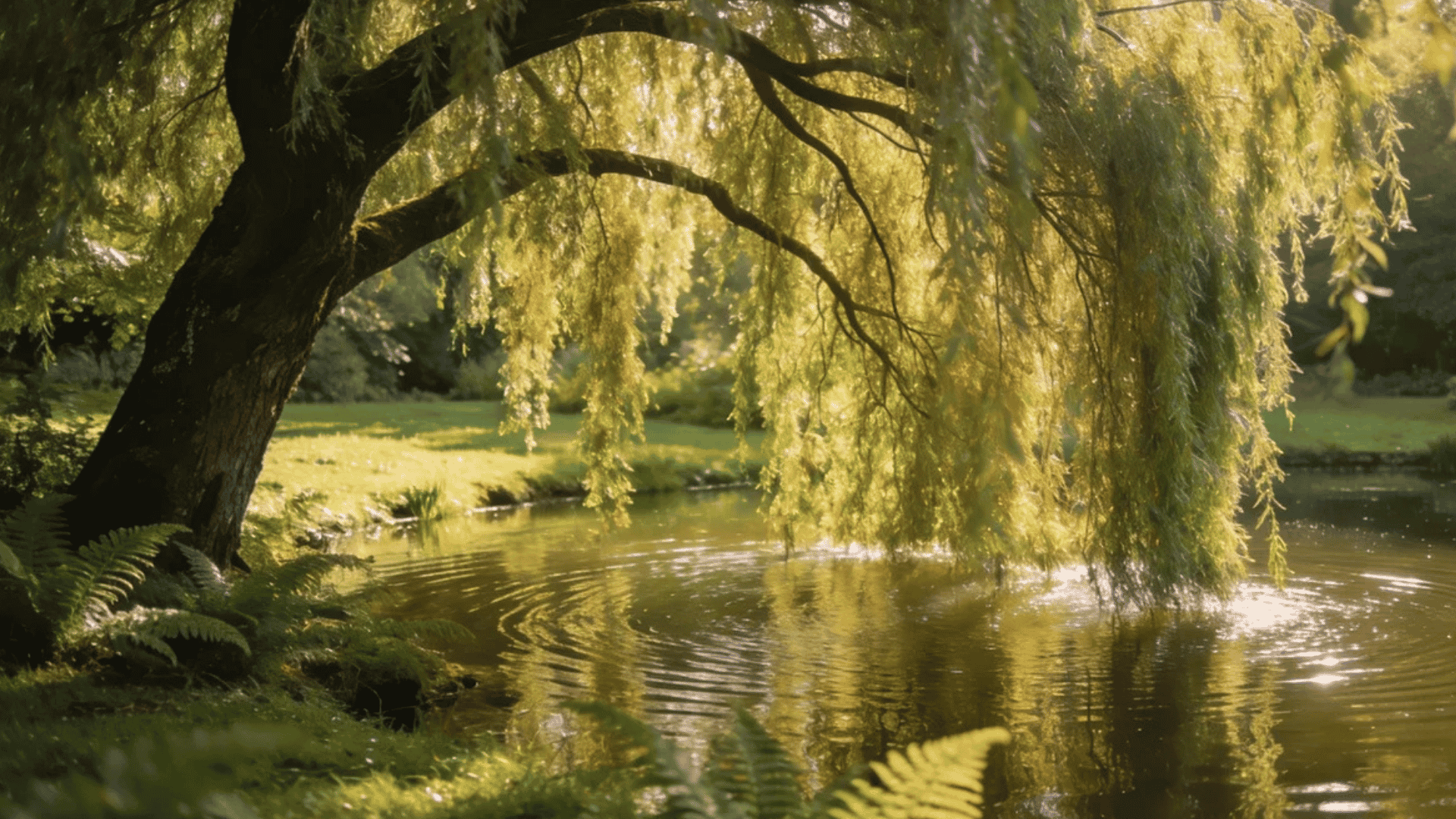
A friend of mine planted a Weeping Willow near her backyard pond, and within two growing seasons, it had become the focal point of the entire yard.
These trees grow around 6–8 feet per year and are best suited to large spaces with naturally moist soil. The long, arching branches create a soft, layered look that’s hard to replicate with any other tree.
- Best for: Wet areas and shade
- Growth rate: 6–8 feet per year
- Mature size: Large (30–50 ft tall)
- Sun needs: Full sun
- Where to buy: Arbor Day Foundation
Note: Weeping Willow roots are known to seek out water lines and septic systems. Plant at least 50 feet away from any underground infrastructure.
5. Sycamore
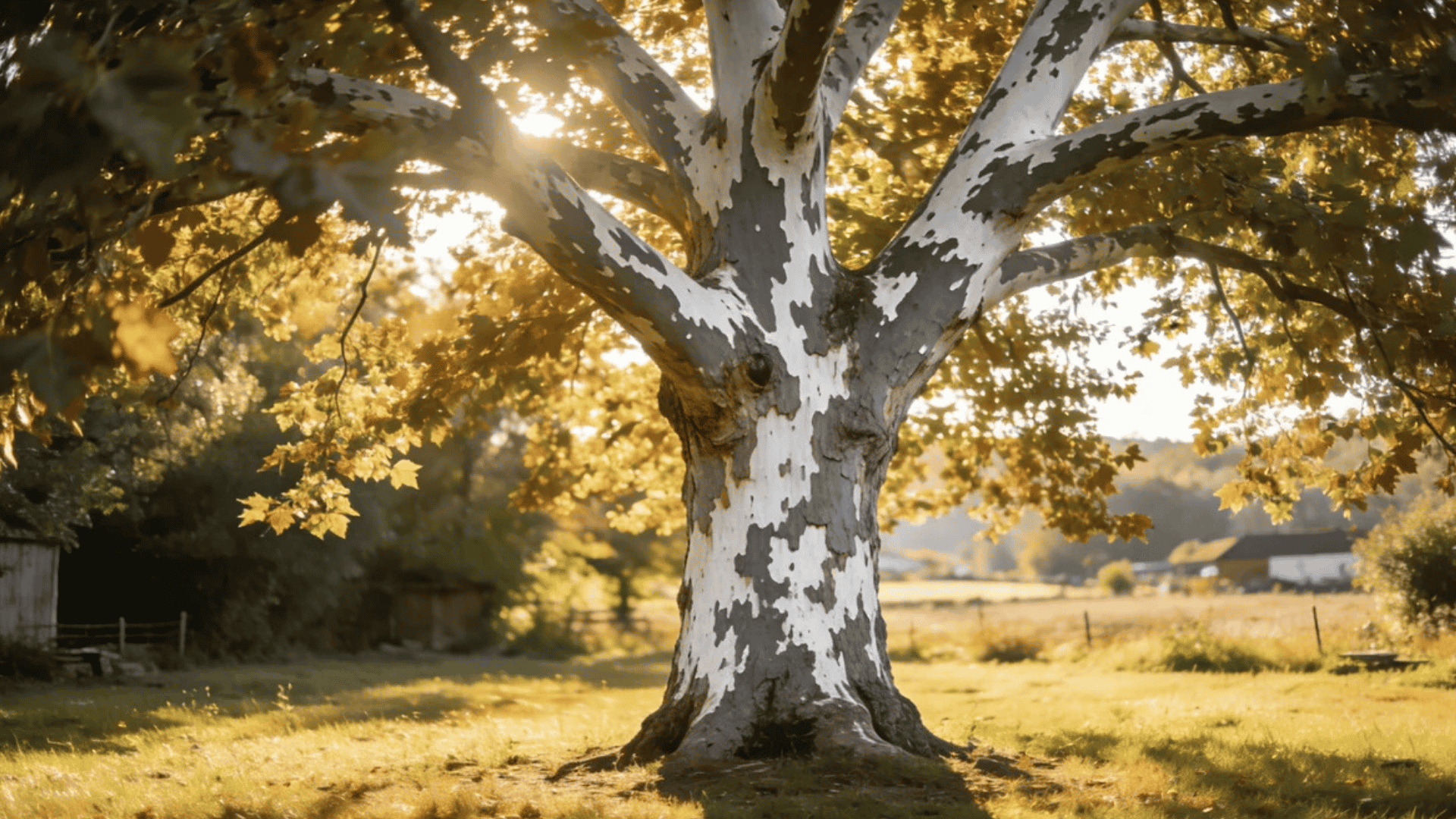
Few trees make as bold a statement as a mature Sycamore. The mottled white and gray bark stands out year-round, and the wide canopy creates serious shade as the tree matures.
It adds roughly 2–3 feet per year and eventually reaches a very large size, so space is a real requirement here. Best suited to big, open yards or properties with rural-style landscaping.
It handles heat and variable soil reasonably well once established in the ground.
- Best for: Big yards
- Growth rate: 2–3 feet per year
- Mature size: Very large (70–100 ft tall)
- Sun needs: Full sun
- Where to buy: Fast Growing Trees
6. Tulip Tree
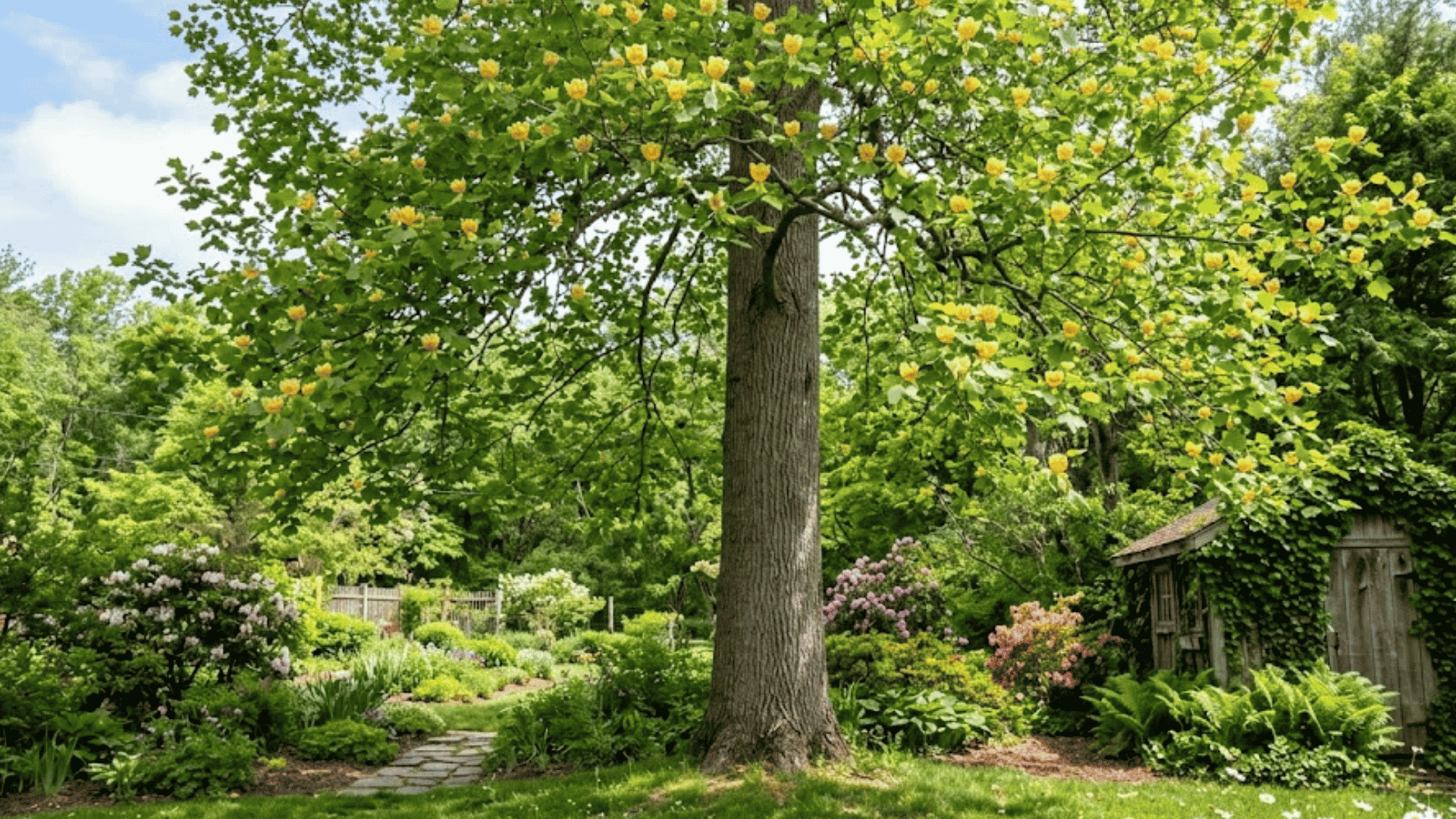
The Tulip Tree stands out because it doesn’t just grow fast, it grows beautifully.
Spring brings distinctive tulip-shaped flowers in yellow and orange, sitting high in the branches before the leaves fully fill in.
Growth runs about 2–3 feet annually, and the tree reaches a tall, straight form over time. It prefers deep, well-drained soil and full sun.
Homeowners who want shade with seasonal visual interest often find this tree checks both boxes cleanly, without needing much in return.
- Best for: Shade and spring flowers
- Growth rate: 2–3 feet per year
- Mature size: Large (60–90 ft tall)
- Sun needs: Full sun
- Where to buy: Fast Growing Tree
7. Freeman Maple
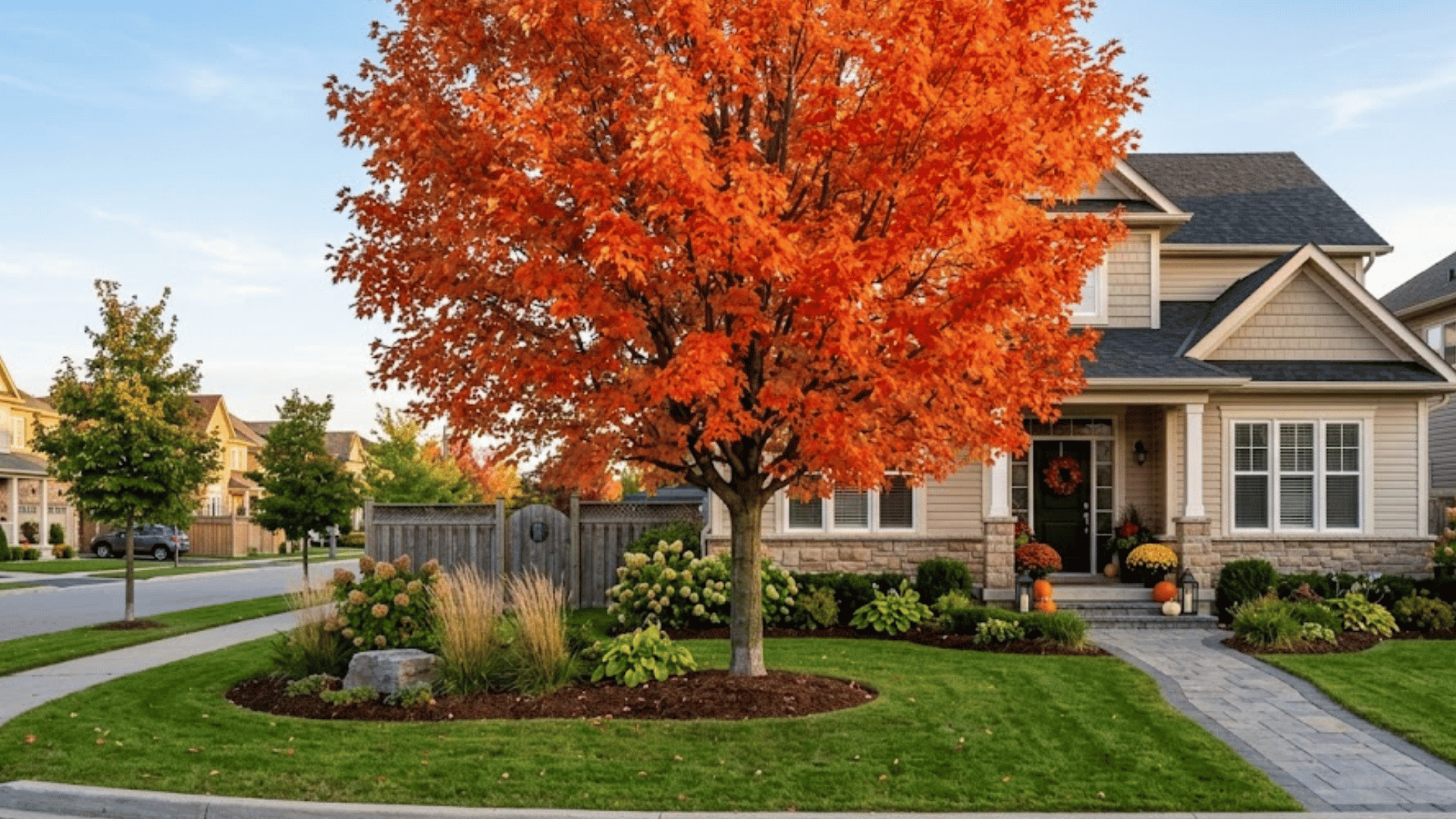
When it comes to blending fast growth with year-round visual appeal, Freeman Maple is a consistent performer. It grows 3–5 feet per year and develops a well-shaped canopy that provides solid shade cover as it matures.
Fall color tends to be a reliable orange-red, which adds strong curb appeal heading into the cooler months.
It handles urban conditions better than many maples, tolerating compacted soil and heat reasonably well, a practical advantage for suburban yards that don’t always have ideal planting conditions.
- Best for: Shade and curb appeal
- Growth rate: 3–5 feet per year
- Mature size: Medium to large (40–60 ft tall)
- Sun needs: Full sun to partial shade
- Typical nursery price: $40–$120, depending on container size
8. Thuja Green Giant
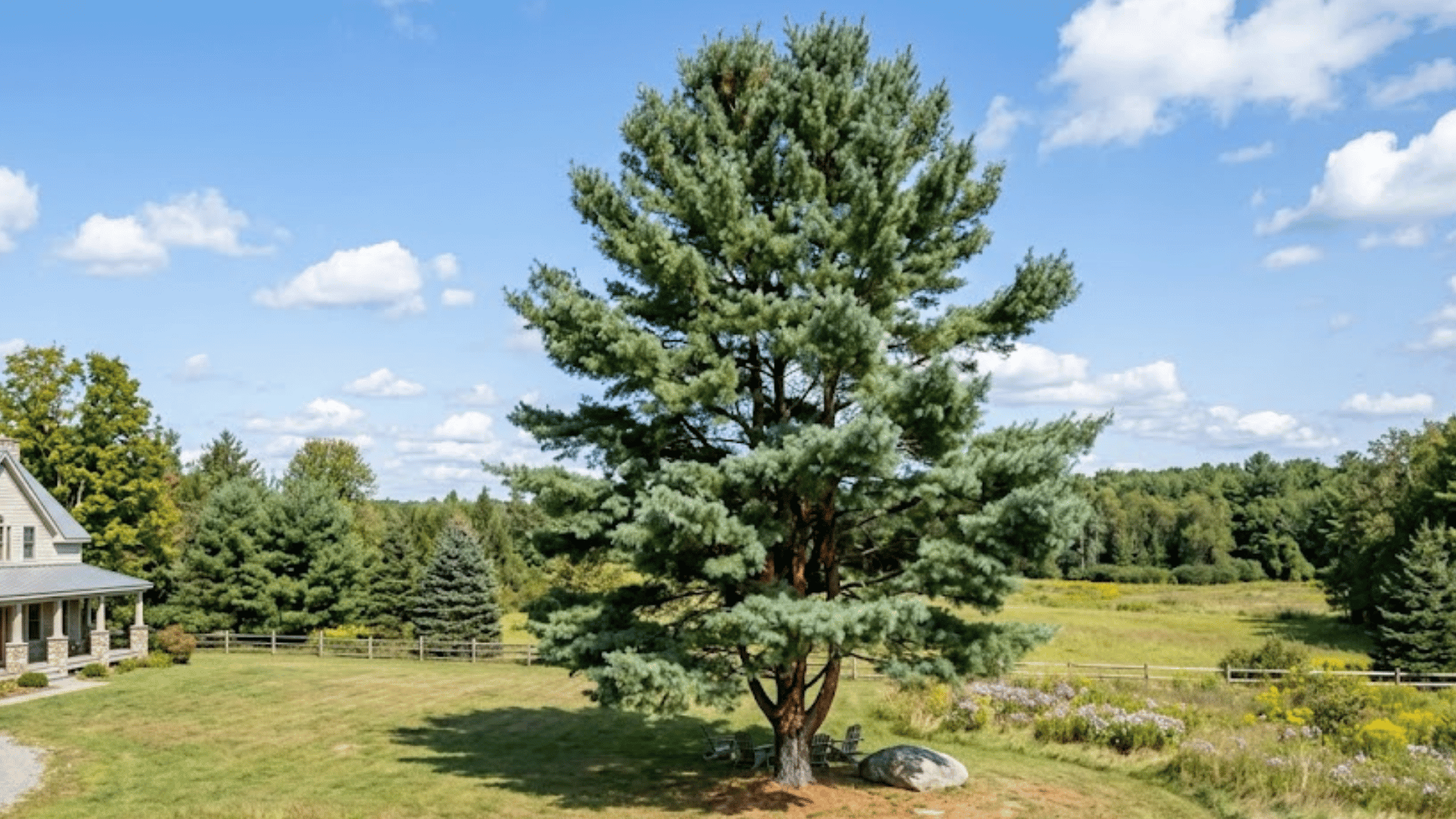
I saw a neighbor put in a row of Thuja Green Giants along a shared fence line, and within three years, there was a full, dense privacy screen where there used to be open sight lines.
Growing at 3–5 feet per year, this is one of the fastest-growing trees for privacy. It stays green through winter, holds its shape without heavy pruning, and handles most soil types.
Spacing plants about 5–6 feet apart at planting gives the best long-term coverage.
- Best for: Privacy screens
- Growth rate: 3–5 feet per year
- Mature size: Large (30–60 ft tall)
- Sun needs: Full sun to partial shade
- Typical nursery price: $25–$90, depending on height at purchase
9. Leyland Cypress
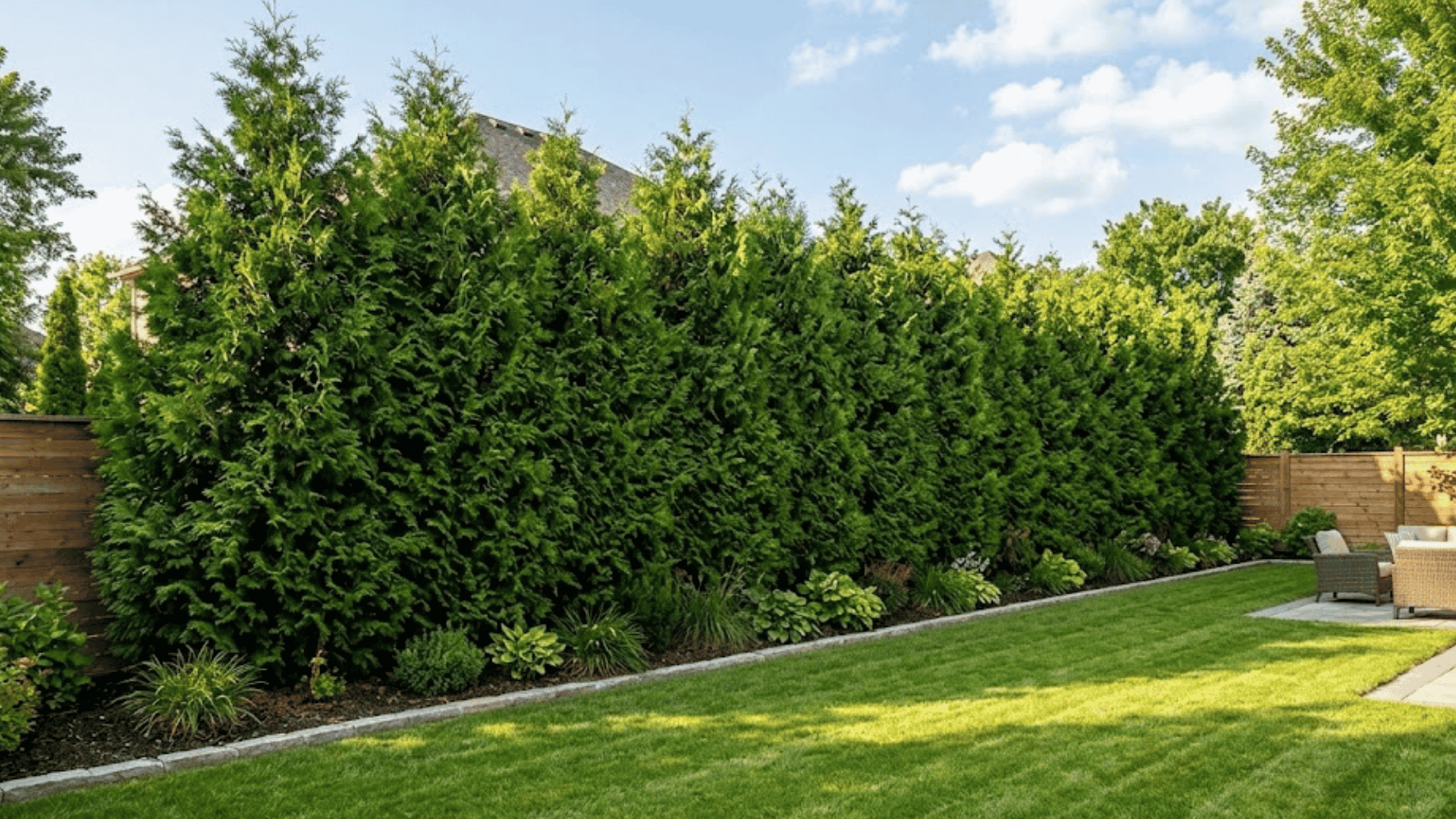
For homeowners who want a tall, dense privacy wall quickly, Leyland Cypress is a solid go-to option. It grows 3–4 feet per year and can reach significant heights in under a decade.
The feathery green foliage stays full from top to bottom, making it effective as a visual barrier along property lines.
Regular trimming as it matures prevents the center from thinning out over time. Proper spacing between plants also reduces the risk of fungal disease in humid climates.
- Best for: Tall privacy
- Growth rate: 3–4 feet per year
- Mature size: Large (60–70 ft tall)
- Sun needs: Full sun
- Where to buy: Arbor Day Foundation
10. Eastern White Pine
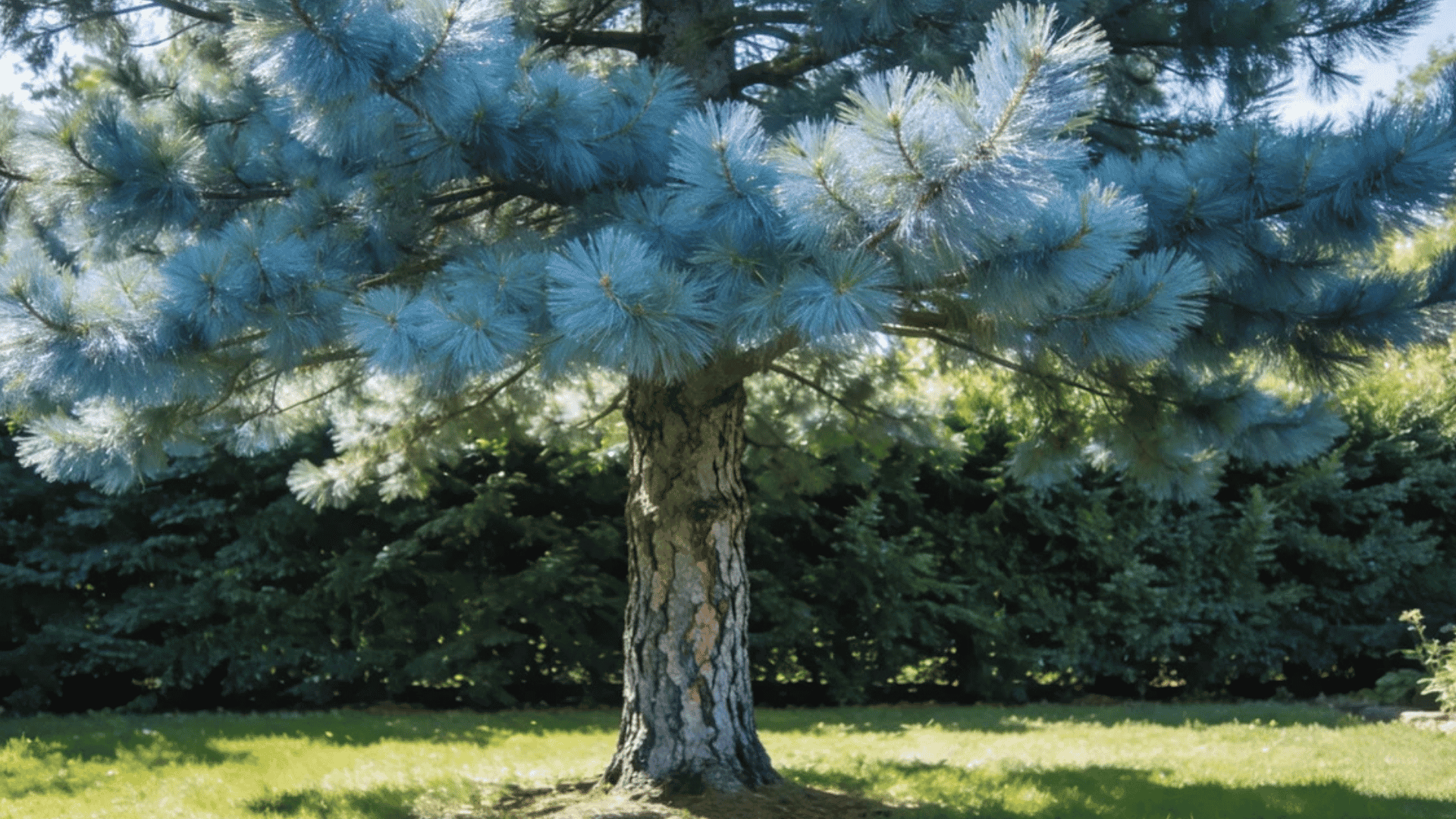
Eastern White Pine is a solid all-rounder; it grows fast, looks good, and works hard. At 2–3 feet of growth per year, it fills in privacy borders and windbreaks reliably.
The soft, blue-green needles give it a lighter look compared to denser evergreens, which suits larger, more natural-feeling landscapes.
It handles colder winters well and adapts to a range of soil conditions. A strong pick for northern and mid-Atlantic regions where space allows room for a full-sized tree.
- Best for: Privacy and windbreaks
- Growth rate: 2–3 feet per year
- Mature size: Large (50–80 ft tall)
- Sun needs: Full sun to partial shade
- Where to buy: Fat Growing Trees
11. Italian Cypress
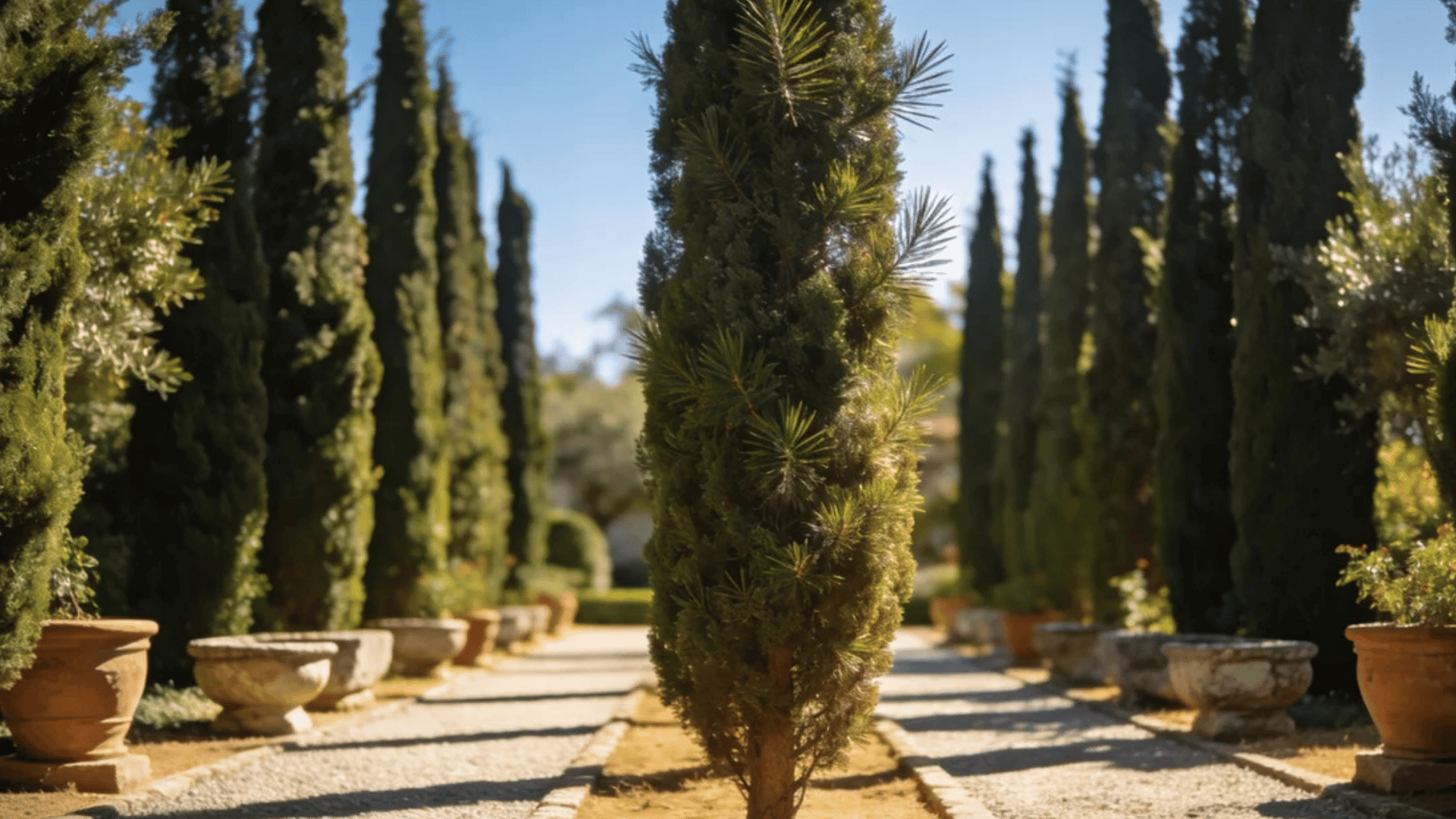
Where most trees spread wide, Italian Cypress grows straight up. That narrow, columnar shape makes it useful for tight spaces, formal garden designs, and yards where width is limited.
It adds about 2–3 feet in height each year and eventually reaches impressive heights without taking up much ground space.
Common in Mediterranean-style landscapes across warmer regions like California and the American Southwest, it performs best in dry, well-drained soil with plenty of direct sun throughout the day.
- Best for: Narrow spaces and formal yards
- Growth rate: 2–3 feet per year
- Mature size: Tall and narrow (40–70 ft tall, 3–4 ft wide)
- Sun needs: Full sun
- Where to buy: Natural Hills
12. Nellie Stevens Holly
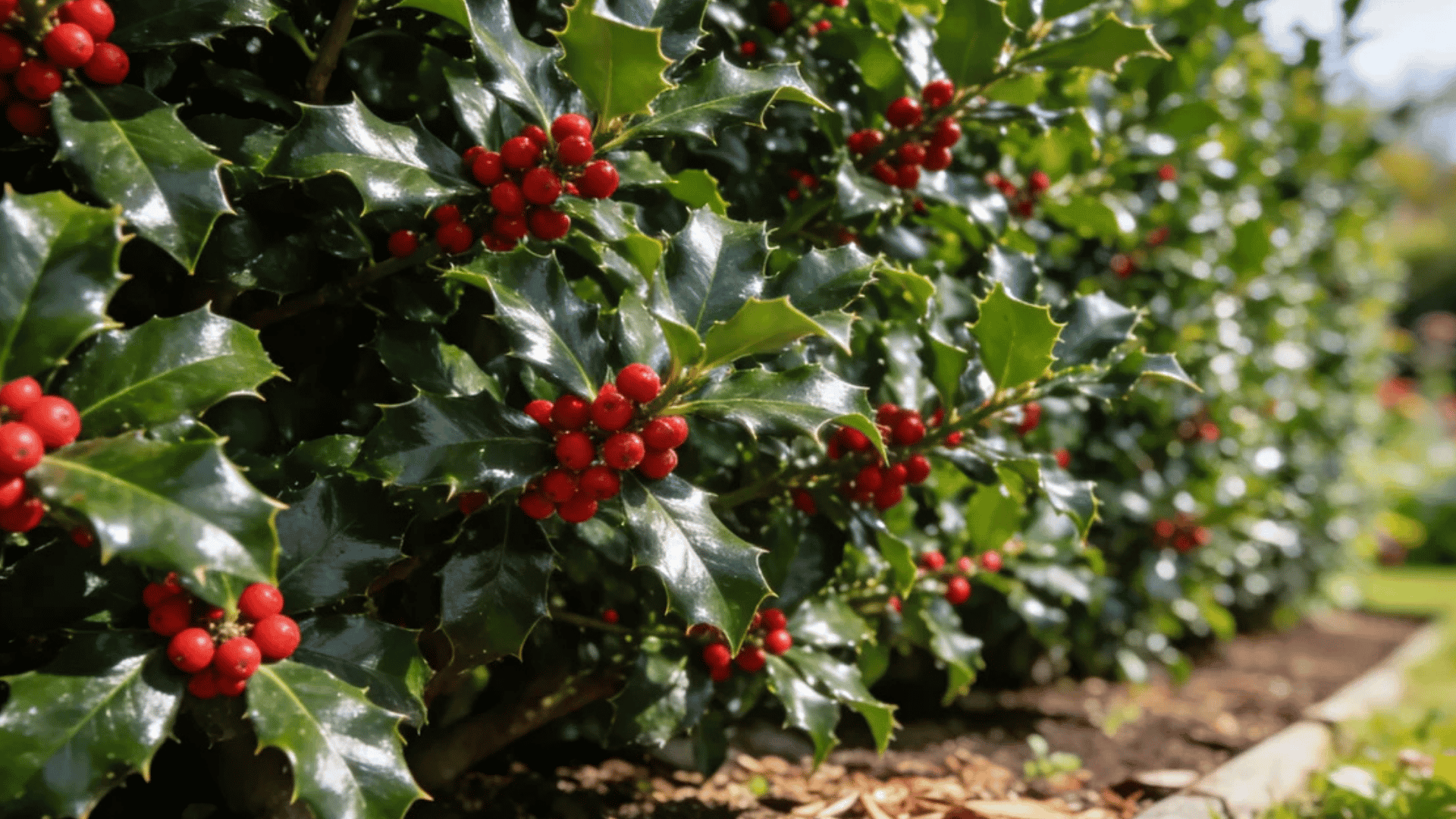
Nellie Stevens Holly takes a practical approach to year-round privacy. It grows roughly 3 feet per year, forming a dense, rounded evergreen shape that works well along boundaries and as a standalone specimen.
The glossy dark leaves hold through winter, and red berries appear in fall, adding color to an otherwise green-heavy season.
It tolerates partial shade better than many evergreens, making it a flexible choice for yards that don’t always get consistent full sun throughout the day.
- Best for: Evergreen privacy and year-round color
- Growth rate: ~3 feet per year
- Mature size: Medium to large (15–25 ft tall)
- Sun needs: Full sun to partial shade
- Where to buy: Arbor Day Foundation
13. Eastern Red Cedar
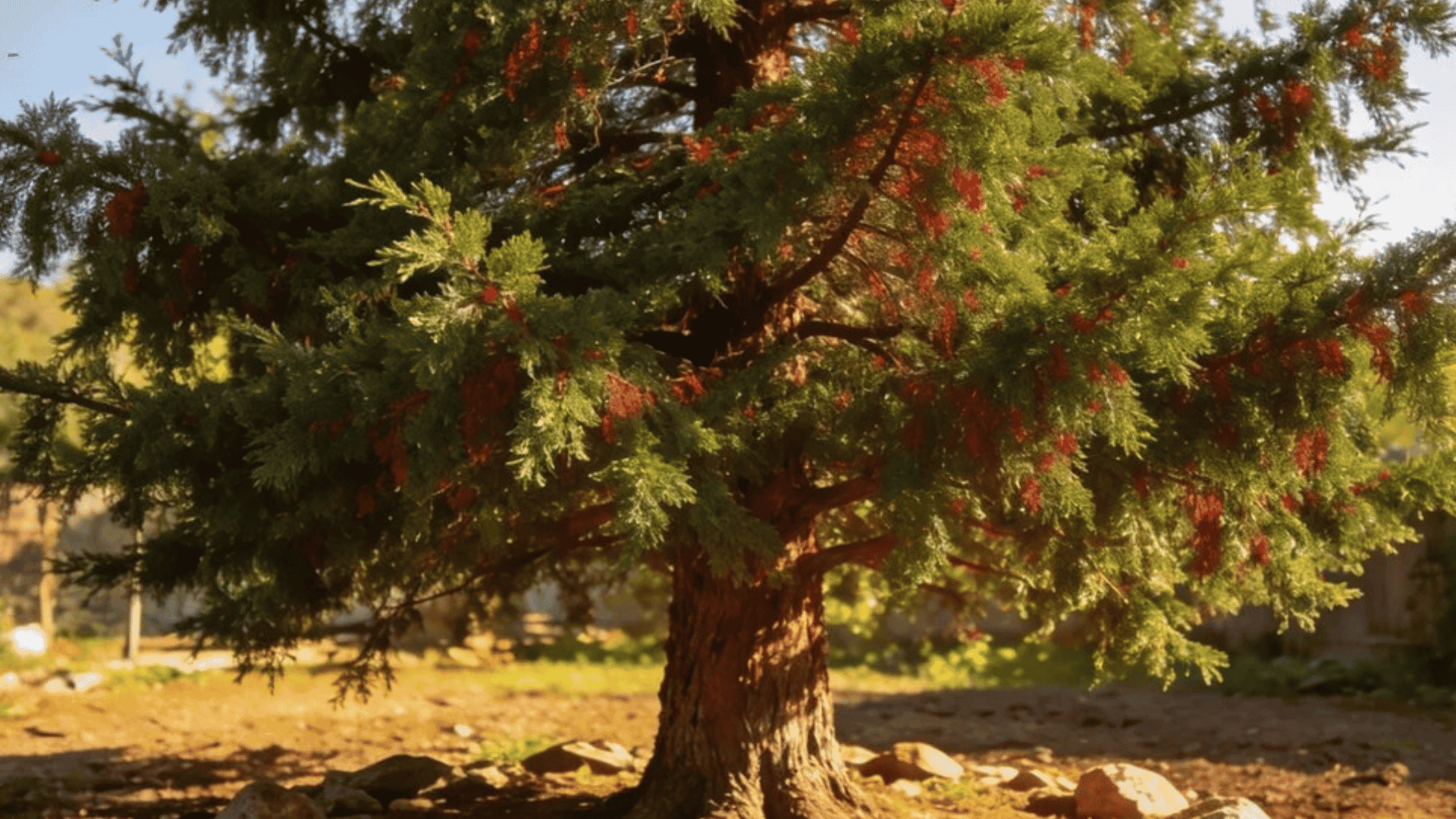
Don’t overlook Eastern Red Cedar just because its growth rate is more measured than others on this list. It adds 1–2 feet per year, but what it lacks in speed it makes up for in durability.
It handles drought, poor soil, rocky ground, and cold winters without complaint. The dense foliage provides reliable privacy and important habitat for birds year-round.
It’s a low-maintenance, long-lasting choice for homeowners who want a functional tree that holds up under tough conditions.
- Best for: Hardy privacy screens and wildlife
- Growth rate: 1–2 feet per year
- Mature size: Medium to large (20–40 ft tall)
- Sun needs: Full sun
- Where to buy: Arbor Day Foundation
14. Wax Myrtle
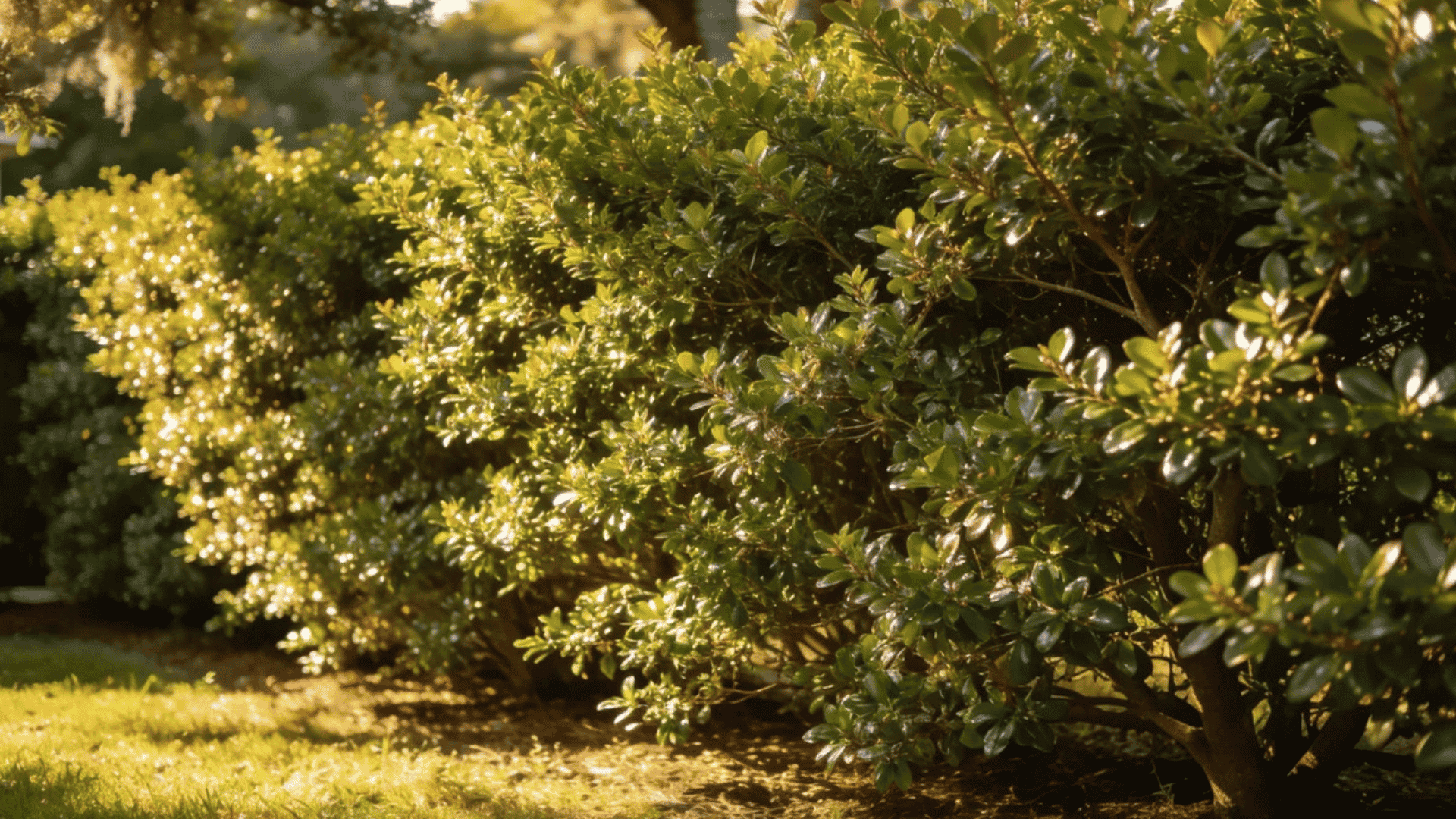
In warmer parts of the country, think the Southeast, Gulf Coast states, and parts of Texas, Wax Myrtle is a reliable go-to for natural-looking privacy.
It grows 3–5 feet per year and can be shaped into a hedge or left to grow freely as a multi-stemmed tree. The aromatic leaves are a nice bonus.
It tolerates heat, salt spray near coastal areas, and moderately wet soil, making it a lower-effort option that still delivers solid year-round screening.
- Best for: Warm-climate privacy hedges
- Growth rate: 3–5 feet per year
- Mature size: Medium (10–20 ft tall)
- Sun needs: Full sun to partial shade
- Where to buy: Fast Growing Trees
15. Crape Myrtle
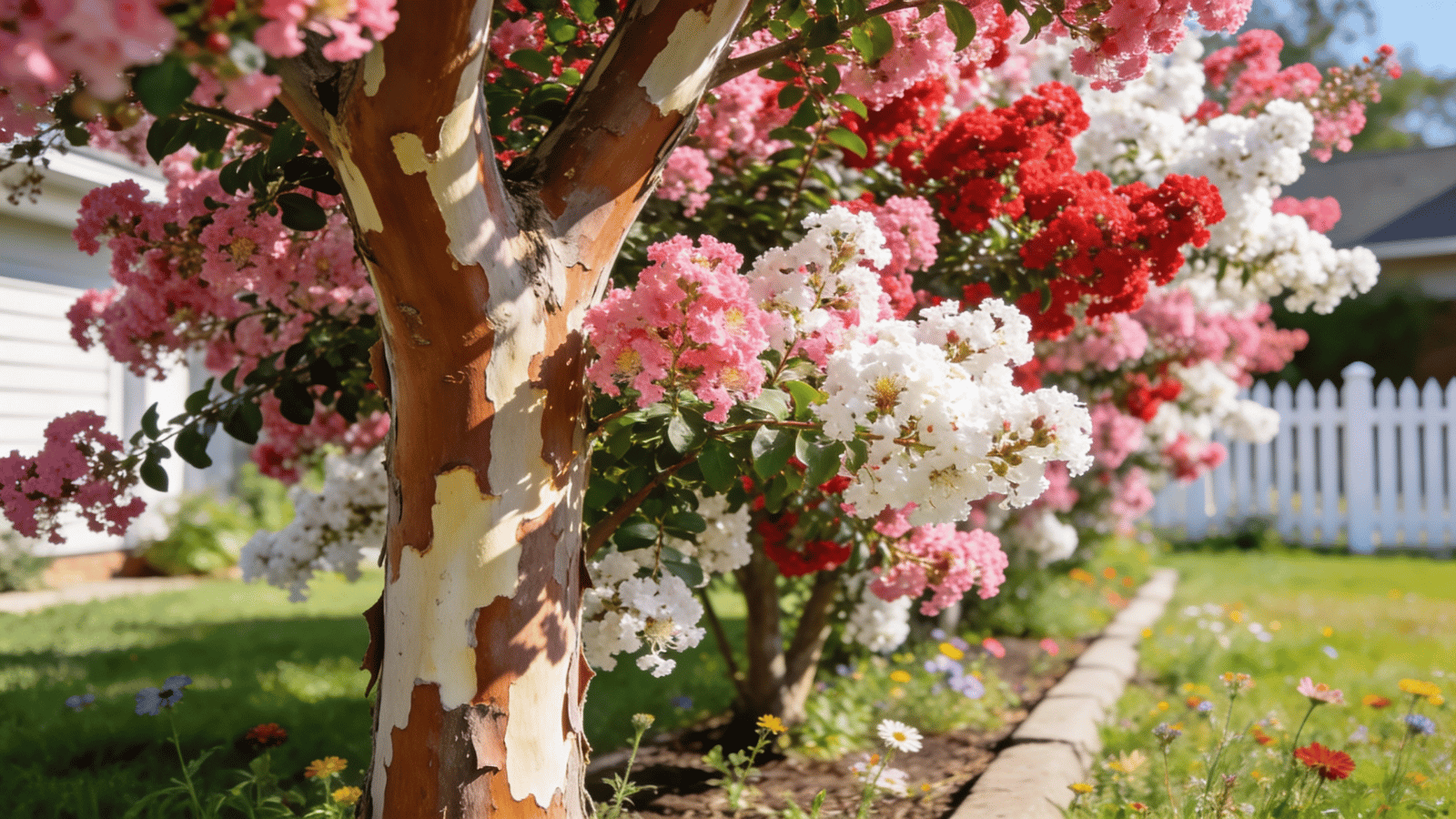
I’ve grown Crape Myrtle in a front yard border and it consistently delivered more color per season than almost anything else planted nearby.
Growing 3–5 feet annually, it reaches blooming size quickly and produces flowers throughout summer in shades of pink, red, white, and purple.
The smooth, peeling bark adds winter interest when blooms are gone. Best suited to USDA zones 6–9, it grows in hot, sunny spots.
Regular pruning keeps the shape clean and encourages stronger flowering each season.
- Best for: Summer color and curb appeal
- Growth rate: 3–5 feet per year
- Mature size: Small to medium (10–30 ft tall, varies by variety)
- Sun needs: Full sun
- Where to buy: Arbor Day Foundation
16. Eastern Redbud
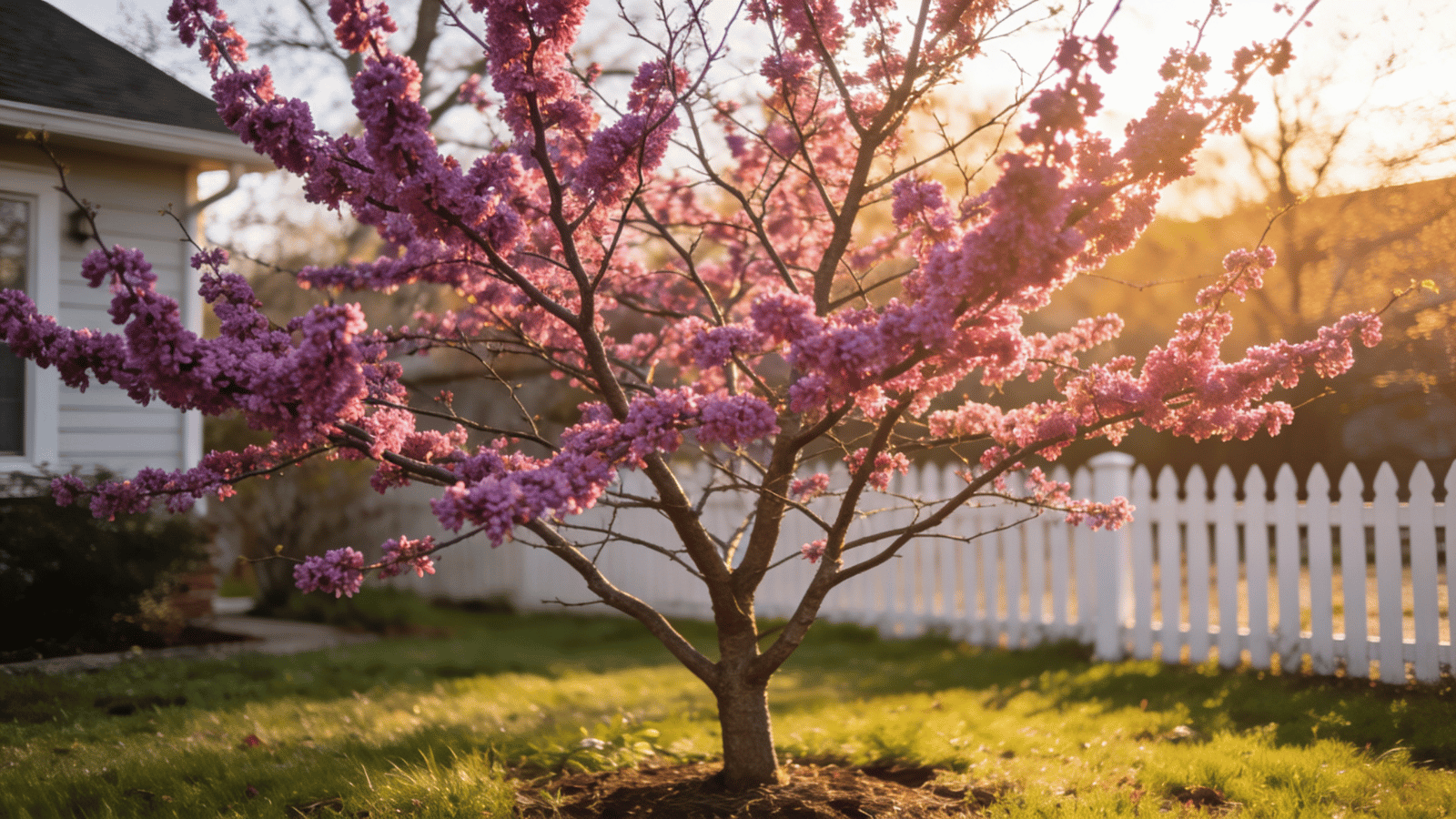
Eastern Redbud announces spring before almost any other tree.
The bright pink-purple flowers emerge directly on bare branches weeks before the heart-shaped leaves appear, a striking effect that works especially well in smaller front yards and garden borders.
Growth runs about 7–10 feet in the first few years, then settles into a slower pace.
It prefers some afternoon shade in hotter regions and performs well across much of the eastern United States, from zone 4 all the way through zone 9.
- Best for: Spring flowers and smaller yards
- Growth rate: 7–10 feet in first 3–4 years, then steadies
- Mature size: Small to medium (20–30 ft tall)
- Sun needs: Full sun to partial shade
- Where to buy: Nature Hills
17. Royal Empress Tree
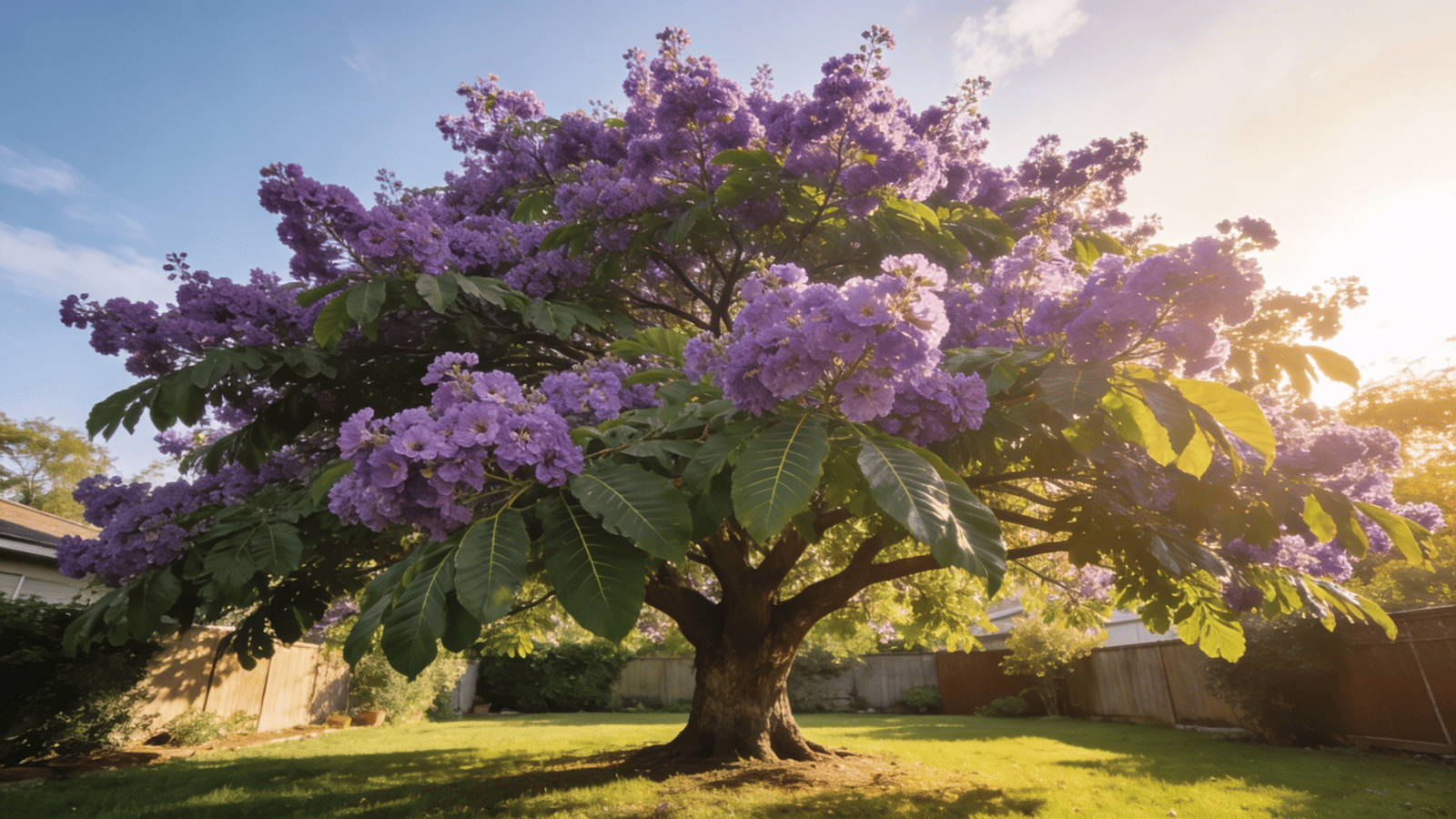
A friend planted a Royal Empress Tree mainly for the flowers, but what surprised her most was the sheer speed it can shoot up to 10–15 feet in a single growing season under the right conditions, making it arguably the fastest-growing tree on this entire list.
The large purple blooms in spring are genuinely hard to miss. It works well as a statement tree in a large yard.
- Best for: Bold statement and rapid growth
- Growth rate: 10–15 feet per year
- Mature size: Large (30–40 ft tall)
- Sun needs: Full sun
- Typical nursery price: $30–$80 for a starter tree
Check before planting: Royal Empress Tree (Paulownia tomentosa) is listed as invasive in several eastern U.S. states. Sterile cultivars like ‘Alishan’ are a safer option where local regulations apply.
18. Mimosa Tree
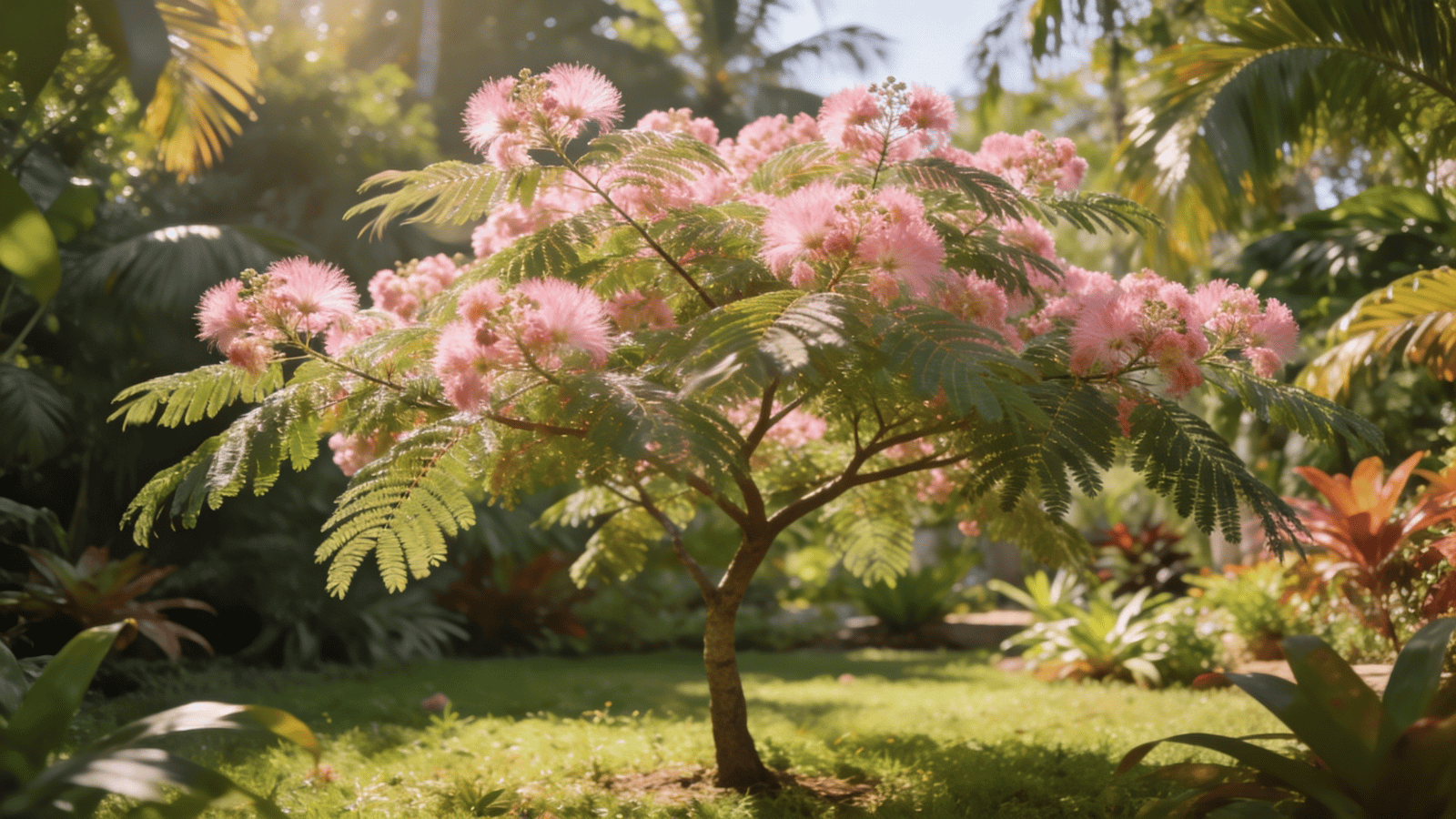
There’s something genuinely eye-catching about a Mimosa in full bloom; the soft, feathery pink flowers and fern-like foliage give it a light, almost tropical feel that most common yard trees can’t replicate.
Growth sits around 2–3 feet per year, and it settles into a wide, spreading canopy at maturity. It performs best in warm, sunny regions and handles dry or poor soil once established.
That said, it seeds readily in some areas, so checking local invasive plant lists first is a smart step.
- Best for: Ornamental interest and tropical look
- Growth rate: 2–3 feet per year
- Mature size: Small to medium (20–40 ft tall)
- Sun needs: Full sun
- Typical nursery price: $25–$75, depending on size and variety
19. Flowering Dogwood
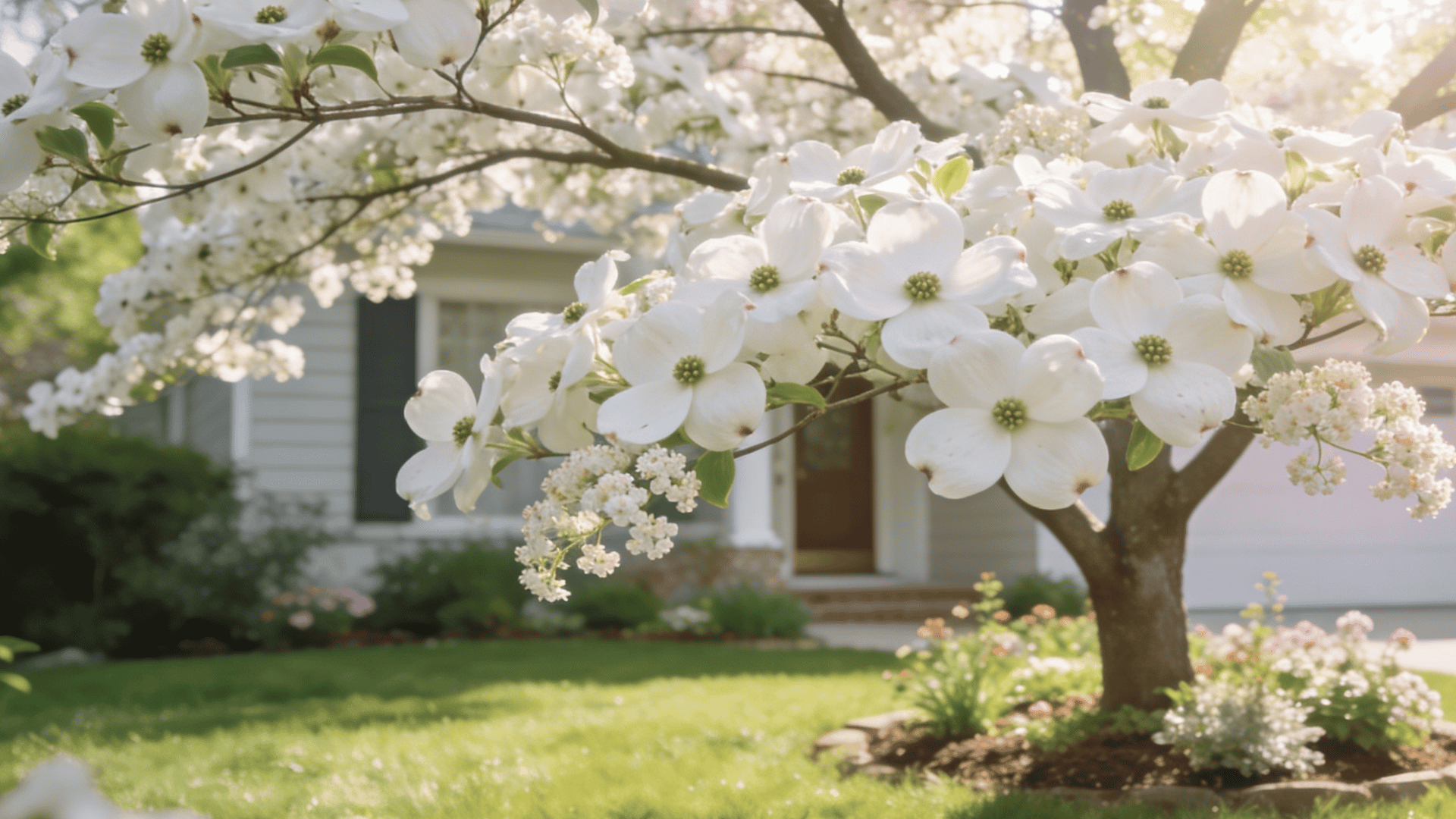
Flowering Dogwood earns its place through sheer seasonal variety rather than outright speed. Spring brings white or pink bracts covering the branches before leaves appear.
Summer offers a dense green canopy. Fall delivers red berries and warm foliage color. Growth is moderate at 1–2 feet per year, making it more of a long-term investment than a quick fix.
It performs best with some afternoon shade in hotter climates and does well in moist, well-drained, slightly acidic soil across most of the eastern United States.
- Best for: Four-season ornamental interest
- Growth rate: 1–2 feet per year
- Mature size: Small to medium (15–30 ft tall)
- Sun needs: Partial shade to full sun
- Where to buy: Nature Hills
20. Chaste Tree
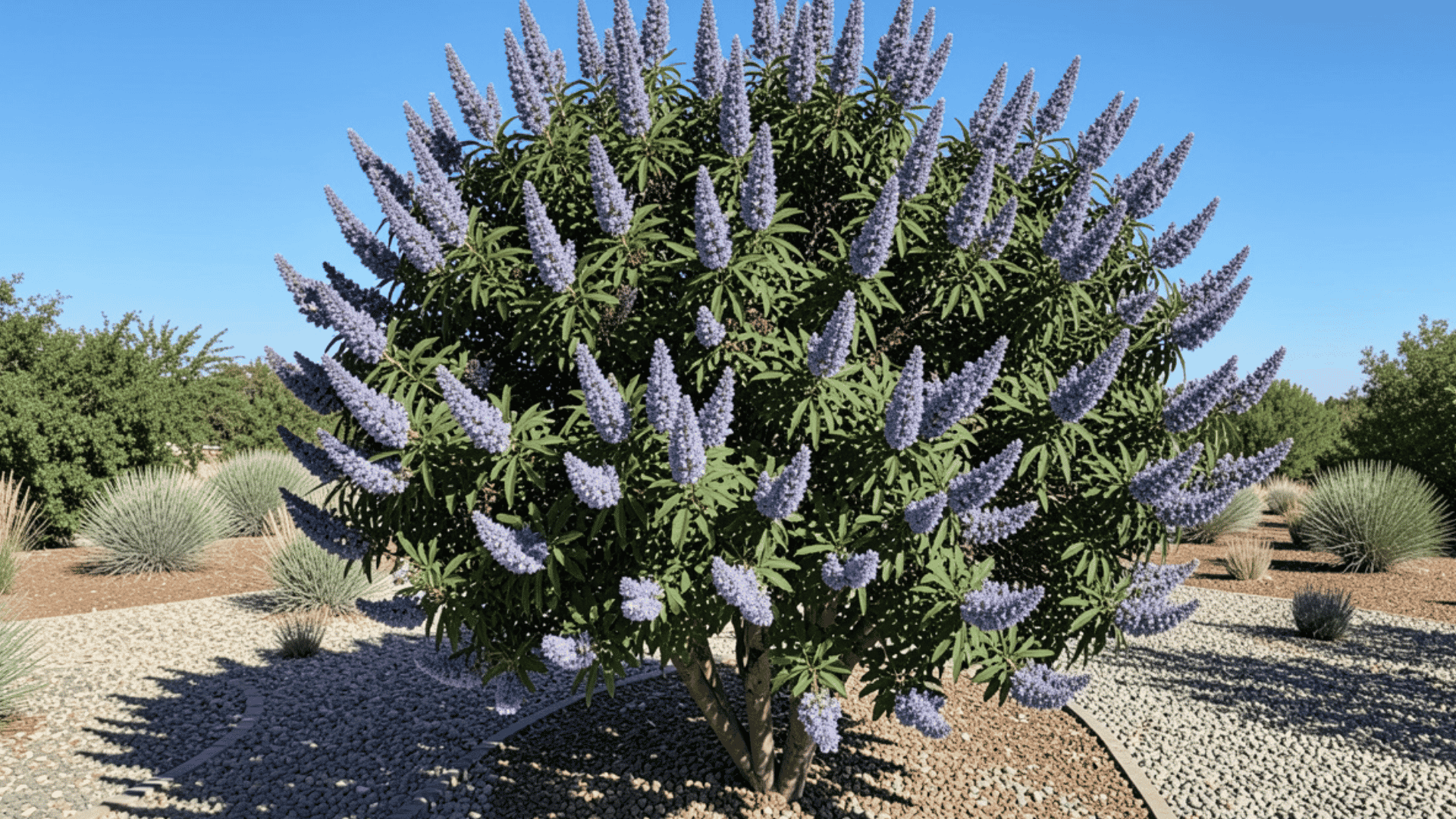
Chaste Tree is a dependable summer bloomer that handles heat and dry conditions without much fuss.
It puts on 2–4 feet of growth per year and fills up with long lavender-blue flower spikes from midsummer into fall, a useful window when many other flowering trees have already finished for the season.
It’s a good fit for warm, dry landscapes in zones 5–9. In colder winters, it dies back to the ground but returns reliably from the roots each spring, which naturally keeps the size manageable.
- Best for: Summer-flowering warm-climate gardens
- Growth rate: 2–4 feet per year
- Mature size: Small (8–15 ft tall)
- Sun needs: Full sun
- Where to buy: Natural Hills
21. Jacaranda
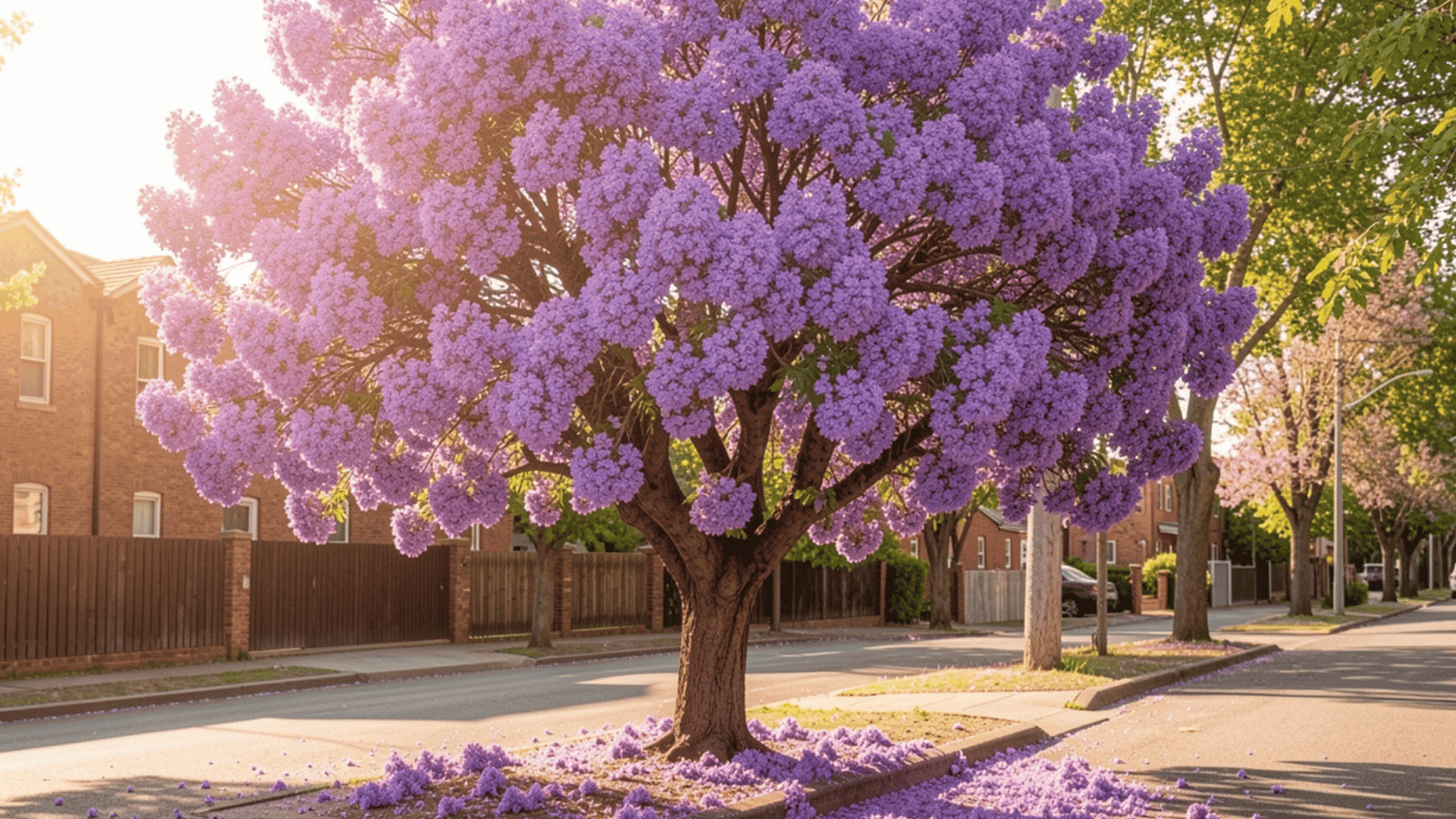
Jacaranda trees are a statement in warm-climate landscapes. When they bloom in late spring, the canopy fills with violet-purple flowers that shed onto the ground below, a well-known sight in cities like Los Angeles and Miami.
Growth runs 2–4 feet per year in the right conditions, and the feathery foliage adds texture between bloom seasons.
It needs a frost-free climate to perform well, making it best suited to USDA zones 9–11, where winters stay consistently mild.
- Best for: Warm-climate statement tree
- Growth rate: 2–4 feet per year
- Mature size: Medium to large (25–50 ft tall)
- Sun needs: Full sun
- Where to buy: Fast Growing Trees
22. Serviceberry
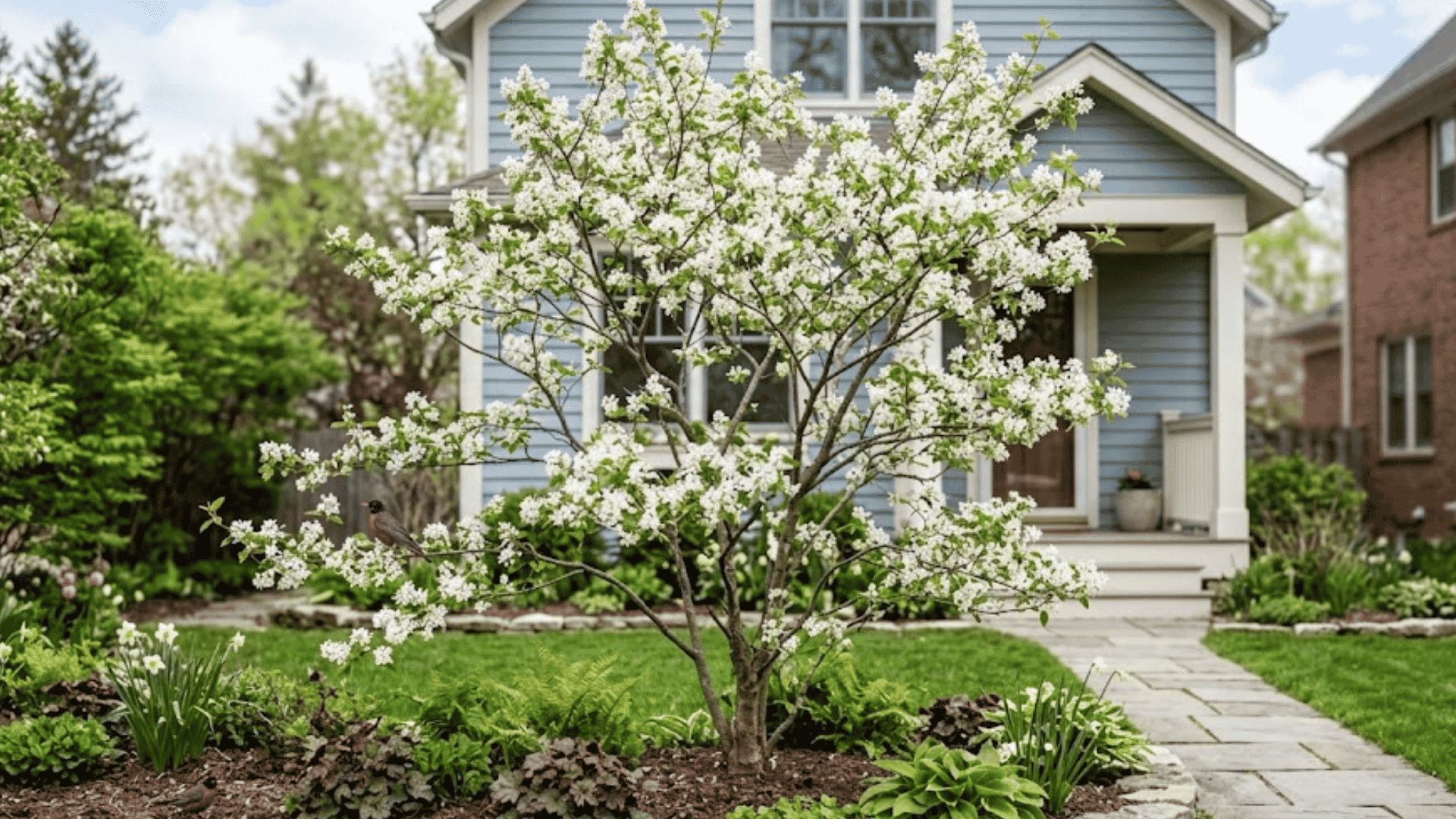
I spotted a Serviceberry in a compact front yard last spring, covered in white flowers while everything else was still bare, and it stopped me in my tracks.
It’s a smaller tree that earns its space through four-season performance. Spring brings clusters of white blooms. Early summer produces small berries that birds love.
Fall color turns orange-red. Growth adds 1–2 feet annually, making it a good match for smaller yards, garden edges, and spots near patios where a full-sized tree simply wouldn’t fit.
- Best for: Small yards and multi-season interest
- Growth rate: 1–2 feet per year
- Mature size: Small (10–20 ft tall)
- Sun needs: Full sun to partial shade
- Where to buy: Arbor Day Foundation
23. Crabapple
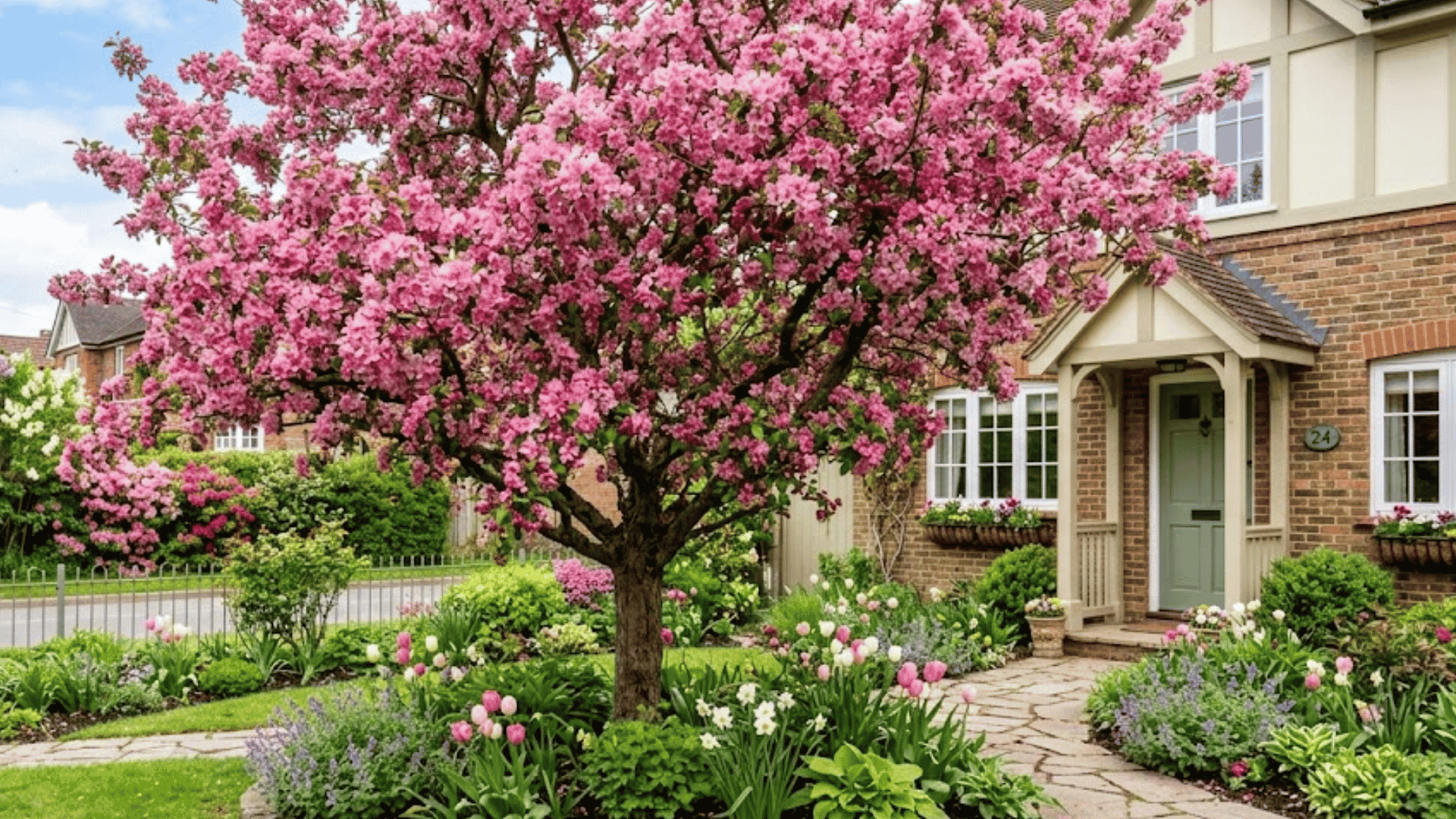
Crabapple is one of the most reliable small trees for front yards and compact landscapes. Spring blooms arrive in white, pink, or red depending on the variety, and small decorative fruits follow in late summer.
Growth sits at 1–2 feet per year, steady rather than dramatic, but the result is a polished tree that looks cared-for in any season.
Choosing a disease-resistant variety from the start saves significant maintenance headaches down the line. Many newer cultivars hold their fruit well into winter, adding late-season color.
- Best for: Front yards and small-space color
- Growth rate: 1–2 feet per year
- Mature size: Small (15–25 ft tall)
- Sun needs: Full sun
- Where to buy: Fast Growing Trees
24. Desert Willow
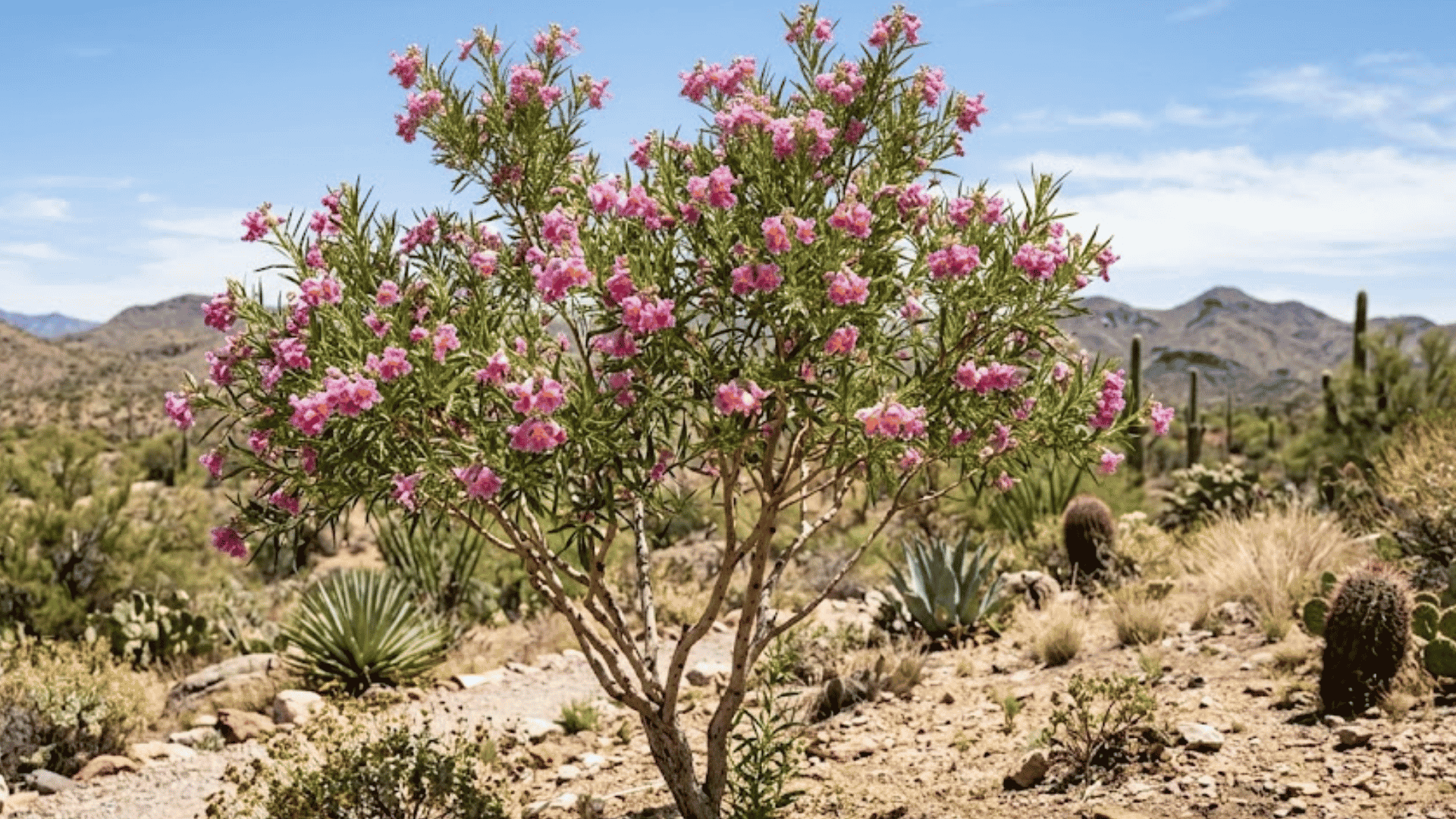
In dry climates where most trees struggle to get going, Desert Willow stands out as a genuinely practical option.
It grows 2–3 feet per year and produces trumpet-shaped flowers in pink, white, or lavender from late spring through summer.
Once established, it needs very little supplemental water, a real advantage in drought-prone areas across the American Southwest, New Mexico, and Texas.
The narrow, willow-like leaves give it a light, open appearance. It tops out at a manageable size, making regular maintenance straightforward.
- Best for: Dry and drought-prone climates
- Growth rate: 2–3 feet per year
- Mature size: Small to medium (15–25 ft tall)
- Sun needs: Full sun
- Typical nursery price: $30–$90 at local Southwest and Southern nurseries
25. River Birch
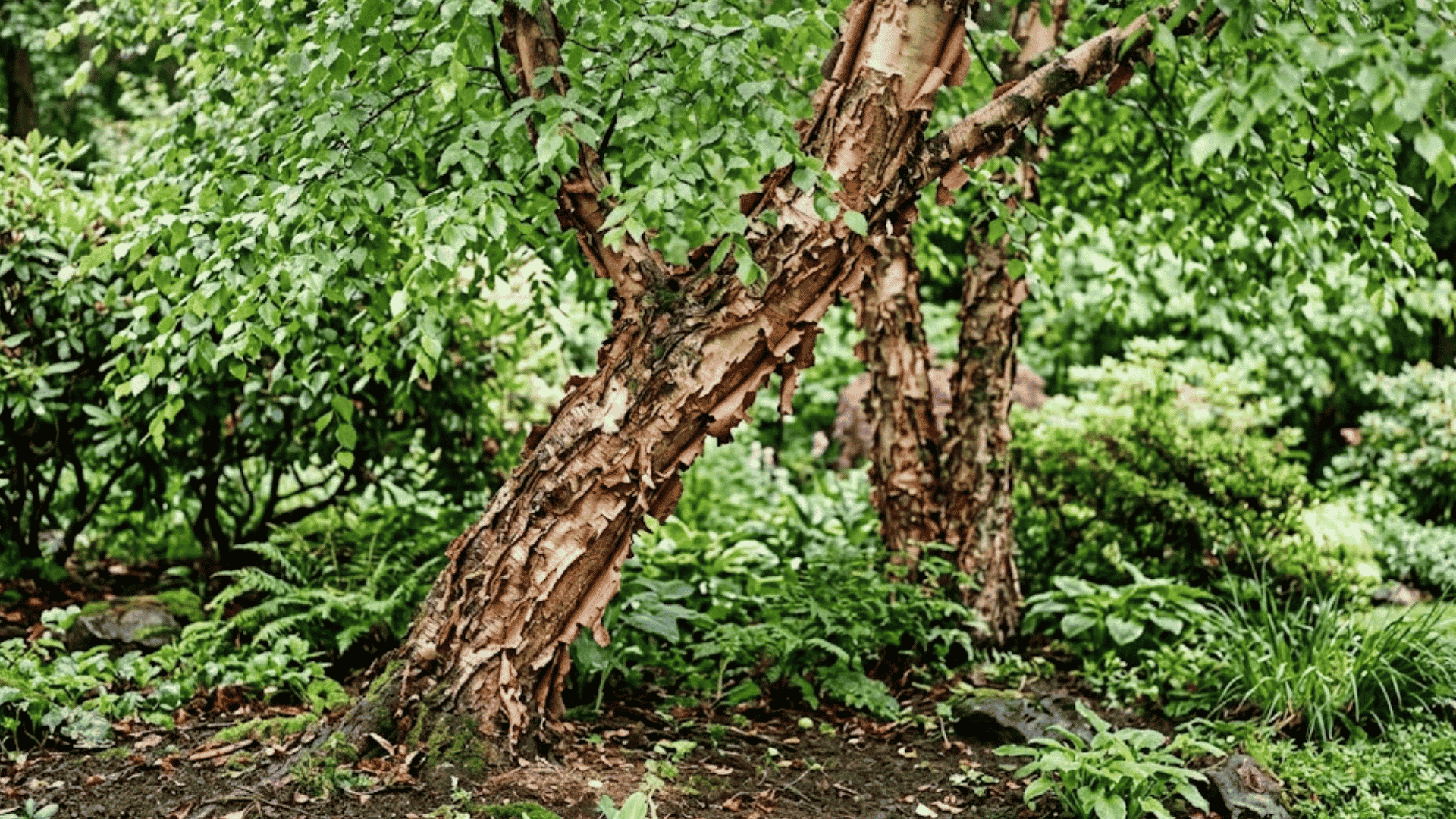
After dealing with a low-lying corner of the yard that stayed soggy every spring, I planted a River Birch there and haven’t had to think about that spot since.
It handles moist, poorly-drained soil better than most trees and grows at a solid 3–4 feet per year. The peeling, papery bark in shades of cinnamon and cream adds visual interest across all four seasons.
It’s one of the more attractive fast-growing trees for wet or transitional soil areas where other species tend to fail quickly.
- Best for: Moist soil and year-round visual appeal
- Growth rate: 3–4 feet per year
- Mature size: Medium to large (40–70 ft tall)
- Sun needs: Full sun to partial shade
- Where to buy: Nature Hills
26. Japanese Maple
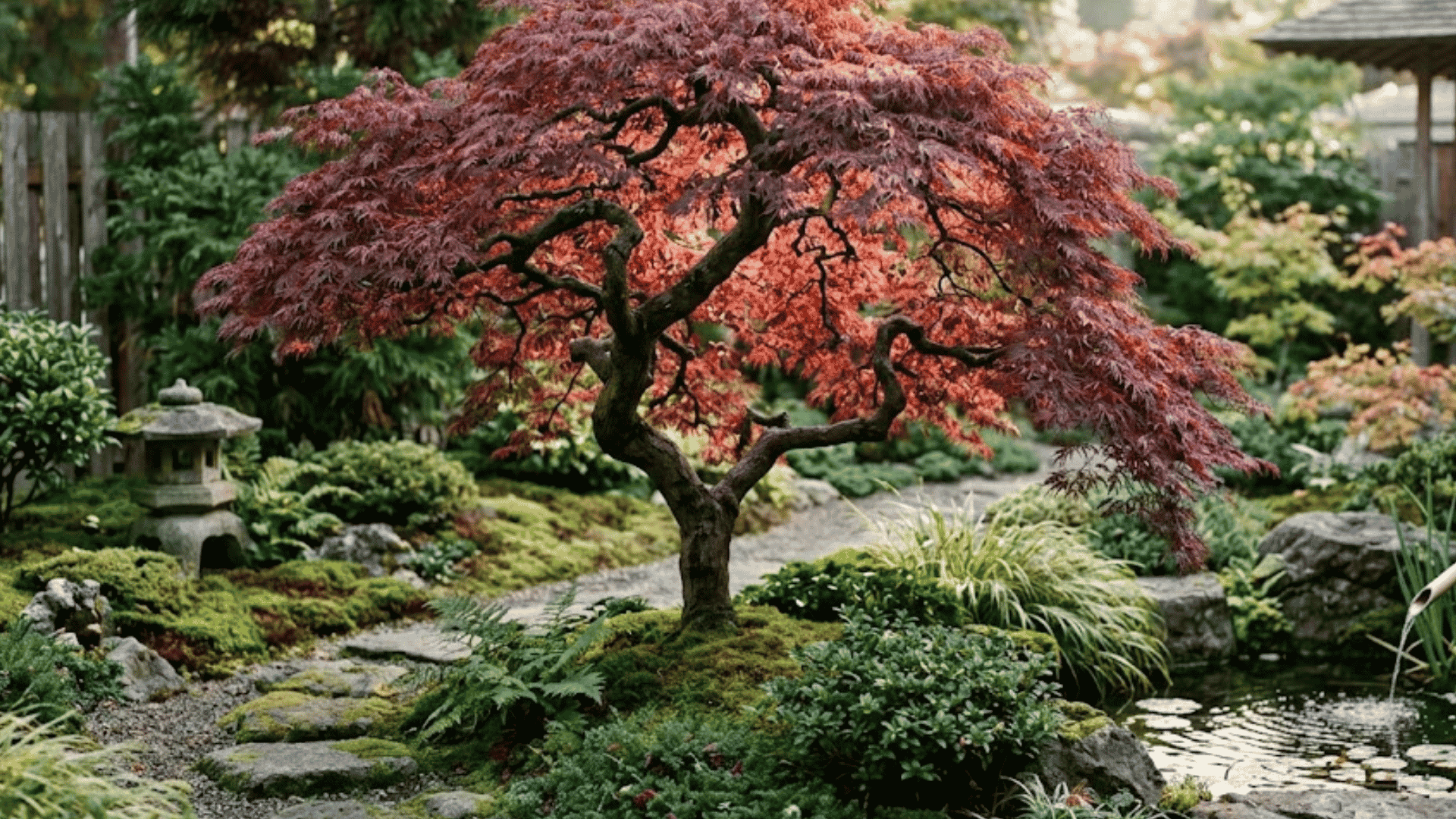
Japanese Maple brings a level of structure and design interest that few small trees can match. Growth is slower at around 1–2 feet per year, but what it lacks in speed it makes up for in year-round visual refinement.
The deeply lobed leaves come in shades of green, red, or burgundy, depending on the variety, and the layered branching gives it a sculptural quality even in winter.
Best placed in spots with morning sun and afternoon shade, especially in warmer climates where summer heat can scorch the foliage.
- Best for: Small-space garden design
- Growth rate: 1–2 feet per year
- Mature size: Small (6–25 ft tall, varies by variety)
- Sun needs: Partial shade to full sun
- Where to buy: Nature Hills
27. Amelanchier
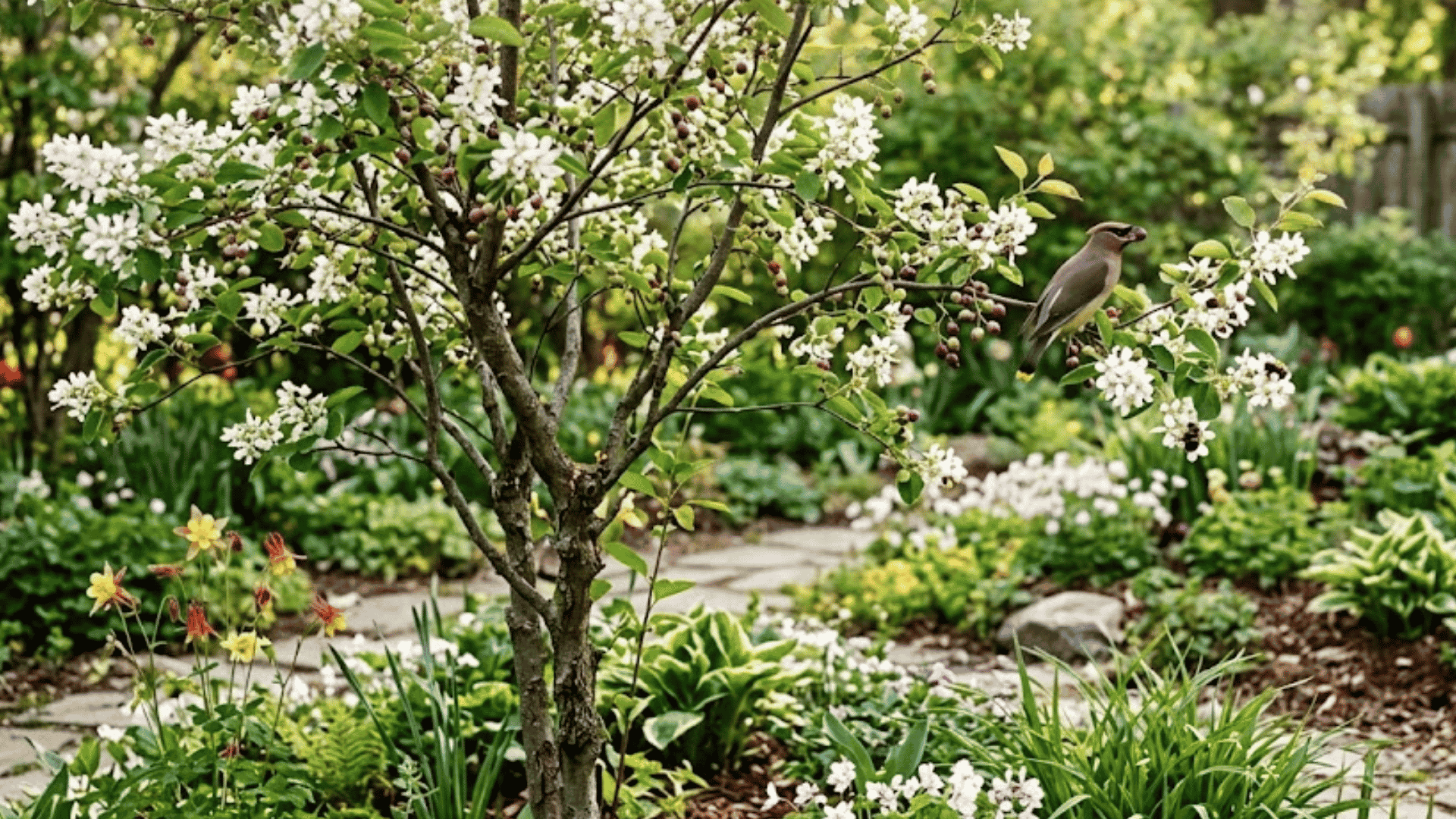
Amelanchier, also called Shadbush or Juneberry, is a native tree that rewards close attention throughout the year. The white spring flowers appear early, sometimes while snow is still on the ground in northern regions.
Sweet berries follow in early summer, drawing birds and pollinators regularly. Fall foliage runs orange to red across most varieties.
Growth adds 1–2 feet per year, and the mature size stays compact enough for planting near patios, walkways, or tighter spaces. A reliable, low-fuss tree across many North American climates.
- Best for: Compact landscapes and native plantings
- Growth rate: 1–2 feet per year
- Mature size: Small to medium (15–25 ft tall)
- Sun needs: Full sun to partial shade
- Typical nursery price: $35–$100, depending on variety and container size
28. Bald Cypress
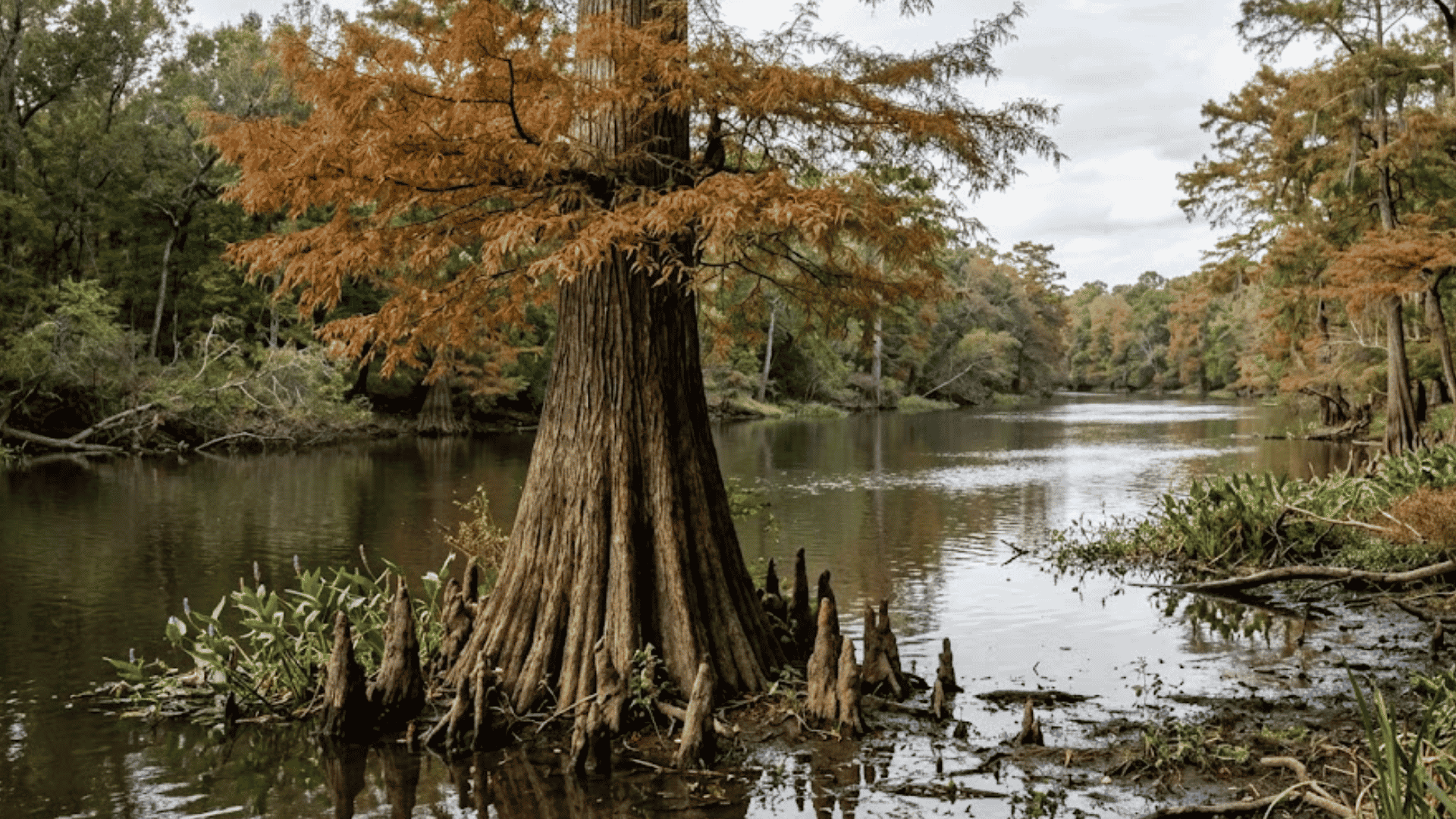
A friend with a low-lying property near a river planted Bald Cypress along the waterline, and years later, those trees are thriving while everything else in that wet patch has struggled to survive.
It adds 1–2 feet per year and develops a strong, conical form that becomes more defined with age. Despite the name, it handles drier upland conditions reasonably well once established.
The feathery needles turn a warm orange-brown in fall before dropping, a reminder that this is one of the few deciduous conifers in North America.
- Best for: Wet soil and large landscapes
- Growth rate: 1–2 feet per year
- Mature size: Large (50–70 ft tall)
- Sun needs: Full sun
- Typical nursery price: $40–$120 for a nursery-grown container tree
29. Eucalyptus
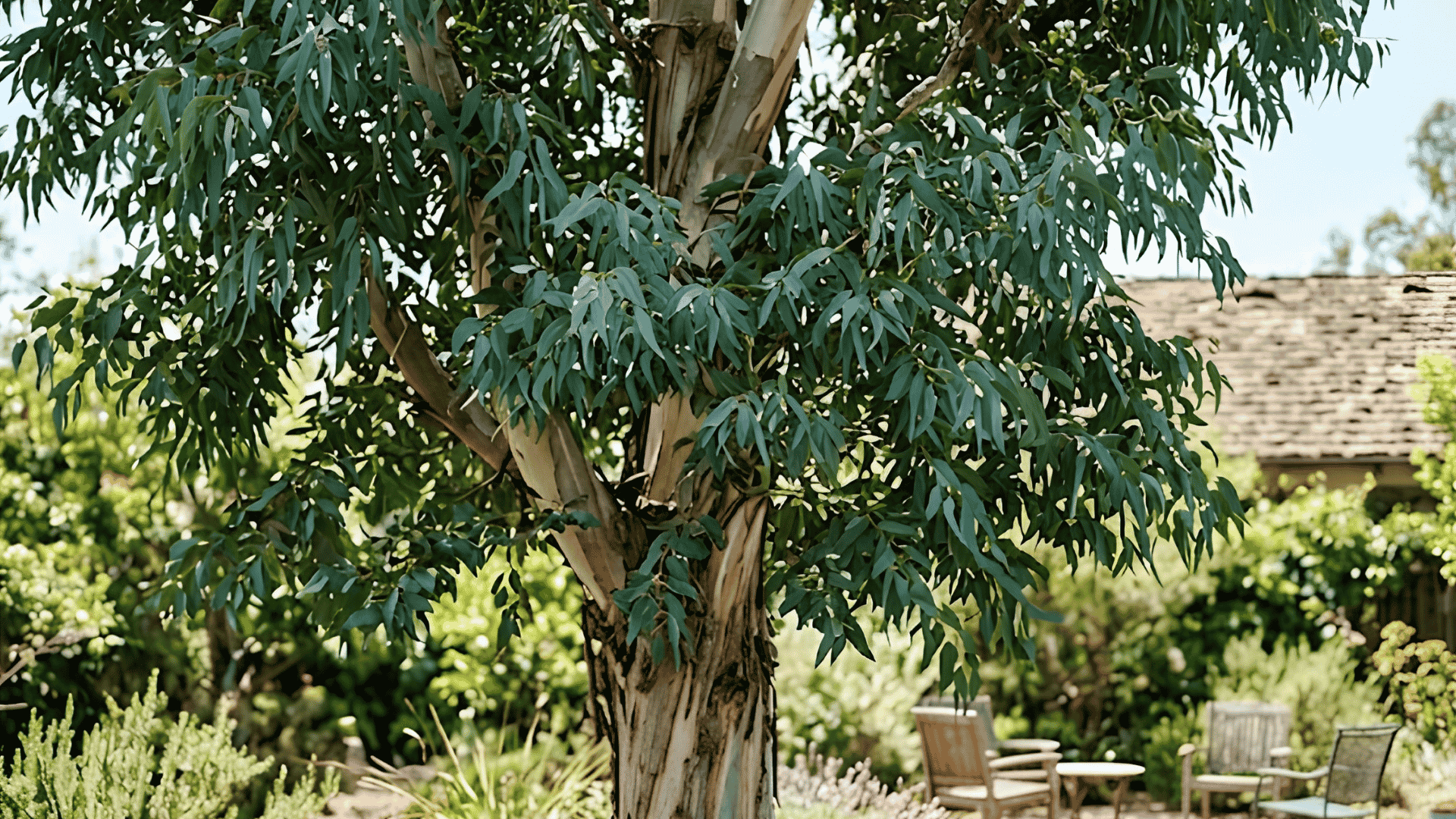
Eucalyptus is genuinely fast, some species add 6–8 feet or more in a single year under warm conditions.
That growth rate puts it among the fastest-growing trees available for warm-climate regions like coastal California, Hawaii, and the Gulf states. The aromatic, blue-green foliage is a bonus, often cut for floral arrangements.
The trade-off is size wide varieties grow very large and need significant space. Selecting a smaller cultivar at the start prevents issues with roots and overhead clearance later.
- Best for: Warm-climate height and greenery
- Growth rate: 6–8+ feet per year
- Mature size: Medium to large (30–180 ft tall, varies by species)
- Sun needs: Full sun
- Where to buy: Arbor Day Foundation
30. Black Locust
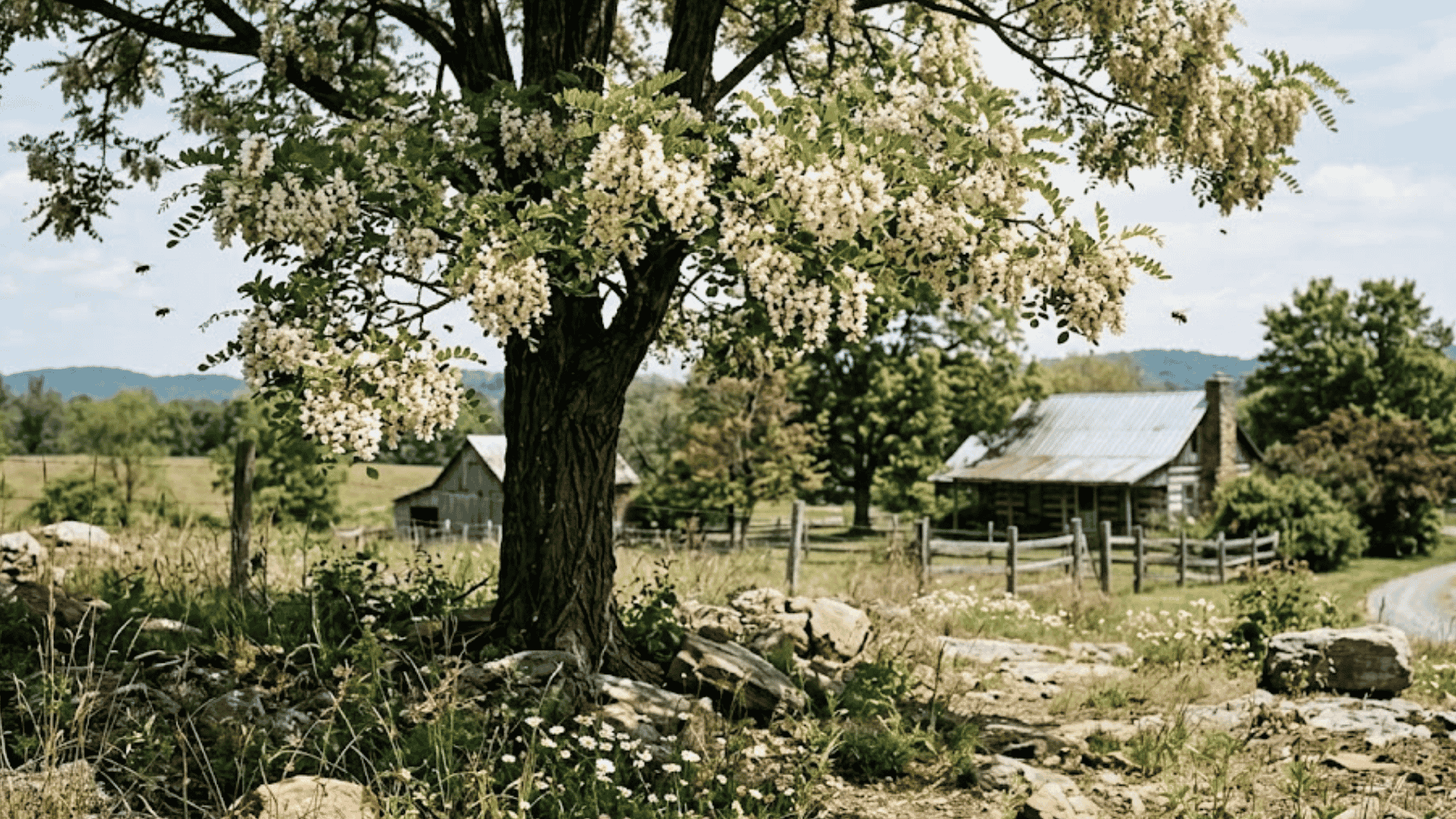
Black Locust is the kind of tree that thrives where others give up. Poor soil, rocky ground, and steep banks, it handles all of these without much help.
Growth adds 3–4 feet per year, and fragrant white flower clusters appear in spring, drawing bees and pollinators in large numbers.
The wood is exceptionally hard and rot-resistant, making it a practical pick for rural properties. It does spread through root sprouts in some regions, so checking local guidance on its use before planting is a sensible first step.
- Best for: Poor soil and erosion control
- Growth rate: 3–4 feet per year
- Mature size: Medium to large (30–50 ft tall)
- Sun needs: Full sun
- Where to buy: Nature Hills
31. Honey Locust
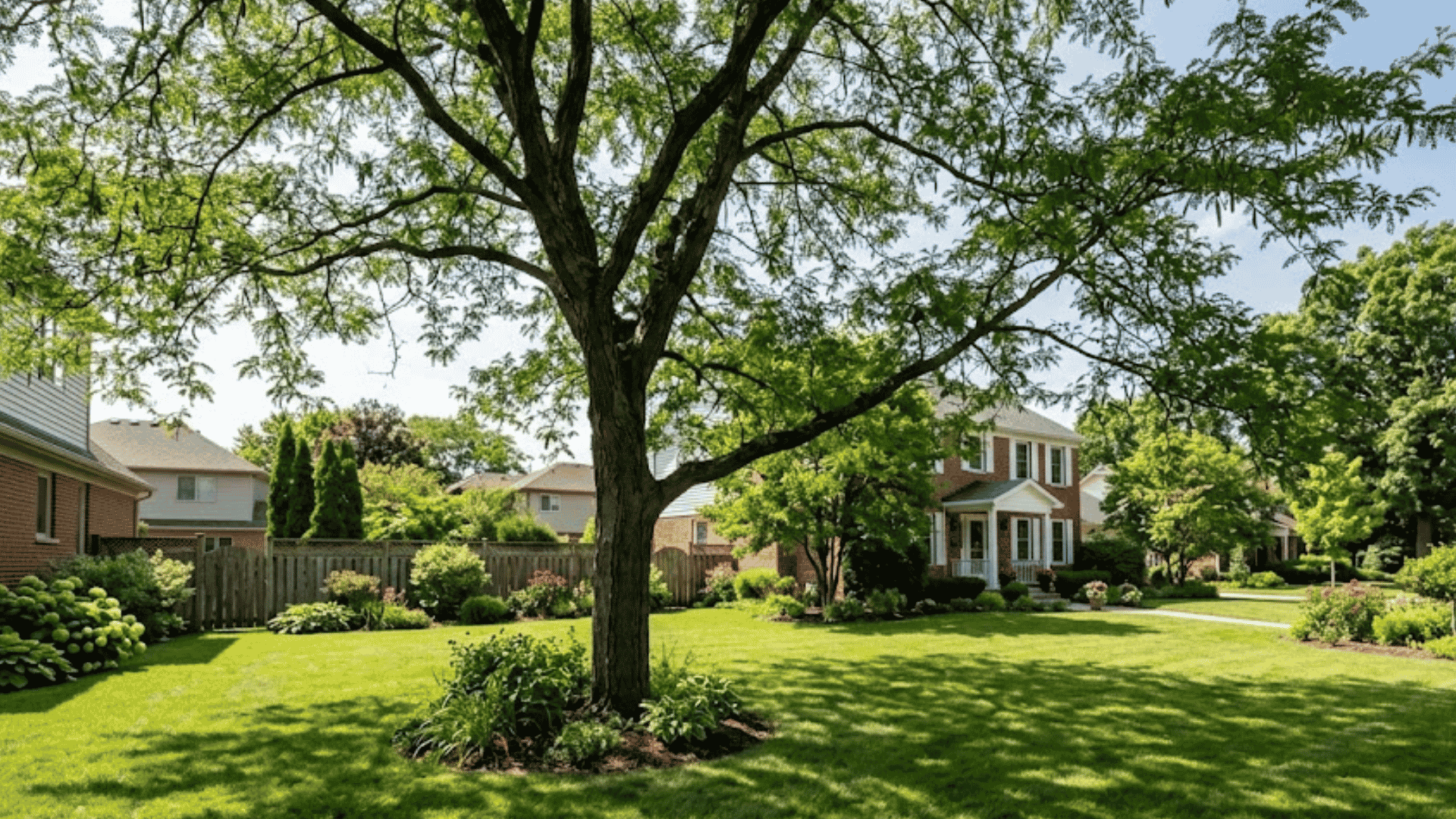
I saw a row of Honey Locusts in an older suburban neighborhood once, and what stood out was how the dappled light filtered through the fine leaflets; it created real shade without making the lawn underneath feel dark or starved of sun.
Growing 2–3 feet per year, it reaches a graceful, arching form over time. Thornless, seedless cultivars are the best pick for residential yards since they reduce cleanup and maintenance.
It tolerates urban conditions well, including compacted soil, heat, and periods of limited water.
- Best for: Filtered shade in urban yards
- Growth rate: 2–3 feet per year
- Mature size: Medium to large (30–70 ft tall)
- Sun needs: Full sun
- Typical nursery price: $50–$130, depending on trunk caliper and height
32. Hackberry
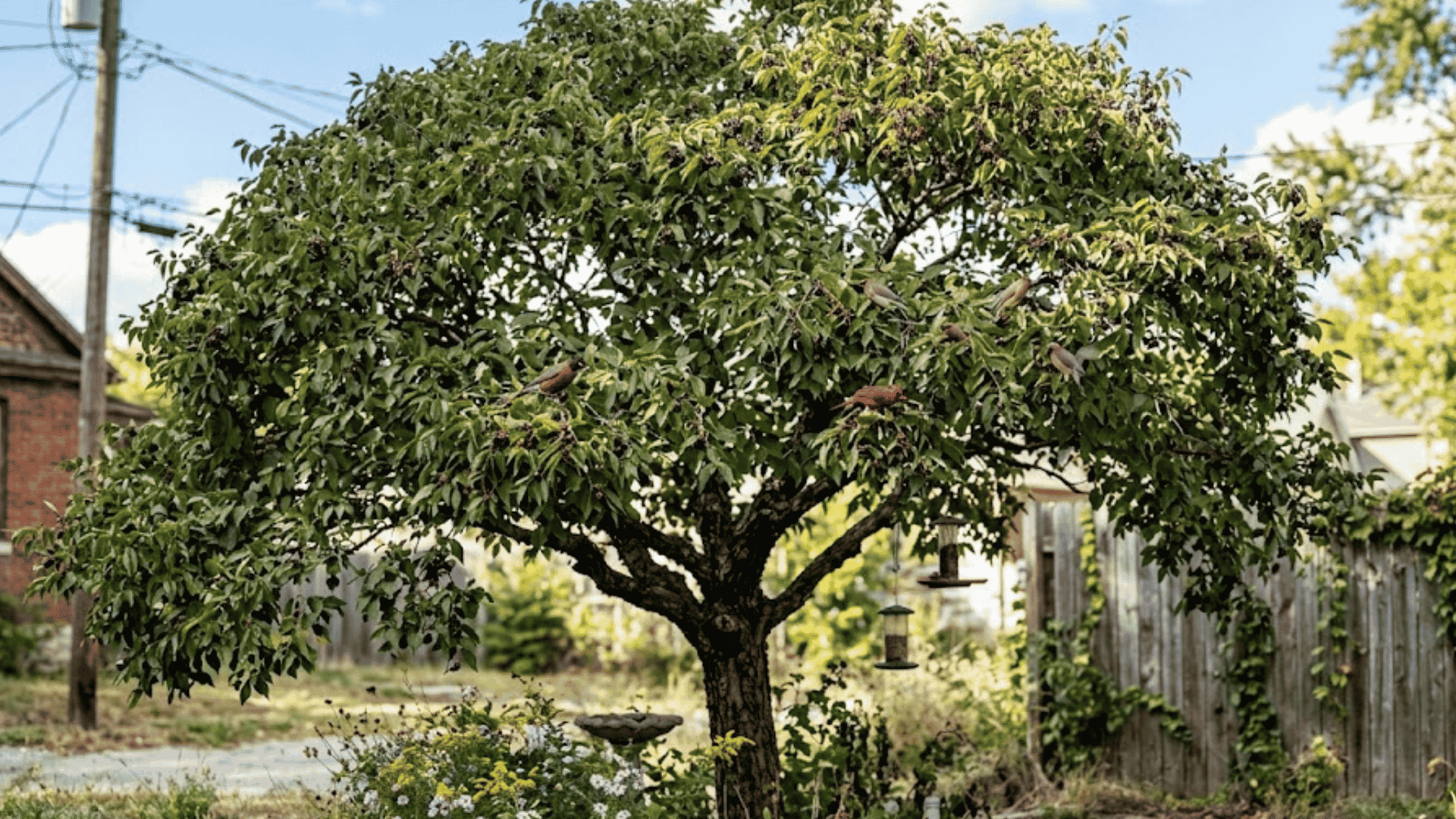
Hackberry doesn’t get the recognition it deserves. It handles heat, wind, drought, flooding, and compacted soil, sometimes all in the same season, and still produces a solid canopy year after year.
Growth adds 1–2 feet annually, and the tree matures into a broad, rounded shape that gives good shade coverage over time. The small dark berries that appear in fall draw a wide range of bird species to the yard.
For homeowners dealing with tough conditions where other trees haven’t lasted, Hackberry is a genuinely dependable fallback.
- Best for: Tough conditions and shade
- Growth rate: 1–2 feet per year
- Mature size: Medium to large (40–60 ft tall)
- Sun needs: Full sun to partial shade
- Where to buy: Fast Growing Trees
33. Green Giant Arborvitae
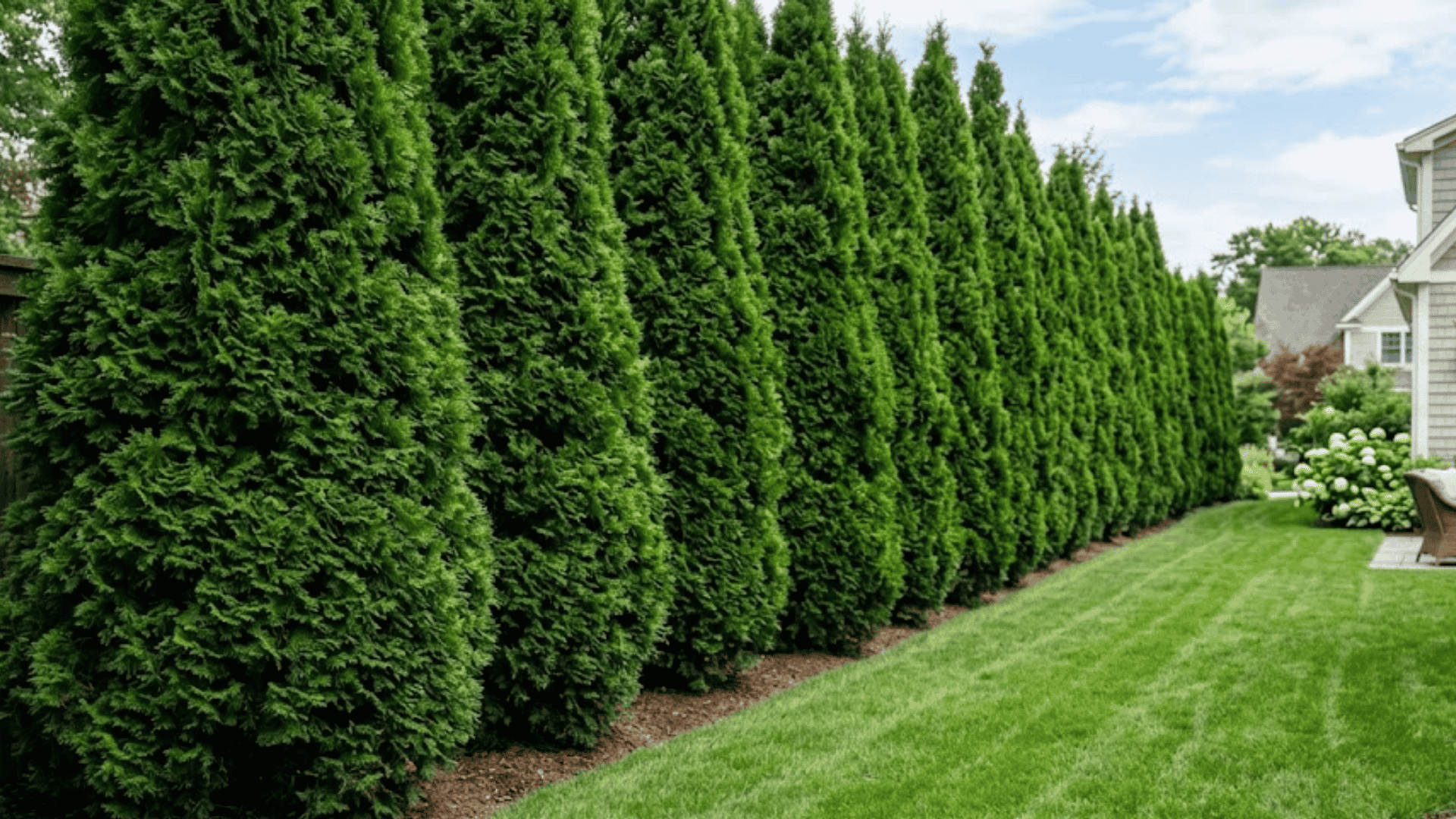
Privacy was the whole point when I put in a line of Green Giants along the side yard, and within four growing seasons, the view from the neighbor’s second floor was completely blocked.
Growing 3–5 feet per year, this is one of the fastest-growing trees consistently recommended for privacy screening. It stays dense, green, and full from top to bottom with minimal maintenance year-round.
Spacing plants 5–6 feet apart at planting gives them room to fill in properly without competing against each other.
- Best for: Privacy and windbreaks
- Growth rate: 3–5 feet per year
- Mature size: Large (30–60 ft tall)
- Sun needs: Full sun to partial shade
- Where to buy: Arbor Day Foundation
34. Dawn Redwood
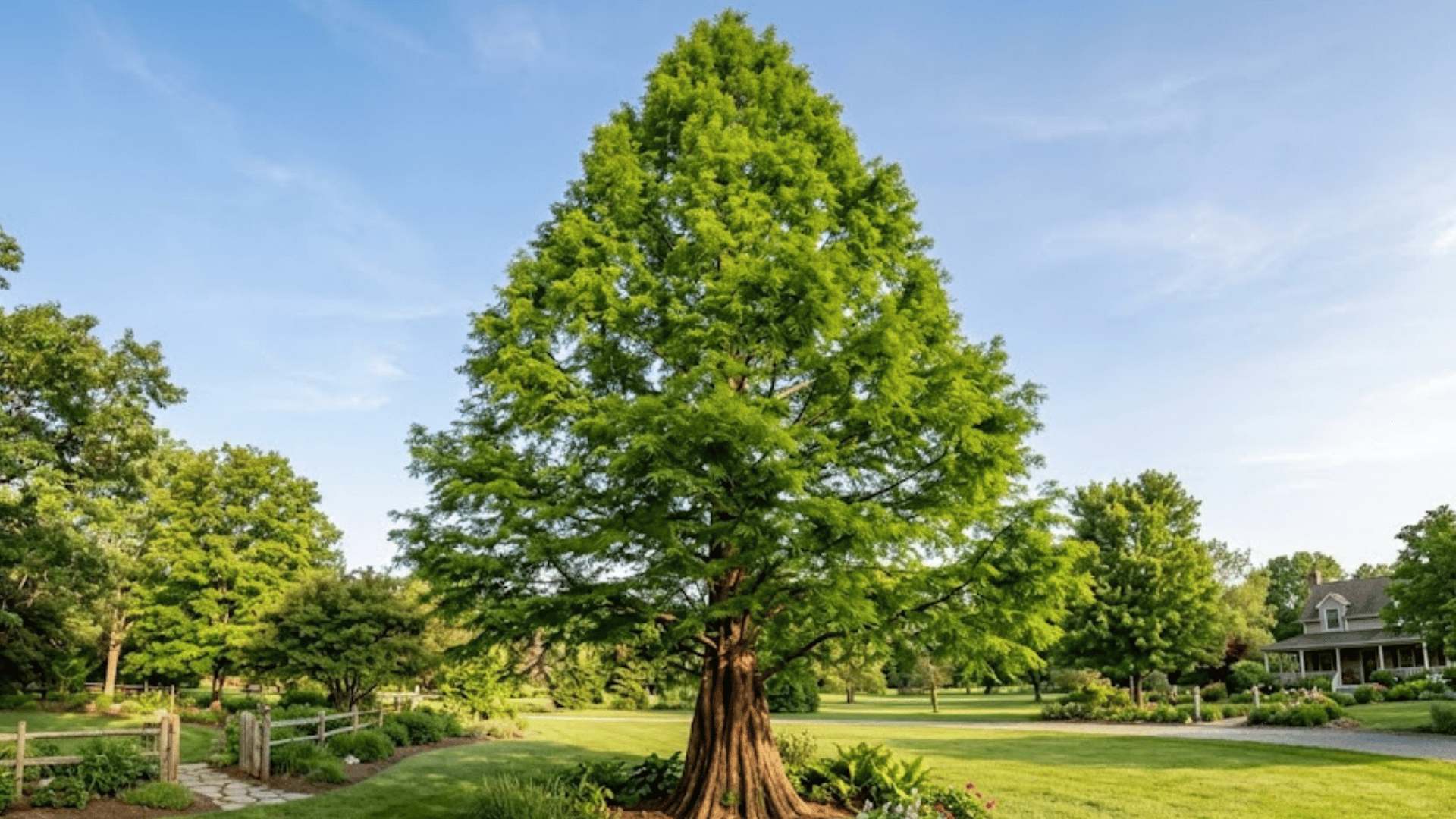
Dawn Redwood is a deciduous conifer, meaning it drops its needles in fall, but don’t let that detail put it off the list. In spring and summer, the soft feathery foliage is a genuine standout in any large yard.
The reddish-brown color before the needle drops in autumn is an added seasonal bonus. It grows 3–4 feet per year and eventually becomes a large, pyramidal tree with a distinctive buttressed base.
It needs space and full sun, but handles wet soil far better than most conifers currently available.
- Best for: Large yards and a structural statement tree
- Growth rate: 3–4 feet per year
- Mature size: Large (70–100 ft tall)
- Sun needs: Full sun
- Where to buy: Fast Growning Trees
35. Quaking Aspen
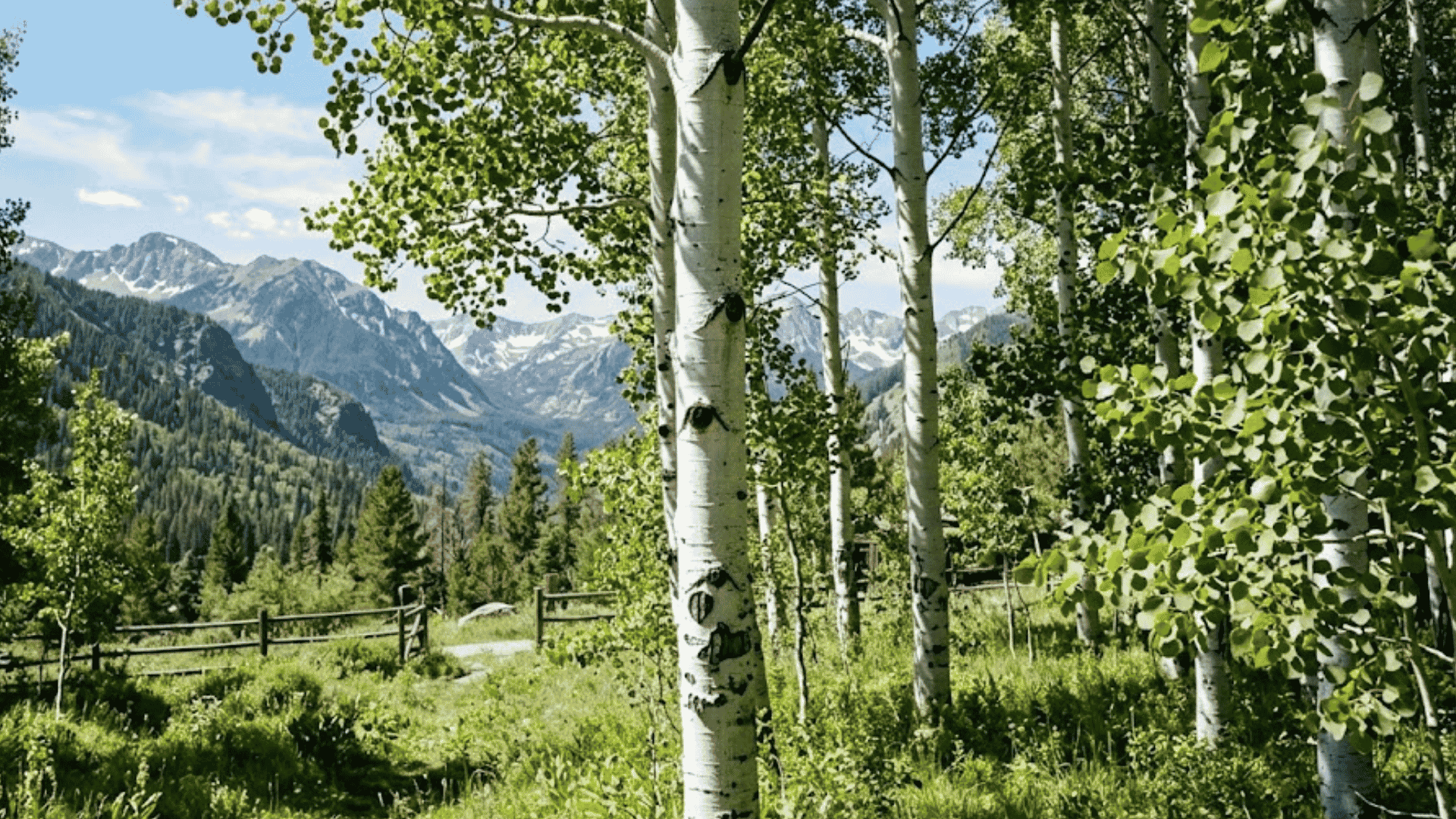
Quaking Aspen takes its name from the way its small, round leaves move at the slightest breeze; even in near-still air, the foliage shimmers in a way unlike that of most other trees.
It grows 3–4 feet per year and develops striking white bark that stands out clearly against winter landscapes.
Best suited to cooler regions in USDA zones 1–6, it’s a natural fit for mountain properties, large northern yards, and open countryside.
It spreads through root shoots over time, which is worth factoring into the planting plan from the start.
- Best for: Cool-climate landscapes and movement
- Growth rate: 3–4 feet per year
- Mature size: Medium (40–50 ft tall)
- Sun needs: Full sun
- Where to buy: Arbor Day Foundation
Pros and Cons of Fast-Growing Trees
Every tree comes with trade-offs. Knowing what to expect upfront makes it easier to choose the right one and avoid surprises down the line.
| Pros | Cons |
|---|---|
| The fastest-growing trees create a shaded yard in just a few seasons, without the long wait. | Some fast-growing trees are more prone to branch breakage in strong winds or heavy storms. |
| Tall, dense trees like Green Giant Arborvitae block sight lines from neighbors quickly. | Rapid growth often means more frequent trimming to maintain shape and prevent overgrowth. |
| A full, healthy tree along the front yard adds real visual value to the property. | Certain trees shed leaves, seeds, or small branches that require regular cleanup throughout the year. |
| A wide canopy reduces ground temperature, making patios and lawn areas more comfortable in summer. | Some varieties develop aggressive root systems that can damage foundations, pipes, or paving. |
| Many fast-growing trees attract birds, bees, and pollinators through berries, flowers, and dense foliage. | A handful of fast-growing trees spread readily and may be restricted in certain regions. |
| More trees mean better air quality, less runoff, and a healthier outdoor environment overall. | Not every fast-growing tree suits every climate, so local research before planting is important. |
Buying Tips for Fast-Growing Trees
Picking the right tree at the nursery is just as important as choosing the right species. A few simple checks at the point of purchase can save a lot of time and money later.
- Check the trunk: Look for a straight, firm trunk with no visible cracks, splits, or soft spots at the base — a weak trunk early on rarely improves with age.
- Look at the leaves: Healthy foliage should look full and evenly colored, with no yellowing, spots, or wilting that could signal disease or stress.
- Inspect the branches: Avoid trees with broken, dead, or crossing branches that haven’t been cleaned up before sale.
- Check the root container: Roots circling the inside of the pot or pushing out of drainage holes mean the tree is root-bound and will struggle to establish properly after planting.
- Consider the size: Smaller trees settle into new soil faster and often catch up to larger trees within a couple of seasons. Larger trees give quicker visual impact but need more consistent watering in the first year.
- Match to your zone: Always check the USDA hardiness zone on the nursery tag. Trees sourced locally are more likely to suit the area’s soil, rainfall, and temperature patterns.
- Research before buying: Some of the fastest-growing trees, like Royal Empress and Mimosa, are listed as invasive in several states. Silver Maple and Weeping Willow have aggressive root systems that can damage foundations and underground pipes.
- Check local rules: Some neighborhoods and municipalities restrict certain tree species, so a quick check before purchasing avoids planting something that may need to be removed later.
To Plant: Start by choosing a spot with the right sun exposure, then dig a hole two to three times wider than the root ball, keeping the root flare just above soil level.
Backfill with native soil, water deeply, add 2–3 inches of mulch around the base, and stake only if the tree is tall or top-heavy in a windy spot.
Common Mistakes to Avoid
Fast-growing trees are a great investment, but only when chosen and planted with a bit of foresight. These are the most common slip-ups that lead to bigger problems down the line.
| Mistake | Why It Matters |
|---|---|
| Buying only based on speed | The fastest-growing trees aren’t always the best fit; growth rate alone doesn’t account for maintenance, mess, or long-term size. |
| Ignoring mature size | A tree that looks manageable at purchase can outgrow its space within a few years, causing damage to structures and neighboring plants. |
| Planting too close to the house | Roots and branches need room; planting too close risks foundation damage, blocked gutters, and costly removal later. |
| Choosing the wrong tree for the climate | A tree outside its suited hardiness zone will struggle to establish, grow slowly, or fail entirely within the first few seasons. |
| Forgetting the root spread | Some fast-growing trees develop wide, aggressive root systems that crack driveways, lift paving, and damage underground pipes over time. |
| Skipping early watering | Consistent watering in the first season is critical; without it, even the toughest fast-growing trees fail to establish properly. |
| Using privacy trees in narrow spaces | Wide-growing evergreens planted in tight spots quickly become overcrowded, lose their shape, and require constant pruning to stay manageable. |
Final Thoughts
A greener yard doesn’t have to mean years of waiting. The right fast-growing tree planted in the right spot can genuinely change how a space looks and feels within just a few seasons.
If the goal is shade on a hot afternoon, a solid privacy screen, or simply more life in the yard, there’s a tree on this list that fits.
The key is matching the tree to the space, not just picking the fastest grower available. Think about mature size, root behavior, and climate fit before heading to the nursery.
A little planning upfront saves a lot of headaches later.
If a fast-growing tree has already been planted, or there’s one on the shortlist, share the experience in the comments below.
Which tree made the biggest difference in your yard?
Frequently Asked Questions
What Fast-Growing Tree is Best for Privacy?
Thuja Green Giant, Leyland Cypress, Green Giant Arborvitae, and Eastern Red Cedar are the most reliable choices for quickly creating a dense, tall privacy screen.
What Fast-Growing Tree Gives the Best Shade?
Hybrid Poplar, Silver Maple, Sycamore, Red Maple, and Tulip Tree all develop wide canopies that deliver strong shade coverage in a relatively short time.
Are Fast-Growing Trees Bad?
Fast-growing trees are not bad; some simply require more space, occasional pruning, or routine cleanup depending on the species and where it’s planted.
What is the Best Fast-Growing Tree for a Small Yard?
Serviceberry, Eastern Redbud, Crabapple, and Desert Willow are compact, well-suited options that grow at a good pace without overwhelming a smaller space.
When is the Best Time to Plant Fast-Growing Trees?
Spring and fall are generally the best planting windows, as cooler temperatures and reliable rainfall give roots time to establish before extreme heat or cold sets in.

With a Master’s in Landscape Architecture from the University of Virginia, Sophia Stephenson has dedicated the last 20 years to creating and maintaining vibrant outdoor spaces. Her professional journey started in landscape design, where she gained a reputation for innovative and sustainable approaches. Sophia became a part of our editorial team as a freelancer in 2019, offering a fresh perspective on outdoor living. Since 2020, she has been the chief for our outdoor design content, blending aesthetic appeal with environmental stewardship. In her leisure time, Sophia is a keen photographer, capturing the beauty of natural landscapes, a hobby that complements her professional expertise.