
Maintaining an automatic gate opener is essentially a battle against constant environmental stress. These systems live outdoors 24/7, exposed to rain, dust, temperature swings, insects, and plant growth. Over time, these small factors combine into serious mechanical resistance and electrical failure if ignored.
A proper maintenance routine should be carried out twice a year (spring and fall). This timing matters because seasonal changes—especially winter moisture and summer heat—are what most often accelerate wear on motors, gearboxes, and control boards. Preventive care is far cheaper than replacing a burnt-out motor or flooded control unit.
1. The Hardware & Gate Structure (Mechanical Health Comes First)
The most important concept in any automatic gate system is simple: the opener should guide movement, not force it. If the gate is heavy, misaligned, or sticky, the motor compensates until it eventually overheats or strips its internal gears.
✔ Manual Balance & Alignment Check
Before testing anything electrical, always disconnect the opener using the manual release key or lever.
- Open and close the gate by hand slowly.
- It should move smoothly with minimal resistance.
- Watch for:
- Squeaking or grinding sounds (friction points)
- Sagging hinges (swing gates)
- Uneven rolling or “catching” (sliding gates)
- Sudden stiffness at certain points (track misalignment)
If the gate feels heavy or inconsistent, the problem is not the motor—it’s mechanical alignment. Common causes include worn bearings, rusted hinges, bent tracks, or foundation shifting. Fixing these first can extend motor life by years.
✔ Lubrication Strategy (Not All Lubes Are Equal)
Proper lubrication reduces strain on the motor and prevents long-term corrosion.
- Use marine-grade grease for hinges and load-bearing joints (best for wet environments).
- Use silicone spray for lighter pivot points and exposed metal contact areas.
- For sliding gates:
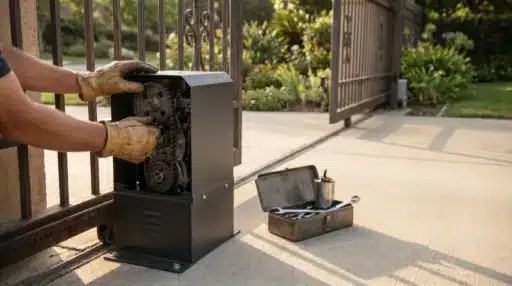
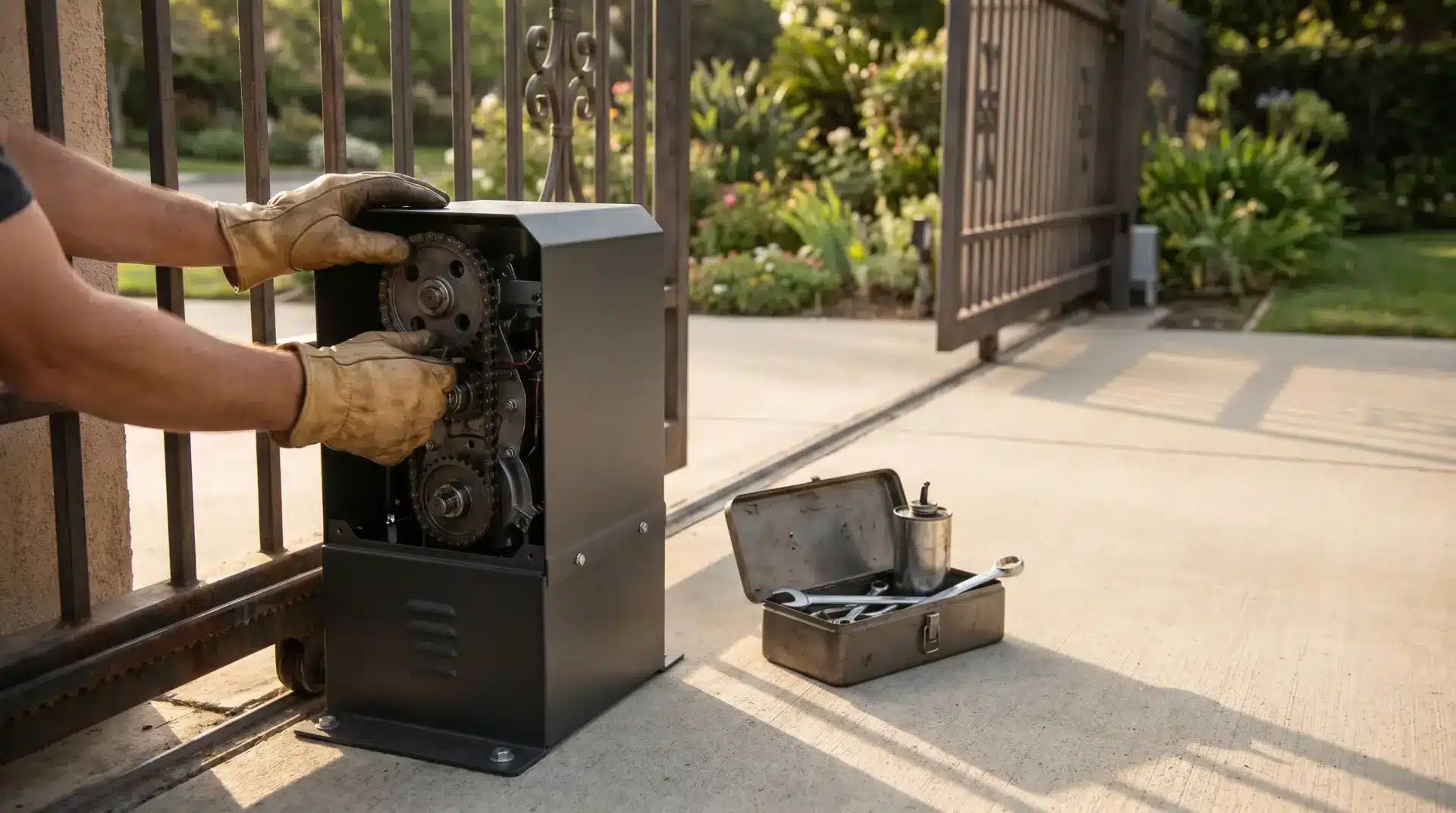
- Lubricate chain drives or rack-and-pinion gears only
- Avoid lubricating the ground track itself
Important: Do NOT grease the bottom track of sliding gates. It may feel helpful short-term, but it traps dust, sand, and debris, turning the track into an abrasive grinding compound that accelerates wheel and roller failure.
✔ Track & Path Clearance
Environmental obstruction is one of the most overlooked failure causes.
- Remove weeds growing into hinges or tracks.
- Trim bushes that press against swing gates.
- Clear gravel, stones, and debris from sliding gate paths.
- Check for ant nests or soil buildup near rollers.
Even a small obstruction increases motor load significantly, especially during cold weather when metal contracts and tolerances tighten.
2. Electrical System & Control Box Maintenance (The “Brain” of the Gate)
The control box is the most sensitive and expensive part of your system. It contains the circuit board, relays, transformer, and often the receiver for remote controls. Because it generates mild heat, it becomes an ideal nesting spot for insects and moisture buildup.
✔ Internal Inspection & Pest Control
Always turn off power before opening the unit.
Inside, check for:
- Spider webs around terminals (can cause signal interference)
- Ant colonies near wiring channels (can short circuits)
- Wasp or insect nests inside enclosure corners
- Dust buildup on the circuit board
Use a dry anti-static brush or compressed air to clean. Avoid wet cloths inside the box unless the system is fully sealed and powered down.
✔ Weather Sealing & Moisture Protection
Water intrusion is one of the most common causes of controller failure.
- Inspect the rubber gasket around the enclosure door.
- Look for cracks, flattening, or missing sections.
- Check cable entry points—these often leak first.
- Seal gaps using neutral-cure silicone (not acidic types).
If condensation is frequent inside the box, consider adding:
- A small silica gel pack
- A drip shield cover above the enclosure
- Slight ventilation improvement (if manufacturer allows it)
✔ Backup Battery Health Check
Most modern gate systems use a 12V backup battery for power outages or solar-assisted operation.
- Average lifespan: 3–5 years
- Signs of failure:
- Slower gate movement
- Partial opening/closing during outages
- Clicking sounds but weak motor response
- Battery swelling or leakage (urgent replacement needed)
If your system supports it, test the battery under load by disconnecting main power and running a full open/close cycle.
3. Safety Devices & Smart Accessories (Preventing Accidents)
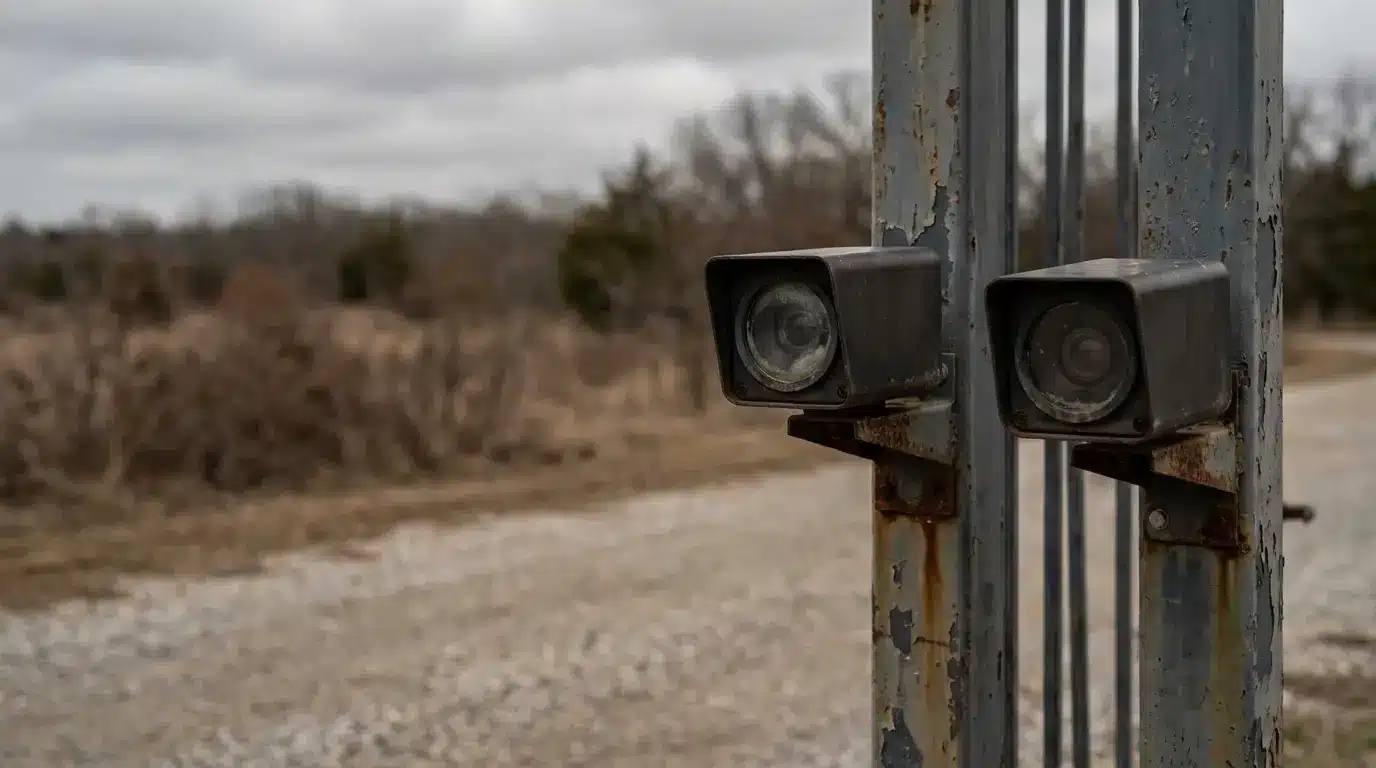
Safety systems are what prevent your gate from becoming dangerous. Even if the mechanical system works perfectly, faulty sensors can create serious safety risks.
✔ Photo-Eye Sensor Cleaning & Alignment
Most gate systems use infrared photo-eye beams or loop detectors.
- Wipe lenses using a soft microfiber cloth
- Remove:
- Dust buildup
- Spider webs (very common issue)
- Mud splash from rain
- Check alignment:
- Both sensors must face each other directly
- Even slight misalignment can cause false “obstruction detected” errors
If your gate randomly stops or refuses to close, dirty or misaligned sensors are the first thing to check.
✔ Auto-Reverse & Obstruction Testing
This is a critical safety function and should be tested regularly.
- Place a solid object (e.g., trash bin or wooden block) in the gate’s path
- Trigger the gate to close
- The gate should:
- Stop immediately upon contact or detection
- Reverse direction automatically
If the gate continues pushing or delays reversing, it may indicate:
- Weak force sensitivity settings
- Faulty pressure sensor
- Control board calibration issue
A malfunctioning auto-reverse system is not just a performance issue—it’s a safety hazard that should be fixed immediately.
✔ Remote Controls & Access Systems
Don’t forget small but important components:
- Replace remote batteries annually
- Reprogram lost or unresponsive remotes
- Test keypad or RFID entry systems for lag or failure
- Inspect antenna wire if remote range has decreased
Final Thought
Automatic gate systems fail slowly, not suddenly. The early warning signs are always subtle: slightly louder motor noise, slower movement, or occasional sensor errors. A consistent twice-yearly maintenance routine prevents these small issues from escalating into costly motor replacements or full system failures.
If you keep the gate mechanically smooth, electrically dry, and sensor-clean, the opener itself will last significantly longer and operate reliably year-round.

Holding a Master’s in Architecture from the University of Texas at Austin, Emily Rodriguez has dedicated more than two decades to the art and science of building renovation. Starting her journey in historic preservation, she developed a profound respect for blending old with new in building design. Emily became a vital part of our team in 2019, renowned for her insightful and innovative renovation tips. She has been leading our DIY home improvement series since ever since, where she shares her wealth of knowledge in turning outdated spaces into modern havens. When not engaged in writing or consulting, Emily is a passionate advocate for heritage conservation and enjoys exploring vintage architecture, a hobby that complements her professional expertise.