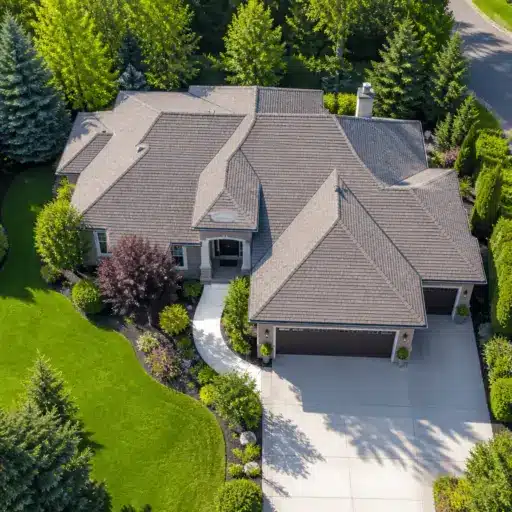
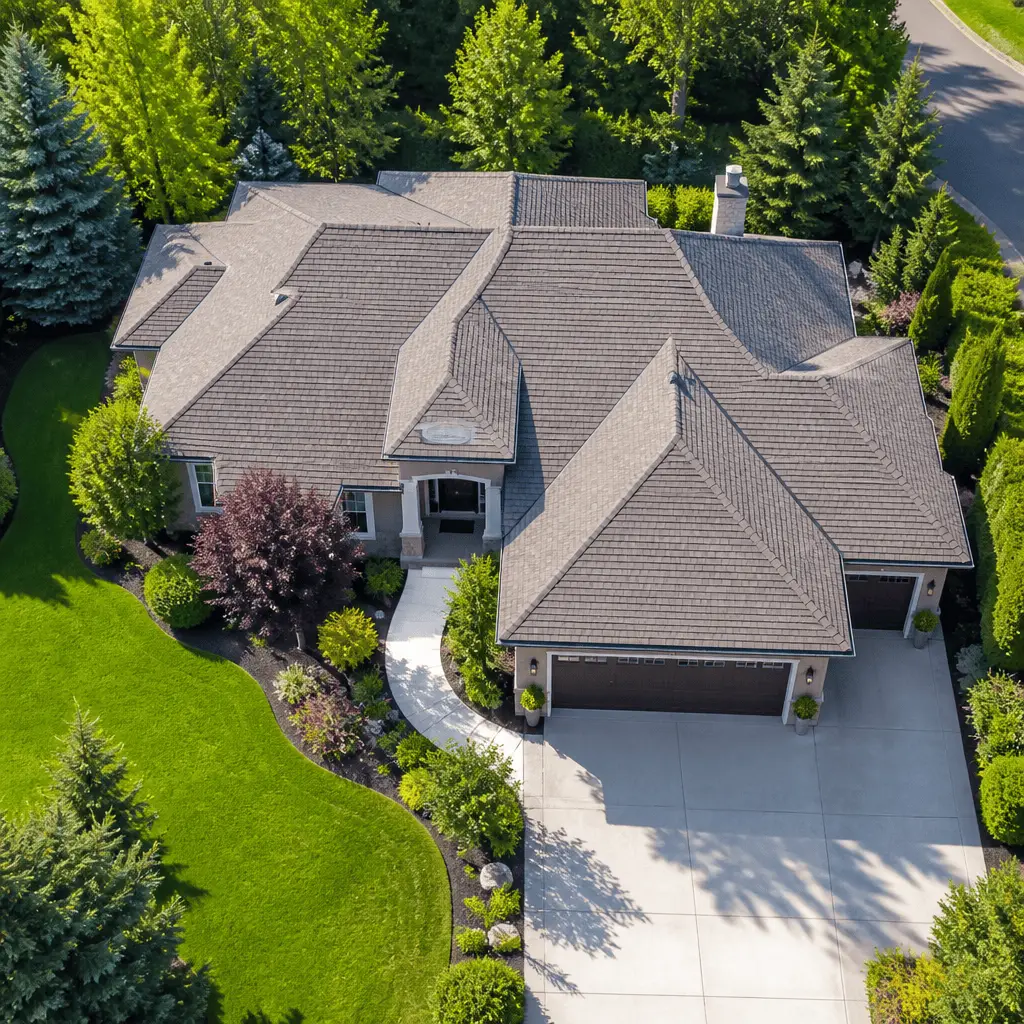
When most homeowners think about roof maintenance, the mental image is familiar: a worker in boots climbing a ladder, walking carefully across shingles, spraying water from above. It works, but it comes with real risks. Cracked tiles, dislodged granules, worker falls, and trampled landscaping are all genuine possibilities with traditional roof cleaning methods. That picture is changing fast.
Drone roof cleaning is becoming one of the most talked-about innovations in home maintenance, and for good reason. What once seemed like technology reserved for film sets or military operations is now landing in residential neighborhoods across the country, quietly transforming the way homeowners protect one of their most important investments. Not every company offering drone cleaning delivers the same quality. When evaluating providers, look for FAA Part 107 certification for the drone pilots, documented soft-wash experience, verifiable reviews across platforms like Google and Angi, clear disclosure of the cleaning solutions being used, and a written warranty or guarantee backing their results.
What Is Drone Roof Cleaning?
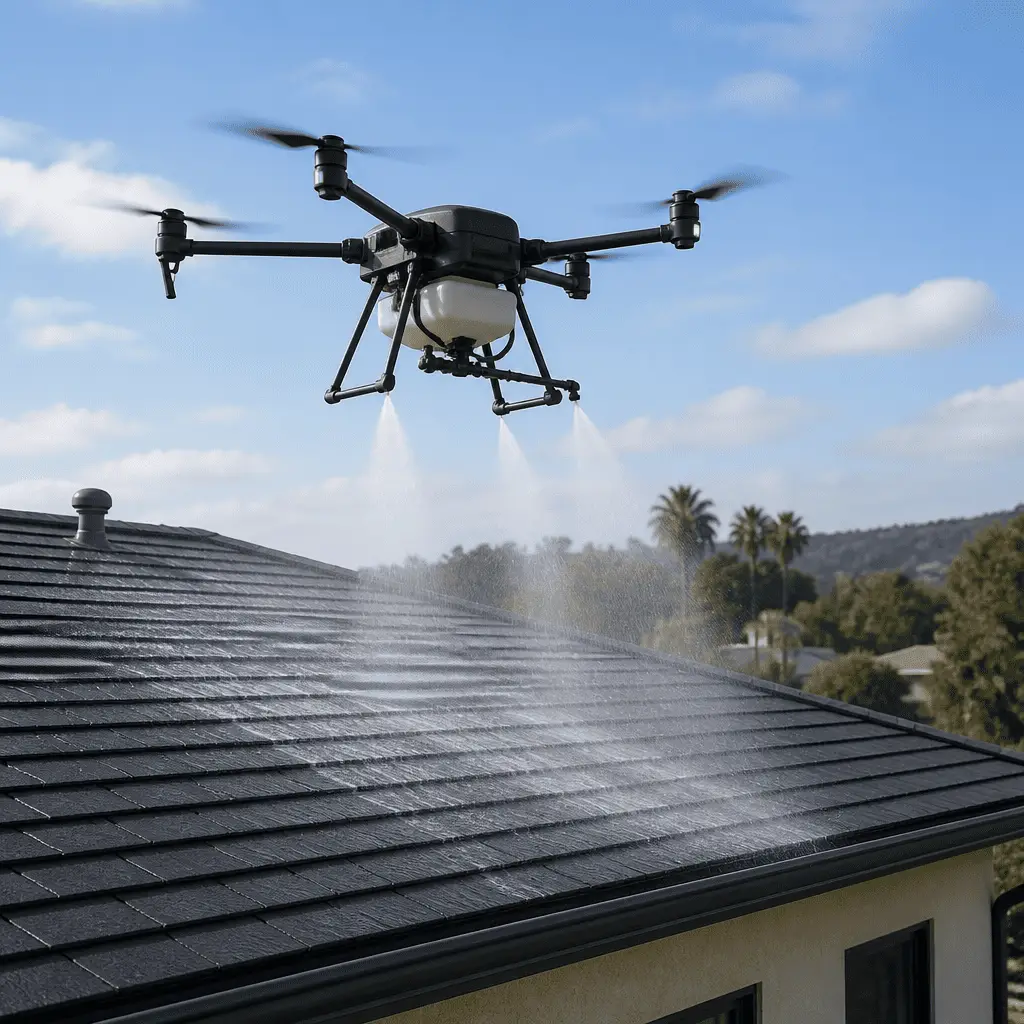
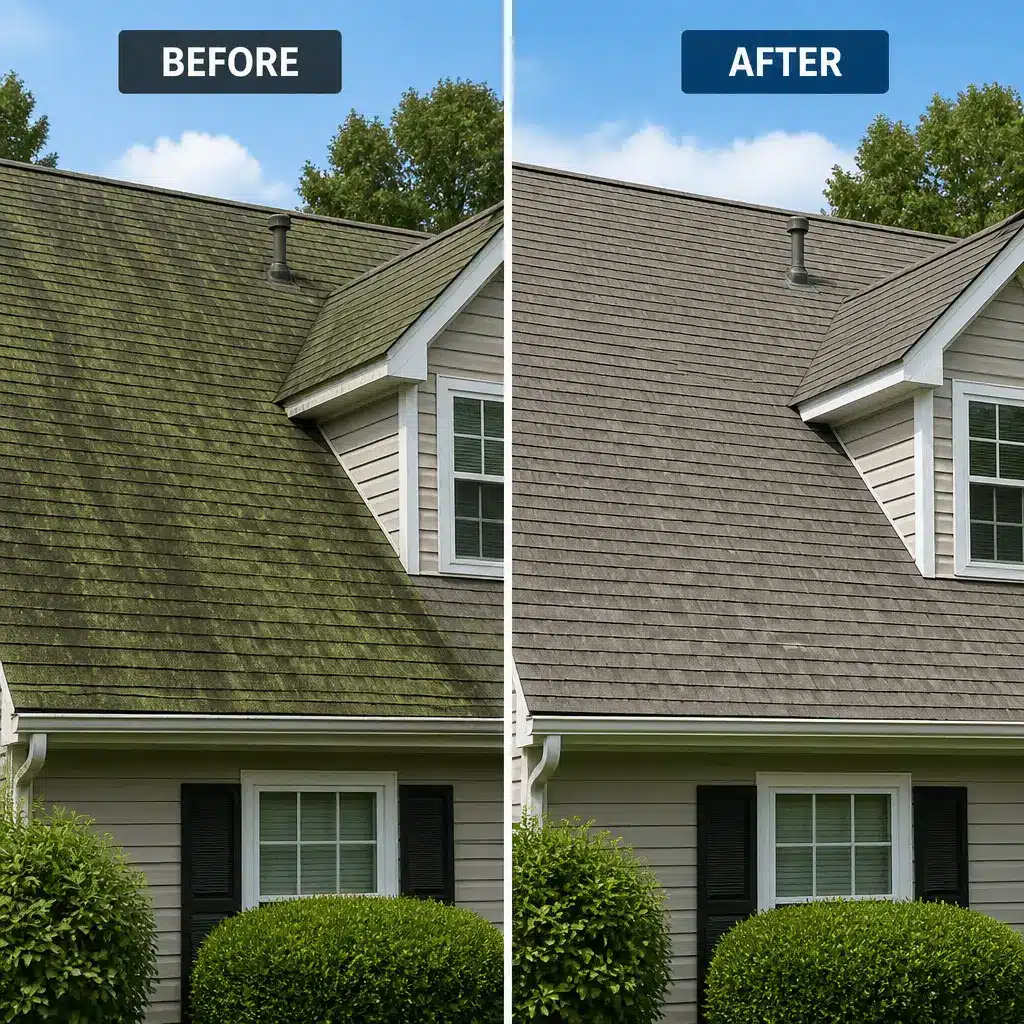
Drone roof cleaning uses FAA-certified unmanned aerial vehicles (UAVs) fitted with soft-wash spraying systems to clean a roof without any physical contact from ladders, scaffolding, or foot traffic. The drone hovers at a controlled height above your roof and delivers a biodegradable cleaning solution across the surface with precision.
The cleaning method is called soft washing, a low-pressure technique (typically under 100 PSI) that uses specially formulated solutions to kill algae, mold, mildew, moss, and bacteria at the root level, rather than simply blasting them off the surface with high-pressure water.
It combines two powerful ideas: the reach and flexibility of drone technology, and the long-proven effectiveness of soft-wash chemistry. For homeowners in Central Florida, Premier Roof Cleaning Inc. has built a strong reputation in this space, combining 25+ years of exterior cleaning experience with modern drone roof cleaning technology and FAA-certified operators.
Why Traditional Roof Cleaning Has Real Drawbacks
To appreciate why drone roof cleaning is gaining momentum, it helps to understand the limitations of conventional methods.
Foot traffic causes hidden damage. Every time a technician walks across your roof, they put stress on the underlying materials. Asphalt shingles can lose protective granules. Clay and concrete tiles, especially on older homes, may crack under concentrated weight. This kind of wear is cumulative and rarely visible until the damage is already done.
Ladders and scaffolding are costly and risky. Falls from ladders remain one of the most common workplace injuries in the construction and maintenance industries. Beyond the human risk, scaffolding setups are time-consuming, expensive, and can damage gutters, landscaping, and the exterior of your home during installation and removal.
High-pressure washing can shorten roof life. Standard pressure washing uses anywhere from 1,300 to 3,100 PSI. While this clears surface dirt quickly, it can strip the granule coating from asphalt shingles, force water underneath roofing layers, and create micro-fractures in older tile. The result often looks clean briefly, but the underlying structure may be weakened.
Results don’t last. Because high-pressure washing removes biological material from the surface without killing it at the root, algae and mold regrowth is fast. Most pressure-washed roofs show visible regrowth within 6 to 12 months.
The Real Advantages of Drone Roof Cleaning
Drone soft washing solves these problems by keeping people and equipment off the roof entirely.
Most drone-cleaned roofs stay cleaner for 3 to 5 years, compared to just 6 to 12 months with traditional pressure washing. That’s because soft-wash chemistry kills organisms at the root level rather than simply displacing them.
Beyond longevity, the method delivers across every dimension that matters to homeowners:
- Zero roof damage. No foot traffic, no high-pressure water, no cracked tiles or stripped granules.
- Safer for workers. FAA-certified pilots stay on the ground while the drone handles the height and the risk.
- Eco-friendly and plant-safe. Biodegradable solutions are gentle on surrounding gardens and landscaping.
- Faster completion. Most residential jobs wrap up in 2 to 4 hours, compared to a full day for manual methods.
- Complete coverage. Drones access valleys, dormers, ridgelines, and steep pitches that workers often cannot safely reach.
What Does the Process Actually Look Like?
If you have never seen drone roof cleaning in action, here is a general walkthrough of how a professional job unfolds.
Assessment. A qualified technician evaluates your roof type, pitch, and condition, identifying areas of heavy growth, drainage issues, and sections needing extra attention. Surrounding landscaping is assessed for protection protocols.
Preparation. Gardens, shrubs, and outdoor furniture are covered or pre-wetted. The FAA-certified pilot conducts airspace checks and establishes safe flight zones in line with local aviation regulations.
Precision application. The drone delivers the soft-wash solution in controlled, overlapping passes. Low pressure (under 100 PSI) ensures even, gentle coverage without the force that damages roofing materials.
Dwell time. Cleaning agents are left to work for a set period, penetrating porous materials and eliminating biological growth at the source rather than just the surface.
Rinse and inspection. A final low-pressure rinse pass reveals the cleaned surface. Technicians conduct both ground-level and aerial inspections to confirm complete coverage.
Cleanup. Protective coverings are removed and surrounding landscaping is thoroughly rinsed as a final step.
Is Drone Roof Cleaning Right for Your Home?
Drone soft washing works well on most residential and commercial roof types, including asphalt shingles, clay and concrete tiles, metal roofs, flat commercial roofs, and older or historic roofing materials that may be too fragile for any foot traffic.
The method is particularly well-suited for homes in humid climates where algae, black streaks (often caused by Gloeocapsa magma bacteria), and moss are persistent seasonal problems.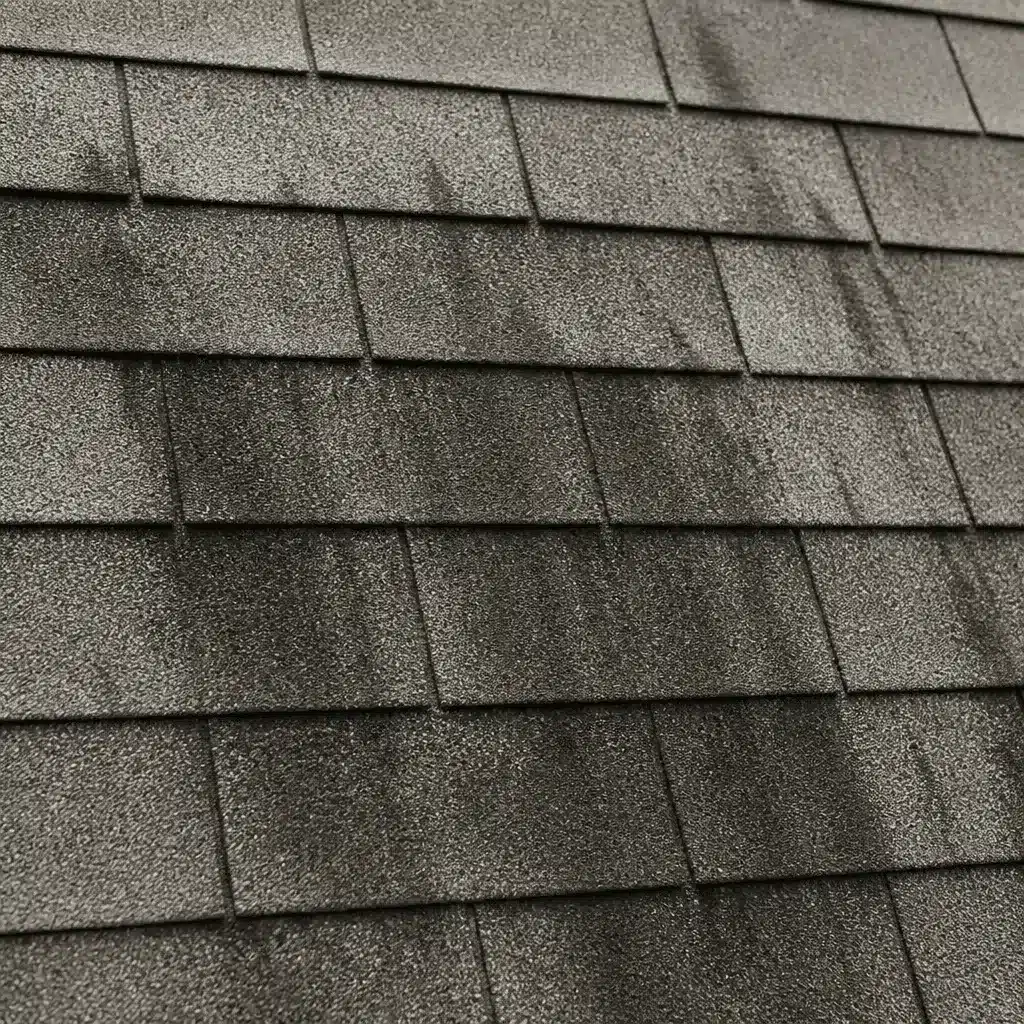
The Bottom Line for Homeowners
Your roof is one of the most expensive components of your home and one of the least maintained until something goes wrong. Regular cleaning removes biological growth that, left unchecked, degrades roofing materials and significantly shortens their lifespan.
Drone roof cleaning represents a genuine improvement over traditional methods, not in marketing language but in measurable outcomes: less physical risk, less chemical runoff, less structural stress, and results that last years instead of months.
For homeowners who have put off roof cleaning because of concerns about damage, cost, or disruption, drone soft washing removes most of those objections. It is faster, safer, and gentler on both your home and the environment.
The future of home maintenance does not always look like science fiction. Sometimes it just looks like a quiet drone doing careful work on a Tuesday morning while you have your coffee.
Tommy Hardy, an alumnus of the Georgia Institute of Technology with a degree in Mechanical Engineering, has been a go-to figure in residential upkeep and innovation for over 18 years. His career commenced in a leading home appliance manufacturing company, where he mastered the intricacies of household systems. Joining our platform in 2020, Tommy quickly became a reader favorite for his practical and easy-to-follow guides. He took the helm of our DIY section in 2019, consistently delivering content that empowers homeowners. Beyond his professional pursuits, Tommy is a passionate gardener and enjoys woodworking, skills enhancing his hands-on approach to home care.