

Termites can be hard to spot.
They do not usually appear in the open. They often stay hidden behind walls, under floors, inside timber, or around damp parts of the home.
That is why many Queensland homeowners only find termites after damage has already started. The early signs can look small. They may seem like normal wear and tear. But if you know what to look for, you may notice a problem sooner.
Why Termites Are Easy to Miss
Termites can damage timber from the inside out.
A skirting board, door frame, wall, or floorboard may look fine on the outside. But inside, termites may already be eating through the timber.
Queensland homes can also face extra risk because of warm weather, humidity, storms, garden beds, and moisture around the home.
The hard part is that early termite signs often look like normal home issues.
Doors or Windows Become Hard to Open
A tight door or window may not seem like a pest problem.
Many homeowners blame the weather, the age of the home, or normal movement. Sometimes that is true. But termites can also damage timber around frames. This can make doors or windows stick.
Watch for:
- Doors that suddenly jam
- Windows that are hard to open
- Frames that look warped
- Gaps around edges
- Uneven paint or timber
One tight door does not always mean termites. But if it happens with other signs, it should be checked.
Hollow-Sounding Timber
Hollow timber is one of the warning signs homeowners often miss.
Termites can eat the inside of timber while the outside still looks normal. When you tap the area, it may sound hollow, papery, or different from nearby timber.
Check areas such as:
- Skirting boards
- Door frames
- Window frames
- Timber posts
- Decking
- Floorboards
- Built-in cupboards
Do not break open timber if you think termites may be active. This can disturb them and make it harder to see where they are moving.
Bubbling Paint or Soft Walls
Bubbling paint can look like a moisture issue.
Sometimes it is. But termites are also drawn to damp areas, so bubbling paint, soft plaster, or swollen walls can sometimes point to a deeper problem.
Look for:
- Paint that bubbles or peels
- Soft spots near skirting boards
- Small cracks near frames
- Plaster that feels damp or weak
- Walls that look uneven
These signs are easy to blame on humidity or old paint. But if they appear near timber or wet areas, they should not be ignored.
Mud Trails Near Walls or Foundations
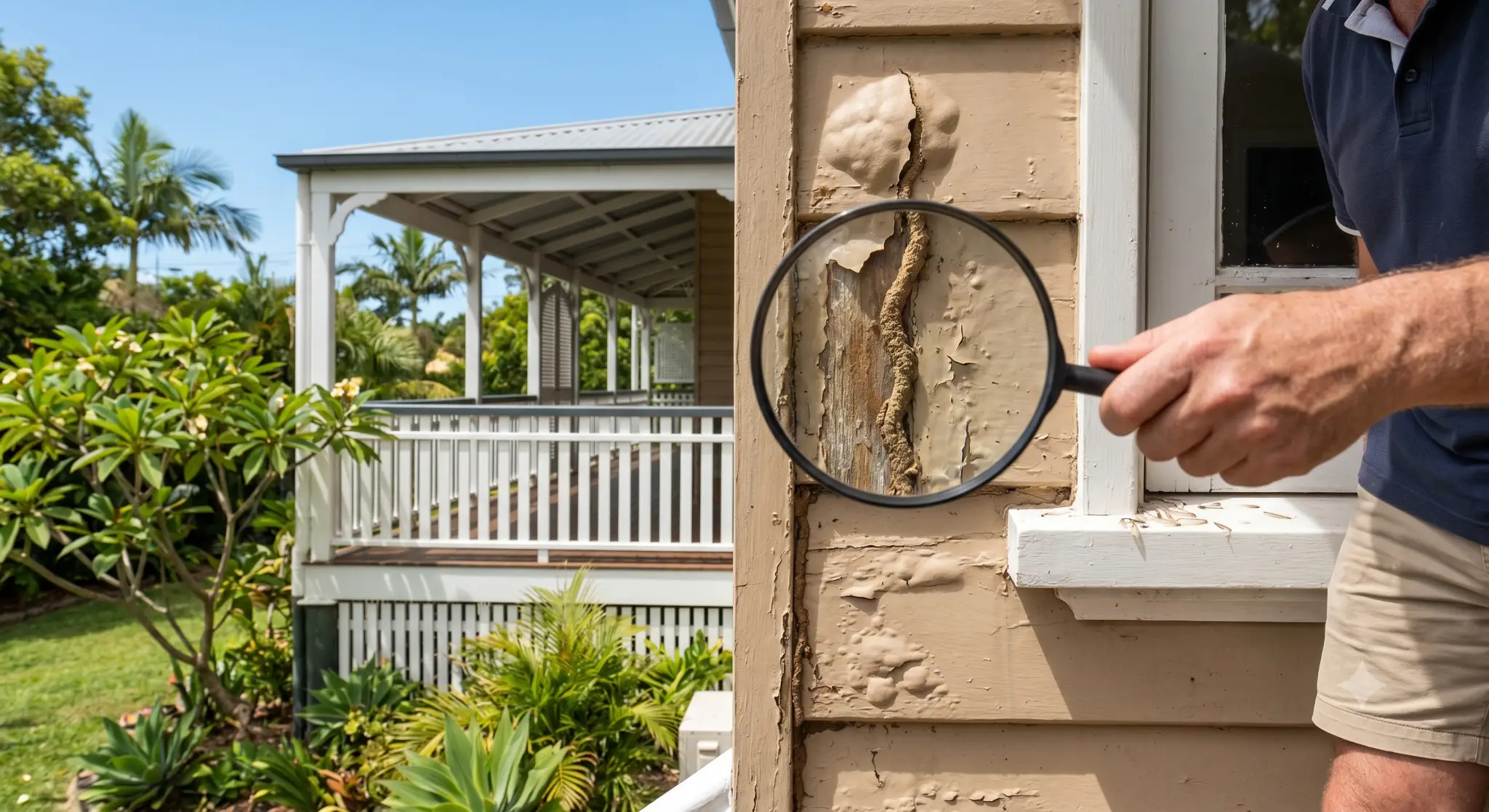
Some termites build mud tubes or mud trails.
These help protect them as they move between the ground and your home. They may look like thin dirt lines, dried mud, or narrow tracks along hard surfaces.
You may find them:
- Along outside walls
- Near concrete edges
- Around foundations
- In garages
- Behind garden beds
- Under the house
- Around timber posts
Mud trails can be a serious sign because they may show termites are moving through the property.
If you see them, avoid breaking them open. The trail can help show where termites are travelling.
Faint Clicking Sounds in the Walls
Some homeowners hear faint clicking or tapping sounds in walls.
This can happen when termites are active or disturbed inside timber. It is not always easy to hear. It may only be noticed in quiet rooms or at night.
Listen around:
- Timber walls
- Skirting boards
- Door frames
- Window frames
- Cupboards
- Quiet rooms
A clicking sound does not always mean termites. But if it appears with other signs, it is worth checking.
Moisture Can Make the Risk Worse
Termites are often drawn to moisture.
This does not mean every damp area has termites. But moisture can make a home more appealing to them.
Common moisture issues include:
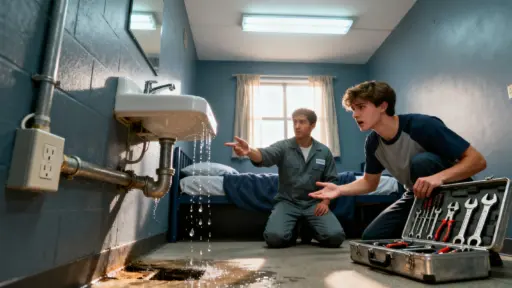
- Leaking taps or pipes
- Poor drainage
- Damp soil near the house
- Garden beds against walls
- Air conditioner overflow
- Wet timber
- Firewood stored near the home
- Blocked gutters
- Water pooling after rain
Queensland weather can make this harder to manage. Heavy rain and humidity can create damp areas around the home.
Fixing moisture problems will not make a home termite-proof, but it can help lower the risk.
When a Small Sign Should Be Checked
One mark, crack, or tight door may not mean there is a termite problem.
But small signs should be taken more seriously when they appear together or keep getting worse.
For example, a homeowner may notice bubbling paint, then a soft skirting board nearby, then hollow-sounding timber under a window frame. On their own, each sign may seem minor. Together, they may point to something more serious.
This is where a professional termite inspection can help confirm what is happening before the issue spreads.
A Quick Home Check You Can Do This Week
You do not need special tools to look for early warning signs.
Start with a simple walk around your home.
Check:
- Skirting boards
- Door and window frames
- Timber floors
- Garage edges
- Cupboards near wet areas
- Under sinks
- Bathrooms and laundries
- Outdoor timber
- Decks and posts
- Garden beds near walls
- Stored firewood
- Areas where water pools
Look for changes that seem new, odd, or getting worse.
You can gently tap timber and listen for hollow sounds. But avoid breaking open damaged areas if you think termites may be active.
Small Signs Can Point to a Bigger Problem
Termite warning signs are easy to miss because they often look like normal home problems.
A tight door. A soft skirting board. A small mud trail. Bubbling paint. A faint sound in the wall.
Each sign may seem minor at first. But together, they can tell a bigger story.
For Queensland homeowners, the best approach is to stay alert, fix moisture problems early, and take small changes seriously. Termites are much easier to manage when they are found early.

Tommy Hardy, an alumnus of the Georgia Institute of Technology with a degree in Mechanical Engineering, has been a go-to figure in residential upkeep and innovation for over 18 years. His career commenced in a leading home appliance manufacturing company, where he mastered the intricacies of household systems. Joining our platform in 2020, Tommy quickly became a reader favorite for his practical and easy-to-follow guides. He took the helm of our DIY section in 2019, consistently delivering content that empowers homeowners. Beyond his professional pursuits, Tommy is a passionate gardener and enjoys woodworking, skills enhancing his hands-on approach to home care.