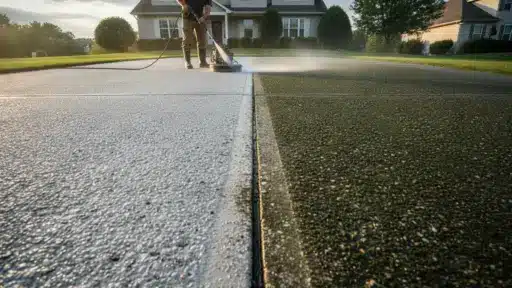
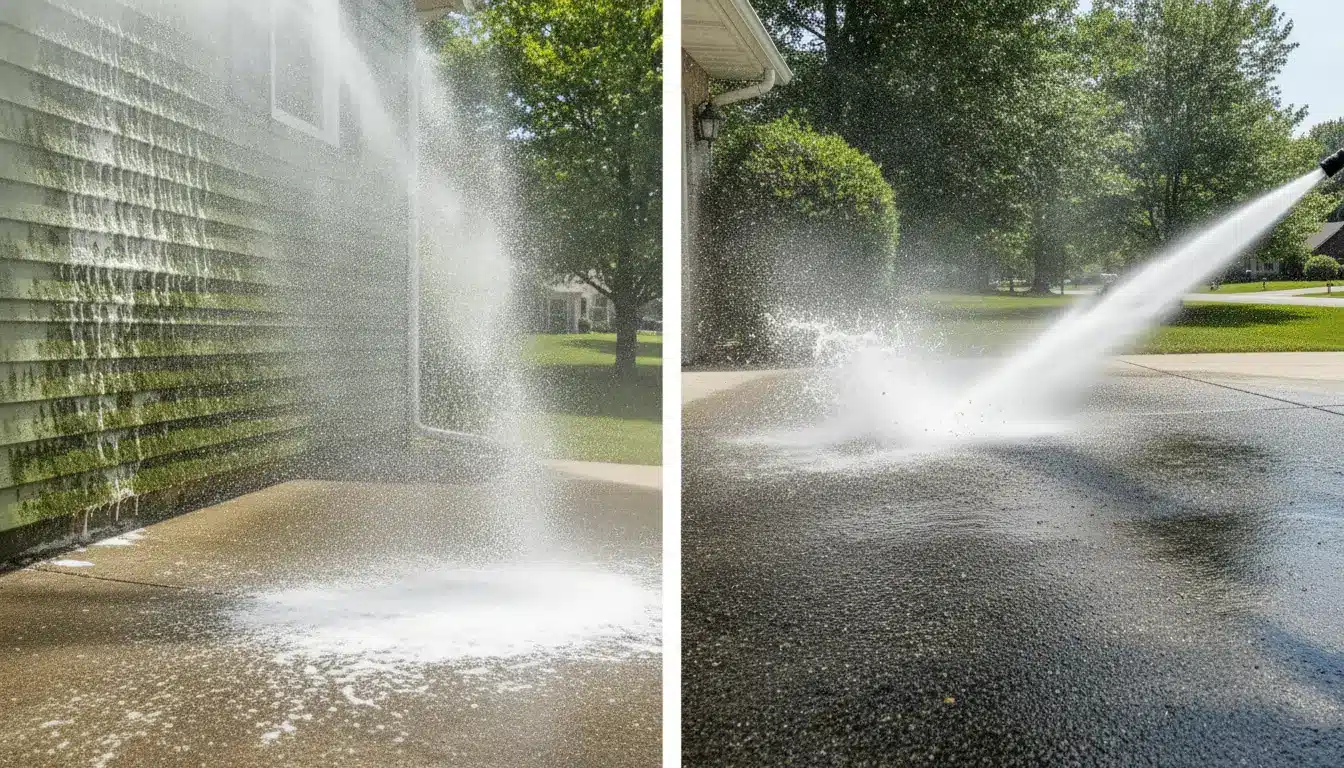

Soft washing vs. pressure washing might confuse homeowners when exterior buildup starts appearing on siding, roofing, and hard surfaces that collect grime over time.
The right method depends on surface type, material sensitivity, and the level of contamination present across different areas of a property.
Pressure washing is commonly used on durable surfaces such as concrete driveways, stone walkways, and certain exterior patios where higher force can remove embedded dirt and algae without causing surface breakdown.
The discussion of pressure washing vs. power washing also comes up when homeowners try to indentify temperature differences in cleaning methods and how heat can influence surface results across exterior materials.
Interior system care also matters in overall property cleanliness. Mini split cleaning becomes relevant when indoor air systems accumulate dust and affect airflow efficiency in compact heating and cooling units.
How Do Cleaning Methods Differ by Surface?
Soft washing relies on low pressure combined with cleaning solutions designed to break down organic growth. This approach targets mildew, algae, and grime without stressing fragile surfaces. It is commonly applied to siding materials that cannot handle forceful water impact.
Pressure-based cleaning focuses on force removal. It works best where surfaces are built to handle impact and where debris has bonded tightly over time. Concrete and brick often respond well to this method because of their density and resistance.
Material composition matters when you’re selecting a cleaning approach. Wood siding, asphalt shingles, and painted finishes respond differently according to pressure levels. Using the wrong method can shorten surface lifespan or create visible wear patterns that require repair.
When Soft Washing Becomes the Better Option
Soft washing might be preferred when biological growth is present. Organic buildup tends to root into porous surfaces, making force alone ineffective. Cleaning solutions break down the structure of algae and mold, allowing easier removal without surface erosion.
Roofing materials benefit from low-pressure cleaning techniques. Shingles can lose protective granules when exposed to high-force water streams. Over time, this can reduce weather resistance and lead to premature aging.
Exterior walls with painted finishes also respond better to gentle treatment. High pressure can strip coatings unevenly, leading to patchy appearance and increased maintenance needs in the future.
Situations Where Pressure Washing Works Best
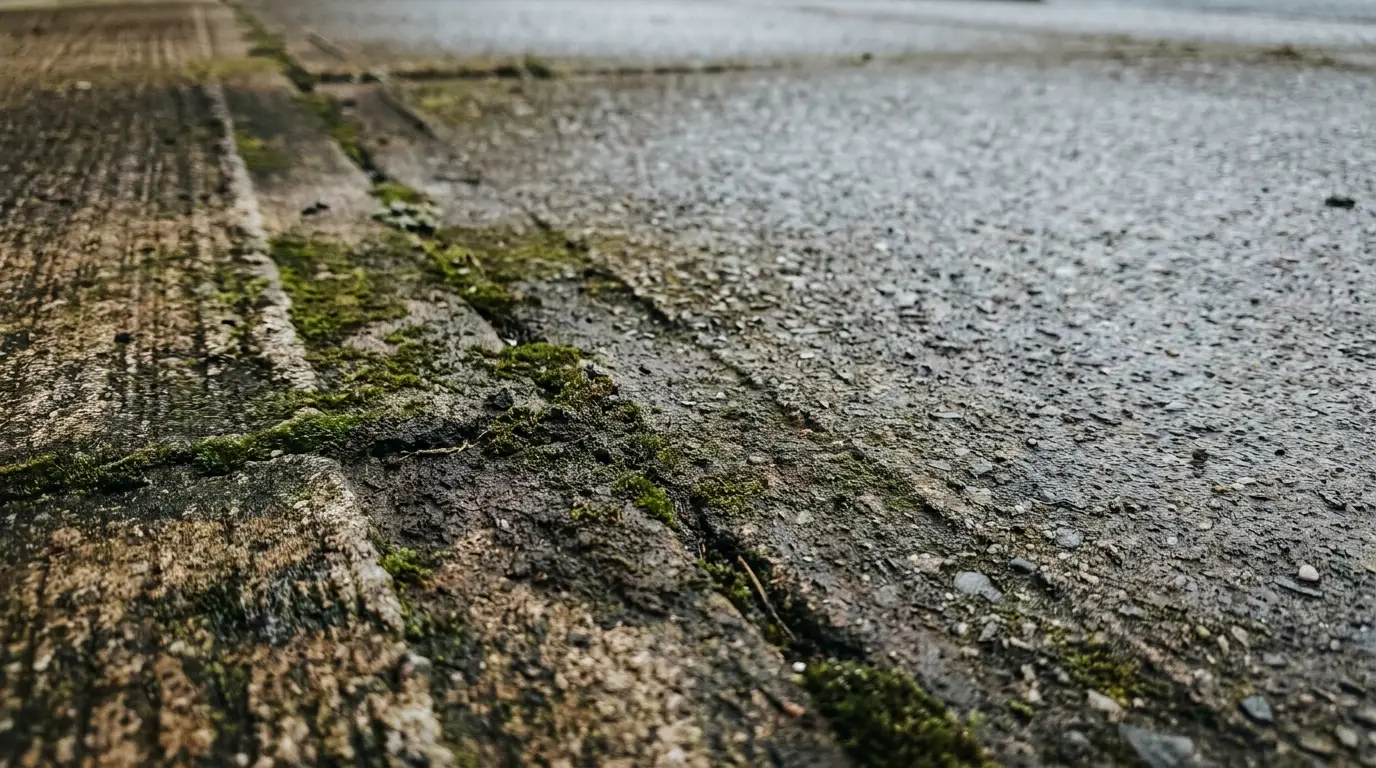
Hardscape areas such as driveways, walkways, and retaining walls accumulate compacted dirt from constant exposure. These surfaces often require stronger water force to lift embedded particles that settle into micro-crevices.
Outdoor living areas exposed to foot traffic tend to develop layered grime that cannot be removed through mild cleaning techniques. Pressure-based methods restore surface clarity and remove long-term buildup that affects appearance and texture.
Surface preparation for sealing or refinishing projects often involves pressure cleaning. Removing old residue allows coatings or sealants to bond more evenly, which supports longer-lasting results on exterior materials.
How Exterior Conditions Influence Cleaning Frequency
Climate conditions play a part in determining how often exterior surfaces require attention. High humidity regions encourage faster biological growth, especially on shaded areas of buildings where moisture lingers longer.
Tree coverage also affects surface accumulation. Properties surrounded by dense foliage often experience faster buildup of organic debris, which leads to more frequent cleaning cycles for both walls and roofing areas.
Wind patterns can carry dust and fine particles across open properties, leading to gradual surface dulling even without visible growth. These environmental influences combine to create different maintenance needs from one home to another.
Indoor Systems That Affect Overall Cleanliness
Indoor air systems influence how clean a home feels, even when exterior surfaces are well maintained. Mini split systems often circulate air continuously, which means dust accumulation inside components can affect airflow consistency.
When interior units become restricted, air distribution can feel uneven across rooms. This creates temperature variation and increases strain on system components over time. Regular cleaning of these systems supports stable performance.
Indoor air quality and exterior cleanliness often connect indirectly. Dust and particles entering from outside eventually pass through internal systems, which reinforces the importance of balanced care across both indoor and outdoor environments.
Common Mistakes in Surface Cleaning Decisions
One common issue is applying high-pressure cleaning to surfaces that are not designed for force exposure. This can lead to surface etching, paint removal, or structural weakening in sensitive materials.
Another frequent oversight involves delaying cleaning until buildup becomes severe. Heavier accumulation requires more aggressive treatment, which can limit available cleaning options and increase surface stress.
Some homeowners also underestimate how different materials respond to moisture exposure. Water retention in porous surfaces can lead to staining or recurring growth if not treated properly after cleaning.
Long-Term Benefits of Choosing the Right Method
Selecting the appropriate cleaning approach supports longer surface lifespan and reduces the frequency of repairs. Gentle treatment for sensitive areas preserves structural integrity, while stronger methods restore heavily used surfaces effectively.
Exterior appearance remains more consistent when cleaning is matched to material type. This helps maintain visual balance across different parts of a property, especially where multiple surface types exist together.
Balanced maintenance also reduces sudden deterioration. When buildup is removed before it becomes deeply embedded, surfaces remain easier to manage over time.
Seasonal Timing and Cleaning Strategy
Timing influences how effective cleaning results will be. Spring often reveals buildup from winter moisture, while summer exposes dust accumulation from dry conditions. Each season presents different surface challenges.
Fall introduces leaf debris and organic material that can settle into corners and drainage areas. Removing this buildup before winter helps reduce moisture retention and surface staining during colder months.
Winter conditions often limit cleaning opportunities, making pre-season maintenance more important for long-term surface protection.
Choosing Between Methods Based on Property Needs
The decision between soft washing and pressure-based cleaning depends on surface type, environmental exposure, and buildup severity. No single method applies universally across all areas of a property.
Combining both approaches in different zones often produces balanced results. Sensitive surfaces benefit from low-pressure treatment, while durable areas respond well to stronger force-based cleaning.
Knowing how each method interacts with materials allows for more controlled maintenance outcomes and reduces unnecessary wear on exterior structures.

Tommy Hardy, an alumnus of the Georgia Institute of Technology with a degree in Mechanical Engineering, has been a go-to figure in residential upkeep and innovation for over 18 years. His career commenced in a leading home appliance manufacturing company, where he mastered the intricacies of household systems. Joining our platform in 2020, Tommy quickly became a reader favorite for his practical and easy-to-follow guides. He took the helm of our DIY section in 2019, consistently delivering content that empowers homeowners. Beyond his professional pursuits, Tommy is a passionate gardener and enjoys woodworking, skills enhancing his hands-on approach to home care.