
Quick Answer: The most common early stage signs of termites in ceiling spaces include mud tubes, frass, pinholes, bubbling paint, discarded wings, and hollow wood.
Termites are often called “ silent destroyers ” for good reason. They can chew through ceiling joists, drywall, and attic beams for months, sometimes years, before a homeowner notices anything wrong.
By the time damage is obvious, repairs can run into thousands of dollars.
Early-stage signs of termites in ceiling areas are easy to miss because they often resemble water damage or normal wear.
According to the National Pest Management Association, only 36% of U.S. homeowners can identify common termite warning signs.
So, let’s spot the clues before termites turn your ceiling into an all-you-can-eat buffet.
What Are the Early Signs of Termites in a Ceiling?
Termite damage often looks like a leak or minor ceiling wear. I check for mud tubes, bubbling paint, pinholes, frass, hollow wood, discarded wings, and sagging drywall.
Some signs point to early activity, while sagging or weakened material may mean the damage is more advanced.
Checking several clues together makes it easier to separate termite damage from ordinary moisture problems.
The table below shows what each sign looks like and how urgently it should be inspected:
| Ceiling Sign | What It May Look Like | Urgency |
| Mud tubes | Thin brown lines along ceiling joints or attic beams | High |
| Bubbling paint | Raised, peeling, or blistered paint without a clear leak | Medium |
| Tiny pinholes | Small clustered holes in drywall or wood | Medium |
| Frass | Pepper-like or sawdust-like pellets below holes | High |
| Hollow wood | Papery or empty sound when tapped | High |
| Discarded wings | Small matching wings near lights or windows | High |
| Sagging ceiling | Dipping, bulging, or weakened drywall | Urgent |
1. Mud Tubes Along Ceiling Corners
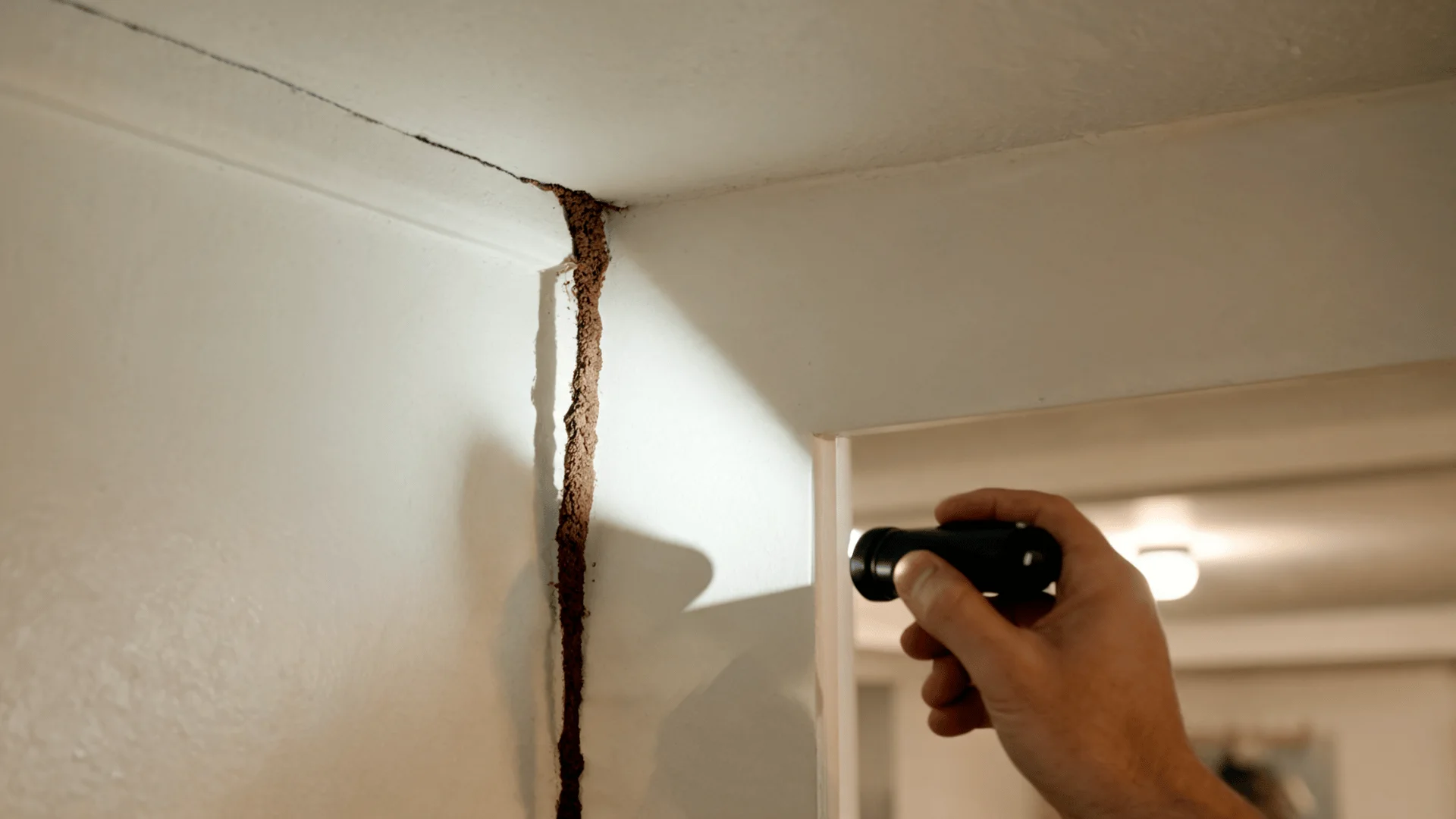
Subterranean termites build mud tubes to travel between soil and wooden parts of a home without exposure to light or dry air.
- How to spot them: Look for thin brown lines along ceiling joints, attic beams, wall corners, and access openings.
- What they feel like: The tubes may appear dry, rough, or crusted.
- What they indicate: An intact or recently repaired tube may suggest active termite movement.
Use a flashlight at a low angle so raised tubes cast a visible shadow.
2. Bubbling or Peeling Paint
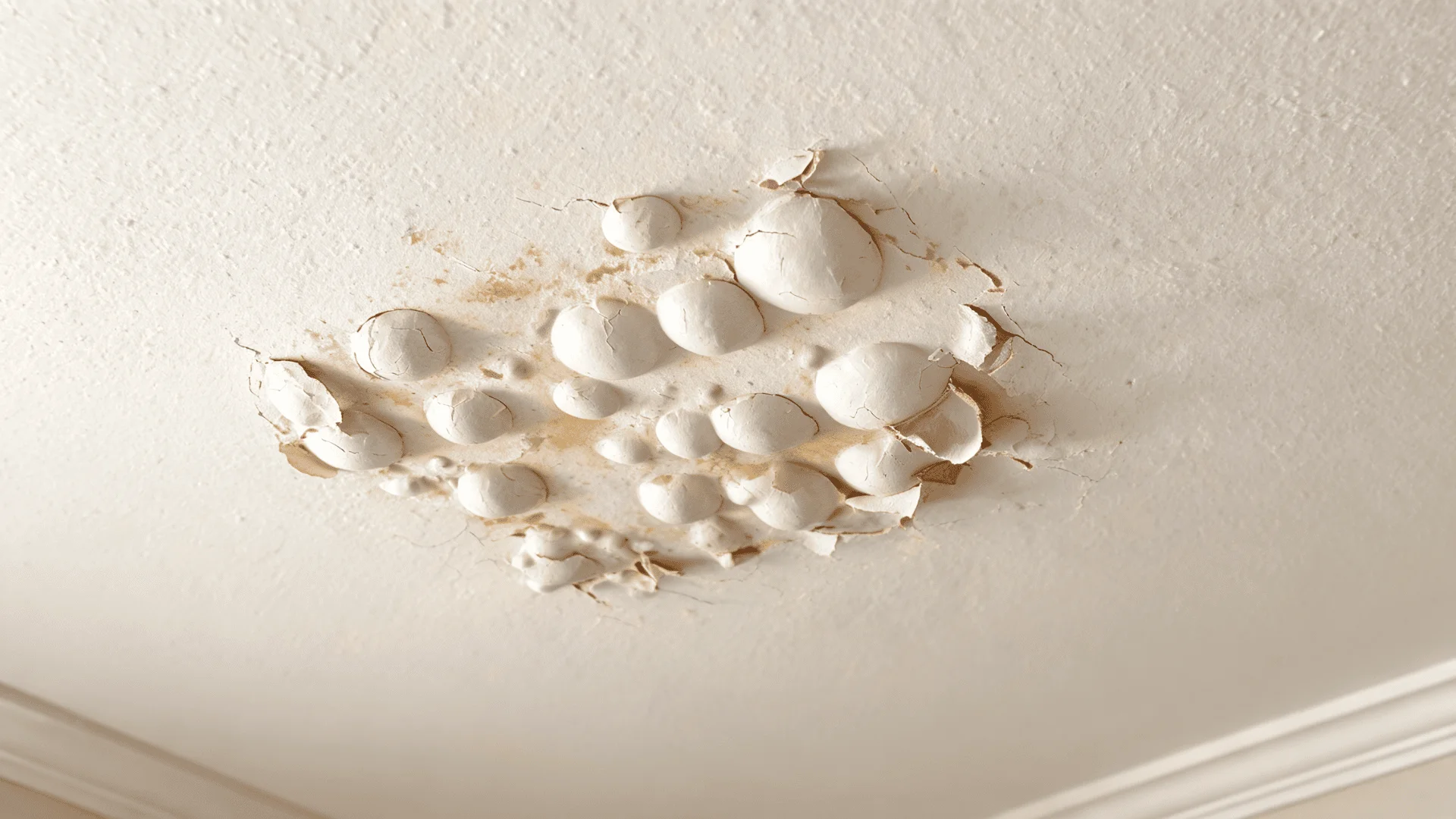
Moisture trapped behind drywall can loosen paint and create bubbles, cracks, or peeling patches. Termites are one possible cause, but roof and plumbing leaks can look similar.
- How to spot it: Check for raised paint, soft drywall, uneven patches, or unexplained discoloration.
- What to compare: Look for nearby roof damage, plumbing lines, or damp insulation.
- What it indicates: Bubbling without a clear leak may justify a termite inspection.
A moisture meter can help identify damp areas, but it cannot confirm termites by itself.
3. Sagging or Bulging Drywall
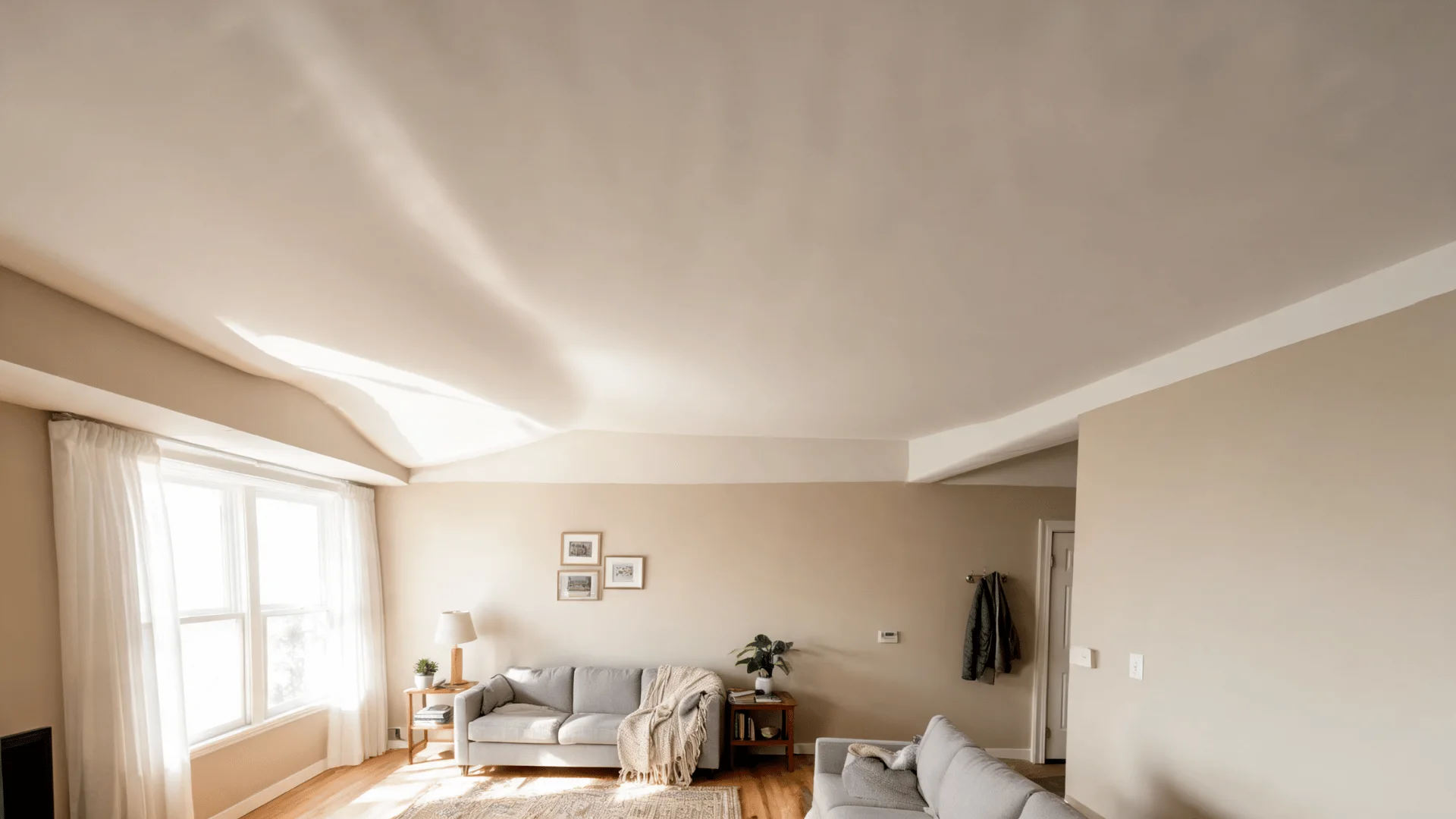
Termites may weaken ceiling joists, roof decking, or the paper backing of drywall. As support decreases, the ceiling can begin to dip or bulge.
- How to spot it: View the ceiling from across the room and look for uneven sections or visible curves.
- What to check: Notice cracks, softness, stains, or movement around the sagging area.
- What it indicates: Sagging usually suggests advanced damage rather than an early infestation.
Do not press, drill, or cut into a sagging ceiling because weakened material may fall.
4. Tiny Pinholes in Drywall
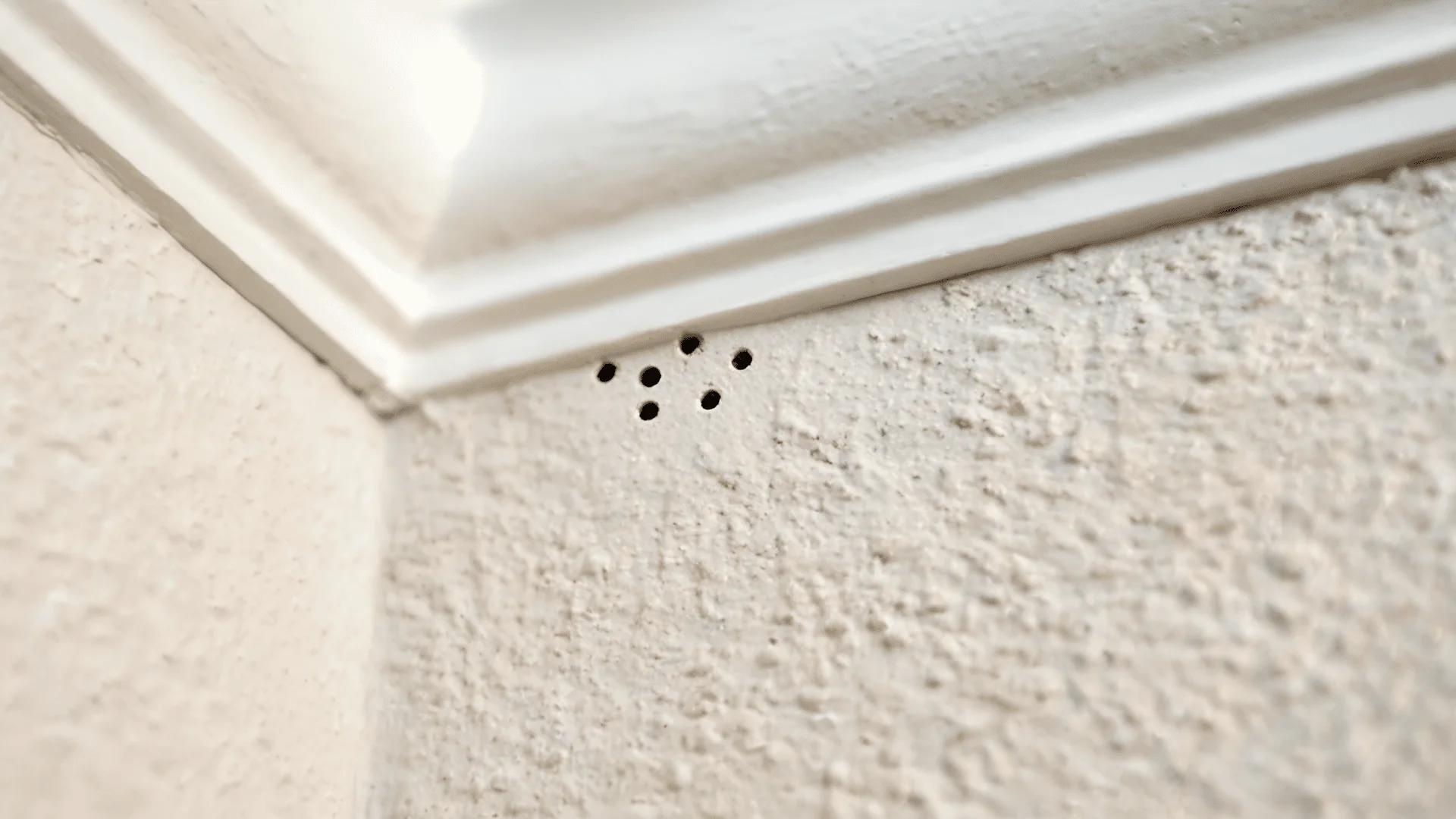
Small holes may appear when drywood termites remove waste from their galleries or when termites reach the drywall surface.
- How to spot them: Look for clustered pinhead-sized holes near beams, trim, ceiling joints, or attic openings.
- What to compare: Nail pops are usually larger and may show a raised fastener beneath the paint.
- What they indicate: Holes accompanied by pellets or damaged wood deserve closer inspection.
Use a magnifying glass to examine the hole without widening or disturbing it.
5. Frass Below Small Openings
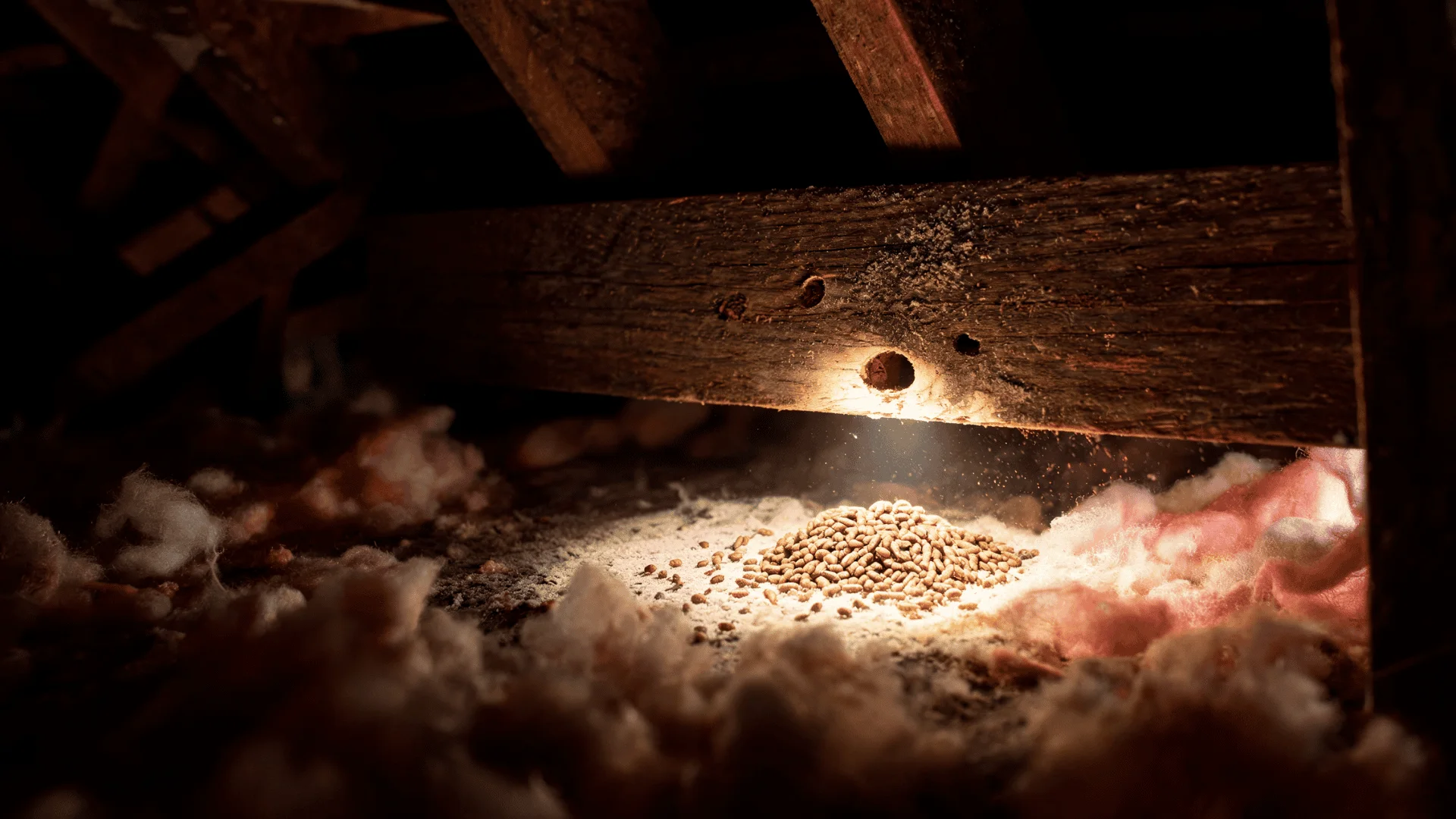
Drywood termites push waste pellets, called frass, through small openings in infested wood.
- How to spot it: Look for small piles resembling pepper, sand, coffee grounds, or sawdust.
- Where to check: Inspect floors, shelves, windowsills, insulation, and stored items below ceiling beams.
- What it indicates: Fresh piles that return after cleaning may suggest ongoing activity.
Do not confuse frass with ordinary sawdust, which usually has irregular flakes rather than uniform pellets.
6. Hollow or Papery-Sounding Wood
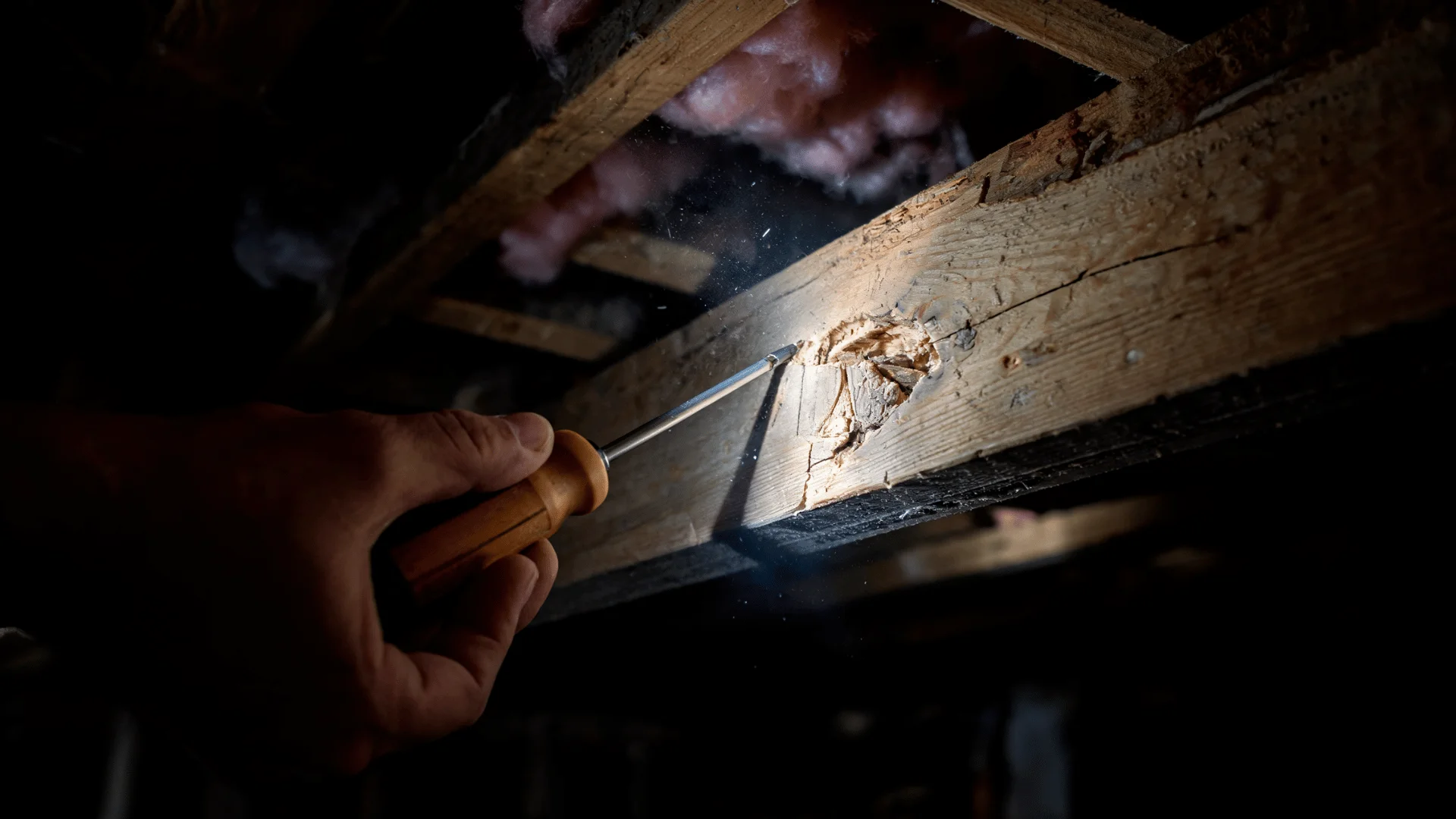
Termites commonly eat wood from the inside while leaving a thin outer surface intact.
- How to spot it: Gently tap exposed beams or joists with a screwdriver handle.
- What to listen for: Damaged sections may sound hollow, thin, or different from nearby solid wood.
- What it indicates: A hollow sound may suggest internal galleries, although rot can cause a similar result.
Avoid striking hard or probing the wood because severely weakened timber can break.
7. Discarded Wings Near Light Fixtures
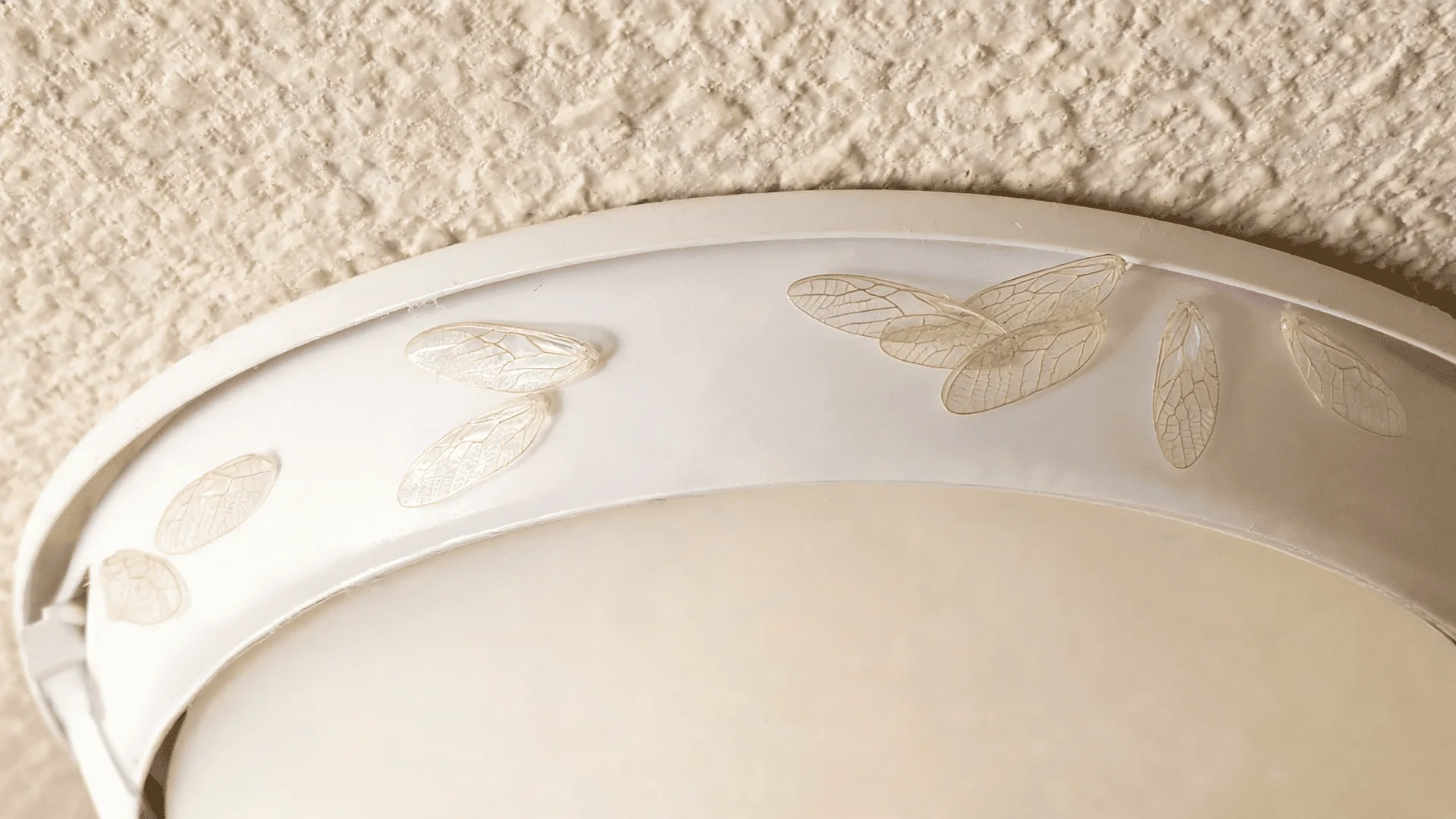
Mature termite colonies release winged swarmers to form new colonies. After landing, they shed their wings, which often collect near indoor light sources.
- How to Spot Them: Look for small, matching wings near ceiling lights, windows, vents, or attic openings.
- What to Compare: Termite wings are usually equal in size, while flying ants have uneven wing pairs.
- What They Indicate: Several discarded wings may suggest a mature colony nearby.
Photograph the wings before cleaning them so a pest professional can examine their shape and location.
Note: According to the National Pest Management Association, winged swarmers are frequently mistaken for flying ants, which means an active colony often goes unreported simply because homeowners misidentify what they’re looking at.
8. Faint Clicking Sounds in Quiet Rooms
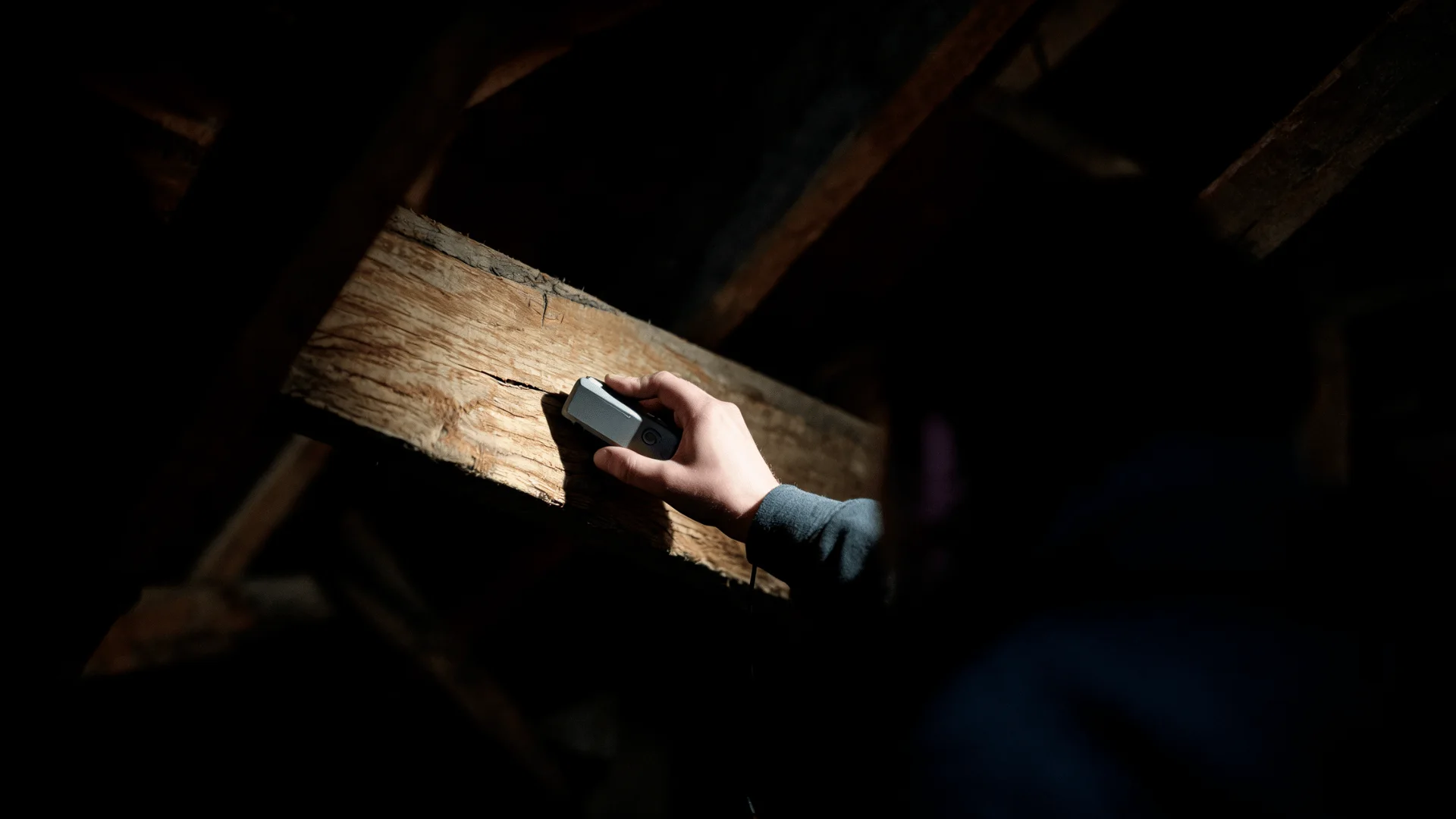
Soldier termites may tap their heads against wood to warn the colony, while worker termites can create faint chewing or rustling sounds.
- How to Hear Them: Listen near ceiling joints, exposed beams, or attic walls when the room is quiet.
- What to Compare: Plumbing, rodents, and expanding building materials can produce similar noises.
- What They Indicate: Repeated sounds from one area, especially with other warning signs, deserve investigation.
Do not cut into the ceiling to locate the sound. Mark the area and arrange a professional inspection.
How do You Inspect a Ceiling for Termite Damage?

A careful ceiling inspection can reveal termite activity before the damage becomes obvious.
Checking early-stage signs of termites in ceiling areas begins with good lighting, a careful surface scan, and a look inside the attic.
Materials Needed:
- Flashlight
- Lighted magnifier
- Moisture meter
- Borescope or inspection camera
- Screwdriver
The goal is not to diagnose the infestation myself. It is to document warning signs such as mud tubes, pinholes, frass, hollow wood, and unexplained moisture.
I avoid pressing, drilling, or cutting into damaged areas. Weakened drywall may fall without warning.
These five steps help me inspect safely and gather useful evidence before calling a licensed termite professional.
Author Tip: Photograph every suspicious mark before touching or cleaning it. Take one close-up and one wider photo showing its location in the room.
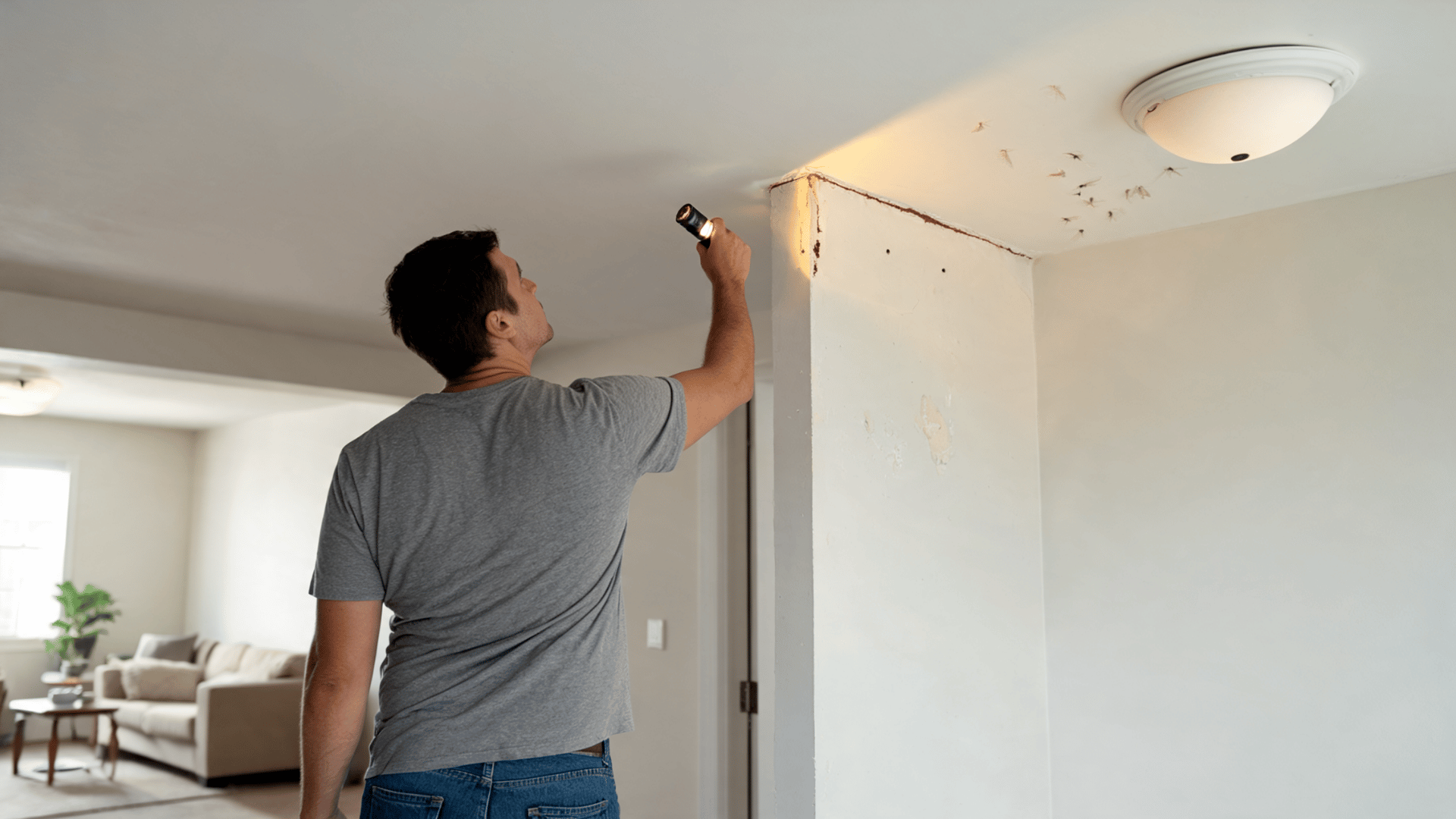
Step 1: Sweep the Ceiling With a Low-Angle Flashlight
I dim the room and shine a flashlight across the ceiling rather than directly at it. Side lighting helps raised mud tubes, tiny holes, bubbles, and uneven patches cast visible shadows.
I move slowly from one wall to the other. I pay close attention to corners, ceiling joints, light fixtures, vents, and attic access panels.
Step 2: Check Below the Ceiling for Frass and Wings
I inspect windowsills, shelves, floors, and stored items below suspicious areas.
Drywood termite frass may resemble pepper, sand, or fine sawdust. Discarded wings often gather near lights and windows.
Inspection Tip: Place a clean sheet of white paper below a suspected hole overnight. Small pellets or wings are easier to notice against the pale surface.
Step 3: Gently Tap Exposed Beams and Joists
Where wood is safely exposed, I tap it gently with a screwdriver handle.
I compare the sound with nearby wood that appears undamaged. A hollow or papery tone may suggest internal galleries, although rot can create a similar sound.
I never strike hard or puncture the surface. Severely weakened wood may split without warning.
Step 4: Inspect the Attic Above the Affected Room
If the attic is safely accessible, I check the area above the affected room.
I inspect rafters, roof decking, joists, insulation edges, and wall-ceiling joints. I look for mud tubes, frass, damaged wood, moisture marks, and discarded wings.
I stay on secure boards and avoid moving insulation near wiring or unstable surfaces.
Step 5: Rule Out Leaks and Other Moisture Sources
Bubbling paint, stains, and soft drywall can also come from plumbing leaks, roof damage, or condensation. I check nearby pipes, roofing, vents, and insulation for a visible moisture source.
A moisture meter can locate damp areas, but it cannot confirm termites. If the cause remains unclear, I document the damage and schedule a professional inspection.
Drywood vs Subterranean Termites in a Ceiling: How to Tell Them Apart?
Some early-stage signs of termites in ceiling spaces can help distinguish drywood termites from subterranean termites.
Drywood termites usually leave frass behind, while subterranean termites are more likely to build visible mud tubes.
Use this comparison every time you inspect:
| Feature | Drywood Termites | Subterranean Termites |
|---|---|---|
| Needs soil contact | No | Yes |
| Main visible sign | Frass or fecal pellets | Mud tubes |
| Colony size | Few hundred to a few thousand | Can exceed hundreds of thousands |
| Common ceiling location | Attic beams and roof decking | Corners and wall-ceiling joints |
Both species can reach a ceiling, so ruling out one does not automatically rule out the other.
What does Ceiling Termite Damage Cost If You Wait?
Ignoring the early-stage signs of termites in a ceiling can allow a small infestation to become a costly structural problem.
According to the National Pest Management Association, termites cause an estimated $6.8 billion in U.S. property damage annually.
For homeowners, the final bill usually includes both termite treatment and repairs to the damaged ceiling or framing.
- Termite Treatment: Expect roughly $250 to $1,000 for colony removal, depending on the termite type, home size, and treatment method.
- Minor Ceiling Repairs: Patching drywall holes, repainting, and fixing cosmetic damage may cost $300 to $2,000.
- Structural Repairs: Damage involving joists, beams, or roof framing can bring the total repair cost to $1,000 to $10,000.
- Insurance Coverage: Homeowners insurance usually excludes termite treatment and gradual termite damage.
Waiting rarely saves money. It usually shifts the cost from early treatment to a much larger renovation later.
When I Stop Inspecting Myself and Call a Professional
When several early signs of termites in the ceiling appear together, I stop inspecting and contact a licensed pest control professional.
Call a licensed pest control professional when several signs appear together, such as mud tubes, frass, hollow wood, or sagging drywall.
Professionals may use moisture meters, borescopes, and other inspection tools to examine hidden areas. They can also identify the termite species and recommend the correct treatment.
I also keep a set of Advance Termite Bait Monitoring Stations around the foundation year-round, which helps catch subterranean activity before it ever reaches the ceiling.
Final Thoughts on Catching Termites in a Ceiling Early
Recognizing early-stage signs of termites in ceiling spaces gives you a better chance of acting before major structural repairs are needed.
Mud tubes, bubbling paint, pinholes, frass, hollow wood, and discarded wings may all point to hidden activity above the surface.
I treat one warning sign as a reason to inspect more closely. If several appear together, I contact a licensed professional before the damage spreads.
Early action can mean the difference between a small repair and a major ceiling replacement.
Termite monitoring stations around the foundation may help detect subterranean activity before it spreads into walls, attic beams, or ceiling spaces.
Have you ever found a strange ceiling clue that turned out to be termites? Share your experience in the comments below.
Frequently Asked Questions
Can Termites Damage a Ceiling?
Yes. Subterranean and drywood termites can infest ceiling joists, attic beams, roof decking, and drywall, especially in warm or poorly ventilated spaces.
How Fast does Ceiling Termite Damage Develop?
The timeline varies by species and colony size. Visible sagging or hollow wood may appear within months, while early activity can remain hidden longer.
Is Bubbling Paint Always a Sign of Termites?
No. Bubbling paint can also indicate roof leaks, plumbing problems, or condensation. Check for moisture sources before arranging a termite inspection.
What Should I do If I Find Mud Tubes or Frass?
Photograph the evidence and avoid disturbing it. Contact a licensed pest professional to confirm the termite type and inspect nearby hidden areas.
Should I Treat Ceiling Termites Myself?
DIY checks can reveal warning signs, but treatment should be handled by a licensed professional who can assess the colony, damage, and termite species.

Tommy Hardy, an alumnus of the Georgia Institute of Technology with a degree in Mechanical Engineering, has been a go-to figure in residential upkeep and innovation for over 18 years. His career commenced in a leading home appliance manufacturing company, where he mastered the intricacies of household systems. Joining our platform in 2020, Tommy quickly became a reader favorite for his practical and easy-to-follow guides. He took the helm of our DIY section in 2019, consistently delivering content that empowers homeowners. Beyond his professional pursuits, Tommy is a passionate gardener and enjoys woodworking, skills enhancing his hands-on approach to home care.