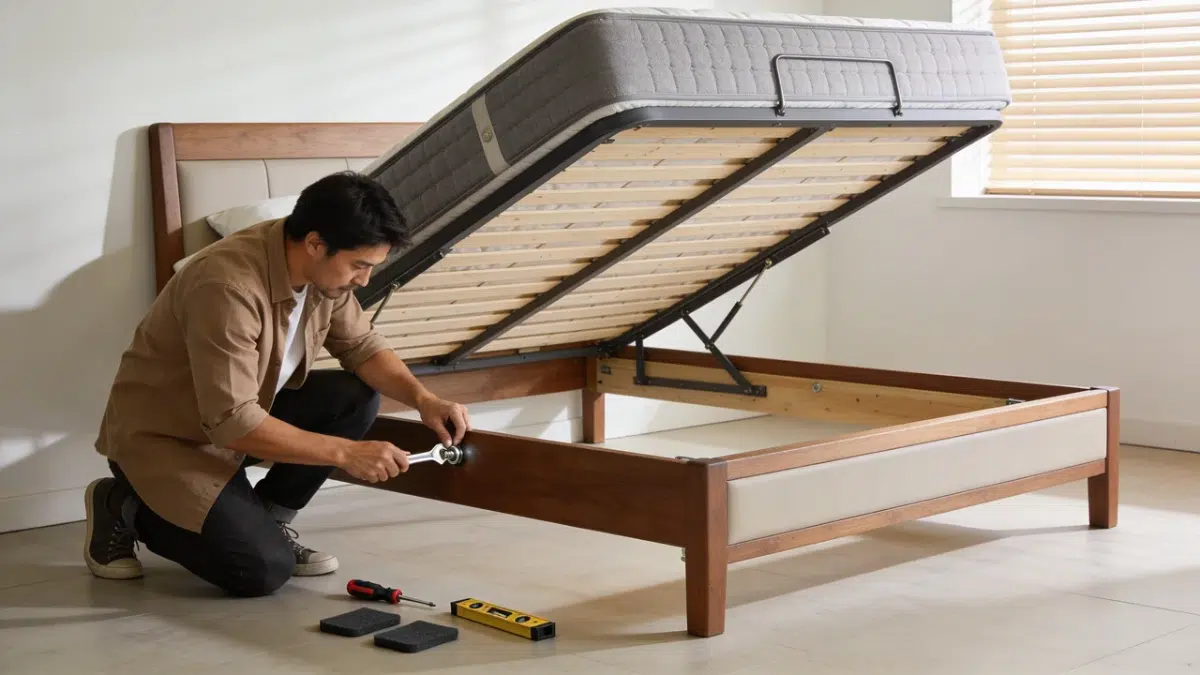

Learning how to stop a squeaky bed starts with finding the exact part that moves.
Loose bolts, rubbing slats, uneven legs, and worn mattress springs are the most common causes.
Test the frame without the mattress first, then tighten the hardware, cushion the contact points, and match the lubricant to the material, since wooden, metal, and divan frames each need a different approach.
A wrench, screwdriver, and felt pads handle most repairs. Cracked wood, bent metal, or a collapsing support needs replacing rather than fixing.
Research on nighttime noise exposure links even small sound disruptions to lower sleep efficiency later in the night, which is reason enough to fix a squeak instead of living with it.
How do You Stop a Squeaky Bed
Strip the bedding and test the mattress and frame separately, so you know which one is talking. Then tighten every screw, bolt, and headboard connection.
Level uneven legs with a shim and replace cracked slats. If the frame still shifts, replace it.
| Squeak Source | Most Likely Fit |
| Loose corner joint | Tighten the hardware |
| Slat rubbing on the rail | Add felt or rubber padding |
| Metal Joint | Tighten, then lubricate |
| Wooden Joint | Rub with beeswax or paraffin |
| Uneven Leg | Shim it or add a furniture pad |
| Mattress Springs | Test separately, then assess replacement |
Why does My Bed Squeak When I Move?
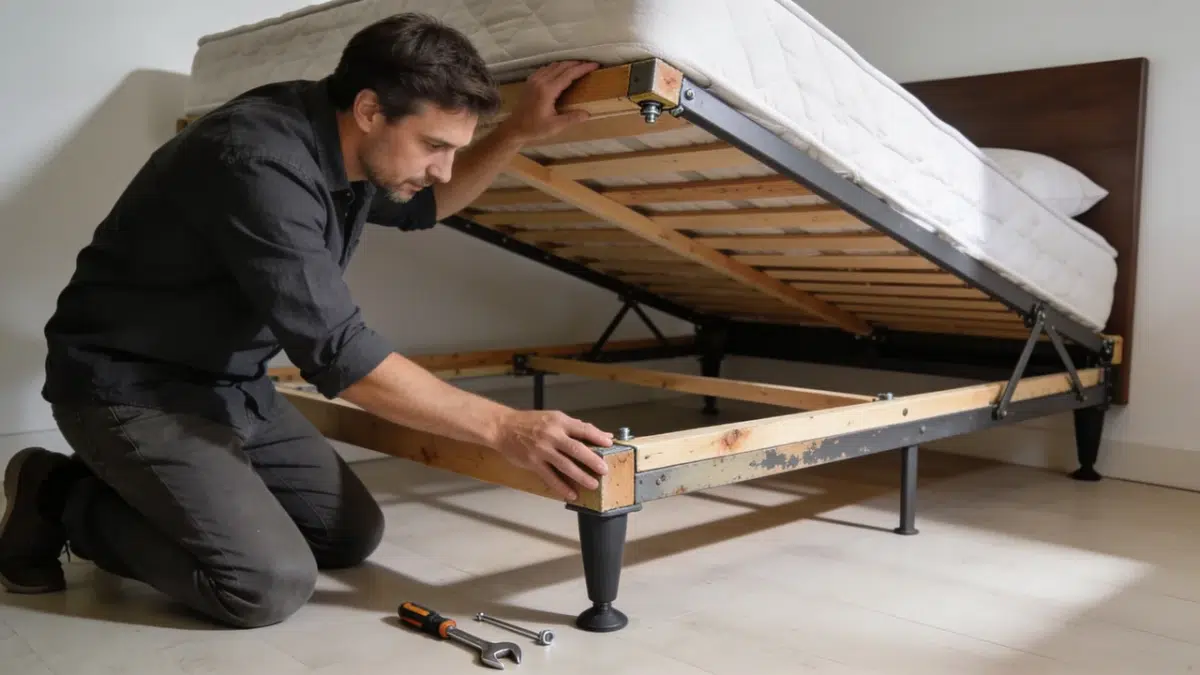
Each time you turn over, your weight moves through the mattress, slats, rails, legs, and headboard. Noise occurs when loose surfaces rub or shift.
Common causes include loose bolts, rubbing wood, grinding metal, moving slats, uneven floors, damaged supports, and worn mattress coils.
Timber may also shrink during dry winter conditions, creating small gaps in wooden joints.
Divan and ottoman bases have extra noise points, including lift-up hinges, drawers, and frame joints.
Box spring squeaks usually come from the hidden wooden frame or aging coil unit, making the source harder to locate than a loose bed-frame connection.
The loudest corner is rarely the broken one. Sound travels through a frame, which is why people tighten the wrong joint and give up.
Tools and Materials to Use to Stop a Squeaky Bed
Most squeaks in beds I have dealt with came down to a wrench, a screwdriver, and a handful of felt pads.
What you actually need depends on where the noise is and what the frame is made of.
Checklist
Tools :
- Adjustable wrench
- Screwdriver set
- Allen keys, usually the set that came with the bed
- Small level
- Removable tape
For Wooden Frames :
For leveling and Replacement :
| Note: Check your manufacturer’s instructions before applying lubricant, adhesive, or replacement hardware. Some warranties are voided by aftermarket parts. |
The Best Ways to Stop a Squeaky Bed
The right fix depends entirely on where the noise starts. A mattress problem will not respond to tightened bolts, and a rocking frame will not be solved by wax.
So test each part on its own before you buy anything, because most of the components below cost money and most of them will turn out to be unnecessary.
Step 1. Rotate or Flip the Mattress
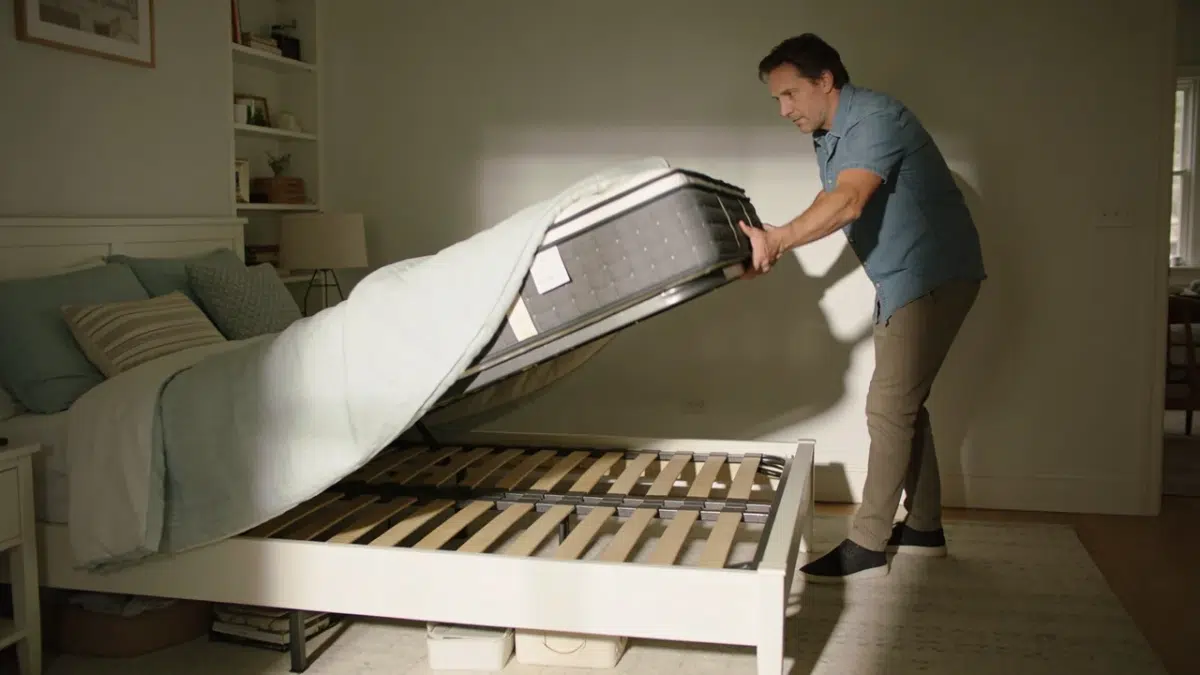
Uneven wear and shifting internal springs cause noise that no frame repair will touch.
Rotate the mattress head to foot every few months, and flip it only if the manufacturer says it is double-sided, since most modern mattresses are not.
Test it on the floor first. If it squeaks there, the frame was never the problem.
Step 2. Tighten The Frame Joints
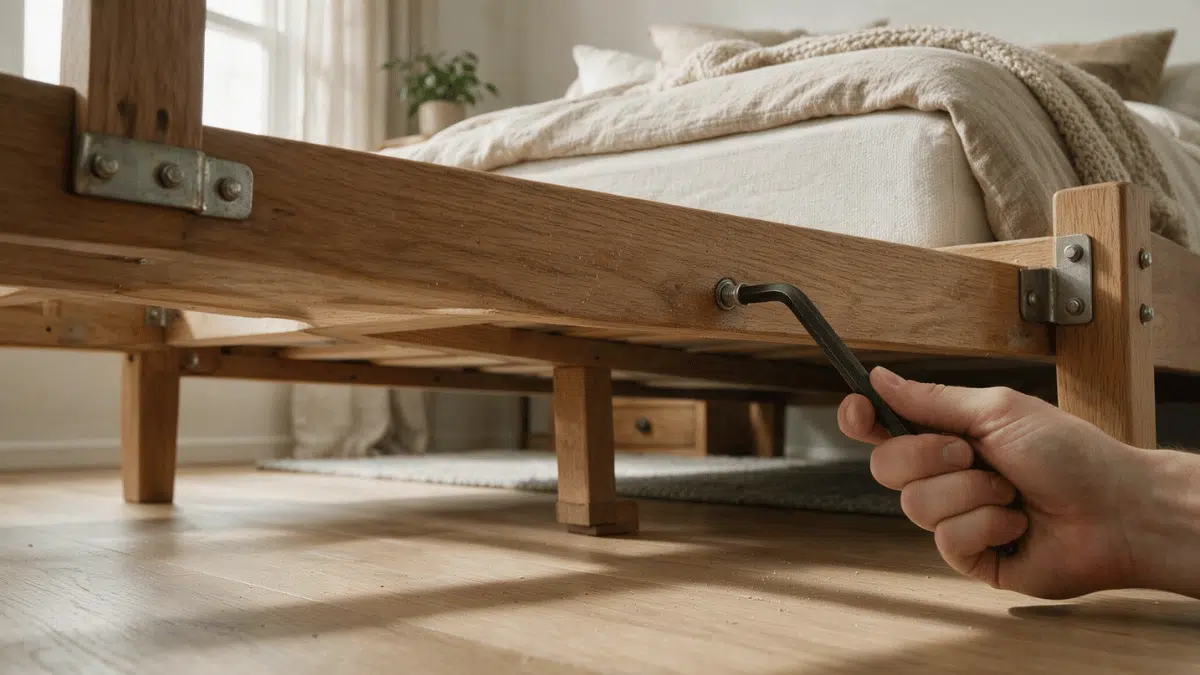
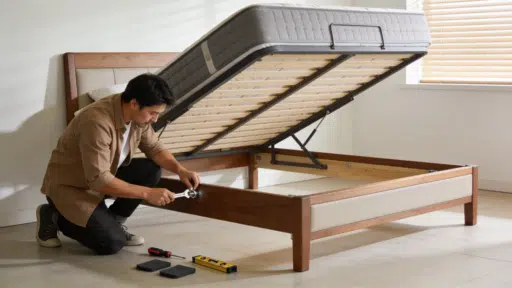
Start underneath with the hardware you cannot see. Corner joints, headboard fittings, footboard bolts, and the center support all work loose over time.
Use the key that came with the bed, tighten firmly, then stop. Overtightening splits timber and strips threads, and a stripped hole is a much bigger job than a squeak.
Step 3. Lubricate Noisy Metal Connections
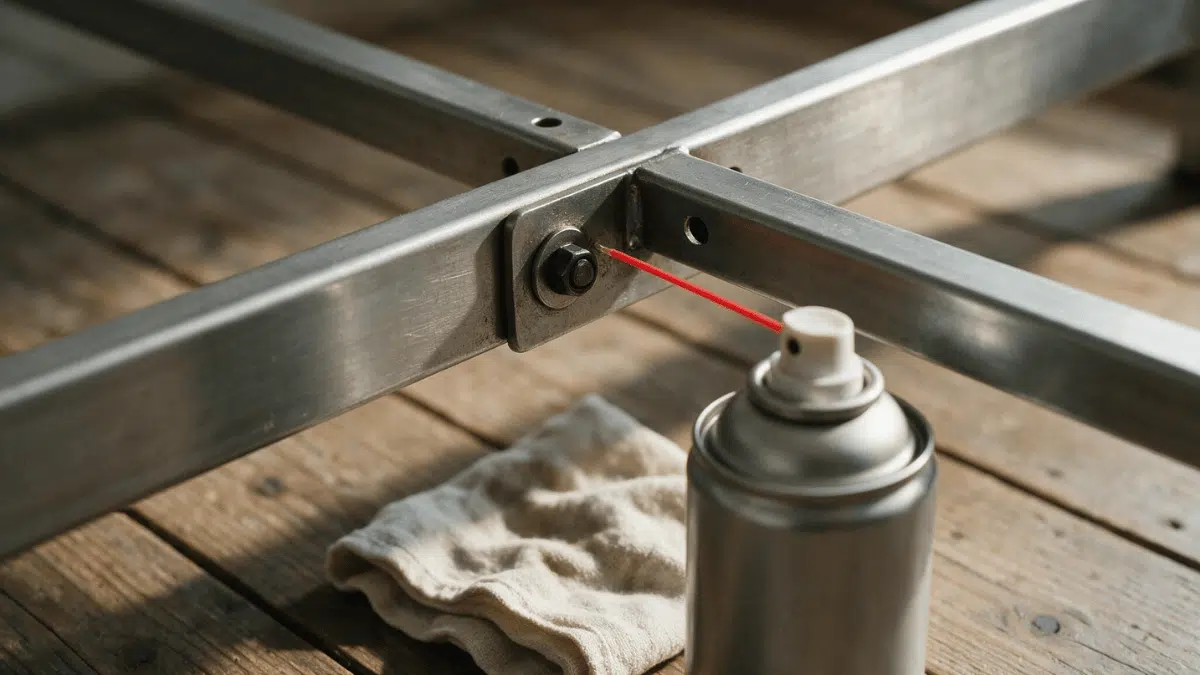
Where metal rubs metal, a silicone spray or dry PTFE lubricant will quiet it quickly.
Apply a small amount directly to the contact point rather than spraying broadly, then wipe the excess before the mattress goes back.
Too much attracts dust, and dust is abrasive, so a heavy application often returns as a worse noise.
Step 4. Apply Beeswax to Wooden Contact Points
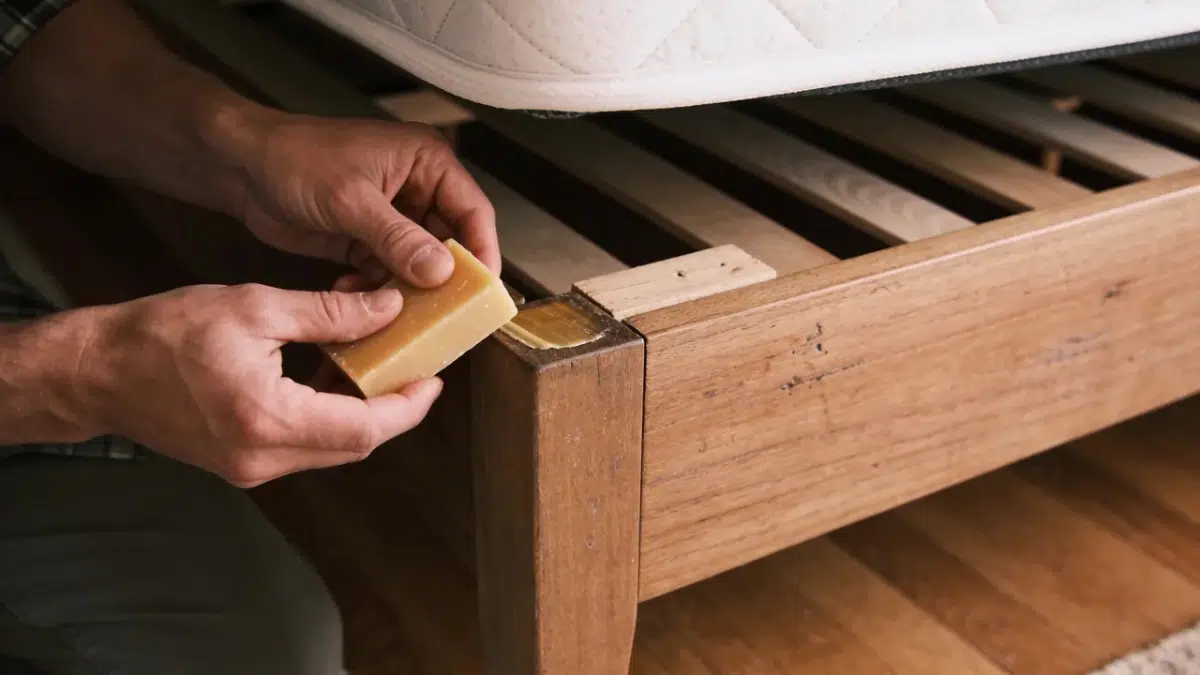
Wood-to-wood contact wants wax, not oil. Rub a beeswax block, a paraffin candle or furniture wax straight onto the rubbing face until it feels slick.
It costs almost nothing and lasts a season or more. Avoid liquid or petroleum-based products on unfinished timber, since they soak into the grain, darken it and collect dust.
Step 5. Replace Worn Bolts and Screws
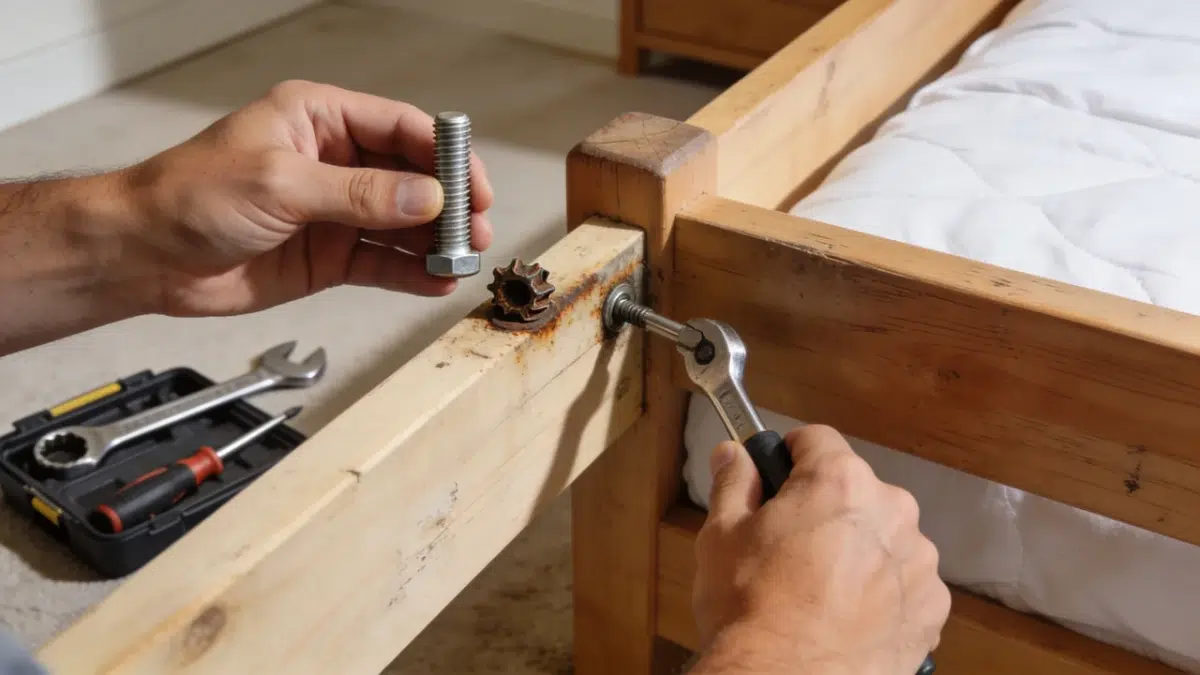
Rusted, bent or stripped fasteners will not hold, however hard you tighten them. Take one to a hardware shop and match the size, thread and length exactly.
Forcing a larger screw into an existing hole feels like a fix and destroys the timber around it, which is how a repairable frame becomes a replacement.
Step 6. Add Padding Beneath the Bed Legs
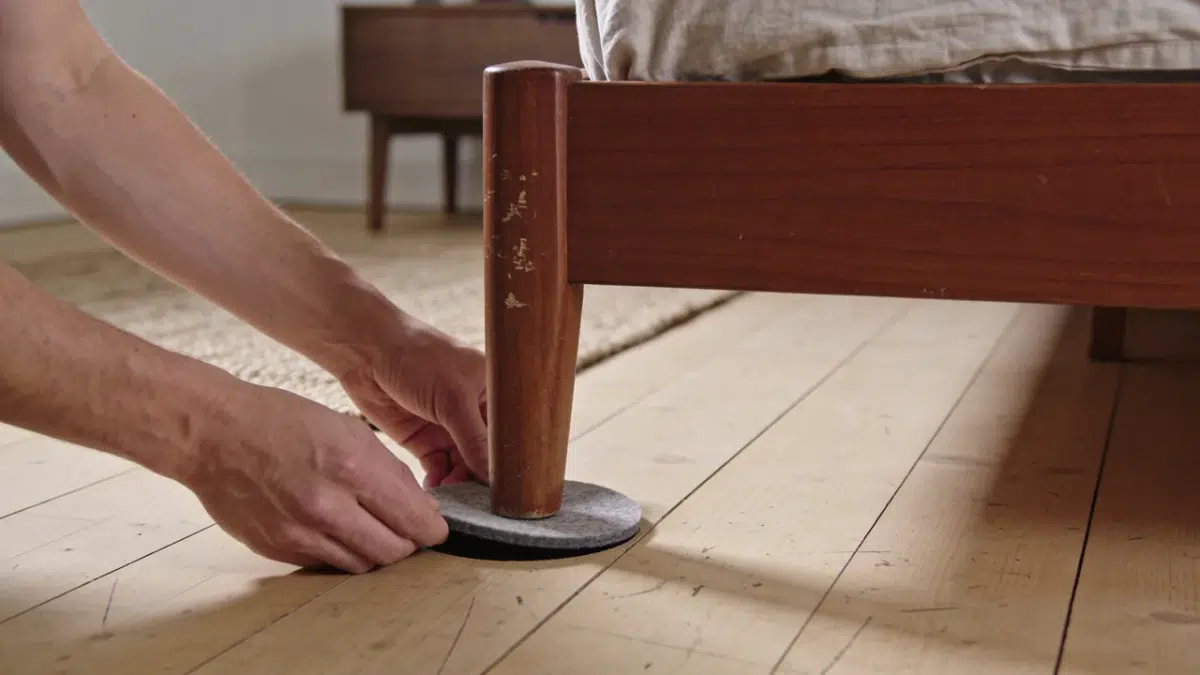
Where legs meet hardwood, laminate or tile, rubber grips or furniture cups stop the frame sliding and absorb the noise that sliding makes.
Felt pads work on smooth floors but wear through. Cups are the better choice on tile, and all of them protect the floor from the scratches a shifting bed leaves behind.
Step 7. Cushion the Slats and Frame Gaps
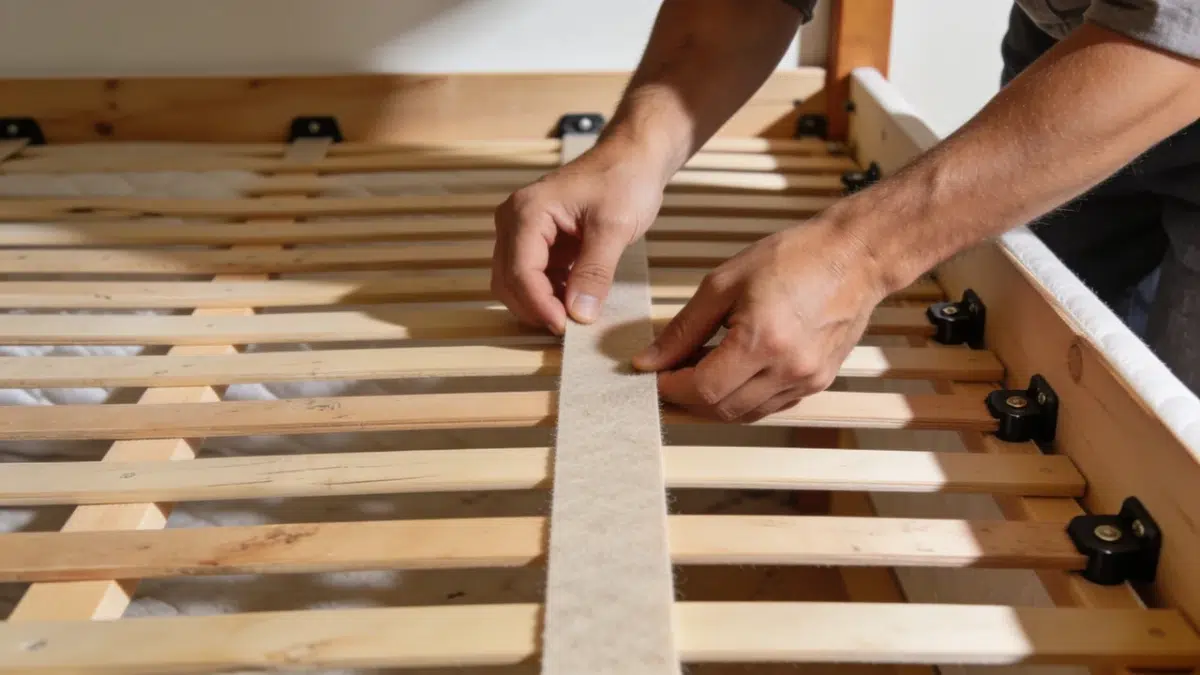
Thin felt, cork, or rubber strips between slats and support rails remove the rubbing that causes most slat noise.
Keep them thin.
Anything bulky raises one slat above its neighbors and creates uneven mattress support, which is a worse problem than the squeak you started with.
Secure them so they cannot bunch.
Step 8. Level and Stabilize the Bed Frame
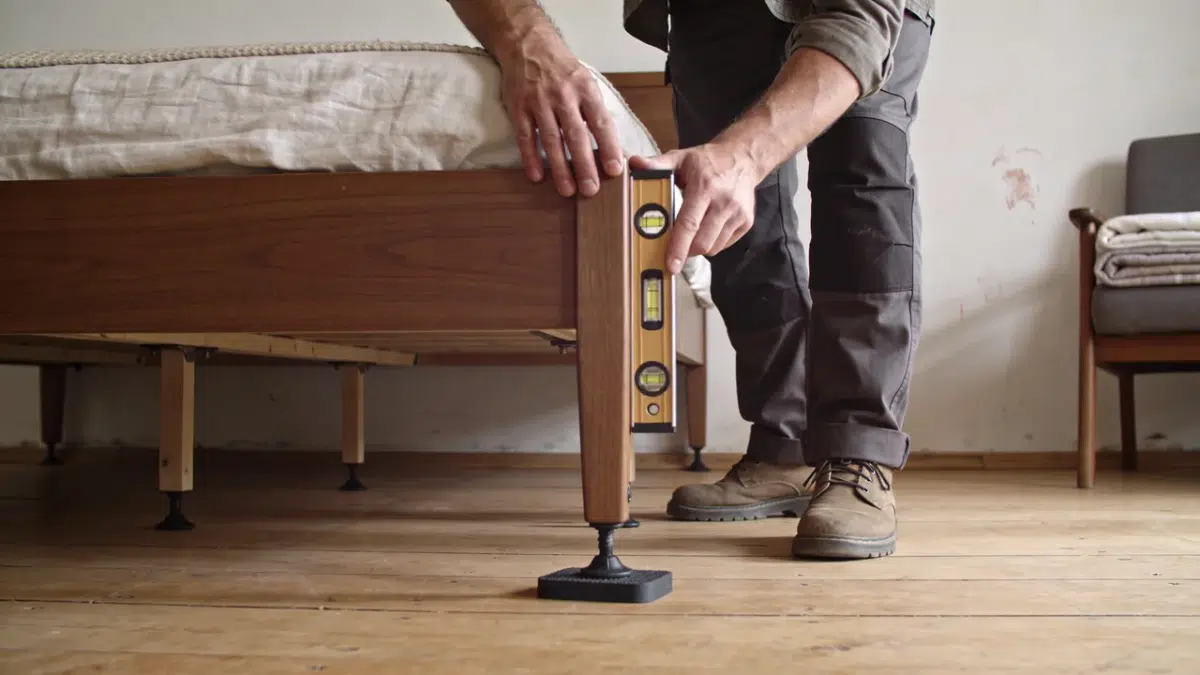
Press each corner and watch for movement. Every leg and the center support should touch the floor, and a small level tells you more than your eye will.
Rubber or purpose-made shims go under the low points. Leveling also takes strain off the joints, which is why it often quiets noises elsewhere.
Step 9. Add Extra Support Carefully
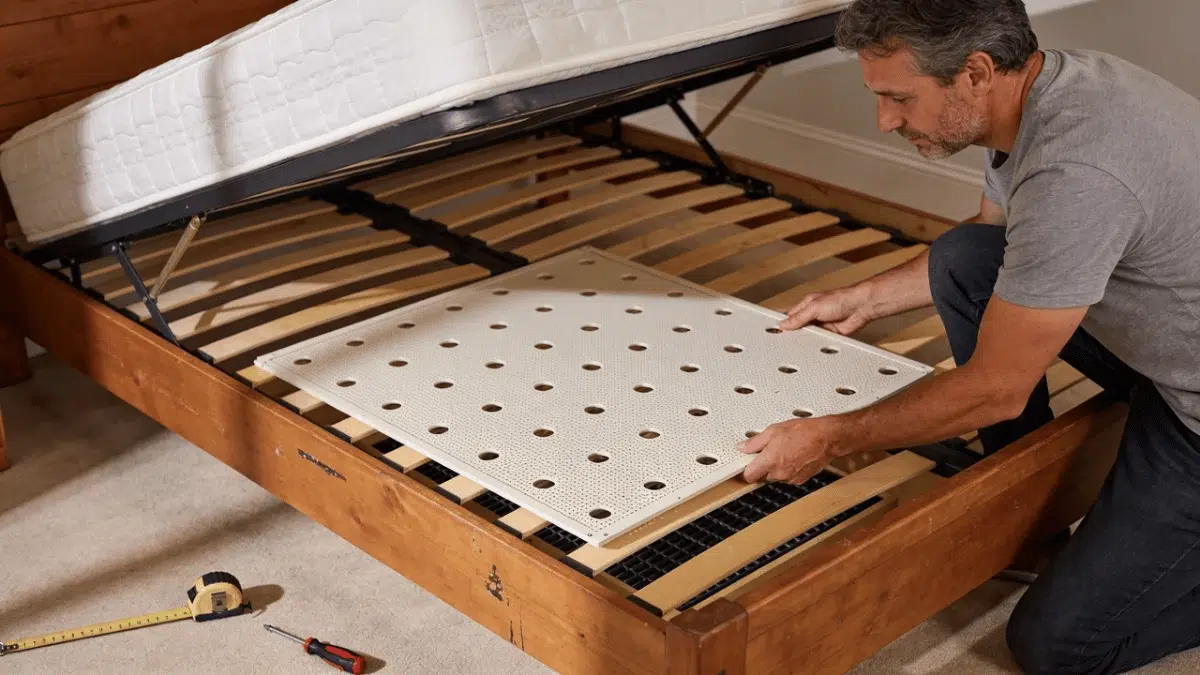
A support board can reduce flex in a frame with widely spaced slats, but check both the mattress and frame guidance first.
Solid plywood restricts airflow under foam and hybrid mattresses, which can encourage moisture and void a warranty. If you use one, drill ventilation holes or choose a slatted panel instead.
Step 10. Replace a Worn Mattress
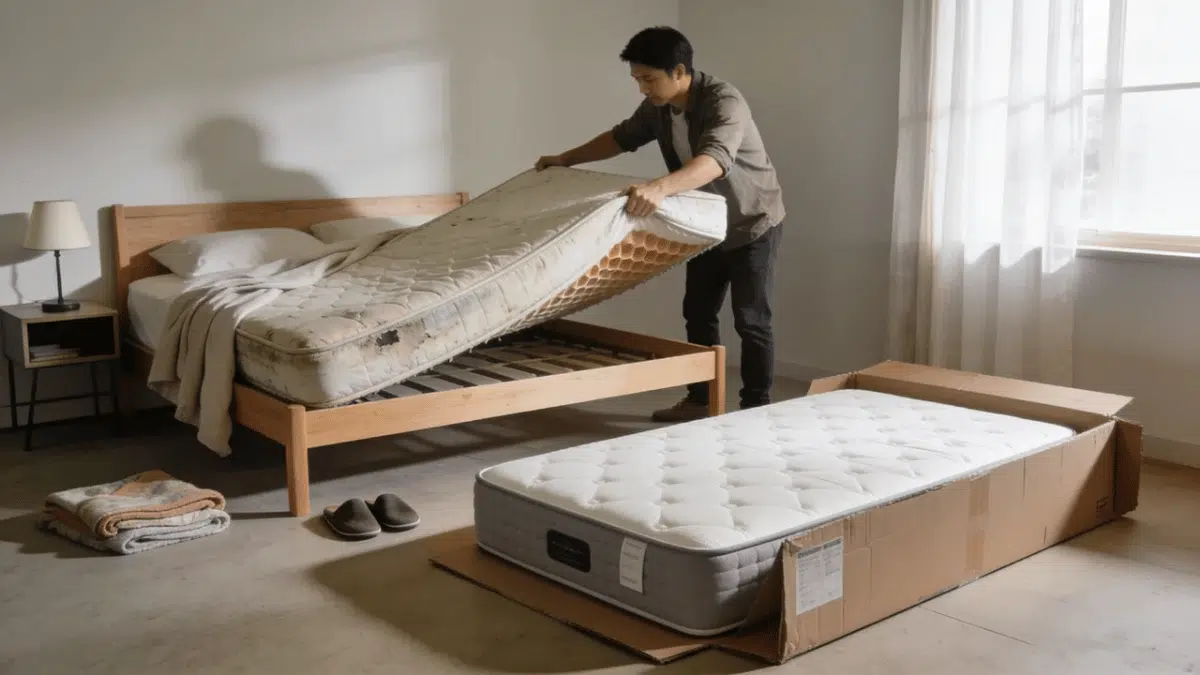
Replace the mattress when it squeaks when lying on the floor, sags visibly, or no longer supports evenly. Broken or shifted coils cannot be repaired from outside, and no amount of framework will silence them.
This is the point where people usually find out they have been fixing the wrong object for months.
How to Stop Bed Slats from Squeaking
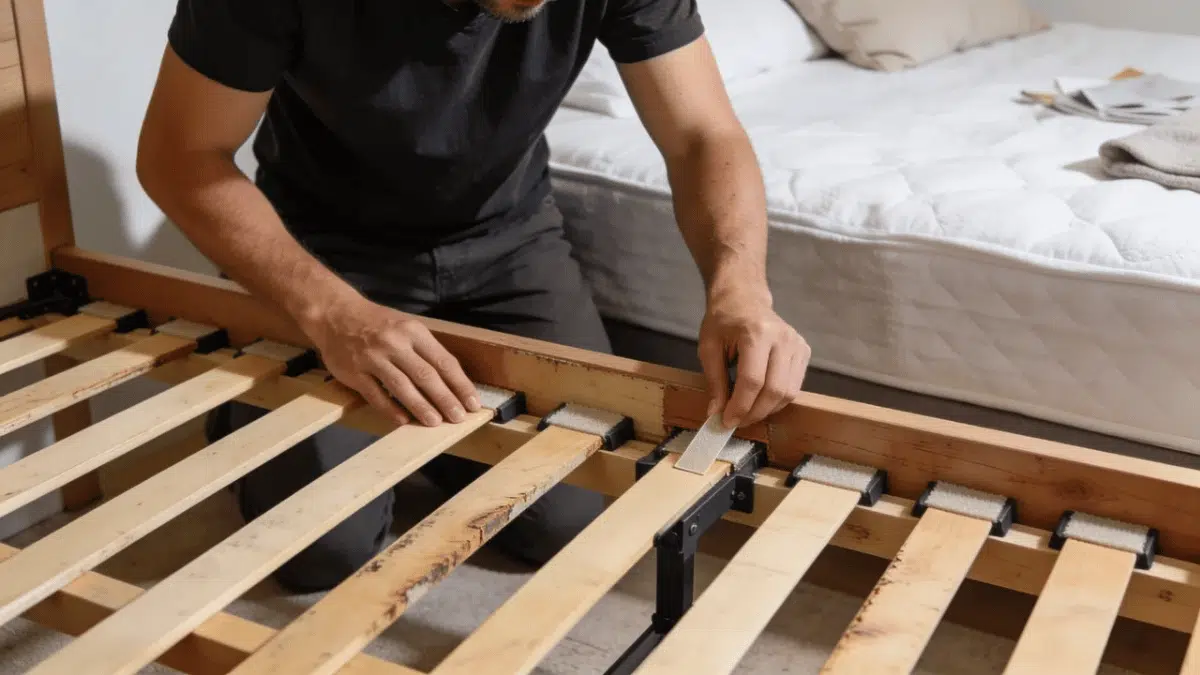
Bed slats often squeak when they shift, bow, rub against the rails, or sit unevenly. To stop the noise:
- Reseat every slat securely in its holder.
- Check that the spacing between slats is consistent.
- Add felt or cork strips where the slat ends meet the rails.
- Inspect plastic or rubber holders for splits.
- Replace cracked, bowed, or warped slats.
- Confirm the center support touches the floor and bears weight.
- Avoid covering the slats with plywood, as this can restrict flexibility and mattress airflow.
Quick Temporary Fixes for a Squeaky Bed
These will buy you a quiet night, not a repair. Use them when it is late, the tools are in the shed, and you need sleep more than you need a solution.
| Quick fix | What it does | How long it lasts |
|---|---|---|
| Felt pads under slat ends | Stops slats rubbing the rails | Weeks, until they compress |
| Thin fabric at contact points | Cushions any two parts that rub | A few nights |
| Rubber pads under the legs | Stops the frame sliding on hard floors | Months, and often permanent |
| Tighten what you can reach | Quiets the most common cause | Until it works loose again |
| Move the bed off the wall | Removes headboard knock, not frame noise | Indefinitely |
| Shim under an uneven leg | Stops rocking | Cardboard, days. Rubber, longer |
| Remove loose headboard trim | Eliminates rattling decorative parts | Permanent |
Common Mistakes When Fixing a Squeaky Bed
Most failed repairs happen because people skip the diagnosis. I have made or seen each of these mistakes, and every one wastes time.
- Skipping diagnosis: Tightening random bolts before locating the squeak.
- Overtightening joints: Splitting the wood or stripping the threads.
- Using the wrong lubricant: Applying a product that does not suit the material.
- Spraying raw wood: Petroleum-based products may stain wood and collect dust.
- Ignoring the center support: Missing a key contact point beneath the bed.
- Padding damaged slats: Covering a crack instead of replacing the slat.
- Leaving the mattress on: Making it harder to isolate the noise.
- Using unstable shims: Leveling the bed with books or folded cardboard.
- Overlooking the floor: Failing to check whether the surface is uneven.
- Blaming the frame: Assuming it squeaks when the mattress causes the noise.
How to Prevent Future Bed Squeaks
A bed may squeak again if the conditions that loosened it remain. Nightly movement can weaken fasteners, while dry winter heating may shrink timber. Ten minutes of maintenance twice a year can help prevent recurring noise.
- Recheck every joint after moving the bed.
- Confirm that each leg and center support touches the floor.
- Replace split slat holders and worn floor pads.
- Refresh wax or lubricant at known friction points.
Keep wooden frames away from radiators and major humidity changes. Stay within the bed’s weight limit, including the mattress, and investigate new noises within a week.
Note: Tighten the headboard and center support early. They carry the most load and loosen first.
Final Thoughts
Once you know how to stop a squeaky bed, you can identify the source, apply the correct fix, and prevent the noise from returning.
If you followed the order above, chances are you never made it past step two, because loose bolts cause more squeaks than everything else combined.
Find the noise first, then match the material to the friction: felt and cork under slats, rubber under legs, wax on wood, dry lubricant on metal, never petroleum on bare timber.
Still talking? Check the mattress on the floor before blaming the frame. The one thing I would not do is pad over a cracked rail. Ten minutes twice a year and you probably will not be back here.
Leave a comment with what fixed your squeaky bed and what kind of frame you have. It might be exactly what the next person needs to read.
Frequently Asked Questions
How Can You Tell Whether the Mattress or Bed Frame Is Squeaking?
Test the mattress on the floor and press the empty frame separately. The part that continues making noise is usually responsible.
What Lubricant Should You Use on a Squeaky Bed?
Use beeswax or paraffin on wooden joints and silicone spray or dry PTFE lubricant on metal connections. Avoid petroleum products on unfinished wood.
Why does My Bed Still Squeak After Tightening the Bolts?
The noise may come from moving slats, an uneven support leg, the mattress, rubbing joints, damaged hardware, or an unstable floor contact point.
When Should You Replace a Squeaky Bed Frame?
Replace it when rails are cracked, metal supports are bent, bolt holes are stripped, slats repeatedly break, or the frame remains unstable.

Tommy Hardy, an alumnus of the Georgia Institute of Technology with a degree in Mechanical Engineering, has been a go-to figure in residential upkeep and innovation for over 18 years. His career commenced in a leading home appliance manufacturing company, where he mastered the intricacies of household systems. Joining our platform in 2020, Tommy quickly became a reader favorite for his practical and easy-to-follow guides. He took the helm of our DIY section in 2019, consistently delivering content that empowers homeowners. Beyond his professional pursuits, Tommy is a passionate gardener and enjoys woodworking, skills enhancing his hands-on approach to home care.