
Quick Answer: Garage door cable replacement requires the correct cable for the door’s spring system, size, fittings, and weight. Stop using a damaged door and hire a trained technician.
A garage door cable may look like a simple steel wire, but it carries a large amount of force every time the door moves.
When the cable becomes rusty, frayed, loose, or broken, the door may tilt, jam in the tracks, or drop without warning.
Finding the correct replacement is not as simple as ordering a cable that looks similar.
Buyers must check the spring system, door height, cable size, end fittings, drums, pulleys, and weight rating. The wrong part may not fit or could cause uneven door movement.
Safe garage door cable replacement starts with identifying the cable system, checking related parts, and choosing qualified service.
What is a Garage Door Cable?
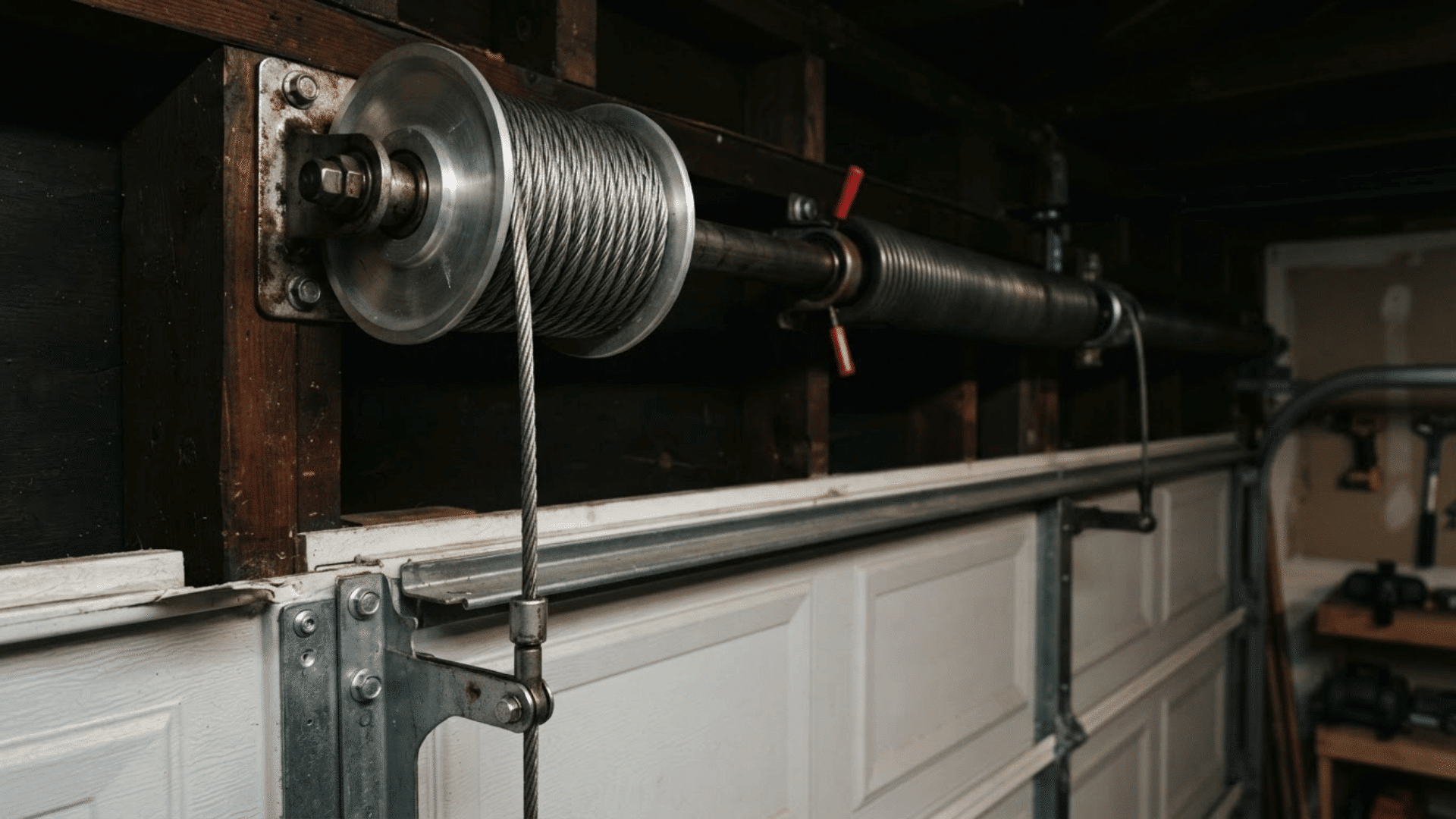
A garage door cable is a strong steel wire that helps control the door as it opens and closes. It works with the spring system to carry the door’s weight and keep both sides moving at the same speed.
The cable does not lift the door by itself. It transfers the force created by the springs and guides the door along the tracks. Its position and design depend on the type of spring system.
Torsion spring doors normally use cables that wrap around drums above the opening. Extension spring doors use lift cables that travel through pulleys.
When either type becomes damaged, the door may feel heavy, move unevenly, or stop working.
Types of Garage Door Cables
Identifying the cable’s purpose is important because lift cables and safety cables perform different jobs.
1. Torsion Spring Lift Cables
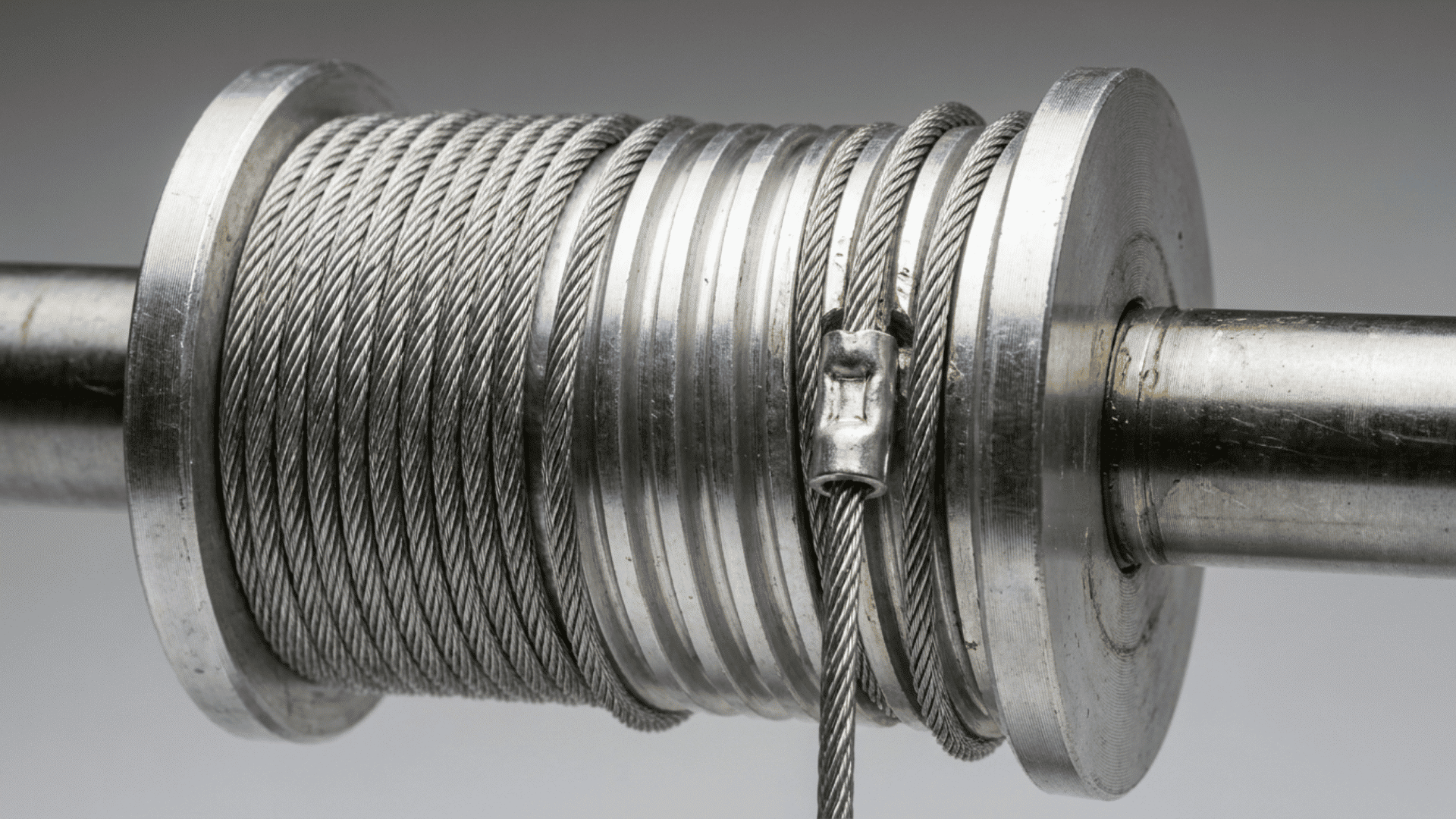
Torsion lift cables attach near the bottom corners of the garage door and travel upward to cable drums mounted on the torsion shaft.
As the torsion spring turns the shaft, the drums wind or release the cables. Both cables must have equal tension so the door stays level while moving.
Buyers should check the door height, drum type, cable length, cable diameter, end stops, and bottom-bracket connection. Standard-lift, high-lift, and vertical-lift doors may require different cable arrangements.
2. Extension Spring Lift Cables
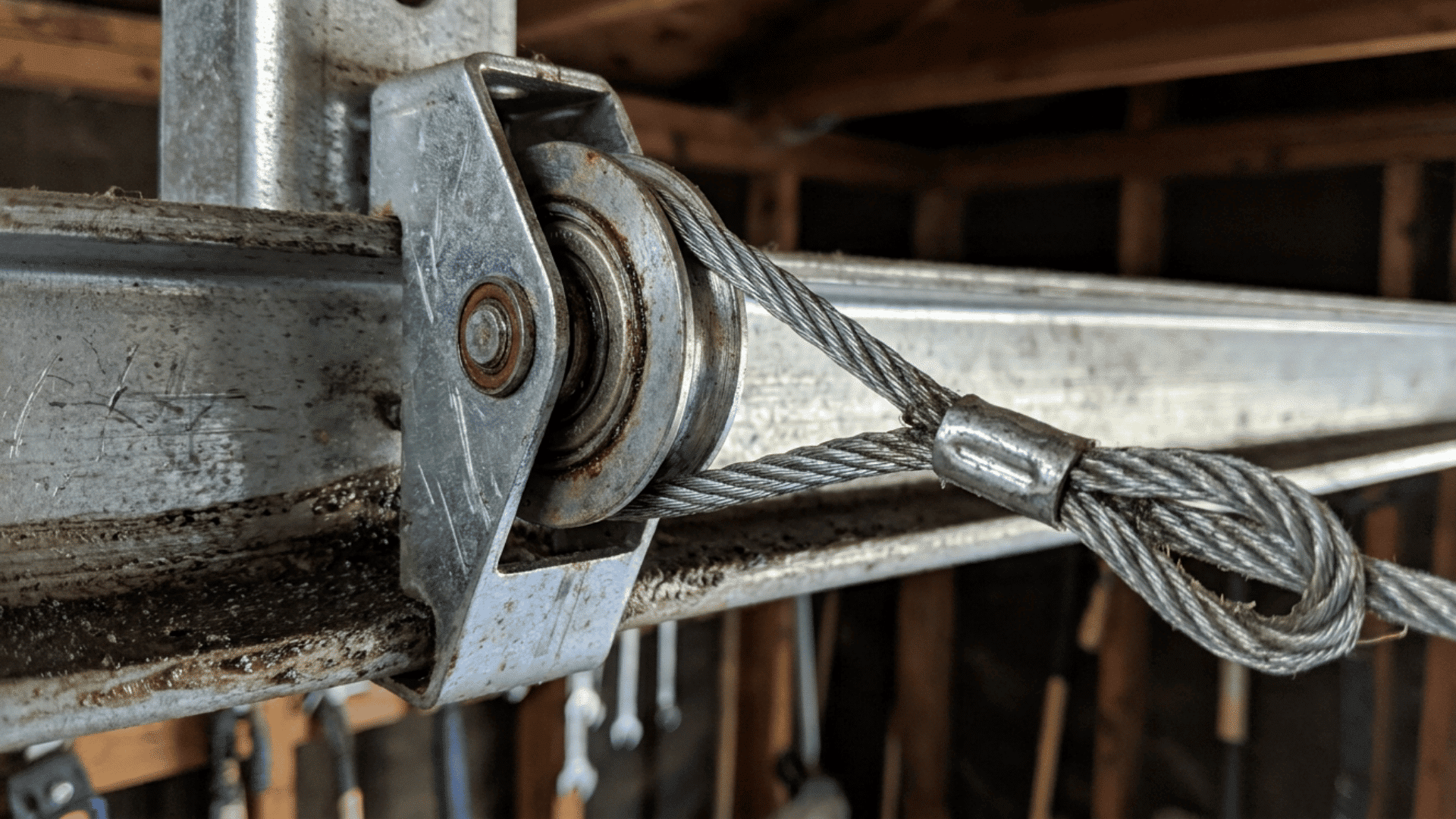
Extension spring lift cables travel through pulleys and work with springs positioned beside the horizontal tracks. These systems are often found on older residential garage doors.
The cable path, pulley position, door height, cable length, and end-loop design must match the existing system. A worn pulley can quickly damage a new cable, so the pulley bearings and wheels should also be inspected.
Extension lift cables should not be confused with extension spring safety cables.
3. Extension Spring Safety Cables
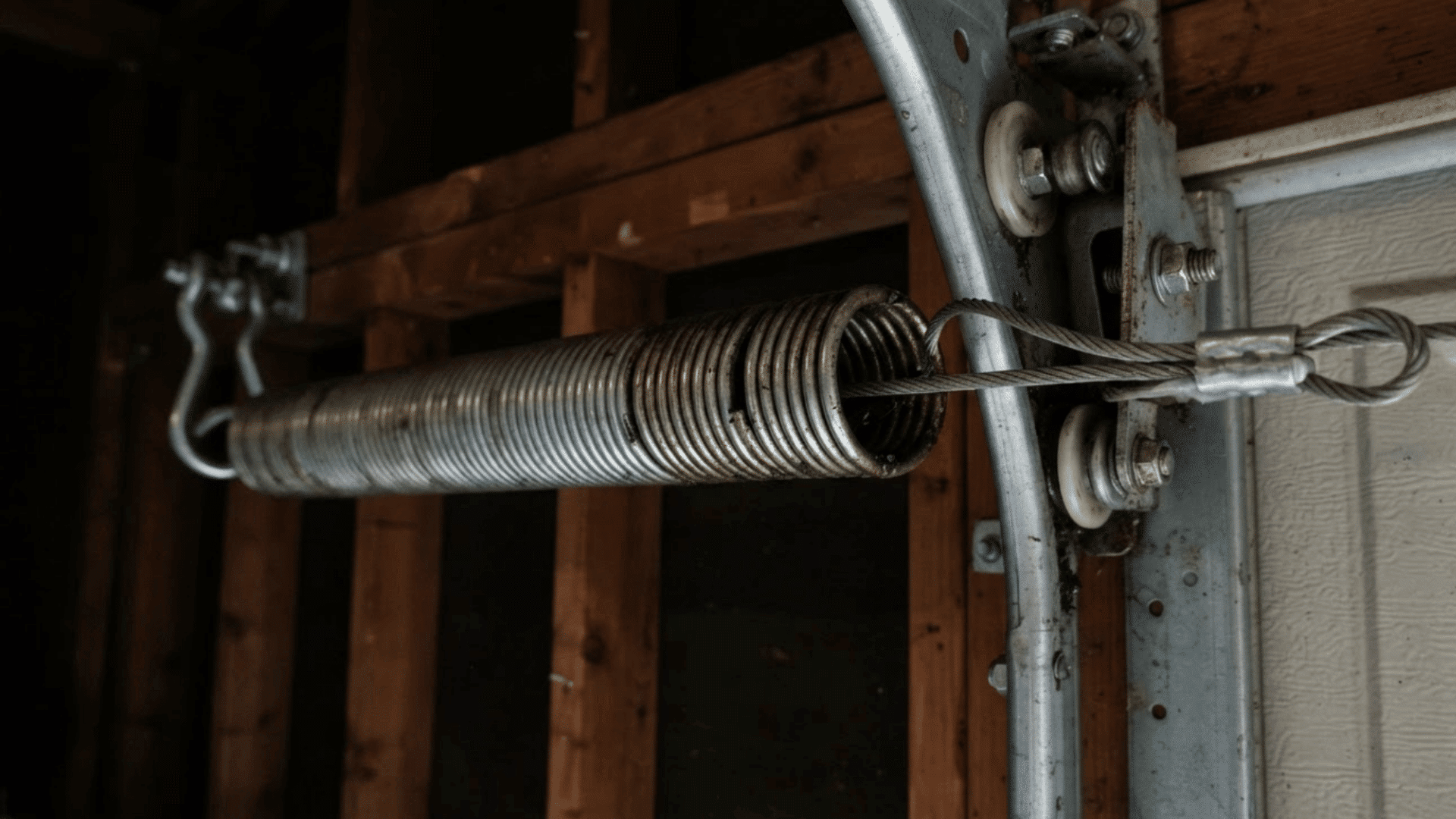
Safety cables pass through the center of extension springs and are secured at both ends. Their purpose is to help contain the spring if it breaks.
They do not lift or balance the garage door. A listing marked “safety cable” should not be purchased as a replacement for the main lift cable.
Check that the safety cable is long enough for the spring arrangement and includes suitable mounting hardware. Both extension springs should have correctly installed safety cables.
4. Commercial Garage Door Cables
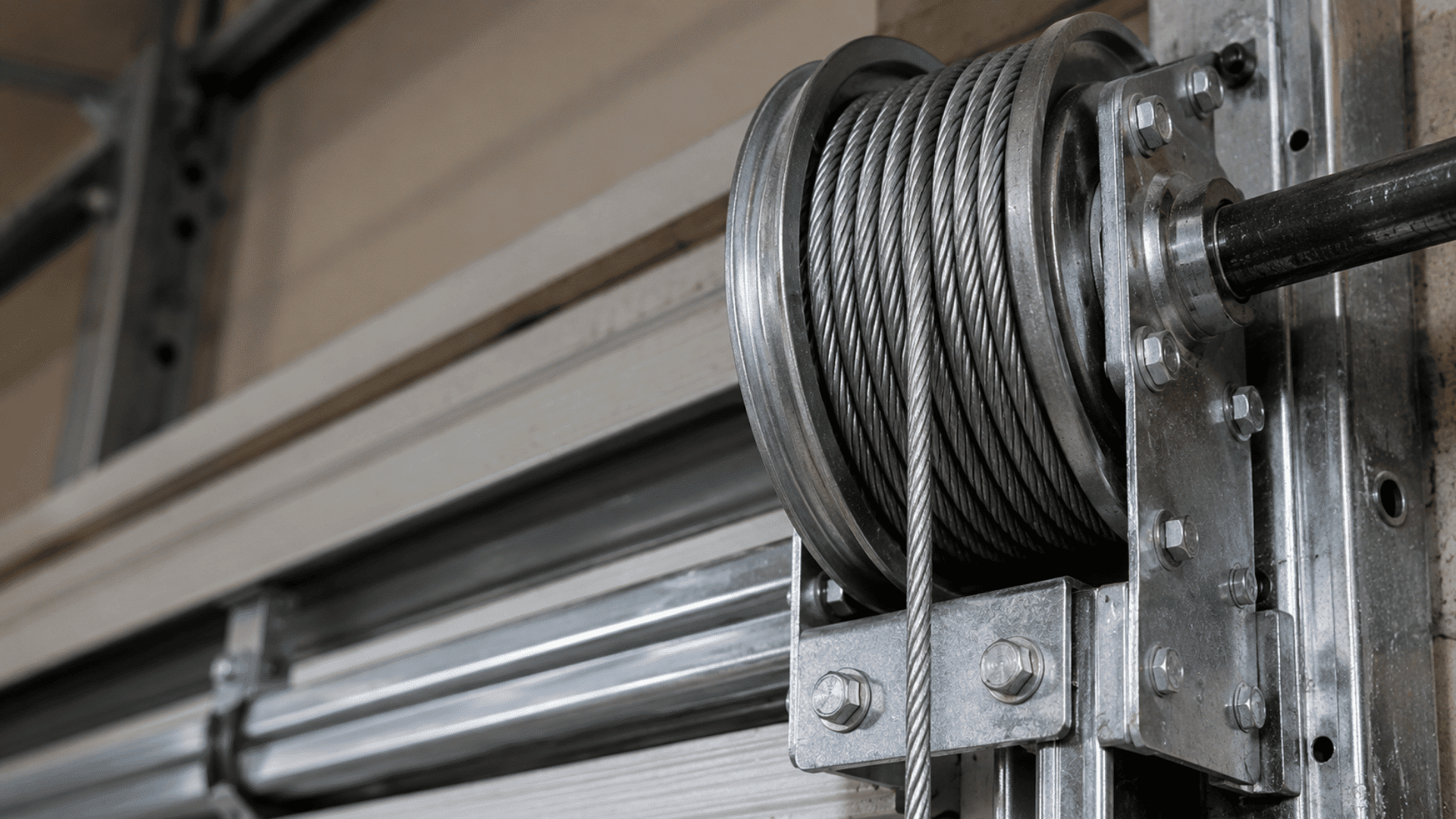
Commercial cables are made for larger, taller, heavier, or frequently operated doors. They may be thicker and have stronger fittings than cables made for standard residential doors.
Warehouses, workshops, loading areas, storage buildings, and commercial service doors may use special drums, high-lift tracks, or vertical-lift systems.
Commercial cables should be selected from the door manufacturer’s specifications, engineered hardware schedule, or an exact part number. Appearance alone is not a safe way to choose them.
What Should You Do When a Garage Door Cable Breaks?
Stop using the garage door immediately if a cable appears broken, loose, or displaced. Keep children, pets, vehicles, and others away because the door could move unevenly or fall.
Do not pull, cut, loosen, or reposition the cable. Never loosen a bottom bracket or place the cable back on the drum because the system may remain under high spring tension.
Disconnect the opener only when the door is fully closed, stable, and supported. Do not manually close a crooked or partly open door.
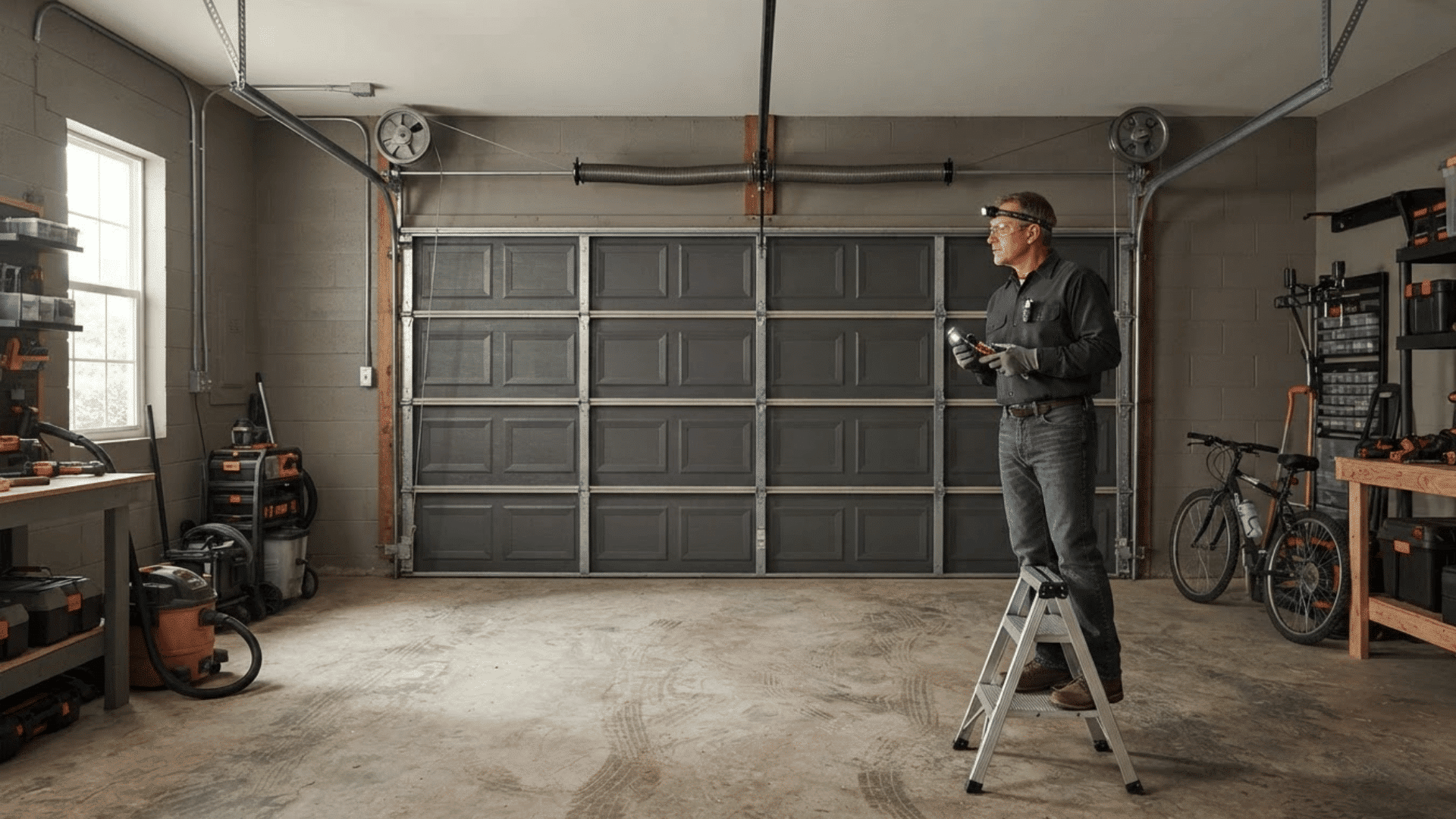
Call a trained technician to inspect both cables, springs, drums, pulleys, tracks, brackets, and door balance. Arrange professional garage door cable replacement before using the door again.
Safety Advice: Take clear photos of the cable, spring, drum, and door label from a safe distance. These details may help a technician identify the correct parts before arriving.
Signs Your Garage Door Cable Needs Replacement
Garage door cable damage may develop slowly or appear suddenly after another lifting part fails. Watch for these warning signs:
- Frayed or Rusty Strands: Broken wires, kinks, flat areas, or heavy rust mean the cable is weakening.
- Loose or Hanging Cable: A cable beside the track or away from the pulley may signal lost tension or damaged parts.
- Crooked Garage Door: Uneven movement often points to a loose, broken, or disconnected cable.
- Poor Opening or Closing: Shaking, jerking, slow movement, or added weight may indicate cable trouble.
- Cable Off the Drum: Overlapping or unwound cable can result from imbalance, worn drums, or spring failure.
- Snapping or Grinding Sounds: Loud or scraping noises may come from broken cables, springs, drums, or pulleys.
Early garage door cable replacement may prevent damage to the opener, tracks, rollers, and door panels.
How Garage Door Cable Replacement Works
Homeowners may find it helpful to know what technicians do during a garage door cable replacement. Although the exact process varies by door, professionals generally follow these steps:
- Disconnect the garage door opener: The technician separates the opener to prevent the door from moving unexpectedly.
- Secure the door and reduce spring tension: The door is stabilized before tension is carefully released from the spring system.
- Remove the damaged cables: Worn cables and any affected hardware are detached from the drums and lower brackets.
- Fit the replacement cables: New, correctly sized cables are installed and positioned evenly on both sides.
- Restore and balance the tension: The spring tension is adjusted so the door lifts evenly without pulling to one side.
- Check the door’s operation: The technician runs several opening and closing tests to confirm smooth, balanced movement.
Because garage door springs and cables remain under high tension, garage door cable replacement should generally be handled by a trained technician.
Is Garage Door Cable Replacement a DIY Repair?
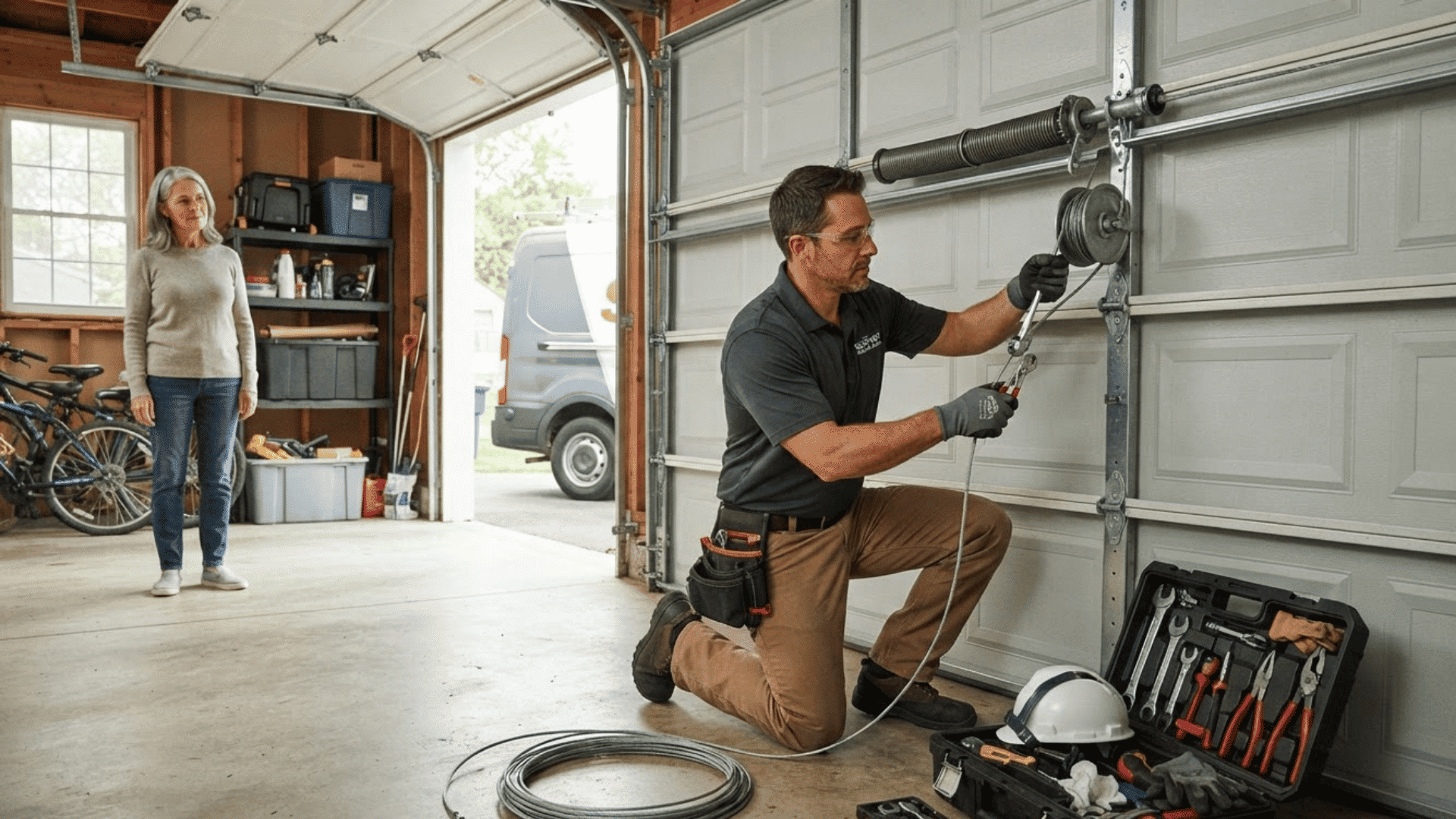
Garage door cable replacement is not a safe DIY repair because lift cables connect to springs, drums, pulleys, and bottom brackets under strong tension.
Loosening these parts can suddenly release stored force, causing the door to fall, hardware to move, or the cable to whip.
Correct replacement requires matching cable lengths, aligning drums, setting spring tension, balancing the door, and testing travel and force.
A trained technician should handle cable installation, bracket removal, spring adjustment, pulley replacement, and safety checks.
Homeowners may inspect from a distance, photograph parts, record model details, and keep the area clear without touching tensioned components.
How to Identify the Correct Garage Door Cable Before Buying
Before buying parts for garage door cable replacement: confirm the cable size, fittings, strength, and intended use.
Garage door cables vary in size, fittings, strength, and purpose. Check these details before ordering:
| Check | What to Confirm | Cable Type |
| Door setup | Spring system, height, type, and lift style | Torsion or extension-spring cable |
| Cable specifications | Type, length, diameter, strength, and fittings | Lift cable or safety cable |
| Compatible hardware | Drums, pulleys, brackets, and included parts | Standard-lift, high-lift, or vertical-lift cable |
| Manufacturer details | Model number, labels, and drum markings | Manufacturer-specified cable |
| Purchase details | Quantity, warranty, and return policy | Single cable or matched cable pair |
Buying Advice: Check the door model, drum markings, cable fittings, and weight rating before comparing prices. Two cables with the same length may still have different fittings or load limits.
Garage Door Cable Sizes and Measurements
Garage door cable size includes the cable’s length, diameter, fittings, construction, and weight rating. Common cable diameters include 3/32 inch, 1/8 inch, 5/32 inch, 3/16 inch, and 1/4 inch.
Since door dimensions differ, comparing the best garage sizes for every homeowner can provide useful context before confirming the required cable length.
For standard-lift doors, cable length is often about 18 inches longer than the door height.
A 7-foot door may use a cable around 8 feet 6 inches long, while an 8-foot door may require about 9 feet 6 inches. High-lift and vertical-lift systems need longer cables.
How Much Does Garage Door Cable Replacement Cost?
Professional garage door cable replacement usually costs $150 to $350, with a national average around $225 for parts and labor combined.
| Cost Factor | Typical Range |
| Basic service call fee | $80 to $130 |
| Cable reset only (off the drum, not broken) | Around $75 |
| Standard cable replacement (parts and labor) | $150 to $350 (avg. $225) |
| Premium or aircraft-grade cables | $200 to $500 |
| Added spring replacement, if needed | $110 to $270 |
| Labor rate (varies by market) | $75 to $150 per hour |
| Full door replacement, if beyond repair | $600 to $2,800 (1-car), $850 to $4,000 (2-car) |
Why prices vary: Costs depend on local labor rates, door size and weight, cable quality, service urgency, and any additional repairs.
Most cable jobs take one to two hours. Request a written estimate listing cable type, quantity, labor, travel fees, added parts, warranties, taxes, and disposal charges before approving work.
Garage Door Cable Replacement Parts You May Need
A broken cable may be caused by another worn part, so the full lifting system should be checked before repairs begin.
A complete garage door cable replacement may require new drums, pulleys, brackets, or related hardware.
- Matching Lift Cable Pair: Technicians often recommend replacing both lift cables after inspecting their condition.
- Cable Drums: Check for cracks, worn grooves, rust, bending, or poor alignment.
- Bottom Brackets: Replace damaged brackets only with correct tension-control procedures.
- Pulleys and Sheaves: Worn bearings or cracked pulleys can quickly damage new cables.
- Extension Spring Safety Cables: Confirm these are included separately when required.
- Springs and Hardware: Inspect springs, shafts, tracks, rollers, bearings, and fasteners.
Correctly matched parts help prevent uneven movement, early cable wear, and repeat failure.
Where to Buy Garage Door Replacement Cables
Garage door replacement cables are sold by:
- Home Depot,
- Lowe’s,
- Menards,
- Local repair companies.
These stores carry common residential lift and safety cables, but buyers must confirm measurements, spring type, fittings, and package quantity.
DDM Garage Doors offers more cable sizes, custom fittings, and commercial options. Clopay Genuine Parts can help match parts to specific door models.
A local repair company is safer when the cable type is unclear because a technician can inspect the system, identify related damage, supply the correct cable, and install it properly.
How Long Do Garage Door Cables Last?
Most garage door cables last 7–15 years. However, there is no exact lifespan. Usage, cable quality, maintenance, and climate all affect durability. Heavy use or harsh weather may shorten cable life to 5–7 years.
Standard steel cables are often rated for about 10,000 cycles. Most households complete 1,000–1,800 cycles annually.
Inspect the cable regularly. Age alone does not reveal its condition. Replace worn cables promptly to prevent uneven movement and further damage to the garage door system.
Ask a technician to check the springs, drums, and pulleys on older doors. Spring replacement may cost $110–$270 if the parts are worn.
How to Help Garage Door Cables Last Longer
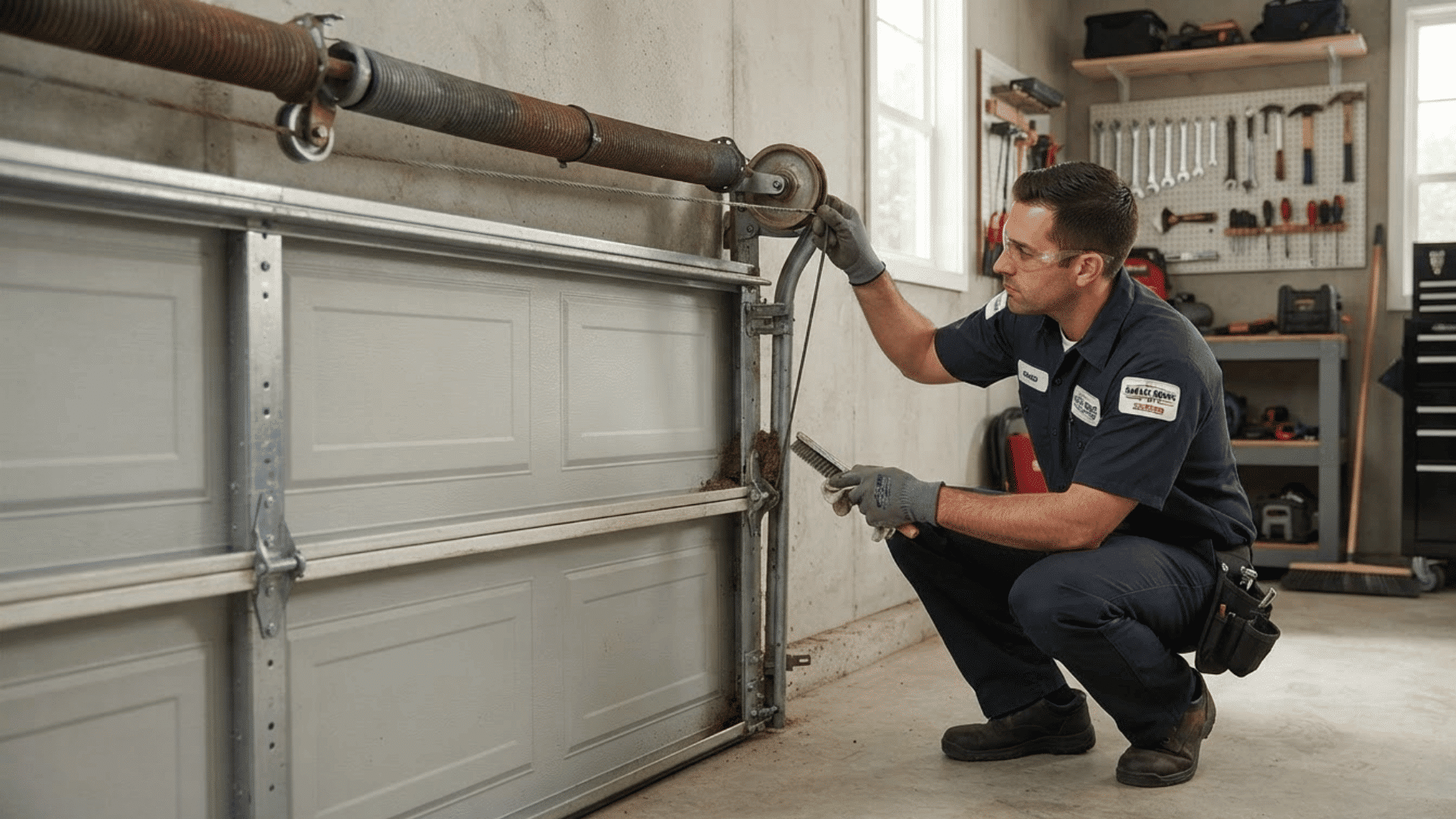
Check garage door cables regularly for fraying, rust, kinks, flat spots, looseness, uneven tension, or rubbing.
Keep the tracks and floor clear, and repair leaks or standing water that could cause corrosion. Stop using the door if it tilts, jerks, grinds, shakes, or becomes unusually noisy.
Ask a technician to inspect the entire system, including the springs, drums, pulleys, rollers, tracks, brackets, opener, and door balance.
Maintenance Advice: Inspect cables only when the door is fully closed. Do not touch frayed strands because they may be sharp and the cable may still be under tension.
Common Garage Door Cable Buying and Replacement Mistakes
Ordering the wrong cable length, diameter, fitting, or weight rating can prevent proper installation and cause uneven or unsafe door movement.
| Mistake | Better Approach |
| Ordering by appearance | Match system, length, diameter, fittings, drums, and rating. |
| Buying one cable | Ask whether both need replacement. |
| Confusing cable types | Check lift cable versus safety cable. |
| Choosing by price | Compare material, warranty, and support. |
| Measuring height only | Confirm length and drum type. |
| Reusing worn parts | Inspect drums, pulleys, springs, and bearings. |
| Ignoring failure causes | Check balance, tracks, and alignment. |
| Choosing thicker cable | Use the required diameter. |
| Following general videos | Use door-specific instructions. |
| Loosening bottom brackets | Leave tensioned parts to a technician. |
Correct identification prevents further damage and unsafe operation.
Final Thoughts
A damaged garage door cable is both a repair issue and a safety concern. Fraying, rust, loose strands, uneven movement, grinding sounds, or a cable hanging beside the track are signs to stop using the door.
The replacement cable must match the spring system, door height, lift type, cable diameter, fittings, drums, pulleys, and door weight. Product photos alone are not enough to confirm a safe match.
Although cable kits are widely available, installation should be handled by a trained technician because the lifting system contains stored spring force.
Professional garage door cable replacement can also reveal worn brackets, drums, pulleys, or springs that may damage the new cable.
Share your questions or past repair experiences in the comments below.
Frequently Asked Questions
Are Garage Door Cables Universal?
No. Garage door cables differ by spring system, door height, lift type, cable diameter, end fittings, drum design, weight rating, and manufacturer requirements.
How Can I Tell a Lift Cable From a Safety Cable?
A lift cable helps move the door through drums or pulleys. A safety cable passes through an extension spring and does not lift the door.
What Information Should I Give a Cable Seller?
Provide the door height, spring type, lift setup, manufacturer, model number, drum markings, cable fittings, door material, and clear photographs of the existing hardware.
Does a Broken Cable Mean the Spring Is Also Damaged?
Not always. However, spring failure, uneven tension, worn drums, damaged pulleys, poor alignment, or track problems may contribute to cable damage.
Can Old Drums and Pulleys Be Used With New Cables?
They may be reused only when they are correctly sized and free from cracks, worn grooves, rough bearings, corrosion, bends, and alignment problems.

Tommy Hardy, an alumnus of the Georgia Institute of Technology with a degree in Mechanical Engineering, has been a go-to figure in residential upkeep and innovation for over 18 years. His career commenced in a leading home appliance manufacturing company, where he mastered the intricacies of household systems. Joining our platform in 2020, Tommy quickly became a reader favorite for his practical and easy-to-follow guides. He took the helm of our DIY section in 2019, consistently delivering content that empowers homeowners. Beyond his professional pursuits, Tommy is a passionate gardener and enjoys woodworking, skills enhancing his hands-on approach to home care.