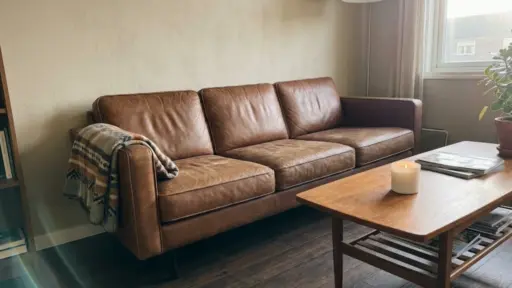
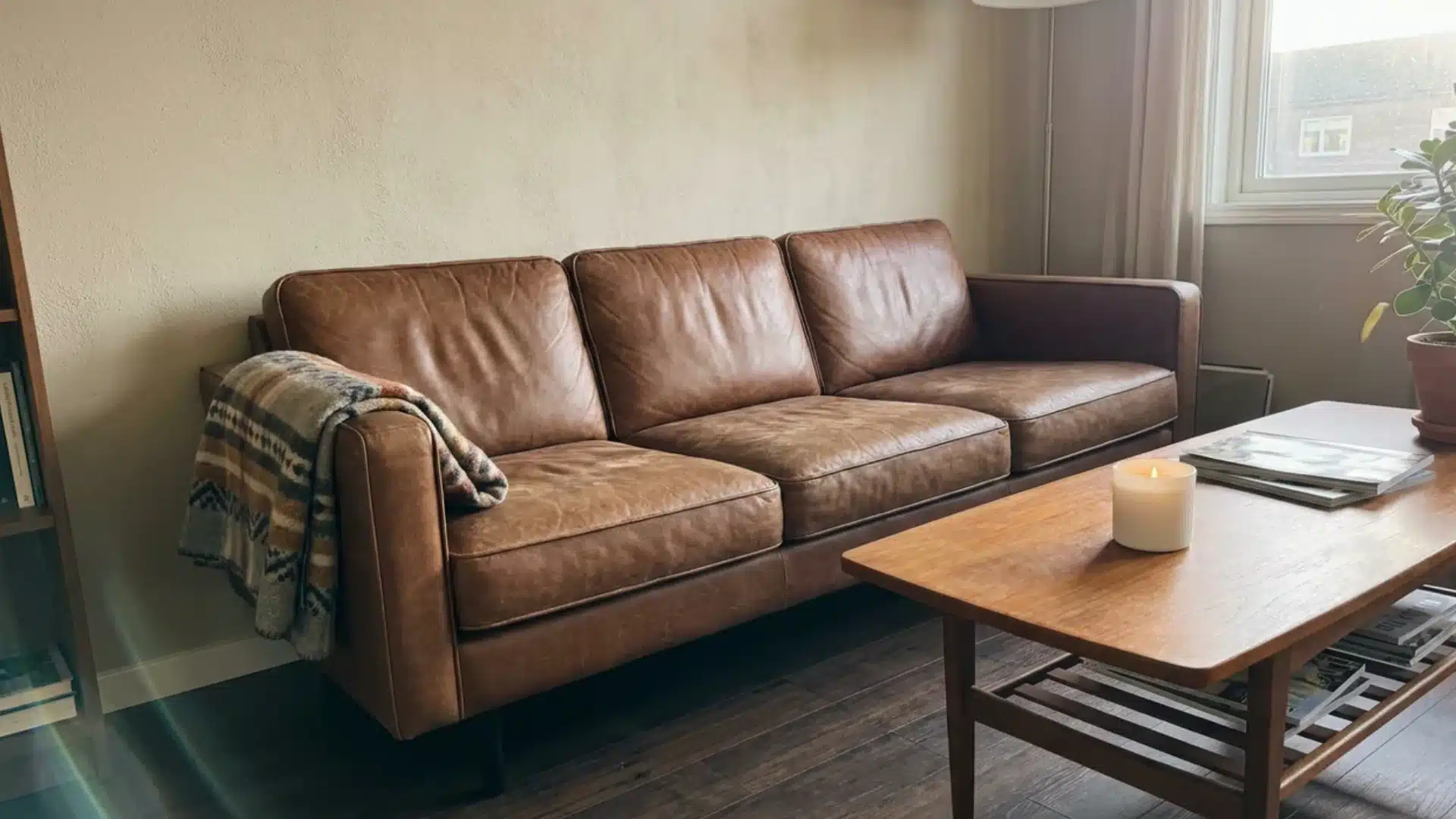

That torn cushion made me realize I didn’t know much about leather. Turns out, treating it like fabric is where things go wrong. Leather breathes, absorbs, and reacts differently than cotton or polyester ever will.
Using the wrong cleaner can cause damage that lingers for months.
Knowing how to clean leather furniture properly means matching the method to the material, not grabbing whatever’s under the sink. Dark leather, white leather, faux leather: each demands its own approach.
Stains behave differently too, depending on what caused them.
Below, every problem gets its own fix, every stain gets its own method, and the guesswork stops here.
Why Leather Furniture Needs Special Care
That cracked cushion made me realize how little I knew about leather.
Leather furniture holds a good amount of natural moisture inside it. Heat sources such as sunlight and heating vents dehydrate surfaces more quickly than many realize.
Since my couch is close to a window, it receives more sun than ideal.
Home leather furniture is also different from leather in cars or outdoor furniture. Those pieces are built to handle oil-based products and constant exposure. A living room couch is not.
Once I understood that difference, it made sense why my old cleaner caused so much damage.
Couch or sofa, the upholstery still needs the same care routine, since the two terms mostly describe styling differences rather than material ones.
What to Clean Leather Couch With
Grab a few basics before you start, and skip anything harsh from under the kitchen sink.
| Item | Purpose |
|---|---|
| Distilled water | Loosens light dirt without leaving mineral spots |
| Mild dish soap (few drops) | Cuts through grease and grime |
| Microfiber cloth | Wipes surface without scratching |
| Soft-bristle brush | Gets into seams and stitching |
| Leather conditioner | Restores oils after cleaning |
| White vinegar (diluted) | Tackles tougher stains |
| Cotton swab | Reaches tight corners and buttons |
Cleaner and Protectant Options:
- Leather Honey Leather Cleaner
- Weiman Leather Cleaner & Conditioner
- Leather Honey Leather Conditioner
- Bick 4 Leather Conditioner
Avoid oil-based products like car seat cleaners, as oils stay on the surface of leather instead of being absorbed.
What to Do Before Cleaning a Leather Sofa
Check the manufacturer’s tag first. It tells you the leather type and lists cleaning codes like W, S, or WS.
W means water-based cleaners only. S calls for a solvent-based cleaner instead. WS allows either one. X means skip liquids entirely and stick to vacuuming or dry brushing.
Vacuum crumbs and dust from seams before anything else touches the surface.
While vacuuming, run a hand along the seams and welting.
Loose stitching or slight puckering is easier to fix now than after a full clean pulls at a weak spot.
Dirt remaining underneath can cause scratches when wiped. Choose a hidden area, such as the back or underside, and test your cleaner there. Wait ten minutes, then inspect for any discoloration or stiffness.
Clear the area around the sofa beforehand to avoid rushing during cleaning.
Step-By-Step Guide: How to Clean Leather Furniture Properly
Different leather types and stains require different approaches, and using the wrong one can cause more harm.
Here are proven methods covering couch types and common stains:
1. How to Clean Dark and Everyday Leather Furniture
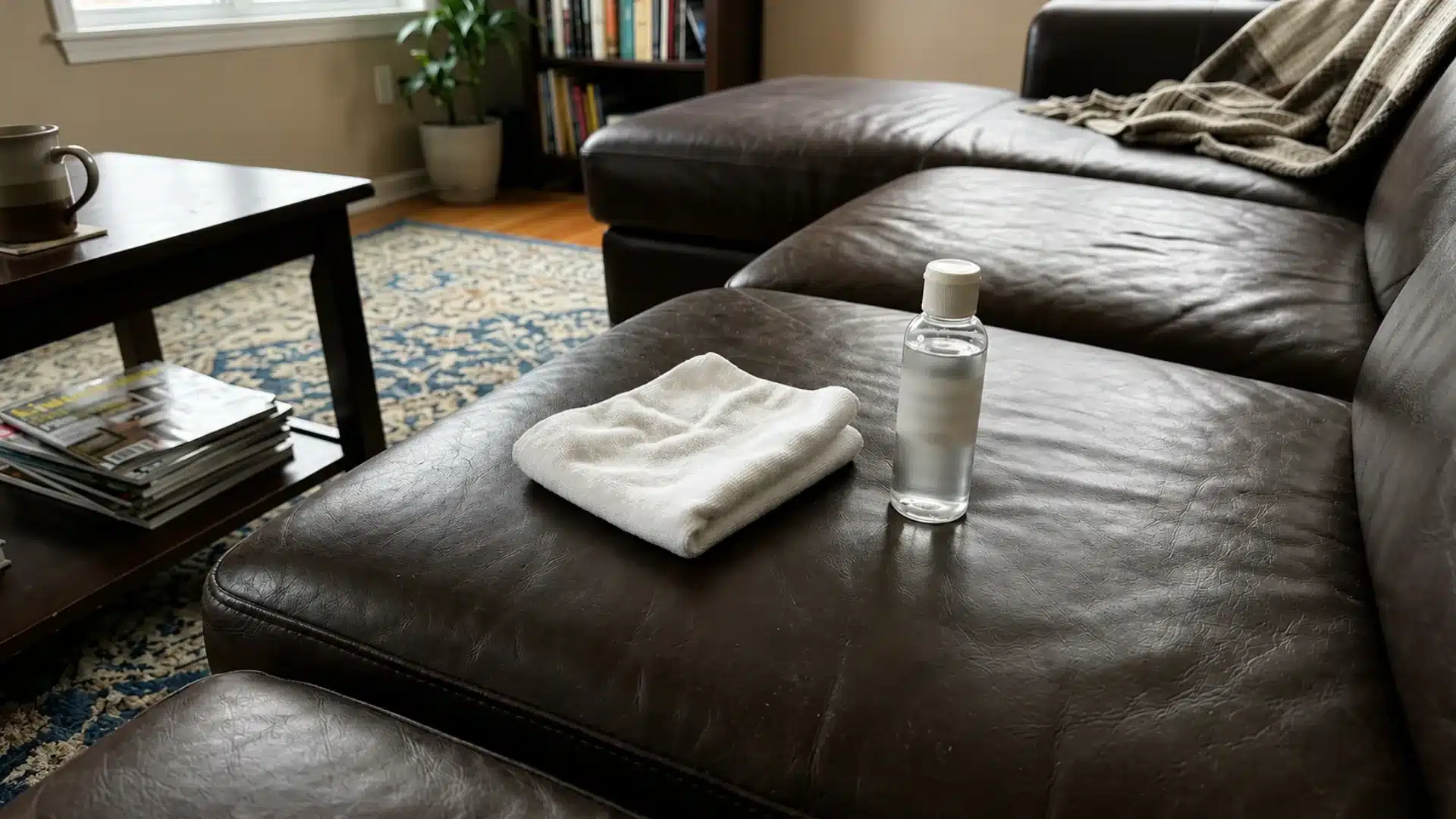
For dark or medium-toned leather, apply a water-based leather cleaner with a soft cloth.
Grab a dry cloth too, for buffing after. This keeps the surface clean without oils that sit on top instead of soaking in properly. The formula works well on everyday wear like dust and light grime.
Step-by-Step Process:
- Step 1: Apply a small amount of cleaner onto the cloth.
- Step 2: Work it into the leather using a circular motion.
- Step 3: Focus on seams, buttons, and stitched edges.
- Step 4: Wipe away any leftover residue with a dry cloth.
- Step 5: Buff the surface lightly to bring back its shine.
- Step 6: Let it air dry for a few minutes before use.
Tip: Before applying a new cleaner to the entire couch, test it on a small hidden area first.
2. How to Clean Light-Colored and White Leather Furniture
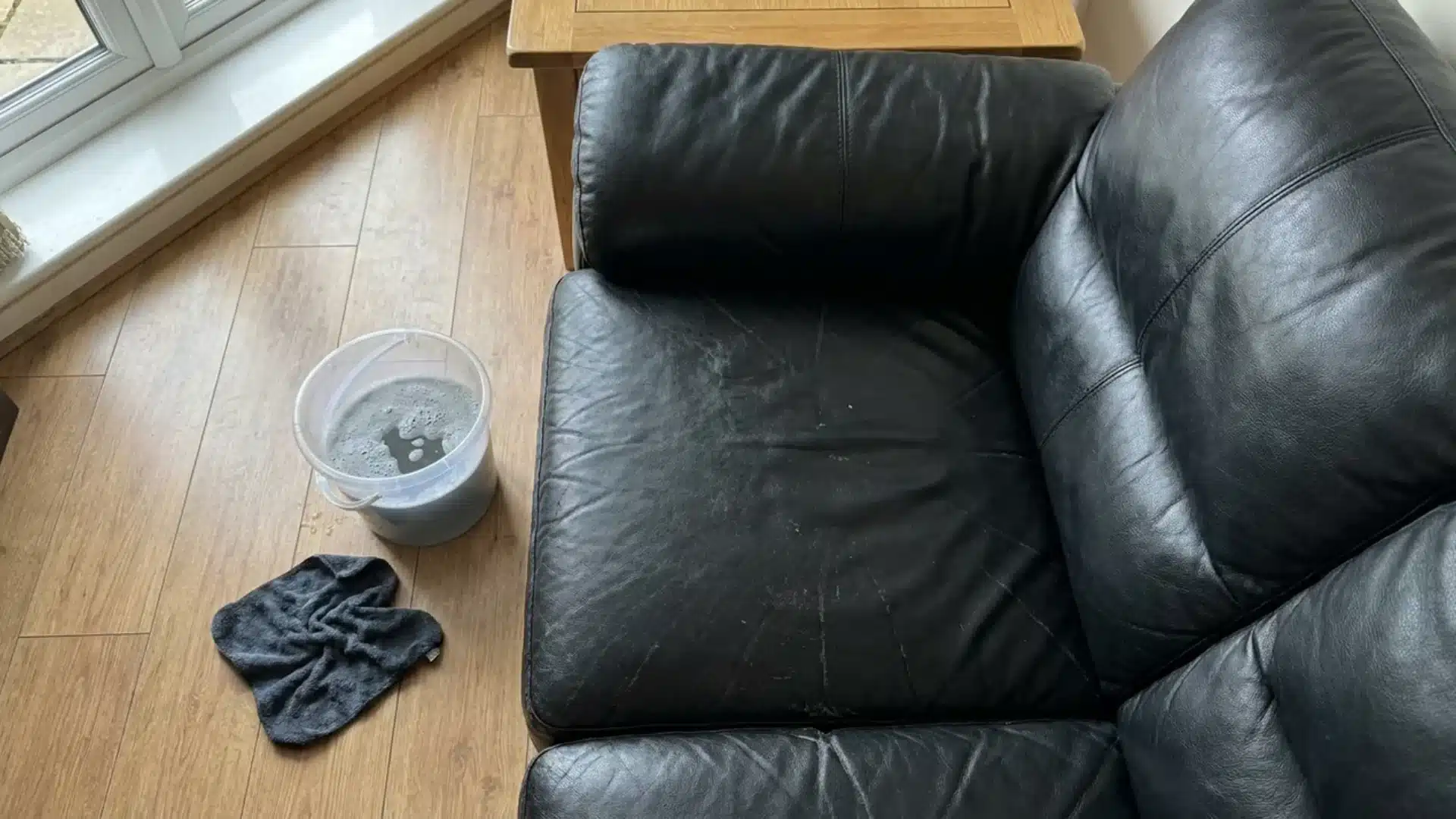
For light or white leather, mix a few drops of mild dish soap into warm water. Use a soft microfiber cloth, and keep a towel nearby for drying.
This avoids harsh ingredients that can yellow pale leather over time.
This mild soap won’t strip the finish or dull the color.
Step-by-Step Process:
- Step 1: Mix a few drops of soap into a bowl of warm water.
- Step 2: Dip the cloth in and wring out most of the liquid.
- Step 3: Wipe the leather using light, even strokes.
- Step 4: Rinse the cloth in clean water partway through.
- Step 5: Go over the same area with a barely damp cloth.
- Step 6: Dry it with a towel right away.
- Step 7: Check the section under bright light for missed spots.
Quick Note: Avoid cleaning colored cloths to prevent dye transfer onto light leather.
3. How to Clean Aniline and Unprotected Leather Furniture
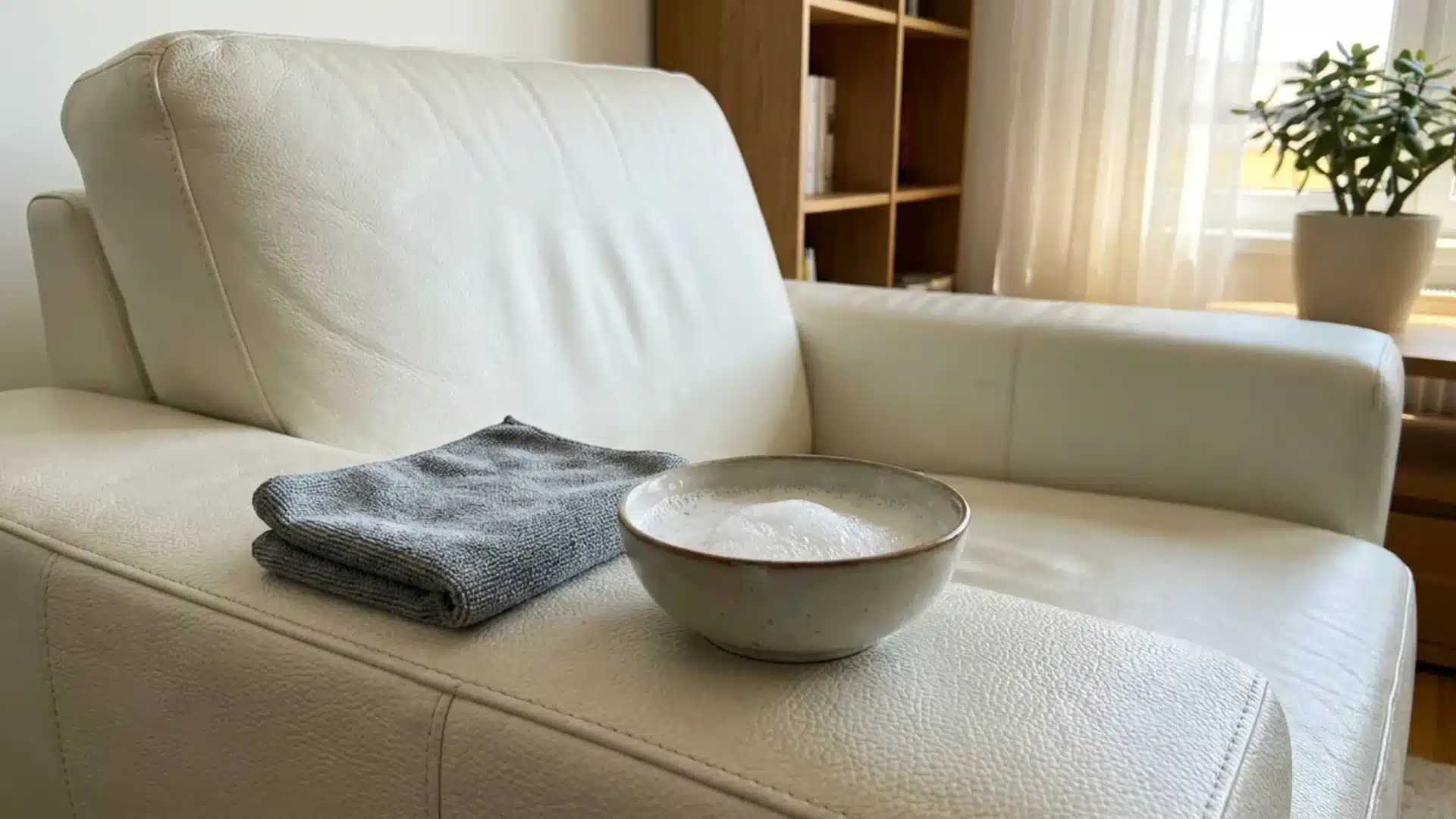
Aniline or unprotected leather requires a gentle mix: equal parts distilled white vinegar and water in a spray bottle.
Keep a soft cloth nearby for application.
Since unprotected leather absorbs more, this diluted mixture helps prevent oversaturation.
Spraying the cloth instead of the couch controls how much liquid touches the surface.
Step-by-Step Process:
- Step 1: Combine the vinegar and water inside the spray bottle.
- Step 2: Mist the solution onto the cloth instead of the leather directly.
- Step 3: Work the cloth across the surface in small sections.
- Step 4: Follow behind with a dry cloth to remove moisture.
- Step 5: Leave the piece uncovered for a bit to fully air out.
Tip: Less liquid is better here, since unprotected leather absorbs moisture faster than sealed leather.
4. How to Clean Faux and Bonded Leather Furniture
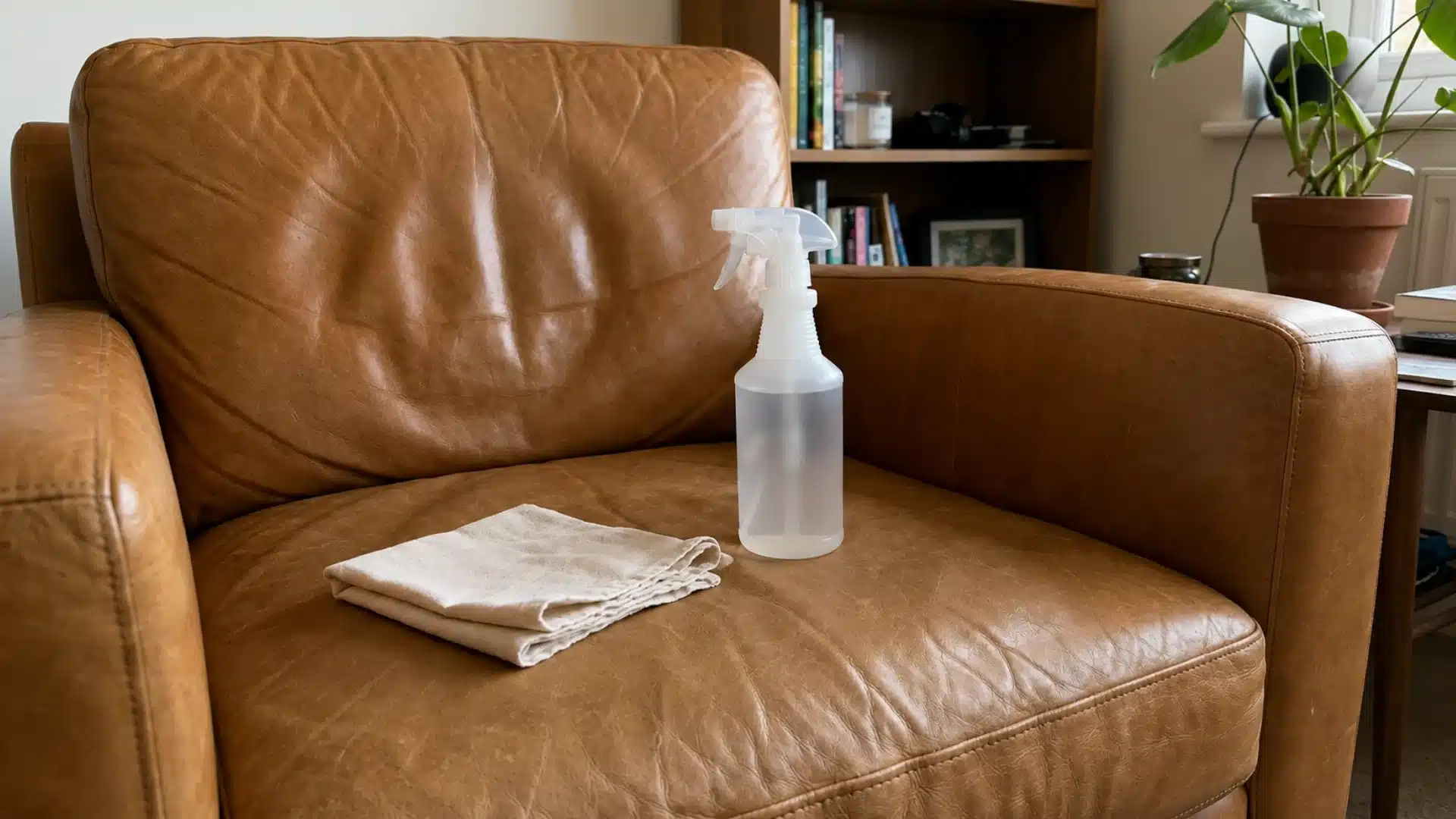
Faux or bonded leather needs warm water, mild soap, and a soft cloth. Keep a towel for the final pass.
Synthetic leather doesn’t need conditioning products for real leather, which can build up.
The material handles soap better than natural hide, since it lacks pores that absorb liquid.
This distinction matters if you’re eyeing a compact recliner for a small living room, since many space-saving recliner designs lean on faux leather for weight and cost reasons.
Step-by-Step Process:
- Step 1: Prepare a mild soap solution in warm water.
- Step 2: Sponge the surface down using the soapy cloth.
- Step 3: Rinse the cloth under clean water.
- Step 4: Wipe the area a second time to lift remaining soap.
- Step 5: Check corners and piping for leftover suds.
- Step 6: Pat the surface dry with a clean towel.
- Step 7: Let the material rest for a few minutes.
- Step 8: Inspect the material for any spots that got missed.
Quick Note: Omit leather conditioners completely, as synthetic leather neither requires nor absorbs them.
5. How to Remove Water Stains from Leather Furniture
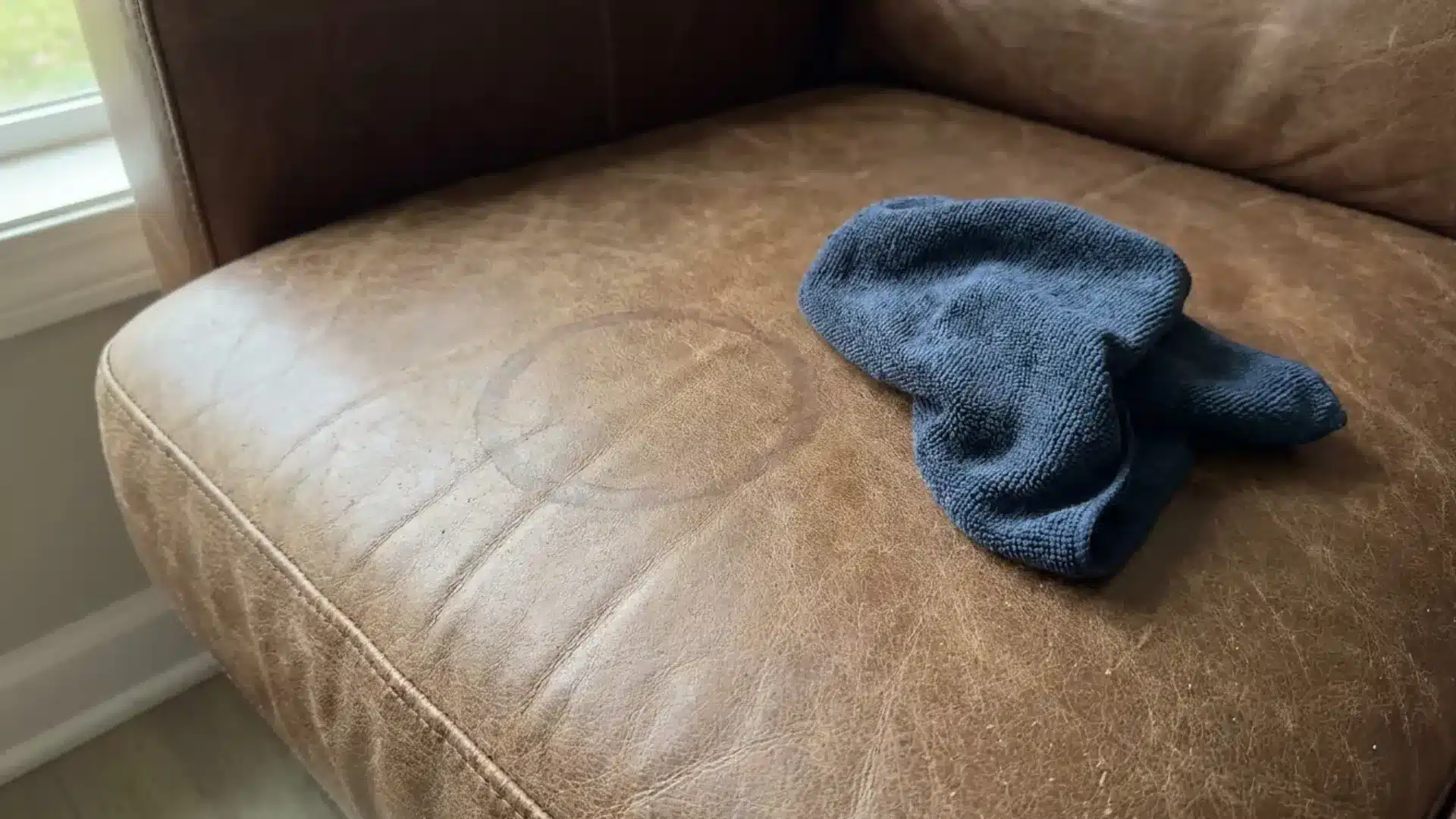
This approach focuses on eliminating water rings or watermarks that appear as darker areas on the leather.
It employs a slightly damp microfiber cloth to smoothly blend the stain with the leather.
Step-by-Step Process:
- Step 1: Moisten a microfiber cloth so it feels barely wet.
- Step 2: Run the cloth evenly across the whole cushion or panel.
- Step 3: Leave the leather to dry on its own, away from heat.
- Step 4: Look closely to confirm the ring has blended in.
- Step 5: Finish with a coat of protectant once it’s completely dry.
Tip: Even, all-over dampening works better than spot-treating just the stained area.
6. How to Remove Oil and Grease Stains from Leather Furniture
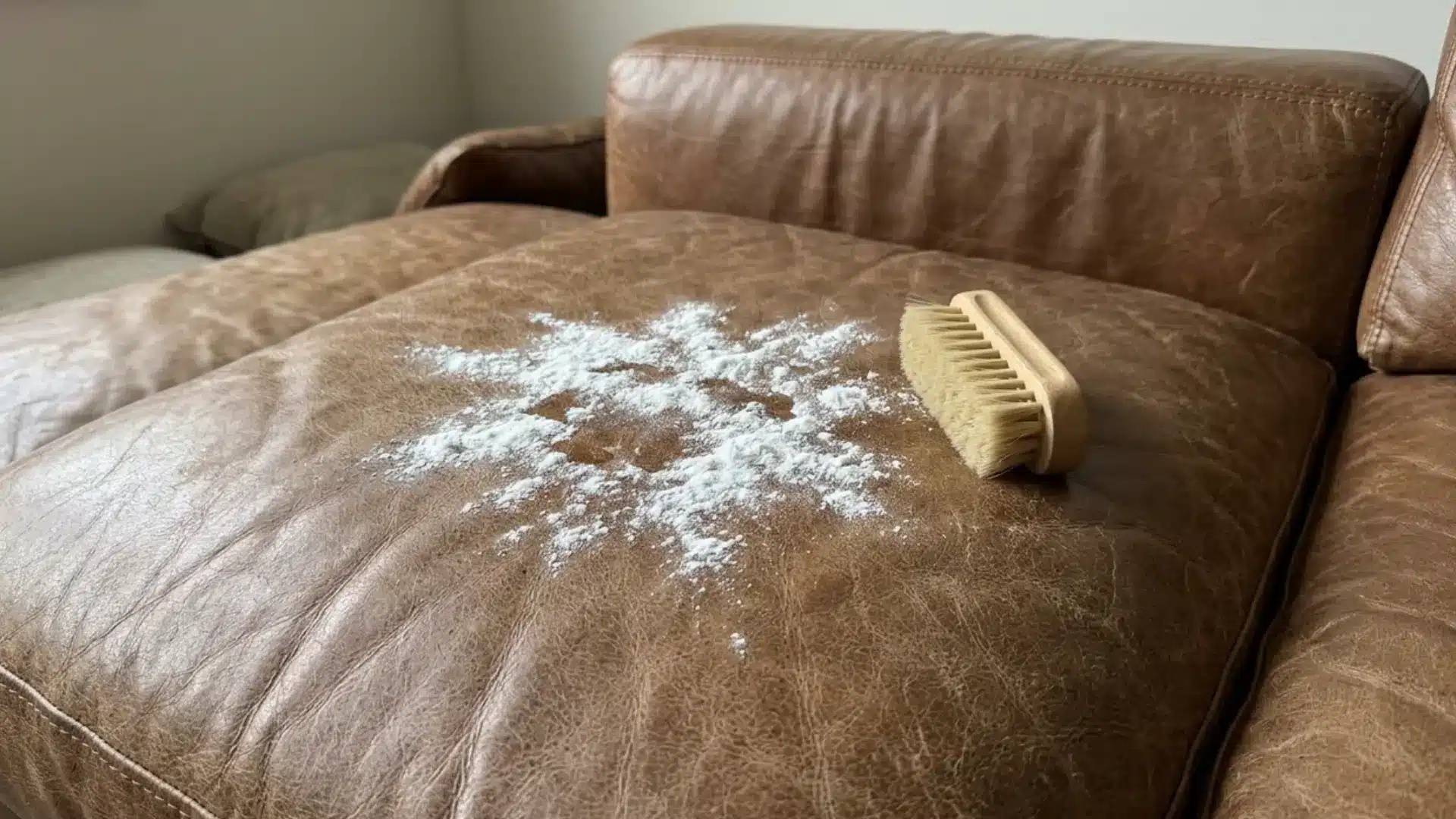
Oil-based stains like food grease or hand lotion respond to plain baking soda or cornstarch.
Keep a soft-bristle brush nearby for cleanup. The powder pulls oil out of the leather instead of pushing it further in.
Overnight sitting time gives the powder time to fully absorb.
Step-by-Step Process:
- Step 1: Press a dry cloth over the stain to soak up excess.
- Step 2: Cover the mark generously with baking soda or cornstarch.
- Step 3: Pat the powder down gently so it sits flat.
- Step 4: Leave the powder undisturbed overnight.
- Step 5: Check the spot in the morning for absorption.
- Step 6: Sweep it away gently with a soft-bristle brush.
- Step 7: Vacuum any remaining powder from the cushion.
- Step 8: Look closely for any leftover trace of the stain.
- Step 9: Repeat the process when the mark hasn’t fully lifted.
Quick Tip: Avoid rubbing oil stains, as it can cause the stain to go further into the leather.
7. How to Remove Ink Stains from Leather Furniture
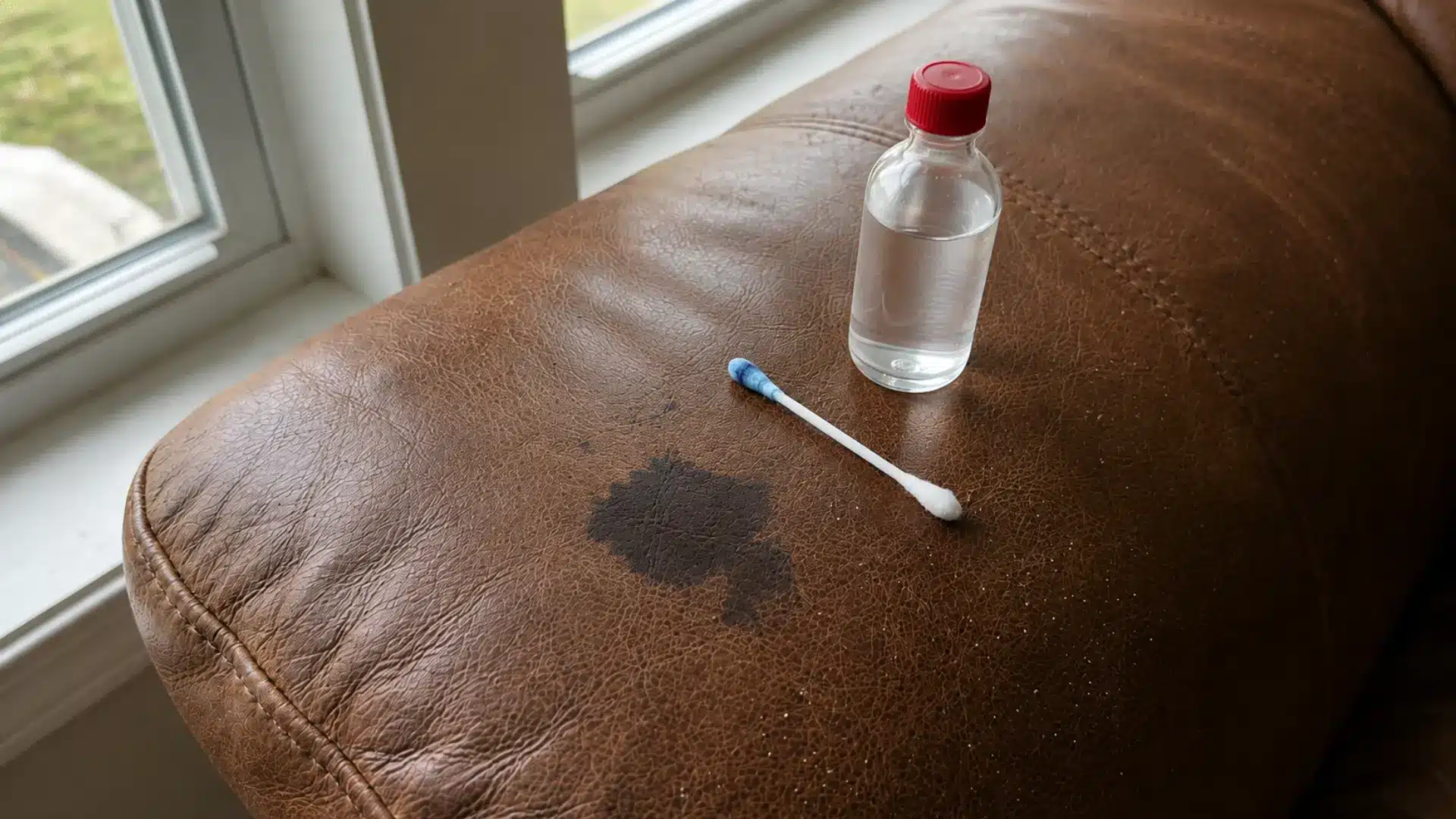
Designed for pen or marker stains, this method uses a cotton swab and a small amount of rubbing alcohol.
Alcohol lifts ink without soaking into the leather the way water-based cleaners would on a fresh mark.
Step-by-Step Process:
- Step 1: Lightly moisten a cotton swab with rubbing alcohol.
- Step 2: Dab it directly onto the ink, without dragging it around.
- Step 3: Switch to a clean section of the swab as the ink lifts.
- Step 4: Wipe the treated spot with a soft, dry cloth.
- Step 5: Allow the leather to air out fully before use.
Tip: Act as soon as possible, since fresh ink lifts far more easily than dried ink.
Signs Your Leather Furniture Needs Cleaning or Conditioning
Your sofa typically shows warning signs well before any actual damage occurs.
| Sign | What It Means |
|---|---|
| Dull, flat finish | Natural sheen has worn away |
| Stiff or tight surface | Leather is losing moisture and flexibility |
| Faint musty odor | Trapped moisture or buildup underneath |
| Squeaking when sat on | Dried-out leather rubbing against itself |
| Rough or sandpapery texture | Surface oils have depleted |
| Small flakes on clothing | Top layer is starting to peel |
| Color looks patchy or uneven | Sun exposure or wear is fading spots unevenly |
How Often to Clean and Condition Leather Furniture
Dust weekly with a dry microfiber cloth, since buildup happens fast in busy households.
Wipe down surfaces monthly with a suitable cleaner for your leather type.
Condition every three to four months, or sooner in dry climates where indoor heating runs often. Homes with pets or kids may need conditioning closer to every two months, given the extra contact.
Watch the seasons too: summer heat pulls moisture out faster than winter months.
A sofa in direct sunlight needs more frequent attention than one tucked in a shaded corner.
Sticking to a routine keeps leather supple and prevents damage from creeping in unnoticed.
How to Keep Leather Furniture Clean Between Deep Cleanings
A full clean and condition every few months only goes so far if daily upkeep gets skipped in between.
A quick wipe-down with a dry microfiber cloth once or twice a week keeps dust and surface grime from building up.
Keeping pets and sharp objects away from the leather prevents scratches that are hard to fix later. Direct sunlight should be avoided when possible, since it speeds up drying and fading over time.
Handle spills immediately by blotting with a dry cloth instead of wiping.
Small habits like this extend the time between deep cleanings and help leather furniture look newer longer.
DIY vs Professional: When to Stop DIY Leather Couch Cleaning
A few warning signs indicate that DIY methods have their limits.
- Deep cracks or tears: Usually need professional tools instead of household products.
- Stubborn set-in stains: Repeated DIY attempts often spread the mark further.
- Unexplained discoloration: May point to a deeper issue with the leather’s finish.
- Antique or high-value pieces: One wrong product can cause permanent damage.
- Persistent odors: Often means the issue has reached deeper into the material.
Recognizing the right moment to seek assistance can save your furniture and prevent frustration.
Frequently Asked Questions (FAQ’s)
1. Is Murphy’s Oil Soap Good for Leather Furniture?
No, it’s formulated for wood and can leave leather sticky, dull, or discolored over time.
2. What is the Best Home Remedy to Clean Leather?
A diluted vinegar and water solution effectively cleans grime without removing natural oils from the hide.
3. What Not to Do when Cleaning Leather?
Never soak leather in water, use bleach, or scrub hard, since all three cause lasting surface damage.
4. What Will Ruin Leather?
Direct sunlight, heat vents, oil-based cleaners, and harsh chemicals dry out leather and crack its surface fast.
5. Can Hydrogen Peroxide Clean Leather?
No, it’s too harsh and tends to bleach or discolor leather, especially on darker, dyed surfaces.
Ending Note!
A cracked cushion or a faded patch usually traces back to a missed step somewhere along the way.
Matching cleaning materials to the leather type, paired with routine dusting and quick spill cleanup, keeps bigger problems from forming. Professional help is worth calling in once damage runs deeper than the surface.
Has a cleaning product ever gone wrong on your leather furniture?
Drop your experience in the comments below, since the mishaps usually teach more than the wins.

Tommy Hardy, an alumnus of the Georgia Institute of Technology with a degree in Mechanical Engineering, has been a go-to figure in residential upkeep and innovation for over 18 years. His career commenced in a leading home appliance manufacturing company, where he mastered the intricacies of household systems. Joining our platform in 2020, Tommy quickly became a reader favorite for his practical and easy-to-follow guides. He took the helm of our DIY section in 2019, consistently delivering content that empowers homeowners. Beyond his professional pursuits, Tommy is a passionate gardener and enjoys woodworking, skills enhancing his hands-on approach to home care.