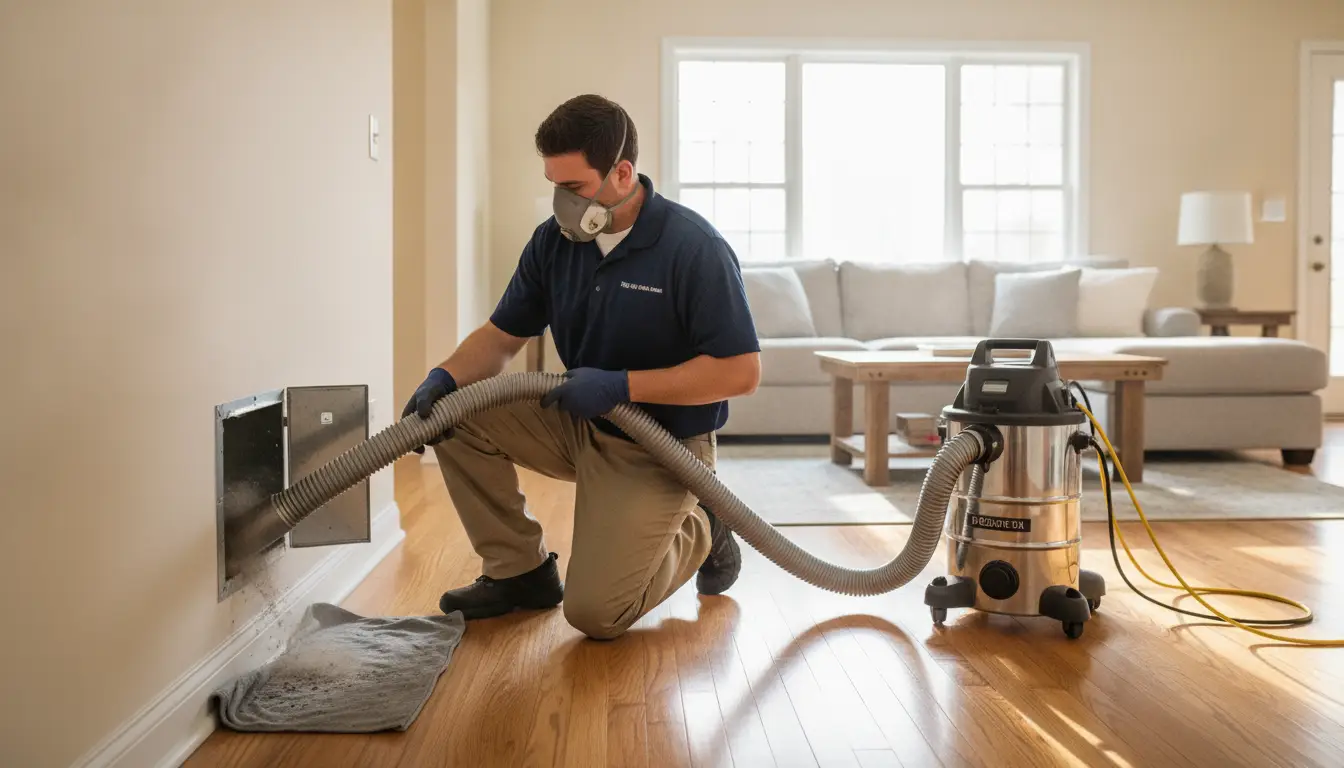

Most homeowners don’t think about air duct cleaning until dust is piling up faster than usual or the energy bill climbs for no obvious reason. Then they start calling around, and the quotes make no sense. One contractor says $200, another says $700, and both claim they’re doing the same job.
Here’s the thing: air duct cleaning costs in Raleigh, NC swing widely because several real, measurable variables are at play. Knowing what pushes prices up or down helps you recognize a fair quote and avoid getting talked into add-ons you don’t need. Below are the five factors that shape what you’ll actually pay.
The Size of Your Home and Number of Vents
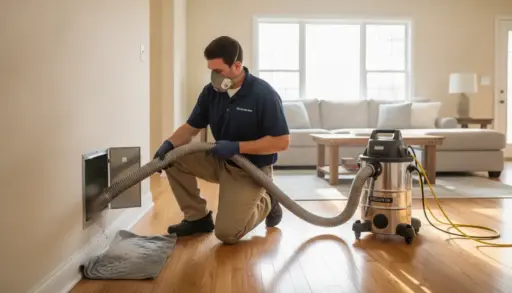
Most duct cleaning companies in Raleigh price jobs by the number of vents or registers, not by flat rate. A larger home with more duct branches typically takes significantly more time and equipment to clean than a compact townhouse or apartment, and that difference in labor tends to show up directly in the final quote. This same pricing structure applies to Summit’s air duct cleaning services in Raleigh, NC and many others in the area.
A standard single-family home in Raleigh might have 10 to 20 supply and return vents. Homes with three or more floors can push past 30. Each vent gets disconnected, cleaned, and resealed, so the count matters more than almost anything else. Companies typically charge somewhere between $25 and $50 per vent.
Before you request a quote, walk through your home and count every grille on your walls, floors, and ceilings. That number gives you a baseline; you’ll notice pretty quickly when an estimate seems wildly off compared to others.
The Level of Contamination in Your Ducts
A duct system untouched for a decade holds far more debris than one serviced two years ago. Contractors check contamination levels during a pre-job inspection and price accordingly. Heavy buildup from pet dander, mold, post-renovation dust, or years of grime means longer cleaning times and more passes through the system, all of which cost more.
Homes that went through construction or renovation recently face the worst contamination risk. Drywall dust and sawdust get pulled into ductwork fast. Clearing that kind of buildup calls for more powerful vacuum equipment and sometimes chemical treatments; both add to the bill.
But mold is the bigger wildcard in Raleigh’s humid climate. If a contractor spots microbial growth during inspection, they’ll probably recommend sanitization on top of the standard cleaning. That’s reasonable when it’s genuinely warranted; just ask for documentation rather than taking a verbal warning at face value.
Duct Material and System Accessibility
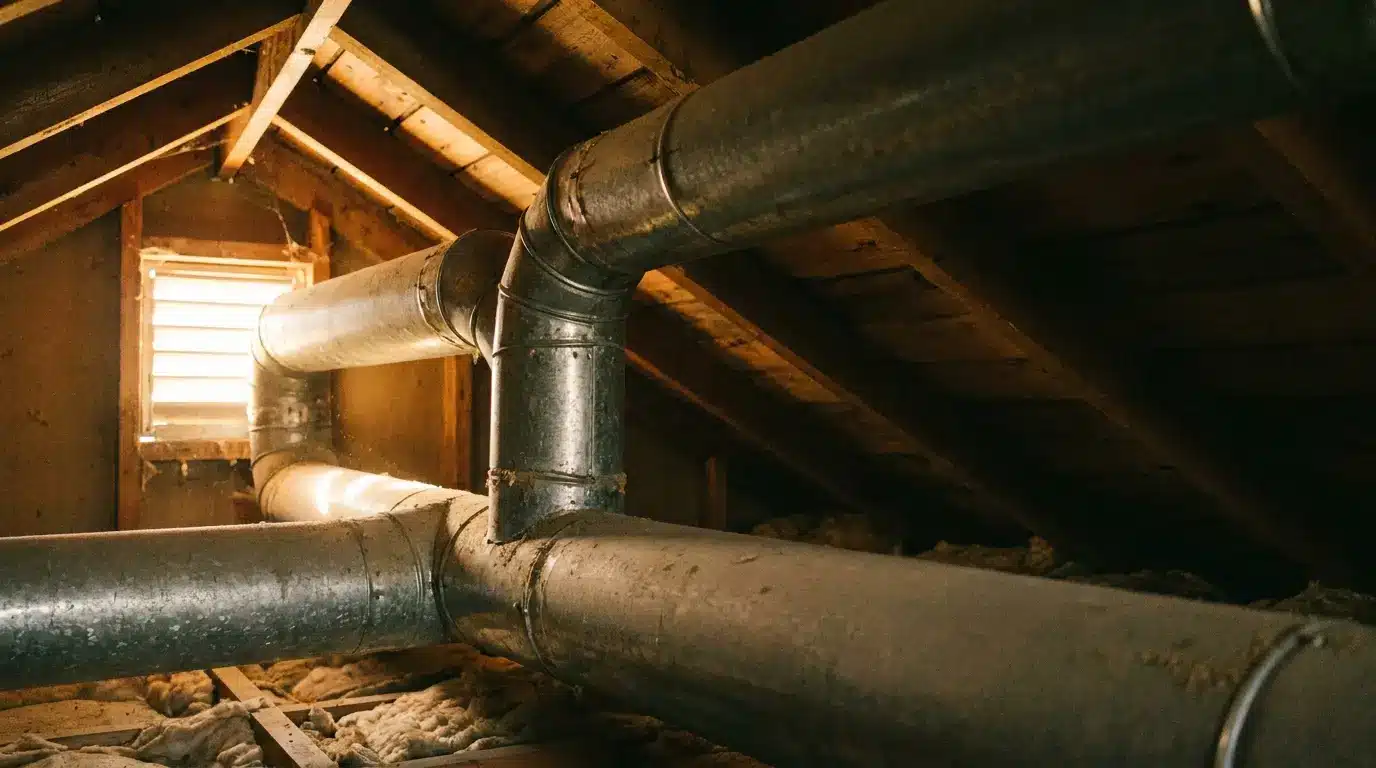
Not all duct systems are built the same. Rigid metal ductwork, common in older Raleigh homes, handles brush cleaning well. Flexible ducts, which show up in newer builds, are quicker to install but need gentler treatment so the liner doesn’t tear. The material your system uses shapes both the technique required and the time it takes.
Accessibility is just as important; a neatly placed attic system is a different job entirely from one threading through tight crawl spaces or finished walls. Contractors aren’t just billing for duct time; they’re billing for every hour the crew spends moving through your home.
So if your setup includes a large air handler, multiple zones, or attic placement that means ladders and repositioning equipment, a higher base price is expected. Ask the contractor to walk you through the scope of work before anything starts.
Add-On Services and System Condition
The price quoted for “duct cleaning” typically covers the ducts themselves. The HVAC system surrounding those ducts is another matter. Dryer vent cleaning, blower motor cleaning, evaporator coil cleaning, and UV light installation are all services contractors commonly offer while they’re already on-site.
Some add-ons genuinely earn their keep. A clogged dryer vent is a fire hazard, and having the crew address it during the same visit makes practical sense. Others – optional deodorizers, “premium sealing sprays” – are easier to skip. The trick is knowing which services fix real problems and which ones are just padding the invoice.
In Raleigh’s older neighborhoods, inspectors also turn up damaged duct sections fairly often. Repair or partial replacement adds to the total, but it may be unavoidable if sections are collapsed, disconnected, or bleeding conditioned air into unconditioned spaces. Always get written documentation of any damage before signing off on repair work.
Company Credentials and Local Market Rates
Raleigh’s HVAC market is competitive, but contractors don’t all operate at the same standard. Licensed, insured companies with certified technicians charge more than unlicensed operators who win jobs on price alone, and that gap reflects genuine risk. If an uninsured contractor damages your system or your property, that headache lands on you.
The National Air Duct Cleaners Association sets professional standards for the industry, and contractors following NADCA guidelines use specific equipment and inspection steps that take longer than a basic vacuum-only visit. Per NADCA’s published guidance, a proper residential cleaning runs two to four hours for a standard home. A 45-minute, $99 job isn’t the same service.
And timing matters too. Booking during off-peak months – late fall or early spring in Raleigh – can shave costs slightly, since demand for HVAC-adjacent work drops between the summer and winter rushes. It’s a small lever, but worth pulling if your schedule allows it.
Conclusion
Air duct cleaning costs in Raleigh, NC come down to five clear variables: home size, contamination level, duct material and access, add-on services, and contractor credentials. None of these factors are hidden or arbitrary. They each reflect real labor, equipment, and training. Get at least two itemized quotes before committing, ask what the inspection process looks like, and verify that any contractor you hire carries full insurance. Those three steps put you in a strong position before any work begins.

Tommy Hardy, an alumnus of the Georgia Institute of Technology with a degree in Mechanical Engineering, has been a go-to figure in residential upkeep and innovation for over 18 years. His career commenced in a leading home appliance manufacturing company, where he mastered the intricacies of household systems. Joining our platform in 2020, Tommy quickly became a reader favorite for his practical and easy-to-follow guides. He took the helm of our DIY section in 2019, consistently delivering content that empowers homeowners. Beyond his professional pursuits, Tommy is a passionate gardener and enjoys woodworking, skills enhancing his hands-on approach to home care.