
An air conditioner seldom stops working without warning. Changes in airflow, sound, moisture, or electricity use often appear before a complete shutdown. Pay attention to those signals because a minor defect can stress motors, controls, coils, and compressors.
Early diagnosis helps protect indoor comfort while repair choices remain simpler and less expensive. It also reduces disruption during Missouri’s hottest periods, when dependable cooling supports health and safety.
Early Signs Need Attention
A change in performance deserves attention, even if cooling continues. Weak airflow, warm supply vents, unusual sounds, and rising utility charges can signal a developing fault. These clues may reflect restricted circulation, failing electrical parts, or impaired heat transfer.
Arranging AC repair services in Eureka, MO after symptoms appear gives a technician time to identify the source. Early correction can prevent secondary damage, restore balanced temperatures, and reduce the chance of an emergency shutdown during extreme heat.
Restricted Airflow Raises Strain
Blocked filters create resistance across the indoor blower. Dust accumulation on an evaporator coil can produce a similar effect. As circulation falls, the system runs longer to reach the thermostat setting. That extended operation increases motor wear and electricity use. Uneven temperatures often appear first in distant rooms. Filter replacement helps, while duct inspection may reveal crushed sections, loose joints, or internal debris.
Refrigerant Loss Reduces Cooling
Refrigerant doesn’t disappear during normal operation. A lower charge usually indicates a leak, which may occur at a fitting, coil, or connection. Reduced pressure can make the evaporator surface excessively cold, leading to frost or ice. Continued use may overheat the compressor because returning vapor fails to provide adequate cooling. Proper service requires leak detection, repair, evacuation, and an accurate charge.
Drain Problems Can Cause Water Damage
During cooling, the indoor coil removes humidity from passing air. Condensed water enters a pan before traveling through a drain line. Algae, sediment, or biological growth can obstruct that path. Overflow may stain ceilings, damage drywall, soak insulation, or encourage mold growth. A technician can clear the passage, inspect the pan, and confirm proper drainage. Prompt attention limits both property damage and indoor moisture exposure.
Electrical Faults Can Spread
Clicking sounds, delayed starts, repeated cycling, or abrupt shutdowns may involve a capacitor, contactor, relay, or damaged wire. Each failed start can increase the motor’s electrical demand. Loose connections may generate heat at the terminal, damaging nearby insulation. Because stored electrical energy can remain hazardous after power is switched off, homeowners should avoid opening service panels. Professional testing identifies unsafe components before a small issue becomes a major failure.
Dirty Coils Waste Energy
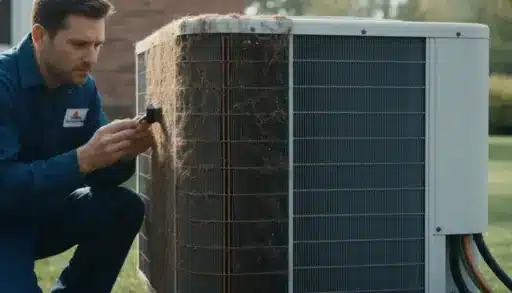
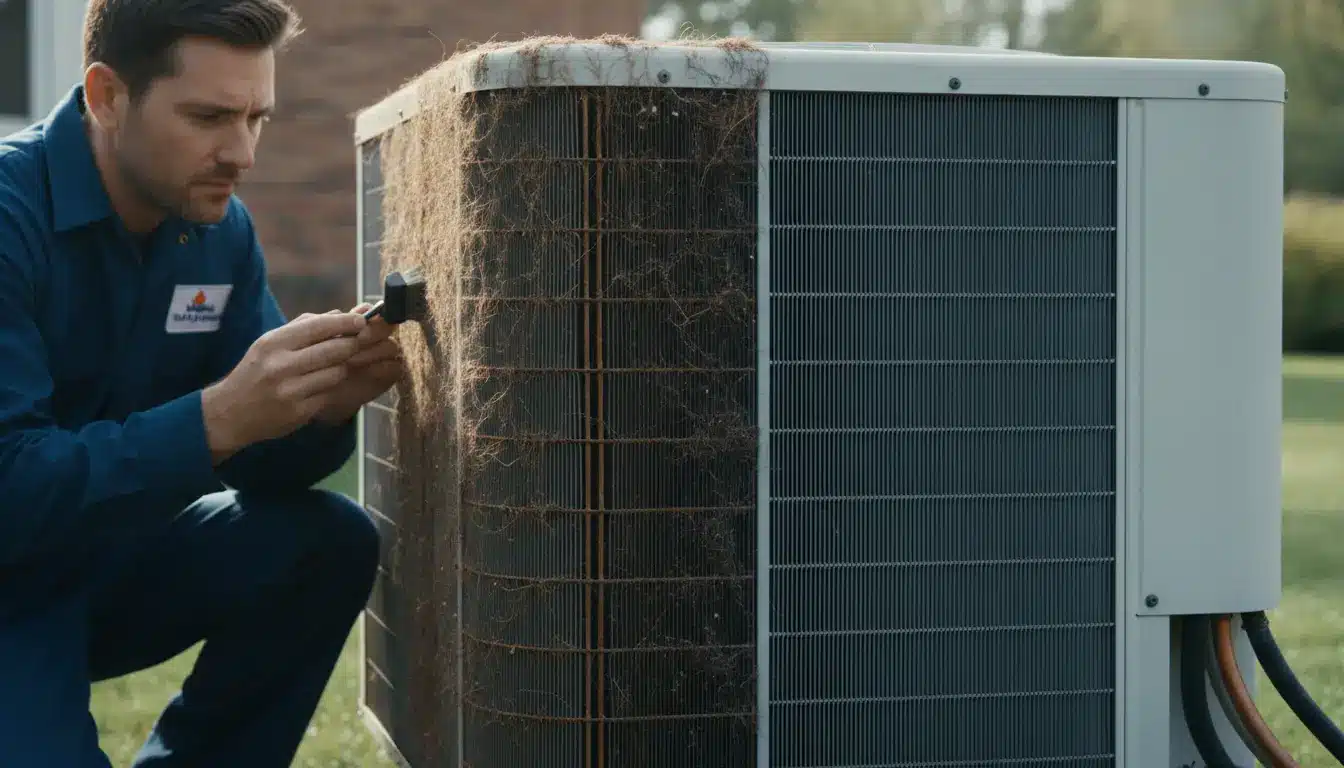
The outdoor condenser releases heat collected inside the residence. Grass, cottonwood fibers, leaves, and dust can coat the coil surface, limiting ventilation. This can raise operating pressure, forcing the compressor to run longer.
This pattern raises consumption and accelerates wear. Safe clearance around the cabinet supports heat release. A service visit can include coil cleaning, fan evaluation, and checks for bent fins that restrict passage.
Delayed Service Increases Costs
A small failed part may initially affect one function. Continued operation can spread stress to connected components, increasing labor and replacement expenses. A struggling blower motor, for example, may overheat wiring or damage a control board.
Early diagnosis preserves more repair options. It also gives homeowners time to compare expected service life, repair pricing, and replacement costs without deciding during an urgent outage.
Maintenance Helps Prevent Repeat Failures
A spring inspection prepares cooling equipment for heavy seasonal demand. A fall visit can identify wear before the next cycle begins. Typical checks include filter condition, electrical connections, coil cleanliness, drain performance, refrigerant readings, and temperature difference.
Finding a weak capacitor or restricted line during routine care is less disruptive than discovering it during a heat wave. Consistent maintenance also supports steadier operation and cleaner indoor airflow.
Repair Or Replacement?
Age alone does not determine the best course. A unit nearing 15 years may still perform well if its major components remain sound. Frequent breakdowns, rising consumption, refrigerant leaks, loud operation, and uneven temperatures deserve closer review.
A professional comparison should include repair price, projected reliability, efficiency, comfort requirements, and available equipment. That assessment helps homeowners choose based on long-term value rather than immediate cost alone.
Conclusion
Timely air conditioning service protects comfort, equipment, and household finances. Responding to warm rooms, weak circulation, strange sounds, leaks, or higher bills can prevent one damaged part from affecting several others.
Routine inspections add another safeguard by revealing wear before peak demand arrives. Qualified diagnosis also improves safety around refrigerant and electrical components. With prompt attention, homeowners can maintain steadier temperatures, reduce avoidable energy use, and limit costly emergency repairs.

Tommy Hardy, an alumnus of the Georgia Institute of Technology with a degree in Mechanical Engineering, has been a go-to figure in residential upkeep and innovation for over 18 years. His career commenced in a leading home appliance manufacturing company, where he mastered the intricacies of household systems. Joining our platform in 2020, Tommy quickly became a reader favorite for his practical and easy-to-follow guides. He took the helm of our DIY section in 2019, consistently delivering content that empowers homeowners. Beyond his professional pursuits, Tommy is a passionate gardener and enjoys woodworking, skills enhancing his hands-on approach to home care.