
Your thermostat is only one part of the comfort story. It can be set to 72 degrees, and you still have a stuffy bedroom, a warm second floor, dry winter air, or rooms that never seem to have that right feel.
Unlike older systems, modern HVAC solutions help with all these issues through precise temperature control, balanced airflow, humidity management, and air filtration. They can even adapt their output as outdoor conditions change.
If you’re interested in learning more about how these systems work, keep reading.
Modern HVAC Systems Adjust to Changing Conditions
Older HVAC equipment usually works at one speed: full power until the thermostat reaches its setting, then off until the next cycle.
Many modern systems, on the contrary, use multi-stage or variable-speed technology. Meaning they can adjust the cooling or heating temperature they output based on what your home needs.
Areas with demanding weather especially need this flexibility. Many homeowners search for HVAC Rancho Mirage, Palm Springs, Palm Desert, Indian Wells, and Desert Hot Springs services due to intense desert heat. And yet, cooler winter nights can call for heating.
That’s why such homeowners need equipment that can adjust and respond to all these changes, without running at full capacity every time it turns on.
Longer cycles at lower output also help keep more consistent temperatures and airflow. In other words, you get fewer noticeable temperature swings between cycles.
Zoning and Smart Controls Give You More Control Room by Room
If there are temperature differences throughout your home, you can’t blame your thermostat for that. An upstairs bedroom may stay warmer than the living room, and a west-facing office can heat up as soon as afternoon sunlight hits the windows.
The solution? A zoned HVAC system. It can divide your home into separate areas with individual temperature controls. In a ducted setup, motorized dampers direct conditioned air exactly where it’s needed.
This means you can keep occupied rooms more comfortable without treating every part of the house the same way.
There’s even another layer of control, one that smart and programmable thermostats add. While it depends on the model and HVAC equipment, you can usually set temperature schedules, make remote adjustments, or check indoor conditions from your phone.
Keep in mind: If there are rooms that constantly feel too hot or too cold, controls alone may not solve the problem. Uneven temperatures can be a result of ductwork, insulation, airflow, or system-sizing issues.
Humidity and Airflow Have a Direct Role in Comfort
Temperature is one part of the equation for room comfort. The other two are humidity and airflow, which can completely change how you experience the same thermostat setting.
Too much indoor moisture can leave a room feeling warm and clammy, and very dry air can cause discomfort, especially during colder months.
Your HVAC system affects both. During cooling cycles, the system can remove some moisture from the air. It’s important, though, to have proper equipment sizing because an oversized air conditioner may cool a home quickly and shut off before it has time to remove sufficient moisture.
Air also needs an unobstructed path through the house. Keep furniture, rugs, and other objects away from vents and return grilles.
Filtration and Ventilation Support the Air You Breathe Indoors
Why does indoor air deserve so much attention? Because you’re probably spending much of your day breathing it.
Just like 90% of other Americans, according to the U.S. Environmental Protection Agency.
Dust, pollen, pet dander, smoke particles, and other pollutants can all build up inside, depending on your home and its surroundings.
Your HVAC filter can help by capturing some airborne particles as air moves through the system. Still, filter performance varies, and a higher-rated filter isn’t universally right for every unit. A filter that creates too much resistance can reduce airflow if the system wasn’t designed for it.
It’s very important to check your filter on a regular basis, replace or clean it according to manufacturer guidance, and ask a professional before switching to a different filter.
Regular Care Helps Your HVAC System Deliver Consistent Comfort
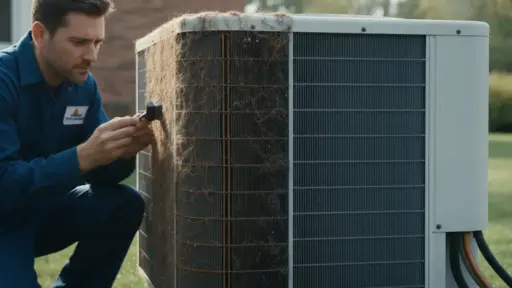
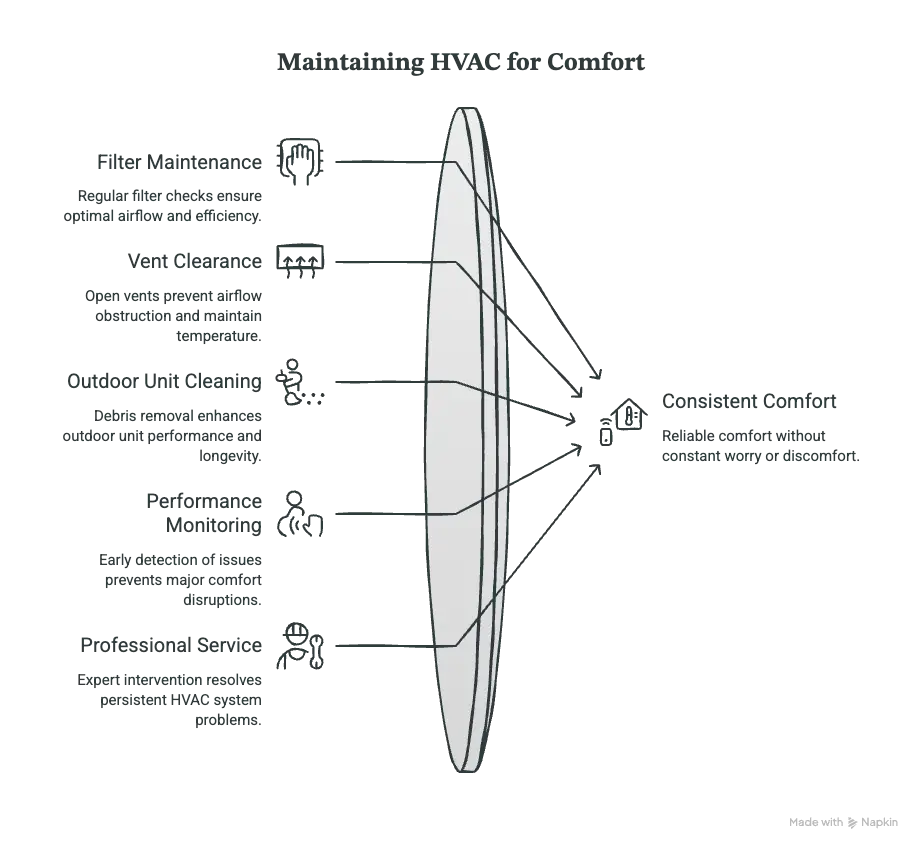
As advanced as HVAC equipment may be, it still needs routine attention to perform as promised. If there’s a clogged filter, it can restrict airflow, while leaves or debris around an outdoor unit can affect normal operation.
Even the smallest changes in performance can alert you that something needs attention.
Here’s what you can do to spot problems on time:
- Take a look at filters and replace or clean them as needed
- Make sure furniture, rugs, curtains, or other items aren’t blocking supply vents or return grilles
- Clean leaves, dirt, and debris from the area around the outdoor unit
- Pay attention when something feels different, such as weaker airflow, frequent on-and-off cycles, strange noises or odors, or a room that suddenly runs hotter or colder than usual
If any issues continue, it’s time to call a professional service.
The ultimate goal is to have a modern, properly maintained system that you won’t even have to think about. Your only job will be to feel comfortable at home.

Tommy Hardy, an alumnus of the Georgia Institute of Technology with a degree in Mechanical Engineering, has been a go-to figure in residential upkeep and innovation for over 18 years. His career commenced in a leading home appliance manufacturing company, where he mastered the intricacies of household systems. Joining our platform in 2020, Tommy quickly became a reader favorite for his practical and easy-to-follow guides. He took the helm of our DIY section in 2019, consistently delivering content that empowers homeowners. Beyond his professional pursuits, Tommy is a passionate gardener and enjoys woodworking, skills enhancing his hands-on approach to home care.