


Disruptions to the power supply can interrupt daily life at home and hinder critical business functions in commercial buildings. Even brief power outages can impact the lighting, refrigeration, and comfort systems that people use every day at home.
In the business setting, downtime can cause disruptions to workflows, delays in services, and a drop in productivity. In addition, choosing the wrong generator can result in inadequate back-up power or overinvesting in unnecessarily large units.
Due to these difficulties, it may be challenging to select the proper one without a method. However, when power requirements, operating conditions, and long-term operating factors are correctly assessed, the decision is manageable. With all these elements determined, the choice of the right diesel generator is more practical and less uncertain.
Considering that, this article provides simple, step-by-step decision factors for selecting an appropriate residential or commercial diesel generator.
1. Calculate Total Power Demand Before Selecting Generator Capacity
The first step in selecting a diesel generator is to determine the actual total power requirements correctly. This allows the generator to cope with actual demand without overload or underperformance.
Begin by identifying all the appliances or equipment that are a must-have if the electricity goes out. In homes, this consists of light fixtures, a refrigerator, air conditioning, and simple electronics. For commercial applications, it involves equipment, office systems, refrigeration systems, and other working equipment.
Then add the running load and starting load. Some devices need more power to start up, and if this is ignored, the system can fail or trip.
Lastly, include a safety margin over the total load. This helps to maintain consistency, minimize strain, and enhance long-term reliability.
2. Prioritize Fuel Efficiency to Control Long-Term Operating Costs
When you select the generator, you should also consider efficiency in terms of fuel usage. Generally, diesel generators are more efficient than petrol generators, particularly when operating continuously on load.
Efficiency is based on the generator’s ability to function in its most efficient load range. When operating above or below rated capacity, fuel consumption rises, and performance efficiency declines.
For household applications, fuel efficiency becomes an issue during long outages when extended runtime is needed. Fuel efficiency can have a direct impact on the operating costs of a generator when it is being used commercially, where it could be running for many hours per day.
Choosing the right model with the right tank size also contributes to longer battery life without the need to refuel often.
3. Match Generator Capacity to Actual Load Requirements
Choosing the correct capacity is crucial to ensure smooth operation and avoid waste of resources. An undersized generator may have difficulty powering items that are connected to it, and an oversized generator uses more fuel than necessary. Proper balance is essential for smooth and efficient operation.
Calculate total running load first and then take starting load into account. Many appliances need additional power for start-up, and this should be part of the final estimate. This is essential to avoid overload and unexpected shutdowns.
Residential customers typically require medium capacity for the basic systems in the home. Commercial users may need more capacity since there are several machines operating simultaneously. It is also good to plan for future load, as this avoids premature upgrades. Appropriate generator size provides a stable output, more efficient fuel utilization, and equipment longevity.
4. Select Installation Location That Minimizes Noise and Ensures Safe Operation
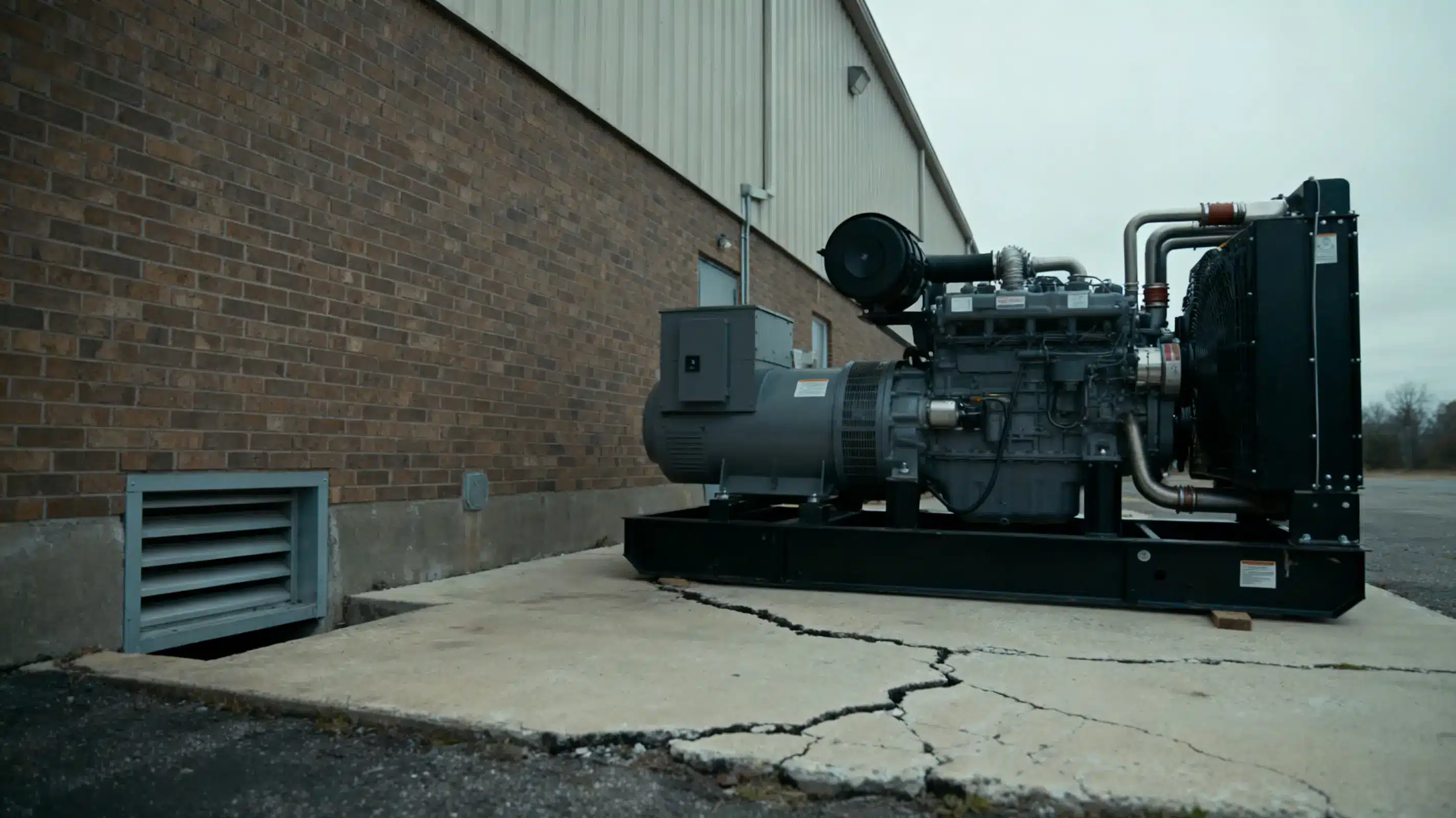
Placement plays a major role in how well a diesel generator performs in daily use. A poor location can increase noise issues, safety risks, and even affect efficiency. Outdoor installation is generally preferred because it allows proper airflow and reduces heat buildup during operation. At the same time, it helps keep operational noise away from indoor spaces, which is important for both homes and workplaces.
For residential setups, distance from bedrooms and living areas makes a noticeable difference in comfort. In commercial environments, dedicated generator rooms or enclosed structures are often used to manage sound and improve safety control.
Ventilation should always remain a priority. Without proper airflow, overheating can occur during long usage hours. A stable base is also important, as it reduces vibration and noise transfer. When these factors are planned properly, the generator runs more safely, quietly, and consistently.
5. Select Durable Build Quality and Reliable Engine Performance
Long-term performance depends heavily on how well the generator is built and how stable its engine is under load. A reliable engine maintains steady output even when demand changes suddenly. This consistency becomes especially important during outages or continuous commercial use, where interruptions are not acceptable.
Structural strength also affects how well the generator handles regular operation. A strong frame, quality casing, and well-designed internal components reduce wear and improve durability over time. In commercial applications, where usage is heavier, this becomes even more critical. Residential users also benefit from strong build quality during extended power cuts or seasonal usage.
Cooling efficiency and protective materials further enhance reliability. A well-designed cooling system prevents overheating, while corrosion-resistant parts help extend service life. When engine stability and build quality work together, the generator delivers dependable performance with fewer breakdowns and lower maintenance needs over time.
6. Plan Regular Maintenance for Long-Term Generator Reliability
Ongoing care is a key part of keeping a diesel generator reliable for years. Without proper maintenance, even a high-quality unit can lose efficiency and develop faults over time. Basic servicing tasks include checking engine oil, replacing filters, and inspecting cooling components. These steps help maintain smooth operation and prevent internal damage.
Usage patterns influence how often maintenance is needed. Residential systems usually require periodic servicing since they run less frequently. In contrast, commercial systems need more regular attention due to longer operating hours and heavier load conditions.
Early planning for maintenance also makes a difference. Generators that are easier to access save time during servicing and reduce downtime. This is especially important in commercial environments where interruptions can affect operations. Keeping a consistent maintenance schedule helps improve fuel efficiency, reduce breakdown risks, and extend overall equipment life, ensuring stable performance whenever power backup is required.
Conclusion
Choosing the right diesel generator becomes straightforward when power demand, fuel efficiency, capacity sizing, installation planning, build quality, and maintenance needs are carefully considered. Each decision factor plays a direct role in ensuring reliable performance for both residential and commercial use.
When these steps are followed correctly, the risk of overload, inefficiency, or unnecessary cost is significantly reduced. A structured approach ensures stable backup power, long-term reliability, and better control over operating conditions in any environment.

Holding a Master’s in Architecture from the University of Texas at Austin, Emily Rodriguez has dedicated more than two decades to the art and science of building renovation. Starting her journey in historic preservation, she developed a profound respect for blending old with new in building design. Emily became a vital part of our team in 2019, renowned for her insightful and innovative renovation tips. She has been leading our DIY home improvement series since ever since, where she shares her wealth of knowledge in turning outdated spaces into modern havens. When not engaged in writing or consulting, Emily is a passionate advocate for heritage conservation and enjoys exploring vintage architecture, a hobby that complements her professional expertise.