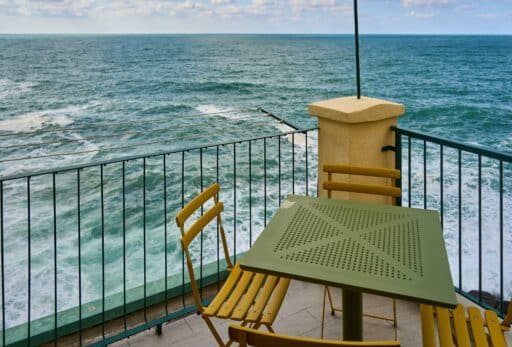
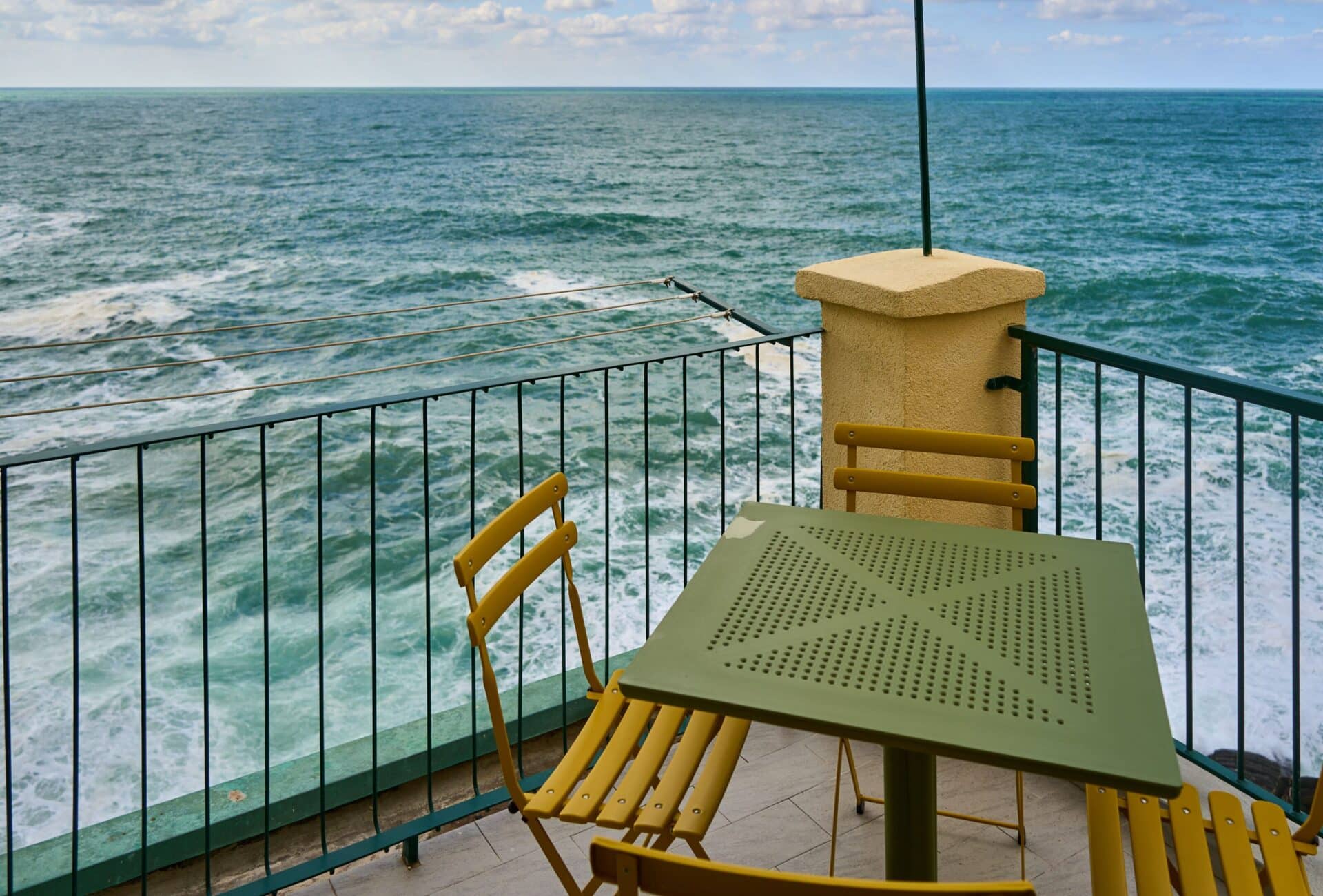

Your home’s coastal balcony appears to be perfectly fine from the outside. Fresh paint. Solid-looking railings. Stunning views of the ocean. What could possibly go wrong?
Unfortunately, it’s exactly these types of coastal properties that suffer from more exterior elevated element (EEE) failure than any other type of residential property.
These elevated elements (e.g., balconies, decks, stairs, walkways, landings, and porches), along with their waterproofing systems, are subject to salt air, fog/marine layer moisture, wind-driven rain, poor drainage, failing waterproofing systems, and minor construction defects, all working together over the years before even a serious warning sign appears.
At Stellar Property Inspections LLC, we have conducted countless exterior elevated element inspections throughout North County San Diego (Encinitas, Carlsbad, Oceanside, Solana Beach, Del Mar, etc.), and I can assure you that what we’ve seen is shocking.
At Stellar Property Inspections LLC, we firmly believe that elevating elements (i.e., balconies, elevated decks, exterior stairs, landings, and walkways) are not merely cosmetic features; they’re structural support systems.
While they don’t typically deteriorate as quickly as a broken kitchen cabinet door or a cracked bathroom tile, when they do fail, they can create significant hazards.
As a result, exterior elevated element inspections (commonly referred to as EEE inspections) are critical in coastal Southern California.
What Exactly Are Exterior Elevated Elements?
While “balconies” are commonly thought of when referring to exterior elevated elements, the definition extends far beyond. Exterior elevated elements refer to the entire assembly of the load-bearing structural elements (wood-framed or otherwise), plus their associated waterproofing systems.
As defined by California Civil Code § 5551, associated waterproofing systems include flashings, membranes, coatings, and sealants intended to prevent water from reaching the load-bearing structural elements.
Many homeowners incorrectly assume that since the walking surface looks good, everything else beneath it must be safe, too. However, in reality, the walking surface is simply one layer in a multi-layer system.
Therefore, the true question is what is occurring beneath the surface of the walking platform, within the Stucco sheathing, at the base of the railing post, at the ledger connection, and within the structural framing members.
A balcony is not just a walking platform; it is a complex system. If the waterproofing system fails, then ultimately the structural system will likely fail as well.
Why Coastal Properties Are More Demanding Than Most Homes
Properties located near the coast are subjected to both high levels of moisture and corrosive conditions, not experienced nearly as frequently by inland Homes. Fasteners, brackets, connectors, and hardware used in railing assemblies can all rapidly corrode due to the presence of salt-laden air. I
n addition, Morning marine layers can continually saturate surfaces. Tiny cracks in coatings can allow water entry. Finally, wind-driven rains can force water into areas previously inaccessible.
Inland climates generally provide a longer period before small defects become major issues. Near the ocean, water seeks out every possible route.
Most often, we tell our clients that costly balcony problems do not begin dramatically. They begin with very small openings: failed beads of sealant, minute cracks surrounding railing posts, improper slope on deck surfaces, inadequate flashing details, or coating degradation over time.
Once water enters the component(s), it may remain trapped, allowing wood framing to decay, metal connectors to rust, and Stucco to conceal damage. By the time visible distress occurs on the surface of the balcony itself, the underlying components may have been significantly compromised.
Therefore, reliance upon appearance alone is a serious oversight.
A Real World Example: How We Prevented A Balcony Collapse
While conducting an EEE inspection for a client’s North County San Diego property, the initial assessment indicated that the balcony appeared serviceable from above.
There was some weathering of the surface coating but none of sufficient concern to raise immediate alarms for someone viewing it casually. Additionally, the railing was painted and provided a wonderful view of the pacific ocean. The primary concern of the homeowner was ensuring the safety of her tenants.
However during the inspection process, we determined that something was amiss regarding the connections attaching the railing assemblies to the deck surface. Specifically at each railing post location where the railing penetrated the waterproofed deck surface the detailing had failed.
This allowed water entry directly through each post at each penetration point. Each time rain impacted the balcony surface, each time condensation occurred in the marine layer and each time the area was washed down water was able to seep down the interior of each railing post and into the unseen framing members below.
There were several indicators that suggested that water was being directed into the interior of each railing post and subsequently into the concealed framing member: staining on the underside of the balcony adjacent to each railing post; slight softening of an area in relation to a localized section of railing; cracking of coating near each post base; and visual evidence of water pooling rather than flowing away freely from under each railing post assembly.
Those subtle indicators represented potentially catastrophic consequences: if water continued to enter the interior framing members supporting each second floor balcony assembly it could lose sufficient structural integrity and become unsafe. Ultimately this type of undetected deterioration can lead to partial collapse.
That inspection immediately changed how everyone viewed this situation. The discussion transitioned from “do we just need to touch up some of the coating?” To “we need to have qualified evaluations performed now and/or repairs completed prior to this becoming a life safety issue.”
That’s how expert inspections can impact discussions. Our intention isn’t to frighten property owners into taking action. Rather, we want to identify potential problems involving water infiltration pathways before they evolve into structural failures.
Lessons From Tragic Failures In California History
California’s balcony safety legislation — specifically SB 721 and SB 326 — was enacted in response to tragic events similar to those described above (the Berkeley balcony collapse). One lesson learned from these tragedies is that successful exterior elevated element design depends entirely on adequate craftsmanship.
An exterior elevated element (such as a balcony) can be constructed using excellent design principles yet fail prematurely if installed with poor-quality waterproofing details, flashing details, drainage details, material selections, or connector/penetration details.
At Stellar Property Inspections LLC, we agree with this sentiment: water management is equivalent to structural protection for exterior elevated elements located in coastal environments. You cannot treat them independently.
Why single-family home owners should be concerned about exterior elevated elements beyond HOA statutory obligations
The vast majority of individuals who learn about EEE inspections relate them to California balcony laws governing apartment complexes/condominiums/multifamily dwelling units.
The statutory requirements are important. However, the safety implications apply to a broader group of homeowners than simply those required by statute to perform an EEE inspection.
Single-family homeowners owning properties in coastal cities with second-story balconies are equally susceptible to the same issues.
Similarly situated single-family homeowners should be aware of water infiltration damage, wood decay, corrosion, and poor flashing details affecting their structures, regardless of whether they fall under a specific statute or not.
Buyers should be concerned about potential balcony repair costs and emergencies; sellers should be concerned about unidentified balcony deficiencies negatively impacting a sale transaction; property owners should be concerned about performing regular maintenance versus facing costly emergency repairs; and real estate agents should be concerned about potential safety liabilities and/or disputes related to proposed repairs when purchasing/selling properties with exposed exterior elevated elements.
Ultimately, our position is that it makes sense to inspect your exterior elevated elements prior to experiencing obvious Signs of distress. At that point, it may be too late. Second-story balconies are particularly hazardous when distressed, and collapsing balconies are an extreme example of what can happen when neglect exists.
Signs You Shouldn’t Ignore Regarding Coastal Elevated Elements
Schedule an appointment with a qualified inspector if you see any of the following:
- Cracking around railing posts or deck edges
- Softness; sponginess; or uneven walking surfaces
- Rust staining leaking through coatings or Stucco
- Water stains appearing under a balcony or elevated walkway
- Loose or unstable railings
- Peeling; bubbling; or blistering waterproof coatings
- Mushroom growth; musty odor; or visually apparent rot
- Standing water remaining after rainfall
- Cracking Stucco where the balcony meets the main building body
- Interior staining near balcony doors or exterior wall locations
While these symptoms may indicate that there is an issue with your elevation element(s), they do not necessarily indicate an imminent hazard. Instead, they indicate that you should seek professional assistance in evaluating your exterior elevation elements.
Our Position: “Looks Good” Does Not Equal “Safe”
A newly coated balcony may still contain decayed wood. New coatings can conceal damaged wood beneath them. Railings may appear to be stable on days without wind but still be structurally unsound due to weak connections.
Luxury coastal properties may present beautifully while moisture is quietly migrating through failed details in their elevations.
That’s why Stellar Property Inspections LLC evaluates EEE inspections based on the safety-first philosophy. We are not there solely to complete paperwork obligations.
We exist to help you evaluate your property’s elevation element condition(s); assess their level of urgency; and provide recommendations for future action based upon those assessments.

Holding a Master’s in Architecture from the University of Texas at Austin, Emily Rodriguez has dedicated more than two decades to the art and science of building renovation. Starting her journey in historic preservation, she developed a profound respect for blending old with new in building design. Emily became a vital part of our team in 2019, renowned for her insightful and innovative renovation tips. She has been leading our DIY home improvement series since ever since, where she shares her wealth of knowledge in turning outdated spaces into modern havens. When not engaged in writing or consulting, Emily is a passionate advocate for heritage conservation and enjoys exploring vintage architecture, a hobby that complements her professional expertise.