
Open-concept homes have transformed modern residential design. Kitchens flow into dining rooms, living spaces blend together, and homeowners enjoy greater flexibility for entertaining and everyday living. However, while open layouts create spacious interiors, they also introduce unique lighting challenges.
Without walls to naturally separate spaces, lighting must work harder to define functionality, create atmosphere, and maintain visual balance. This is where layered lighting becomes essential.
Instead of relying on a single overhead fixture or uniform ceiling lighting, layered lighting combines multiple types of illumination to improve comfort, aesthetics, and functionality. For many homeowners, layered lighting open concept living strategies offer one of the most effective ways to transform a space without taking on a major renovation project.
By using ambient, task, and accent lighting together, homeowners can create a more inviting and functional environment while preserving the openness that makes these layouts appealing in the first place.
Why Open-Concept Homes Need Better Lighting Planning
Traditional floor plans naturally separated lighting needs room by room. Kitchens, dining rooms, and living areas each had their own walls, fixtures, and lighting goals.
Open-concept spaces remove those boundaries. Suddenly, one large area must support multiple activities throughout the day, including:
- Cooking
- Dining
- Relaxing
- Entertaining
- Watching television
- Working from home
- Family gatherings
Because these activities require different lighting conditions, a single ceiling fixture is rarely enough to make the space feel comfortable and functional.
Poor lighting design can leave open-concept homes feeling overly bright, flat, shadowy, or visually disconnected. Layered lighting helps solve these problems by creating balance and flexibility throughout the space.
Understanding the Three Layers of Lighting
Successful layered lighting design typically combines three primary categories of illumination.
Ambient Lighting
Ambient lighting serves as the foundation of the room’s illumination. It provides the overall brightness needed for everyday movement and visibility.
Common ambient lighting options include:
- Recessed lighting
- Flush mount fixtures
- Pendant lights
- Track lighting
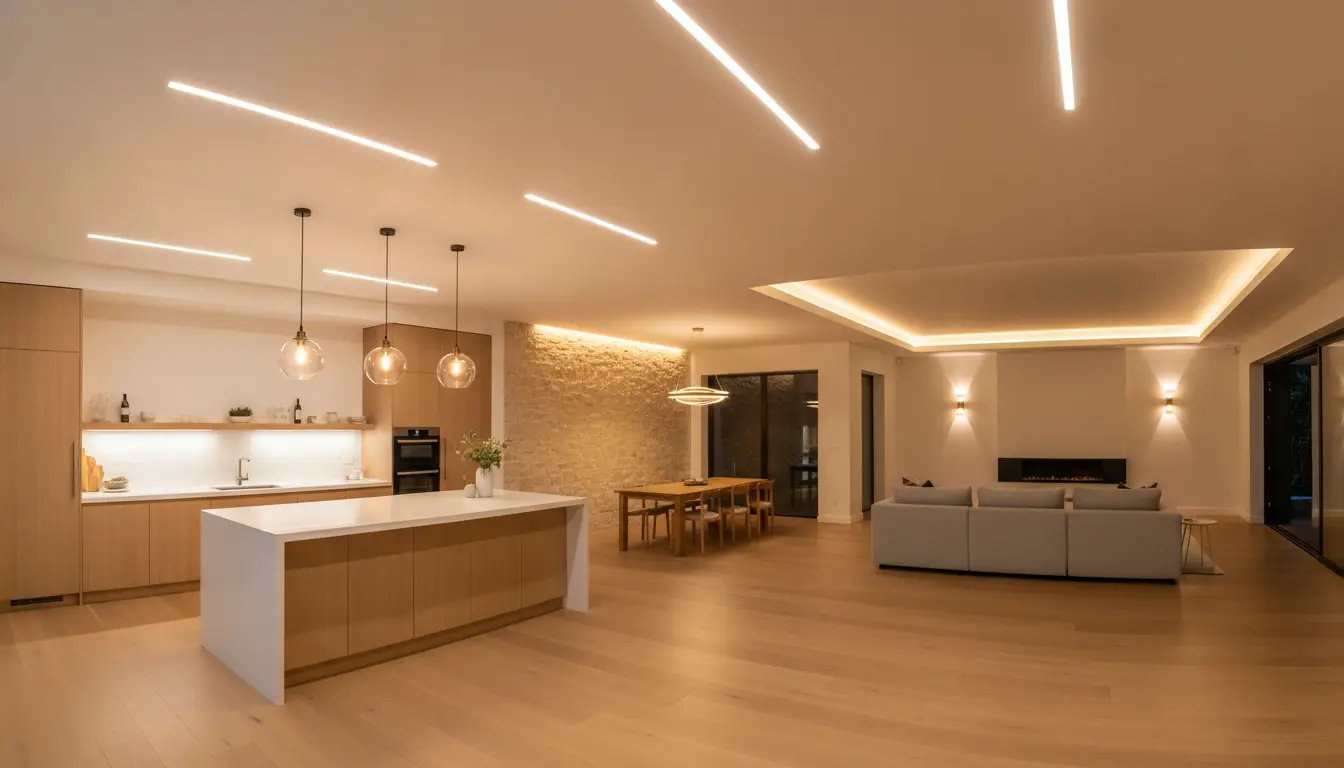
Homeowners who want broad, even illumination without bulky ceiling fixtures often choose recessed lighting because it distributes light throughout open-concept spaces while maintaining clean architectural lines. Clean ceiling lines help preserve the spacious appearance that homeowners want in modern interiors.
Many homeowners now choose slim canless recessed lights, which come with their own junction boxes. These types of fixtures are ideal where above-ceiling space is limited, or the user simply does not want to bother with ceiling canisters.
Task Lighting
The traditional role of task lighting is to provide focus illumination for activities. In open-concept homes, however, that functional role is supplemented by a structural one, where the light helps define room boundaries.
Examples of task lighting include:
- Under-cabinet kitchen lighting
- Pendant lights over islands
- Desk lamps
- Reading sconces
- Gimbal directional recessed lighting
Homeowners who struggle with shadows on countertops often install under-kitchen cabinet lighting to improve visibility for cooking, meal prep, and cleaning tasks.
Light source spacing and brightness can help visually separate rooms. For instance, an open plan great room combining both living and dining areas, can have a tight spacing of recessed ceiling lights over the dining table to anchor the eye, with additional fill lighting coming from side-mounted gimbal recessed downlights. The noticeably brighter illumination subtly separates the dining areas from the living one, so the eye scans them as distinct. The main cluster of lights over the dining area acts as the main driver, with the gimbal lights adding contrast, depth, and filling in shadows.
Accent Lighting
Accent lighting adds depth, atmosphere, and visual interest. Without this layer, open-concept homes can sometimes feel too uniform or sterile. Accent light fixtures are generally higher contrast than surrounding ambient lights and focused on a specific area the users wants to highlight. The goal here is not so much to add visibility as to evoke an emotion.
Accent lighting can include:
- Wall wash lighting
- Shelf lighting
- Toe-kick lighting
- Decorative sconces
- Artwork illumination
- Cove lighting
Lighting fixtures can be multipurposed, so the same gimbal directional fixtures used to complement the main task lighting over the dining table, can also be used to create an accent effect. For instance, they could highlight a table centerpiece, or even the entire table if it has a noteworthy wood or stone texture.
Using Layered Lighting to Create Functional Zones Without Walls
One of the biggest challenges in open-concept design is maintaining organization within a large uninterrupted space.
Layered lighting helps establish subtle visual boundaries without requiring walls or structural changes.
For example:
- Pendant lighting can define a dining area
- Recessed lighting can brighten kitchen workspaces
- Accent lighting can soften living room seating areas
- Under-cabinet lighting can separate prep zones from entertainment spaces
These lighting distinctions help rooms feel more intentional and comfortable while maintaining the openness homeowners want.
Instead of physically dividing spaces, lighting guides how people interact with different areas of the home.
Recessed Lighting in Open Layouts
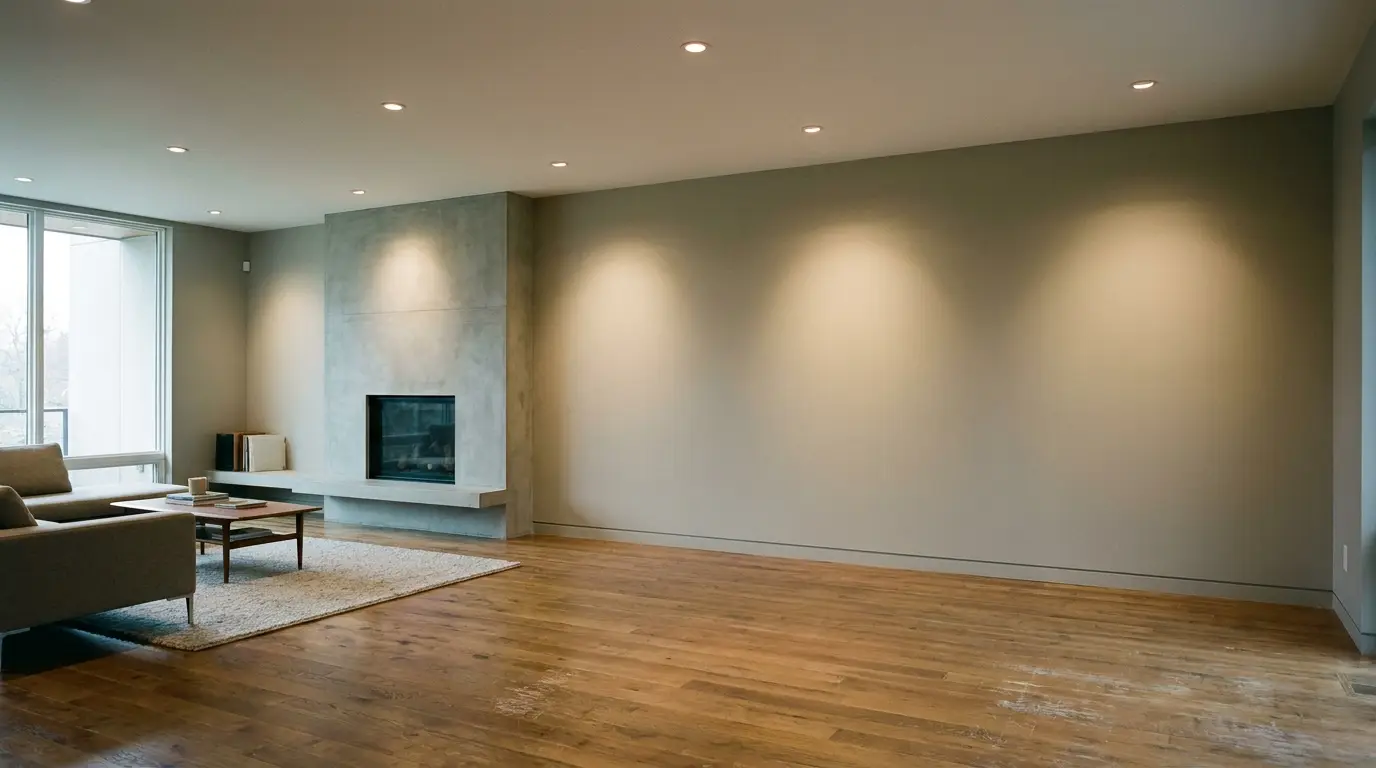
Recessed lighting often serves as the backbone of layered lighting open concept living strategies because it provides broad, even illumination while maintaining clean architectural lines.
Slim recessed fixtures have become especially popular because they fit into tight ceiling spaces and create a minimalist appearance. Their low-profile design helps reduce visual clutter while supporting a more contemporary aesthetic.
Recessed lighting also offers flexibility in placement, allowing homeowners to evenly distribute light throughout kitchens, living rooms, hallways, and transitional spaces.
Adjustable recessed fixtures can further improve lighting performance by directing illumination toward artwork, seating areas, kitchen islands, or architectural details.
This flexibility allows homeowners to customize lighting layouts without making major structural modifications.
The Role of Light Color Temperature on Room Atmosphere
Lighting temperature significantly influences how open-concept spaces feel throughout the day.
Cooler temperatures, typically between 4000K and 5000K, often work well in kitchens and workspaces because they improve visibility and create a crisp, energetic environment.
Warmer temperatures, usually between 2700K and 3000K, create a softer and more inviting atmosphere that works well in living rooms and dining spaces.
Layered lighting allows homeowners to combine these temperatures strategically across different areas of the home.
For example:
- Bright neutral lighting in kitchen prep zones
- Warm ambient lighting in seating areas
- Soft accent lighting for evening relaxation
This balance helps large spaces feel more dynamic and comfortable rather than overly bright or visually monotonous.
Dimmers and Smart Controls Add Flexibility
Modern lighting systems increasingly incorporate dimmers and smart controls, especially in open-concept homes where rooms often serve multiple purposes throughout the day. A bright kitchen setup in the morning may transition into softer evening lighting for entertaining or relaxing.
Smart lighting controls allow homeowners to:
- Adjust brightness levels
- Create lighting scenes
- Control zones independently
- Improve energy efficiency
- Customize ambiance throughout the day
Because open-concept spaces typically involve multiple overlapping activities, lighting flexibility becomes extremely valuable.
Simple upgrades like dimmers and programmable lighting controls can dramatically improve the functionality of a home without requiring expensive remodeling projects.
Layered Lighting Helps Open Spaces Feel More Comfortable
Large open rooms sometimes feel cold or impersonal when lighting lacks variation.
Layered lighting helps soften these spaces by introducing contrast, depth, and visual balance. Instead of flooding the room with uniform brightness, homeowners can create more inviting environments through intentional lighting placement. This approach also improves comfort by reducing glare and shadows while supporting different activities more effectively.
As a result, layered lighting often makes open-concept homes feel:
- More welcoming
- Better organized
- More visually balanced
- More relaxing
- More functional
These improvements can dramatically change the overall feel of a home without requiring demolition or construction work.
Small Lighting Upgrades Can Deliver Big Results
One reason layered lighting continues to gain popularity is because it offers substantial visual impact without requiring major renovations.
Adding recessed lighting, upgrading outdated fixtures, incorporating accent lighting, or installing dimmers can completely transform how an open-concept home looks and functions. Compared to large-scale remodeling projects, lighting upgrades are often more affordable, less disruptive, and easier to complete.
For many homeowners, improving lighting is one of the most effective ways to modernize a home while enhancing comfort and functionality at the same time. As open-concept living continues to dominate residential design trends, layered lighting will remain one of the most practical and impactful strategies for creating spaces that feel both beautiful and highly livable.

Holding a Master’s in Architecture from the University of Texas at Austin, Emily Rodriguez has dedicated more than two decades to the art and science of building renovation. Starting her journey in historic preservation, she developed a profound respect for blending old with new in building design. Emily became a vital part of our team in 2019, renowned for her insightful and innovative renovation tips. She has been leading our DIY home improvement series since ever since, where she shares her wealth of knowledge in turning outdated spaces into modern havens. When not engaged in writing or consulting, Emily is a passionate advocate for heritage conservation and enjoys exploring vintage architecture, a hobby that complements her professional expertise.