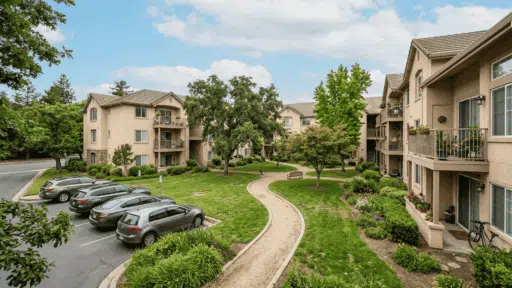
Looking for an apartment that feels more like a home than a box in the sky? That’s the whole idea behind garden-style apartments.
I have toured plenty of rental options over the years, and this style stands out for one simple reason: space to breathe. These low-rise communities are built around courtyards, lawns, and walking paths instead of packed hallways and elevators.
This article will walk you through what sets garden-style apartments apart from high-rises and mid-rises. You will learn about typical layouts, common amenities, average rent ranges, and who these apartments work best for.
I will also cover a few things to check before signing a lease, so you know exactly what you are getting. By the end, you should have a clear idea of if this lifestyle fits your needs.
What are Garden Style Apartments?
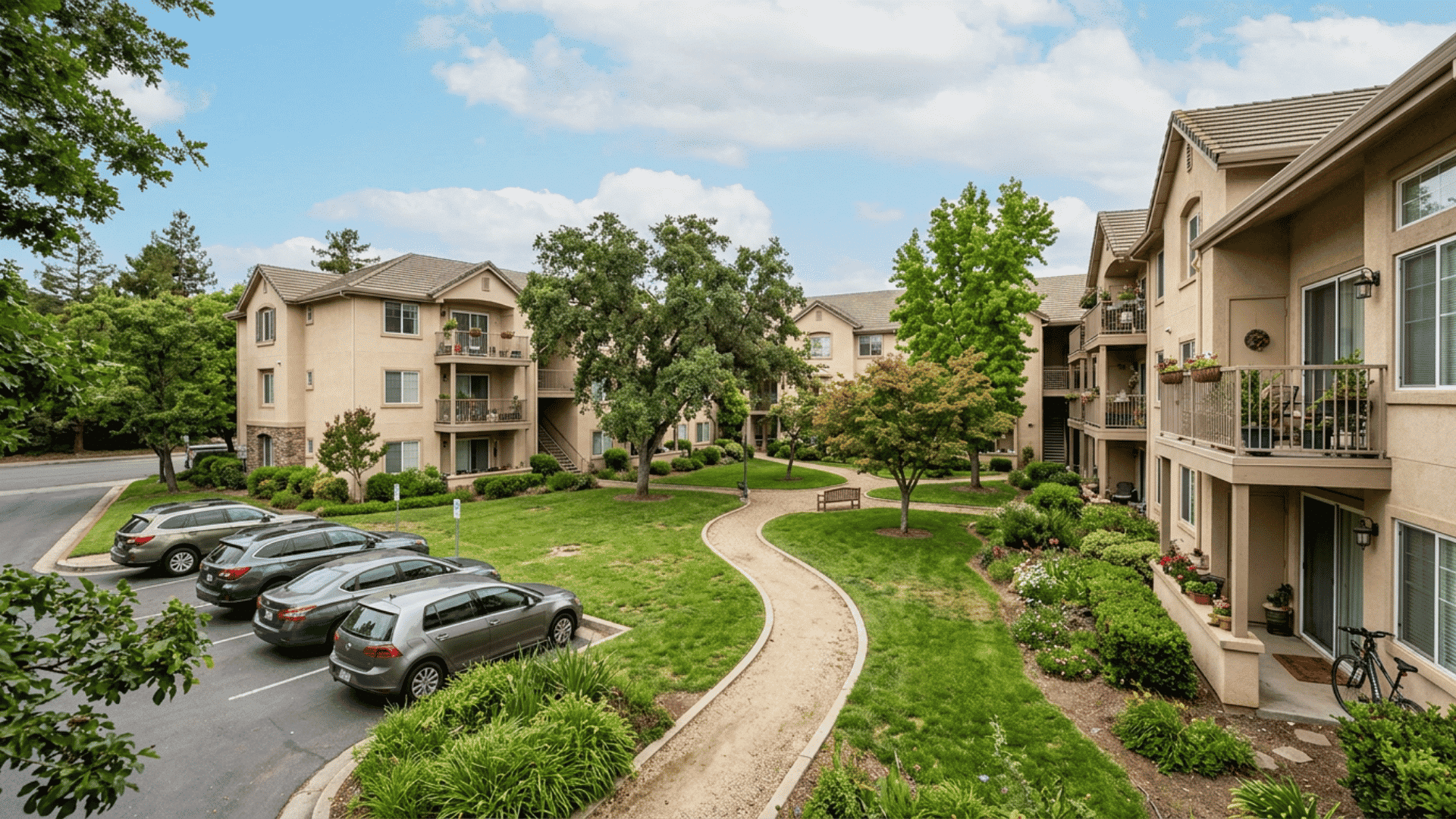
Garden-style apartments are low-rise rental communities, usually two or three stories tall, built around shared outdoor spaces such as courtyards, lawns, or gardens.
Unlike high-rise buildings, these communities spread out horizontally instead of stacking units vertically.
Most garden-style apartments sit on suburban or semi-rural land, where space allows for more greenery and parking. Buildings are grouped in small clusters, often connected by walking paths.
Residents typically park close to their own unit instead of relying on a shared garage or elevator. This layout works well for renters who want a quieter setting without giving up modern conveniences.
Many communities offer a pool, fitness room, or small dog park for shared use.
Key Features of Garden Style Apartments
These communities share a few traits that set them apart from other rental styles. Here’s what you’ll typically find when touring garden-style apartments.
- Low-Rise Buildings: Most structures are two to three stories tall, with no elevators needed to reach your unit.
- Outdoor Courtyards: Shared green spaces sit between buildings, giving residents a place to relax or let kids play close to home.
- Direct Unit Access: Entrances open to the outdoors or to a shared walkway, rather than a long interior hallway.
- Ample Parking: Open lots or carports are common, often located near each building for shorter walks.
- On-Site Amenities: Many properties include a pool, fitness room, laundry facilities, or a small dog park.
- Private Patios or Balconies: Most units come with an attached outdoor space, adding a bit of privacy and fresh air.
- Pet-Friendly Policies: Ground-level access and nearby green space make these communities a common choice for pet owners.
Typical Layout of Garden Style Apartments
Layouts vary from property to property, but most follow a similar pattern. Here’s what you can expect once you step inside.
1. Single-Story Unit Layouts
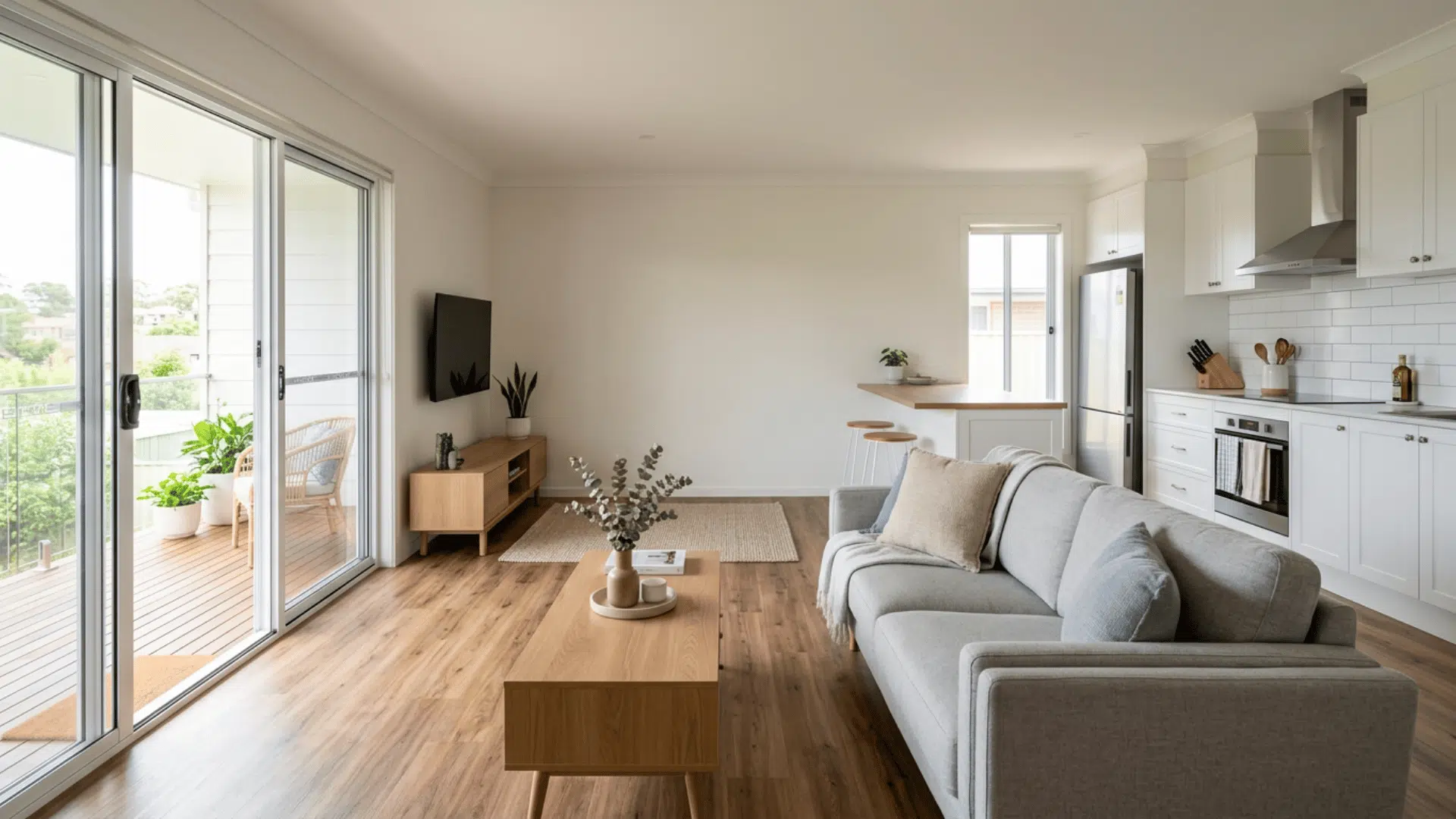
Many garden-style apartments offer single-story units, meaning everything is on one level. This makes them a solid choice for older adults or anyone who prefers not to deal with stairs.
Bedrooms, bathrooms, and living areas are usually arranged in a simple, open flow. Square footage tends to run smaller than townhome-style units, but the trade-off is easier upkeep.
My friend moved into a single-story unit last year and said the lack of stairs made moving furniture far less stressful. It’s a practical setup for daily living.
2. Two-Story Townhome Style Units
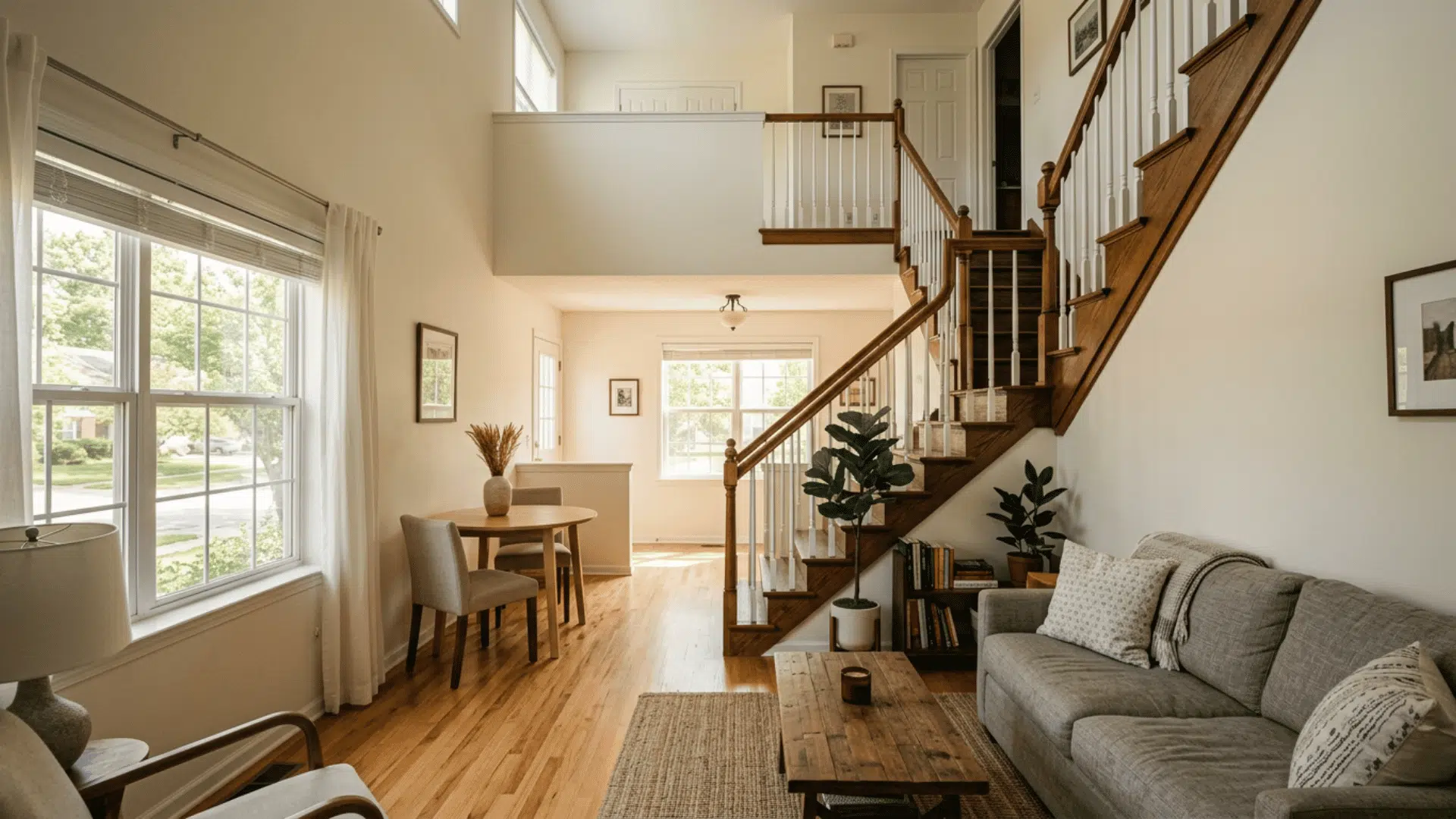
Some garden-style apartments include two-story townhome units, with bedrooms upstairs and living space below. This split gives a bit more separation between quiet areas and common spaces.
The stairs inside the unit are common, as is a small entryway near the front door. These layouts often feel closer to a small house than a typical apartment.
I toured one last spring and noticed the upstairs bedrooms felt noticeably quieter than the main floor, since street noise and courtyard activity stayed downstairs.
3. Shared Courtyard Placement
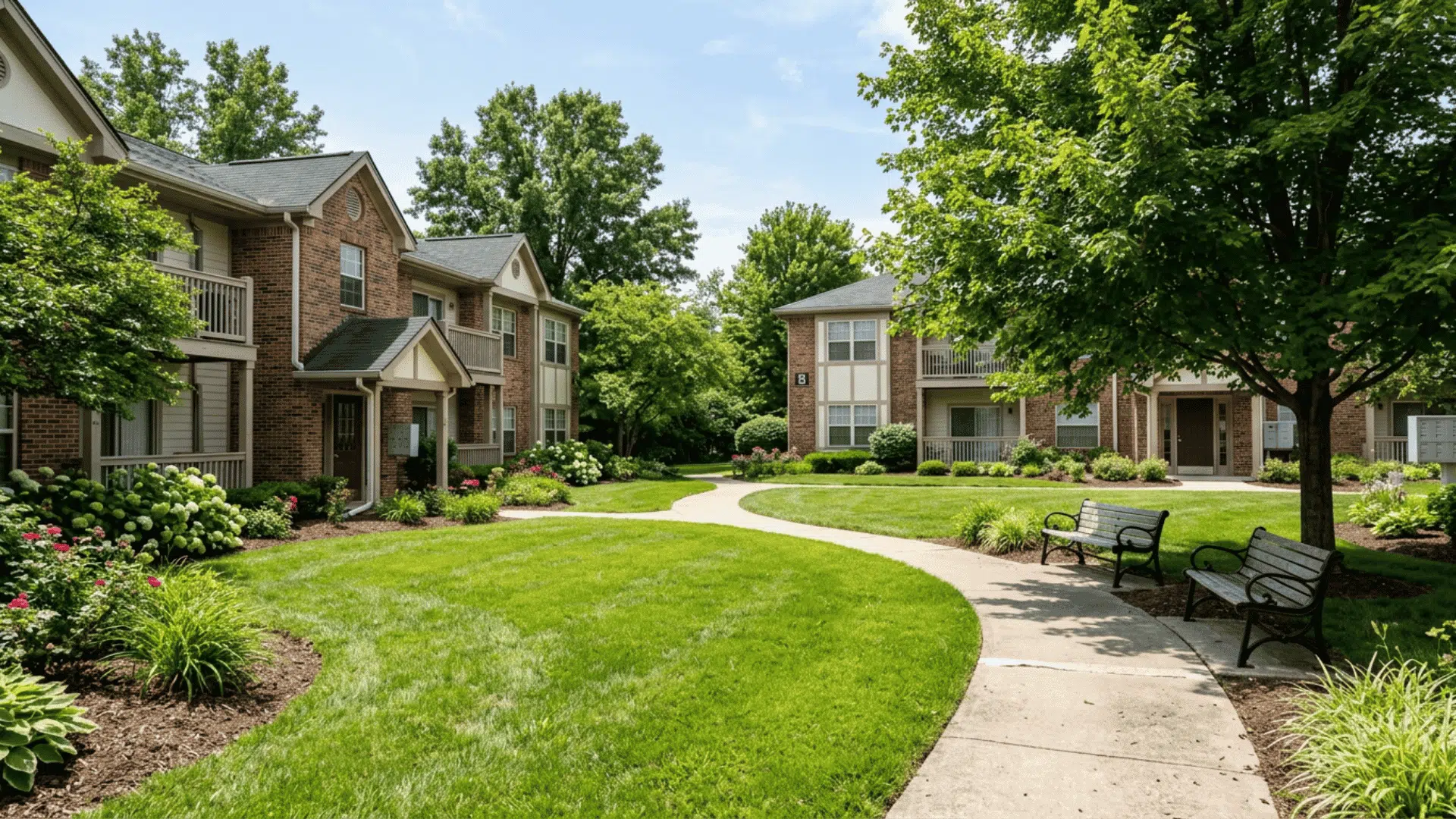
Buildings in a garden-style community are usually arranged around a central courtyard or several smaller green spaces. This layout keeps units close to nature without requiring residents to leave the property.
Courtyards often include:
- Benches or seating areas
- Walking paths connecting buildings
- Grass or landscaped sections
- Occasional grilling or picnic spots
The courtyard placement encourages residents to spend time outdoors and interact with neighbors, something taller apartment buildings rarely offer in the same way.
4. Parking and Entry Points
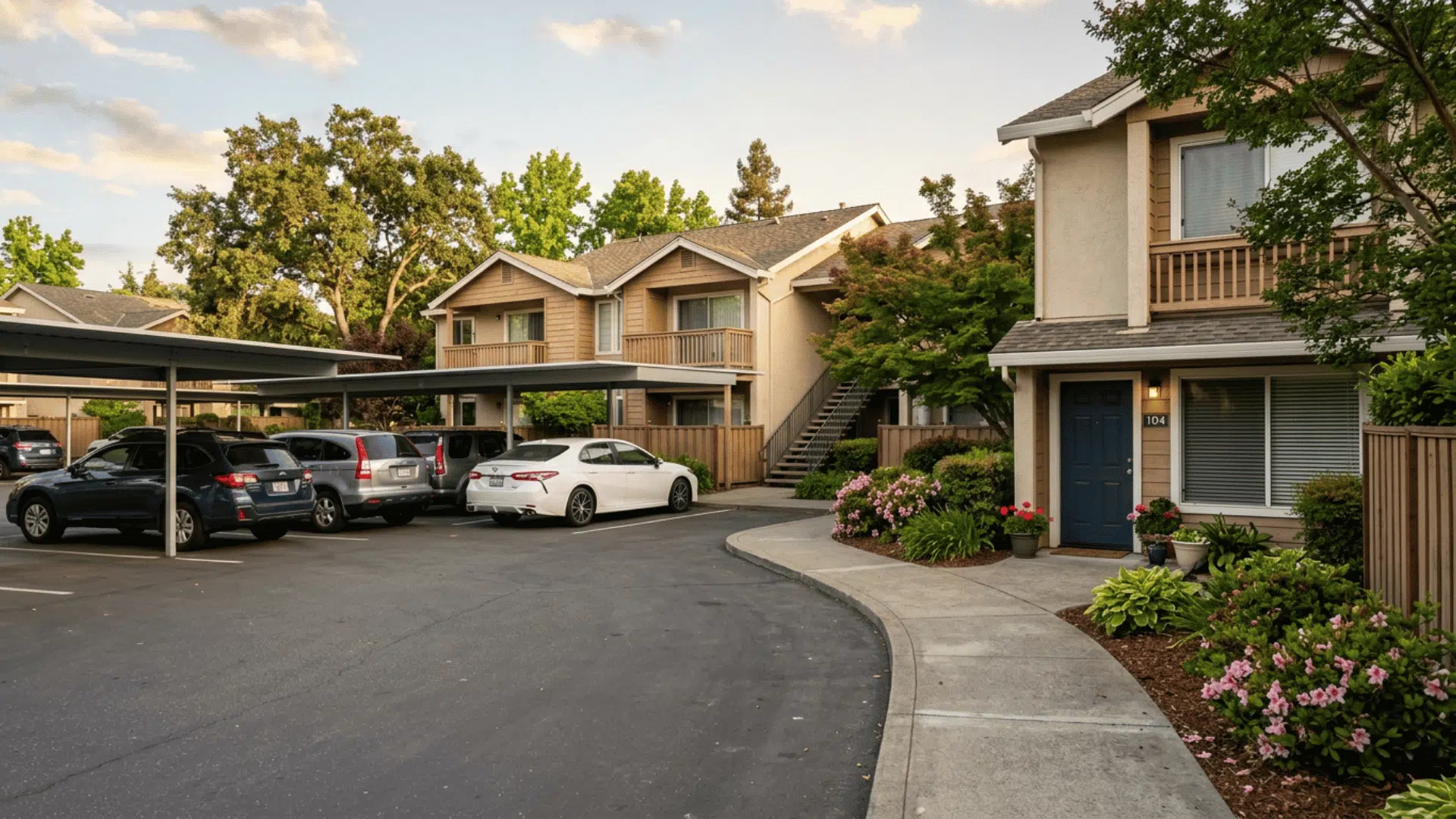
Where do residents park in garden-style apartments? Most communities offer parking lots or carports positioned near each building, so residents rarely walk far from their car to their front door.
Entry points typically open directly to the outside rather than into a shared indoor hallway.
Quick tip: When touring a property, check how far visitor parking sits from your building. This detail matters more than it seems once you’re unloading groceries.
5. Common Amenity Zones
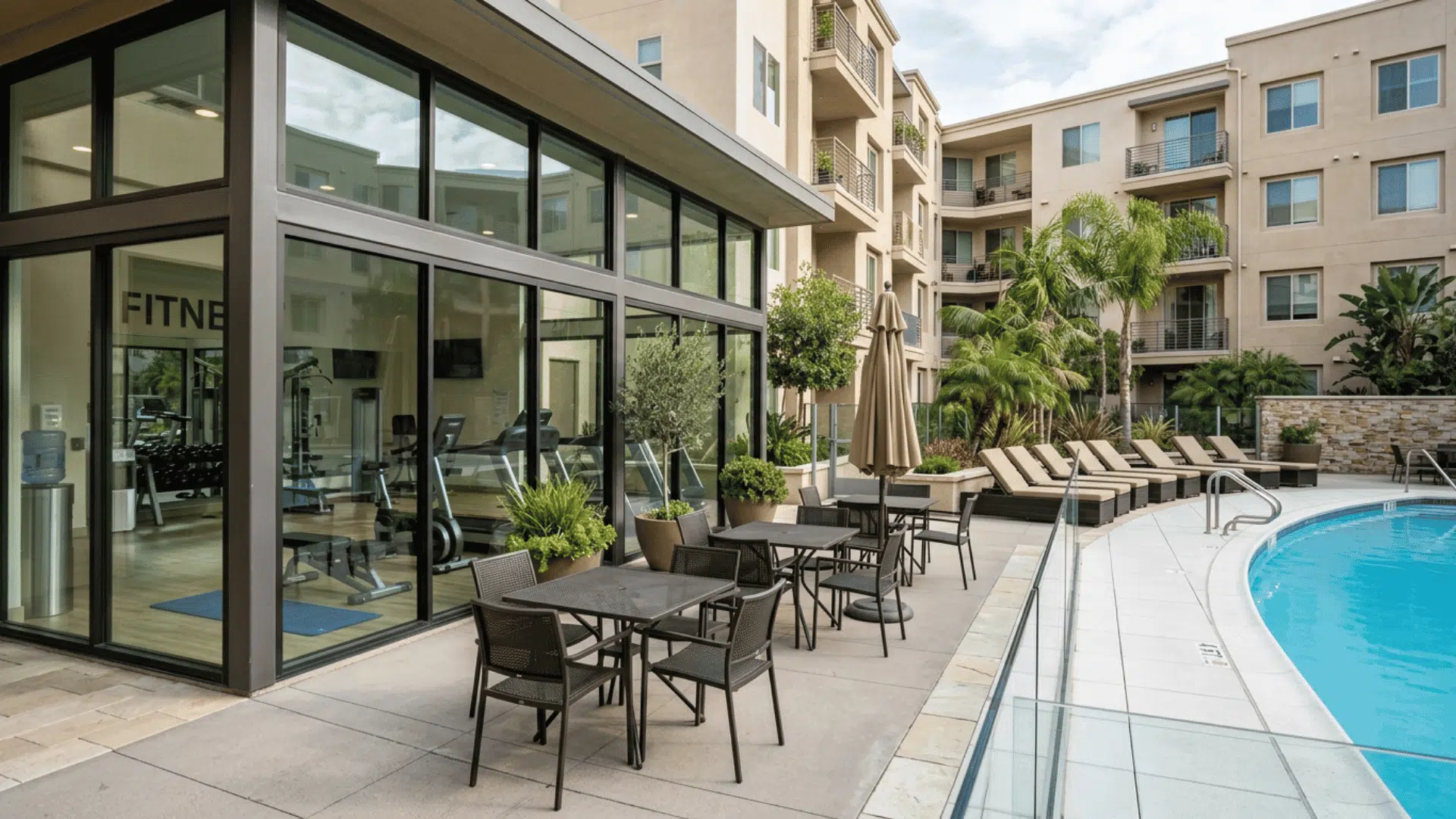
Amenities in garden-style apartments are usually grouped in one or two central areas rather than scattered throughout the property.
A pool, fitness room, and clubhouse often sit near the entrance or center of the complex.
I saw one property where the amenity zone doubled as a small gathering spot, with tables set up for residents to work outside or eat lunch between buildings.
Pros and Cons of Garden-Style Apartments
No rental style fits everyone, and garden-style apartments come with their own set of trade-offs. Here’s a quick side-by-side look before you decide.
| Pros | Cons |
| Quiet, low-rise setting with fewer shared walls | Fewer floors mean fewer units, so vacancies can be limited |
| Easy ground-level or short-walk access to units | Limited or no elevator access for upper units |
| Private patios or balconies in most units | Less secure entry compared to buildings with lobbies or staff |
| Pet-friendly layouts with nearby green space | Parking lots may be farther from your specific building |
| Shared courtyards encourage outdoor time | Fewer high-end amenities compared to luxury high-rises |
| Often more affordable than mid-rise or high-rise options | Older properties may have dated interiors or appliances |
| Suburban locations offer a calmer atmosphere | A farther commute if your job is based downtown |
Who Should Choose Garden Style Apartments?
This layout isn’t for everyone, but it fits certain lifestyles better than others. Here’s a quick look at who tends to benefit most.
- Pet Owners: Ground-level access and nearby green space make daily walks and bathroom breaks much easier.
- Older Adults: Single-story units mean no stairs to manage, which is a big plus for long-term comfort.
- Young Families: Courtyards and open outdoor space give kids room to play close to home.
- Remote Workers: Quieter surroundings and fewer shared walls make it easier to focus during the day.
- Budget-Conscious Renters: Garden-style apartments often cost less than high-rise units in the same area.
- People Who Dislike Elevators: Most units are reachable by stairs or ground-level entry, so you skip the wait.
- Suburban Lifestyle Seekers: Those who prefer a slower pace and greater access to the outdoors tend to feel at home here.
If you value space, quiet, and easy access over rooftop pools or downtown views, garden-style apartments are worth serious consideration.
How Much does it Cost to Afford a Garden Apartment?
Renting a garden apartment typically costs between $1,000 and $2,200 a month, depending on location, size, and amenities.
Buying one, if sold as a condo-style unit, often ranges from $150,000 to $350,000 based on the market. Monthly rent covers the base unit, but extra costs often apply.
Utilities, parking fees, and pet deposits can add another $100 to $300, depending on the property. Garden-style apartments in suburban areas tend to cost less than similar units near downtown or city centers.
Location remains the biggest factor affecting price, even within the same city. For those considering ownership, property taxes and HOA fees are common added expenses on top of the purchase price.
A general rule is to budget 30% of monthly income toward rent or mortgage payments to keep costs manageable over the long term.
What to Look for Before Renting a Garden-Style Apartment
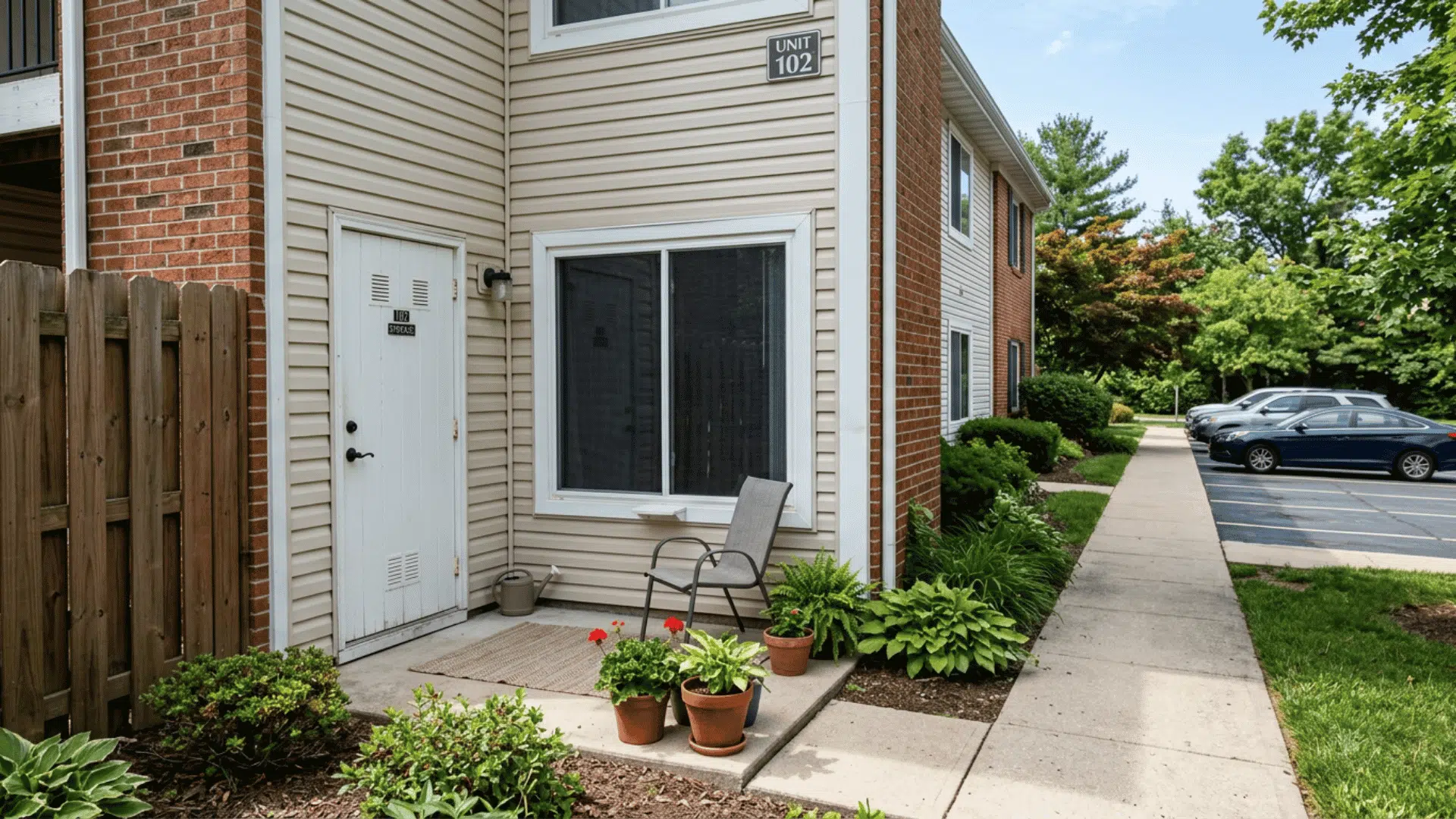
A little research before signing a lease can save you a lot of hassle later. Here are the details worth checking first.
Noise and Parking
Garden-style apartments often have fewer shared walls than high-rises, but sound can still travel between ground-floor and upper units.
Ask the leasing office about flooring materials, since thin flooring allows footsteps to carry over more easily. Parking is usually an open lot or carport, but the distance from your unit can vary widely.
I once had assigned parking almost a five-minute walk away, which mattered during grocery trips. Confirm both details before signing anything.
Pest Control and Storage
Ground-floor units in garden-style apartments are closer to grass and landscaping, which can mean more exposure to bugs, depending on the region.
Ask how often pest control is scheduled and if it’s included in rent. Storage can also be limited, especially in single-story units, so check closet size and cabinet space early.
Some properties offer small outdoor storage closets attached to patios for bikes or seasonal items.
Quick tip: Measure furniture beforehand, since smaller closets can make oversized pieces tricky to fit.
Lease Terms and Maintenance
Before signing, ask how maintenance requests are handled and how quickly the team typically responds. I saw one property where residents mentioned a two-day average response time for repairs, which felt reasonable compared to other stories I had heard.
Also confirm the lease length options, pet deposits, and if utilities are included, since these details vary widely even within the same garden-style apartment category.
A quick conversation with current residents can reveal more than any brochure or leasing pitch ever will.
How to Control Access to Garden Style Apartments
Since these communities often skip a shared lobby or front desk, access control works a bit differently. Here’s what property managers and residents can do to keep things secure.
- Gated Entry Points: Many garden-style apartments add gates at vehicle and pedestrian entrances, often controlled by a code or key fob.
- Individual Unit Locks: Since units open directly to the outside, deadbolts and secondary locks matter more here than in buildings with interior hallways.
- Security Cameras at Common Areas: Cameras placed near courtyards, parking lots, and mailboxes help monitor activity without needing full-time staff.
- Motion-Sensor Lighting: Well-lit walkways and parking areas around garden-style apartments discourage unwanted activity after dark.
- Key Fob or Code Access: Some properties use fobs or codes for pool areas, fitness rooms, and laundry facilities to limit access to residents only.
- Regular Landscaping Maintenance: Trimmed hedges and clear sightlines around buildings reduce hiding spots and improve overall visibility.
Combining a few of these measures gives garden-style apartments a reasonable level of security, even without a staffed entrance.
Garden Style Apartments vs Other Apartment Types
Comparing rental styles side by side makes it easier to see where garden-style apartments stand out. Use this table to match features with what matters most to you.
| Feature | Garden Style Apartments | Mid-Rise Apartments | High-Rise Apartments |
| Building Height | 2 to 3 stories | 4 to 6 stories | 7+ stories |
| Elevator Access | Rarely needed | Usually available | Always available |
| Outdoor Space | Courtyards and shared green areas | Limited common areas | Rooftop decks or none |
| Parking | Open lots or carports | Attached garages | Structured parking garages |
| Noise Levels | Generally quieter | Moderate | Higher due to density |
| Typical Location | Suburban areas | Suburban or urban edges | Downtown or city centers |
| Average Rent | Lower to moderate | Moderate | Higher |
| Pet-Friendliness | High, with ground-level access | Moderate | Lower, more restrictions |
| Security Features | Basic, often no shared lobby | Controlled entry common | Staffed lobbies and cameras |
Final Thoughts
Garden-style apartments offer something many renters overlook: space to actually live, not just sleep and leave.
Between the quieter setting, easy ground-level access, and shared outdoor areas, this layout fits a wide range of lifestyles, from young families to remote workers to anyone tired of elevators and thin walls.
Before you sign a lease, walk the property at different times of day, ask about parking and maintenance response times, and imagine your daily routine there.
The right fit depends on your priorities, not just the price tag.
Have you lived in a garden-style apartment, or are you touring one right now? Share your experience in the comments below.
Frequently Asked Questions
Do Garden Style Apartments Have Better Natural Light?
Yes, often they do, but it depends on the layout and landscaping, as some garden-style units can get less natural light.
How Old are Most Garden-Style Apartment Buildings?
Most garden-style apartment buildings are relatively low-rise, typically 1 to 4 stories, and the style dates back to the late 19th century, with U.S. examples dating to 1917.
Can Garden Style Apartments Have Shared Walls?
Yes, they can have shared walls, especially in multi-unit low-rise buildings, though many also have exterior entrances and fewer shared interior hallways than larger apartment types.

Licensed broker Logan Patel holds an MBA in Urban Economics from UCLA and has steered buyers and investors through market swings for a decade. He joined us in 2024 to demystify listings, financing, and neighborhood data with clear, chart-backed advice. When he isn’t scanning comps, Logan coaches youth basketball and scouts mid-century districts for hidden architectural gems on weekend walks.