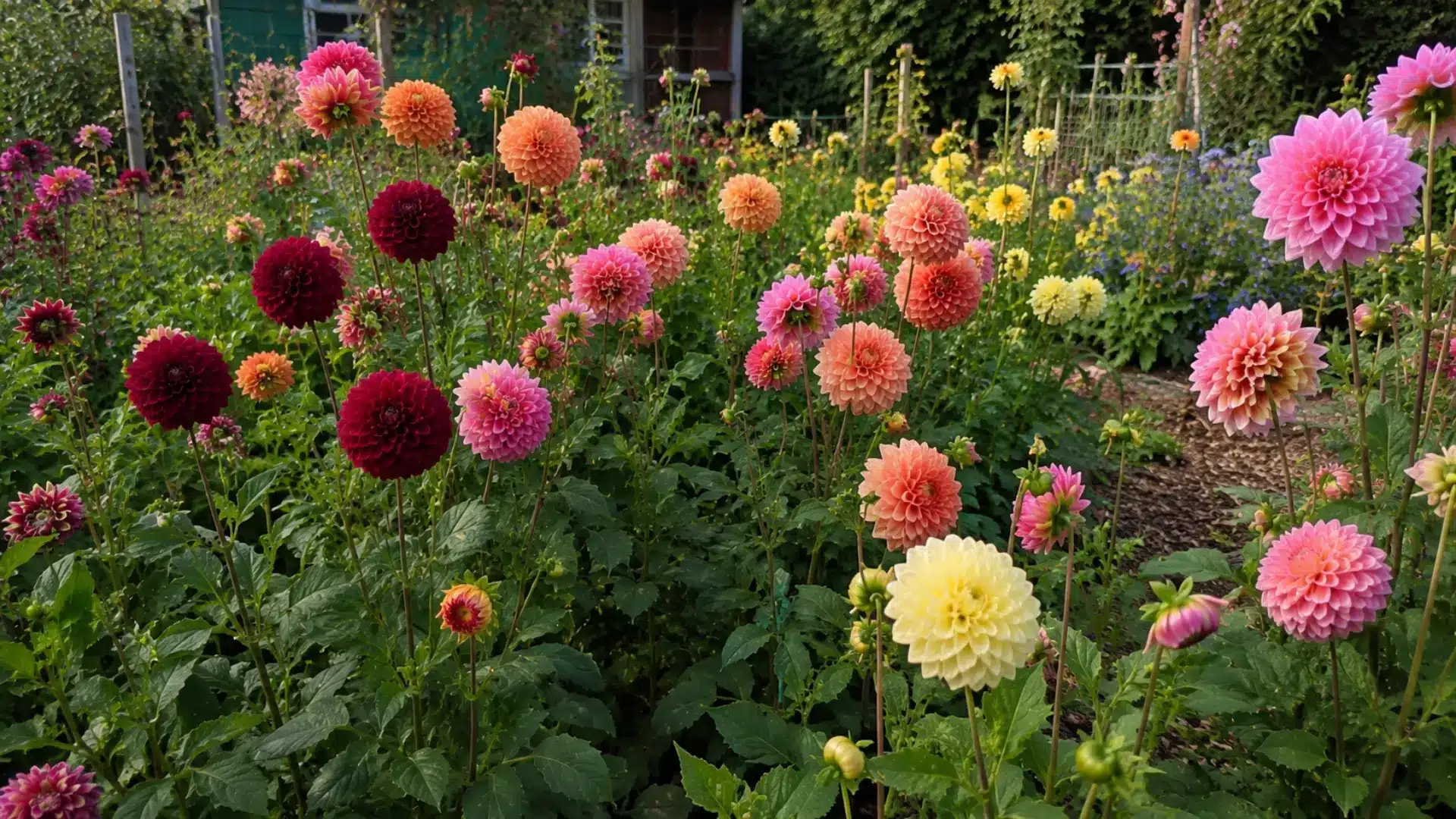

Dahlias have a way of making a garden feel genuinely alive.
They come in such a wide range of colors and shapes that it’s nearly impossible to pick a favorite, which is honestly a big part of why gardeners love them so much.
Once they start flowering in midsummer, they just keep going all the way through fall until the first frost arrives.
Dahlias typically bloom from late summer into autumn, though your planting date, local climate, and how you care for them all play a role in the timing.
When Do Dahlias Bloom?
Dahlias are worth the wait, and most gardeners will tell you that. Once planted, they take 8 to 10 weeks to push out their first blooms, which puts most gardens right in that sweet spot of mid to late summer.
From there, they just keep flowering into fall, often outlasting everything else in the garden. Warmer climates tend to see an earlier start, while cooler zones get a slightly shorter window.
How well they bloom also comes down to a handful of factors:
- Temperature: Too cold early on stalls growth significantly
- Sunlight: Fewer than 6 hours a day, and blooms thin out
- Soil Quality: Nutrient-poor soil delays flowering and weakens stems
- Watering Habits: Inconsistent moisture causes buds to drop before they open
When to Plant Dahlias: Timing by Climate Zone
The single most important rule for when to plant dahlias: wait until your last frost has passed and your soil temperature has reached 60°F (15°C).
Here is when to plant dahlia tubers based on your USDA hardiness zone:
| Zone | Region Example | Planting Window |
|---|---|---|
| 3 to 4 | Minnesota, Montana | May to June |
| 5 to 7 | Ohio, Virginia | April to May |
| 8 to 10 | Texas, California | March to April |
If your season is short, you do not have to wait for the outdoor window. Start tubers indoors 4 to 6 weeks before your last frost date in trays of barely damp compost.
They will develop early shoots and hit the ground running the moment conditions outside are right.
Dahlia Different Growth Stages
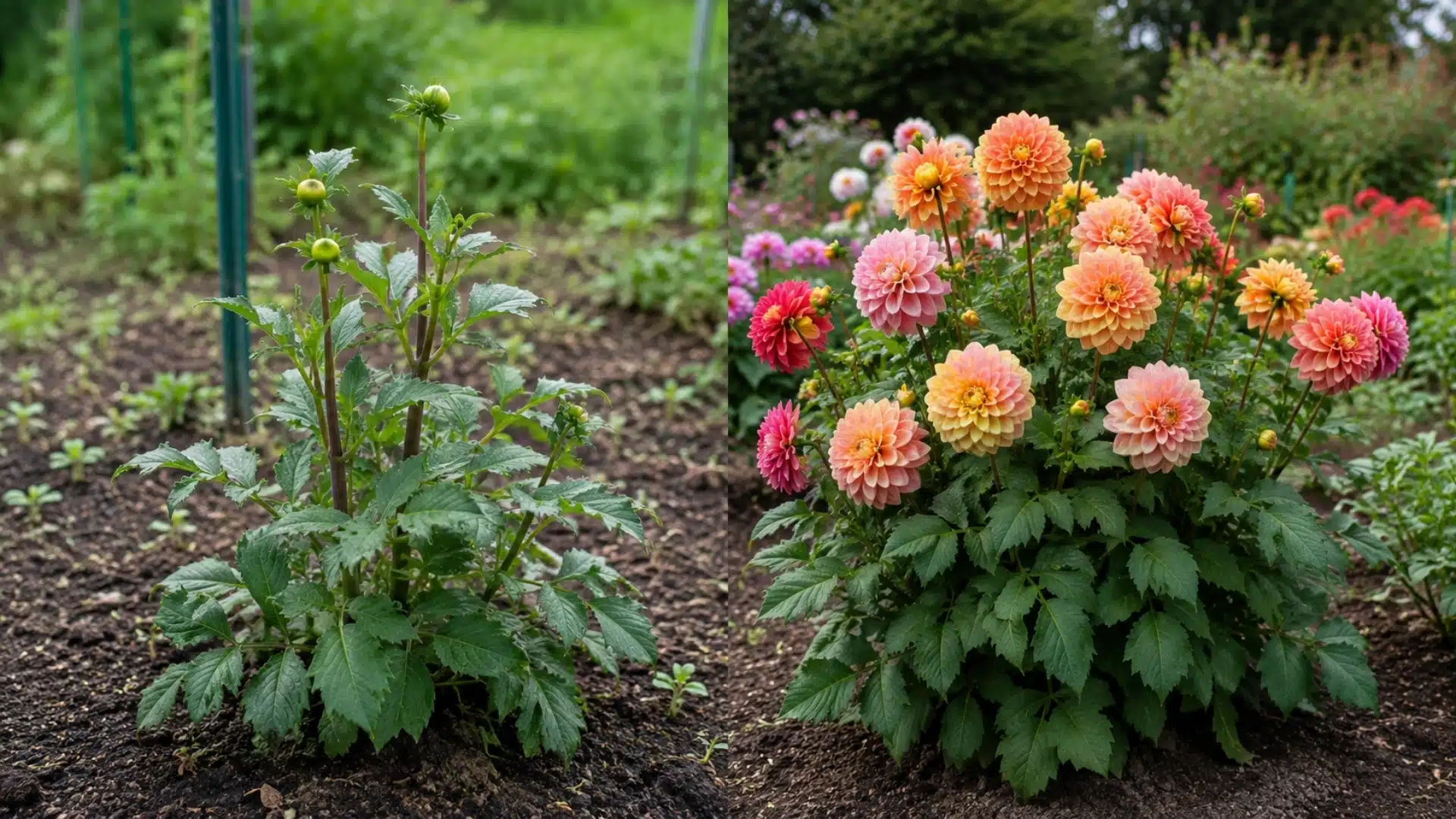
Understanding what your dahlia is doing underground and above it makes the whole growing process feel a lot less like waiting and a lot more like watching something unfold.
Stage 1: Sprouting
Nothing appears to be happening above ground, but the tuber is quietly absorbing warmth and moisture from the soil. The first sign of life is a small pink or purple shoot pushing toward the surface.
This is the stage most growers get wrong. Watering too early is a common mistake. The tuber does not need help yet; it needs warmth and patience.
Stage 2: Early Shoot Development
Once the shoot breaks the surface, leaf development begins quickly. The plant is establishing its energy-gathering system while its root structure continues expanding underground.
Growth can feel rapid and a little surprising after the stillness of sprouting. This is the right moment to begin light, consistent watering, enough to support the plant without saturating the soil around the developing tuber.
Stage 3: Vegetative Growth
The plant puts most of its energy into stem and foliage growth during this stage. It can feel like nothing significant is happening, but this is the foundation on which everything else builds.
The stronger the structure now, the better the blooms later. Pinching the central stem at this stage encourages bushier growth and creates more bloom sites, which pays off considerably come summer.
Stage 4: Bud Formation
Small buds begin appearing at the stem tips as the plant shifts its energy toward reproduction. This transition is one of the more satisfying moments in the growing season, as the promise of flowers becomes real.
Feeding with a low-nitrogen, high-potassium fertilizer at this point supports stronger bloom development. Avoid high-nitrogen feeds now, as they promote leafy growth at the expense of flowers.
Stage 5: Full Bloom
The first flowers open, and the plant enters its most productive phase. This is what all the earlier stages were building toward.
Regular deadheading keeps new buds forming and prevents the plant from putting energy into seed production. With consistent watering, feeding, and spent bloom removal, this stage stretches all the way through fall to the first frost.
Stage 6: End-of-Season Dieback
As temperatures drop and frost approaches, the foliage blackens and the plant signals the end of its cycle. This is not a failure; it is the natural close of the season.
Now is the time to lift the tubers, cure them for a few days in a dry spot, and store them somewhere cool and dark through winter, ready to begin the whole process again.
How Long Do Dahlias Bloom?
Dahlias have one of the longest flowering windows of any garden plant, and that is a big part of why gardeners keep coming back to them.
Once the first bloom opens, a healthy dahlia will continue flowering for 12 to 16 weeks, carrying the garden all the way through summer and deep into fall.
The key to keeping that window open is deadheading. Removing spent blooms signals the plant to keep producing rather than put energy into seed development.
Skip it for a week, and you will notice the difference in flower count almost immediately.
Strategies to Encourage Dahlias to Bloom Faster and Fuller
Dahlias are naturally heavy bloomers, but they perform much better with a few simple care steps. Small changes early in the season can lead to fuller plants, stronger stems, and far more flowers from midsummer until frost.
1. Pinch the Growing Tip Early
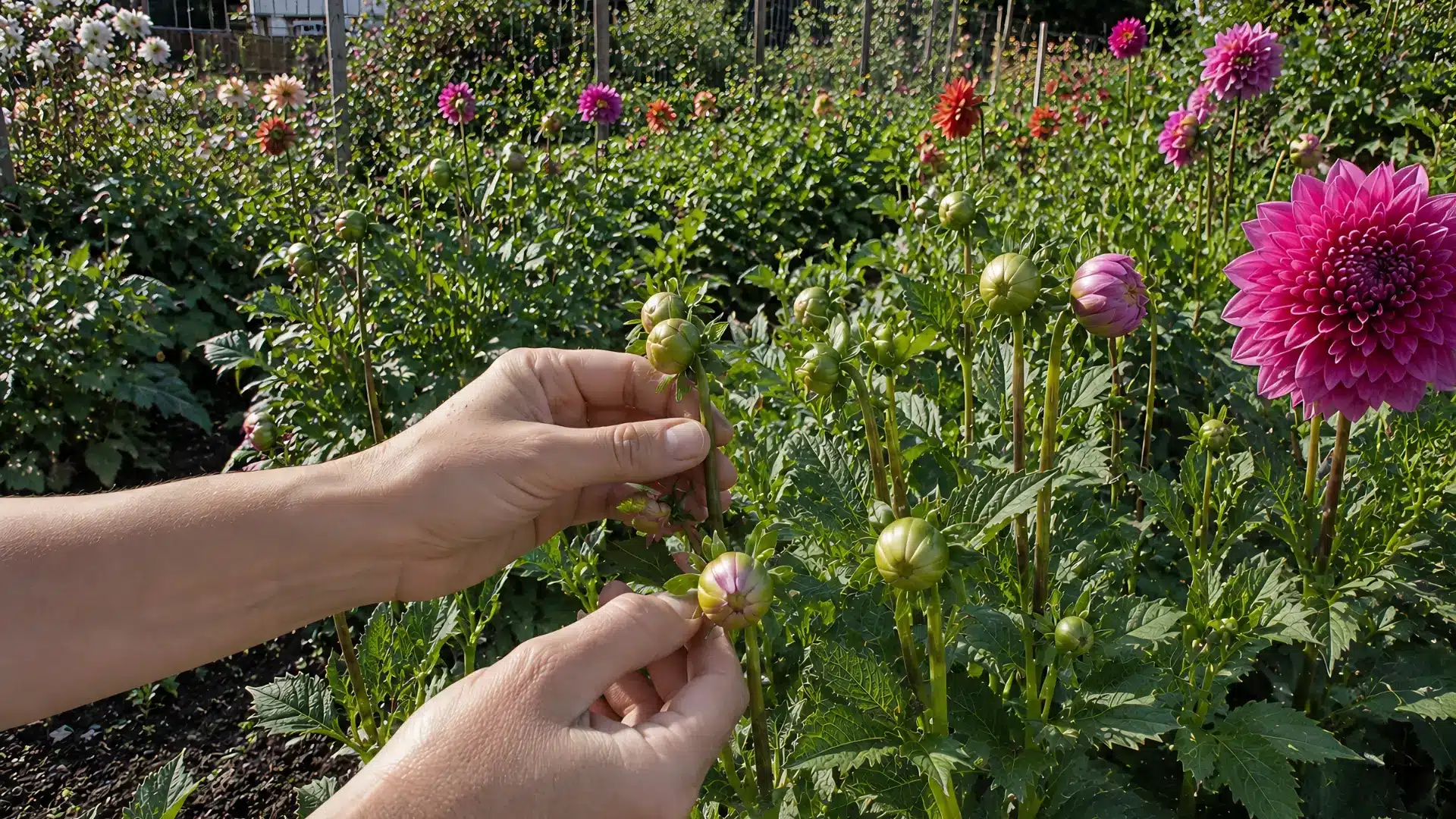
Pinching removes the central growing tip just above a pair of leaves. This encourages the plant to branch out rather than grow as a single tall stem.
Instead of producing a single main stem, the plant develops several strong side stems that carry more blooms throughout the season.
When to do it: When the main stem reaches about 12 inches tall.
2. Use a Low-Nitrogen Fertilizer
Too much nitrogen encourages leafy growth instead of flowers. Dahlias bloom more heavily when fed with fertilizers higher in phosphorus and potassium.
Tomato fertilizer or bloom-focused fertilizer works especially well because it pushes the plant’s energy toward bud production rather than excessive foliage.
When to do it: Every 2 to 3 weeks after the plant is established.
3. Deadhead Flowers Regularly
Removing faded flowers keeps dahlias blooming continuously. Once a flower starts producing seeds, the plant slows down new flower production.
Cutting spent blooms back to a healthy side bud encourages the plant to keep forming fresh flowers for the rest of the season.
When to do it: From the first bloom until frost.
4. Stake Plants Before They Need Support
Dahlia stems can become top-heavy once flowers open, especially after rain or strong winds. Adding support early keeps stems upright and protects developing buds from damage.
Early staking also prevents root disturbance, which often occurs when supports are added too late.
When to do it: At planting time or when shoots first emerge.
5. Combine Pinching and Early Staking
Many experienced growers see the best results when pinching and staking are done together early in the growing season.
This combination creates bushier plants with stronger stems, improved airflow, and many more blooms over time.
When to do it: At the beginning of the season.
Popular Types of Dahlias and Their Blooming Habits
Not all dahlias behave the same way, and that is actually what makes them so interesting to grow.
Some varieties push out blooms early and keep going steadily, while others save their best display for late summer.
| Dahlia Type | Bloom Size | Bloom Time | Best Known For |
|---|---|---|---|
| Dinner Plate | Very large | Mid to late summer | Showstopping garden focal points |
| Ball | Medium | Midsummer onward | Perfectly round, long-lasting blooms |
| Cactus | Medium to large | Late summer | Spiky, dramatic petal formation |
| Pompon | Small | Midsummer onward | Compact, prolific flowering |
| Decorative | Large | Late summer into fall | Full, dense blooms in a wide color range |
Mixing two or three of these types is one of the simplest ways to keep color flowing through the garden well into fall.
What the Dahlia Growing Community Says
Real growers are honestly the best resource for dahlias. Over on r/dahlias, gardeners regularly share timing wins, troubleshooting tips, and tuber recommendations that no gardening guide quite captures.
A few things that come up again and again:
- Pinching early makes a noticeable difference in bloom count.
- Patience with watering before sprouting is the hardest but most important habit to build.
- Most first-time growers admit they planted too early and lost tubers to cold soil.
The collective experience in that community is genuinely hard to replicate elsewhere.
The American Dahlia Society at Dahlia.org and The Royal Horticultural Society at Rhs.org.Uk carry variety-specific data, regional planting calendars, and community-vetted advice built up over decades.
Both are worth bookmarking before your next growing season.
Growing Dahlias in Pots vs. Garden Beds
Both work, and the right choice really comes down to your space and how much control you want over growing conditions.
| Factor | Garden Beds | Pots and Containers |
|---|---|---|
| Root development | Deeper root systems, stronger stems, more prolific flowering | Restricted by container size, needs larger pots to perform well |
| Watering | Once established, the ground retains moisture evenly | Dries out faster, needs more consistent attention |
| Feeding | Natural soil ecosystem supports nutrients over time | Nutrients deplete faster, and feeding frequency increases |
| Flexibility | Fixed in place, harder to adjust conditions | Move into better light, bring indoors before frost |
| Drainage | Naturally managed by soil composition | Non-negotiable, waterlogged pots rot tubers quickly |
| Maintenance | Largely self-sufficient once settled in | More hands-on throughout the season |
How Does Climate Affect Dahlia Bloom Time?
Climate shapes the dahlia calendar more than most growers expect. In warmer regions, tubers wake up faster, root systems establish earlier, and the first blooms can appear weeks earlier than in cooler zones.
Where spring lingers cold and damp, the same variety planted on the same date will simply take longer to move.
Here is a rough guide by climate type:
- Warm and Dry: earliest blooms, longest overall season; tubers may need lifting earlier due to heat stress.
- Warm and Humid: strong growth, but watch for fungal issues that can interrupt bloom cycles.
- Cool and Temperate: steady mid- to late-summer blooming, reliable fall display.
- Short-Season Climates: starting tubers indoors becomes less optional and more essential.
Working with your climate rather than against it is what separates a good dahlia season from a frustrating one.
Why Dahlias May Not Bloom?
If your dahlias are producing plenty of foliage but no flowers, or never surface at all, the cause is almost always one of five things.
Here is how to identify which one and what to do about it.
| Problem | Signs | Quick Fix |
|---|---|---|
| Too much nitrogen | Lots of leaves, no buds | Use low-nitrogen fertilizer |
| Insufficient sun | Weak stems, few blooms | Give 6–8 hours of direct sun |
| Overwatering early | No sprouts, soft tubers | Wait to water until shoots appear |
| Planted too deep | No growth after weeks | Replant at the correct depth |
| Pest damage | Buds won’t open | Treat pests with neem oil or traps |
Dahlias are not slow; they are just deliberate, and the wait is always worth it.
Frequently Asked Questions (FAQs)
What is the Scientific Name of Dahlia?
The scientific name of the dahlia is Dahlia pinnata, sometimes also listed as Dahlia variabilis. It belongs to the Asteraceae family, the same family as sunflowers and daisies.
How Long Does It Take for Dahlias to Bloom from Tubers?
Dahlias generally take 90 to 120 days from planting to bloom, depending on climate, soil temperature, and variety. Smaller pompon and ball types bloom earlier than dinnerplate varieties.
Do Dahlias Have Medicinal Benefits?
Dahlia tubers contain inulin, a prebiotic fiber that supports gut health and helps moderate blood sugar levels. Dahlia petals also contain flavonoids and polyphenols with antioxidant properties.
Are Dahlias Used in Perfumes?
Dahlia is used in perfumes via dahlia absolute, a solvent extract, or synthetic accords that mimic its green, earthy, and floral scent. Notable perfumes with dahlia include Dahlia Noir and Dahlia Divin by Givenchy, and Black Dahlia by Illamasqua.
Do Dahlias Bloom More Than Once?
Dahlias bloom continuously if spent flowers are regularly removed. Deadheading every two to three days keeps the plant in active bloom from midsummer until the first frost, resulting in a single extended bloom rather than several flushes.
Final Thoughts
Dahlias reward patience, and once you understand their rhythm, growing them feels less like guesswork and more like a conversation with the garden.
Getting the planting timing right, choosing the correct variety, and giving tubers the conditions they actually need make all the difference in how the season unfolds.
If this is your first time growing dahlias, start simple, pick one or two varieties, and let the process teach you.
Either way, bookmark this page for whenever the next question comes up, because with dahlias, there is always something new to learn.

Jordan Mathews, who has a degree in horticulture from Texas A&M University, has been a guiding force in plant health and sustainable gardening for over 16 years. His career began with a role at a renowned botanical garden, where he deepened his understanding of plant physiology and eco-friendly cultivation methods. Jordan joined our website as a freelancer in 2020, becoming a go-to expert for readers seeking advice on nurturing diverse plant species apart from offering insights grounded in scientific knowledge and practical experience. Beyond his professional achievements, Jordan is a keen nature photographer, capturing the beauty of flora in its immensely diversified forms.