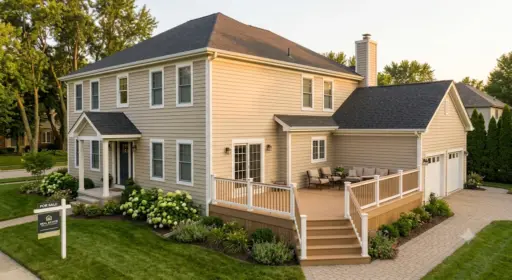

A deck that fights with the house it’s attached to is one of the fastest ways to make an otherwise well-maintained exterior look unplanned. The fix isn’t complicated, but it does take more thought than “match the trim.” Below is a practical guide to house and deck color combinations by siding color, plus the factors — sun exposure, material, railing, landscaping — that decide whether a pairing actually reads as intentional once it’s built.
What Makes a House and Deck Color Combination Work?
A handful of factors decide whether an exterior house and deck color combination reads as designed or accidental, before a single board color is even picked:
- Material fade rate. Natural wood decking changes color as it weathers and grays over a few seasons; composite decking holds its original color for the life of the product. A combination planned around freshly stained wood can drift out of sync with the house within a couple of years.
- Sun exposure. Darker decking absorbs more heat and gets noticeably hotter underfoot in full sun. A deck that faces south or west most of the day is a stronger candidate for a lighter tan or gray than a dramatic dark brown or black.
- Landscaping. Rich brown decking tends to sit well against a lush green lawn, while a yard with a lot of colorful planting usually looks calmer against a neutral gray deck rather than another warm tone competing with the flowers.
- The primary-secondary-tertiary rule. The most cohesive exteriors usually have one dominant siding color, a secondary color in trim or roofline, and a tertiary accent color in the door, shutters, or railing. The deck color should relate to at least one of these three, not introduce a fourth unrelated hue.
- Contrast vs. continuity. A deck can either closely match the siding for a seamless, monochromatic look, or contrast it deliberately for definition. Both work — the mistake is landing in between, with a deck color that’s almost-but-not-quite either.
Deck Colors for a Tan House
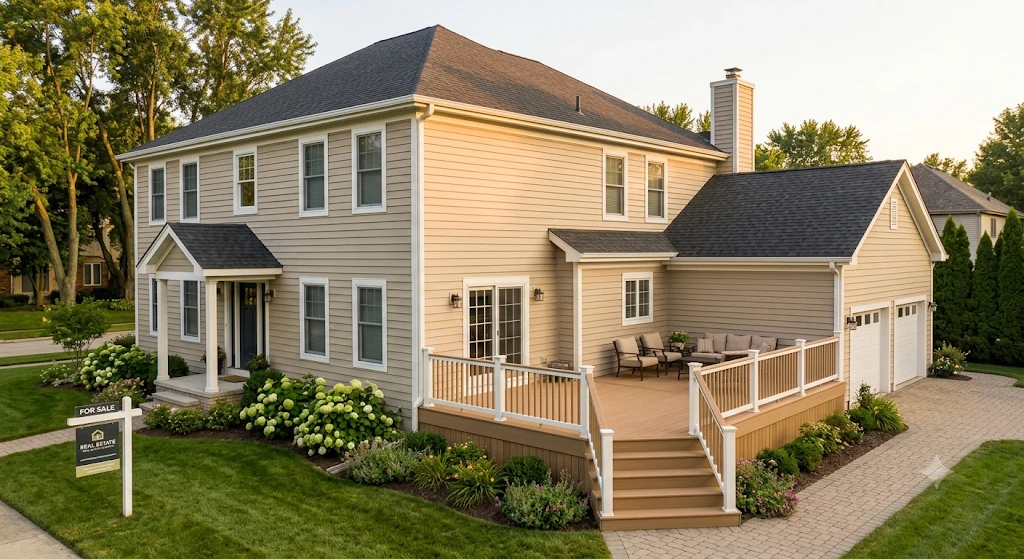
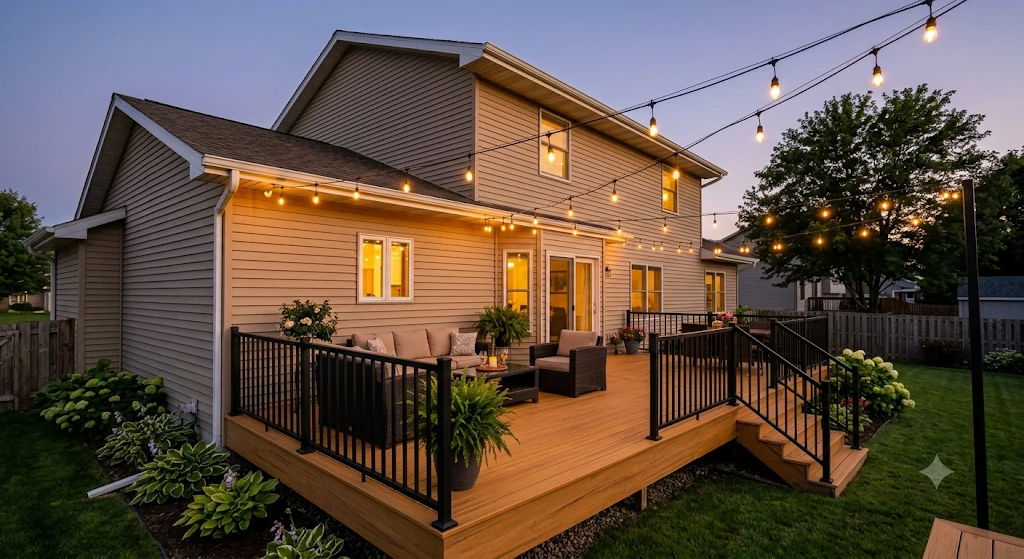
Tan siding ranges from sandy beige to a warmer golden tone, and it pairs comfortably with both directions — matching or contrasting.
Cool contrast: A gray composite deck against tan siding creates clean definition without clashing, since gray sits on the cool end of the wheel opposite tan’s warmth. Tie the two together with a shared white trim color used on both the home’s fascia and the deck’s skirting.
Warm continuity: Choosing a tan or honey-toned deck close to the siding color creates a seamless, monochromatic transition from house to outdoor space. Break up the single-tone look with a black metal railing for contrast at the perimeter, so the combination doesn’t read as flat.
Deck Colors for a White House
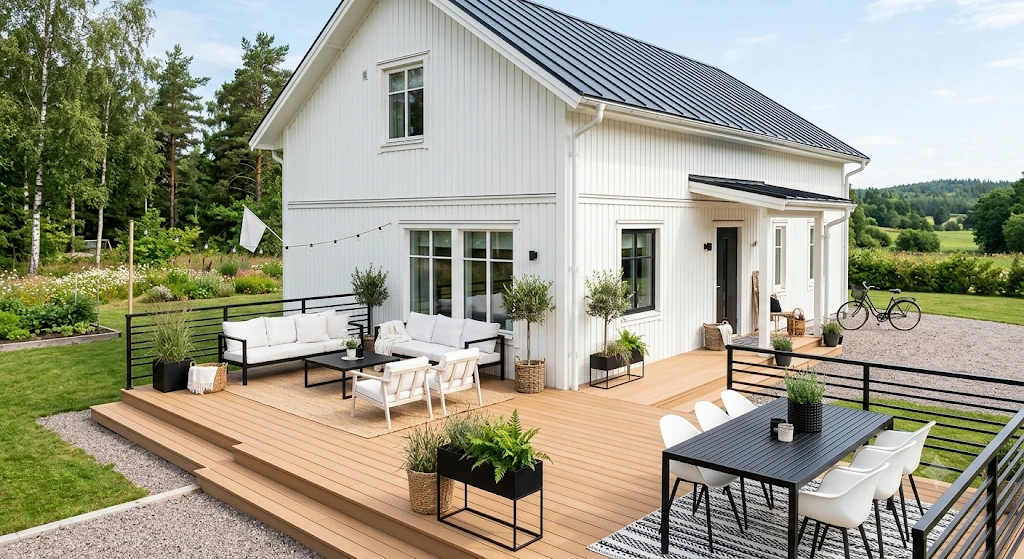
White siding is close to a blank canvas, which is exactly why it’s easy to get wrong — with no dominant color to react to, the deck color has to do more of the design work on its own.
Bold and graphic: A white house supports a deck built from two or three board colors in a pattern like herringbone or a simple two-tone border, something that would look busy against a more colorful house but reads as intentional against a neutral white one.
Warm Scandinavian feel: Sunny tan decking with white trim and black-and-white outdoor furniture echoes the house’s neutral palette while still bringing warmth to the space. This combination tends to photograph especially well, since the contrast between white siding and warm wood-look decking is clean without being stark.
Traditional Deck Colors for a Grey House
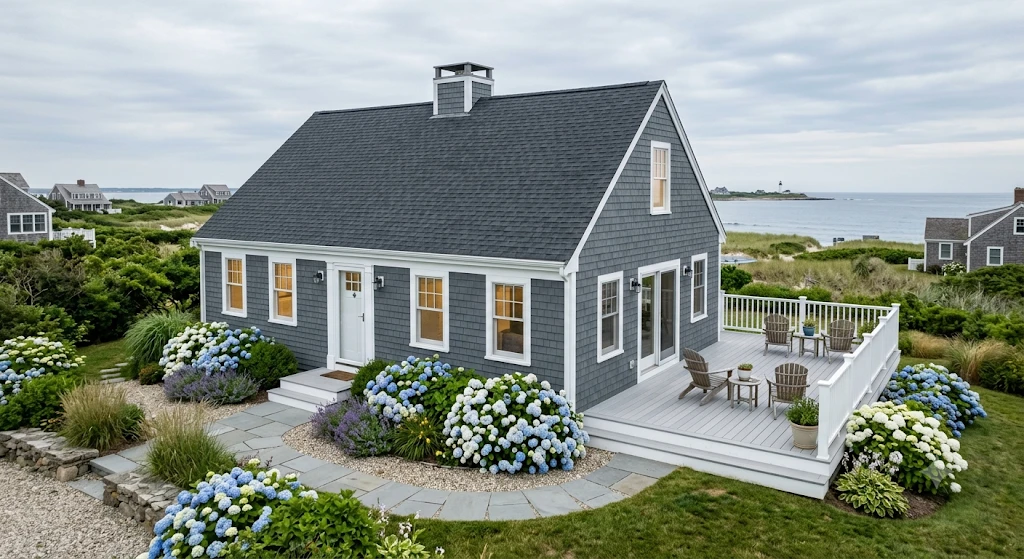
Grey house and deck color combinations split into two directions depending on the age and style of the home, and traditional pairings lean toward the subtler option.
The traditional route keeps the deck within the same cool color family as the siding — a gray composite deck one or two shades lighter or darker than the house — which is the classic pairing on Cape Cod and coastal-style homes. It keeps the whole exterior feeling light and cohesive rather than segmented into separate zones.
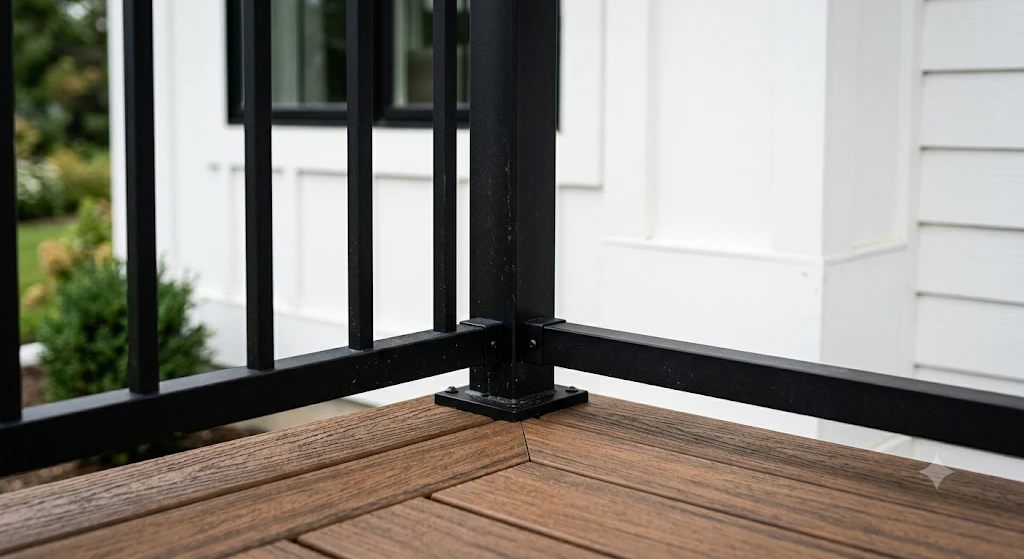
The contemporary route goes the opposite way: warm brown decking with a black railing against cool gray siding and white trim, which reads as more architectural and works especially well on modern or transitional-style homes that already lean toward bold contrast elsewhere on the exterior.
Deck Colors for a Blue House
Blue siding is one of the more dramatic choices to build a deck around, and it tends to reward committing to a direction rather than splitting the difference.
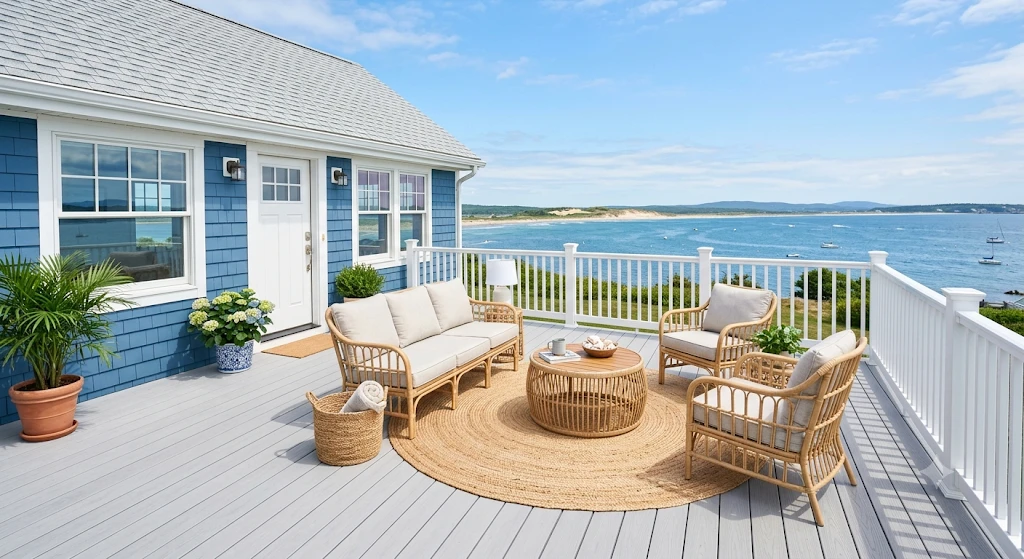
High contrast: Richly-hued brown or near-black decking against blue siding creates a dramatic, high-end look, especially when paired with white trim on the fascia and skirting and a white railing with black balusters for a defined perimeter.
Coastal and neutral: Light gray decking with a white composite railing plays into blue’s natural association with coastal design, keeping the palette cool and calm. Warm up the space with natural-fiber furniture and jute or rope accents rather than another paint color.
Deck Railing and Trim: The Detail That Ties It Together
Railing color gets decided last in most projects and it shouldn’t, since it’s often the single most visible line in the whole combination. A railing that matches the deck boards disappears into the floor and reads as one continuous surface. A railing that matches the house trim instead creates a visual frame around the deck, tying it back to the architecture above rather than just the decking below it. Black railing in particular reads as a modern accent against almost any siding color, which is why it shows up across tan, white, gray, and blue pairings alike.
Matching Deck Color to Sun Exposure and Material
The color decision isn’t purely aesthetic — it affects how the deck actually performs day to day:
- South- and west-facing decks get the most direct sun exposure and heat buildup, so lighter tan and gray tones stay noticeably cooler underfoot than dark brown or black boards in the same location.
- Composite and PVC decking holds its manufactured color for the life of the product, which means the house-and-deck pairing planned at installation stays accurate for decades rather than shifting as the material weathers.
- Natural wood decking grays and fades over a few seasons unless it’s re-stained regularly, so a combination built around a fresh reddish-brown stain needs a maintenance plan if that exact pairing matters long-term.
Preview Your House and Deck Color Combination Before You Commit
A deck stain sample or a composite board swatch rarely gives an accurate sense of how a color will actually look against the full scale of a house facade, in real light, next to the existing landscaping. LandscapeAI, a free landscape design tool, lets homeowners upload a photo of their actual home exterior and generate design concepts built around it, which makes it easier to compare a few deck and trim combinations side by side before ordering material.
FAQ
Should the deck match the house color or contrast with it?
Both approaches work — matching creates a seamless, continuous look, while contrasting creates definition and visual interest. The combination to avoid is a deck color close enough to almost match but different enough to look like a mistake.
What’s the most versatile deck color for changing house colors later?
Gray tends to be the safest long-term choice, since it pairs reasonably well with tan, white, blue, and most other siding colors, which matters if a repaint is likely at some point before the deck is replaced.
Does deck color affect how hot the boards get in the sun?
Yes. Darker decking absorbs more heat and can get noticeably hotter underfoot than lighter tan or gray boards in the same sun exposure, which is worth factoring in for a deck that gets full afternoon sun.
How many colors should a house and deck combination actually include?
Three tends to be the practical limit: a dominant siding color, a secondary trim or roofline color, and one accent color carried through the railing or furniture. Adding a fourth unrelated color is where most combinations start to look cluttered.
Bottom Line
The house doesn’t have to match the deck exactly, it just has to relate to it — through a shared trim color, a deliberate contrast, or a railing that ties the two together. Pick a direction based on the siding color and how much sun the deck actually gets, and the combination will hold up a lot longer than one chosen off a single stain sample.

Holding a Master’s in Architecture from the University of Texas at Austin, Emily Rodriguez has dedicated more than two decades to the art and science of building renovation. Starting her journey in historic preservation, she developed a profound respect for blending old with new in building design. Emily became a vital part of our team in 2019, renowned for her insightful and innovative renovation tips. She has been leading our DIY home improvement series since ever since, where she shares her wealth of knowledge in turning outdated spaces into modern havens. When not engaged in writing or consulting, Emily is a passionate advocate for heritage conservation and enjoys exploring vintage architecture, a hobby that complements her professional expertise.