
Quick Answer
Yard waste removal in Edmonton comes down to three choices: the city’s seasonal Monday collection, a free drop-off at an Eco Station, or hiring a hauler when the pile is too big. Leaves and clippings go in see-through plastic or paper bags. Branches must be bundled with twine. Stumps and thick logs are Eco Station only. Match the method to the volume, and summer cleanup stays painless.
Introduction
The lawn gets mowed on Saturday morning, the hedge gets a trim, and by Sunday afternoon, there are six bulging bags leaning against the garage. Curbside collection isn’t running, the green cart is already stuffed, and nobody wants to spend a July evening hauling bags across town.
Summer is the season when Edmonton yards produce the most, and the city collects the least. Between the June cutoff and the fall pickup dates, homeowners are largely on their own. That gap is why plenty of people end up looking at options like yard waste removal Edmonton once the pile outgrows the bin.
Most of it sorts itself out with a bit of planning. Knowing what goes where and when saves you the pile-up entirely.
Edmonton’s Green Waste Collection Schedule, Explained
The city’s system is built around two short windows: a spring stretch and a fall stretch. Summer sits between them, which catches a lot of homeowners off guard.
Curbside Pickup Dates and How the Rotation Works
Curbside yard waste pickup runs on Mondays only, twice in spring and twice in fall. Your neighbourhood’s dates are set the previous autumn and posted on the WasteWise app. The city services roughly a quarter of Edmonton each Monday, so it takes four weeks to cycle through every district.
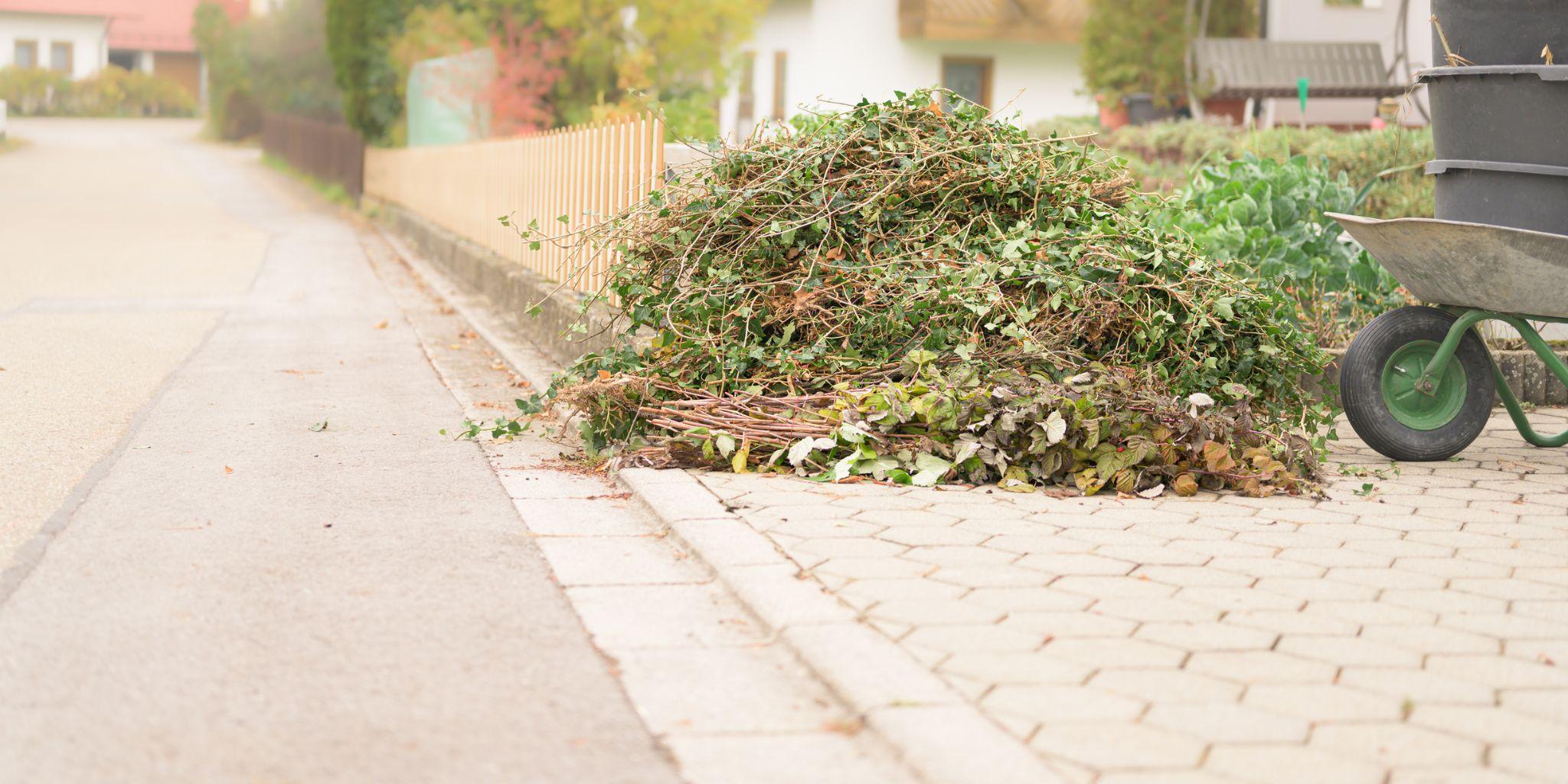
Through the summer months, your food scraps cart does the heavy lifting. Grass, leaves, and small trimmings can go in it any week, provided they fit the size and weight limits. Overfilled carts get skipped during peak growing season, so pack sensibly.
Bagging and Bundling: The Rules That Get Piles Skipped
Bad prep is the most common reason a pile stays sitting on the curb.
- Use double-ply paper bags rolled closed, or see-through plastic bags tied shut
- Black and orange garbage bags will not be collected, no exceptions
- Tie branch bundles with natural twine, under 1 metre long and 0.5 metres thick
- Keep soil, sod, and rocks out of the compost stream entirely
Eco Station Drop-Off for Stumps, Trunks, and Heavy Loads
Anything over 20 centimetres in diameter, meaning stumps, trunks, and thick logs, heads to an Eco Station. Drop-off is free for residents, and the compost produced from all that material comes back to Edmontonians at no charge.
Material | Best Method | Cost |
|---|---|---|
Grass, leaves, trimmings | Food scraps cart | Included |
Bagged bulk (spring/fall) | Curbside Monday pickup | Included |
Stumps, trunks, large branches | Eco Station drop-off | Free |
Soil, sod, rocks | Eco Station or hauler | Varies |
Post-storm or renovation piles | Private removal service | Quoted by volume |
Once the debris stops fitting into any of these boxes, the calculation changes, and that’s usually the moment a homeowner starts weighing effort against cost.
Hiring a Junk Hauler: When the Debris Pile Wins
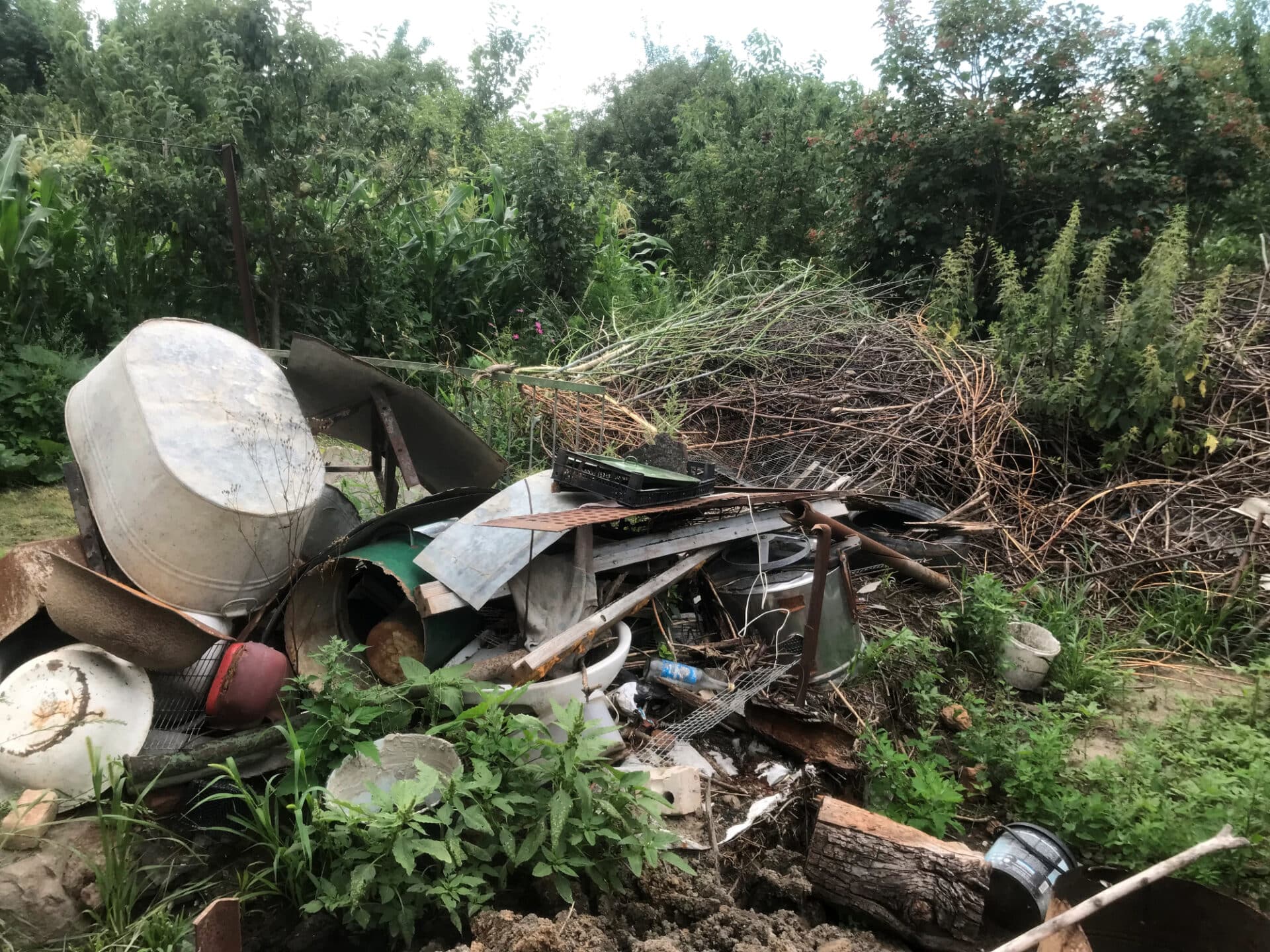
There’s a point where the DIY approach stops making sense. Six bags is a Saturday chore, but a torn-out flower bed, a fallen poplar limb, or a decade of hedge growth is a much bigger job.
The Point Where a Hauler Becomes the Cheaper Option
- The material is heavy: sod rolls, soil, gravel, or wet stumps
- You’d need three or more trips in a borrowed truck
- The debris includes non-organics like old fencing or patio wood
- The next curbside collection date is months away
- Lifting it yourself is a realistic injury risk
Heavy loads are where people misjudge the job. A single pallet of sod can weigh more than most half-tons should carry, and the Eco Station trip that seemed simple turns into two afternoons and a sore back.
What’s Included in a Yard Debris Pickup Quote
Bye Bye Junk yard waste pickup price by the volume your debris takes up in the truck, not by weight. A mountain of light leaves may cost less than a modest pile of dirt. Ask up front whether the quote includes disposal fees, because some outfits tack them on afterward.
A standard yard waste disposal Edmonton Alberta service usually includes:
- On-site loading, so you don’t touch the pile
- Hauling to an approved facility
- Sorting organics for composting from treated wood and junk
- Cleanup of the staging area once the truck is loaded
Cutting Your Volume Before It Becomes a Problem
Small, repeated sessions beat one massive August weekend, because most of the volume then disappears into your regular cart without you thinking about it. Grasscycling, which just means leaving the clippings on the lawn as you mow, cuts your output noticeably and feeds the soil while it’s at it. Save the hauler for the genuinely oversized jobs, and you’ll rarely need one.
The habits that make this work are worth spelling out.
Keeping Your Edmonton Yard Clear All Season
A tidy yard through July and August is less about effort and more about matching each pile to the right destination. Small, steady batches go in the food scraps cart. Bulky bagged loads wait for a Monday collection date. Stumps and thick limbs earn a free trip to the Eco Station. Sod, soil, storm damage, and torn-out fencing are worth handing to someone with a truck and the equipment to move them.
Homeowners who never seem to have a debris mountain have simply built the habit: mowing without the bag, trimming in shorter sessions, and checking the collection calendar before the pile shows up. Get that summer yard cleanup Edmonton rhythm in place, and the leaves in October become a chore rather than a crisis, which is about as good as autumn gets.

With a Master’s in Architecture from the University of California, Berkeley, Alexander Martin has dedicated the last 18 years to enhancing outdoor living through thoughtful and robust structure design. His career kicked off in urban planning, giving him a unique perspective on integrating structures into diverse environments. In 2019, Alexander brought his expertise to our website, offering insights into creating versatile outdoor spaces. Since then, he has been the lead advisor for our outdoor design projects and is known for his ability to merge functionality with environmental consciousness. Alexander enjoys rock climbing outside of work and participates in community development projects, activities that reflect his passion for the outdoors and sustainable design.